
Reviewed · TOKYO TOURS
Tokyo: Shinjuku Historical Walking Tour & Secret Backstreets
Shinjuku changes character after dark. Neon signs flash above narrow lanes, tiny bars crowd together, and quiet shrine grounds sit only minutes from the noise. This 90-minute private walking tour gives you a simple way to see the district without staring at a phone map or taking a wrong turn.
I like two things here: the route mixes famous sights with easy-to-miss lanes, and the guides tailor advice to your interests. Mao, Ai, Aki, Akari, and other local guides have helped visitors find restaurants, bars, photo spots, and calmer corners. The main drawback is that you do not get a food tasting or a bar visit included, so this is a seeing-and-learning walk rather than a full evening out.
Key points at a glance
- Omoide Yokocho and Golden Gai: See two tiny-lane districts with very different moods and useful tips on where to eat or drink.
- Kabukicho after dark: Get close to Shinjuku’s famous neon, including the area around the giant entertainment signs and Godzilla displays.
- Tokyu Kabukicho Tower: Spend about 25 minutes around one of the district’s newest landmarks.
- Hanazono Shrine: End with a quieter look at Japanese shrine customs, including omikuji and small offerings.
- Practical local advice: Ask your guide for restaurant, bar, shopping, and evening suggestions suited to your plans.
- Good value at $25.20: The price is modest for a private orientation, though optional food, drinks, and shrine purchases cost extra.
Starting at Shinjuku Station East Exit
Your meeting point is the police box at Shinjuku Station’s East Exit, at 3-chōme-38-1 Shinjuku. That is a sensible place to begin because Shinjuku Station can feel like a small city of its own. You will want to allow time to find the correct exit before the start.
The guide leads the way from there, which is one of the tour’s strongest practical features. Shinjuku’s streets are easy to reach but harder to understand on a first visit. A guide can point out entrances, side lanes, signs, and streets that you might pass without noticing.
The activity is listed as private, meaning your group should participate on its own. Some people have also described joining a larger group, including one group of about 15, so I would confirm the expected group arrangement if that matters to you. Either way, the walk is designed to keep moving through crowded streets and pause in calmer spots for explanations.
The tour ends back at the meeting point. That makes it easy to return to your hotel, continue dinner, or use the nearby station, but it also means you should not expect the guide to escort you to a final restaurant.
More history-led days in Tokyo:
- Tokyo: Imperial Palace and Shogun Historical Walking Tour
★ 5.0 · 2,251 reviews - Tokyo: Imperial Palace Japanese History Walking Tour
★ 4.9 · 987 reviews - Yanaka Walking Tour: Historic and Traditional District of Tokyo
★ 5.0 · 530 reviews
Omoide Yokocho and the old Shinjuku feel
Omoide Yokocho, also called Memory Lane, brings a very different mood from the large signs and broad station streets. Its narrow passageways are lined with small eateries and old-style stalls. The setting is compact, atmospheric, and photogenic, especially as the evening lights come on.
This is a good place to ask questions about eating in Shinjuku. The tour does not include a meal, so you will not sit down for a tasting as part of the $25.20 price. Instead, the guide can explain where you might find appealing food and what parts of the district suit your budget or mood.
I see that as both a strength and a limit. You get useful advice without paying for a fixed restaurant menu, and you can return later to eat where you choose. But if you want an included dish, drink, or hands-on local activity, this walk will feel light on participation.
Keep your camera ready, but be polite around the small businesses. Omoide Yokocho is a working food area, not only a photo set. The narrow lanes can feel tight, and you may not linger in one place for long.
Kabukicho, Shinjuku’s sleepless entertainment district
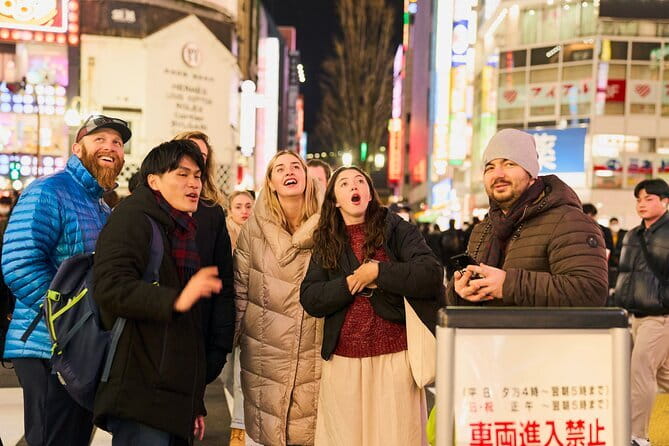
The route continues into Kabukicho, often called Sleepless Town. At night, the signs brighten, people move between restaurants and entertainment venues, and the district shows the flashy side of modern Tokyo.
The point is not simply to walk past neon. A local guide helps explain how the area fits into Shinjuku and directs you toward streets you might otherwise skip. You can ask about places to eat, drink, shop, or return to later.
The schedule lists about 10 minutes here, so keep your expectations realistic. This is an introduction, not a full tour of every lane. You will see the main atmosphere and hear useful context, then continue to other parts of the district.
This section also brings a practical concern. Kabukicho is energetic and can be confusing, particularly at night. Staying with your guide helps you move through it with less worry, but the tour does not promise entry into venues or personal introductions with local business owners.
That limitation matters to some people. One less favorable assessment found the walk informative but wanted more direct interaction and something to take part in. If you want a bar crawl, restaurant seating, or a neighborhood activity, plan to add that afterward.
Tokyu Kabukicho Tower and newer Tokyo
Tokyu Kabukicho Tower receives the longest scheduled stop, about 25 minutes. The large complex represents the newer face of the district and gives the route a useful contrast with Omoide Yokocho and Golden Gai.
You can take photographs, hear about the area, and use the stop to ask your guide for suggestions. The tower is also a useful landmark for getting your bearings later. Some people have received extra help finding a free observation deck, though that detail is not guaranteed in the advertised route, so treat it as a possible bonus rather than a promise.
The stop is free to enter according to the tour details, but the tour fee does not cover purchases inside. You should also not assume that every attraction in the building is included. The value here comes from seeing the complex as part of a guided neighborhood walk, not from a ticketed visit to every facility.
I like this part of the route because it prevents the experience from becoming only a nostalgic look at old Tokyo. Shinjuku is a district of small lanes, large entertainment buildings, traditional worship, and constant redevelopment. The tower helps you see that change in one short walk.
More walking tours in Tokyo:
- Tokyo Tsukiji Fish Market Food and Culture Walking Tour
★ 5.0 · 3,184 reviews - Tokyo: Shinjuku Local Bar and Izakaya Guided Walking Tour
★ 4.9 · 1,794 reviews - Tokyo: Tsukiji Fish Market Food and Walking tour
★ 5.0 · 1,724 reviews - Tokyo: Asakusa Walking Tour with Sensoji Temple Visit
★ 4.8 · 1,583 reviews
Golden Gai and its tiny drinking lanes
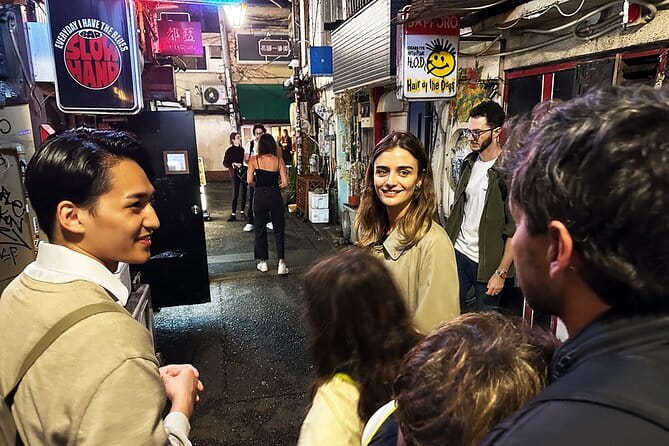
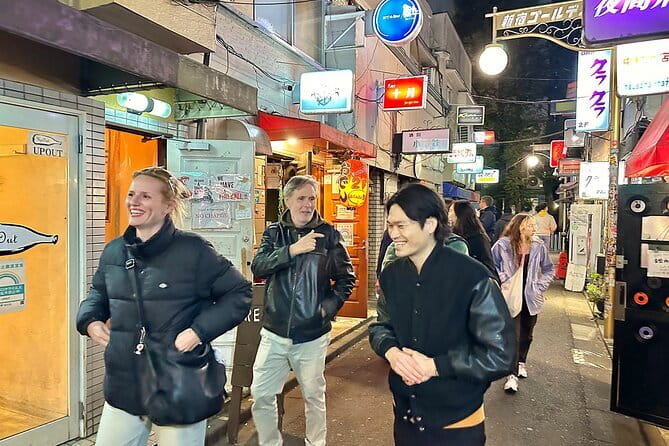
Golden Gai is one of the most distinctive stops. Several narrow lanes hold many very small bars, each with limited space and its own personality. From outside, the area looks like a maze of signs, stairways, and closely packed doorways.
A guide is particularly useful here because the area can be intimidating if you do not know how it works. You can ask which streets are better for a quiet drink, what kinds of places may welcome first-time visitors, and where to return later.
The itinerary allows about 15 minutes, which is enough to see the layout and get an introduction. It is not enough for a leisurely drink, and no bar purchase is included. That is worth stating plainly. The tour shows you the setting and offers suggestions, but you will need to make your own decision about entering a bar afterward.
This stop suits independent visitors who want a little confidence before exploring at night. It is less suitable if you prefer a fixed dinner reservation or a guided tasting with prices explained in advance.
Hanazono Shrine, a quiet finish
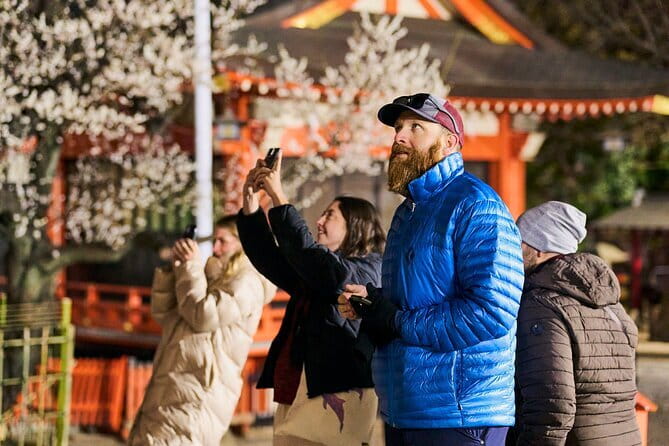
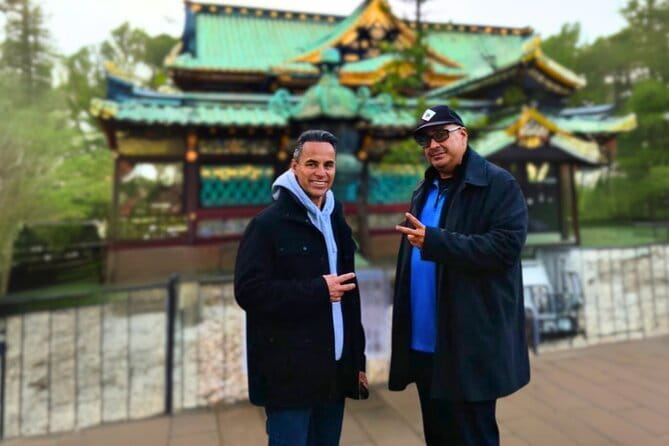
Hanazono Shrine provides the route’s strongest change of pace. After the lights and narrow entertainment lanes, the shrine offers a calmer place to learn about Japanese religious customs in the center of Shinjuku.
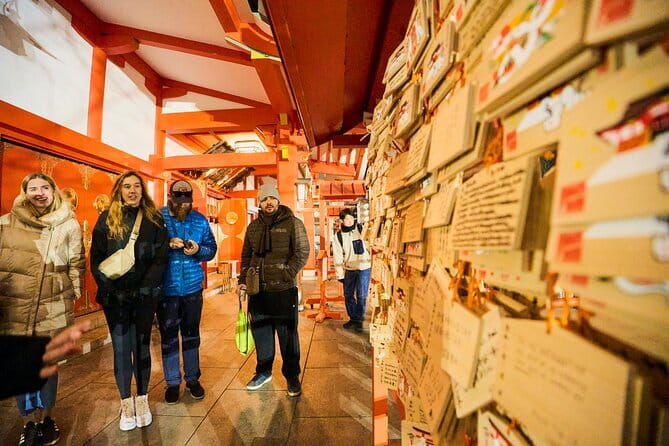
The scheduled visit lasts about 20 minutes. Your guide can explain basic traditions, including how to behave at the shrine and what omikuji are used for. You may purchase an omikuji or make a small cash offering, but those costs are not included.
This ending gives the walk some balance. You see the city’s nightlife, then finish with a traditional site rather than another commercial district. It also gives you a chance to ask final questions about Tokyo customs, food, or places to visit next.
The shrine is not an attraction with a major admission charge. Its value comes from context. Without explanation, you might walk through, take a photograph, and miss the meaning of the place. With a guide, the stop becomes a short lesson in how old traditions remain part of daily city life.
What your guide adds to the walk
The quality of this experience depends heavily on the guide. The strongest accounts describe guides who first asked about personal interests, then adjusted the route or advice. Mao is noted for doing this at the start, while Ai, Aki, Akari, Cherry, Glenda, Hannah, Nana, Maya, Naoto, Ren, and Ayaka are among the guides praised for clear explanations, friendly manner, and local suggestions.
That range of names suggests the operator uses several guides, so your experience will not be identical from one booking to another. You may get a guide who focuses more on history, food, nightlife, photography, or neighborhood orientation. Tell the guide what you want early: affordable meals, quiet bars, shopping, architecture, Japanese customs, or places to revisit alone.
Several guides have also helped people feel comfortable in areas they might avoid on their own. That is important for solo visitors and first-time Tokyo visitors, especially in Kabukicho and Golden Gai. You still remain responsible for deciding where to eat or drink, but a local explanation can make those choices easier.
The walk is conducted in English based on the supplied activity information and reviews, though the exact guide and style can vary. Ask questions rather than waiting for a lecture. A 90-minute route goes quickly, and the best value comes when the guide focuses on what you actually plan to do afterward.
What is included, and what is not
The price is $25.20 per person. For a guided introduction to one of Tokyo’s most confusing districts, that is a reasonable cost, especially if you use the restaurant and bar advice later in your trip.
Included are the walking tour, a local guide, and one vending-machine drink recommended by the guide. That drink is a small touch, not a meal or a tasting. You should budget separately for food, alcohol, shopping, omikuji, and shrine offerings.
The tour does not include admission tickets for paid attractions. The listed stops themselves have free admission, but that does not mean everything you encounter in Kabukicho Tower or elsewhere costs nothing.
I would judge the value this way:
- Book it for orientation, neighborhood context, and practical suggestions.
- Skip it if you mainly want to eat, drink, or enter attractions during the tour.
- Book early if your schedule is tight, since it has been booked more than 20 times in a recent week.
- Choose a time slot that matches your goal. Night slots should offer the best neon views, while daytime departures may show some venues before they open.
Timing, weather, and comfort
The walk lasts about one hour and 30 minutes. That is long enough to cover several distinct parts of Shinjuku without taking up an entire evening. You can follow it with dinner or drinks, using the guide’s advice while the information is fresh.
The tour requires good weather. If poor weather causes cancellation, you receive the choice of another date or a full refund. One person found the experience worthwhile even in heavy rain, but you should still dress for the forecast and understand that weather can change the plan.
Wear comfortable shoes. The experience is a walking tour through station streets, narrow lanes, entertainment areas, and shrine grounds. The activity is near public transportation, and most people can participate, but the supplied information does not provide detailed accessibility notes.
A mobile ticket keeps the booking simple. Confirmation arrives when you book, and free cancellation is available up to 24 hours before the start time. Cancellations or changes inside that window are not refunded or accepted.
Who should book this Shinjuku walk
I would recommend it most strongly for first-time visitors who are staying in or near Shinjuku. You will quickly learn how the major areas connect, where the narrow lanes are, and which places deserve a second visit.
It also suits solo visitors who want an introduction before going out at night. The guide gives you a route and some confidence without locking you into a restaurant or bar.
Couples and families can use it as a short evening orientation, though Golden Gai and Kabukicho are more about atmosphere than child-focused sightseeing. Food lovers should bring questions and use the advice to plan a later meal.
Experienced Tokyo visitors may find the walk too basic if they already know Kabukicho, Golden Gai, and Hanazono Shrine. Still, the private format and local guide can make it worthwhile if you want new restaurant ideas or a closer look at side streets.
Should you book it?
Book this tour if you want a low-cost, guided introduction to Shinjuku that combines neon streets, old lanes, new architecture, and a traditional shrine. The strongest value comes from the guide’s local tips and the ease of following someone who knows where to go.
Do not book it expecting a food tour, pub crawl, or ticketed attraction visit. You see the places, hear their background, and receive suggestions, then continue exploring on your own.
At $25.20, the risk is modest. If you have one free evening in Shinjuku and want to get your bearings fast, I would book it early, tell the guide your interests, and leave time afterward for the restaurant or bar you choose.
FAQ
How long does the Tokyo Shinjuku walking tour last?
The tour lasts approximately one hour and 30 minutes.
Where does the tour begin?
It begins at the Shinjuku Station East Exit Police Box, at 3-chōme-38-1 Shinjuku, Shinjuku City, Tokyo 160-0022, Japan.
Where does the tour end?
The activity ends back at the meeting point.
Is the tour private?
The activity is listed as a private tour for only your group. Some tour descriptions from participants refer to larger groups, so confirm the group arrangement when booking if this is important to you.
Is food or a bar drink included?
No meal or bar drink is included. The tour includes one vending-machine drink recommended by the guide. Food, alcohol, omikuji, and shrine offerings cost extra.
Can I cancel for a full refund?
Yes. You can cancel at least 24 hours before the local start time for a full refund. Cancellations or changes made less than 24 hours before the start are not accepted or refunded.
What happens if bad weather cancels the tour?
If the experience is canceled because of poor weather, you will be offered another date or a full refund.
Just added around Tokyo
- Private Arrival Transfer : Narita International Airport to Central Tokyo City★ 4.5 · 12 reviews
- Narita Airport(NRT): Private Transfer to Tokyo/Yokohama 1-9pax★ 5.0 · 47 reviews
- Private Transfer from Narita Airport to Yokohama Port and City★ 4.5 · 17 reviews
- [Narita Airport Terminals 1, 2] 40-60km Sawara Itako Historic Bike Tour★ 5.0 · 13 reviews
- 3 Day Japan Highlights Tour: Tokyo, Mt.Fuji, Nara, Kyoto, Osaka★ 5.0 · 22 reviews
- Small Town in the Big City: Tasting Tokyo’s Kichijoji★ 5.0 · 195 reviews
- Small Town in the Big City: Tasting Tokyo’s Kichijoji★ 5.0 · 16 reviews
- The 10 Tastings of Tokyo With Locals: Private Street Food Tour★ 5.0 · 48 reviews
Tokyo Tours, compared.

Mt Fuji and Hakone 1-Day Bus Tour Return by Bullet Train
Read our review →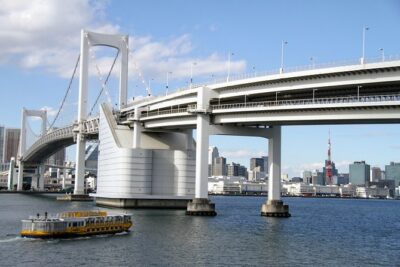
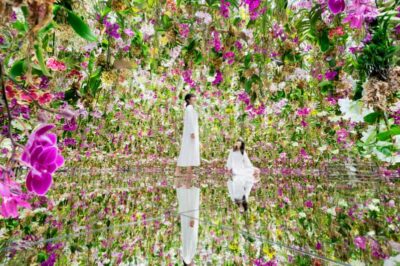
teamLab Planets TOKYO Digital Art Museum Entry Ticket
Read our review →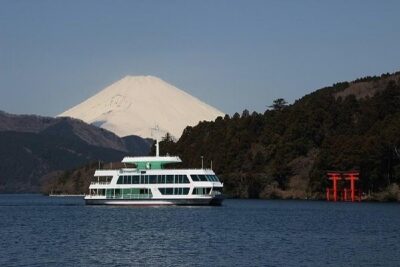
Mt Fuji & Hakone Cruise, Drum Show Bullet Train 1 Day from Tokyo
Read our review →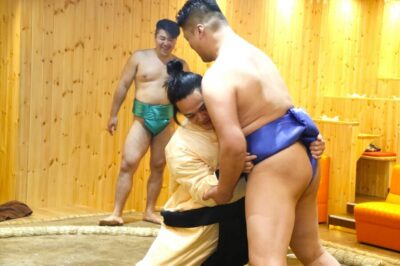
Sumo Show Experience with Chicken Hot Pot and a Photo
Read our review →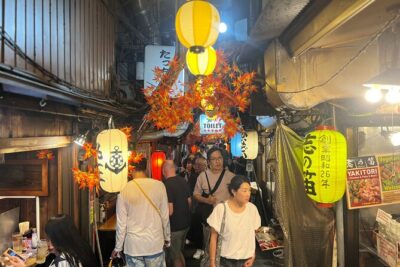
Shinjuku Food Tour (13 Dishes at 4 Local Eateries)
Read our review →
Tokyo Mt Fuji 5th St & Hakone Cruise Bus Tour w/Bullet Train
Read our review →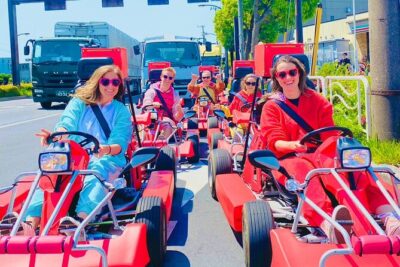
Flagship 2-Hours Official Street Go-Kart Tour – Tokyo Bay Shop
Read our review →Browse the lists this tour appears in