
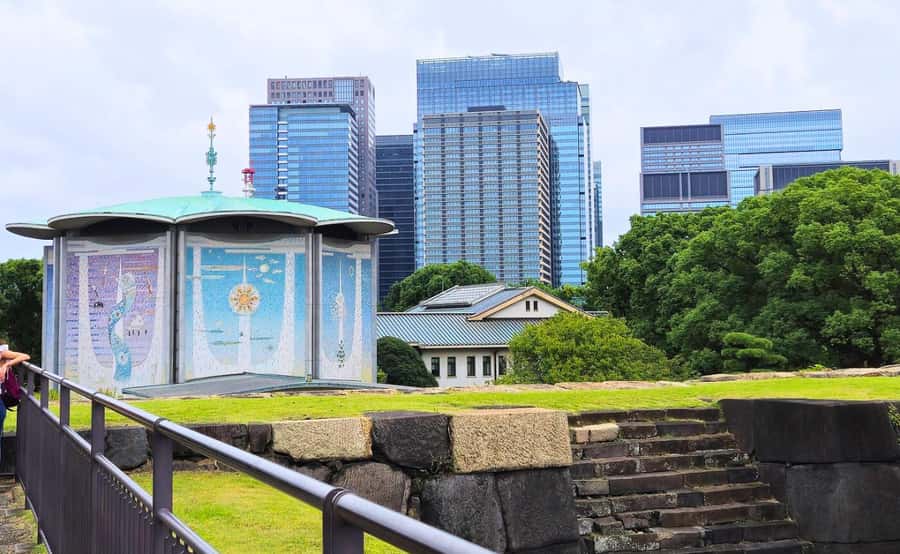
Reviewed · IMPERIAL PALACE TOURS
Tokyo: Imperial Palace Japanese History Walking Tour
Tokyo’s Imperial Palace sits at the center of modern Tokyo, but beneath its clipped hedges and broad stone walls lies the site of Edo Castle, the power base of the shoguns for more than 250 years. This walking tour uses the Eastern Gardens to explain how farmers, samurai, daimyo, shoguns, and emperors shaped Japan.
I like the way the tour connects physical remains to big historical changes, rather than treating the palace as a string of pretty gardens. I also like the practical human touch: guides such as Mika, Natsumi, Laki, and Alexandre are praised for answering questions, taking photos, and offering food and sightseeing tips.
The main drawback is that you do not enter the Inner Palace, which is closed to the public. The walk also takes place rain or shine and can feel hot in Tokyo summer, so this is best for people comfortable walking outdoors.
Key points at a glance
- Start at Wadakuramon Fountain Park: Meet your guide near the Starbucks by the fountain, close to Tokyo Station and Otemachi Station.
- See where Edo Castle once ruled Japan: Explore gates, stonework, ruins, and a model of the former castle complex.
- Learn the social order of old Japan: The guide explains the roles of farmers, samurai, daimyo, and shoguns.
- Walk through the Eastern Gardens: Expect bamboo, seasonal greenery, old samurai-related sites, and trees gifted to the emperor.
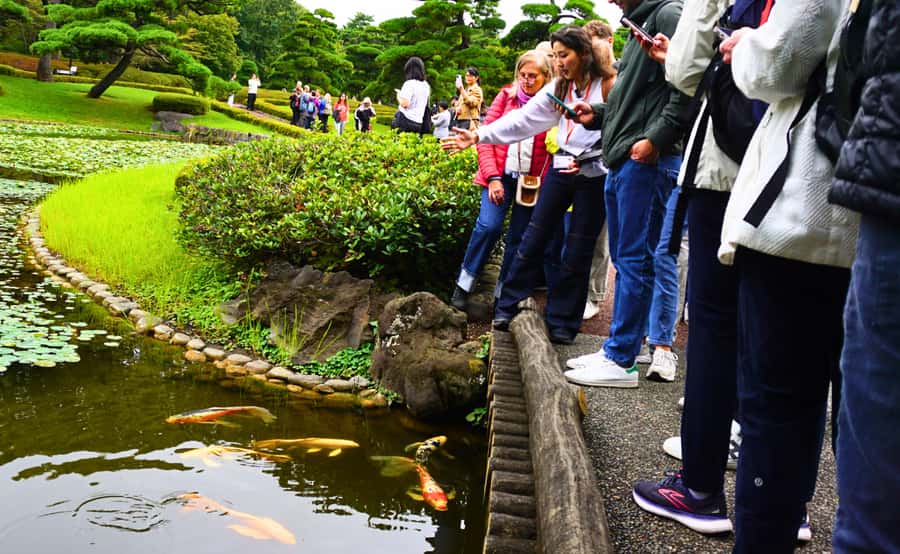
- Finish with royal koi: The garden ponds provide one of the tour’s most memorable photo stops.
- Pay $32 for context and company: The value is strongest if you want history explained, not just a self-guided garden stroll.
Why Edo Castle matters more than the palace walls
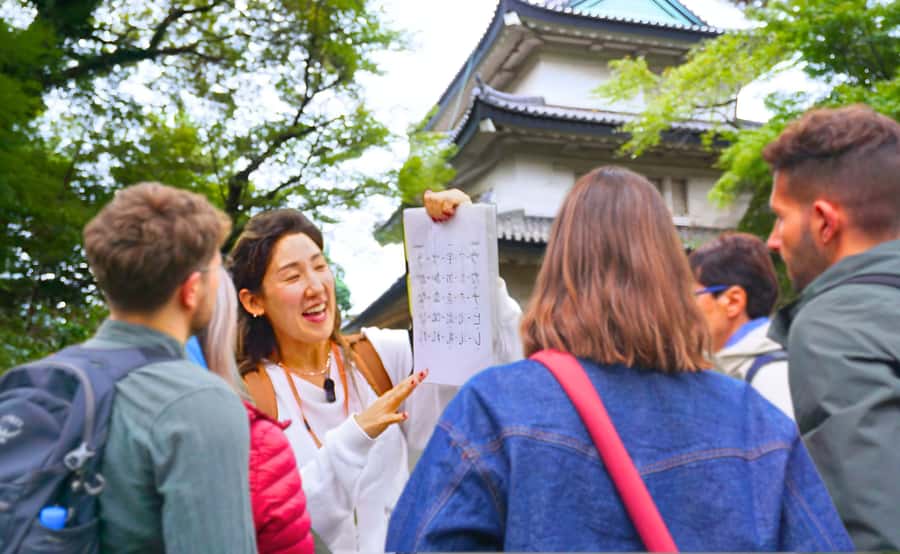
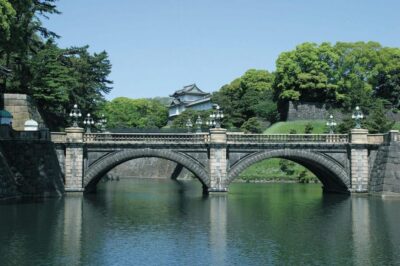
The most useful thing to understand before you arrive is that the Imperial Palace is built on layers of power. The emperor lives at the heart of the complex today, but the Eastern Gardens occupy part of the old Edo Castle grounds, where the Tokugawa shoguns governed Japan from the early 1600s until the Meiji period.
The original castle buildings are gone. That may sound disappointing at first, but it gives the guide an important job. Instead of walking through furnished rooms, you read the site through enormous stone foundations, gates, moats, garden design, surviving ruins, and a miniature model showing how the castle looked in the past.
I find this more useful than a polished reconstruction. You can see what remains, then picture the castle as the guide explains its scale and purpose. The missing buildings also open the door to the larger story: how military rule changed, how the emperor’s role shifted, and how Edo became the foundation for modern Tokyo.
The tour is aimed at people who want that background. If you only want a quiet garden walk, you can visit the grounds on your own. If you want to understand why this particular patch of Tokyo mattered so much, the guide adds the missing links.
More Imperial Palace visits:
- Tokyo: Imperial Palace and Shogun Historical Walking Tour
★ 5.0 · 2,251 reviews - Tokyo: Imperial Palace and Shogun Walking Tour
★ 4.9 · 935 reviews - Imperial Palace East Garden and Edo Castle Walking Tour in Tokyo
★ 5.0 · 510 reviews
Meeting your guide near Tokyo Station
The meeting point is in Wadakuramon Fountain Park, near the Starbucks by the fountain. From Tokyo Station or Otemachi Station, allow about five to ten minutes on foot. Your guide will hold a sign marked SUNRISE ADVENTURE.
This is a sensible meeting place because Tokyo Station is easy to reach from many parts of the city, while Otemachi Station is even closer. Still, Tokyo’s station passages can be confusing, especially if you are arriving with luggage or changing subway lines. I would reach the area early and use the fountain as your visual landmark.
The guide may be Mika, Natsumi, Laki, Alexandre, Nico, Hugo, Arief, Fei, or another member of the team. The strongest pattern across the experience is the quality of the guiding rather than a single fixed personality. Mika is praised for clear explanations and care in hot weather. Natsumi is known for lively storytelling and useful restaurant suggestions. Laki brings an interactive style, while Alexandre leads tours in French as well as English.
The language options are English and French. If you have questions about Japanese history, culture, food, or etiquette, ask them during the walk. The guides are specifically valued for staying after a scheduled explanation when the group needs more time.
Otemon Gate: the proper entrance to the old castle
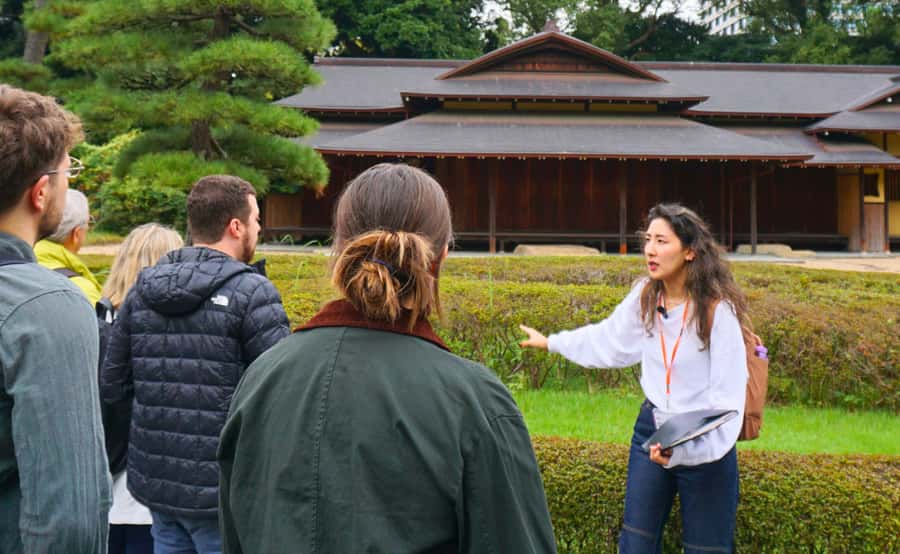
From the meeting point, the group walks toward Otemon Gate, the grand entrance to the Imperial Palace grounds. This transition is part of the experience. You leave the modern business district, with its offices and train connections, and arrive at a fortified entrance that once controlled access to the shogun’s castle.
The guide uses the gate to explain how movement and status worked in the old castle town. A gate was not just an opening in a wall. It was a point of control, a display of authority, and part of a larger defensive system.
You should expect stops for explanation rather than a nonstop march. One of the tour’s strengths is its pace. It is long enough to give the Edo and Meiji periods some shape, but not so long that every stone starts to look alike. A review describes the walk as about two hours, which gives you a useful sense of the commitment involved.
The route is outdoors, so comfortable shoes matter. The ground may include uneven sections around old walls and ruins. The tour is not suitable for wheelchair users or people with mobility impairments, back problems, heart problems, recent surgery, or a low level of fitness. It is also not recommended for pregnant women.
Edo Castle ruins and the shogun’s changing world

The castle ruins are the historical center of the walk. Here, your guide explains the ranking system that organized Japanese society, from farmer to samurai, daimyo, and shogun. This is not simply a list of titles. It helps you understand who produced food, who served in war, who governed large territories, and who held national military authority.
The shogun’s world was highly ordered, and Edo Castle was its main stage. Daimyo lords came to the capital under rules designed to keep them under the shogun’s control. Samurai served as warriors and officials. The castle complex reflected this hierarchy through its size, access points, and use of space.
The best guides turn these ideas into a conversation. Laki is praised for making the walk interactive, while other guides ask questions and invite the group to work out how the system operated. That approach is especially useful for families and older children, who may struggle with a straight lecture about feudal titles.
You also hear how the castle changed from the seat of the shogun into an imperial palace. That shift is one of the key reasons this site matters. The stones are not only remnants of a vanished fortress. They mark Japan’s move from Tokugawa military rule toward the modern imperial state of the Meiji era.
More history-led days in Tokyo:
- Yanaka Walking Tour: Historic and Traditional District of Tokyo
★ 5.0 · 530 reviews - Tokyo: Shinjuku Historical Walking Tour & Secret Backstreets
★ 5.0 · 530 reviews - Mt. Fuji Heritage Tour: Traditional Villages, Lakes & Shrine
★ 4.5 · 509 reviews - From Tokyo: Nikko World Heritage Site Private Full-Day Trip
★ 4.9 · 243 reviews
The castle model fills in what the ruins cannot show
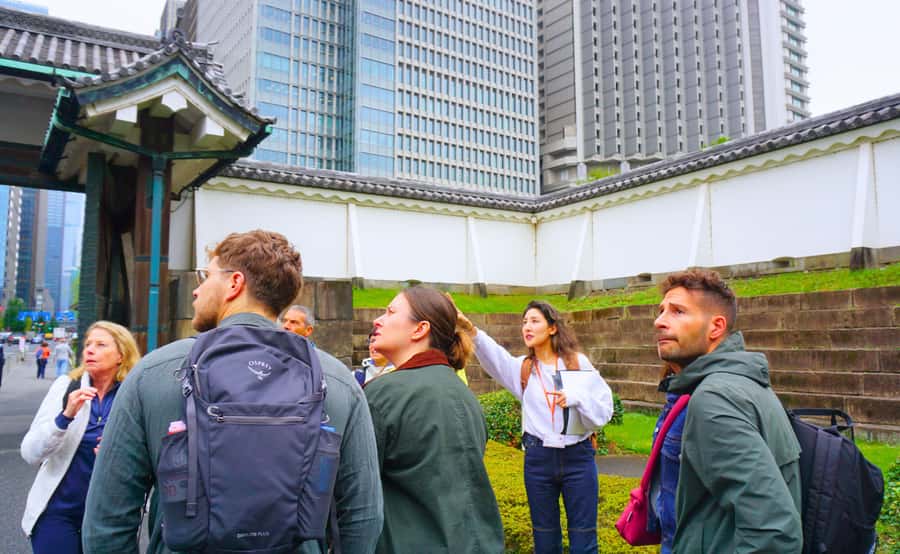
Because the original castle is no longer standing, the miniature model is an important stop. It lets you see the former complex as a whole rather than trying to reconstruct it from scattered foundations.
I would pay close attention here. A model can quickly become a decorative extra, but on this tour it gives the explanations a clearer shape. After seeing the scale and arrangement of the castle, the surviving stonework makes more sense. You can look at a wall or base and understand its former place in a much larger compound.
This is also a good point to ask questions. The guides are used to explaining the difference between the shogun’s castle and the emperor’s palace, and they can help sort out the names and periods that often blur together on a first visit.
If you are new to Japanese history, do not worry about remembering every date. The more useful takeaway is the sequence: Edo Castle was the shogun’s seat, the shogunate ended, the emperor’s role became central again, and Tokyo grew around these layers of authority.
Gardens, bamboo, and trees sent to the emperor
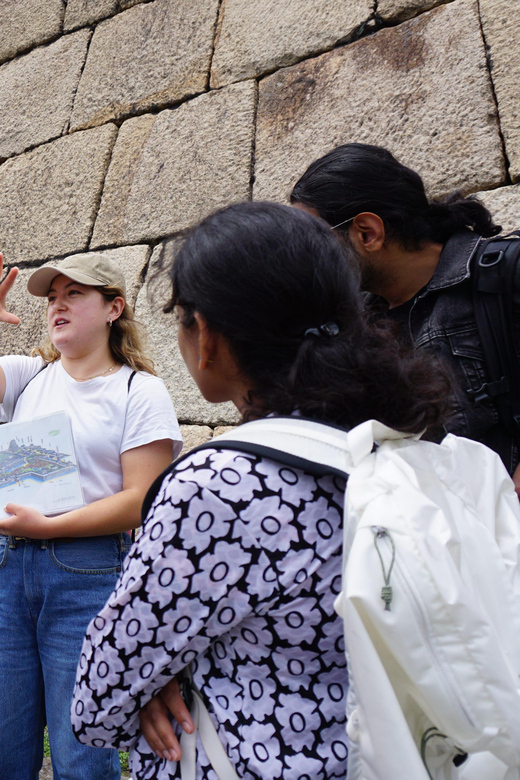
The Eastern Gardens soften the military story. After stone walls and castle remains, you move through carefully maintained greenery, including bamboo and trees from different parts of Japan that were gifted to the emperor.
These plantings show another side of the palace grounds. They are not simply decoration. They connect the imperial center with regions across the country, while giving you a calmer setting in which to absorb the history.
The bamboo area is a particularly good photo stop, though the garden’s appeal changes with the weather and season. In summer, shade from the trees can make a major difference. One guide was praised for stopping in shaded areas whenever possible and handing out small gifts useful in the heat. Another supplied mosquito spray, a thoughtful touch in a garden with standing water and heavy vegetation.
Bring your own water and wear clothing suited to the forecast. The tour runs in rain or shine, and Tokyo’s summer heat can make even a gentle walk tiring. A hat, sun protection, and breathable clothes are sensible choices. The route may feel easy in cool weather and demanding in high heat, so think about your fitness before booking.
Royal koi and the final garden views
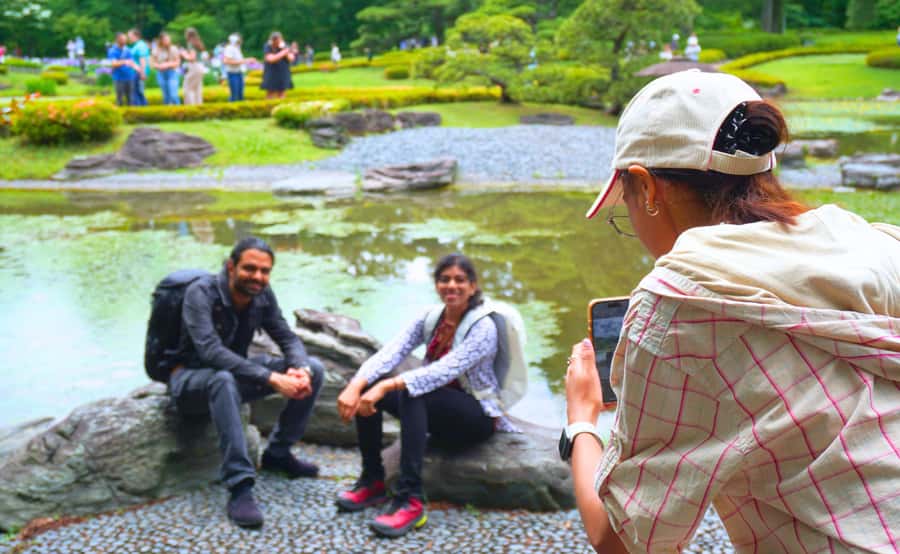
The walk ends with garden ponds and the palace’s distinctive royal koi. These fish are an unexpected highlight. After several hours of military and political history, the koi offer a simple, colorful pause and a chance to take photos.
The final garden section also gives the tour a good rhythm. You begin with the modern city and the dramatic gate, move into stories of the shoguns and castle ruins, then finish in a quieter setting with bamboo, trees, water, and fish.
You return to the original meeting point at the end. That makes the tour easy to combine with lunch, another Tokyo Station visit, or an afternoon in nearby Marunouchi and Otemachi. Guides often give restaurant and sightseeing suggestions, so this is a useful time to ask where to go next.
How the $32 price works for you
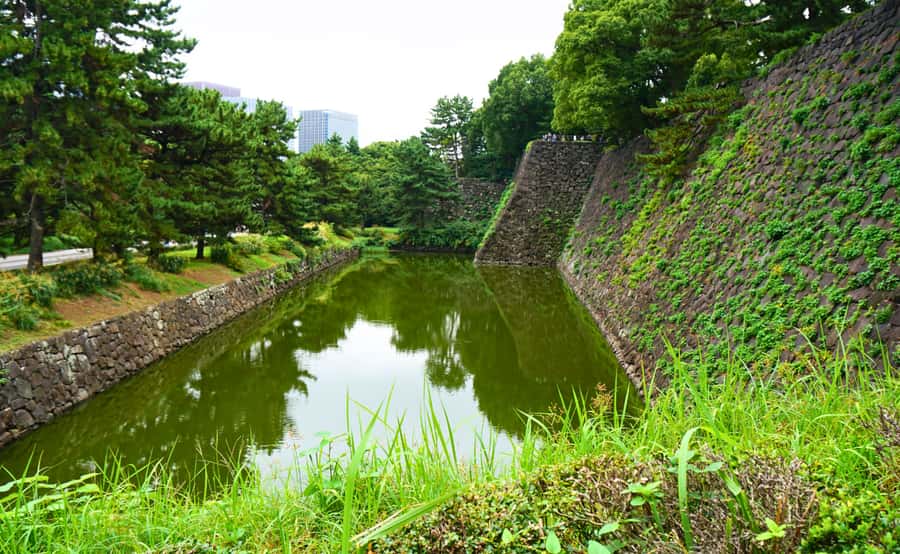
At $32 per person, this is not a ticket for exclusive palace access. You are paying for a guided interpretation of public grounds that you could technically walk through on your own.
The value depends on your goals. For a visitor who already knows the Edo period and enjoys reading signs, the price may feel unnecessary. For a first visit to Tokyo, the guide can save you from seeing attractive walls and gardens without understanding their meaning.
The strongest value comes from three things:
- Historical structure: You learn how Edo Castle, the shogunate, and the imperial palace fit together.
- Questions and conversation: You can ask about Japanese culture, etiquette, food, and modern Tokyo.
- A clear route: The guide leads you through key areas, helps with photos, and points out details you might pass without noticing.
The high rating, 4.9 from 987 reviews, fits the repeated praise for clear speaking, friendly conduct, strong storytelling, and attention to the group. I would not book it for palace interiors, since those are not included. I would book it for the story behind the grounds.
What the tour does not include

The Inner Palace is not open to the public, and this tour does not provide access. You should set your expectations correctly: this is a walk through the Eastern Gardens and former Edo Castle grounds, not a visit inside the emperor’s private residence.
Weapons, sharp objects, smoking, drones, alcohol, drugs, skateboards, and fire-making are not allowed. These rules fit a carefully protected government and garden site.
The physical demands also matter. The walk is not suitable for wheelchair users, people with mobility limitations, serious back or heart problems, recent surgery, pregnancy, or low fitness. If you need an accessible route or frequent seated breaks, this is not the right choice based on the stated restrictions.
You can cancel up to 24 hours in advance for a full refund, and the reserve-and-pay-later option helps if your Tokyo plans are still moving around.
Who will get the most from this walk?
I would recommend this experience to first-time Tokyo visitors, history fans, families with older children, and anyone who wants a useful introduction to the Edo and Meiji periods. It also works well early in a Tokyo stay because the guide can suggest food, cultural activities, and nearby places for the rest of your visit.
The interactive style makes it more approachable than a formal lecture. Kids may enjoy the castle model, koi, and questions about samurai. Adults will likely appreciate the explanation of how political power moved from the shogun to the emperor.
You may want to skip it if your priority is entering the Inner Palace, avoiding all walking, or exploring at your own pace without scheduled explanations. You should also think twice about a midsummer booking if you dislike heat, though shaded stops can help.
Should you book the Imperial Palace history walk?
Book this tour if you want the Imperial Palace grounds to make sense. For $32, you get a guided route through Otemon Gate, Edo Castle remains, the historical model, samurai-related sites, bamboo, gifted trees, and royal koi, plus a clear explanation of Japan’s political transformation.
The best reason to go is not the palace interior, because you will not see it. The reason is the story under your feet. Guides such as Mika, Natsumi, Laki, and Alexandre bring different personalities, but the experience consistently centers on clear history, questions, photos, and practical Tokyo advice.
Choose a cool part of the day if possible, wear proper shoes, and arrive early at the Starbucks by Wadakuramon Fountain. If you can handle the outdoor walk and want more than attractive gardens, this is a smart, fairly priced introduction to the forces that shaped modern Japan.
FAQ
Where does the tour begin?
The tour begins at the Starbucks near the fountain in Wadakuramon Fountain Park. The guide will be near the fountain and will hold a SUNRISE ADVENTURE sign.
How do I reach the meeting point?
You can take the train to Tokyo Station or Otemachi Station. From either station, the walk to Wadakuramon Fountain Park takes about five to ten minutes.
Where does the tour end?
The tour ends back at the original meeting point.
Is the Inner Palace included?
No. The Inner Palace is not open to the public, and this activity does not include entry.
Which languages are available?
The tour is available in English and French.
What should I wear?
Wear clothing suited to the weather and comfortable shoes for walking. The tour takes place rain or shine, so prepare for the forecast.
Can I cancel for a refund?
Yes. You can cancel up to 24 hours in advance for a full refund.
More Walking Tours in Tokyo
- Tokyo Tsukiji Fish Market Food and Culture Walking Tour
★ 5.0 · 3,184 reviews - Tokyo: Shinjuku Local Bar and Izakaya Guided Walking Tour
★ 4.9 · 1,794 reviews - Tokyo: Tsukiji Fish Market Food and Walking tour
★ 5.0 · 1,724 reviews - Tokyo: Asakusa Walking Tour with Sensoji Temple Visit
★ 4.8 · 1,583 reviews
Just added around Tokyo
- Private Transfer from Narita Airport to Yokohama Port and City★ 4.5 · 17 reviews
- Private Arrival Transfer : Narita International Airport to Central Tokyo City★ 4.5 · 12 reviews
- Narita Airport(NRT): Private Transfer to Tokyo/Yokohama 1-9pax★ 5.0 · 47 reviews
- [Narita Airport Terminals 1, 2] 40-60km Sawara Itako Historic Bike Tour★ 5.0 · 13 reviews
- 3 Day Japan Highlights Tour: Tokyo, Mt.Fuji, Nara, Kyoto, Osaka★ 5.0 · 22 reviews
- Small Town in the Big City: Tasting Tokyo’s Kichijoji★ 5.0 · 195 reviews
- Small Town in the Big City: Tasting Tokyo’s Kichijoji★ 5.0 · 16 reviews
- The 10 Tastings of Tokyo With Locals: Private Street Food Tour★ 5.0 · 48 reviews
Imperial Palace Tours, compared.
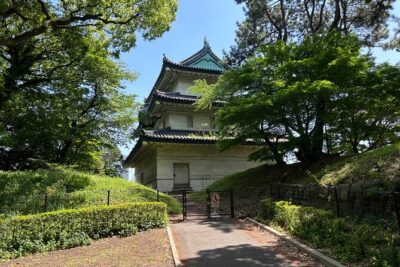
Imperial Palace and Shogun Historical Walking Tour
Read our review →
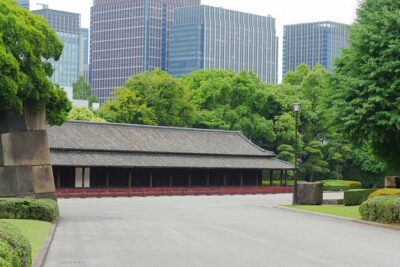
Imperial Palace East Garden and Edo Castle Walking Tour in Tokyo
Read our review →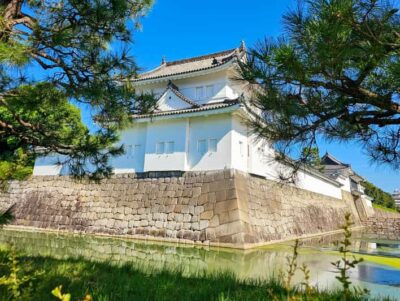
Imperial Palace & Nijo Castle Guided Walking Tour
Read our review →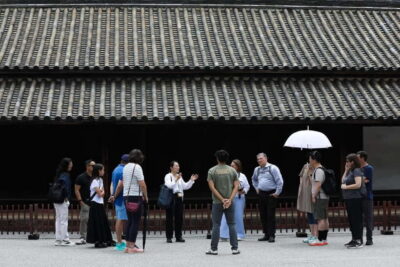
Imperial Palace, Sensō-ji Temple, & Tokyo Tower Tour
Read our review →
Tokyo Castle, Imperial Palace, Shogun & Garden Walking Tour
Read our review →
Edo Castle & East Garden of the Imperial Palace Tour
Read our review →Browse the lists this tour appears in