
Reviewed · IMPERIAL PALACE TOURS
Kyoto: Imperial Palace & Nijo Castle Guided Walking Tour
Kyoto’s political story comes into focus when you visit Nijo Castle and the Imperial Palace together. One was tied to the shogun, the military ruler who held power during the Edo period. The other was home to the emperor. Seeing both in one outing gives you a useful side-by-side look at Japan’s old power structure.
I like the small group size, capped at nine, and the choice of start times. I also like that the price includes Nijo Castle admission, including the Ninomaru-goten Palace and Painting Gallery. The main thing to consider is the walking: you cover two large sites, with no hotel pickup, meals, or transport included.
The guide can make or break a history tour, and this one has a strong record in that area. Jasmine, Raphael, Vincent, Taku, Cecilia, Alex, and other guides are praised for clear English, good pacing, cultural insight, and the ability to answer questions. Still, the Imperial Palace is mainly an outdoor visit, so visitors hoping to enter every palace building may feel shortchanged.
Key points to know before booking
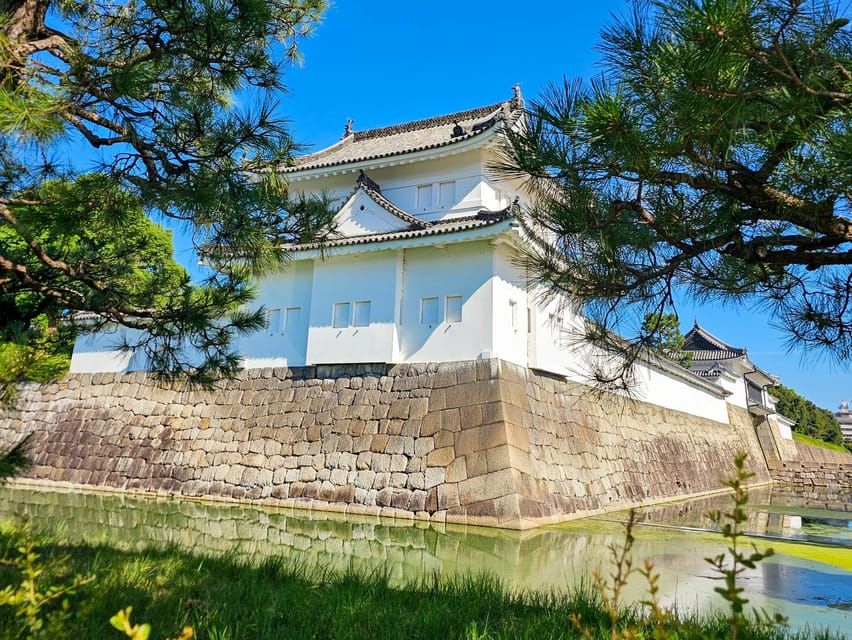
- Two power centers in one tour: Compare the shogun’s Nijo Castle with the emperor’s Kyoto residence.
- Ninomaru Palace is the castle highlight: The included visit covers the palace, garden, and Painting Gallery, not every part of the castle complex.
- Small groups help: With no more than nine participants, it is easier to hear the guide and ask questions.
- Plan for about three hours: Site guiding takes about two hours, with walking and the move between attractions filling out the schedule.
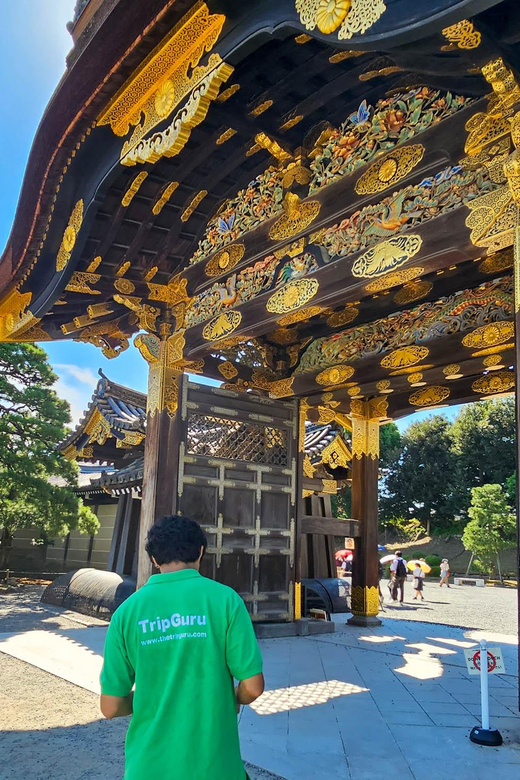
- Meet at Nijojo-mae Station: Your guide waits outside Exit 1 in a TripGuru shirt or with a TripGuru sign.
- Wear sensible clothes: Comfortable shoes, water in warm weather, and modest clothing for the palace grounds will make the outing easier.
Why these two sites belong on the same afternoon
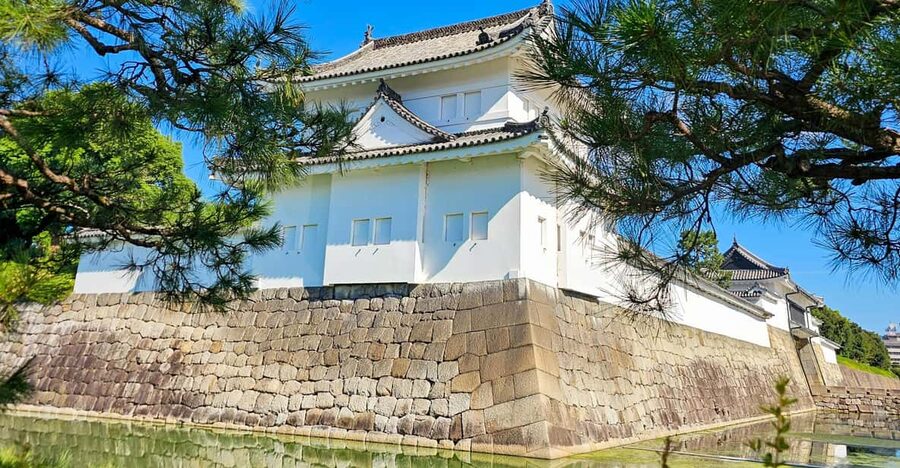
Kyoto was Japan’s imperial capital for more than a thousand years. That long role gives the city a special connection to the country’s court, ceremonies, architecture, and political life.
Nijo Castle adds a different viewpoint. It was connected to the shoguns, the military leaders who governed Japan for centuries. The castle’s buildings, gardens, decorative details, and interiors reveal how power was displayed and controlled outside the imperial court.
On your own, you can certainly walk through both places. The problem is that the meaning behind them is not always obvious. A guide can explain why one site feels like a military headquarters and the other like a formal court residence. That comparison is the real value of this tour.
The outing is also a practical choice if your Kyoto schedule is tight. It does not try to combine half the city in one day. Instead, it concentrates on two major historic places and gives you a clear theme: shogun and emperor.
More Imperial Palace visits:
- Kyoto Imperial Palace & Nijo Castle Guided Walking Tour – 3 Hours
★ 4.5 · 106 reviews - Kyoto: Nijo Castle and Kyoto Imperial Palace Guided Tour
★ 4.6 · 98 reviews - Nijo Castle and Imperial Palace Visit with Guide
★ 5.0 · 53 reviews
Starting at Nijojo-mae Station
You meet outside Exit 1 at Nijojo-mae Station. Your guide should be wearing a TripGuru shirt or holding a TripGuru sign, but you still need to arrive at least 10 minutes early.
This matters in Kyoto. A late arrival can mean a rushed start, and the guide waits no more than 10 minutes before moving on. Morning traffic can also take longer than navigation apps suggest, so leave extra time even if your route looks simple on a phone.
The meeting point is well chosen. Nijojo-mae Station puts you right beside the castle, so you begin at the first major sight rather than spending part of the paid tour getting there. Since hotel pickup is not included, you need to arrange your own route to the station.
The tour operates in small groups of up to nine people. That is large enough for a social outing but small enough for the guide to keep the group together and respond to questions. Several guides are praised for checking that everyone could hear, keeping a comfortable pace, and helping with photos.
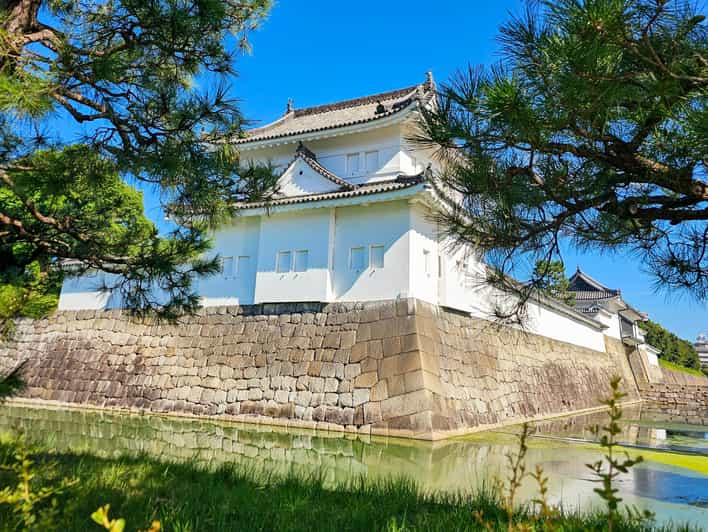
Nijo Castle: the shogun’s side of Kyoto
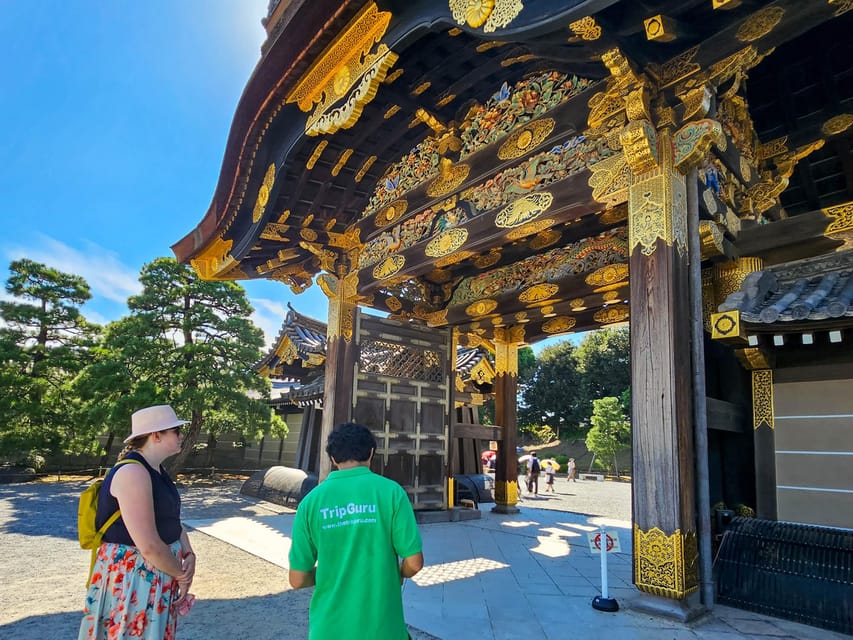
The first guided stop lasts about an hour. Nijo Castle is the more interior-focused part of the experience, with admission to the Ninomaru-goten Palace and Painting Gallery included.
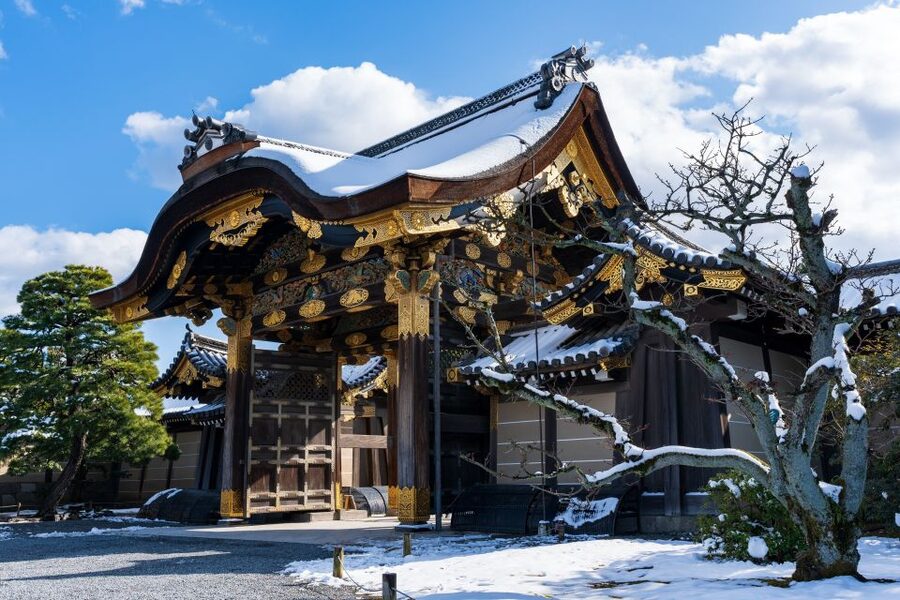
The castle is known for its feudal-era architecture, formal gardens, and carefully decorated rooms. The Ninomaru Palace is especially important because it gives you a closer look at the setting used by the shogun’s government. You are not simply looking at an impressive gate or wall. You are moving through rooms designed to express rank, ceremony, and control.
This is where a guide adds real value. A good explanation helps you read the building’s layout, decoration, and symbols. Jasmine, Raphael, Vincent, Taku, and other guides are praised for explaining details that are easy to miss during a self-guided walk. They also connect the rooms to Japanese customs, court behavior, and the larger story of the Edo period.
The Painting Gallery adds another layer. You can look at the artwork and interior details, while the guide gives context for what you are seeing. Without that background, a visitor may remember beautiful rooms but miss the reason certain designs were used.
The gardens provide a change of pace after the interiors. You get time to appreciate the relationship between architecture, stonework, plants, and open space. The tour is not only a history lecture. It also gives you time to look around and take photographs.
There is one important limit. The guide brings the group to Ninomaru-goten Palace and Garden, rather than covering every section of the castle. If you want a slow, complete exploration of the entire grounds, you may need extra time before or after the tour.
I would give Nijo Castle your closest attention if you are most interested in buildings and interiors. One participant found it more rewarding than the Imperial Palace, which is a fair personal judgment. The castle offers more obvious detail to inspect, especially inside the Ninomaru Palace.
Walking between the castle and palace
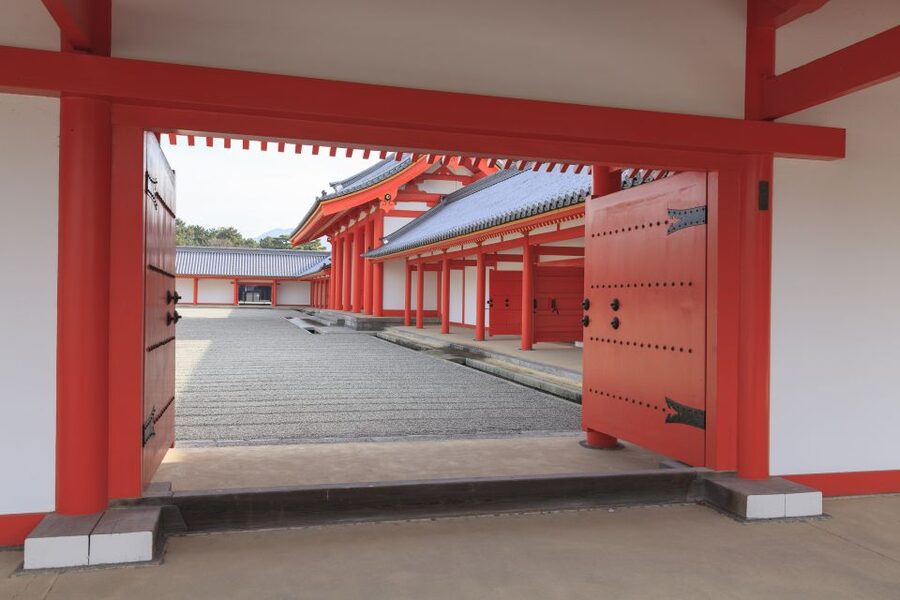
After Nijo Castle, the group continues toward Kyoto Imperial Palace. The tour is described as a walking experience, and transportation costs are not listed as part of the included package.
One important detail comes from the practical information: guides may assist with subway transfers, but you should not assume that every possible transport cost is included unless your booking details confirm it. The stated finish is Imadegawa Station, placing you near the Imperial Palace area at the end.
The move between the sites helps connect the two visits. You are not seeing two unrelated attractions. The guide can continue the historical thread while you shift from the shogun’s world to the emperor’s former residence.
You should wear comfortable shoes. This is not a short stroll with a few stops. You walk through large grounds, stand during explanations, and cover two substantial attractions. In summer, carry water and wear a hat. June can be very hot, and warm weather will make the open palace grounds feel longer.
More walking tours in Kyoto:
- Kyoto Geisha Walking Tour: Gion District & Hidden Gems
★ 4.7 · 3,273 reviews - Kyoto: Gion Magical Night Walking Tour with Geisha Trivia
★ 4.9 · 2,393 reviews - Kyoto: Gion Geisha District Walking Tour – Stories of Geisha
★ 4.7 · 2,187 reviews - Night Walk in Gion: Kyoto’s Geisha District
★ 4.5 · 2,003 reviews
Kyoto Imperial Palace: the emperor’s former residence
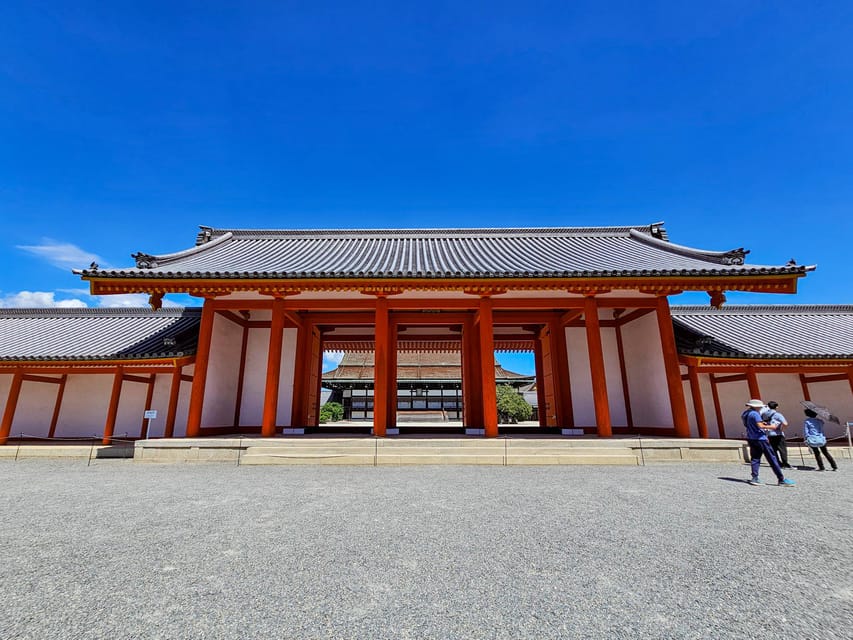
The second guided visit lasts about an hour. Here you learn about the former home of Japan’s imperial family and Kyoto’s long role as the imperial capital.
The palace grounds are impressive for their scale, formal design, and restrained architecture. Guides point out structures, gardens, and details that help explain how the imperial residence differed from Nijo Castle. This contrast is one of the strongest reasons to book the combined tour.
Do not expect the same kind of interior visit here. The experience focuses on the palace grounds, and you cannot assume access to all palace buildings. One participant felt there was less to see than at Nijo Castle and noted that much of the visit is outdoors. That is worth keeping in mind if indoor rooms are your main reason for booking.
Still, the palace works well as the second half of the tour. After seeing the shogun’s residence, you have a reference point. The guide can explain how imperial life, formal ceremony, and military rule fit into Japan’s past.
The guides receive especially strong praise for giving historical context rather than reciting dates. Alex is noted for connecting the sites with present-day Japanese culture. Jasmine is praised for explaining symbols and adding humor. Vincent is described as switching comfortably between political history and everyday cultural references. That kind of storytelling helps keep the palace from feeling like a series of empty courtyards.
The tour finishes at Imadegawa Station. This is useful because you can continue exploring the area or make your own way to your next Kyoto stop. It is not a hotel drop-off, so plan your onward route before the tour begins.
What the guide adds to the experience
The biggest reason to choose this tour instead of walking through the sites alone is the explanation. Kyoto’s historic buildings do not always explain themselves to first-time visitors.
The strongest guides appear to combine several skills:
- Clear historical storytelling: You learn how the emperor and shogun held different kinds of authority.
- Architecture and symbols: The guide can point out meanings in rooms, gardens, and decorative details.
- Cultural context: Several guides also discuss Japanese life, religion, customs, and modern culture.
- Question handling: Guides such as Raphael, Vincent, Taku, and Yuko are praised for answering detailed questions.
- Practical care: Some guides help with photos, make sure the whole group can hear, and offer ideas for other places to visit.
The actual guide is assigned by date and availability, so you cannot count on a particular person unless the operator confirms it. If a guide named in past feedback is available, names such as Jasmine, Raphael, Vincent, Taku, Cecilia, Alex, Kosuke, Naoki, and Kenta have been associated with especially strong explanations and friendly manner.
Language choices include English, French, and Spanish. The experience is led by a live guide, not an audio recording or printed route. That makes it easier to ask about a detail that catches your eye or adjust the conversation to your interests.
Three hours, two hours of site visits
The timing needs a little explanation. The advertised duration is three hours, while the two main guided visits are listed as about one hour each. The remaining time covers meeting up, walking between the sites, and moving through the entrances.
That is a sensible pace for most people. You get enough time to understand each location without giving up an entire day. One participant described three hours as the right amount of time to see both places, and I agree with that general assessment.
At the same time, this is not a leisurely photography session. If you like to stop at every garden corner, read every sign, or sit quietly in each setting, the group schedule may feel limiting. The guide needs to keep nine people moving and reach the final station on time.
Several guides are praised for covering a lot of ground while keeping the tour comfortable. That balance matters. A rushed tour can turn great monuments into a blur, while a slow one can leave you without enough time for the rest of Kyoto.
Start times vary, which is helpful for fitting the outing around a temple visit, lunch, or an evening reservation. Same-day booking may be possible, but you should still check availability rather than assume a place will be open.
Is $49 a fair price?
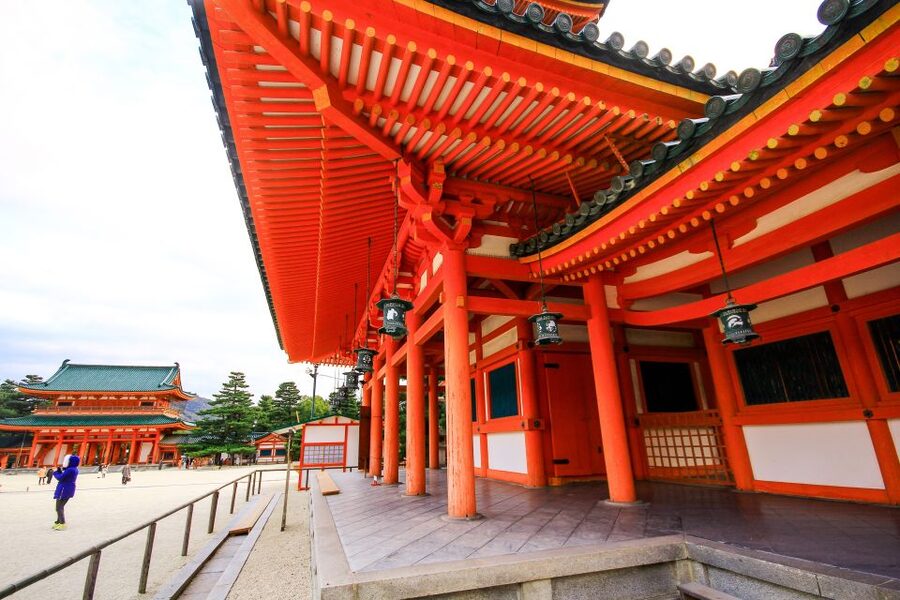
At $49 per person, the price is reasonable if you want context and convenience rather than only entry tickets.
The package includes an English-, French-, or Spanish-speaking guide, the walking tour, and Nijo Castle admission with the Ninomaru-goten Palace and Painting Gallery. Meals, drinks, personal spending, and hotel transfers are not included.
The value improves if you are new to Japanese history or have only a short time in Kyoto. You pay for a focused route, a small group, and a person who can explain why the sites matter. You also avoid spending your limited sightseeing time trying to work out the connection between them.
The value is weaker if you already know the history, prefer exploring alone, or want a complete visit to every corner of both complexes. You may prefer to buy entry separately and set your own pace.
Free cancellation up to 24 hours before the tour and reserve-now, pay-later booking make it easier to fit into a changing itinerary. Those policies do not replace checking the start time, meeting point, weather, and your energy level before committing.
Who should book this Kyoto walk?
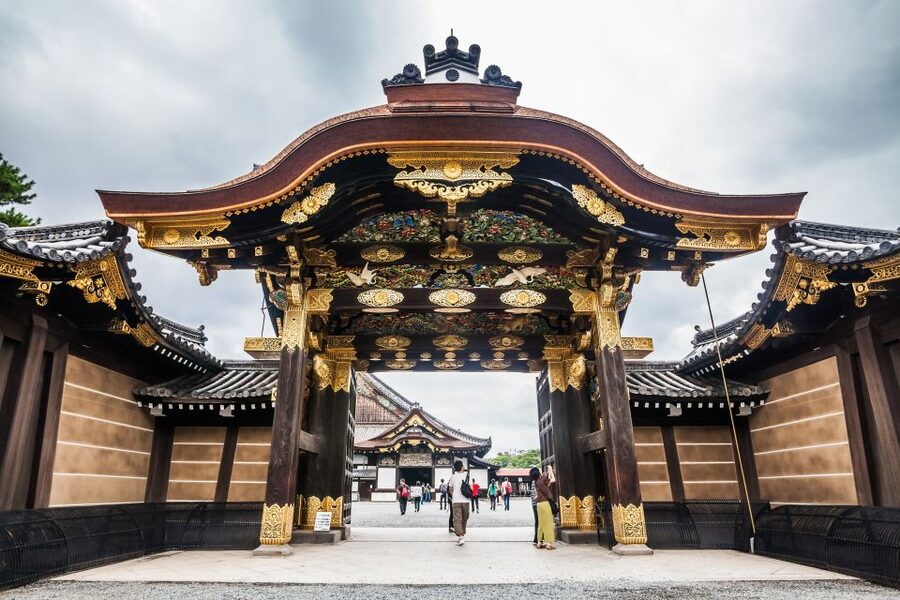
I would recommend this outing to first-time Kyoto visitors who want a clear introduction to the city’s political past. It also suits anyone who enjoys architecture, gardens, and stories about how power worked in old Japan.
It is a good match for:
- Couples or friends with only half a day available
- Solo visitors who prefer a small guided group
- Families with older children who can manage several hours of walking
- People who want to ask questions instead of relying on signs
- Visitors deciding between a self-guided visit and a structured route
I would think twice if you have limited mobility, heart problems, respiratory issues, or are pregnant, since the activity involves substantial walking and is not listed as suitable for those conditions. You should also reconsider it if hot weather is difficult for you.
Dress modestly for the palace grounds. Shorts or tank tops may be considered too casual or revealing. Comfortable shoes, a camera, and some cash are sensible items to carry.
Should you book the Imperial Palace and Nijo Castle tour?
Book it if you want two major Kyoto sights explained as one connected story. The best part is not simply entering Nijo Castle and walking around the palace grounds. It is understanding the contrast between the shogun’s residence and the emperor’s former home.
The $49 cost makes sense for a short schedule, especially with admission and a small group included. Choose it with realistic expectations: Nijo Castle offers the stronger interior experience, the Imperial Palace is mainly an outdoor visit, and the three hours include walking.
If you prefer independent wandering, need a slower pace, or want to inspect every corner, go on your own. For most first-time visitors who want history, architecture, and efficient sightseeing without giving up a full day, this is a smart Kyoto introduction.
FAQ
How long does the Kyoto Imperial Palace and Nijo Castle tour last?
The advertised duration is three hours. The guided visits at Nijo Castle and Kyoto Imperial Palace each last about one hour, with walking and transitions between the sites making up the remaining time.
Where does the tour begin?
The meeting point is outside Exit 1 of Nijojo-mae Station, beside Nijo Castle. Your guide will wear a TripGuru shirt or hold a TripGuru sign.
Where does the tour finish?
The tour finishes at Imadegawa Station after the visit to Kyoto Imperial Palace.
What is included in the $49 price?
The price includes a live English-, French-, or Spanish-speaking guide, the walking tour, and entrance fees for Nijo Castle, including the Ninomaru-goten Palace and Painting Gallery.
Does the tour include hotel pickup or meals?
No. Hotel pickup and drop-off, meals, drinks, and personal expenses are not included.
Can I book the tour on the same day?
Same-day reservations may be accepted, subject to availability. The activity also offers several start times, so check the available schedule before booking.
Is the tour suitable for people with mobility limitations?
The activity is not suitable for people with mobility impairments, pregnant women, or people with heart or respiratory issues. It involves walking through two large historic sites.
Just added around Kyoto
- Kyoto: Zen Meditation at a Private Temple with a Monk★ 5.0 · 25 reviews
- Kyoto: Gion Geisha District & Sake-in-Hand Walking Tour★ 5.0 · 37 reviews
- Private Pewter Sake Cup Experience with a Kyoto Artisan★ 5.0 · 31 reviews
- Your Private Vacation Photography Session In Kyoto★ 5.0 · 110 reviews
- Private Guided Traditional Buddhist Cooking in Japan★ 5.0 · 16 reviews
- Kyoto Wagashi(Japanese sweets) Cooking Class near Fushimiinari★ 5.0 · 60 reviews
- Traditional Japanese Music show & Experience Tour in Kyoto★ 5.0 · 57 reviews
- Kyoto:Family-Friendly Kimono & Yukata Experience at WARGO★ 5.0 · 147 reviews
Imperial Palace Tours, compared.
Imperial Palace and Shogun Historical Walking Tour
Read our review →

Imperial Palace East Garden and Edo Castle Walking Tour in Tokyo
Read our review →
Imperial Palace, Sensō-ji Temple, & Tokyo Tower Tour
Read our review →
Tokyo Castle, Imperial Palace, Shogun & Garden Walking Tour
Read our review →
Edo Castle & East Garden of the Imperial Palace Tour
Read our review →Browse the lists this tour appears in