
Reviewed · IMPERIAL PALACE TOURS
Tokyo: Edo Castle & East Garden of the Imperial Palace Tour
The most rewarding part of this tour is seeing modern Tokyo give way to the former stronghold of the shoguns. Inside the Imperial Palace East Gardens, broad paths, old stone walls, foundations, gates, ponds, and clipped greenery help you picture Edo Castle as the political center of Japan.
I like two things in particular: the guide turns bare ruins into a readable story, and the two-hour pace leaves time to stop for photographs and questions. The special koi fish are a fun detail to watch for, too. The main drawback is simple: you do not enter the Inner Palace, and the garden itself is free to visit, so you are paying for interpretation rather than admission.
The garden is closed on Mondays and Fridays. You also pass through a baggage inspection, so leave newly purchased Japanese knives or similar items in a coin locker before meeting the guide.
Key points to know before booking
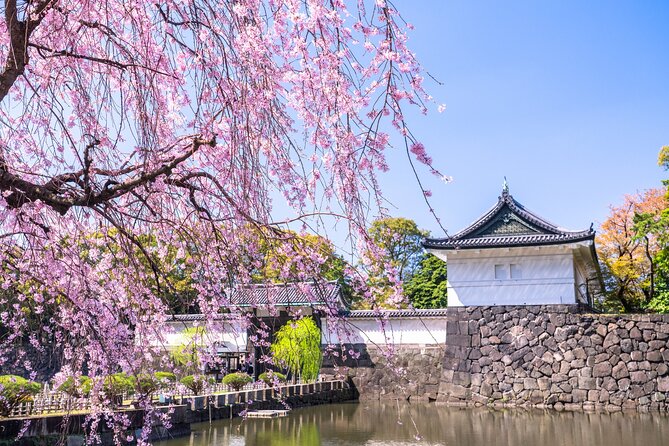
- Walk through former Edo Castle grounds: See surviving walls, foundations, entrances, and other traces of the shogun’s castle.
- English-speaking local guide: Guides including Hitoshi, Naoko, Shigeru, Masahito, Mikio, and Hirashima have led engaging tours with history, culture, photographs, and visual aids.
- Two hours at an easy pace: The route is designed for conversation and sightseeing rather than a rushed march between landmarks.
- The Inner Palace is off limits: This experience covers the East Gardens only, not the private palace buildings.
- Watch for the unusual koi: The fish are presented as a special feature of the garden and add a playful moment to the historical walk.
- Plan around closing days: The East Gardens are closed every Monday and Friday.
Meeting at Wadakura Fountain Park
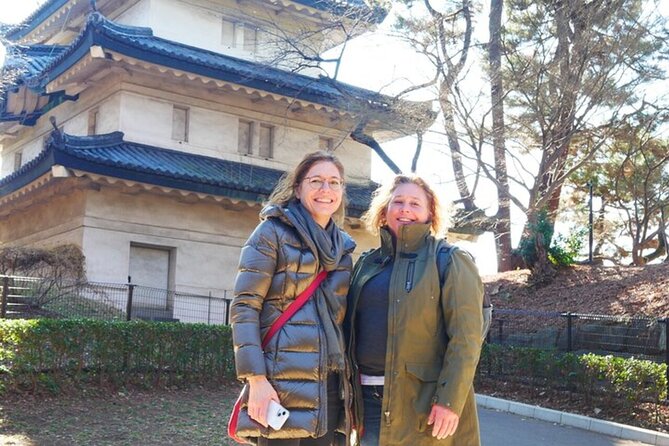
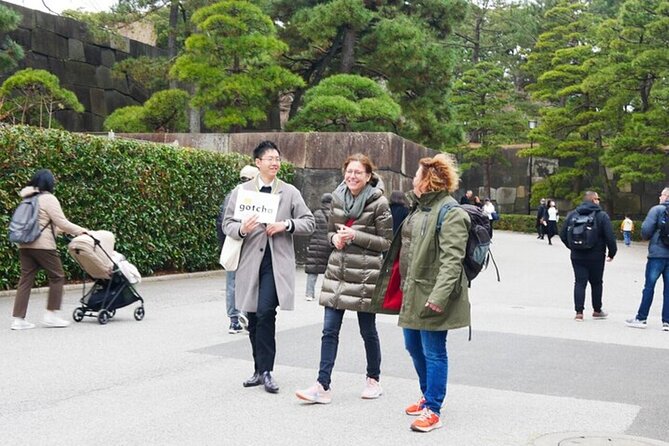
Your guide meets you in front of the fountain at Wadakura Fountain Park. Look for the guide holding a sign marked Gotcha. This is a useful meeting point because the fountain park provides an obvious landmark in a large central Tokyo area.
Give yourself enough time to find the fountain. The tour begins outdoors, and a clear meeting point matters in Tokyo, where large stations and office districts can make a short walk feel longer than expected.
Once the group is together, the walk heads toward the East Gardens. The tour returns to Wadakura Fountain Park after about two hours, so you finish where you began rather than being left to work out a new destination on your own.
More Imperial Palace visits:
- Tokyo: Imperial Palace and Shogun Historical Walking Tour
★ 5.0 · 2,251 reviews - Tokyo: Imperial Palace Japanese History Walking Tour
★ 4.9 · 987 reviews - Tokyo: Imperial Palace and Shogun Walking Tour
★ 4.9 · 935 reviews
What you actually see inside the East Gardens
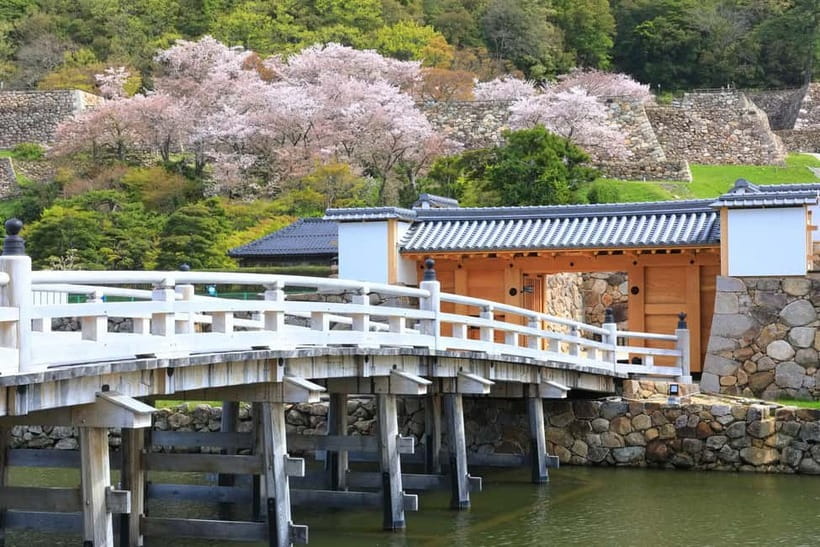
The East Gardens occupy part of the old Edo Castle grounds. That setting gives the tour its real force. You are not simply walking through a pleasant public garden. You are walking across the former center of shogun power, where the military government directed Japan for centuries.
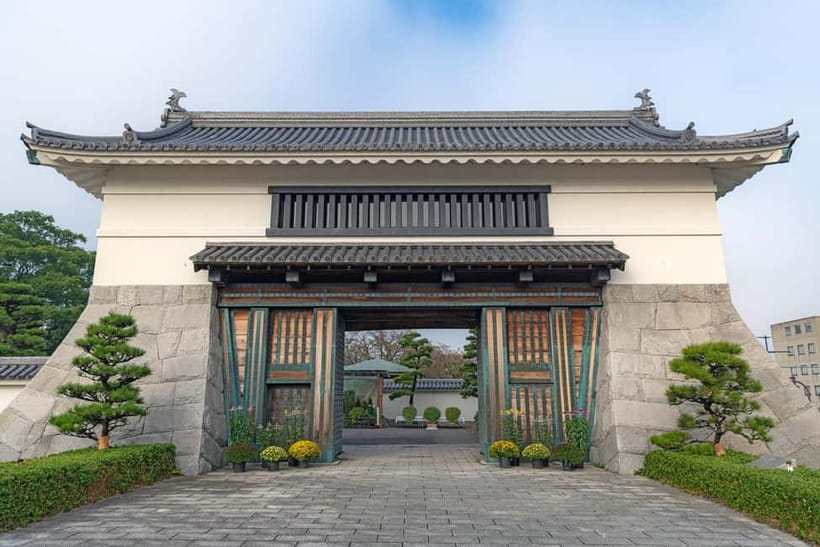
The remains are not a complete castle complex. Much of Edo Castle no longer exists, and that can surprise anyone expecting grand palace rooms or a restored fortress. You will instead encounter traces such as stone walls, old building foundations, entrances, and other structural remains.
This is where a guide earns the $42 price. Without explanation, a foundation can look like a low stone platform and a wall can look like just another old wall. With context, those same features help you understand the scale and organization of the castle grounds.
Guides have used photographs and other visual material to show how the site looked in earlier periods. That is especially useful because there is not always a large building in front of you to explain the past. You get a before-and-after picture, then connect it with what remains under your feet.
Shoguns, emperors, and the story behind the stones
The tour links the Edo period with the Imperial Palace today. That historical bridge is more useful than a list of dates. You learn how the site shifted from the seat of shogun government to part of the modern imperial center.
Hitoshi, Shigeru, Masahito, Mikio, Naoko, Ayako, and other guides have been praised for explaining Japanese history in clear English. Their strongest contribution is the ability to place the garden in a wider story, including shoguns, daimyo, ninjas, emperors, the imperial family, Japanese customs, and the design of the grounds.
You should expect interpretation rather than a formal lecture. The pace is leisurely, with stops for questions and small details. Several guides have also used simple visual explanations, which can help children and anyone who finds Japanese political history difficult to sort out.
I especially like this format for a first visit to Japan. The guide can explain basic historical terms before you get among the ruins, then return to those ideas as you see the castle site. That makes the tour easier to follow than trying to absorb a long explanation all at once.
The garden is more than a backdrop
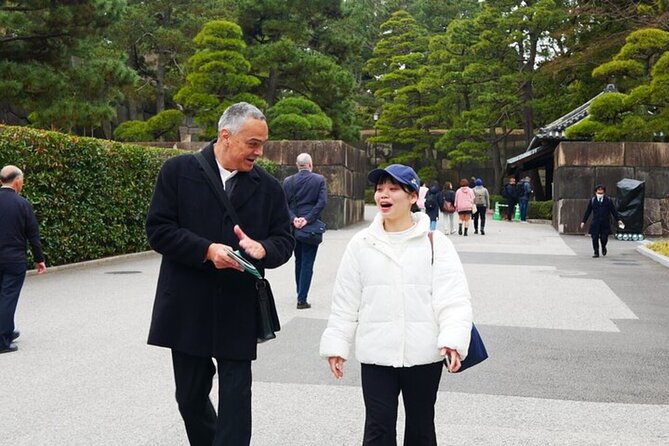
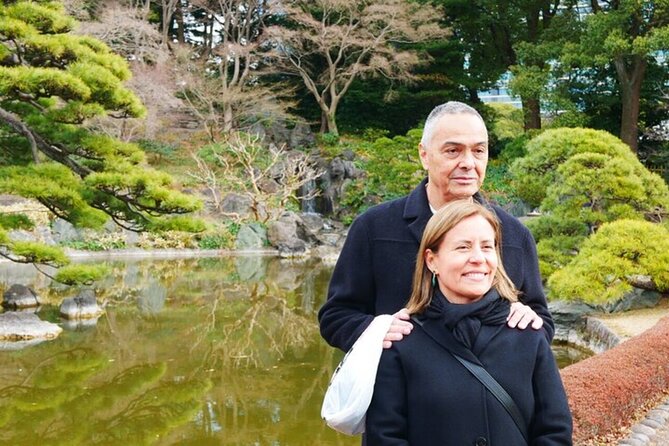
The East Gardens combine historic remains with carefully maintained planting, ponds, open lawns, trees, and seasonal color. The garden offers a calm break from Tokyo’s traffic and concrete, but it is not disconnected from the city. You remain close to the capital’s modern business districts while walking through a place shaped by older power.
Pay attention to the way the garden works around the ruins. Stone, water, trees, and open spaces create a setting that feels deliberate rather than decorative. Guides explain the significance of plants and garden features, helping you notice details you could easily pass without a second thought.
The garden can be especially pleasant when you want a slower morning or afternoon. One visitor described the walk as slow paced, and that is a fair way to picture it. You are not being pushed from one stop to the next. You have time to listen, look, and take pictures.
The weather matters. Rain has not prevented people from enjoying the tour, but wet paths and gray skies can make the garden less comfortable. Bring suitable clothing and shoes, since this is a walking experience rather than a museum visit.
A few more Tokyo half-days to weigh up
- Mt Fuji and Hakone 1-Day Bus Tour Return by Bullet Train
★ 5.0 · 26,383 reviews - 1-Day Tokyo Bus Tour
★ 5.0 · 14,250 reviews - Tokyo: TOKYO SKYTREE® Admission ticket
★ 4.5 · 11,192 reviews - Tokyo: teamLab Planets TOKYO Digital Art Museum Entry Ticket
★ 4.6 · 9,779 reviews
Keep an eye out for the special koi
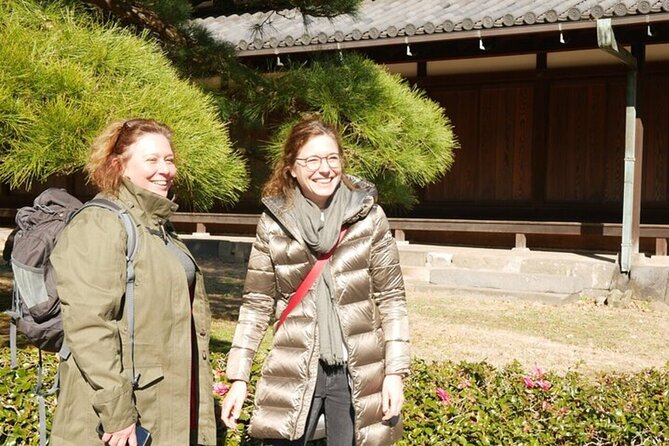
The tour highlights a one-of-a-kind magical breed of koi fish. The description is playful, but the fish provide a memorable change of pace after the castle history and political discussion.
You will want to listen for the guide’s explanation rather than treating the koi as a random pond feature. This is one of the small details that can make a guided walk feel personal. It gives you something specific to seek out and a lighter moment amid stories of shoguns and palace life.
The koi are not a reason to book the tour by themselves. The main value comes from the combination of castle history, garden design, and cultural context. Still, families and children may appreciate having a living feature to look for during a history-focused walk.
How the two-hour pace works for different groups
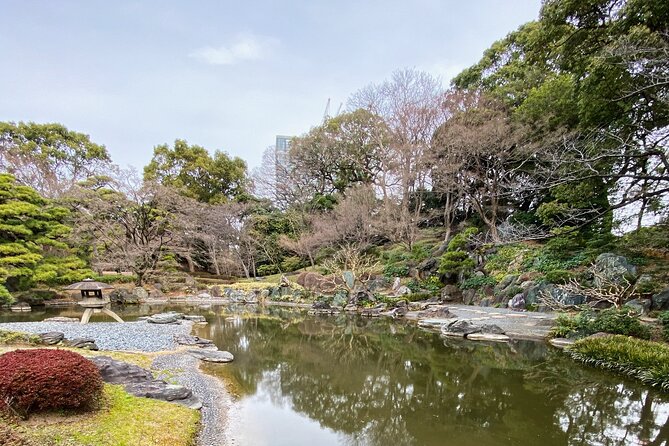
Two hours is long enough to cover the main parts of the East Gardens without turning the outing into an exhausting half-day commitment. It also fits neatly before lunch, a museum visit, or another Tokyo activity.
The guides have adapted the pace for older people, children, and people who need more time. Some tours included frequent pauses, and Hitoshi received particular praise for taking care of a guest who used a wheelchair. Mikio was also noted for allowing extra time and responding to requests for slower walking.
That does not mean you should assume every route or surface will suit every mobility need. The information confirms thoughtful assistance from individual guides, but it does not promise a fully accessible route for every condition. If mobility is important for your booking, raise your needs in advance.
Families can make good use of this tour, especially if children enjoy stories, pictures, or unusual details. A nine-year-old was able to follow and benefit from one guide’s explanation. The relaxed structure also gives you a better chance to ask questions than a large, tightly timed sightseeing program.
The guides make the largest difference
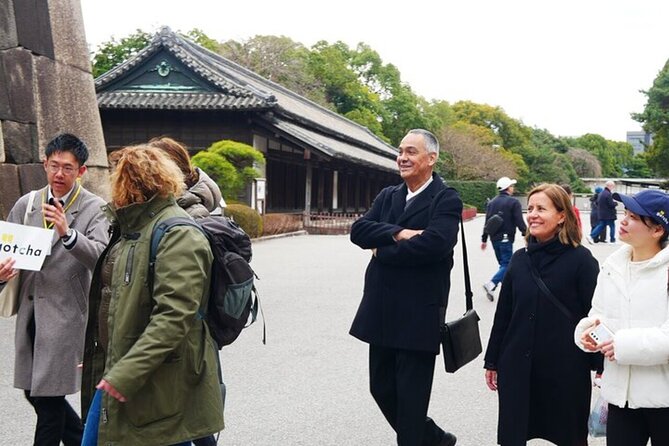
The guide is the heart of this experience. The garden is open to the public, and you can walk through it without paying for a tour. You book this experience to understand what you are seeing and to connect the site with Japanese history and culture.
Hitoshi has been praised for clear English, patient answers, and careful attention to the group. Shigeru has provided broad historical introductions, helped with photographs, and even guided people toward the subway after the walk. Naoko has used pictures and visual explanations and has been especially patient with groups of older people.
Masahito has been described as friendly, well prepared, and good humored. He has also taken time to point out nearby cherry blossoms when conditions allowed. Mikio has brought earlier views of the site to life and adjusted the pace for small groups.
Other guides, including Hirashima, Yoshikawa, Ayako, Mari, Miho, and Yuyu, have also led highly praised walks. You cannot choose the exact guide from the information provided, so book this for the guiding format rather than expecting one particular person.
The strongest pattern is clear English and a willingness to answer questions. That matters here because the site’s physical remains are impressive but not self-explanatory. A good guide supplies the missing connection between stone, space, and story.
Is $42 a fair price?
At $42 per person, this tour is not the cheapest way to enter the East Gardens. The garden itself is free, which means your entire payment covers the guide and the organized walking experience.
I would call the price fair for people who want historical context, but less attractive for independent sightseers who are happy to read signs and wander alone. The value improves if you are visiting Tokyo for the first time, have limited time, or want to understand the shogun and imperial stories without doing your own research.
One person reasonably questioned the cost when compared with a full-day trip to Nikko or Mount Fuji. That comparison is worth keeping in mind. This is a compact central Tokyo activity, not a major day excursion with extensive transport and multiple sights.
The tour makes the most sense when you value your time. For $42, you get two hours with an English-speaking guide, a structured route, answers to questions, historical visuals, and help connecting the gardens to Japanese culture. You do not get entry to the Inner Palace or a full-day sightseeing program.
Practical details that can affect your visit
The East Gardens are closed on Mondays and Fridays. Check the available starting times carefully and avoid building your schedule around a garden visit on either closing day.
You cannot go inside the Imperial Palace during this tour. The experience covers the East Gardens on the former Edo Castle grounds, which is a substantial and worthwhile area, but it is not an interior palace tour.
Expect a baggage inspection when entering the palace grounds. If you have bought a Japanese knife or another item that could be treated as a weapon at Tsukiji, Asakusa, or elsewhere, place it in a coin locker before meeting the guide.
The tour is offered in English with a live guide. Free cancellation is available up to 24 hours before the start for a full refund, and you can reserve now and pay later. Those policies are useful if your Tokyo plans are still shifting.
Wear shoes suited to two hours of walking and bring protection from rain or strong sun. That is ordinary advice, but it matters more in a garden than it does in a train station or indoor museum.
Who should book this walk?
I would recommend it to you if you want a gentle introduction to Japanese history, prefer conversation to audio commentary, or like having someone point out details that are easy to miss. It is also a strong choice for older groups, families, and anyone who wants a flexible pace.
Book it early in your Tokyo stay if you can. The guide’s explanation can give later visits to other castles, temples, and historic districts more meaning, since you will have a clearer idea of how shogun and imperial history fit together.
You may want to skip it if you only want to see the Imperial Palace interior, since that is not included. I would also skip the paid tour if you are comfortable exploring a free garden on your own and already know the basic history of Edo Castle.
FAQ
How long does the Tokyo Edo Castle and East Garden tour last?
The guided walk lasts two hours. It begins and ends at Wadakura Fountain Park.
Where do I meet the guide?
Meet in front of the fountain at Wadakura Fountain Park. The guide will hold a sign that says Gotcha.
What language is the tour offered in?
The tour is conducted in English with a live guide.
Can I enter the Inner Palace?
No. The tour does not go inside the Imperial Palace or the Inner Palace. It visits the East Gardens on the former grounds of Edo Castle.
Is the East Garden open every day?
No. The East Gardens are closed on Mondays and Fridays.
Is admission to the garden included?
The tour includes the guide and the walking tour. The garden is free to enter, so the $42 price pays for the guided experience rather than a separate admission ticket.
Is there a baggage inspection?
Yes. Visitors are subject to a baggage inspection when entering the Imperial Palace grounds.
What should I do with a Japanese knife bought before the tour?
Leave it in a coin locker or similar secure storage before the meeting if you have bought a Japanese knife or another item that could be used as a weapon.
Should you book it?
Book this tour if you want the East Gardens to tell you a story, not just provide a pleasant walk. The old castle foundations and walls are far more meaningful when a guide explains what stood there, how the shoguns used the site, and how the imperial setting developed.
At $42, it is a guide-led history experience in a free public garden, so the choice comes down to how much context you want. For a first Tokyo visit, an easy two-hour outing, or a group that values patient English explanations, I think it is a worthwhile booking. Just schedule it on a day other than Monday or Friday, leave restricted purchases in storage, and remember that the Inner Palace is not part of the route.
Just added around Tokyo
- Private Arrival Transfer : Narita International Airport to Central Tokyo City★ 4.5 · 12 reviews
- Narita Airport(NRT): Private Transfer to Tokyo/Yokohama 1-9pax★ 5.0 · 47 reviews
- Private Transfer from Narita Airport to Yokohama Port and City★ 4.5 · 17 reviews
- [Narita Airport Terminals 1, 2] 40-60km Sawara Itako Historic Bike Tour★ 5.0 · 13 reviews
- 3 Day Japan Highlights Tour: Tokyo, Mt.Fuji, Nara, Kyoto, Osaka★ 5.0 · 22 reviews
- Small Town in the Big City: Tasting Tokyo’s Kichijoji★ 5.0 · 195 reviews
- Small Town in the Big City: Tasting Tokyo’s Kichijoji★ 5.0 · 16 reviews
- The 10 Tastings of Tokyo With Locals: Private Street Food Tour★ 5.0 · 48 reviews
Imperial Palace Tours, compared.
Imperial Palace and Shogun Historical Walking Tour
Read our review →

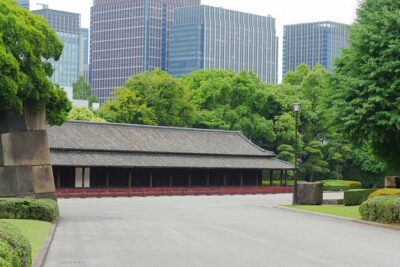
Imperial Palace East Garden and Edo Castle Walking Tour in Tokyo
Read our review →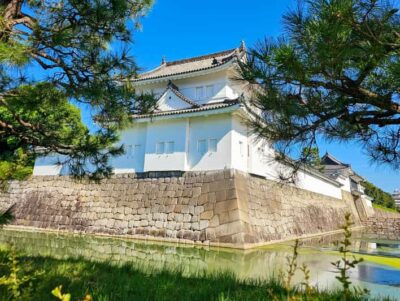
Imperial Palace & Nijo Castle Guided Walking Tour
Read our review →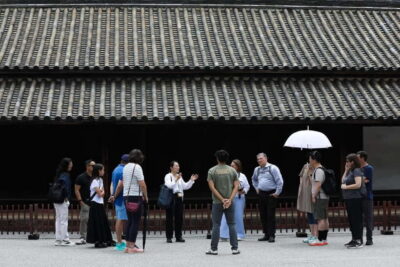
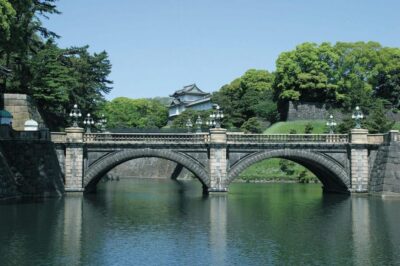
Imperial Palace, Sensō-ji Temple, & Tokyo Tower Tour
Read our review →
Tokyo Castle, Imperial Palace, Shogun & Garden Walking Tour
Read our review →Browse the lists this tour appears in