
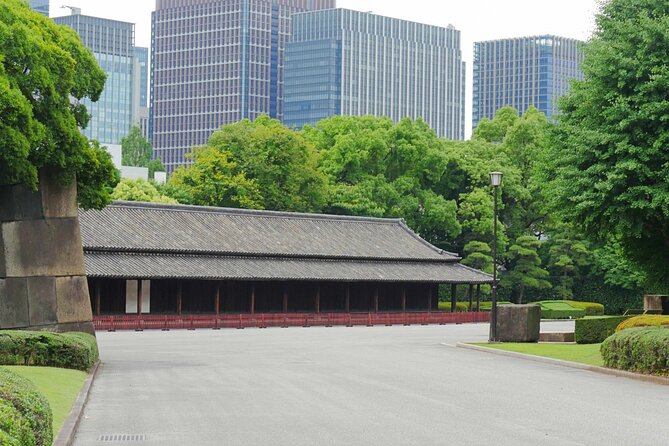
Reviewed · IMPERIAL PALACE TOURS
Imperial Palace East Garden and Edo Castle Walking Tour in Tokyo
The best part of this Tokyo walk is the way it links Edo Castle’s samurai past with the modern Imperial Palace grounds. You follow old castle sites, gardens, ponds, and stone remains while your guide explains how the shoguns, emperors, and royal family fit into Japan’s story.
I like the small group of no more than 12, which makes it easier to hear and ask questions. I also like the guides’ practical style: Kenta uses visual pages to explain the past, while guides such as Glenda, Miko, Sato, and Kei have been praised for clear English, humor, and thoughtful pacing.
The main drawback is simple: this is a grounds tour, not a palace interior visit. Some people find the gardens peaceful and beautiful, while others may think the scenery is less dramatic than expected. Also, plan for the full two and a half hours, not a quick one-hour stroll.
Key points to know before you book
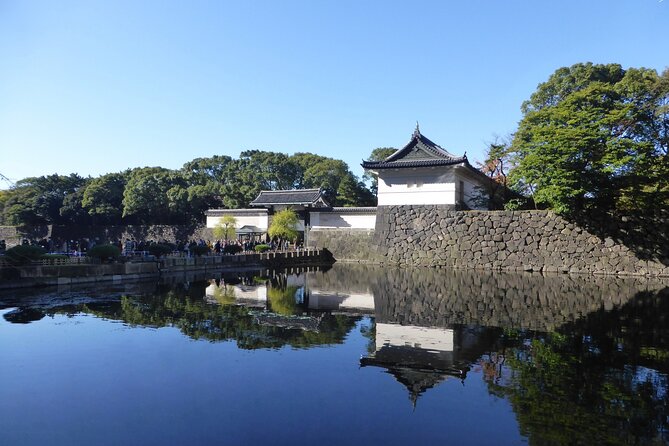
- Edo Castle ruins give the tour its historical focus, with explanations of the former castle tower, samurai life, shoguns, and the Imperial family.
- Wadakura Fountain Park is the meeting point and first stop, with free admission and a calm introduction to the palace district.
- The Imperial Palace buildings are not entered, since the public does not have access to them on this experience.
- The group is capped at 12 people, though some sessions may be smaller and more intimate.
- The walk includes hills and uneven outdoor paths, but one detailed account described the route as having no stairs.
- The $25 price pays mainly for interpretation and company, since entry to both stops is free.
Why Edo Castle makes this more than a garden walk
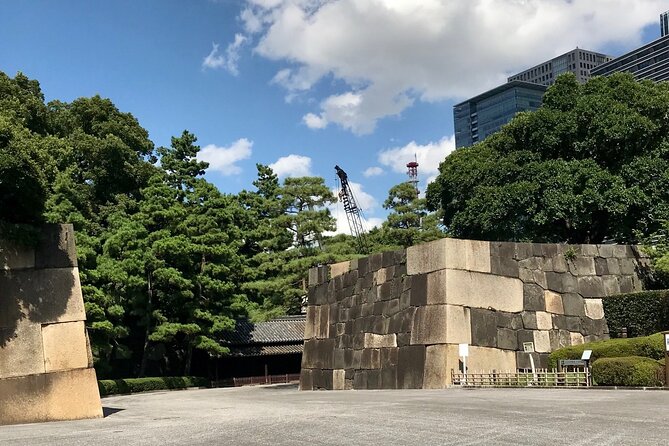
Tokyo’s Imperial Palace can be hard to understand on your own. You see broad open spaces, gates, walls, trees, and carefully kept gardens, but the original castle buildings are largely gone. Without context, the setting can feel more like a pleasant public park than the center of Japan’s political power.
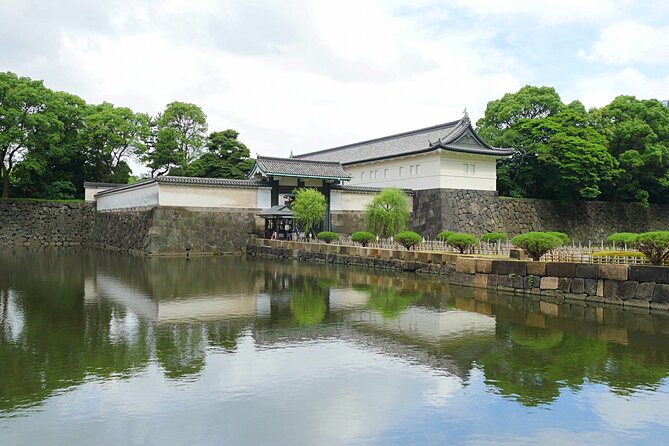
A good guide changes that. The walk explains that the East Gardens occupy part of the old Edo Castle grounds, once tied to the shoguns who ruled Japan before the modern imperial era. You hear about samurai, the Edo period, castle life, the former tower, and the later role of the emperor and royal family.
That historical bridge is the real reason to book. You are not simply looking at flowers and stone walls. You are learning how power shifted from the shogun to the emperor, and how an old military stronghold became part of today’s Imperial Palace grounds.
The guides bring different strengths. Kenta has been praised for his energy, humor, clear explanations, and visual materials. Miko uses photographs to show what the gardens, castle grounds, and former tower may have looked like. Glenda is noted for explaining the emperors, shoguns, samurai, and gardens in careful, easy-to-follow English.
You should not expect a lecture. The best accounts describe a friendly walk with time for questions and a useful amount of cultural background. That makes this a good first activity in Tokyo if you want a broad introduction before visiting other historic sites.
More Imperial Palace visits:
- Tokyo: Imperial Palace and Shogun Historical Walking Tour
★ 5.0 · 2,251 reviews - Tokyo: Imperial Palace Japanese History Walking Tour
★ 4.9 · 987 reviews - Tokyo: Imperial Palace and Shogun Walking Tour
★ 4.9 · 935 reviews
Starting at Wadakura Fountain Park
The meeting point is the Starbucks Coffee at Wadakura Fountain Park, 3-1 Kōkyogaien, Chiyoda City. This gives you a practical landmark near the Imperial Palace rather than sending you to a vague gate or open plaza.
Wadakura Fountain Park is worth a short look before the main walk begins. Its fountains and formal design create a quiet pause beside the busy center of Tokyo. The park was first built in 1961 to mark the wedding of Emperor Akihito and Empress Michiko. It was redesigned and reopened in 1995 for the wedding of Crown Prince Naruhito and Crown Princess Masako.
The stop lasts about 30 minutes, and admission is free. That time is long enough for your guide to introduce the area, explain the park’s royal connections, and help the group get organized before entering the East Gardens.
Do not expect a major attraction in the style of a temple or museum. The fountain park is more of a graceful starting point. Its value comes from its setting and its connection to Japan’s modern royal family.
Walking through the East Gardens
The East Gardens take up most of the experience, with about two hours on foot. They offer a mix of planted gardens, ponds, castle walls, open spaces, and historic remains.
The Ninomaru Garden provides the more traditional Japanese scenery. You may see carefully shaped plantings, water, and quiet paths rather than grand buildings. The gardens can be especially pleasant during spring cherry blossom season and autumn foliage, though seasonal conditions vary.
One useful warning: this is not always a flower-filled garden. An October visit described plenty of greenery and neat plantings but no fall colors or flowers in bloom. If you are booking mainly for seasonal color, keep your expectations flexible. The East Gardens are attractive, but their appeal is often calm design and historical setting rather than constant floral display.
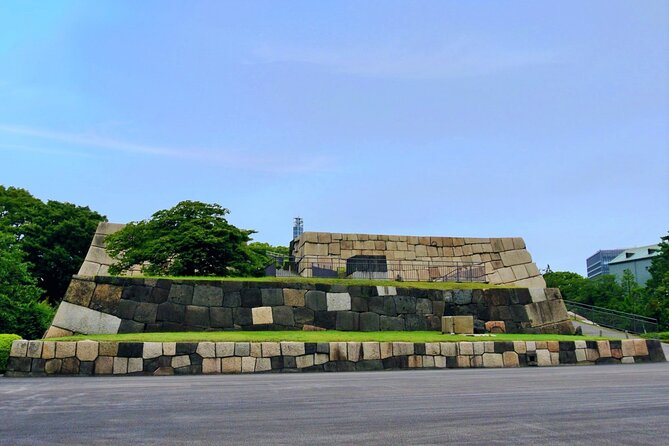
The Honmaru area and castle ruins supply the stronger historical material. Your guide points out surviving sections, explains the former castle tower site, and helps you picture the scale and purpose of Edo Castle. A walk that might seem plain at first becomes easier to read once you know what each wall, rise, or open area once meant.
There are some hills and steep paths. One account described the route as an easy walk with hills but no stairs, while another advised preparing for steeper sections. That makes comfortable shoes important. The route is not presented as a difficult hike, but you should still allow for steady walking over outdoor ground.
The grounds are open and spacious, so weather matters. A guide named Kaz kept a good pace in the rain, and Kei adjusted the route and used more sheltered locations during another wet outing. Still, bring weather protection and understand that the activity requires good weather. If poor conditions cancel it, you are offered another date or a full refund.
What the guide adds to the scenery
At $25 per person, you are not paying for admission. Both listed stops have free entry. You are paying for someone to explain what you are seeing, keep the walk moving, and answer questions.
That is a fair price if you care about context. Edo Castle is not an intact palace with rooms, furniture, and a clear route through the building. Much of the story must be reconstructed from ruins and open grounds. A guide supplies the missing information.
The strongest guide comments focus on four traits: clear English, accurate historical detail, a friendly manner, and an ability to make the subject entertaining. Kenta is described as funny and energetic. Sato is praised for giving the right amount of information and responding to questions. Miki and Miyu are noted for being kind and well-informed. Kei is described as caring and attentive, especially in bad weather.
The small group also helps. With a maximum of 12 people, you are less likely to be lost at the back of a large crowd. A group of 10 or fewer can feel especially personal. You may make a few acquaintances during the walk, but the exact group size depends on the date.
The guide quality appears to be the biggest variable in the experience, as it is with any walking tour. The available guide names include Kenta, Sato, Kei, Glenda, Miko, Miki, Kaz, Satoko, and Miyu. You may not be able to choose a particular guide, so book this for the structure and subject rather than a promise of one specific person.
More walking tours in Tokyo:
- Tokyo Tsukiji Fish Market Food and Culture Walking Tour
★ 5.0 · 3,184 reviews - Tokyo: Shinjuku Local Bar and Izakaya Guided Walking Tour
★ 4.9 · 1,794 reviews - Tokyo: Tsukiji Fish Market Food and Walking tour
★ 5.0 · 1,724 reviews - Tokyo: Asakusa Walking Tour with Sensoji Temple Visit
★ 4.8 · 1,583 reviews
What you will not see inside the palace
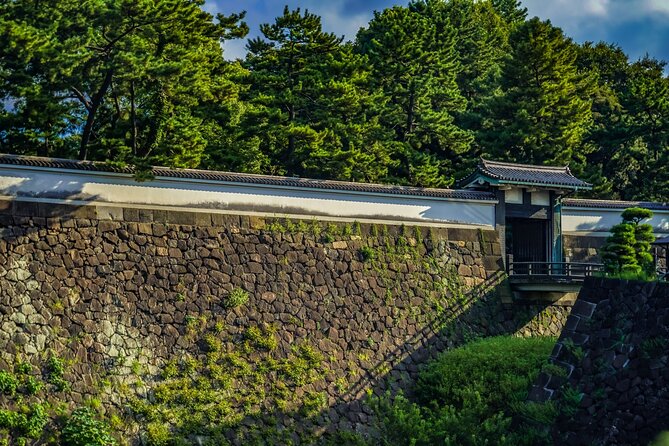
Set your expectations carefully. This experience does not enter the Imperial Palace buildings. Public access to the palace interiors is not permitted as part of this tour.
You can still see the surrounding grounds and East Gardens, along with historic ruins and photo points. But if you want ornate interiors, royal rooms, or an indoor museum, this is not the right choice.
This limitation explains the mixed reaction the experience can produce. People who enjoy history, gardens, and outdoor walking tend to find plenty to appreciate. People expecting a grand palace tour may feel let down, especially if they were picturing a European-style royal residence with rooms open to the public.
I would treat the name Edo Castle Walking Tour as the more useful promise. The castle is mainly experienced through its former site, walls, foundations, garden areas, and the stories attached to them.
Timing, meeting point, and walking comfort
The advertised duration is about two hours and 30 minutes. Take that seriously when arranging your Tokyo day. One session ran close to the full two and a half hours, and the longer format caused problems for someone who had planned another activity soon afterward.
The tour begins and ends at the Starbucks Coffee by Wadakura Fountain Park. Since the return is to the meeting point, you should not count on finishing near a different station or attraction.
Wear comfortable shoes. You will be outside for most of the experience, and the route includes hills. There are no snacks included, so eat beforehand or carry something suitable if you need food during a two-and-a-half-hour walk.
Most people can take part, and service animals are allowed. The information describes the activity as near public transportation. A guide also helped obtain a wheelchair for a person who became tired and dizzy, which suggests a caring response when an unexpected need arises. Still, the route’s hills and outdoor surfaces mean you should consider your own mobility before booking.
Who will get the most from this $25 tour
This tour suits a first visit to Tokyo, especially if you want a clear introduction to the city’s political and royal history. It also works well for families, since the guides use stories, humor, images, and questions rather than relying only on formal explanations.
You will likely enjoy it if you:
- Want to understand the difference between the shogun’s Edo Castle and the modern Imperial Palace
- Prefer outdoor sights to museums
- Like asking questions during a small-group walk
- Have a morning or afternoon available for the full 2.5 hours
- Are comfortable walking on paths that may include hills
- Value a guide more than included attractions or food
You may want to skip it if your main goal is to enter palace buildings, see lavish interiors, or spend your time among large displays of flowers. The gardens can be serene and attractive, but they are not always at their most colorful.
The experience also suits visitors who like a gentle start to sightseeing. Wadakura Fountain Park offers an easy beginning, and the East Gardens provide a change from Tokyo’s dense streets without sending you far from the city center.
How to decide if the gardens are worth your time

The East Gardens are not a substitute for a famous temple, a castle with original buildings, or a major museum. Their appeal is quieter. You get open space, traditional garden design, ponds, greenery, castle remnants, and a story that connects medieval power, the Edo period, and modern Japan.
That quiet quality can be a strength after busy days in Tokyo. You can slow down, listen, and look closely at the grounds. The tour gives meaning to details you might otherwise pass without noticing.
The value depends on your interests. At $25, the cost is modest for a two-and-a-half-hour English-language walk with a maximum group of 12. Since admission is free, the price is not buying access to a restricted attraction. It is buying interpretation, organization, and the chance to ask questions.
Free cancellation is available if you cancel at least 24 hours before the start time. Changes or cancellations made later are not accepted for a refund. Since bad weather can cancel the activity, keep this in mind when fitting it into a tightly planned visit.
Should you book the Imperial Palace East Garden walk?
Book it if you want the story behind the stones and gardens, not palace interiors. The strongest reason to go is the guide’s explanation of Edo Castle, samurai society, the shoguns, the emperors, and the royal grounds. The small group and low $25 price make it a sensible introduction to this part of Tokyo.
Skip it if you need dramatic architecture, indoor exhibits, or guaranteed seasonal flowers. For everyone else, allow the full 2.5 hours, wear good shoes, and arrive ready for a calm but information-filled walk through one of Tokyo’s most important historic sites.
FAQ
Does this tour enter the Imperial Palace buildings?
No. The experience visits the Imperial Palace East Gardens and surrounding grounds. Entry to the palace buildings is not included because the interiors are not open to the public as part of this activity.
How long does the tour last?
The tour lasts approximately two hours and 30 minutes. You should plan your schedule around the full length rather than expecting a short one-hour walk.
Where does the tour begin?
The meeting point is Starbucks Coffee at Wadakura Fountain Park, 3-1 Kōkyogaien, Chiyoda City, Tokyo 100-0002, Japan.
Where does the tour end?
The activity ends back at the same meeting point near Wadakura Fountain Park.
What places does the tour visit?
The tour visits Wadakura Fountain Park and the East Gardens of the Imperial Palace, including the Edo Castle ruins and historic grounds.
Is admission included?
Yes. Admission to the listed stops is free, and all fees and taxes are included in the tour price.
Is a guide included?
Yes. An English-speaking local guide leads the walk and explains the history and culture connected with the gardens and Edo Castle.
How large is the group?
The group has a maximum of 12 people. Some sessions may have fewer participants.
Should I wear special clothing?
You should wear comfortable walking shoes. The route includes outdoor paths and some hills, and one account described sections as steep.
Are snacks included?
No. Snacks are not included.
Can I cancel for a full refund?
You can cancel for a full refund at least 24 hours before the experience start time. Cancellations or changes made less than 24 hours before the start time are not accepted for a refund.
What happens if bad weather cancels the tour?
The experience requires good weather. If it is canceled because of poor conditions, you are offered another date or a full refund.
Just added around Tokyo
- Private Arrival Transfer : Narita International Airport to Central Tokyo City★ 4.5 · 12 reviews
- Narita Airport(NRT): Private Transfer to Tokyo/Yokohama 1-9pax★ 5.0 · 47 reviews
- Private Transfer from Narita Airport to Yokohama Port and City★ 4.5 · 17 reviews
- [Narita Airport Terminals 1, 2] 40-60km Sawara Itako Historic Bike Tour★ 5.0 · 13 reviews
- 3 Day Japan Highlights Tour: Tokyo, Mt.Fuji, Nara, Kyoto, Osaka★ 5.0 · 22 reviews
- Small Town in the Big City: Tasting Tokyo’s Kichijoji★ 5.0 · 195 reviews
- Small Town in the Big City: Tasting Tokyo’s Kichijoji★ 5.0 · 16 reviews
- The 10 Tastings of Tokyo With Locals: Private Street Food Tour★ 5.0 · 48 reviews
Imperial Palace Tours, compared.
Imperial Palace and Shogun Historical Walking Tour
Read our review →

Imperial Palace & Nijo Castle Guided Walking Tour
Read our review →
Imperial Palace, Sensō-ji Temple, & Tokyo Tower Tour
Read our review →
Tokyo Castle, Imperial Palace, Shogun & Garden Walking Tour
Read our review →
Edo Castle & East Garden of the Imperial Palace Tour
Read our review →Browse the lists this tour appears in