
Reviewed · IMPERIAL PALACE TOURS
Kyoto: Nijo Castle and Kyoto Imperial Palace Guided Tour
Nijo Castle and Kyoto Imperial Palace tell two sides of Kyoto’s past. One reflects the power of the shoguns, the other the quieter authority of Japan’s emperors. I like that this tour connects them through politics, architecture, and daily life, rather than treating each site as a collection of pretty buildings.
I also like the small group of no more than nine people and the quality of guides such as Goku, Kayo, Nene, and Taku. The main caution is that much of the Imperial Palace visit is outdoors, and you may see the exteriors of some buildings rather than enter every interior.
Key points to know before booking
- Nijo Castle shows shogunal power: Admission covers Nijo Castle, Ninomaru Palace, and the Art Gallery.
- Kyoto Imperial Palace offers a different mood: Expect formal architecture, refined gardens, and the former home of Japan’s emperors.
- The walk between sites matters: The tour includes about 20 minutes on foot between the Imperial Palace and Nijo Castle.
- Guide quality is central to the experience: Goku, Kayo, Nene, and Taku have been especially praised for clear explanations, local tips, and friendly conversation.
- The group stays small: With a maximum of nine participants, you have a better chance to ask questions and keep up with the guide.
- Spring brings extra garden appeal: Cherry blossoms and seasonal planting can make the palace grounds particularly attractive.
Nijo Castle puts the shogun’s power on display
Nijo Castle is the more dramatic of the two stops. Built by Tokugawa Ieyasu, it was designed to communicate authority. You are not simply looking at an old castle. You are seeing how the military government wanted visitors to feel when they entered.
The lavish interiors and detailed decoration reflect the money and control held by the shogunate. Your guide helps connect the rooms and design choices to the political climate of the time. That context matters, because the building can otherwise seem like a grand collection of painted panels and polished wood.
Admission includes Ninomaru Palace and the Art Gallery. Ninomaru Palace is an important part of the visit, since it gives you a closer look at the formal setting of shogunal rule. The tour is stronger here than a quick self-guided walk because your guide can explain who used the spaces, what the decoration signaled, and how the castle fit into Japan’s power structure.
One detail to expect is the famous nightingale-floor effect, though the supplied tour information does not promise a particular presentation of it. Focus instead on the larger point: Nijo Castle was built to impress, protect status, and make political power visible.
I would allow yourself time to look upward and sideways. The architectural details are easy to miss if you rush from room to room. A guide such as Goku has been praised for explaining the events surrounding shoguns and emperors in detail, while still keeping the visit lively for family members who may care more about photographs than politics.
More Imperial Palace visits:
- Kyoto: Imperial Palace & Nijo Castle Guided Walking Tour
★ 4.7 · 453 reviews - Kyoto Imperial Palace & Nijo Castle Guided Walking Tour – 3 Hours
★ 4.5 · 106 reviews - Nijo Castle and Imperial Palace Visit with Guide
★ 5.0 · 53 reviews
Kyoto Imperial Palace offers a quieter kind of authority
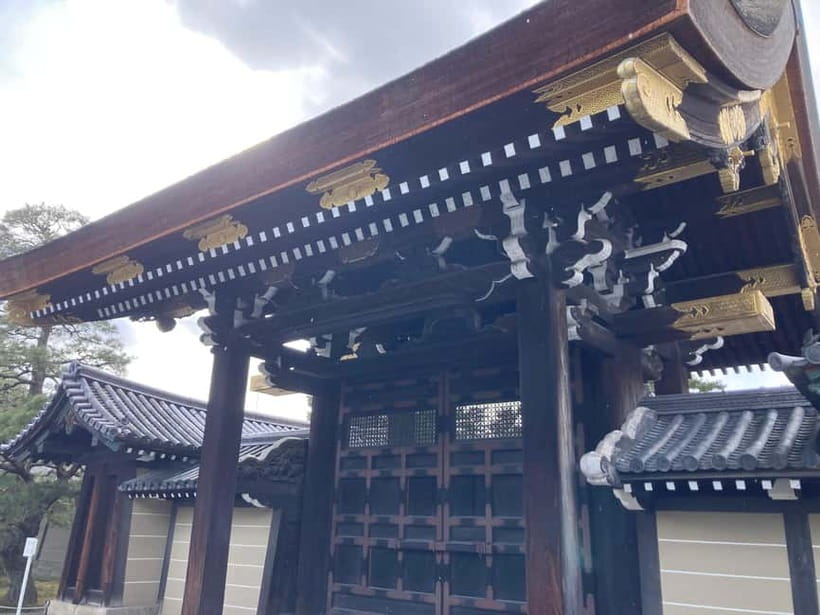
The Imperial Palace changes the mood. Where Nijo Castle feels tied to military power, the palace represents the imperial court and the refined traditions associated with Japan’s emperors.
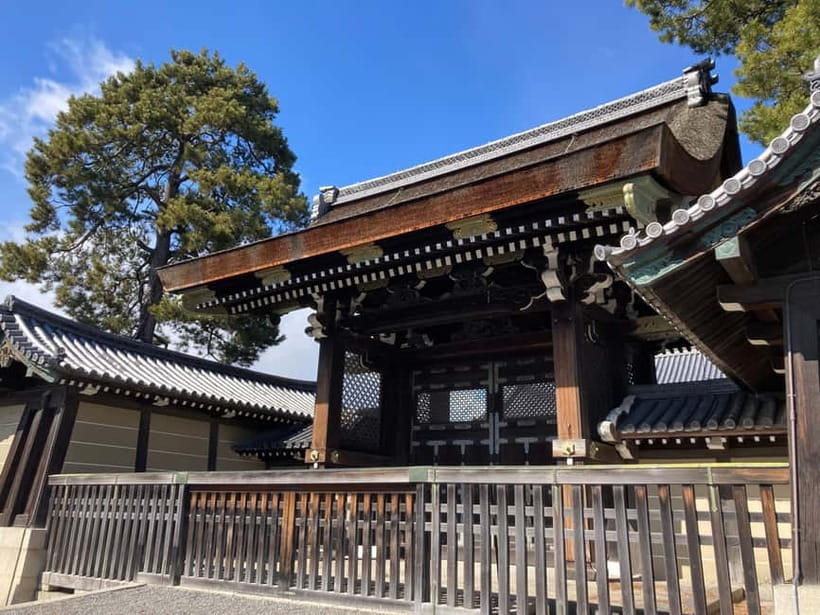
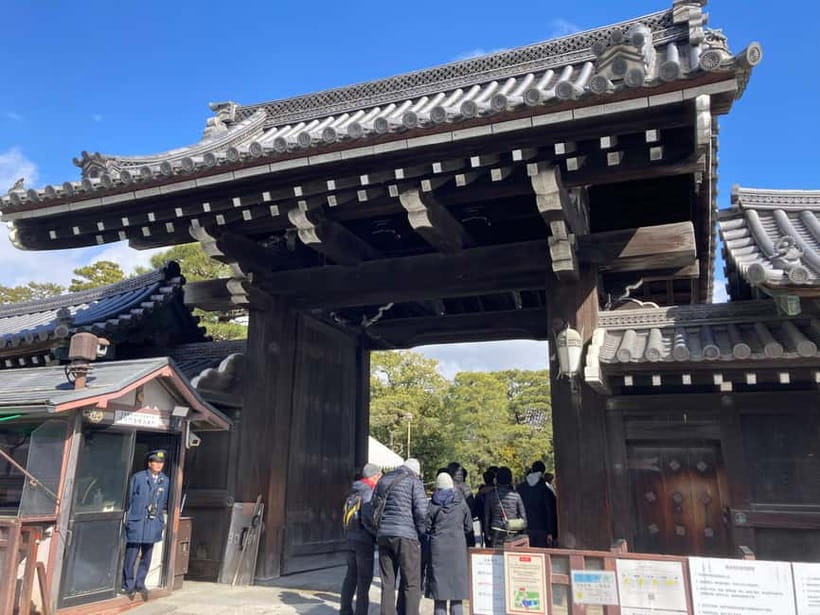
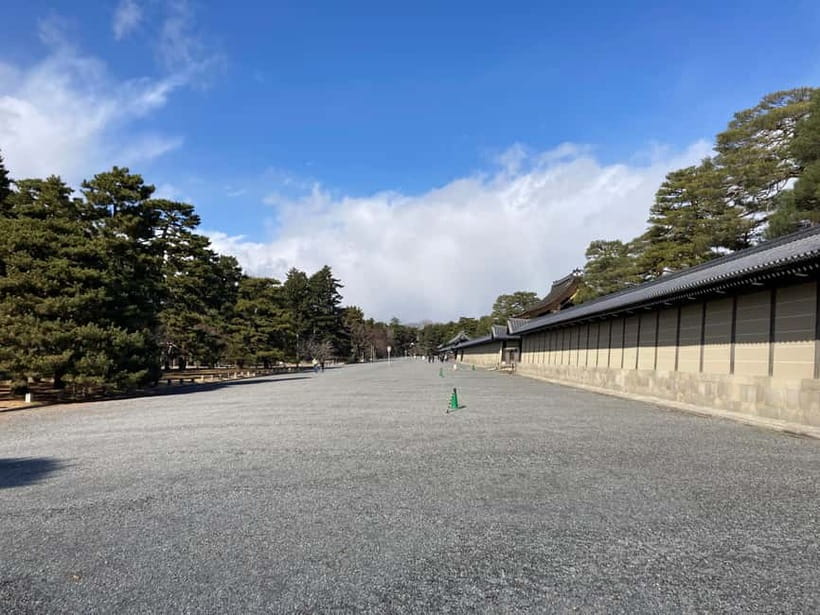
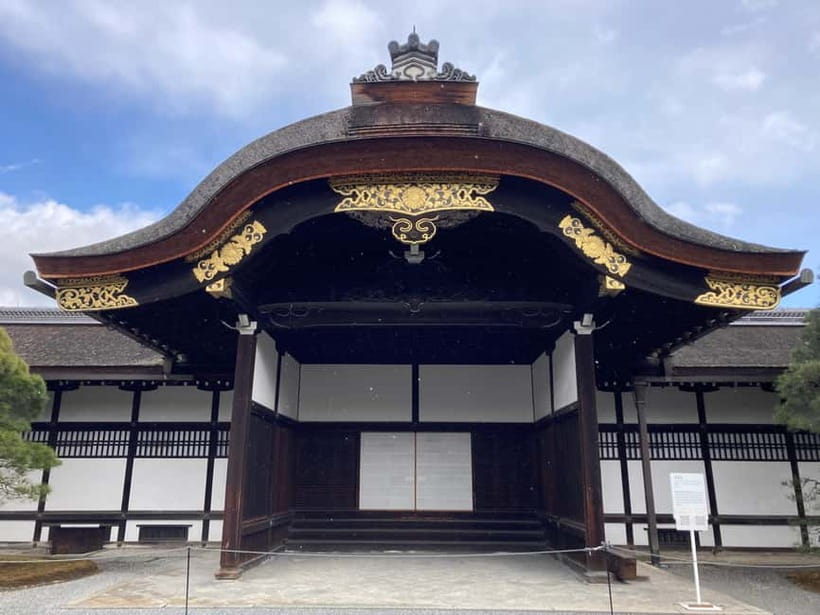
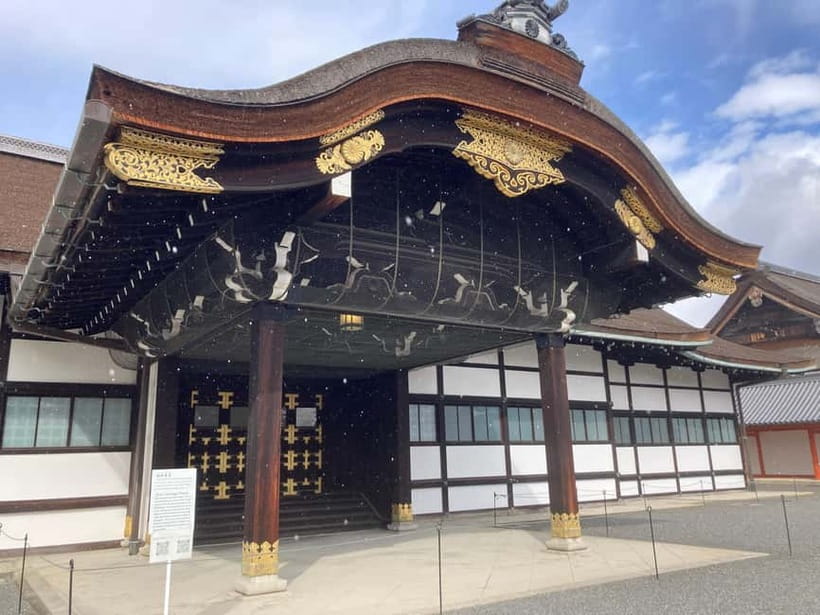
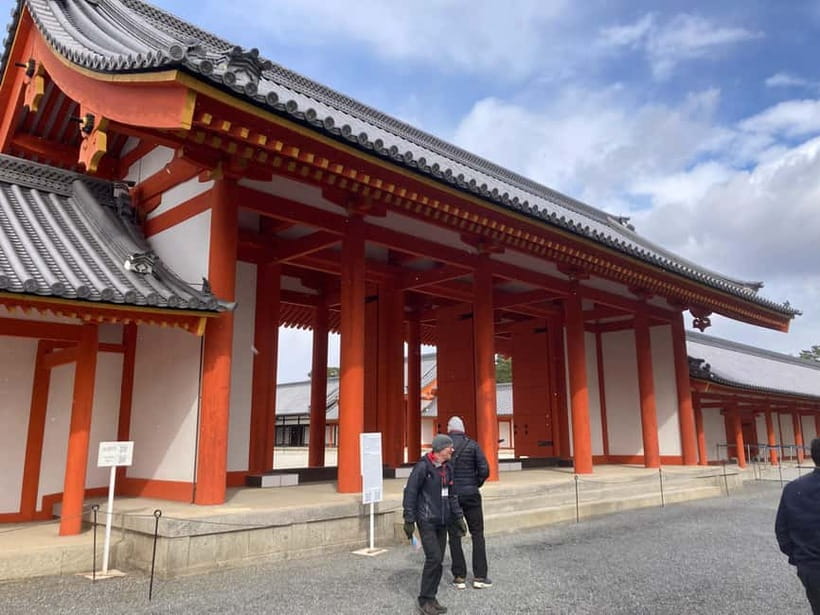
The grounds give you a useful sense of scale. Formal gates, broad spaces, carefully arranged gardens, and elegant buildings create a more restrained impression than the castle. Your guide explains the architectural style and the way the gardens were planned to reveal seasonal beauty.
This is especially appealing in spring, when cherry blossoms can add color to the grounds. Other seasons have their own appeal, though the tour information does not specify exactly what will be in bloom on your date. I would think of the gardens as a reason to slow down, not as a guaranteed flower show.
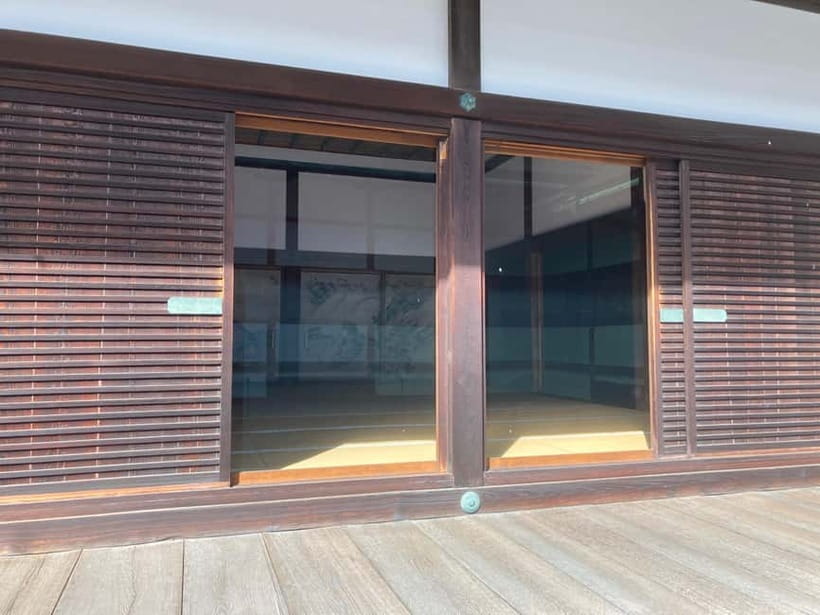
You should set your expectations carefully. One booking reported that the Imperial Palace visit offered only exterior views of the buildings. That does not make the stop pointless, but it does mean you should not book this tour expecting a full indoor palace tour. The value comes from the setting, the architecture, the gardens, and the guide’s explanation of the imperial role.
The meeting point is the Nakadachiuri Gate of the Kyoto Imperial Palace. The operator says you will receive advance information about what your guide looks like and what they will be wearing. That is useful at a large site with several gates and open spaces.
The walk between the two sites adds useful context
The tour is not just two separate admissions stitched together. The route includes a roughly 20-minute walk from the Imperial Palace to Nijo Castle, according to one detailed account of the experience.
I like this part because walking gives you time to shift from the imperial world to the shogunal one. The guide can keep the conversation going, and past participants have found this stretch useful for questions about Japanese and Western culture, politics, and modern Japan.
You may also pass traditional Kyoto townhouses and a spot known for cherry blossoms. These smaller details help you see Kyoto as a living city, not only a series of major monuments. The walk is also a practical consideration: wear comfortable shoes and be ready to spend most of the three hours on your feet.
The route may feel less exciting if you want nonstop sightseeing. You are not being driven from gate to gate. This is a walking tour, and the ordinary streets between the major sites are part of the experience.
The guide makes the difference
The strongest reason to book this tour is the guide. Names that appear repeatedly in the supplied material include Goku, Kayo, Nene, and Taku, though the guide assigned to you depends on availability.
Goku has been praised for explaining Japanese history, culture, and political events with unusual detail. He also adjusted visits to suit different interests, giving history-focused groups more detail while making room for photographs and questions. One solo participant appreciated his help with pictures, and another received restaurant suggestions for the area around their hotel after the tour.
Kayo has been described as warm, funny, and able to keep three hours moving quickly. She has also been praised for answering broad questions about Japan, not just reciting facts about the two sites.
Nene’s strength is clear explanation and a thoughtful manner. She also stepped in when another guide became ill, showing flexibility under difficult circumstances. Taku has been praised for local tips, patient answers, and discussions that ranged from architecture and art to politics.
The multilingual offering includes English, French, Spanish, Japanese, Portuguese, and Russian. The available information does not guarantee every language on every departure, so check the language when you choose your time.
A small group capped at nine people is a real advantage. You can ask about a detail you do not understand, hear the answer without a crowd around you, and keep the guide’s attention more easily. The tradeoff is that the tour’s quality depends heavily on the individual guide you receive. The overall pattern is encouraging, but no tour can promise that one specific guide will lead every departure.
A few more Kyoto half-days to weigh up
- PERFECT KYOTO 1-Day Bus Tour
★ 5.0 · 13,518 reviews - Kyoto: Fushimi Inari, Kinkakuji, Bamboo Grove 1 Day Bus Tour
★ 4.8 · 4,316 reviews - Kyoto: Tea Ceremony in a Traditional Tea House in Kiyomizu
★ 4.9 · 3,519 reviews - Kyoto Geisha Walking Tour: Gion District & Hidden Gems
★ 4.7 · 3,273 reviews
Three hours is enough for an overview, not a full Kyoto education
The three-hour length works well if you want a focused introduction to two major sites. You get an organized route, admission to the key castle areas, and a guide who can explain why the buildings matter.
Still, three hours is not enough for a slow, exhaustive visit to both complexes. You will need to keep moving, especially if the group includes many questions or if the grounds are busy. If you like to photograph every gate, garden view, and architectural detail, you may wish for more free time.
I would book this early in your Kyoto stay. The tour gives you a framework for understanding the shoguns, emperors, court culture, and castle design. Later visits to temples, gardens, or museums may make more sense once you have this political background.
The activity is also a good choice when you want structure without giving up conversation. It is not a lecture delivered from one fixed spot. You walk, look, listen, and ask questions along the way.
Is $63 a fair price?
At $63 per person, this is not the cheapest way to enter Nijo Castle and the Imperial Palace area. The price includes a professional guide, admission to Nijo Castle, Ninomaru Palace, and the Art Gallery, plus the walking experience.
I think the price is reasonable if you care about context. Two famous sites can blur together when you visit them alone, especially if you are unsure which details deserve your attention. A guide can turn the decoration at Nijo Castle into a lesson about authority and make the Imperial Palace gardens part of a discussion about court taste and seasonal design.
The value is strongest for first-time visitors, people with limited time, and anyone curious about Japanese political history. It is weaker for independent visitors who already know the difference between shogunal and imperial institutions and prefer to set their own pace.
The small group improves the value. A nine-person maximum is much more personal than a large bus tour, and the guide can adapt the discussion. Several accounts also describe guides offering restaurant ideas and broader Kyoto advice, which can add practical value beyond the three-hour route.
Who will enjoy this Kyoto walk?
I would recommend this tour to you if you:
- Want historical explanation instead of just entrance tickets
- Enjoy learning about shoguns, emperors, architecture, and politics
- Prefer a small group to a large organized tour
- Are comfortable walking outdoors for three hours
- Want a helpful introduction early in your Kyoto visit
- Enjoy asking questions and adjusting the discussion to your interests
- Are visiting during cherry blossom season and want time in palace gardens
Families with teenagers may also find it a good fit. One guide adapted the discussion for two teenagers while still covering detailed material about shoguns and emperors. Solo visitors can benefit from the small group and the guide’s willingness to help with photographs.
I would be more cautious if you are pregnant, since the activity is listed as unsuitable for pregnant women. Shorts are also not allowed, so dress accordingly. Bring a camera and some cash, and wear shoes suitable for a substantial walking route.
What to expect on the day
Meet your guide at the Nakadachiuri Gate of Kyoto Imperial Palace. You will receive information in advance about the guide’s appearance and clothing, which should make the meeting easier.
The tour then introduces the Imperial Palace grounds before moving toward Nijo Castle. The exact pace can depend on the group, the guide, and the conditions on the day, but you should expect a mixture of outdoor walking, architectural viewing, garden stops, and conversation.
At Nijo Castle, your admission covers the main castle experience, Ninomaru Palace, and the Art Gallery. This is where the tour’s political explanation is most useful. At the Imperial Palace, focus on the exterior architecture, gates, gardens, and the broader role of the imperial household rather than expecting access to every interior.
Free cancellation is available up to 24 hours before the activity for a full refund, and you can reserve now and pay later. Those options are helpful if your Kyoto schedule is still shifting, though they do not change the walking demands or the outdoor nature of the visit.
My verdict: book it for the explanation
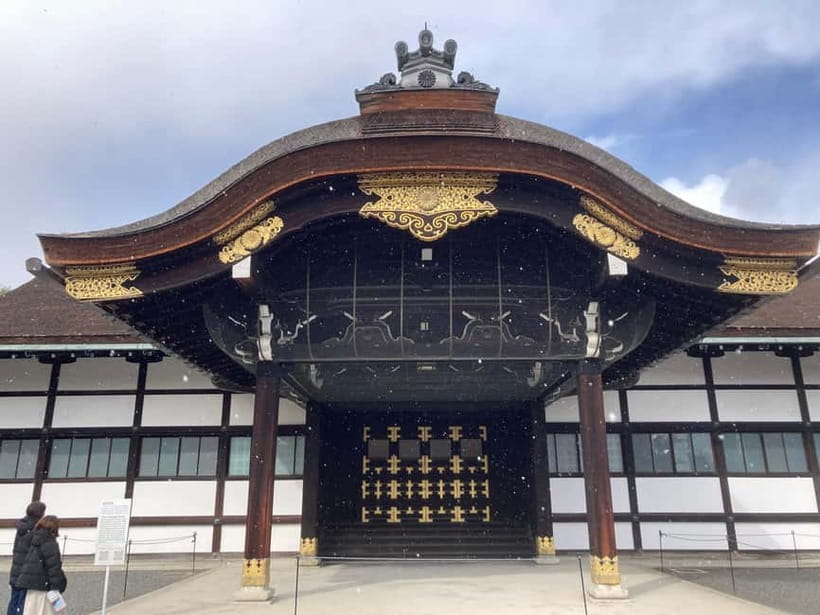
Book this tour if you want Nijo Castle and Kyoto Imperial Palace to make sense as part of Japan’s political story. The sites are attractive on their own, but the guide-led connection between shogunal power, imperial tradition, architecture, and seasonal gardens is the real reason to pay for the experience.
I would choose it over a self-guided visit if you have only a few days in Kyoto or if you enjoy asking questions. I would skip it if you want a slow, private visit with full access to palace interiors, since the Imperial Palace portion may focus on exteriors and the three-hour schedule keeps the group moving.
For the best chance of a strong experience, confirm the tour language, dress for walking, and arrive ready to engage with your guide. Goku, Kayo, Nene, and Taku have each been praised for making the history clear, friendly, and useful. That is what turns this from a sightseeing checklist into a worthwhile lesson in how Kyoto once worked.
FAQ
How long is the Kyoto Nijo Castle and Imperial Palace tour?
The tour lasts three hours. Check available starting times when booking.
What is the meeting point?
Meet at the Nakadachiuri Gate of the Kyoto Imperial Palace.
Which sites are included?
The tour visits Nijo Castle and Kyoto Imperial Palace. Admission includes Nijo Castle, Ninomaru Palace, and the Art Gallery.
What languages are available?
Guided tours are available in English, French, Spanish, Japanese, Portuguese, and Russian. The available language depends on the selected departure.
How large is the group?
The tour is limited to nine participants.
Is the Imperial Palace interior included?
The available information does not promise full interior access. You may mainly see the exteriors of palace buildings, along with the grounds, gardens, and architectural features.
What should I bring?
Bring a camera and cash. Comfortable walking shoes are also a sensible choice for the three-hour walking route.
Can I cancel or pay later?
You can cancel up to 24 hours before the activity for a full refund. Reserve now and pay later is also available.
Just added around Kyoto
- Kyoto: Zen Meditation at a Private Temple with a Monk★ 5.0 · 25 reviews
- Kyoto: Gion Geisha District & Sake-in-Hand Walking Tour★ 5.0 · 37 reviews
- Private Pewter Sake Cup Experience with a Kyoto Artisan★ 5.0 · 31 reviews
- Your Private Vacation Photography Session In Kyoto★ 5.0 · 110 reviews
- Private Guided Traditional Buddhist Cooking in Japan★ 5.0 · 16 reviews
- Kyoto Wagashi(Japanese sweets) Cooking Class near Fushimiinari★ 5.0 · 60 reviews
- Traditional Japanese Music show & Experience Tour in Kyoto★ 5.0 · 57 reviews
- Kyoto:Family-Friendly Kimono & Yukata Experience at WARGO★ 5.0 · 147 reviews
Imperial Palace Tours, compared.
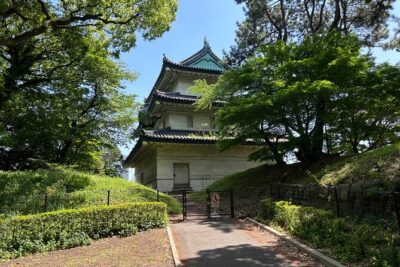
Imperial Palace and Shogun Historical Walking Tour
Read our review →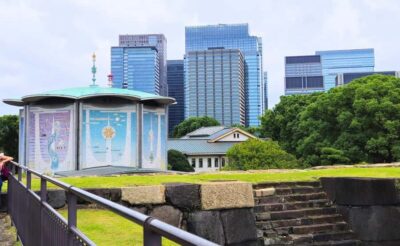

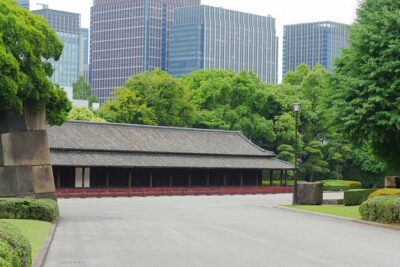
Imperial Palace East Garden and Edo Castle Walking Tour in Tokyo
Read our review →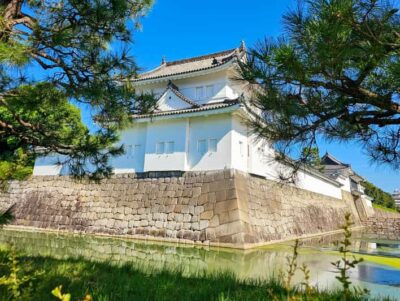
Imperial Palace & Nijo Castle Guided Walking Tour
Read our review →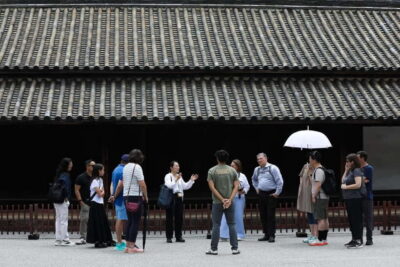
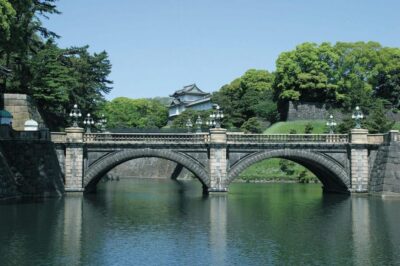
Imperial Palace, Sensō-ji Temple, & Tokyo Tower Tour
Read our review →
Tokyo Castle, Imperial Palace, Shogun & Garden Walking Tour
Read our review →Browse the lists this tour appears in