
Reviewed · NARA TOURS
Nara: Great Buddha, Kasuga Shrine & Deer Park Tour
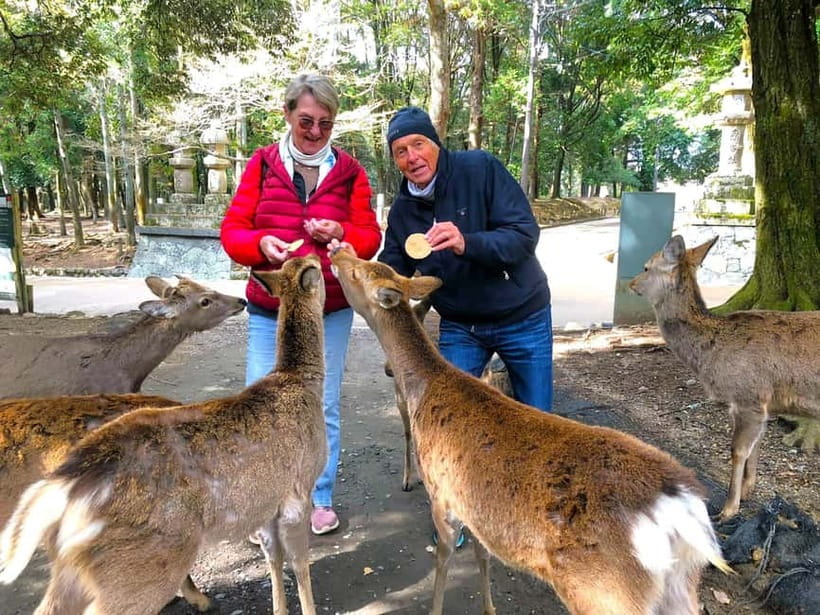
Nara’s famous deer are only the opening act. This three-hour walk brings you from the free-roaming animals of Nara Park to the lanterns of Kasuga Taisha, then into Todai-ji’s enormous hall to face one of Japan’s most memorable Buddhist statues. The route links nature, Shinto worship, and Buddhist power in a compact introduction to old Japan.
I like two things especially: the guide-led context, which helps you understand why these places matter, and the included deer crackers and admission fees, which keep the day simple. Guides such as Eri, Takashi, Teppei, Yayoi, and Nobu have been praised for answering questions, adjusting the pace, and helping with trains or local directions afterward.
The main drawback is the clock. Three hours is enough for the highlights, but not for a slow Nara day, extended shopping, or every corner of the park. Expect a good amount of walking and some steps, and remember that you must reach the meeting point at Himuro Shrine on your own.
Key points to know before you book
- Three major Nara sights in one walk: Nara Park, Kasuga Taisha, and Todai-ji fit into a focused route.
- Deer crackers are included: You can feed Nara’s sacred deer without buying them separately.
- Kasuga Taisha access goes beyond the outer grounds: The price includes special inner shrine admission.
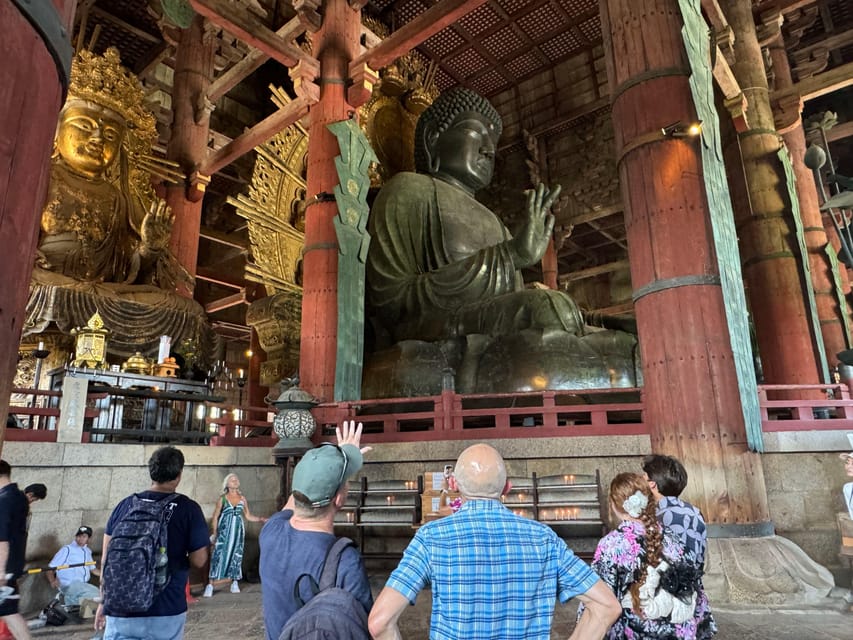
- Todai-ji admission is covered: You enter the Great Buddha Hall with a guide rather than stopping at the gate.
- Private and small-group formats are available: The experience can suit families, couples, or travelers who want questions answered along the way.
- The guide is a major part of the value: English and Japanese guides have helped with cultural questions, photo stops, food ideas, and onward transport.
Why this short Nara tour works
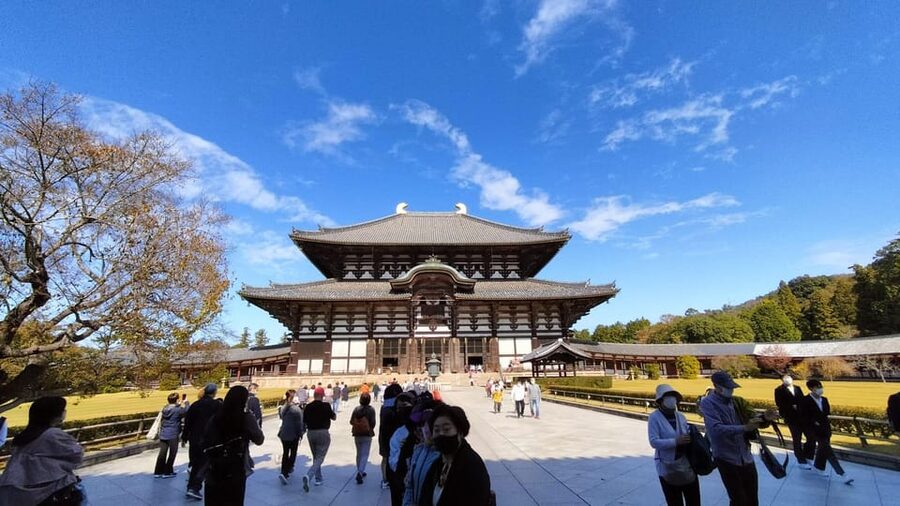
Nara was Japan’s first permanent capital in the eighth century. That gives the city a different feel from Kyoto or Osaka. Here, major religious sites sit beside open parkland, and deer wander through the same spaces where people have worshipped for centuries.
This tour makes good use of that setting. Instead of treating the deer, shrine, and temple as unrelated photo stops, the route shows how Shinto and Buddhism shaped Nara together. Your guide can explain why the deer are treated as sacred messengers, how shrine rituals work, and why Todai-ji was built on such an immense scale.
At $77 per person, the price is fair if you want a guided introduction and plan to visit all three main sights anyway. Todai-ji admission, Kasuga Taisha’s special inner shrine access, deer crackers, and the guide are included. You still pay for your own transport to the meeting point, food, drinks, and personal purchases, so the real cost is a little higher if you are coming from Kyoto or Osaka.
I would not book this as your only Nara experience if you want hours for museums, gardens, shopping, or a long meal. I would book it if you have a half day, want the key monuments explained clearly, and prefer a local person to handle the cultural details.
A few more Nara half-days to weigh up
- World Heritage Kyoto & Nara Uji Authentic Matcha Experience
★ 5.0 · 1,573 reviews - Nara Half Day Trip Walking Tour (Private Option Available)
★ 5.0 · 937 reviews - Nara Early Morning Tour (Kyoto or Osaka Departure Available)
★ 5.0 · 676 reviews
Starting at Himuro Shrine
The meeting point is in front of the torii gate of Himuro Shrine. Look for the guide holding a yellow DeepExperience sign. This is a clear landmark, but it is not a promise of door-to-door pickup, so plan your route before the start time.
Beginning at a shrine is fitting. You start among the visual language of Shinto before walking into Nara Park and later entering Todai-ji, a major Buddhist temple. The sequence gives the tour a natural rhythm: first sacred space and nature, then a shrine with a powerful local tradition, and finally a monumental temple.
The tour ends near the second torii of Kasuga Taisha, with drop-off listed at either Nininotorii or the Kasuga Taisha second torii. That matters when planning the rest of your day. You do not finish back at Himuro Shrine, so make sure your next destination works from the eastern side of Nara Park.
Meeting Nara’s deer in Nara Park
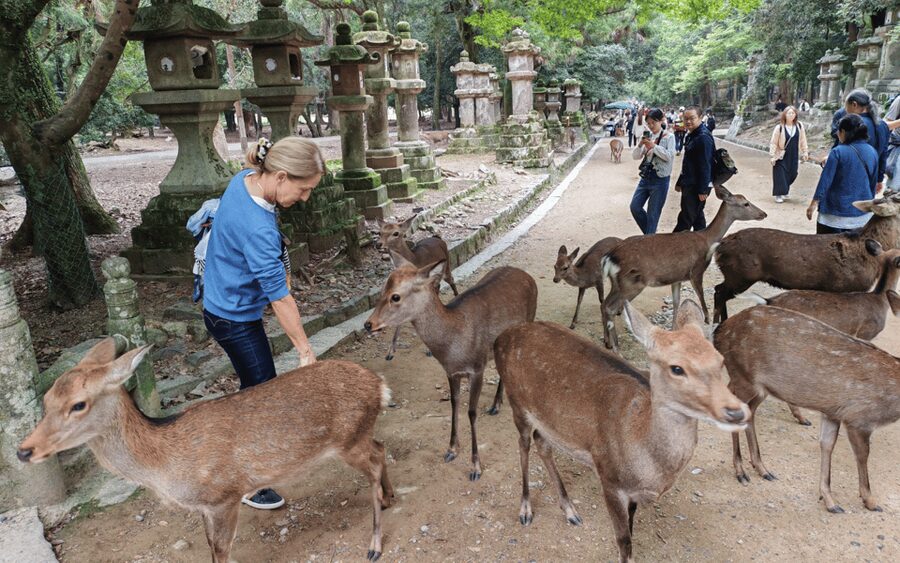
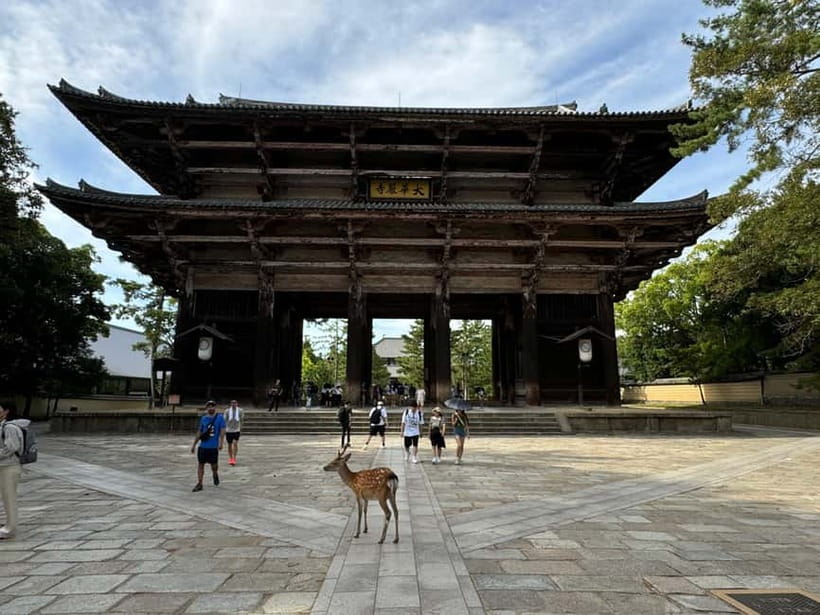
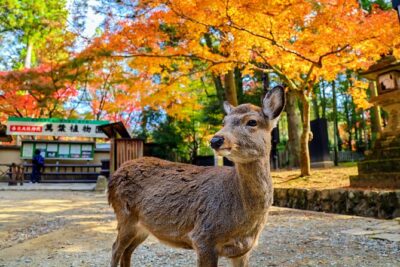
Nara Park is the most relaxed section of the route. Hundreds of deer roam through the broad green grounds, often close to paths, gates, and religious buildings. The animals are closely linked with Kasuga Taisha and are regarded in Shinto belief as sacred messengers.
The included shika senbei, or deer crackers, gives you a direct way to take part. Your guide can show you how the feeding works and explain why deer became protected symbols of Nara. This is more useful than simply buying a snack and taking a quick photograph, because the animal encounter connects to the city’s religious tradition.
Keep your attention on the deer and your food at the same time. The experience is simple, but the animals are a lively part of the walk, not a staged presentation. The supplied information does not promise a particular number of deer interactions, so think of the crackers as an opportunity rather than a guaranteed close-up moment.
This first stop takes about 30 minutes. That is enough to meet the deer and hear the main explanation, but it is not a long wildlife visit. If you want extended time for photographs, you may need to return to the park after the tour.
The park also helps you understand Nara’s unusual character. You are not moving from one sealed monument to another. The route passes through open space where ordinary city life, religious symbols, and animals share the same setting. That mix is one of the strongest reasons to choose Nara over a standard temple-only excursion.
Following the lantern paths at Kasuga Taisha
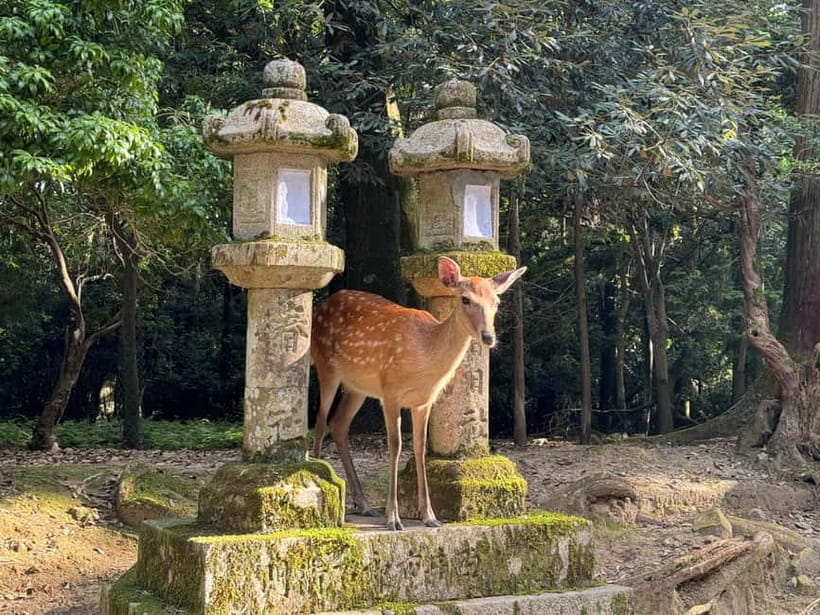
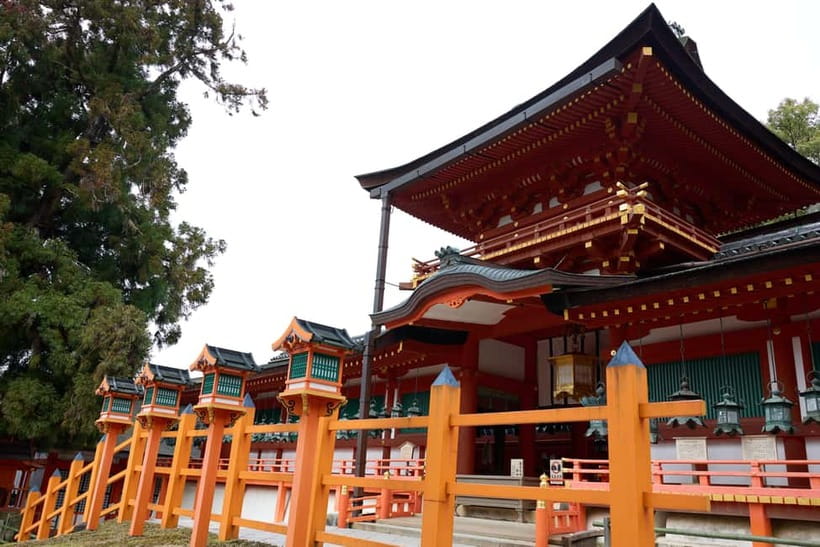
The walk continues to Kasuga Taisha, founded in 768 and connected with the influential Fujiwara clan. This is one of Nara’s most important Shinto shrines, and the surrounding old-growth forest gives it a quieter mood than the huge temple approach at Todai-ji.
The shrine is famous for its bronze and stone lanterns. Worshippers donated them across generations, and they line the approach and shrine grounds in large numbers. During special festivals, the lanterns are lit, creating a very different atmosphere from an ordinary daytime visit. Your tour takes place in the regular setting, but your guide can help you picture the festival tradition and explain what the lanterns represent.
Admission to Kasuga Taisha’s special inner shrine area is included. That is a useful detail because it takes you beyond a quick look at the main approach. A guide can point out architectural features, explain purification customs, and introduce the basic ideas of Shinto without turning the visit into a lecture.
The guided portion lasts about one hour. That makes Kasuga Taisha the longest stop on the route, and rightly so. There is more to notice here than a single building. The forest, lanterns, pathways, ritual spaces, and connection with the Fujiwara family all help explain the shrine’s place in Nara.
I also like this part for travelers who want a calmer counterpoint to Todai-ji. The atmosphere at Kasuga Taisha is shaped by trees and lantern-lined paths, while Todai-ji is about size and human effort. Seeing both makes the day more varied.
The tradeoff is that the hour can pass quickly. The tour does not appear designed for a long independent exploration of every shrine building or surrounding path. If you are passionate about Shinto architecture or photography, ask your guide how much free time is possible, or plan to return later.
Same base, a completely different sort of day:
- Osaka: Nara and Uji Day Trip with Deer Park and Hot Spring
★ 4.4 · 302 reviews - Kyoto/Osaka: Kinkakuji, Bamboo Forest, and Nara Deer Park
★ 4.4 · 265 reviews - Nara 6hr Private Tour with Government-Licensed Guide
★ 5.0 · 219 reviews - E-Bike Nara Highlights – Todaiji, Knives, Deer, Shrine
★ 4.8 · 186 reviews
Entering Todai-ji and facing the Great Buddha
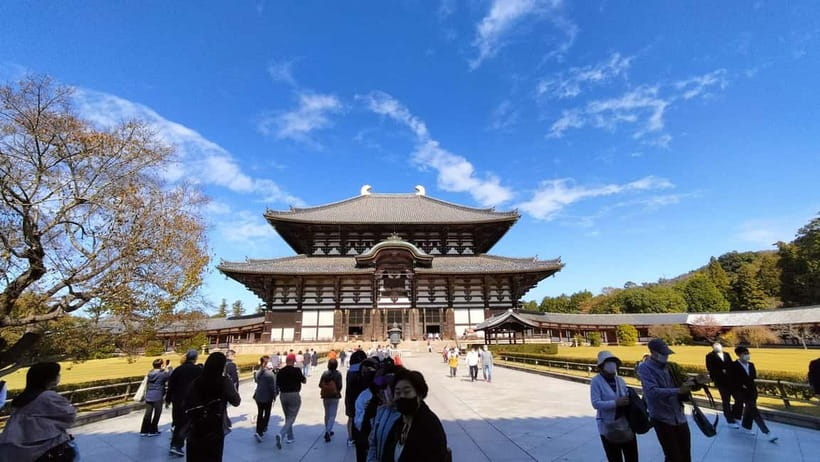
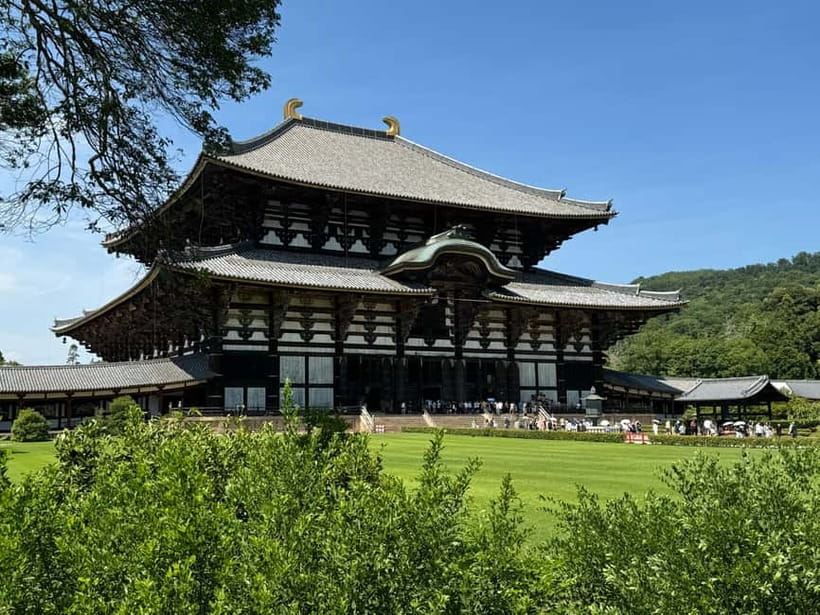
Todai-ji is the tour’s final major stop and likely its most powerful visual moment. The admission fee is included, so you enter the Great Buddha Hall rather than viewing the complex only from outside.
Daibutsuden, or the Great Buddha Hall, is among the largest wooden structures in the world. Inside, the colossal bronze Great Buddha represents Vairocana Buddha. The statue was cast in the eighth century, when Nara served as Japan’s capital, and its construction demanded an enormous investment of labor, materials, and political will.
That scale is easier to grasp with a guide. Without context, you see a huge hall and a huge statue. With an explanation, you begin to understand that Todai-ji expressed both religious ambition and the authority of early Japan’s government. The building was not simply made to impress, although it certainly does that.
The tour allows about one hour here. You should have time to take in the hall, listen to the story of the Great Buddha, and ask questions. Guides have been praised for pausing for photographs and explaining the site in clear English, which is important in a place where the sheer size can crowd out the finer details.
Todai-ji can also be the busiest and most visually intense part of the walk. If you prefer quiet temples, Kasuga Taisha may be your favorite stop. If you want the moment that stays with you after leaving Nara, the Great Buddha is the stronger candidate.
What the guides add to the experience
The guide is not a minor extra on this tour. The route is easy enough to follow in a basic sense, but the meaning of the deer, lanterns, rituals, and Buddha is much harder to grasp without explanation.
Several named guides have received especially warm praise for personal service. Takashi has been noted for sending an introduction before the tour, asking what the group wanted to cover, helping with transport questions, and walking people to a local bus afterward. Eri has been praised for local insight, useful food suggestions, and small route adjustments that can include quieter places and interesting shops.
Teppei has been described as patient, generous with answers, and eager to discuss daily Japanese life as well as monuments. Nobu has helped with train purchases after the walk and even provided neck coolers on a hot day. Those details show the kind of practical support that can make a short tour easier, though individual guide arrangements can vary.
Yayoi brings energy and care to the history and deer sections, while Yoshi and Marc have been praised for patience, clear explanations, and help during difficult weather. Ryan has also been noted for strong communication when traffic caused a delay.
The tour is offered in English and Japanese, with private or small-group options. A small group usually gives you a chance to ask questions without turning the walk into a private lecture. A private booking may be the better fit if your party has children, older relatives, a particular interest in religion, or a strong preference for a flexible pace.
Walking, weather, and the three-hour pace
You should be ready to walk between the sites. The route crosses Nara Park and includes shrine and temple grounds, with some steps along the way. One person described the walking and steps as substantial but worthwhile, which is a sensible expectation for most people.
Three hours sounds generous until you consider the distance, three major stops, photographs, deer feeding, and explanations. The pace should feel focused rather than leisurely. It works well for a first visit, especially if you want to see the main sights before lunch or dinner.
Weather can change the feel of the day. The tour can still be enjoyable in rain, but wet paths and umbrellas may slow you down. Summer heat is another consideration. A guide has provided neck coolers during a hot outing, but you should still dress for the conditions and bring water, since food and drinks are not included.
Build in a little breathing room around the start and finish. Traffic delays have been handled kindly by at least one guide, but you should not rely on waiting time. The best approach is to arrive early at Himuro Shrine, especially if you are unfamiliar with Nara Park.
Who gets the best value from $77
I see the strongest value for first-time visitors to Nara who want the essentials in one organized walk. You pay for more than entry tickets. You get a guide who can connect the sites, explain unfamiliar customs, answer questions, and help you make sense of the city’s religious traditions.
Families may appreciate the deer crackers and the variety of the route. The animals offer an immediate point of interest, while Todai-ji gives older children and adults a memorable architectural and cultural focus. A private format may be worth considering if your group needs frequent pauses.
Couples and solo visitors can also benefit, especially if they prefer conversation over reading signs. Several guides have helped with food suggestions and onward transport, giving the experience a useful local layer beyond the formal route.
I would be more cautious if you have already spent a full day in Nara and know the major sites well. You may find the three-hour structure too guided or too short. The same applies if you want to linger for a long time at one shrine, photograph lanterns in detail, or explore the park without a schedule.
The tour does not include transport to Himuro Shrine, meals, drinks, or personal expenses. Those exclusions are normal for a walking tour, but they matter when you compare the total cost with exploring alone. Independent sightseeing will be cheaper, while this option buys structure and explanation.
Practical details that shape your choice
You can cancel up to 24 hours before the activity for a full refund, and the reserve-now, pay-later option keeps your plans flexible. Starting times vary, so you need to check availability for your chosen date.
The tour is supplied by DeepExperience, Inc. and uses live English or Japanese guides. Private and small-group bookings are available, which can affect both the feel and value of the walk.
For the best use of your time, arrive ready to walk, keep your schedule open for questions, and avoid packing the next activity too tightly against the end. If your main goal is the Great Buddha, the tour gets you there with useful background. If your priority is Kasuga Taisha’s forest and lanterns, the hour-long shrine visit gives that part proper attention.
Should you book the Nara Great Buddha and Deer Park Tour?
Book it if you want Nara’s essential trio in three hours, with a guide who can explain the connection between sacred deer, Shinto practice, and Buddhist architecture. The included admissions and deer crackers make the $77 price reasonable, especially for a private or small-group outing.
Skip it if you prefer wandering alone, already understand the major sites, or want a full day for museums and side streets. The route is focused, and the walking pace leaves limited time for unplanned detours.
For most first-time visitors with a half day in Nara, I would choose it. The deer draw you in, Kasuga Taisha supplies atmosphere and ritual, and Todai-ji finishes with a statue and hall that are difficult to appreciate fully without some explanation.
FAQ
Where does the tour meet?
The meeting point is in front of the torii gate of Himuro Shrine. Your guide will hold a yellow sign with the DeepExperience logo.
How long does the tour last?
The tour lasts three hours. You need to check availability for the starting times offered on your chosen date.
Which sights are included?
The route includes Nara Park, Kasuga Taisha, and Todai-ji Temple.
Is Todai-ji admission included?
Yes. The Todai-ji Temple admission fee is included in the tour price.
Is entry to Kasuga Taisha included?
Yes. The experience includes special inner shrine admission at Kasuga Taisha.
Can I feed the deer?
Yes. Deer crackers, called shika senbei, are included so you can feed the deer in Nara Park.
What languages are available?
Live guides are available in English and Japanese. The experience can be booked as a private or small-group tour.
Just added around Nara
- All must-sees in 3 hours – Nara Park Classic Tour! From JR Nara!★ 5.0 · 108 reviews
- Private Nara Tour and Sake Tasting (Departing from Kyoto/Nara)★ 5.0 · 40 reviews
- Hammer a Pattern on Your Ring Workshop★ 5.0 · 57 reviews
- Nara World Heritage PRIVATE TOUR★ 4.5 · 15 reviews
- Nara Sake Tasting Tour at Local Brewerie(tasting fee included)★ 5.0 · 12 reviews
- Nara Private Tour: Flexible Pickup from Kyoto, Osaka, or Nara★ 5.0 · 17 reviews
- Nara – Heart of Nature Cross Bike Tour★ 5.0 · 19 reviews
- Nara Highlight Walking Tour with Furoshiki Experience with Lunch★ 5.0 · 73 reviews
Nara Tours, compared.
World Heritage Kyoto & Nara Uji Authentic Matcha Experience
Read our review →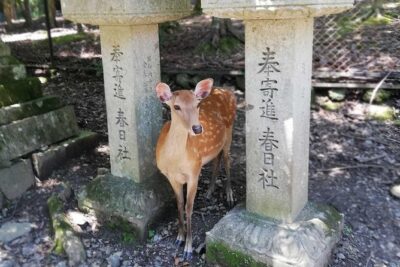
Nara Half Day Trip Walking Tour (Private Option Available)
Read our review →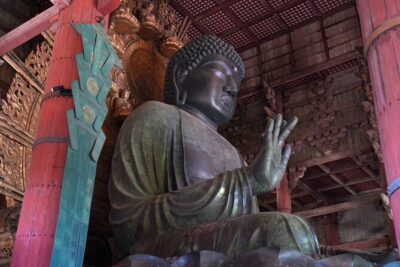
Nara Early Morning Tour (Kyoto or Osaka Departure Available)
Read our review →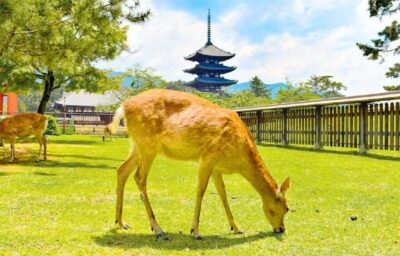
Nara and Uji Day Trip with Deer Park and Hot Spring
Read our review →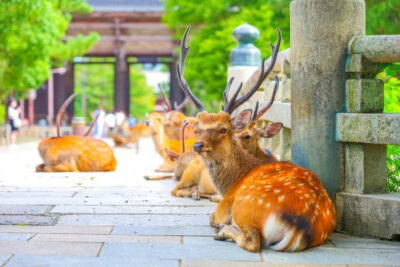
Kyoto/Osaka: Kinkakuji, Bamboo Forest, and Nara Deer Park
Read our review →
Nara 6hr Private Tour with Government-Licensed Guide
Read our review →
E-Bike Nara Highlights – Todaiji, Knives, Deer, Shrine
Read our review →
Nara Early Bird Tour (Kyoto Departure Option Available)
Read our review →Browse the lists this tour appears in