
Reviewed · NARA TOURS
Nara: Essential Private Tour with Deer Park and Temples
Nara makes an excellent first stop for understanding old Japan. In three hours, you move from a shopping street to ancient Buddhist temples, through a park where deer roam freely, and into Todai-ji, home to one of Japan’s best-known giant Buddha statues. The route gives you both cultural landmarks and open green space, without wasting time figuring out directions.
I like the private format and the guide’s practical help. Masa is praised for patient explanations, excellent English, careful planning, and a warm manner. He has also helped with shop translation, ATM directions, restaurant suggestions, and even an extra umbrella. The main drawback is the tight schedule: six stops in three hours means you get a smart overview, not a slow, museum-style visit.
Key points to know before booking
- Deer etiquette is part of the experience: You learn how to feed and approach Nara’s deer without attracting too many at once.
- Todai-ji gets a full hour: This is the tour’s main cultural stop and deserves the extra time.
- The private group keeps the pace flexible: You can ask questions and focus on the subjects that interest you most.
- Masa is a particularly helpful guide: He has provided detailed explanations, translations, local food advice, and practical assistance.
- The route is mostly a walking tour: Wear comfortable shoes, bring sun protection, and expect no hotel transportation.
- The price is strongest for couples or small groups: At $126 per person, the value depends on how much you want personal guidance.
Why this short Nara route works
Nara was Japan’s first permanent capital, and its central sights are close enough to connect on foot. That makes a private three-hour tour useful, especially if you are visiting from Kyoto or Osaka and want a clear introduction without spending a full day.
The route also has a good rhythm. Higashimuki Shopping Street gives you a look at modern Nara and a useful starting point. Kofuku-ji brings you into the city’s Buddhist past. Nara Park adds the famous deer. Himuro Shrine offers a quieter pause before Todai-ji takes center stage. Yoshikien Garden ends the outing with ponds, plants, and calm paths.
I like this order because the experience keeps changing. You are not spending three straight hours inside temples, and you are not treating the deer park as a quick photo stop. You get a little street life, religion, wildlife, and garden scenery in one compact outing.
The tradeoff is time. The listed stops add up to about 170 minutes before counting all the walking between them. Your guide will need to keep things moving, and you may not have time to explore every building or linger at every viewpoint. Think of this as a well-organized introduction rather than a full archaeological study of Nara.
A few more Nara half-days to weigh up
- World Heritage Kyoto & Nara Uji Authentic Matcha Experience
★ 5.0 · 1,573 reviews - Nara Half Day Trip Walking Tour (Private Option Available)
★ 5.0 · 937 reviews - Nara Early Morning Tour (Kyoto or Osaka Departure Available)
★ 5.0 · 676 reviews
Meeting Masa at Kintetsu Nara Station
The meeting point is Kintetsu Nara Station, a practical location for a walking tour. After leaving through the East Gate, head toward Exit 3. Take the stairs or the escalator beside them, then look for the tourist information center. The guide waits nearby with a sign showing the Get Your Guide logo.
This is a useful arrangement because the station can feel confusing when you first arrive. You do not need to wander around looking for a street corner or a hotel lobby. Still, give yourself enough time to find Exit 3, especially if you are carrying luggage or arriving during a busy period.
Masa receives especially strong praise for being patient, friendly, and prepared. His English is described as excellent, and he has handled questions in detail. He has also translated information into Korean for one visitor, which suggests a careful approach to communication. The listed tour language is English, so ask ahead if you need another language.
Because this is a private group, you can ask for clarification as you go. That matters in Nara, where a short explanation of a Buddhist figure, shrine custom, or temple layout can make the difference between simply seeing a building and understanding its purpose.
Higashimuki Shopping Street in 20 minutes
The tour starts with 20 minutes on Higashimuki Shopping Street. This is not the main historical attraction, but it gives you a practical introduction to Nara’s everyday side before the temples begin.
A guide can help you notice how the street connects the station area with the older sightseeing district. You might also use this opening stretch to ask about local food, shopping, and customs. One guest was directed to a good soba restaurant during the day, so Masa appears willing to add useful local advice when the timing allows.
Do not expect a long shopping break. Twenty minutes is enough to get your bearings and look at the street, but not enough for serious browsing or a relaxed meal. If you want souvenirs, save that task for after the tour unless your guide suggests otherwise.
This stop also lets you settle into the walking pace. You will soon be moving through large temple grounds and park paths, so use the early minutes to adjust your shoes, check your camera, and apply sunscreen.
Kofuku-ji and Nara’s Buddhist center
The 30-minute visit to Kofuku-ji brings the first major temple setting. Your guide explains the site and helps you understand what you are looking at instead of leaving you to decode unfamiliar religious images on your own.
That personal explanation is one of the tour’s main advantages. Japanese temples can appear quiet and simple at first glance, yet the statues, halls, and grounds carry layers of meaning. A good guide can point out details you might otherwise walk past and answer questions in plain English.
Half an hour is enough for a focused visit, but it is not an exhaustive examination of every structure. If you are especially interested in Buddhist art or temple architecture, tell Masa early. A private guide can adjust the emphasis more easily than a large group tour.
Kofuku-ji also prepares you for Todai-ji. You begin to see how Nara’s religious sites fit into the city’s story, rather than treating Todai-ji as an isolated monument. That context gives the later visit more weight.
Same base, a completely different sort of day:
- Osaka: Nara and Uji Day Trip with Deer Park and Hot Spring
★ 4.4 · 302 reviews - Kyoto/Osaka: Kinkakuji, Bamboo Forest, and Nara Deer Park
★ 4.4 · 265 reviews - Nara 6hr Private Tour with Government-Licensed Guide
★ 5.0 · 219 reviews - E-Bike Nara Highlights – Todaiji, Knives, Deer, Shrine
★ 4.8 · 186 reviews
Nara Park and the deer in 30 minutes
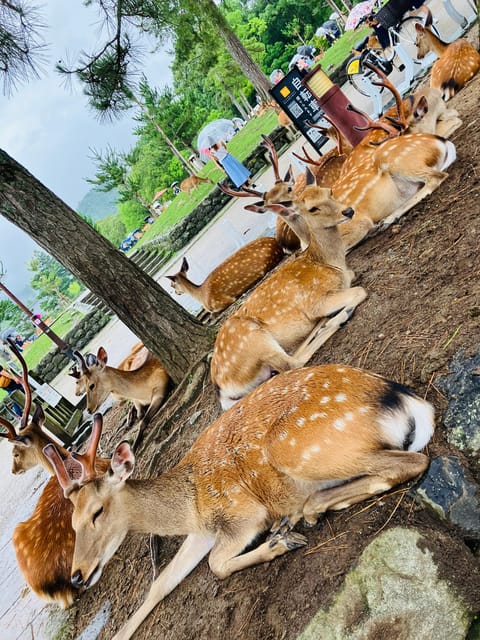
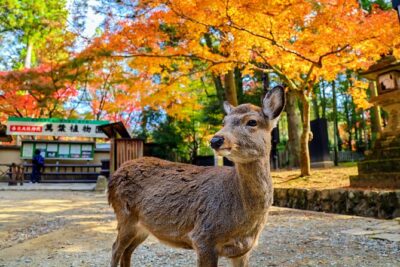
Nara Park is the most playful part of the outing, but it still requires some care. The deer are friendly and accustomed to people, yet they are not tame pets. Your guide can show you how to feed and approach them without being surrounded by a hungry group.
That advice is genuinely useful. The deer may expect food, and a visitor who holds onto crackers too long can quickly attract attention. Watch what your guide does, follow local etiquette, and keep your hands clear once the food is gone. Do not wave snacks around while trying to take photographs.
Thirty minutes gives you time to see the deer, take pictures, and enjoy the park’s open setting. It is long enough to make the wildlife encounter feel like part of the tour, not a rushed photo opportunity. It is not long enough for a broad walk across the entire park, so keep your expectations realistic.
People with animal allergies should not book this experience. The tour is also listed as unsuitable for pregnant women and wheelchair users. Even for people without those concerns, comfortable shoes matter because the day involves walking between several sites.
The park is valuable for another reason. It breaks up the temple visits. After concentrated cultural information at Kofuku-ji, you get a chance to look around, move freely, and enjoy Nara’s unusual mix of wildlife and historic buildings.
Himuro Shrine, a quieter 20-minute stop
Himuro Shrine receives 20 minutes, making it a short but welcome change of mood. Compared with the larger temple sites, a shrine visit can feel more intimate and easier to take in at a glance.
Your guide can explain the difference between Shinto shrine customs and Buddhist temple traditions. That distinction is helpful in Japan, where both traditions appear throughout the same city and sometimes close to one another.
This stop is also a useful breathing space before Todai-ji. You are not simply rushing from one famous building to the next. The schedule allows a brief pause for photographs and questions, though anyone wanting extended quiet time should expect this visit to remain compact.
If you enjoy gardens, sacred gates, and smaller religious sites, you may wish the stop lasted longer. The private format gives you a chance to tell the guide that preference, but the overall route still needs to stay on schedule.
Todai-ji, the tour’s main event
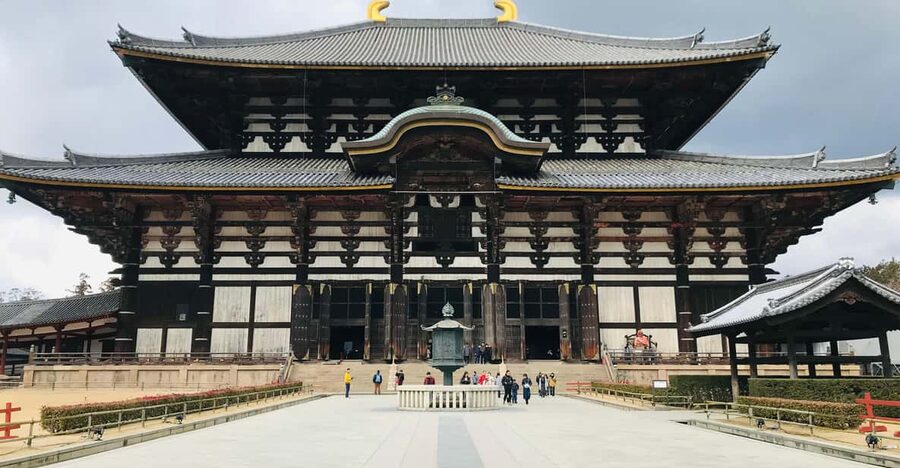
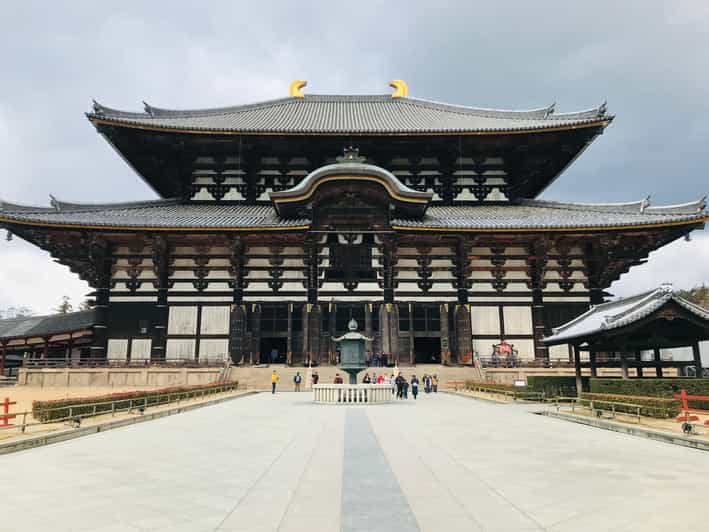
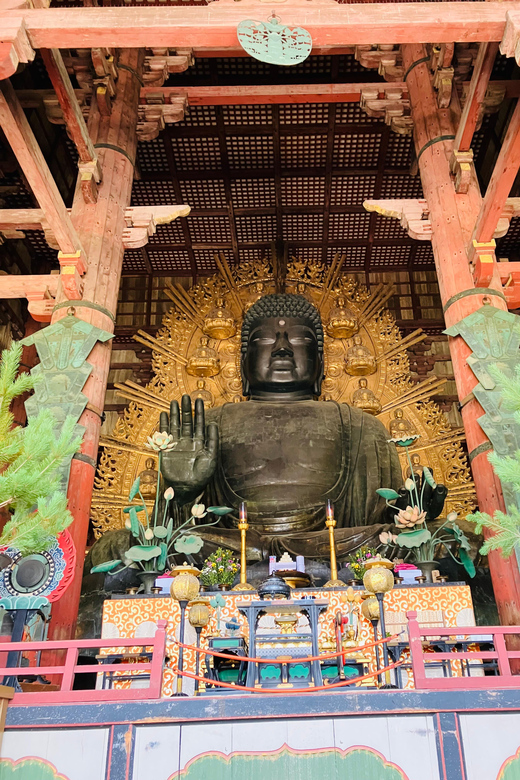
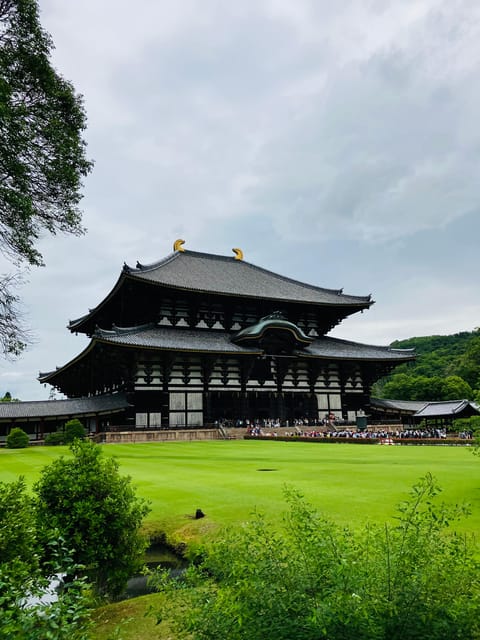
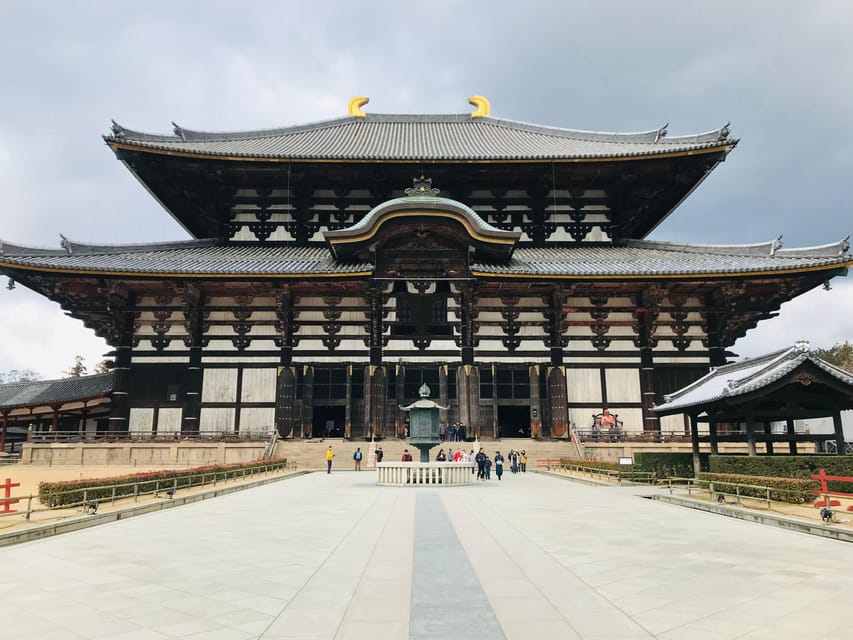
Todai-ji receives one hour, and that is the right choice. This is the place where the tour’s historical and religious themes come together most powerfully.
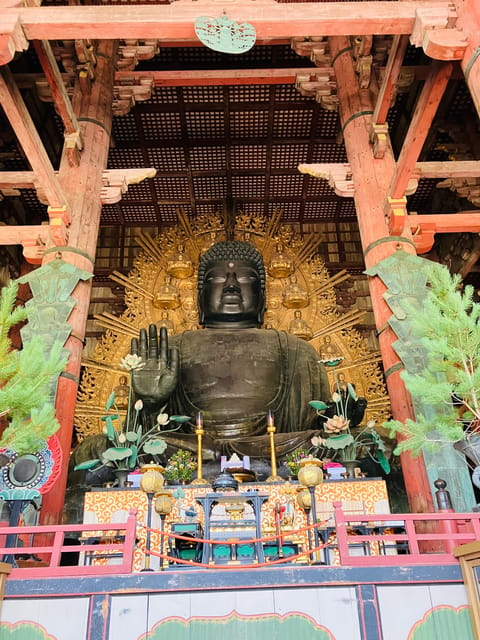
Inside, the enormous Buddha statue gives the visit a clear focal point. The scale can be hard to grasp from photographs, and a guide’s explanation helps you understand why the hall and statue matter. Masa is praised for explaining both temple history and the statues within the buildings, so this is the part of the tour where his background is especially valuable.
An hour sounds generous, but Todai-ji can absorb much more time if you want to study the architecture, statues, and grounds slowly. Your guide will give you a strong overview, answer questions, and point out significant details. You may still want to return later on your own if this becomes your favorite stop.
Flash photography is not allowed, and smoking is not permitted. Bring a camera, but use it respectfully and follow signs inside the temple. A hat and sunscreen are useful because parts of the route are outdoors, even though the main hall gives you a break from the sun.
Todai-ji is also where the $126 price becomes easier to judge. Admission is included, and you receive a private explanation at the site instead of paying only for transportation or a brief escort. If you are already comfortable reading temple information on your own, the price may feel high. If you want help understanding what you see, the hour can justify much of the cost.
Yoshikien Garden in 20 minutes
The final sightseeing stop is Yoshikien Garden, with 20 minutes for a guided visit. After the imposing scale of Todai-ji, the garden offers a quieter finish and a chance to slow your eyes down.
Garden visits often benefit from a guide who explains how to look at the space. Rather than treating it as a quick walk through attractive scenery, you can ask about design, seasonal changes, and the relationship between the garden and nearby temple grounds. The available information does not promise a particular seasonal display, so your experience will depend on the time of year.
Twenty minutes gives you a pleasant closing walk but not a long garden visit. If you are passionate about Japanese gardens, you may want to return separately and spend more time. For a first visit to Nara, though, the stop adds balance and prevents the tour from ending on a single large temple.
The tour then returns to Kintetsu Nara Station. That makes the finish convenient if you are catching a train, continuing to another part of Nara, or using the station area for lunch and shopping.
What $126 per person buys you
At $126 per person, this is not a budget walking tour. The price pays for an English-speaking guide, a private group, and admission to the temples and parks. Hotel pickup, hotel drop-off, drinks, souvenirs, and other personal costs are not included.
I would judge the value by group size. For a couple or a small family, private attention can make the fee reasonable, particularly if you want historical explanations and help with practical matters. Masa has assisted with translation in shops and helped someone find an ATM, which shows how the guide’s role can extend beyond formal commentary.
For a solo visitor, the price is harder to defend unless you place a high value on personal guidance. You can walk through Nara Park and visit many major sights independently. The tour earns its cost through structure, context, and the ability to ask questions at every stop.
The three-hour length is another factor. You are paying for an efficient introduction, not a full-day private guide. If Nara is only one part of a larger Japan trip, that compact format may be exactly what you need. If Nara is your main destination for the day, you may prefer a longer experience with more free time.
Gratuity is optional but appreciated. Personal expenses are yours to cover, so bring money for drinks, food, or shopping after the tour.
Pace, clothing, and practical limits
Wear comfortable shoes. The route includes a shopping street, temple grounds, park paths, a shrine, and a garden, so you should expect steady walking rather than a stationary guided visit.
Bring a hat, camera, and sunscreen. An umbrella may also be useful depending on the forecast. Masa has been praised for carrying an extra umbrella for a client, but you should not rely on that being available every time.
The tour is private, which helps with pace and questions, but it does not remove the physical demands of the route. It is not suitable for wheelchair users, pregnant women, or people with animal allergies. Smoking and flash photography are not allowed.
The cancellation terms are helpful if your Japan plans are still shifting: you can cancel up to 24 hours in advance for a full refund. You can also reserve now and pay later, which reduces the risk of committing funds far ahead of your trip.
Who should book this Nara tour?
I would recommend it to first-time visitors who want the major sights explained in clear English. It suits couples, families with older children, and anyone who prefers a private guide to a large group.
It is also a good choice if you worry about missing the important details. Masa has a reputation for careful answers, friendly conversation, and practical assistance. That combination can make the day easier for people who do not speak Japanese or who want help navigating shops and stations.
You may want another option if you prefer to wander at your own speed, spend a long time photographing deer, or study temple art in depth. The route is efficient, and six stops in three hours leave limited time for unscheduled detours.
If you have an animal allergy, are pregnant, or use a wheelchair, do not book this experience. The stated limits are clear, and the walking route is not designed around those needs.
Should you book it?
Book this tour if you want a well-planned first look at Nara, personal attention, and enough explanation to make the temples meaningful. The mix of deer, shrines, Todai-ji, and Yoshikien Garden is thoughtfully balanced, and the private format gives you room to ask questions.
At $126 per person, it is best value for two or more people who would otherwise spend time navigating and researching on their own. Go in expecting a concise overview, not a leisurely full-day exploration. Bring good shoes, keep your deer snacks under control, and tell Masa what interests you most at the start.
FAQ
How long does the Nara private tour last?
The tour lasts three hours, including visits to Higashimuki Shopping Street, Kofuku-ji, Nara Park, Himuro Shrine, Todai-ji, and Yoshikien Garden.
Where does the tour meet?
Meet at Kintetsu Nara Station. After exiting through the East Gate, head toward Exit 3. The guide waits near the tourist information center with a sign showing the Get Your Guide logo.
Is the tour private?
Yes. The activity is offered for a private group, with an English-speaking live guide.
Is admission included?
Yes. Admission to the temples and parks is included in the tour price.
Does the tour include hotel pickup and drop-off?
No. Hotel pickup and drop-off are not included. The tour starts and finishes at Kintetsu Nara Station.
What should I bring?
Bring comfortable shoes, a hat, a camera, and sunscreen. You should also plan for personal expenses such as drinks and souvenirs.
Who is the tour not suitable for?
The tour is not suitable for pregnant women, wheelchair users, or people with animal allergies. Smoking and flash photography are also not allowed.
Just added around Nara
- All must-sees in 3 hours – Nara Park Classic Tour! From JR Nara!★ 5.0 · 108 reviews
- Private Nara Tour and Sake Tasting (Departing from Kyoto/Nara)★ 5.0 · 40 reviews
- Hammer a Pattern on Your Ring Workshop★ 5.0 · 57 reviews
- Nara World Heritage PRIVATE TOUR★ 4.5 · 15 reviews
- Nara Sake Tasting Tour at Local Brewerie(tasting fee included)★ 5.0 · 12 reviews
- Nara Private Tour: Flexible Pickup from Kyoto, Osaka, or Nara★ 5.0 · 17 reviews
- Nara Highlight Walking Tour with Furoshiki Experience with Lunch★ 5.0 · 73 reviews
- Nara – Heart of Nature Cross Bike Tour★ 5.0 · 19 reviews
Nara Tours, compared.
World Heritage Kyoto & Nara Uji Authentic Matcha Experience
Read our review →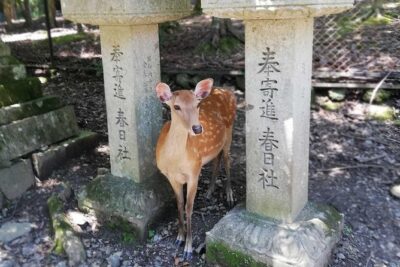
Nara Half Day Trip Walking Tour (Private Option Available)
Read our review →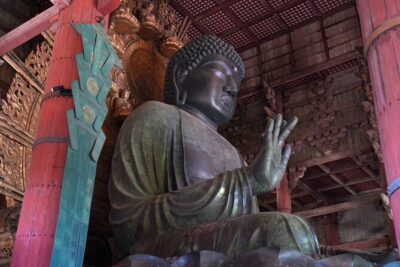
Nara Early Morning Tour (Kyoto or Osaka Departure Available)
Read our review →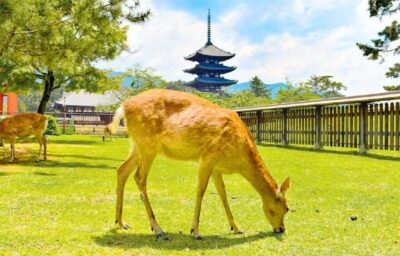
Nara and Uji Day Trip with Deer Park and Hot Spring
Read our review →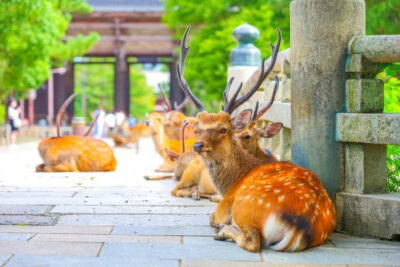
Kyoto/Osaka: Kinkakuji, Bamboo Forest, and Nara Deer Park
Read our review →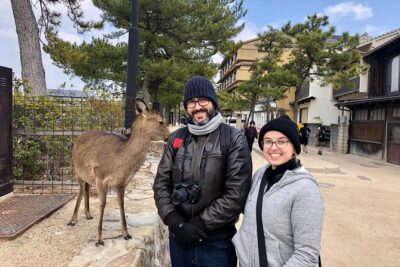
Nara 6hr Private Tour with Government-Licensed Guide
Read our review →
E-Bike Nara Highlights – Todaiji, Knives, Deer, Shrine
Read our review →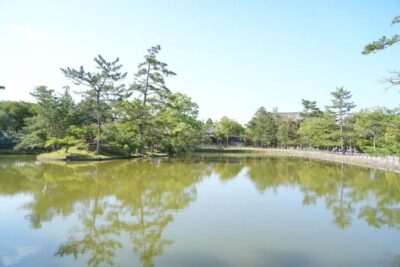
Nara Early Bird Tour (Kyoto Departure Option Available)
Read our review →Browse the lists this tour appears in