
Reviewed · OSAKA TOURS
Osaka: Food Tour Kuromon Market & Dotonbori with Guide
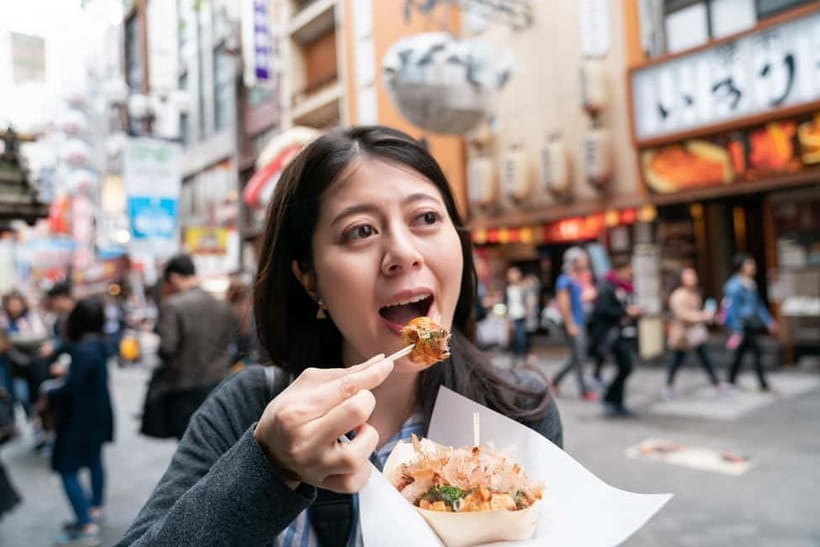
Osaka’s best introduction may be edible: a hot takoyaki ball, a savory okonomiyaki pancake, and a crisp kushikatsu skewer, all tied together by a walk through Kuromon Market and Dotonbori. This tour gives you a set route through the city’s food districts, so you can taste several local favorites without spending your first day guessing where to stop.
I like the mix of market browsing and easy-to-recognize Osaka landmarks. I also like the small touches, such as three-color dango at Mitoya and a final custard tart at Egg Tart. The main consideration is that this is a guided tasting walk, not a full sit-down meal, and the guide may be a fluent English or Spanish speaker rather than a Japanese culinary specialist.
Key points to know before booking
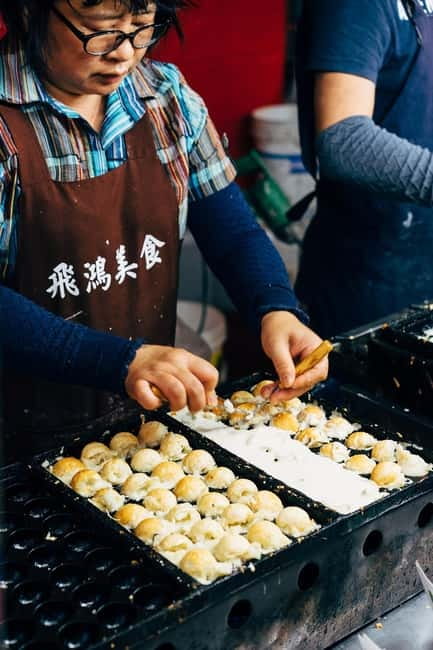
- Kuromon Market starts the food trail: Sample takoyaki at Wanaka and see stalls filled with fresh ingredients and Osaka specialties.
- Four food stops cover a lot of ground: The tastings include takoyaki, three-color dango, okonomiyaki, kushikatsu, and a custard tart.
- Hozenji adds atmosphere between bites: Walk through an older-feeling area before reaching the lively streets around Gigo and Dotonbori.
- Ebisu Bridge delivers the classic photo: Finish near the famous Glico running-man sign, one of Osaka’s most recognizable city images.
- Bilingual guidance is available: The tour is offered in English and Spanish, with guides such as Paula and Angeles praised for energy and helpful city explanations.
- Plan for walking and weather: Comfortable shoes matter, and the tour is not suitable for wheelchair users.
Why this Osaka food walk works well
At $84 per person, this experience makes sense if you want an organized introduction to Osaka’s signature dishes and nightlife districts. You are paying for a bilingual guide, several tastings, and a planned route through places that can feel confusing on a first visit.
The value depends on your appetite and expectations. If you want a large dinner, the included portions may not be enough on their own. If you want to sample several famous foods, learn where you are, and avoid making every decision yourself, the price is easier to justify.
The route also has a sensible rhythm. It begins with a market, moves through a traditional neighborhood, then finishes amid Dotonbori’s glowing signs. Food comes first, but the walk gives each dish a setting and a bit of Osaka context.
More Food Tours in Osaka
- Osaka: Shinsekai Food Tour with 13-15 Dishes at 5 Eateries
★ 4.8 · 2,204 reviews - Osaka Food Tour: 13 Dishes at 5 Local Eateries
★ 5.0 · 2,149 reviews - Hungry Osaka Street Food Tour:15 Tastings & 3 Drinks with a Local
★ 5.0 · 1,727 reviews
Meeting outside Hotel Royal Classic Osaka
The tour begins outside Hotel Royal Classic Osaka. Look for the guide holding an Amigo Tours sign, and arrive at least 10 minutes early for check-in.
This is a useful meeting point because the tour returns there at the end. You do not have to figure out a new pickup location after several food stops, and the return point gives you a clear place to continue your evening or head back to your hotel.
The experience is built around walking. Wear shoes that can handle several city streets, and avoid clothing that will make you uncomfortable in Osaka’s hot or cold seasons. Bring a camera, too, since the route includes the Glico sign at Ebisu Bridge.
Rain and seasonal weather deserve real attention. An umbrella or raincoat, sunscreen, and sunglasses can help in warmer months. In colder weather, bring warm clothing, extra socks, and another pair of shoes in case snow or wet streets leave you soaked.
Kuromon Market and Wanaka’s takoyaki
Kuromon Market is the opening act, and it is a good choice for a food tour. The market is filled with fresh ingredients and prepared local specialties, giving you a look at the raw materials behind Osaka cooking as well as the ready-to-eat dishes.
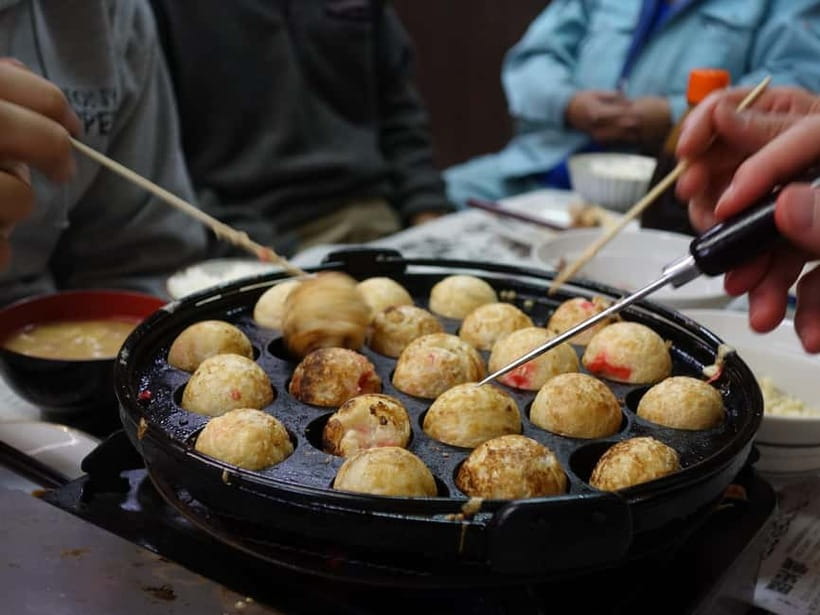
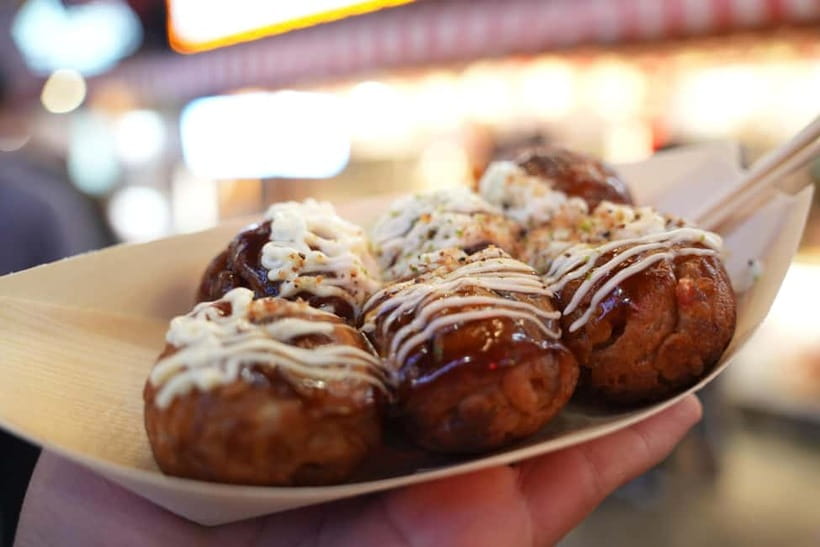
The first named tasting is takoyaki at Wanaka. These round batter snacks are crisp on the outside and soft inside, usually with octopus at the center. They are one of Osaka’s defining street foods, and eating them fresh matters because the inside can be extremely hot.
A guide helps here in a practical way. You can focus on the food and the market scene instead of trying to decide which stall fits your plans. You also get a quick introduction to a dish that many first-time visitors associate with Osaka immediately.
Keep your expectations in check. Takoyaki is a snack, not a full meal, and the market stop is one part of a longer tasting route. You will be sampling rather than settling in for a long meal.
Three-color dango at Mitoya
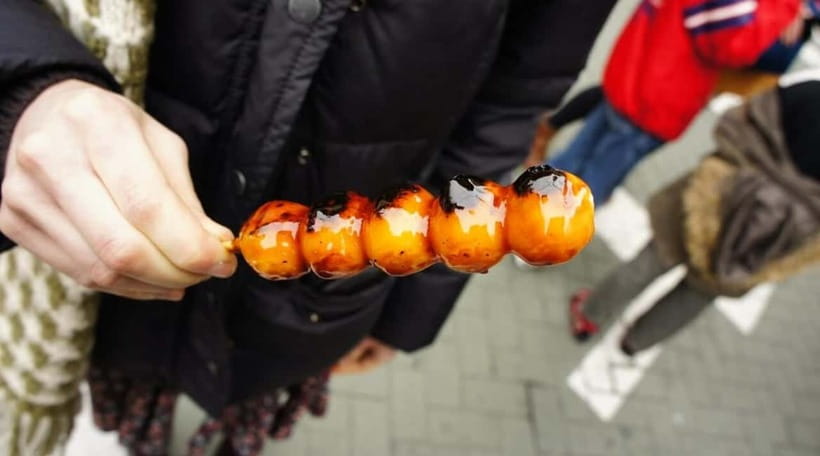
The next stop is Mitoya for three-color dango. These are chewy rice-flour dumplings served on a skewer, with three different colors arranged together.
Dango gives the tour a pleasant change of texture. After the hot, savory takoyaki, you get something soft and sweet. It is a classic Japanese treat, and the simple presentation makes it easy to eat while continuing through the neighborhood.
This stop also helps show that Osaka food is not only fried or heavily seasoned. The route includes savory dishes, sweets, and small traditional snacks. For you, that means a broader taste of local food culture without needing to commit to a single restaurant menu.
The portions are tastings, so the experience suits people who enjoy variety. If you prefer one large plate at each stop, you may find the format less satisfying.
Same base, a completely different sort of day:
- Osaka Go Karting Tour with Funny Costume
★ 5.0 · 2,658 reviews - Osaka Castle: Museum and Tower Entry Ticket
★ 4.5 · 2,380 reviews - Osaka: teamLab Botanical Garden Entry Ticket
★ 4.5 · 1,710 reviews - Osaka: Tea Ceremony Experience
★ 4.9 · 1,426 reviews
Hozenji and the road to kushikatsu
After Kuromon Market, the route continues through the Hozenji area. This section offers a break from the market crowds and neon signs, with streets that feel more intimate and traditional.
You then stop at Kushikatsu Yokozuna, located in front of Gigo. Here the focus shifts to two major Osaka favorites: okonomiyaki and kushikatsu.
Okonomiyaki is a savory pancake made with a mixture of ingredients and cooked as a hearty, filling dish. It is associated strongly with Osaka, and tasting it on a guided route gives you a useful introduction before you decide if you want to order a larger version later.
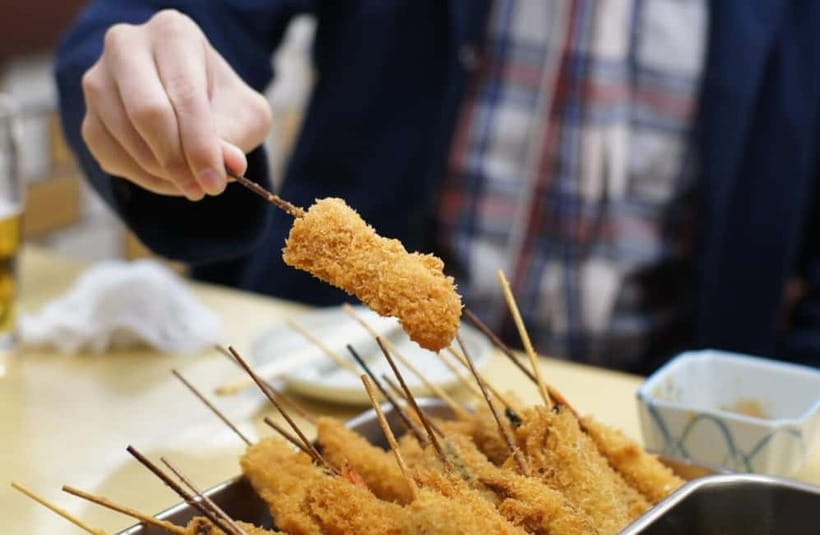
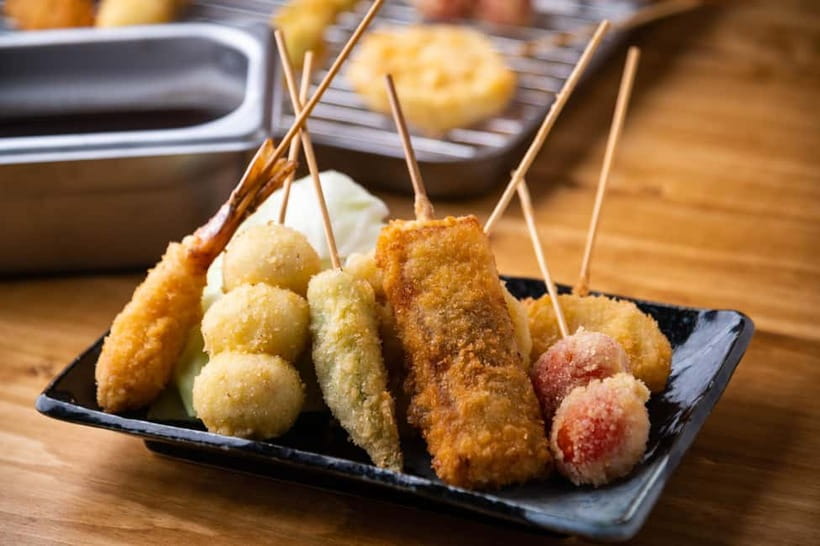
Kushikatsu consists of ingredients placed on skewers, coated, and deep-fried. The crisp outside and dipping sauce make it an easy food to enjoy while moving through the city, though the fried items can begin to feel heavy when paired with other rich dishes.
The appeal of this stop is contrast. You have moved from fresh market displays to a cooked specialty, then from a pancake to fried skewers. I would treat these servings as a sampler platter spread across several locations, not as a carefully paced restaurant dinner.
Egg Tart for a sweet finish
The final food stop is Egg Tart, a dessert shop known for custard tarts with flaky pastry and a creamy filling.
This is a smart ending. After takoyaki, okonomiyaki, and kushikatsu, a small pastry gives your palate something sweet and soft. The custard tart also provides a clear finish to the food portion before the tour turns toward Dotonbori’s signs and crowds.
If you have a sweet tooth, this may be one of the more memorable stops. If you are already full, you may want to pace yourself earlier in the route. Since the experience includes multiple tastings, it is wise not to arrive after a large meal.
The tour information does not give exact serving sizes, so you should not book it expecting a fixed multi-course dinner. Think of it as guided grazing through Osaka’s most famous food neighborhoods.
Dotonbori after dark
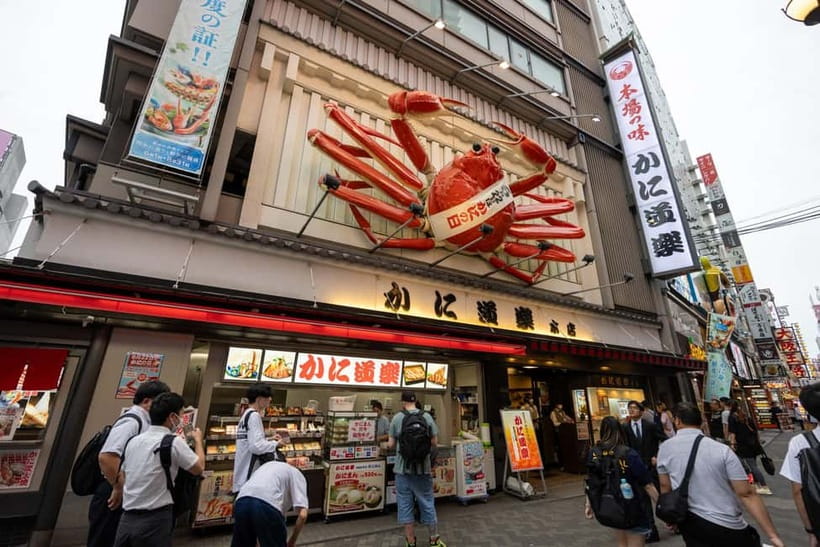
Dotonbori is where Osaka’s energy reaches full volume. Its neon signs, bright advertising boards, restaurants, and busy pedestrian streets create a very different mood from Hozenji.
The route gives you time to walk through the district rather than simply stopping for one dish and leaving. That matters because Dotonbori is as much about the street scene as the food. You can watch the signs change, see the restaurant fronts, and get a feel for Osaka’s entertainment center.
One practical benefit of having a guide here is orientation. Dotonbori can be crowded and visually loud, with plenty of turns and distractions. A guide keeps the group moving toward the main landmarks while explaining attractions you pass along the way.
Do not expect a quiet neighborhood walk. This is one of Osaka’s busiest entertainment areas, and the noise and crowds are part of the experience. People who prefer small restaurants and calm backstreets may enjoy Hozenji more than Dotonbori.
The Glico sign at Ebisu Bridge
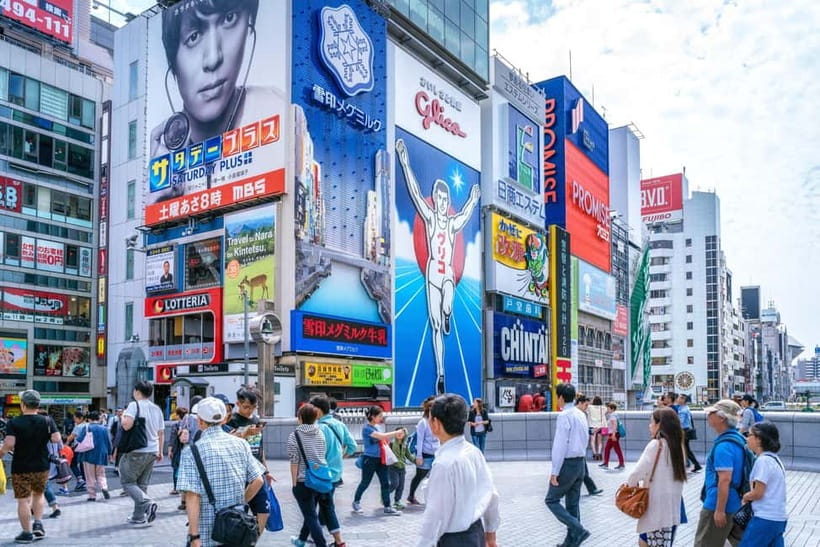
The tour stops at Ebisu Bridge for a photograph with the famous Glico sign. The running figure against the bright sign has become one of Osaka’s standard images, and the bridge is the natural place to capture it.
This is a simple stop, but it gives the tour a clear visual finale. You have tasted several Osaka foods, walked through Kuromon Market and Hozenji, and then reached the city image most people recognize from Osaka photos.
Bring your camera or phone ready. The stop is designed for a memorable picture, not a long attraction visit. No entrance fee to a specific attraction is included because the route focuses on public streets, market areas, and food shops.
After the bridge, you return to Hotel Royal Classic Osaka. That fixed ending is useful if you want to make dinner plans nearby or use the hotel as your next navigation point.
The guides and the style of insight
The tour is offered in English and Spanish. Guides Paula and Angeles received especially strong praise for their energy and for pointing out local attractions along the way.
That kind of guidance can add value even when the food portions are modest. You are not only being led from one shop to the next. You can ask questions as you walk, get help understanding what you are eating, and notice details you might pass without a guide.
There is one fair limitation to consider. The guide is not necessarily Japanese, and one piece of feedback specifically wished for a local Japanese food guide for deeper culinary insight. If your priority is detailed knowledge of regional ingredients, cooking methods, and food history, check your expectations.
For a first look at Osaka, the bilingual format may be more important than the guide’s nationality. Paula and Angeles were described as energetic, and that matters on a walking tour with several stops. A slow, uncertain guide could make a crowded route tiring, while a lively guide can keep the experience moving.
There was also a serious logistical complaint about a guide not showing up, leaving six people waiting for more than 30 minutes. It appears to be an isolated but important warning. Arrive early, keep your booking details handy, and if the guide is not at the hotel meeting point after the stated departure time, contact the provider promptly.
Who will get the most from the $84 price
I would recommend this tour most strongly to first-time Osaka visitors, food-focused sightseers, and people who want a ready-made introduction to Dotonbori. It is also useful if you are traveling alone and would rather share a food walk than choose every stop by yourself.
The experience is less suited to you if you want a long, leisurely restaurant meal, a highly technical Japanese food lesson, or a fully accessible route. It is not suitable for wheelchair users, and pets are not allowed.
The price becomes better value when you make use of the cultural side of the tour. You are not only buying bites of food. You are also getting a route through Kuromon Market, Hozenji, Dotonbori, and Ebisu Bridge, with a bilingual guide connecting those stops.
If you already know Osaka well, the food may feel familiar and the route may cover places you have seen. In that case, you may get more value from choosing individual restaurants and spending longer in each area.
You can reserve now and pay later, which keeps your plans flexible. Cancellation is allowed up to 24 hours before the tour for a full refund. Those terms are helpful if your Osaka schedule is still changing.
Should you book this Osaka food tour?
Book it if you want a structured food introduction with several classic Osaka tastes and a walk through the city’s most recognizable districts. The combination of takoyaki, dango, okonomiyaki, kushikatsu, and custard tart gives you variety, while the Glico sign provides a satisfying finish.
Skip it if you want generous portions, a Japanese-led culinary lecture, or a quiet, private meal. Also think twice if walking in crowded streets or changing weather will be difficult.
For most first-time visitors, the strongest reason to book is convenience. You can meet at one clear location, follow a route through Osaka’s food center, learn as you go, and return to the same hotel meeting point. Just arrive early, wear good shoes, and treat the included food as a tasting tour rather than dinner.
FAQ
Where does the Osaka food tour begin?
The tour begins outside Hotel Royal Classic Osaka. The guide will be holding an Amigo Tours sign.
How early should I arrive?
Arrive at least 10 minutes before the departure time for check-in.
Where does the activity end?
The tour ends back at the meeting point outside Hotel Royal Classic Osaka.
Which languages are available?
The tour is available in English and Spanish.
What food is included?
The tastings include takoyaki at Wanaka, three-color dango at Mitoya, okonomiyaki, kushikatsu, and a custard tart at Egg Tart.
Is the Glico sign included?
Yes. The route stops at Ebisu Bridge, where you can take a photo with the famous Glico sign.
Is the tour suitable for wheelchair users?
No. The activity is not suitable for wheelchair users.
What should I bring?
Bring comfortable shoes and a camera. An umbrella or raincoat, seasonally appropriate clothing, sunglasses, and sunscreen are also advised. In cold weather, bring warm clothing, extra socks, and spare shoes in case of snow or wet conditions.
More Shopping in Osaka
- Tokyo: Tsukiji Fish Market Food and Walking tour
★ 5.0 · 1,724 reviews - Tokyo: Tsukiji Fish Market Guided Walking Tour
★ 4.9 · 1,397 reviews - Nishiki Market Brunch Walking Tour (7 Tastings + Brunch)
★ 5.0 · 1,355 reviews - Tsukiji Fish Market Guided Tour and Sushi Making with Pro Chef
★ 5.0 · 775 reviews
More Markets in Osaka
- Kuromon Market Food Walking Tour in Osaka (6 stops, 6 tastes)
★ 5.0 · 550 reviews - Osaka: Kuromon Market Food Walking Tour (6 stops, 6 tastes)
★ 4.6 · 272 reviews - Osaka: Cooking Class & Sake Tasting with Local Market Visit
★ 4.8 · 31 reviews - Tokyo Tsukiji Fish Market Food and Culture Walking Tour
★ 5.0 · 3,184 reviews
Just added around Osaka
- Discover Real Osaka: A Cultural Walk with Food & Drink★ 5.0 · 13 reviews
- Osaka 6hr Private Walking Tour with Government Licensed Guide★ 5.0 · 174 reviews
- Private Airport transfer Kansai Intl. Airport(KIX) to OSAKA CITY★ 4.5 · 12 reviews
- From Osaka/Kyoto: Kyoto & Nara Day Trip with Optional Lunch★ 4.5 · 79 reviews
- Osaka: Namba Local Food Walking Tour (Taste 15 Dishes)★ 5.0 · 20 reviews
- Osaka Delights: Traditional Japanese Food Tour★ 4.5 · 33 reviews
- Badminton in Osaka & Kyoto with Locals!★ 5.0 · 15 reviews
- From Osaka or Kyoto: Kyoto and Nara 1-Day Bus Tour★ 3.5 · 141 reviews
Osaka Tours, compared.


Shinsekai Food Tour with 13-15 Dishes at 5 Eateries
Read our review →
Osaka Food Tour: 13 Dishes at 5 Local Eateries
Read our review →
Hungry Osaka Street Food Tour:15 Tastings & 3 Drinks with a Local
Read our review →



Hotspots & Hidden Gems Walking Tour Private or Group
Read our review →Browse the lists this tour appears in