
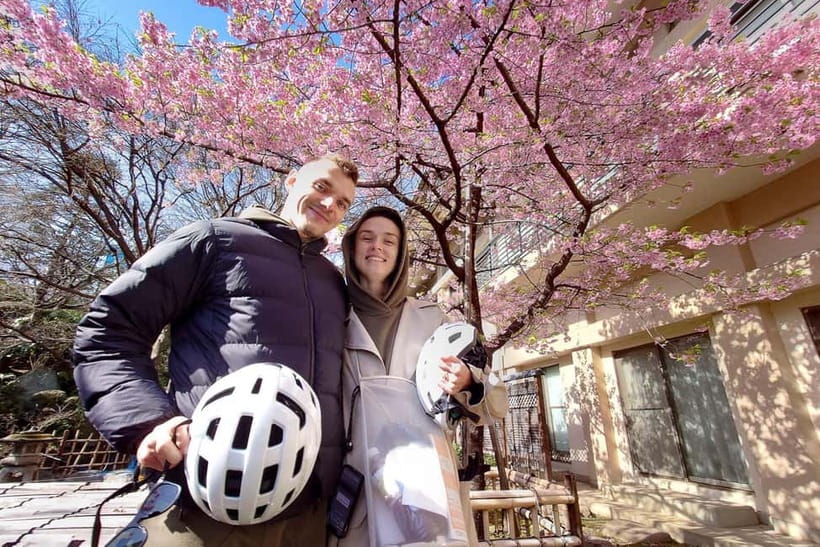
Reviewed · TOKYO TOURS
Tokyo: 3h Private E-bike Tours, Starting at Your Hotel
Tokyo makes far more sense from an e-bike seat. In three hours, you can move from Shinjuku skyscrapers to quiet back streets, pause at shrines and riverside paths, and cover ground that would take much longer on foot. Kazuma leads the ride in English or Japanese, and the private format lets you shape the route around your interests.
I like two things right away: hotel pickup and drop-off remove the usual Tokyo meeting-point puzzle, and electric assistance keeps hills and a 15 to 20-kilometer route manageable. The main consideration is that this is still a real bike ride. You need to be comfortable cycling in city traffic, and the tour is not suitable for children under 10, riders below 145 centimeters, or anyone over 100 kilograms.
Key points at a glance
- Start at your hotel: Meet the guide in the lobby with your helmet five minutes before departure.
- Cover serious ground: A typical route runs about 15 to 20 kilometers in three hours.
- Choose your Tokyo: Possible stops range from Shibuya Crossing and Tokyo Tower to old neighborhoods, shrines, and riverside roads.
- Ride an e-bike: The motor assists as you pedal, making the pace relaxed rather than athletic.
- Keep it private: You can request a preferred starting time, longer duration, or specific sights, with extra fees for some changes.
- Expect careful guiding: Kazuma adjusts the bikes, explains safety clearly, makes regular stops, and can take photos when you are off the bike.
Tokyo from a bike seat, not a train platform
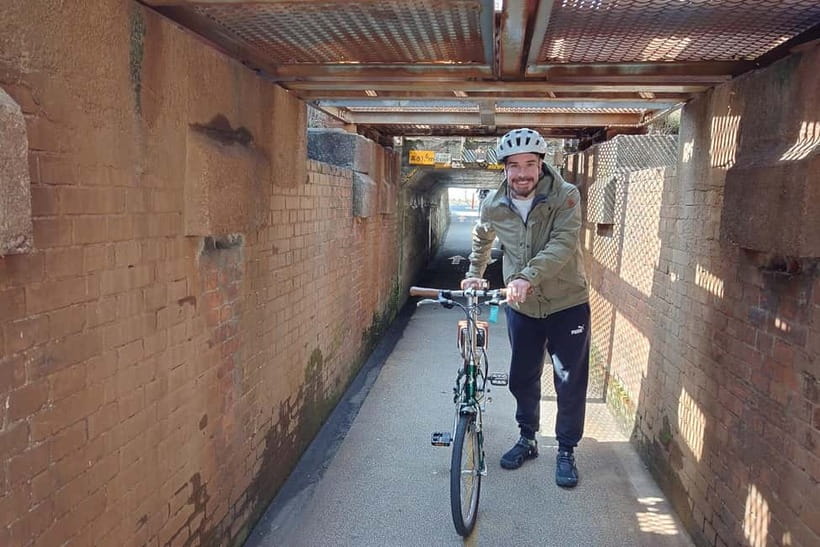
Most first-time visitors see Tokyo in separate pieces. You take the train to Shibuya, walk around, ride to Ginza, and perhaps visit Asakusa on another day. This tour joins those pieces together. You get a moving picture of the city, with modern towers, older lanes, imperial grounds, waterfront districts, and local neighborhoods appearing in one continuous ride.
The e-bike matters here. Tokyo is not a mountain town, but the distance, traffic, heat, and stop-and-go riding can wear you down. The motor gives assistance while you pedal, so you can keep moving without turning the outing into a fitness test. You still ride the bicycle yourself, but the effort is gentler.
The three-hour length is useful for a first look. It is long enough to see several districts, yet short enough to fit on your arrival day or between other plans. I would not treat it as a full sightseeing day. Think of it as a broad introduction, with short stops rather than long visits inside attractions.
More bike days around Tokyo:
- Tokyo Guided Small-Group Biking Tour
★ 5.0 · 1,250 reviews - Tokyo Great Cycling Tour
★ 5.0 · 811 reviews - Tokyo Top Highlights 3h Guided E-bike Tour
★ 5.0 · 714 reviews
Meeting Kazuma at your hotel
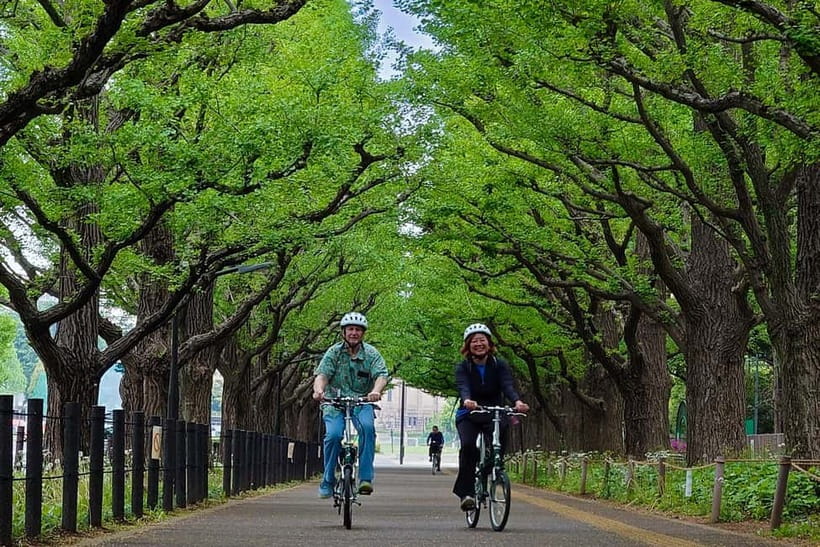
The easiest part of the arrangement is the start. You meet the guide in your hotel lobby five minutes before the scheduled pickup time, looking for a person with a bike helmet. That saves you from explaining a Japanese address to a taxi driver or finding an unfamiliar meeting point in a large city.
Pickup and drop-off are offered in many central areas, including Shinjuku, Shibuya, Ginza, Marunouchi, Asakusa, Ueno, Akihabara, Roppongi, Shinagawa, Toranomon, Hamamatsucho, and Minato City. The exact hotel must be within the operator’s service range. If it is not, you can discuss another starting point, but an added charge may apply.
Kazuma adjusts each bicycle before setting off. That small step matters, especially if several people in your group have different heights or little recent cycling experience. The bikes are intended for riders between 145 and 185 centimeters, and the operator does not accept riders over 100 kilograms.
You receive a helmet, safety instructions, insurance, and a live guide. Communication before the ride takes place through WhatsApp, iMessage, or SMS, so keep an eye on your messages after booking.
What a three-hour route can include
The proposed route covers roughly 15 to 20 kilometers, but no single list of stops is guaranteed. Your private group can ask for particular areas, and the guide can adjust the route to suit your pace. Here is what the possible sights mean in practical terms.
Shinjuku, skyscrapers, and Memory Lane
The Tokyo Metropolitan Government Building is the listed photo stop, with about 10 minutes set aside. Its tall twin towers give you a useful sense of modern Tokyo, and the surrounding Shinjuku district supplies a dramatic opening: wide avenues, towers, neon, and dense pedestrian areas.
Nearby Omoide Yokocho, often called Memory Lane, offers a sharp change of mood. Its narrow alleys and tiny restaurants recall an older, more intimate Tokyo. You should expect a brief stop rather than a sit-down meal, since food and drinks are not included and the tour keeps moving.
Shinjuku can be crowded, so this part of the ride is about seeing the contrast between major city streets and compact side lanes. If your group wants a quieter outing, tell Kazuma early so he can balance the route.
More e-bike rides in Tokyo:
- 3h Tokyo E-Bike Tour: Hidden Gems, and Local Life with guide
★ 5.0 · 670 reviews - Tokyo: 3-Hour Bike or E-Bike City Highlights Tour
★ 4.8 · 435 reviews - Tokyo: 3-hour Guided E-Bike Tour of the City’s Hidden Gems
★ 4.8 · 251 reviews - Tokyo: 3-Hour Bike or E-Bike Tour of City’s Hidden Gems
★ 4.7 · 81 reviews
Shibuya and Aoyama
Shibuya Crossing is one of Tokyo’s famous visual moments. Reaching it by bicycle lets you understand the surrounding streets rather than seeing only the crossing itself. The area is energetic and full of traffic, so your guide’s safety instructions are especially important.
From there, a route may continue toward Aoyama, including the Ginkgo Tree Avenue and Aoyama Cemetery’s cherry blossom street. These areas offer more open space and a calmer rhythm than central Shibuya. Seasonal scenery will vary, of course. The ginkgo trees are most notable in their autumn season, while blossoms depend on the time of year.
This is a good section for people who want both the postcard Tokyo and the city’s quieter side streets. It is less useful if you want long shopping stops, since the tour is designed for cycling and short visits.
Shrines, the Olympic area, and Hibiya
Hatonomori Hachiman Shrine may appear on a route through central Tokyo. A small shrine stop gives you a break from the large-scale city and a chance to hear about everyday religious customs and neighborhood life.
The National Stadium, used for the Tokyo Olympics, is another possible landmark. You will see the outside rather than take part in a stadium visit. Its value is mainly architectural and historical, especially if you followed the 2020 Olympics.
Hibiya Park, described as Tokyo’s first western-style park, makes a sensible rest point. It also helps explain how the city combines formal public spaces with dense commercial districts. The park, Imperial Palace area, and Marunouchi can fit together well, though the final order depends on your hotel, pace, and requests.
The Imperial Palace, Tokyo Station, and Nihonbashi
The Imperial Palace is one of the most useful places for a guide to explain Tokyo’s transition from castle city to modern capital. You may cycle around the outer areas and see broad roads, gardens, walls, and moats. The experience is primarily an exterior look, not a palace interior tour.
Tokyo Station provides a strong architectural contrast. Its historic red-brick facade faces the high-rise Marunouchi business district, making the area a compact lesson in old and new Tokyo.
Nihonbashi Bridge marks another change in the city’s story. The bridge and surrounding district connect present-day offices and shops with Tokyo’s older commercial identity. These central stops are particularly good if you want context rather than only bright lights and famous photo spots.
Tsukuda Island and Tsukishima
The waterfront route can include Tsukuda Island and Tsukishima Monja Street. These districts show a more local side of central Tokyo, with older residential pockets set against newer towers and broad water views.
Tsukishima is associated with monja, a Tokyo specialty cooked on a hot plate and eaten directly from the grill. Food is not included, and the tour may only stop for a look or explanation, but the street helps connect the ride to local eating culture.
This section is appealing if you want Tokyo beyond the standard first-day circuit. It is also a reminder that private tours work best when you tell the guide what kind of city you want to see: architecture, food, neighborhoods, temples, or major landmarks.
Zojo-ji, Tokyo Tower, and Asakusa
Zojo-ji Temple and Tokyo Tower make a classic pair. The temple brings religious and historical atmosphere, while the orange tower rises behind or near it as a symbol of postwar Tokyo. Depending on the route, you may see both from outside and stop for photographs.
Asakusa’s Kaminarimon Gate is another likely choice, especially for first-time visitors. The gate is the entrance to the approach toward Senso-ji, and its large lantern is one of Tokyo’s most recognizable sights. The surrounding streets can be crowded, so cycling may pause or slow considerably in this area.
Asakusa is not just a photo stop. It gives you a feel for an older entertainment and temple district, quite different from Shinjuku or Marunouchi. If you want to enter Senso-ji or spend time browsing shops, confirm how that fits with the three-hour schedule.
Kitasenju and the rivers
Kitasenju, the Arakawa Riverside, and the Sumidagawa Riverside offer a less polished but more everyday view of Tokyo. Kitasenju is a local neighborhood rather than a headline sight, and that is exactly its appeal if you have already seen the major central districts.
Riverside stretches can make the ride feel more relaxed. They also provide room to cycle and pause, away from some of the tightest central streets. Tokyo Skytree may appear on a route along the Sumida River, giving you a dramatic endpoint or mid-tour photo opportunity.
The tradeoff is distance. A route that reaches the eastern side of Tokyo may leave less time for Shibuya, the Imperial Palace, or Tokyo Tower. Private touring solves some of that, but not the basic limits of three hours and city traffic.
Why the private format earns its price
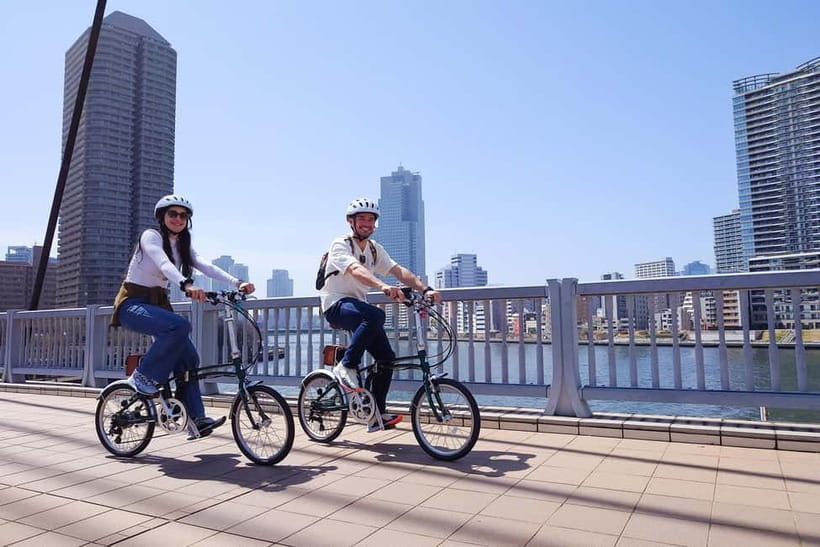
At $141 per person, this is not the cheapest way to see Tokyo. You are paying for a private guide, hotel service, an e-bike, helmet, insurance, safety briefing, and a route built around your group rather than a fixed public schedule.
The value is strongest for two to four people who want an introduction without spending hours underground on trains. A guide can connect districts that feel unrelated on a transit map, point out places you would pass without noticing, and change the pace when you need water or a short rest.
The private format also helps families and mixed-ability groups. One person can be a novice rider while another is more confident, and the electric assistance keeps the group together. Still, the tour cannot remove every cycling demand. You need to follow instructions, wear suitable clothing, and stay alert.
Custom requests may cost extra. Changes to the start time, a longer tour, or a distant requested sight can bring additional charges. Ask about those costs when you book instead of assuming every change is included.
Safety, clothing, and comfort
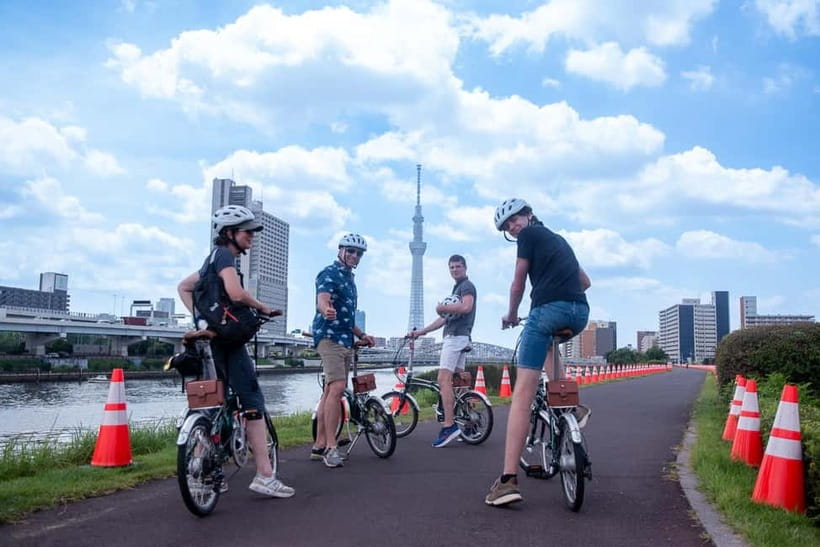
The guide places strong emphasis on safety, which is important in a city this large. You receive instructions before riding, and regular stops provide chances to listen, drink, and catch your breath.
Wear comfortable closed shoes. High heels, sandals, and flip-flops are not allowed, and skirts are also unsuitable. Smoking, alcohol, and drugs are prohibited. You cannot take photos or videos while cycling, so stop the bike first and then use your camera.
The route is not suitable for children under 10. Height and weight limits are specific: riders should be 145 to 185 centimeters tall and no heavier than 100 kilograms. Those limits are connected to the bicycles, so do not treat them as casual suggestions.
The operator provides insurance, but that does not mean you should ignore your own travel coverage or the safety briefing. If you have not ridden recently, tell Kazuma. The ride can be adjusted, and the e-bike makes the physical side easier, but city cycling still requires attention.
The guide’s personal touch
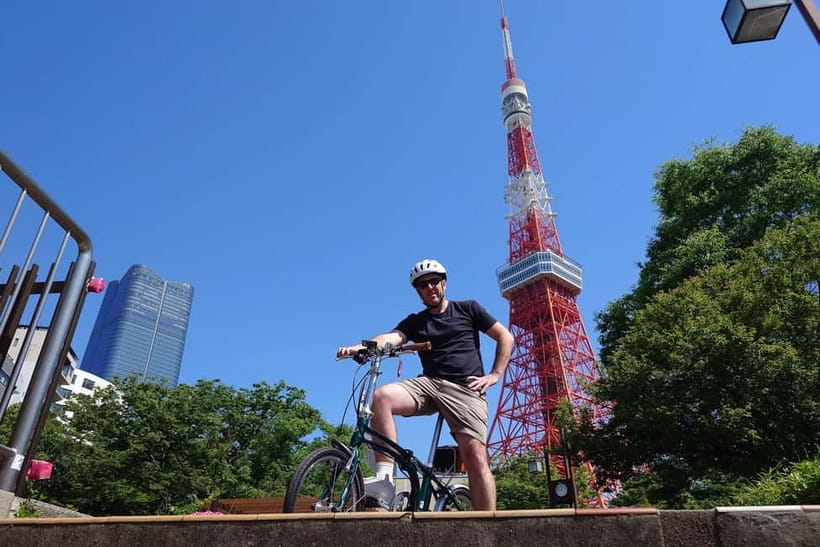
Kazuma is a major part of the experience. He speaks excellent English, explains Tokyo’s history and culture during the stops, and adjusts the outing to suit the people on the bikes. He has also been praised for patience with novice riders and for keeping a careful pace.
A thoughtful extra is photography. Kazuma may take photos of your group during the ride and send them afterward, including action shots when you are cycling. This is not a guaranteed substitute for your own camera, but it means you can enjoy the ride without trying to photograph yourself constantly.
The strongest pattern is his combination of safety, friendliness, and flexibility. He can guide a family around Shinjuku and Shibuya, take a couple through the Imperial Palace and old side streets, or focus on places you have not yet visited. The best results come when you share your interests before departure.
Who should book this ride?
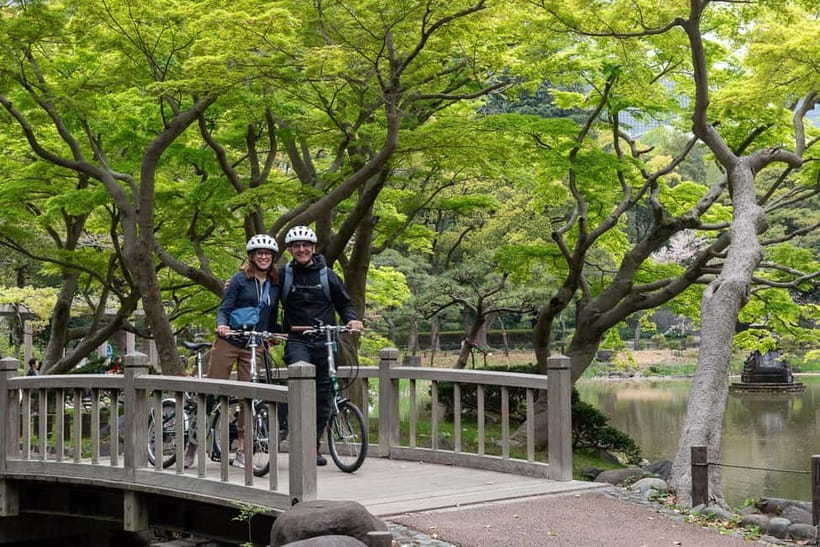
I would choose this tour for a first or second day in Tokyo, when you want to get your bearings across several districts. It is also useful if your time is limited and you want more than one neighborhood without committing to a full-day bus or walking tour.
It suits active adults, couples, families with older children, and friends who like moving at their own pace. You do not need to be a strong cyclist, but you should be comfortable on a bicycle and able to follow traffic and guide instructions.
I would choose another activity if you want long interior visits, a food-focused tour, serious shopping time, or a completely effortless sightseeing day. Three hours passes quickly, and the tour favors breadth over extended time at any one monument.
Free cancellation is available up to 24 hours before departure, and you can reserve now and pay later. Check availability for starting times, then confirm your hotel is within the pickup area.
Should you book Tokyo Bike Bliss?
Book it if you want to connect Tokyo’s famous sights with ordinary streets in one private outing. The hotel pickup, electric assistance, flexible route, and careful guiding make the $141 price easier to justify, especially when shared by a small group.
I would particularly recommend it to first-time visitors who feel overwhelmed by Tokyo’s size. You will not see everything, but you will get a useful citywide introduction and a better sense of how the districts relate to one another. Tell Kazuma your priorities, wear proper shoes, and allow the route to include a few places you would not have found by yourself.
FAQ
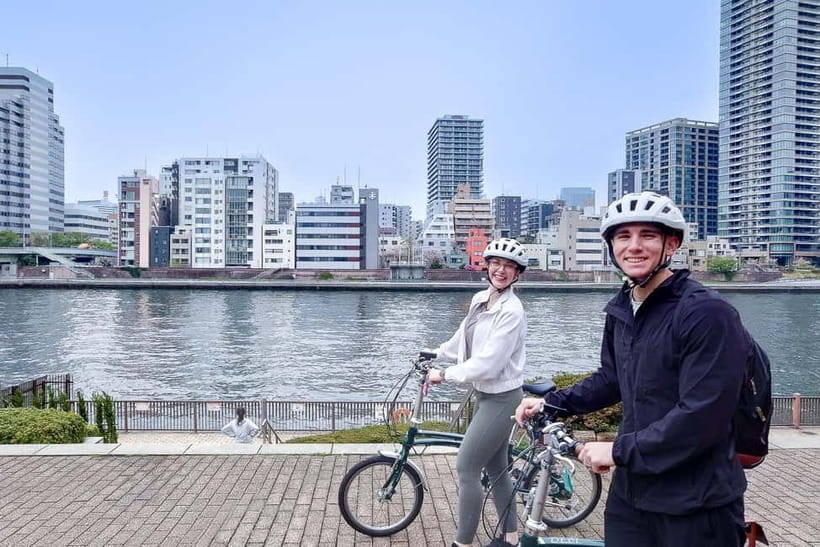
Where does the Tokyo e-bike tour start and end?
The tour starts and ends at your hotel when the hotel is within the operator’s service range. If it is outside that range, you can discuss another starting point, and an extra charge may apply.
How long is the tour?
The tour lasts three hours. A typical route covers about 15 to 20 kilometers, depending on the chosen route, stops, and riding pace.
Which languages does the guide speak?
The tour is available with a live guide in English or Japanese. Kazuma is identified as the guide and speaks excellent English.
Which Tokyo sights can the tour visit?
Possible places include Shibuya Crossing, the Imperial Palace, Tokyo Station, Nihonbashi Bridge, Tokyo Tower, Zojo-ji Temple, Asakusa’s Kaminarimon Gate, Tokyo Skytree, Hibiya Park, Shinjuku, Tsukishima, Kitasenju, and riverside areas. The route is private and can be adjusted.
Is the e-bike included?
Yes. The e-bike, helmet, safety instruction, insurance, and live guide are included in the activity.
Is food or drink included?
No. Food and beverages are not included. The tour includes short stops where you can drink, but you should plan separately for any meal or snack.
Who cannot join the tour?
The tour is not suitable for children under 10, people below 145 centimeters, or people over 100 kilograms. High heels, sandals, flip-flops, and skirts are not allowed.
Can I request a different start time or a longer route?
Yes. You can request a different starting time, a longer duration, or visits to particular places. Some customizations, especially longer routes or distant sights, may require additional payment.
More 3-Hour Experiences in Tokyo
- Tokyo: 3-Hour Food Tour of Shinbashi at Night
★ 4.9 · 45 reviews - 3-Hour Kyoto Insider Sake Brewery Tour with Tastings & Pairings
★ 5.0 · 917 reviews - Kyoto: 3-Hour Fushimi Inari Shrine Hidden Hiking Tour
★ 4.9 · 270 reviews - All must-sees in 3 hours – Nara Park Classic Tour! From JR Nara!
★ 5.0 · 108 reviews
Just added around Tokyo
- Private Arrival Transfer : Narita International Airport to Central Tokyo City★ 4.5 · 12 reviews
- Narita Airport(NRT): Private Transfer to Tokyo/Yokohama 1-9pax★ 5.0 · 47 reviews
- Private Transfer from Narita Airport to Yokohama Port and City★ 4.5 · 17 reviews
- [Narita Airport Terminals 1, 2] 40-60km Sawara Itako Historic Bike Tour★ 5.0 · 13 reviews
- 3 Day Japan Highlights Tour: Tokyo, Mt.Fuji, Nara, Kyoto, Osaka★ 5.0 · 22 reviews
- Small Town in the Big City: Tasting Tokyo’s Kichijoji★ 5.0 · 195 reviews
- Small Town in the Big City: Tasting Tokyo’s Kichijoji★ 5.0 · 16 reviews
- The 10 Tastings of Tokyo With Locals: Private Street Food Tour★ 5.0 · 48 reviews
Tokyo Tours, compared.

Mt Fuji and Hakone 1-Day Bus Tour Return by Bullet Train
Read our review →

teamLab Planets TOKYO Digital Art Museum Entry Ticket
Read our review →
Mt Fuji & Hakone Cruise, Drum Show Bullet Train 1 Day from Tokyo
Read our review →
Sumo Show Experience with Chicken Hot Pot and a Photo
Read our review →
Shinjuku Food Tour (13 Dishes at 4 Local Eateries)
Read our review →
Tokyo Mt Fuji 5th St & Hakone Cruise Bus Tour w/Bullet Train
Read our review →
Flagship 2-Hours Official Street Go-Kart Tour – Tokyo Bay Shop
Read our review →Browse the lists this tour appears in