
Reviewed · TOKYO TOURS
Tokyo: Manga Drawing Workshop Guided by Pro Manga Artist
The best part of this 150-minute manga workshop is that you do not merely watch an artist draw. You work through the same basic stages used in professional manga production, from an idea and rough sketch to ink, black fills, screen tones, and speech bubbles. The instructor does the hard rescue work when your pose or proportions go astray.
I like two things here: the small group, limited to eight, gives you real access to the sensei, and the finished, laminated panel makes a far better souvenir than another shop-bought trinket. The main consideration is that the class may feel more like guided tracing and adaptation than a fully free-form art lesson, especially if you are already a confident artist.
At a glance
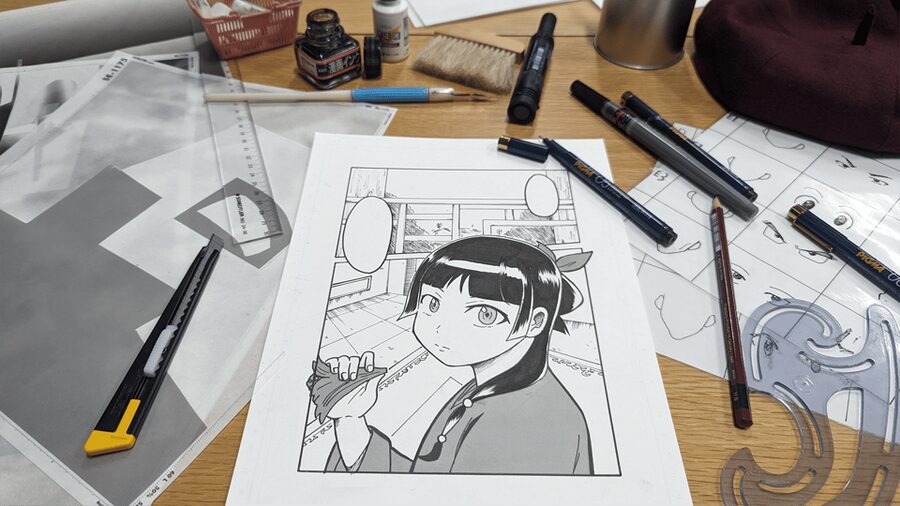
- A professional process in miniature: Follow ideation, rough sketching, drafting, inking, solid blacks, screen tones, and lettering.
- Designed for complete beginners: The artist guides you step by step, so poor drawing skills are not a barrier.
- A small Shibuya setting: With no more than eight participants, questions are easier to ask and help is close at hand.
- Interpreter included: English and Japanese support is provided, with interpreters such as Hanae, Madoka, Machi, and Ai working with different sessions.
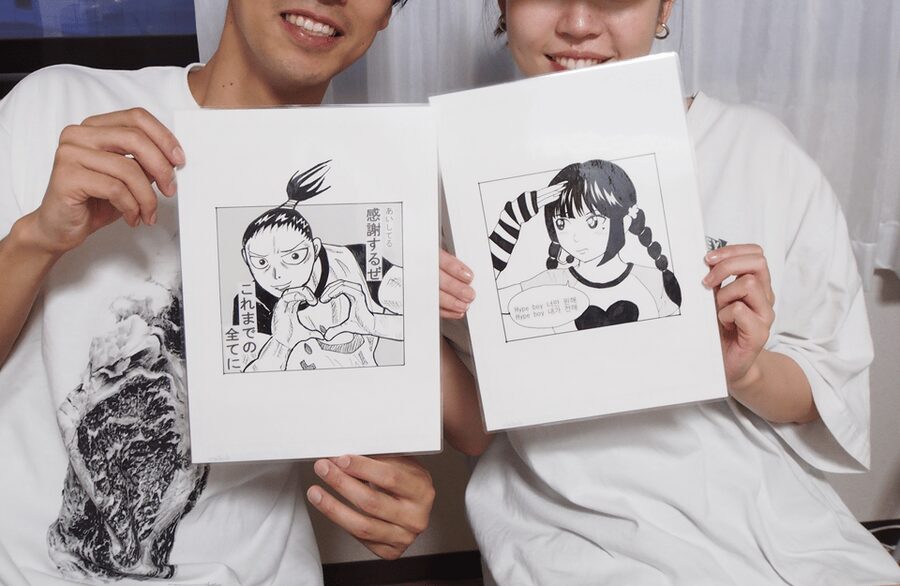
- A personal keepsake: You leave with your own finished manga artwork, often laminated for the journey home.
- A useful reality check: Artistic freedom can vary, so ask early if you want to create a wholly original piece rather than adapt a sample or reference image.
Your first challenge is finding the black building in Shibuya
The meeting point is 6F of the Shibuya 3-chome TR Building, at 3-8-11 Shibuya, Shibuya-ku. The building is black and relatively thin, details worth noting because the location can be easy to miss in Shibuya’s maze of signs, side streets, and tall buildings.
Give yourself extra time. One family had trouble finding the entrance during a political rally near Shibuya Crossing, and the guides helped locate them. That does not make the workshop’s address bad, but it does mean you should not arrive at the last minute. Save the exact address before leaving your hotel and look for the black, narrow building rather than relying only on a broad map pin.
The studio setting is part of the appeal. You are not in a large tourist classroom with rows of desks. The group can be as small as one booking, and it is capped at eight people. That creates an intimate class where the artist can look closely at your page, adjust your approach, and answer questions about manga tools and working methods.
More anime and pop-culture days in Tokyo:
- Official Street Go-Kart Tour – Akihabara
★ 5.0 · 1,578 reviews - Tokyo Go Kart: Asakusa, Skytree, and Akihabara **IDP MUST**
★ 5.0 · 988 reviews - Tokyo Studio Ghibli Museum and Ghibli Film Appreciation Tour
★ 4.5 · 421 reviews
Choosing an idea before the pencil touches paper
The session begins with the concept. You may choose from provided examples or bring an image of your own, then decide what sort of character, expression, or pose you want to draw. Some people have worked from favorite characters, personal characters, pets, or a photo. One participant asked for a version of a virtual YouTuber, which proved more demanding because complex character designs take longer to reproduce.
This first stage matters more than it sounds. A simple, readable character gives you time to learn the tools. A detailed costume, crowded pose, or complicated reference can eat into the two and a half hours. If you have a specific idea, keep it clear and reasonably simple.
For beginners, this is where the artist makes the activity approachable. The sensei can provide a rough outline or guide your composition before you commit to the final lines. You are not expected to arrive with an original manga plot or polished character design.
For experienced artists, the opening decision is more important. You may want feedback on your own style rather than a preselected exercise. Tell the instructor and interpreter this at the start. The class can accommodate different skill levels, but the amount of creative control may depend on the instructor, your chosen image, and the time available.
Rough sketching with a sensei beside you
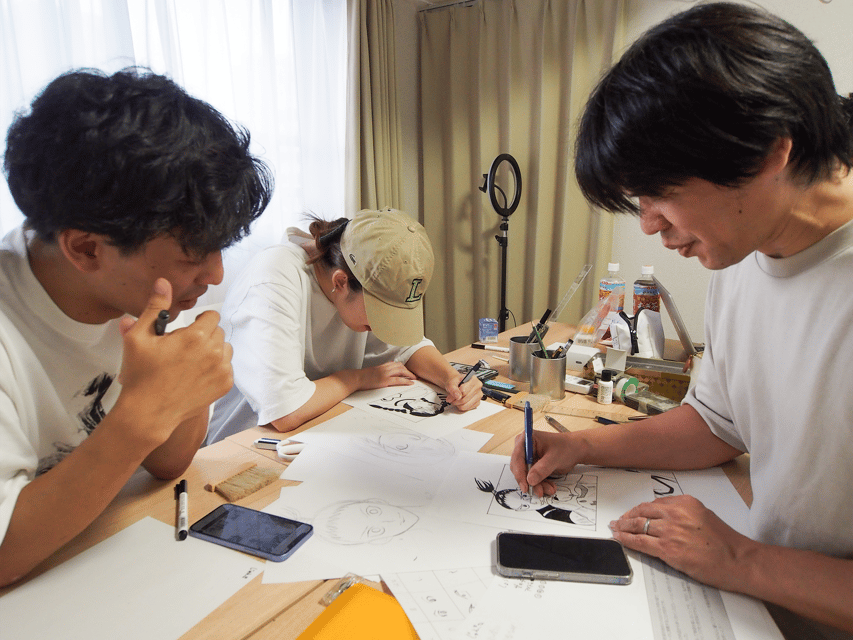
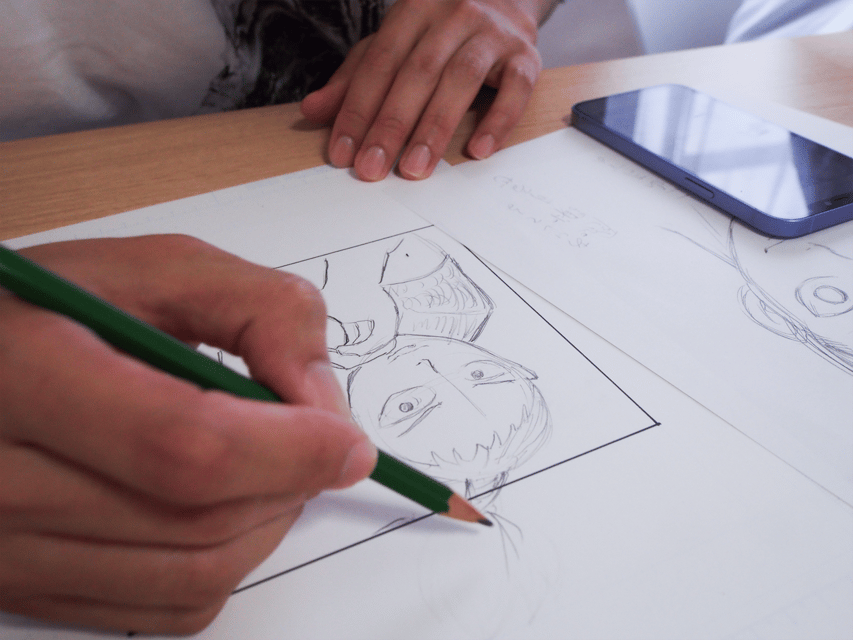
After the idea is settled, the professional artist creates or demonstrates the rough structure. This is the point where your chosen image begins to look like a manga panel rather than a loose concept.
The instructor’s role is not limited to giving a lecture. You receive direct help with proportions, placement, expression, and the basic shape of the character. Several instructors have been praised for patience, including Shige Matsumori, Rokkaku-sensei, Kousei-sensei, Hiroshi, and Kamaya Katsuki. The assigned artist can vary, but the format remains hands-on.
You then work over the rough lines and amend them with pencil. This may feel less like producing every mark from nothing and more like learning by following a professional framework. That is useful for a first attempt because you can focus on line quality and technique instead of spending half the session stuck on anatomy.
It can also be the least satisfying part for skilled artists who want a blank page. One participant specifically felt the class offered less freedom than expected, with the sensei producing a manga-style version of a supplied photo for the participant to trace and finish. I would treat this as an important booking question: if you want instruction and a strong final image, the format works well; if you want an open studio critique, it may feel limited.
Inking, erasing, and seeing the panel take shape
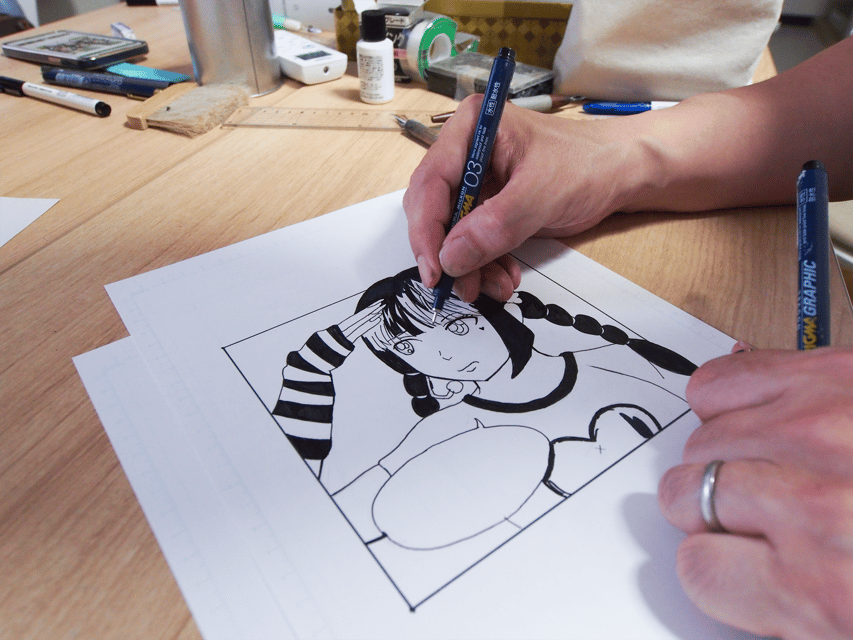
Once the pencil work is ready, you move to ink. This is where the workshop starts to feel distinctly different from ordinary sketching. Manga line work depends on confidence, weight, and clean decisions, and the proper tools can make a surprising difference.
You ink over the approved drawing, then erase the remaining pencil marks. The sequence forces you to slow down and pay attention. You cannot casually redraw every line once the ink is on the page, so the sensei’s guidance is useful for knowing which marks matter and which can be left alone.
The instructor can help you correct mistakes or strengthen the finished image. Beginners often arrive worried that their drawings will look childish. The structure of the lesson, along with the artist’s rough work and corrections, gives you a much better chance of producing a presentable panel.
This is also a good time to ask questions. The interpreter helps explain the instructions in English, and the format allows conversations about the artist’s career, inspirations, materials, and the manga business. The interpreters have been singled out for making communication comfortable and clear. Their contribution is not just word-for-word translation. They help keep the lesson moving and make it easier for you to ask a question when the artist is working.
More hands-on workshops in Tokyo:
- Sushi Making Tokyo Roll and Authentic Japanese Sushi Class
★ 5.0 · 3,971 reviews - Tokyo: Roll and Authentic Sushi Making Class in Asakusa
★ 4.9 · 1,957 reviews - Tokyo Shinjuku Chopsticks Making Class
★ 5.0 · 1,763 reviews - Tokyo: Sushi Making Class in a Happi Coat near a Famous Spot
★ 4.9 · 1,377 reviews
Solid blacks and the logic of manga contrast
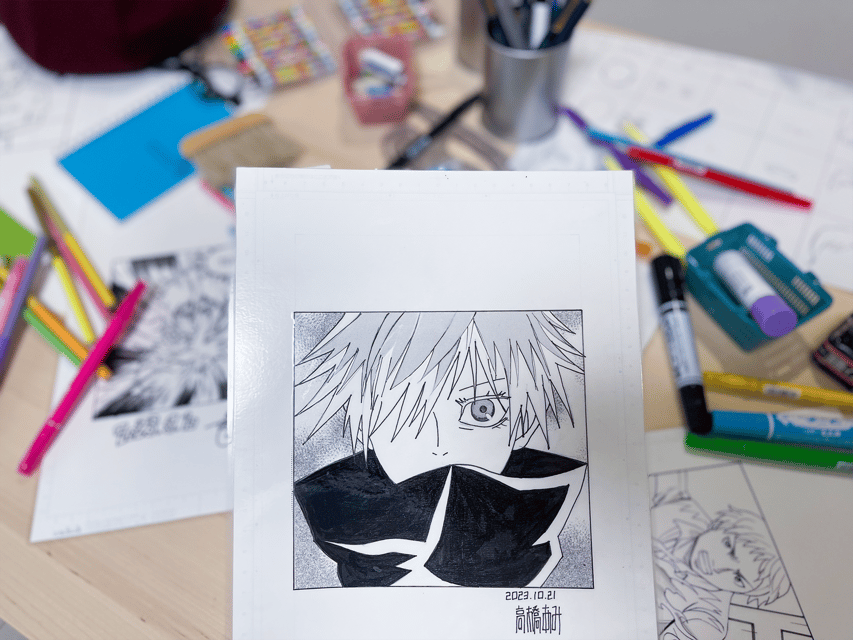
After the main lines are inked, you add solid black areas. This can mean hair, clothing, shadows, or a background element. The result is more graphic and dramatic than a pencil drawing.
The artist shows you where black will strengthen the composition. For a beginner, this is a useful lesson in restraint. Filling every dark area can flatten a panel, while leaving too much white can make it look unfinished. The workshop gives you a practical glimpse of how manga artists control attention with contrast.
You should expect guidance rather than total independence here. The sensei may suggest where to add black or help repair an uneven area. That is part of the value of having a professional artist in the room, though it also reinforces the fact that your final page is a guided piece, not necessarily a completely self-generated illustration.
The process is especially rewarding for families and mixed-skill groups. A child can work alongside an adult, and a participant with years of digital drawing experience can learn traditional methods without the beginner feeling left behind. Two 11-year-old boys completed artwork they were proud to display, while adult artists used the session to try traditional materials again.
Screen tones are the workshop’s most unusual lesson
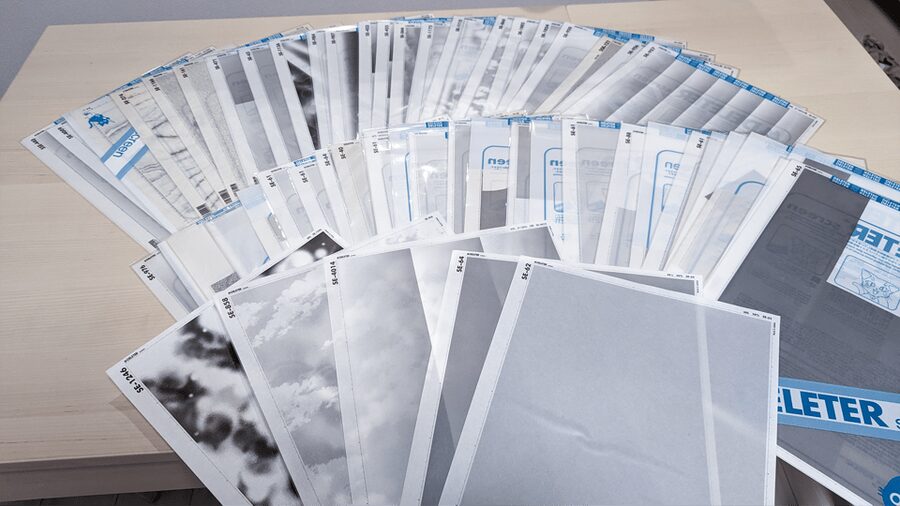
The most distinctive tool here is screen tone, a transparent sheet used to create grey areas, texture, shading, and printed effects. You cut the tone with a small tool, position it over the page, and rub or secure it so the pattern transfers to the desired area.
If you mainly know manga through books or screens, this reveals how much craft sits behind those clean grey backgrounds and patterned shadows. The effect can look simple on the finished page, but applying it neatly takes care.
Screen tones were a highlight for several participants, including an artist who normally works digitally and later went shopping for traditional supplies. If you have never used them, pay close attention to the cutting technique and ask where the materials can be found in Tokyo. The interpreter may be able to point you toward art-supply options, as happened during one session, though that help should not be treated as a formal shopping tour.
This stage also rewards patience. The class can feel slow at first, particularly while the rough drawing is being prepared. Stick with it. Once the tones, black areas, and ink lines come together, the page begins to resemble a finished manga panel.
Speech bubbles, finishing touches, and your take-home art
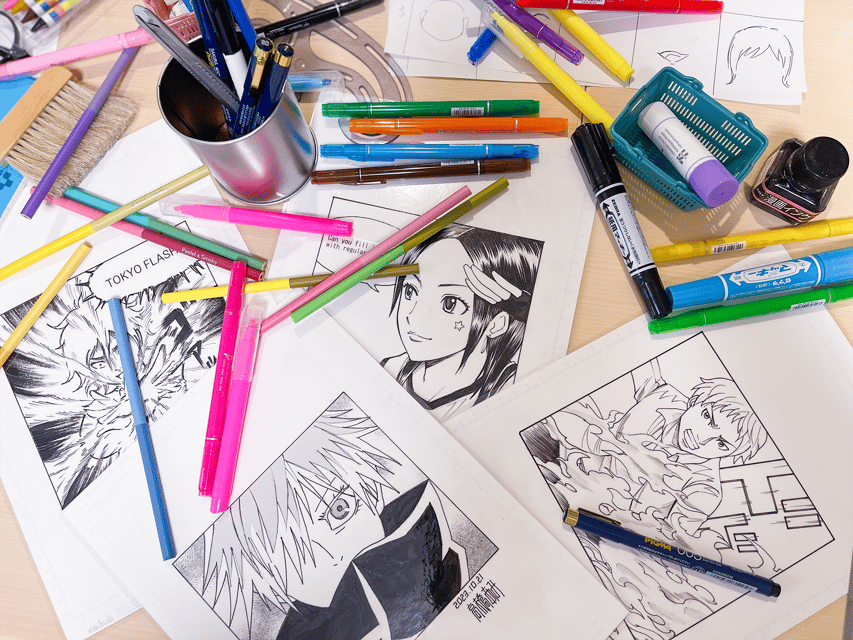
The final steps include speech bubbles and other comic effects. Depending on your design, you may add lettering, stickers, or a dramatic visual treatment that makes the image read like a panel rather than a standalone portrait.
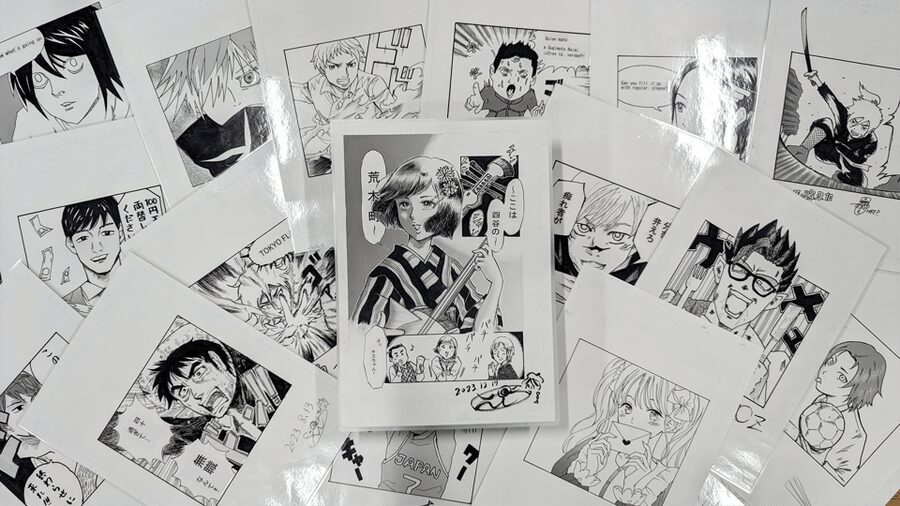
At the end, the artwork is laminated so it can travel home more safely. You get a tangible souvenir made during your time in Japan, not simply a photograph of an activity. Couples have planned to frame their panels, and families have taken home pieces intended for display.
The final result depends on your starting idea and how much assistance you accept. Some people produce a panel closely guided by the sensei’s drawing. Others make more of their own decisions and use the instructor mainly for advice, composition, or technical help.
You should not expect a professional manga page in the strict publishing sense. You are learning a condensed version of a long craft in 150 minutes. Still, the finished panel can look remarkably polished because you are using the same broad sequence and materials that give manga its familiar visual language.
What the $129 price buys you
At $129 per person, this is not a cheap drop-in activity. The cost makes more sense when you count the professional instruction, interpreter, materials, small group size, and finished artwork. You are paying for access to an artist with more than 20 years of manga experience, not just for paper and pencils.
The value is strongest if you care about manga, anime, illustration, or Japanese creative culture. You receive a lesson, a conversation, and a souvenir in one booking. It also fills a useful rainy-day or hot-afternoon slot in Tokyo because the entire activity takes place indoors.
The value is weaker if you only want a quick novelty photo or a completely free drawing session. A participant who expected a more open-ended art class felt the final piece was mostly based on the sensei’s work. If you are an advanced artist, contact the operator or state your preference clearly at the beginning so you understand how much original work you can complete.
Food, drinks, and pickup are not included. Plan your own route to Shibuya and eat before or after the session. The schedule lasts 150 minutes, so you need a solid block of time rather than a casual stop between nearby sights.
Who will enjoy this most
I would recommend this for:
- First-time manga drawers who want strong guidance
- Anime fans looking for a personal souvenir
- Families with children and adults at different skill levels
- Couples seeking a shared activity rather than another shopping stop
- Solo visitors who enjoy creative classes and conversation
- Digital artists curious about traditional ink and screen-tone methods
You do not need to be a fan of One Piece or Naruto to enjoy the class. Those series help explain the cultural appeal, but the actual activity is about learning a visual process. Even someone who cannot draw well can take part because the professional artist supports the rough sketch and later stages.
It is also suitable for a serious manga fan who wants to ask about the working life of a mangaka. The interpreters help turn the workshop into a useful cultural exchange, not just a craft project.
Practical details for a smooth session
All drawing materials are provided, so you can arrive without special equipment. Bring a reference image only if you have a particular character or idea in mind. A simple image will give you more room to learn the techniques and complete the piece comfortably.
The live guide service is available in English and Japanese, with an interpreter included for communication. Names and pairings can vary by session. Past classes have included interpreters named Hanae, Madoka, Machi, and Ai, alongside different manga artists.
The activity is wheelchair accessible, and the small group is limited to eight participants. You can cancel up to 24 hours before the start for a full refund, and the reserve-now, pay-later option can help if your Tokyo schedule is still shifting.
Arrive early. The black, narrow building at the stated Shibuya address can be tricky to spot, particularly when the area is crowded or an event is taking place. Pickup is not provided, so you are responsible for reaching the meeting point.
Should you book the manga workshop?
Book it if you want to leave Tokyo with something you made, enjoy direct instruction, and like the idea of handling the real tools behind manga art. The screen-tone lesson and professional feedback are the strongest reasons to choose it over a casual drawing café.
Think twice if your main goal is unrestricted original work. The instructor may prepare a rough version of your idea for you to trace, refine, and finish, and the balance between demonstration and independent drawing can vary. For most beginners, that structure is a help. For advanced artists, it is the one point to clarify before paying $129.
For families, couples, solo art fans, and anime devotees, this is a memorable Shibuya activity with a clear payoff: a laminated manga panel in your luggage and a better sense of how the craft works. Go with a manageable idea, arrive early, and let the sensei guide the tricky parts.
FAQ
How long does the manga drawing workshop last?
The activity lasts 150 minutes, or two and a half hours. Check the available starting times when booking.
Is the workshop suitable for beginners?
Yes. No previous drawing skills are required, and the professional artist guides you through each stage of creating the manga panel.
What languages are available?
The live tour guide service is available in English and Japanese. An interpreter is included to help English-speaking participants communicate with the artist.
What is included in the price?
The price includes the professional manga artist instructor, interpreter, and manga drawing materials. Food, drinks, and pickup are not included.
Where is the meeting point?
Meet at 6F of the Shibuya 3-chome TR Building, 3-8-11 Shibuya, Shibuya-ku, Tokyo. The building is black and relatively thin, so arriving early is wise.
Can I cancel the booking?
You can cancel up to 24 hours in advance for a full refund. A reserve-now, pay-later option is also available.
Just added around Tokyo
- Private Arrival Transfer : Narita International Airport to Central Tokyo City★ 4.5 · 12 reviews
- Narita Airport(NRT): Private Transfer to Tokyo/Yokohama 1-9pax★ 5.0 · 47 reviews
- Private Transfer from Narita Airport to Yokohama Port and City★ 4.5 · 17 reviews
- [Narita Airport Terminals 1, 2] 40-60km Sawara Itako Historic Bike Tour★ 5.0 · 13 reviews
- 3 Day Japan Highlights Tour: Tokyo, Mt.Fuji, Nara, Kyoto, Osaka★ 5.0 · 22 reviews
- Small Town in the Big City: Tasting Tokyo’s Kichijoji★ 5.0 · 195 reviews
- Small Town in the Big City: Tasting Tokyo’s Kichijoji★ 5.0 · 16 reviews
- The 10 Tastings of Tokyo With Locals: Private Street Food Tour★ 5.0 · 48 reviews
Tokyo Tours, compared.

Mt Fuji and Hakone 1-Day Bus Tour Return by Bullet Train
Read our review →

teamLab Planets TOKYO Digital Art Museum Entry Ticket
Read our review →
Mt Fuji & Hakone Cruise, Drum Show Bullet Train 1 Day from Tokyo
Read our review →
Sumo Show Experience with Chicken Hot Pot and a Photo
Read our review →
Shinjuku Food Tour (13 Dishes at 4 Local Eateries)
Read our review →
Tokyo Mt Fuji 5th St & Hakone Cruise Bus Tour w/Bullet Train
Read our review →
Flagship 2-Hours Official Street Go-Kart Tour – Tokyo Bay Shop
Read our review →Browse the lists this tour appears in