
Reviewed · TOKYO TOURS
Tokyo: Morning Sightseeing Bus Tour
Tokyo is a huge city, and this 210-minute morning tour tackles its greatest hits before lunch. You move by air-conditioned coach from Shinjuku or Ginza to Meiji Shrine, the Imperial Palace, and Asakusa, with plenty of city scenery between stops. It is a smart first look when your time is short.
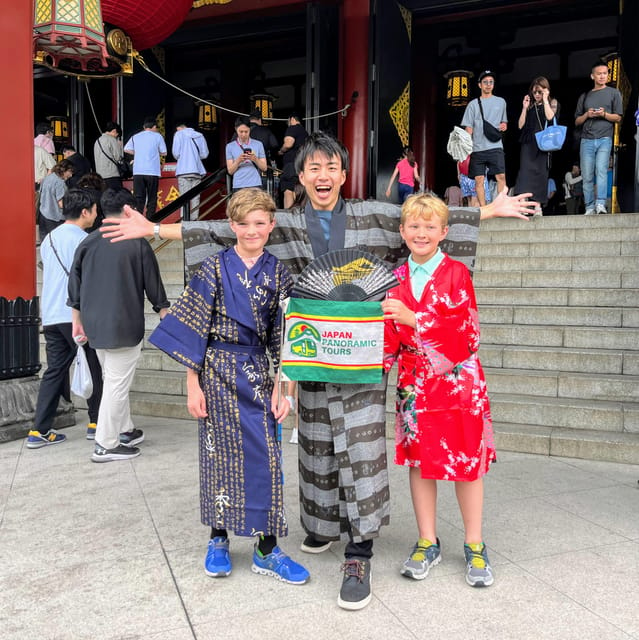
I like the mix of major sights and small cultural moments: you do not only photograph the Imperial Palace, you learn how to visit a Shinto shrine and try Uji matcha in Asakusa. I also like the friendly English-speaking guides, with past tours led by Aoi, Angela, Taka, Tsubasa, Levin, and Jack.
The catch is time. Heavy traffic can shorten visits, and several places are viewed from the coach rather than explored on foot. The tour ends at Asakusa, so you need to arrange your own way back.
Key points to know before booking
- Start early at 8am: Meet at the Love sculpture in Shinjuku or at the Robert Indiana Love sculpture in Ginza, depending on your booking.
- Visit Meiji Shrine: Walk through the forested grounds and learn the basic customs for worship at a Shinto shrine.
- See Tokyo’s landmarks efficiently: The route passes Harajuku, Omotesando, the National Diet Building, Akihabara, Ueno, and Kappa-Bashi.
- Stop for palace scenery: Your visit includes either the Imperial Palace East Garden or Niju-bashi Bridge in the Outer Garden.
- Finish with matcha in Asakusa: Choose a matcha drink or matcha gelato, then continue exploring Senso-ji and Nakamise Avenue on your own.
- Use language support: Live commentary is in English, with audio guide support in French, Italian, Spanish, German, Portuguese, and Ukrainian.
Why this morning coach tour works in Tokyo
Tokyo rewards independent exploring, but its size can make a first day feel scattered. This tour gives you a fixed route, a comfortable coach, and an English-speaking guide who connects the stops. You can see how the city’s districts differ without spending your first morning studying train maps.
The coach passes through areas with very different personalities. Kabukicho gives you a look at Tokyo’s famous nightlife district. Harajuku points toward youth fashion and pop culture. Akihabara is tied to anime culture. Asakusa offers older streets, temple grounds, and traditional shops.
That range is the real value. You are not spending three and a half hours at one attraction. You are getting a broad introduction, then you can return later to the places that interest you most.
The $90 price is reasonable if you value transportation, guiding, and the matcha experience. It is less attractive if you are already comfortable using Tokyo’s trains and prefer long, unhurried visits. You are paying for ease and orientation, not admission to a long list of major attractions.
More early starts in Tokyo:
- Tokyo: Sumo Morning Practice Viewing Tour
★ 4.8 · 570 reviews - Tokyo: Sumo Morning Training Visit
★ 4.4 · 370 reviews - Tokyo: Sumo Morning Practice Tour at Sumida City
★ 4.8 · 308 reviews
Starting at the Love sculpture at 8am
The tour begins at 8am, with starting options listed in central Tokyo. One meeting point is the Robert Indiana Love sculpture near Ginza, while the main departure description places the start at the Love statue in Shinjuku. Your exact meeting place depends on the option you book, so check it carefully before leaving your hotel.
An early start helps. Tokyo traffic can be heavy, and the route covers a lot of ground. The morning schedule also leaves you in Asakusa around lunchtime, where you can keep exploring rather than being returned to the starting point.
The coach has air conditioning, Wi-Fi, and regular ventilation. Antibacterial coating is also noted for the vehicle. These details matter on a morning with several walks and periods of sitting in traffic.
Bring comfortable shoes. Meiji Shrine and Asakusa both involve walking, and the palace stop may include garden paths or a walk near Niju-bashi Bridge. You also need to load and unload your own luggage from the coach trunk, including strollers and wheelchairs.
Meiji Shrine, a quiet forest in the city
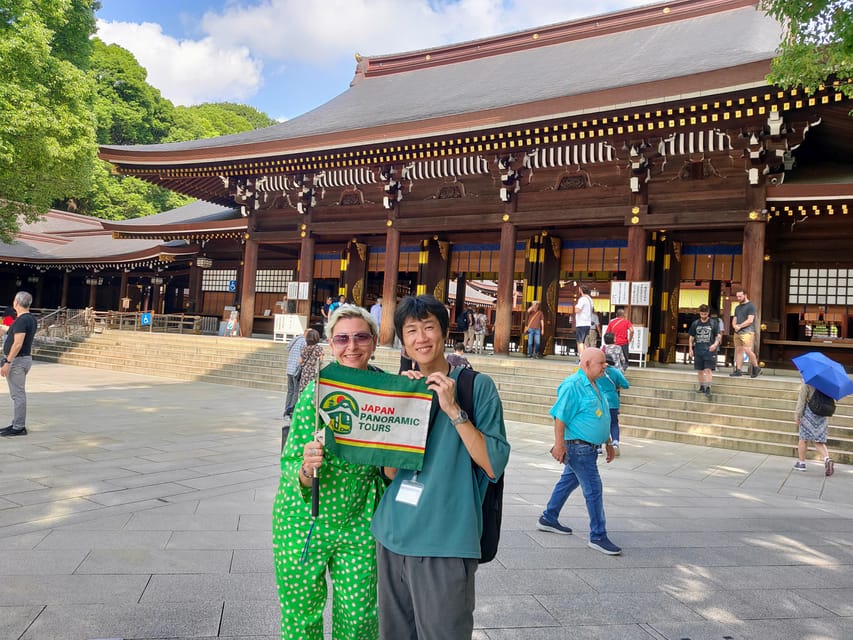
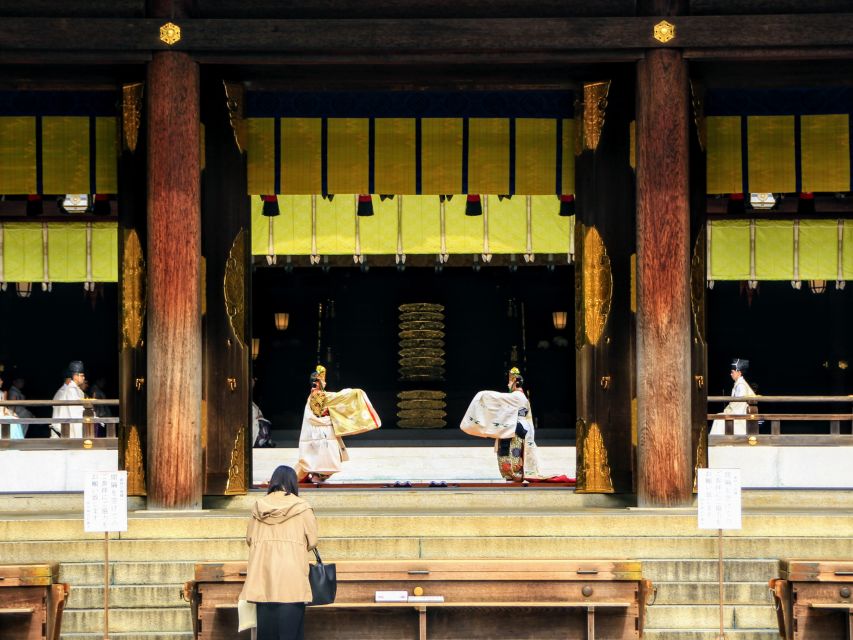
Meiji Shrine is the first major visit, and it gives the tour a calm opening. The shrine was built in 1921 for Emperor Meiji and is surrounded by a large forested area. Within a short time, the city noise gives way to broad paths, trees, and the formal atmosphere of a Shinto religious site.
Your guide explains the traditional way to visit the shrine. That makes this stop more useful than a quick photo break. You learn the basic behavior expected at a Shinto shrine, then have a chance to take part respectfully.
The grounds are a highlight for anyone who wants a pause from Tokyo’s hard surfaces and traffic. Still, do not expect a long private walk through every corner. The whole tour has a strict clock, and the group must return to the coach.
Harajuku, Omotesando, and the National Diet Building
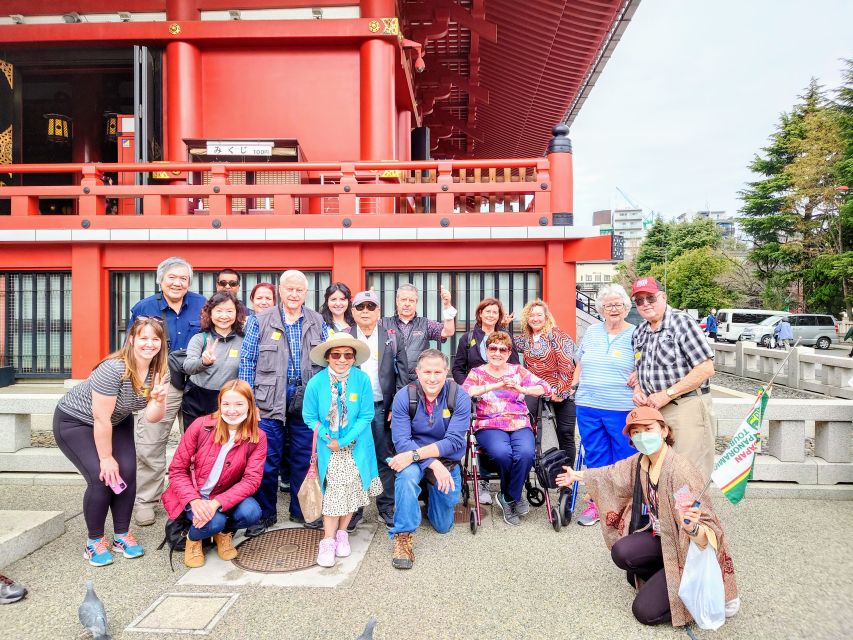
After Meiji Shrine, the coach passes Takeshita Avenue, Harajuku’s famous youth shopping street. This is a drive-by look rather than a full shopping visit, but it gives you a sense of why Harajuku is linked with Japanese pop culture and fashion.
The route continues toward Omotesando, a major shopping district. You will see another side of central Tokyo here, with polished retail streets replacing the shrine forest.
The National Diet Building comes next by coach. Japan’s parliament house is known for its symmetrical design and was built in 1936. It is a useful architectural marker on the route, but the tour does not describe an interior visit. Treat it as a passing sight and listen for the guide’s explanation rather than expecting a full stop.
This is where the tour’s format becomes clear. You get many visual introductions, but only selected places receive proper walking time. If Harajuku shopping or modern architecture is a priority, return independently on another day.
A few more Tokyo half-days to weigh up
- Mt Fuji and Hakone 1-Day Bus Tour Return by Bullet Train
★ 5.0 · 26,383 reviews - 1-Day Tokyo Bus Tour
★ 5.0 · 14,250 reviews - Tokyo: TOKYO SKYTREE® Admission ticket
★ 4.5 · 11,192 reviews - Tokyo: teamLab Planets TOKYO Digital Art Museum Entry Ticket
★ 4.6 · 9,779 reviews
The Imperial Palace and two possible viewpoints
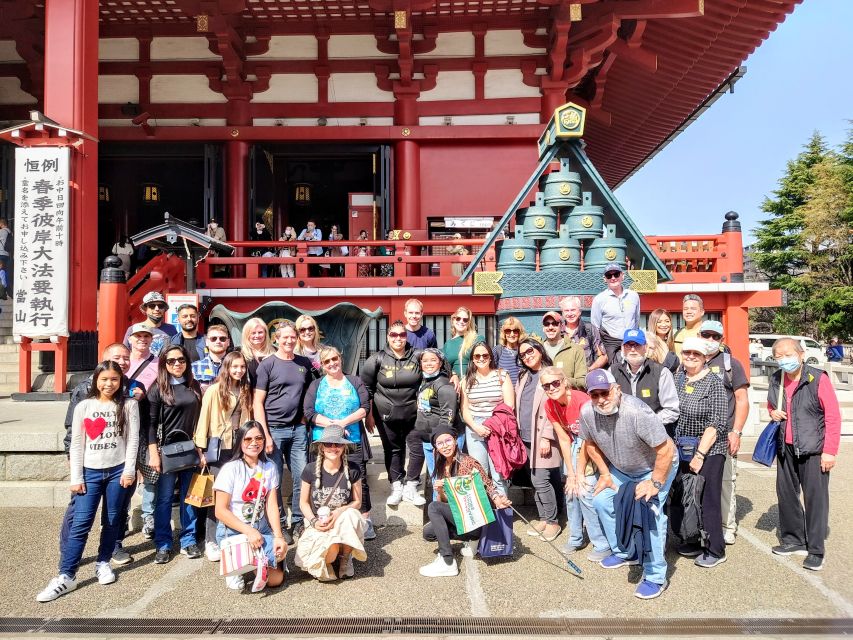
The Imperial Palace stop brings together present-day royal life and Tokyo’s earlier identity as Edo. The palace is the current residence of the Imperial family and occupies the site of Edo Castle, the seat of the city’s former rulers.
The tour visits either the East Garden or Niju-bashi Bridge in the Outer Garden. The East Garden offers traditional Japanese garden scenery. Niju-bashi gives you a well-known historical structure and a classic palace-area photo opportunity.
Because the exact choice can change, you should not book this tour expecting both. The itinerary can also change due to traffic, weather, closures, or other operating needs. If one location is unavailable, an alternative is attempted.
This stop is valuable because it adds political and historical context to the city tour. The possible drawback is that a photo stop cannot replace a longer visit. You may leave with a good orientation and a few pictures, but not a full palace experience.
Akihabara, Ueno, and Kappa-Bashi from the coach
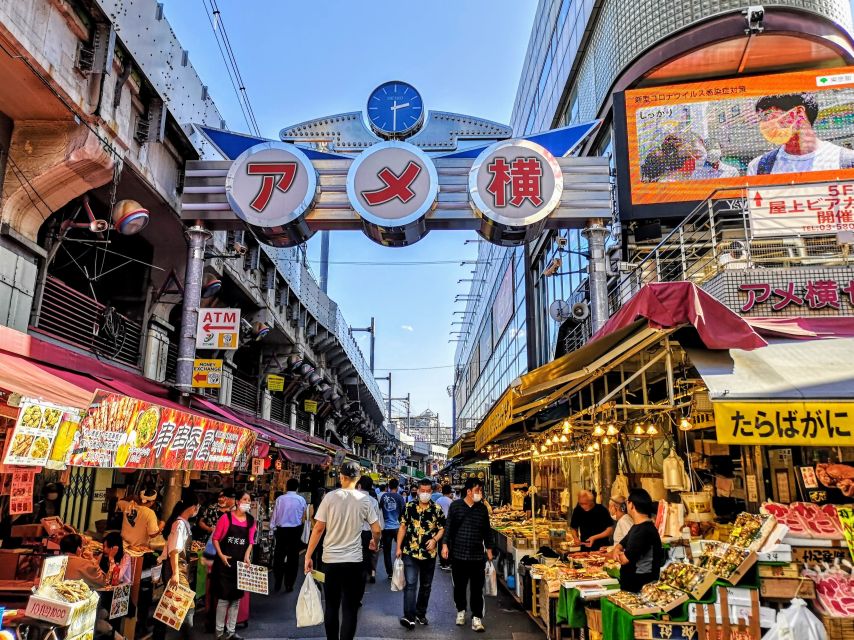
The coach then moves through Akihabara, Tokyo’s center for anime culture and the wider otaku scene. You may see the district from the road and hear context from the guide, but the tour does not schedule time for browsing its shops.
Ueno follows, known here as Japan’s oldest park. Again, this is part of the route rather than a long park visit. The passing views help you place Tokyo’s districts on a mental map, which is useful if you plan to return by train later.
Kappa-Bashi market street adds a practical and unusual detail. The area is known for kitchen goods, including Japanese dishes, knives, and remarkably realistic food replicas. That detail gives the bus ride a purpose beyond sightseeing. It shows you a commercial side of Tokyo that does not fit neatly into the usual shrine and palace list.
I would pay attention during this stretch, even if you are tempted to check your phone. The guide’s commentary is especially useful while the coach passes places you will not stop at.
Asakusa, where the tour finds its best rhythm
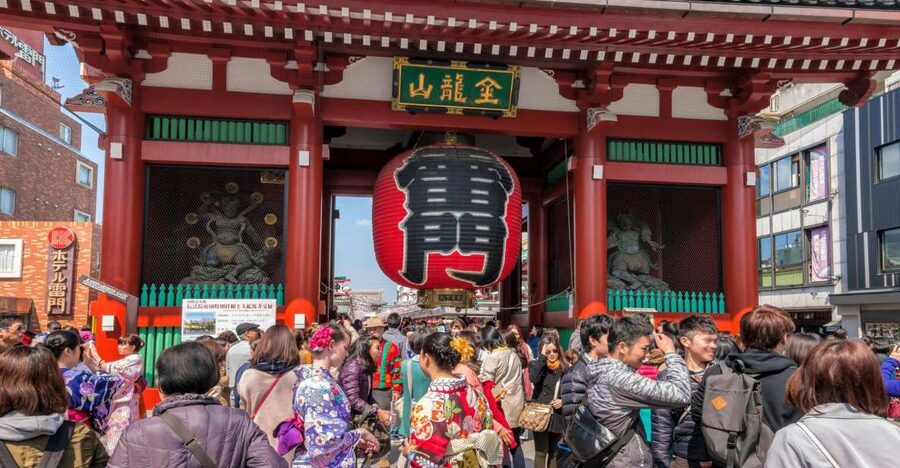
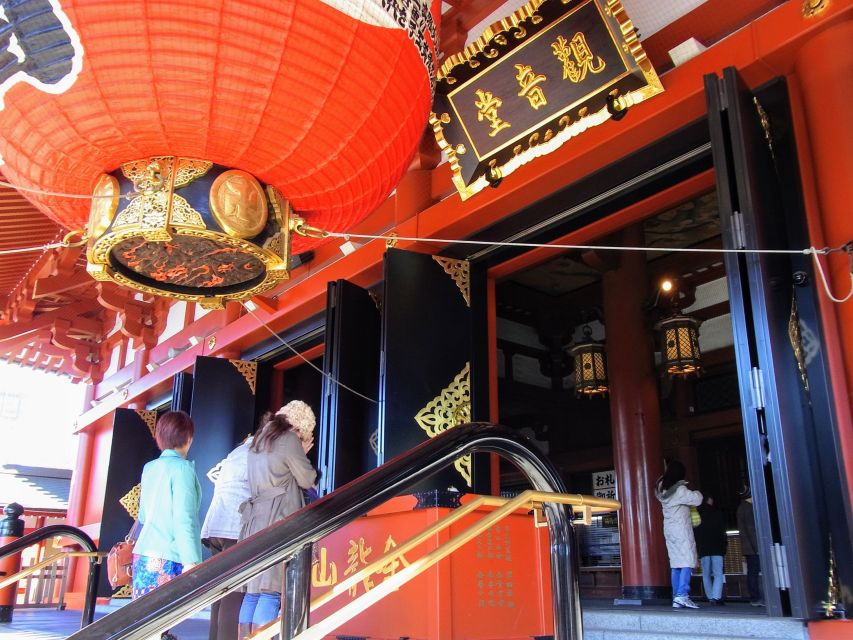
Asakusa is the final major stop and the place where the tour feels most hands-on. You have time to explore Nakamise Avenue, the traditional shopping street leading toward Senso-ji, and photograph Kaminari-mon Gate with its large red lantern.
This is a good ending because you can continue at your own pace. The coach does not take you back to Shinjuku or Ginza, so you are free to eat lunch, visit more of Senso-ji, browse the shops, or make your way elsewhere by public transport.
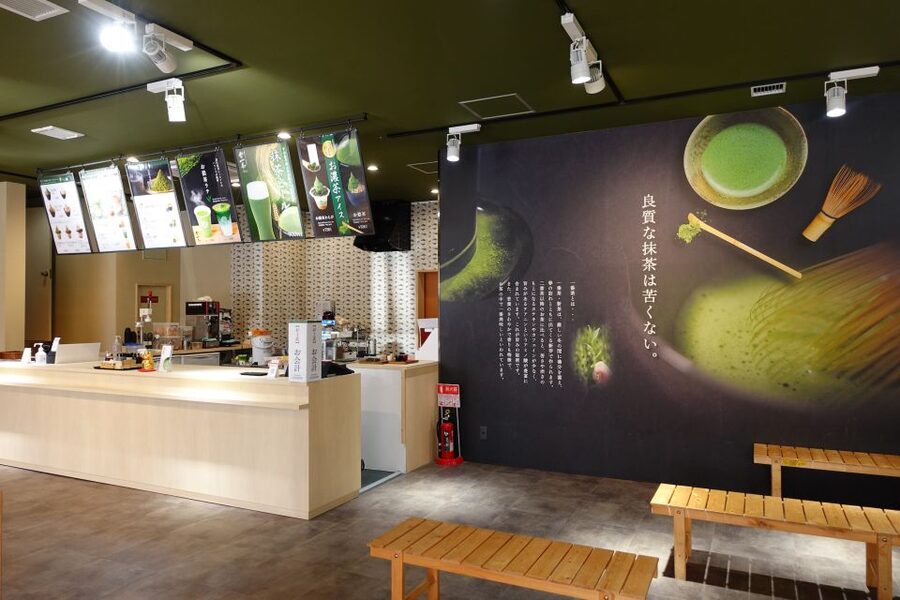
The stop also includes a matcha experience. You can receive a matcha drink or matcha gelato, depending on the option selected. The matcha uses first-flush tea from Uji in Kyoto and is described as a premium, less-bitter style. A matcha beer option is also available.
For many people, the gelato will be the easier choice, especially if you are not used to the sharper taste of green tea. One past participant specifically praised the matcha gelato, and another noted that the break helped the long morning feel smoother rather than rushed.
The matcha shop is closed on May 14. On that date, the experience changes to matcha souvenirs. If the tea tasting is a key reason for booking, keep that date restriction in mind.
What the guide and audio system add
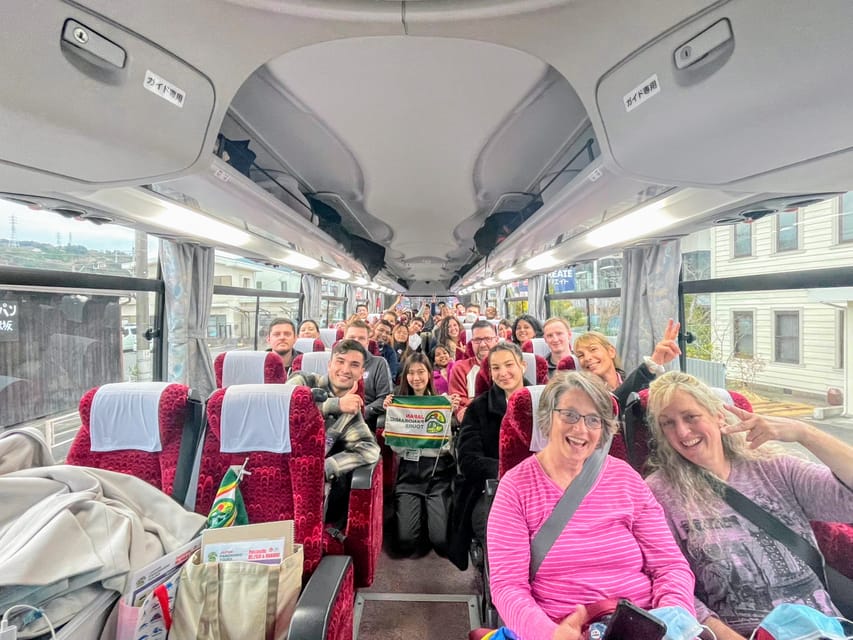
The live guide speaks English, while audio headsets are available in French, Italian, Spanish, German, Portuguese, and Ukrainian. That combination works well for a mixed-language group. You can follow the main tour in English or use the audio support for more comfortable listening.
The strongest part of the guiding is the human touch. Guides named in past tours include Aoi, Angela, Taka, Tsubasa, Levin, and Jack. Aoi was praised for clear English and an upbeat manner, while Angela was described as funny and helpful. Taka was noted for combining information with entertainment.
Guide quality can vary from one departure to another, so I would not book solely on the hope of getting one particular person. The consistent benefit is having someone explain the shrine customs, point out the passing districts, and keep the group moving.
One older comment raised a fair concern: there was not always enough commentary during the bus travel. This is worth remembering. If you want constant narration from the first minute to the last, the experience may feel quiet at times. If you prefer a balance of explanation and looking out the window, it should suit you better.
Time, traffic, and the half-day trade-off
The tour lasts 210 minutes, but Tokyo traffic can affect the rhythm. A past tour account described heavier traffic and rushed sightseeing at some stops. That is not a flaw unique to this operator. Tokyo roads can turn a carefully planned route into a shorter visit.
The best way to think about the schedule is as a sampler. You see the city’s major zones, walk at Meiji Shrine and Asakusa, and make a palace-area stop. You do not receive extended free time at every district.
That makes the tour especially useful if you have only one day, a short stopover, or a first morning in Tokyo. One past participant with only 24 hours found the format ideal as a starting view of the city. It can also work well on your first full day, helping you decide where to spend the next few days.
You should choose a different plan if your priority is shopping in Harajuku, visiting Akihabara stores, or spending hours around the palace. Those interests need independent time.
Who should book this tour
I would recommend it to first-time visitors who want structure and a quick feel for Tokyo’s scale. It also suits anyone who finds large cities tiring to organize, since the coach connects distant districts while the guide handles the route.
It is a good choice for families and older visitors who appreciate air conditioning and fewer train changes, though the walking stops still require comfortable footwear. The coach has Wi-Fi, but you should not count on every minute being smooth or fast during busy traffic.
Language support makes the tour more approachable for international groups. English is the live guiding language, with the listed audio options available in six additional languages.
Independent explorers may find the $90 cost harder to justify. Tokyo’s public transport is excellent, and you can visit Meiji Shrine, the Imperial Palace area, and Asakusa without a tour. But doing so takes planning, navigation, and time. The fee buys a simple morning plan, commentary, transport, and a matcha treat.
Practical details that affect your decision
The price is $90 per person. Lunch is not included, so plan to eat after the tour ends in Asakusa. This is not a serious drawback because Asakusa is a useful place to continue your day, but you should not expect a provided meal.
Hotel pickup and drop-off are not included. Pickup is offered from Ginza when that option is booked, while other meeting arrangements may apply. Confirm the meeting point, especially if you have several separate bookings. The operator asks you to provide the booking numbers and total group size before the tour.
Cancellation is flexible up to 24 hours before departure for a full refund, and you can reserve now and pay later. These terms help if your Tokyo schedule is still shifting.
The final stop is Senso-ji, with no extra return transfer. That is both a limitation and an advantage. You must arrange your own transport afterward, but you also avoid being pulled away from one of Tokyo’s most useful areas for lunch and further sightseeing.
Should you book the Tokyo morning bus tour?
Book it if you want a guided first look at Tokyo, especially with limited time. Meiji Shrine, the palace area, and Asakusa give you a strong mix of religious, royal, historic, and everyday city life. The matcha stop adds a pleasant local touch, and the friendly guides can make the long route feel personal.
Skip it if you want deep time at each sight or already know Tokyo’s train system well. Traffic may shorten some stops, and several districts are viewed only from the coach.
For most first-time visitors, I see this as a useful orientation tour rather than a complete Tokyo day. Start early, wear good shoes, keep your afternoon free in Asakusa, and you will get the best value from the $90 price.
FAQ
Where does the Tokyo morning bus tour start?
The tour has starting options in central Tokyo. Listed meeting points include the Love sculpture in Shinjuku and the Robert Indiana Love sculpture at 4-chome-1-2 Ginza. The exact meeting point depends on the option booked.
What time does the tour begin?
The tour starts at 8am.
How long does the tour last?
The duration is 210 minutes, or three and a half hours.
Where does the tour finish?
The tour finishes at Senso-ji in Asakusa. No extra drop-off service is provided.
Is hotel pickup included?
No. Hotel pickup and drop-off are not included. Pickup from Ginza is available with the relevant booking option.
What languages are available?
The live tour guide speaks English. Audio guide support is available in French, Italian, Spanish, German, Portuguese, and Ukrainian.
Is matcha included?
Yes. The experience includes either a matcha drink or matcha gelato, depending on the selected option. A matcha beer option is also available.
What happens on May 14?
The matcha store is closed on May 14. On that date, matcha souvenirs are provided instead of the usual store experience.
Is lunch included?
No. Lunch is not included. Since the tour ends in Asakusa, you can arrange lunch there after the tour.
Can I cancel for a full refund?
Yes. You can cancel up to 24 hours in advance for a full refund. Reserve now and pay later is also available.
Just added around Tokyo
- Private Arrival Transfer : Narita International Airport to Central Tokyo City★ 4.5 · 12 reviews
- Narita Airport(NRT): Private Transfer to Tokyo/Yokohama 1-9pax★ 5.0 · 47 reviews
- Private Transfer from Narita Airport to Yokohama Port and City★ 4.5 · 17 reviews
- [Narita Airport Terminals 1, 2] 40-60km Sawara Itako Historic Bike Tour★ 5.0 · 13 reviews
- 3 Day Japan Highlights Tour: Tokyo, Mt.Fuji, Nara, Kyoto, Osaka★ 5.0 · 22 reviews
- Small Town in the Big City: Tasting Tokyo’s Kichijoji★ 5.0 · 195 reviews
- Small Town in the Big City: Tasting Tokyo’s Kichijoji★ 5.0 · 16 reviews
- The 10 Tastings of Tokyo With Locals: Private Street Food Tour★ 5.0 · 48 reviews
Tokyo Tours, compared.

Mt Fuji and Hakone 1-Day Bus Tour Return by Bullet Train
Read our review →

teamLab Planets TOKYO Digital Art Museum Entry Ticket
Read our review →
Mt Fuji & Hakone Cruise, Drum Show Bullet Train 1 Day from Tokyo
Read our review →
Sumo Show Experience with Chicken Hot Pot and a Photo
Read our review →
Shinjuku Food Tour (13 Dishes at 4 Local Eateries)
Read our review →
Tokyo Mt Fuji 5th St & Hakone Cruise Bus Tour w/Bullet Train
Read our review →