
Reviewed · KAMAKURA TOURS
Kamakura Walking Tour – The City of Shogun
Kamakura packs a remarkable amount of Japan into one walk: a warrior capital’s grand shrine, a bronze Buddha, hillside temple gardens, snack-filled streets, and glimpses toward the coast. This 3.5-hour small-group tour gives you a clear route through the city without leaving you to decode every ritual and historical name on your own.
I like the way the tour links Tsurugaoka Hachimangu and Hasedera rather than treating them as isolated sights. I also like the small maximum of 10 people, which should make it easier to ask questions and keep the group moving. The main drawback is that the $35 price does not include transportation or admission, listed at a total of 1,200 yen, so the final cost is higher than the headline price.
Key points at a glance
- A compact route through Kamakura’s major sights: Visit Tsurugaoka Hachimangu Shrine, Komachi Street, the Great Buddha, and Hasedera Temple in one morning.
- Guides who explain customs as well as dates: Miyu, Midori, and Maki are singled out for clear explanations of Buddhist temples, Shinto shrines, and modern Japanese practice.
- A small group capped at 10 people: You get a more personal walk than on a large coach excursion.
- A useful finish at Hase Station: The tour ends near more Kamakura sights and transport, leaving your afternoon open.
- Extra costs are easy to overlook: Bring money for the 1,200 yen transportation and admission amount listed for the experience.
- Free cancellation with a weather condition: Cancel at least 24 hours ahead for a full refund, while poor weather may lead to a new date or refund.
Why this route makes sense for a first Kamakura visit
Kamakura can look simple on a map, but its major sights are spread along a route that works best when you understand how they fit together. The city was the seat of Japan’s first military government under Minamoto no Yoritomo, and its shrines and temples reflect that blend of political power, religious devotion, and local life.
This walk begins by Kamakura Station and finishes at Hase Station. That arrangement is practical. You start in the city center, pass through the popular shopping street, then move toward the Great Buddha and Hasedera. You do not need to circle back to your starting point at the end.
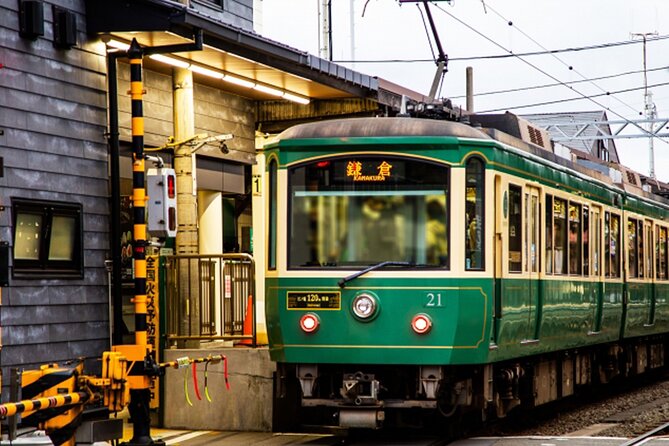
The tour is listed at about three and a half hours, with roughly two hours of named sightseeing stops. The remaining time allows for walking between places, explanations, photographs, and transportation. One review specifically describes riding the Enoden train as part of the day, but transportation is not included in the price, so you should be ready to pay local fares separately.
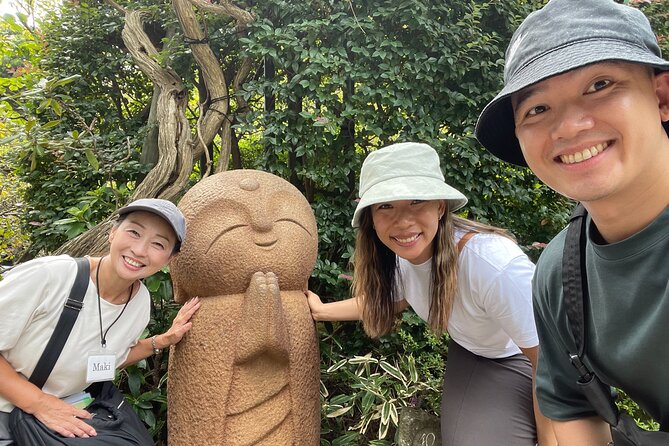
The guides are a major part of the experience. Miyu is praised for answering questions and suggesting places to see after the walk. Midori is described as good with families and photography. Maki receives especially warm praise for her energy, friendly manner, and ability to explain the difference between Buddhist temples and Shinto shrines in an easy way.
More walking tours in Kamakura:
- Kamakura Historical Walking Tour with the Great Buddha
★ 5.0 · 129 reviews - Buddha, Bamboo & Zen – Bespoke Kamakura Private Walking Tours
★ 5.0 · 25 reviews - Kyoto Geisha Walking Tour: Gion District & Hidden Gems
★ 4.7 · 3,273 reviews
Tsurugaoka Hachimangu, Kamakura’s ceremonial heart
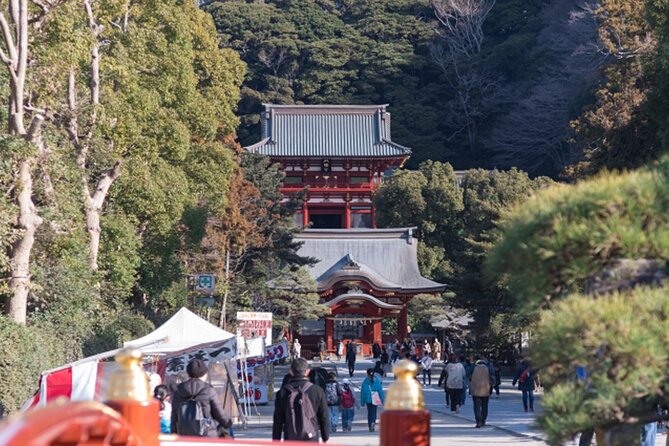
Your first major stop is Tsurugaoka Hachimangu, Kamakura’s best-known Shinto shrine. Minamoto no Yoritomo founded it in the 12th century and dedicated it to Hachiman, the Shinto god associated with the warrior class. That background gives the shrine more weight than a quick photo stop.
Allow about 30 minutes here. A guide can help you notice the difference between a shrine and a temple, explain the role of ritual, and show how people continue Japanese customs today. That context matters because the entrance paths, gates, worship area, and offerings can otherwise blur together for a first-time visitor.
The setting also gives you a strong introduction to Kamakura’s scale. The approach leads through the center of town toward the shrine grounds, making the transition from modern shopping streets to a formal religious site easy to follow. You will have time for photographs, though this is not a long, quiet temple visit.
If you want extended time at the shrine, plan to return later. Thirty minutes is enough for orientation and the main sights, but not enough for every corner or a slow appreciation of the grounds. The value here is the explanation and the place in Kamakura’s story, not a leisurely private visit.
Komachi Street, snacks and a busy change of pace
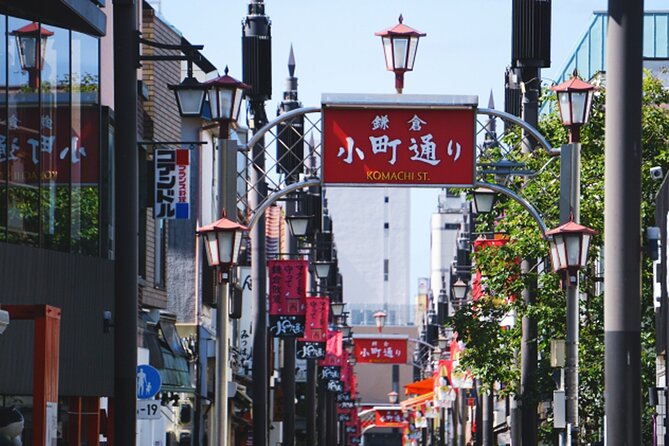
Komachi Street brings you back into present-day Kamakura. This pedestrian street runs near the station and is filled with shops and food stops. The tour allows about 20 minutes, so think of this as a quick introduction rather than a full food tour.
I like this pause because it keeps the morning from becoming a string of solemn religious sites. You can see where local shopping and sightseeing overlap, and your guide may point out food or small stops worth returning to after the tour. The tour description also highlights traditional dishes and lesser-known places to eat, but it does not promise a meal or include food in the price.
Twenty minutes passes quickly here. If you enjoy browsing, tasting, or buying edible souvenirs, save Komachi Street for after the guided portion. The guide’s suggestions can help you use your afternoon more wisely, particularly if you are unsure where to eat or what to visit next.
This stop is also a reminder to keep your group close. The street is pedestrian-only and popular, so it may feel crowded at times. The guide’s job is less about giving a long lecture and more about keeping the route clear while helping you make sense of what you are seeing.
The Great Buddha, Kamakura’s unforgettable image
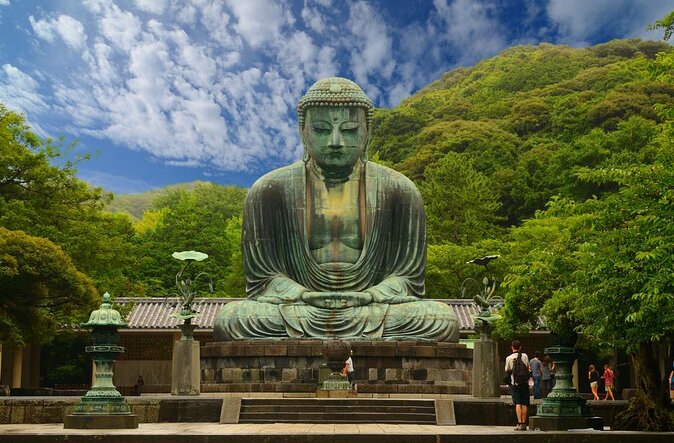
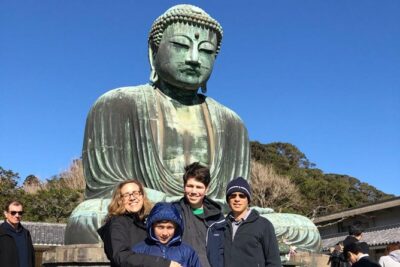
At Kotoku-in, you meet the Kamakura Great Buddha, a bronze statue about 13.35 meters, or 44 feet, tall. The statue dates from the 13th century and is the image most closely tied to Kamakura for many first-time visitors.
The tour allows about 30 minutes, and admission is not included. The statue’s size is impressive, but the guide adds value by explaining the Buddhist setting and the place of the Great Buddha within Kamakura’s religious tradition. The experience is more rewarding when you understand that you are not simply looking at a large bronze figure, but visiting an important devotional site.
The short visit works well for a morning overview. You have time to take in the statue, hear its background, and take photographs. If you want a slow visit or hope to explore every part of the temple grounds, you may want to return independently.
Bring cash or another accepted payment method for the admission and transportation costs. The supplied information gives a total of 1,200 yen for transportation and admission, but it does not break down the individual fees. Treat that amount as an expected extra rather than assuming the $35 covers everything.
A few more Kamakura half-days to weigh up
- Tokyo: Kamakura & Enoshima Day Trip including Temple Tickets
★ 4.5 · 1,375 reviews - From Tokyo: Kamakura & Enoshima 1-Day Bus Tour
★ 4.5 · 189 reviews - Kamakura Private Tour: Temples, Nature, and the Great Buddha
★ 5.0 · 121 reviews - Kamakura 4hr Private Trip with Government-Licensed Guide
★ 5.0 · 58 reviews
Hasedera Temple and the final stretch to Hase Station
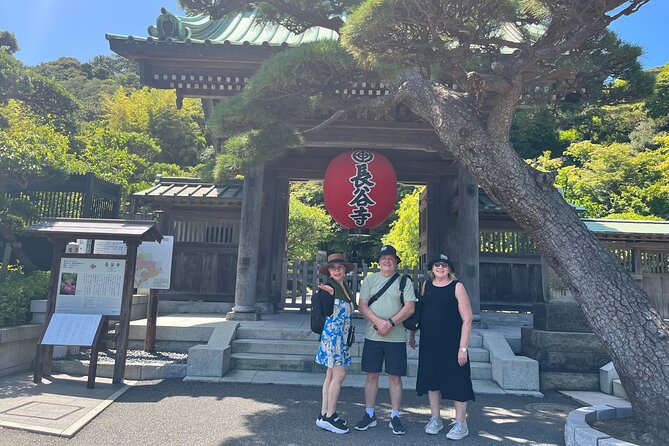
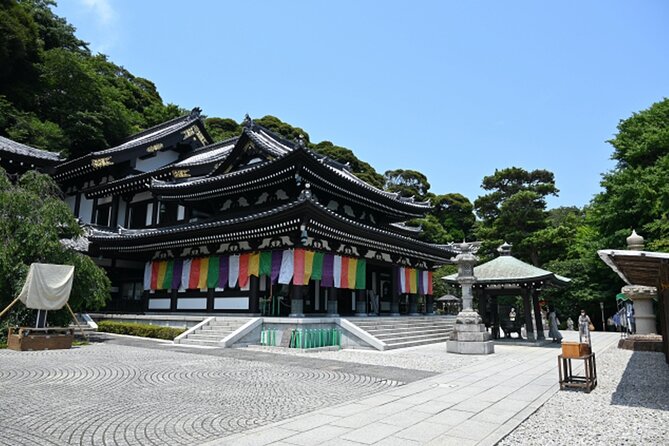
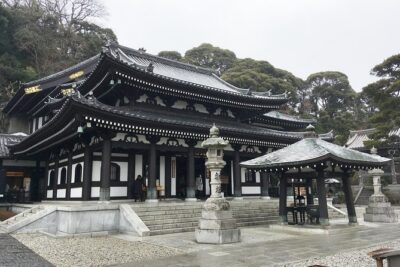
Hasedera, also called Hase Kannon Temple, is the longest listed stop at about 40 minutes. It is known for its calm grounds, gardens, and a tall wooden statue of the Kannon deity. The temple’s setting gives the tour a quieter finish after the station area and the Great Buddha.
This is where the route gains variety. You move from a Shinto shrine to a pedestrian shopping street, then to a large Buddhist image and finally to a temple with gardens and hillside views. The tour description also points to coastal scenery, so you should expect opportunities to look beyond the temple grounds toward Kamakura’s surroundings.
The 40-minute visit is enough to appreciate the temple’s main features, but it remains a guided introduction. Hasedera rewards slow walking, careful viewing, and time in the gardens. If the grounds capture your attention, the end of the tour at Hase Station makes it easy to continue on your own rather than returning to the center with the group.
Photography is another strength here. Midori is praised for showing good viewing spots and taking wonderful pictures. That does not mean every tour includes a formal photography service, but a guide who knows where to pause can make a real difference when you have only a short time.
What the guides add to the experience
The clearest pattern across the guide feedback is not simply that the guides know facts. It is that they explain complicated subjects in a way families and first-time visitors can follow.
Miyu is described as engaging, helpful with questions, and good at offering ideas for the afternoon. If you like to keep your schedule flexible, that kind of local advice can be as useful as the formal sightseeing.
Midori receives praise for making the history of Kamakura enjoyable, showing fun spots along the way, and working well with children. Her attention to photo locations is another plus for families and couples who want more than standard front-facing snapshots.
Maki is praised for being energetic, pleasant, personal, and clear. Her explanations cover Buddhist temples, Shinto shrines, and the way people carry Japanese customs into modern life. That last point is important. You are not only collecting names and dates. You are learning how two religious traditions appear in everyday practice.
The guide names may vary by departure. You cannot choose a particular guide from the information provided, but the repeated praise for Miyu, Midori, and Maki suggests that the human side of the tour is central to its appeal.
Price, group size, and what you really receive
At $35 per person, this is a reasonably priced introduction to Kamakura, especially if you want cultural background rather than a simple route map. You are paying for a guide, a planned sequence of major sights, and help understanding customs that are easy to miss when walking alone.
The value is strongest if this is your first Kamakura visit. A guide can explain why Tsurugaoka Hachimangu matters, separate temple practices from shrine customs, and help you use the rest of the day after the tour. Several people also describe the tour as leaving plenty of time for independent exploration afterward.
The price is less attractive if you already know Kamakura well or prefer to set your own pace. You will pay admission and transportation separately, and the named stops receive limited time. Independent visitors can linger longer at Hasedera, browse Komachi Street without watching the clock, or spend more time around the Great Buddha.
A maximum of 10 people is a good middle ground. It is small enough for questions and personal attention, but it is not a private tour. The experience can still vary with the group’s walking pace, interests, and punctuality.
Practical planning for the 10:00 start
The meeting point is the Kamakura City Tourist Information Center at 1-chōme-1-1 Komachi. The start time is 10:00 am, so arrive with enough time to find the center and check your mobile ticket. The tour ends at Hase Station, 2 Chome-14 Hase.
Transportation and admission are not included. The stated total for these extras is 1,200 yen. Since the route may involve the Enoden train, keep the additional fare in mind and do not spend all your cash before the walk.
Wear comfortable shoes. The activity is a walking tour lasting several hours, and the route includes shrine and temple grounds rather than only flat station streets. The tour requires good weather. If conditions lead to cancellation, you will be offered another date or a full refund.
Most people can take part, and service animals are allowed. The experience is near public transportation. Confirmation arrives when you book, and the mobile ticket makes the basic arrival process simple.
For cancellations, you can receive a full refund if you cancel at least 24 hours before the local start time. Changes or cancellations inside that 24-hour window are not accepted for a refund.
Who will appreciate this Kamakura walk
I would choose this tour for a first visit, especially if you want the main sights in one organized morning. It suits couples, families, and solo visitors who enjoy asking questions and learning the meaning behind religious customs.
It also works well for anyone who wants a useful afternoon plan. Since the walk finishes at Hase Station, you can continue exploring after the guide leaves. The advice from Miyu about afternoon stops is especially helpful if you have not researched Kamakura beyond the Great Buddha.
Families may like the shorter visits and the guide-led structure. Children get variety: a grand shrine, shops, a giant Buddha, gardens, and views. The tour is less suitable if your priority is extended photography, a long meal, or a slow visit to one temple.
You should also consider the weather. Since the tour requires good conditions and involves walking outdoors, a rainy forecast could change your plans. The cancellation terms give you protection if the operator cancels for weather, but you should still avoid packing the day too tightly.
Should you book the Kamakura Walking Tour?
Book it if you want a friendly, efficient introduction to Kamakura with clear explanations of shrines, temples, and local customs. The route covers the city’s essential sights, the group is limited to 10, and the finish at Hase Station gives you a practical base for the rest of the day.
Skip it if you already know Kamakura or want complete control over your timing. You will need to pay 1,200 yen for transportation and admission, and the major stops are introductions rather than long visits.
For most first-time visitors, the $35 fee is fair. You get a well-shaped route, personal guidance, and the cultural framework that turns a collection of attractive sites into a coherent morning in Japan’s former shogun capital.
FAQ
How long does the Kamakura Walking Tour last?
The tour lasts approximately 3 hours and 30 minutes. The listed sightseeing times are about 30 minutes at Tsurugaoka Hachimangu, 20 minutes on Komachi Street, 30 minutes at the Great Buddha, and 40 minutes at Hasedera.
Where does the tour start?
The tour starts at the Kamakura City Tourist Information Center, 1-chōme-1-1 Komachi, Kamakura, Kanagawa 248-0006, Japan.
Where does the tour end?
The tour ends at Hase Station, 2 Chome-14 Hase, Kamakura, Kanagawa 248-0016, Japan.
What is included in the price?
The $35 price includes the tour guide fee. Transportation and admission fees are not included. The listed total for those extra costs is 1,200 yen.
How many people can join the tour?
The tour has a maximum of 10 participants.
Can I cancel for a full refund?
Yes. You must cancel at least 24 hours before the local start time to receive a full refund. If poor weather causes the operator to cancel, you will be offered a different date or a full refund.
Just added around Kamakura
- When Emperors Reigned and Shoguns Ruled★ 5.0 · 43 reviews
- First time in Kamakura? Enjoy a Tour of All Must-sees!★ 5.0 · 15 reviews
- Your Own HANKO Name Seal Activity in Kamakura.★ 5.0 · 24 reviews
- Kamakura Bamboo Forest and Great Buddha Private Tour★ 5.0 · 12 reviews
- Kamakura 4hr Private Trip with Government-Licensed Guide★ 5.0 · 58 reviews
- Exciting Kamakura – One Day Tour from Tokyo★ 5.0 · 40 reviews
- Kamakura Tours Half Day or Full Day Tours with a local guide.★ 5.0 · 12 reviews
- Buddha, Bamboo & Zen – Bespoke Kamakura Private Walking Tours★ 5.0 · 25 reviews
Kamakura Tours, compared.
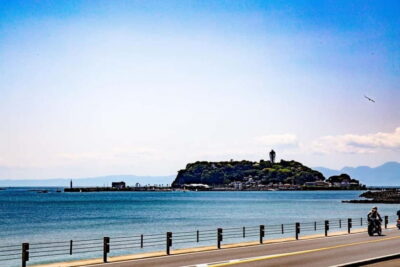
Kamakura & Enoshima Day Trip including Temple Tickets
Read our review →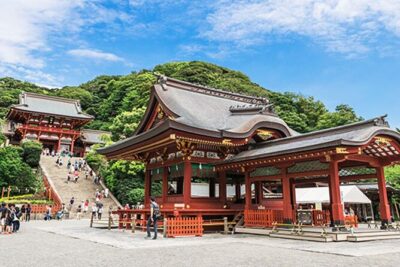
Kamakura Historical Walking Tour with the Great Buddha
Read our review →
Kamakura Private Tour: Temples, Nature, and the Great Buddha
Read our review →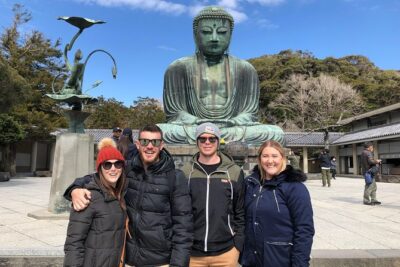
Kamakura 4hr Private Trip with Government-Licensed Guide
Read our review →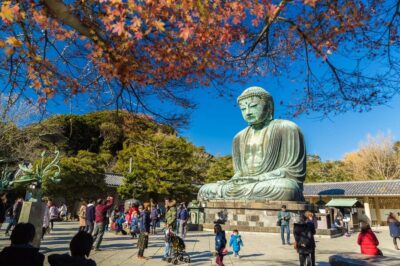
Kamakura Full Day Tour with a Local Expert Guide
Read our review →
Browse the lists this tour appears in