
Reviewed · KAMAKURA TOURS
Your Own HANKO Name Seal Activity in Kamakura.
A Japanese Hanko name seal is more than a souvenir stamp. It represents your identity, and this short Kamakura workshop lets you shape one around your own name, lettering style, color, and material. Owner Mitsuhiro Tsukino, a third-generation craftsman, explains the tradition in clear English and answers questions without rushing you.
I especially like the close, private format and the chance to leave with something made for you rather than something pulled from a shelf. I also like the careful blend of machine rough-carving and hand finishing. The main consideration is price: at $131.65 per person, this is a premium souvenir, and case upgrades, specialty materials, ink, and shipping cost extra.
Key points to know before booking
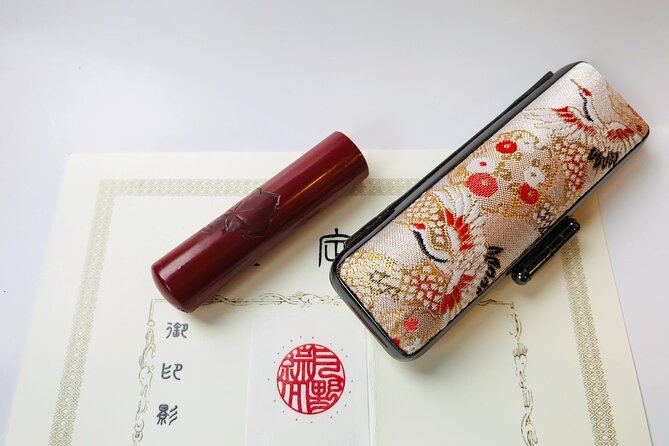
- Third-generation craftsmanship: Mitsuhiro Tsukino and his family continue a traditional seal-making trade in Kamakura.
- A private workshop: Only your group participates, so you can ask questions and get direct help choosing Japanese characters.
- Name writing in katakana: You learn how your name can be represented in Japanese before selecting a typeface.
- Hand-finished seal: A machine handles the rough carving, then a craftsman completes the fine work by hand.
- Near Kamakura Station: The shop is about a five-minute walk south of the station, making it easy to fit into a day of sightseeing.
- Pickup or shipping: The finished seal can be collected later the same afternoon, or shipped for an additional charge.
Why a Hanko makes a better souvenir than another trinket
Kamakura gives you plenty of ways to spend money on souvenirs. You can buy sweets, temple charms, ceramics, or a T-shirt. A Hanko is different because it is personal, compact, and still useful after you return home.
The finished seal carries your name in Japanese characters. You can stamp cards, journals, letters, artwork, or gift wrapping. The meaning is yours to decide. For some people, it becomes a daily-use object. For others, it is a small reminder of Japan that stays in a desk drawer for years.
The workshop also gives you a little cultural context. In Japan, seals have long been used to represent a person or business. The design is not simply decorative. The characters, circular layout, seal style, and ink color all affect the way the finished mark looks and feels.
That makes the activity more rewarding than a quick engraving service. You are not just ordering a name stamp. You are learning why the object matters, then making choices that affect its appearance.
A few more Kamakura half-days to weigh up
- Tokyo: Kamakura & Enoshima Day Trip including Temple Tickets
★ 4.5 · 1,375 reviews - From Tokyo: Kamakura & Enoshima 1-Day Bus Tour
★ 4.5 · 189 reviews - Kamakura Historical Walking Tour with the Great Buddha
★ 5.0 · 129 reviews
Finding Kamakura HANKO near the station
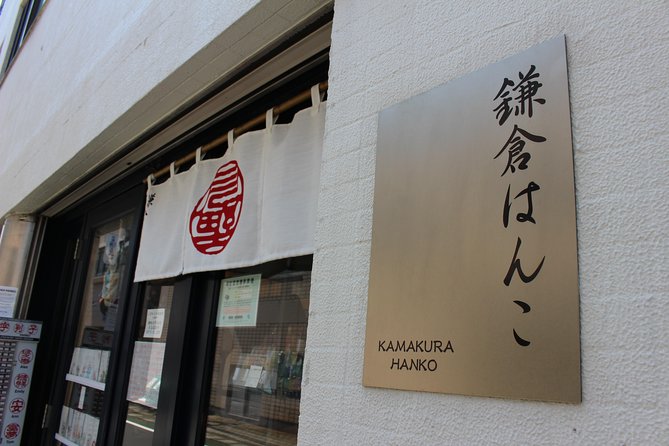
The meeting point is Kamakura seal shop Souvenir shop at 5-6 Onarimachi, Kamakura, Kanagawa 248-0012. The shop is less than five minutes south of Kamakura Station, near public transportation and easy to combine with a visit to the town’s temples, shopping streets, or seaside area.
You should arrive punctually. The shop needs time to prepare the materials and organize the engraving. The experience is listed as approximately 45 minutes, and it is available in the morning only. That timing matters because the finished seal is not necessarily handed over at the end of the session.
You choose an afternoon pickup time for the completed Hanko. Some people have collected their seals about two hours later, while others have arranged hotel delivery or international shipping. Shipping is not included, so ask about the cost before choosing it.
The pickup arrangement can work well in Kamakura. You can attend the workshop in the morning, visit another part of town, eat lunch, and return for the finished piece. It is less convenient if you are only passing through for a short stop or leaving Kamakura immediately after the workshop.
The opening lesson: seal culture, styles, and purpose
The session begins with an explanation of Japanese name seals. You learn about the different types of Hanko, how they are used, and why the lettering matters. The owner also explains materials, ink colors, and the difference between various seal styles.
This introduction is one of the strongest parts of the activity. You do not need prior knowledge of Japanese writing. The explanations are designed to help you make choices, not test you.
The private format helps here. Since only your group participates, you can stop and ask about a character, a font, or the difference between a souvenir seal and one intended for more formal use. The owner has also been praised for being patient and for avoiding pressure to buy upgrades.
That last point is worth noting. Several optional additions are available, including different materials, cases, and typefaces. The workshop presents those choices, but the basic activity is meant to work on its own.
Turning your name into Japanese katakana
Next comes the most personal part: choosing how your name will appear in Japanese. For most international names, the workshop uses katakana, the Japanese script commonly used for foreign words and names.
You work with the craftsman to select characters that reflect the sound of your name. The process is not a direct letter-for-letter translation. Japanese characters represent syllables, so the result may require choices about pronunciation and visual balance.
You are also shown typeface options. A katakana font suitable for an official-style seal is recommended, but you can discuss other looks and possible upgrades. The choice affects whether your Hanko feels formal, bold, playful, or more artistic.
I would take your time at this stage. Once the seal is carved, the characters cannot be changed. Ask the owner to write the proposed name clearly and explain how it sounds before you approve the design.
The completed seal is a small object, so the lettering must remain readable within a compact shape. The craftsman helps balance the characters so the final design fills the seal properly rather than leaving awkward gaps.
Same base, a completely different sort of day:
- Kamakura Private Tour: Temples, Nature, and the Great Buddha
★ 5.0 · 121 reviews - Kamakura Walking Tour – The City of Shogun
★ 5.0 · 100 reviews - Kamakura 4hr Private Trip with Government-Licensed Guide
★ 5.0 · 58 reviews - When Emperors Reigned and Shoguns Ruled
★ 5.0 · 43 reviews
Choosing the material, color, and case
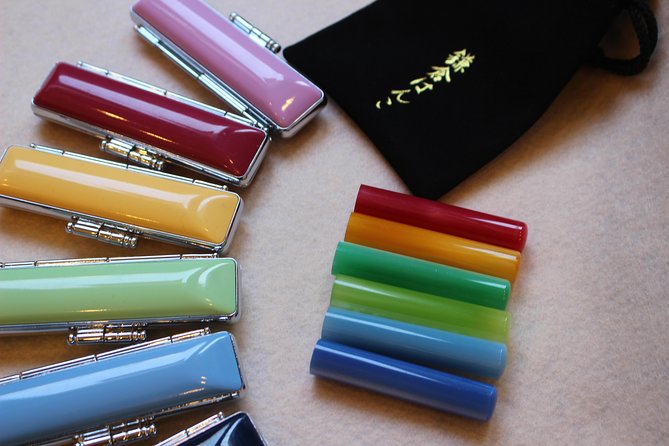
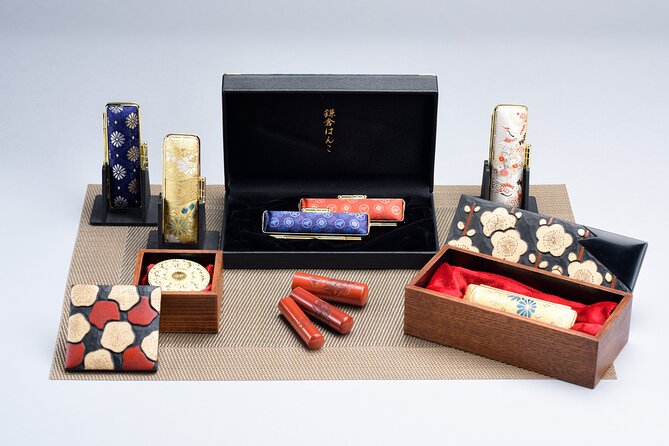
The standard workshop includes the Hanko and engraving fee, along with an original pouch. The supplied details identify Japanese boxwood as included, while the workshop description also refers to acrylic as the standard material with a choice of color. Because those details differ, confirm the exact included material when you book.
Horn, wood, and gemstone options may be available for an additional fee. One account describes choosing wood, with an extra charge for the material. Specialty materials can make the souvenir feel more substantial, but they also push the final cost above the advertised price.
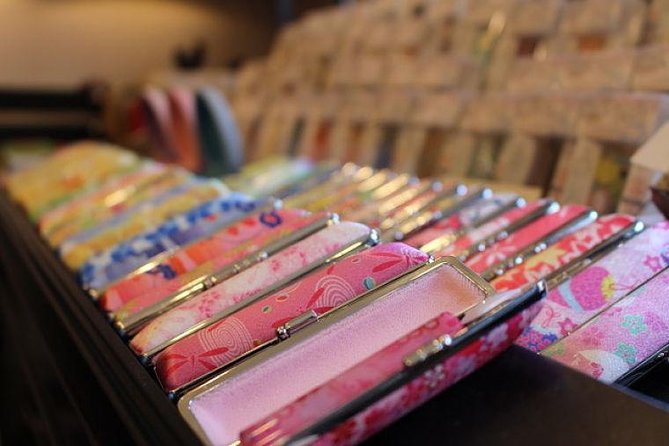
You can also select a case, although the case is sold separately. Different case colors and types are available, and a kimono-fabric pouch or case may cost extra. The included original pouch provides basic protection, so you do not have to buy an upgraded case unless its appearance matters to you.
Red ink is not included. That is a small but important detail. If you want to use the seal immediately, budget for ink or ask whether it is available for purchase at the shop.
The choices are part of the fun, but they can also make the final bill less predictable. I recommend deciding in advance how much you want to spend on upgrades. The basic seal is the sensible choice if you mainly want the experience and a personal keepsake.
How the engraving is completed
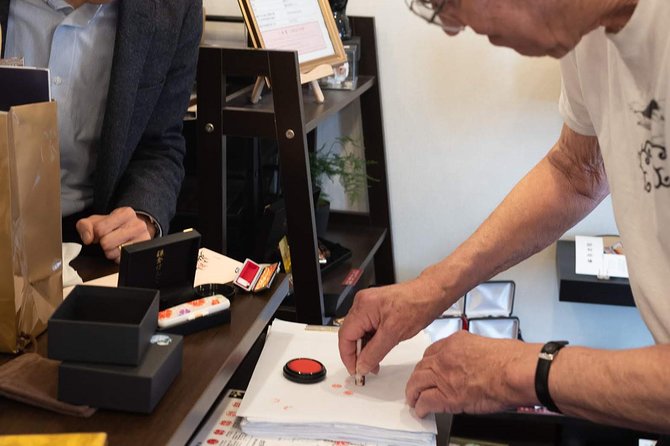
The process combines modern machinery with handwork. An engraving machine makes the initial rough cut, then a craftsman completes the final details by hand.
This is a practical approach. The machine handles the early work with precision, while hand finishing gives the seal its final character. The result is not presented as a fully machine-made souvenir. A skilled maker still checks and refines the carved surface.
The seal is individually made in Japan. That matters if you care about the origin and workmanship of your souvenir. You are not selecting a mass-produced stamp with a preprinted foreign name.
The actual carving is completed after your design choices, so you may not watch every stage during the 45-minute visit. The workshop focuses on explanation and design, followed by pickup later in the day. If you want to see the finished piece before leaving Kamakura, schedule enough time for collection.
A private session with direct attention
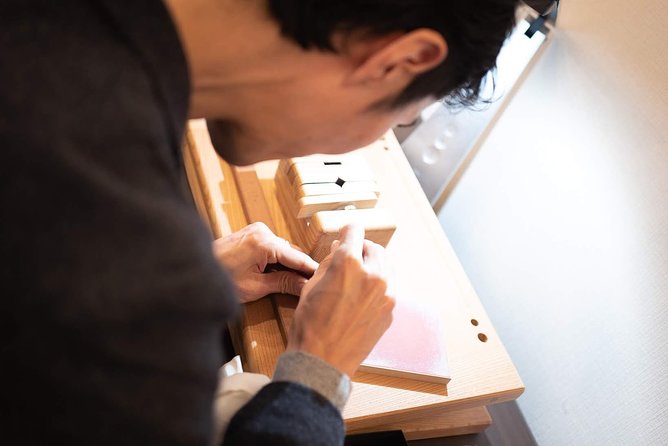
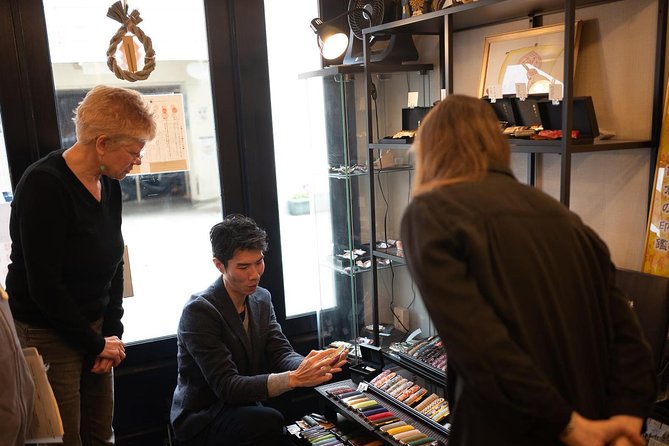
This is a private activity, not a large class. Only your group participates, which gives the workshop a quiet and personal feel.
That format suits couples, families, and solo visitors who want to ask detailed questions. A couple can create matching or contrasting seals. Friends can compare different scripts, colors, and materials. A solo participant can take more time with the lettering without feeling that a group is waiting.
The direct contact with the owner is a major strength. Mitsuhiro Tsukino explains the craft, helps with the Japanese name, and discusses the advantages and disadvantages of materials. English communication is available, and the experience is designed for people who do not already understand Japanese seals.
The small setting does mean this is not a fast, anonymous service. You need to be comfortable making personal design choices and listening to an explanation of the tradition. If you only want a souvenir handed to you in ten minutes, this will feel slow and expensive.
What the price includes, and where extras begin
The listed price is $131.65 per person. That is a lot for a 45-minute activity, especially when several useful accessories are not included.
The value comes from the personal service and the finished object. Your seal is designed around your name, carved in Japan, and finished by hand. You also receive instruction about Japanese scripts and seal culture. For a visitor who values craft, this can be a better purchase than several inexpensive souvenirs with no connection to the maker.
The basic package includes:
- The Hanko seal
- Katakana engraving
- An original pouch
The following cost extra or are not included:
- Hanko case
- Red ink
- Horn, wood, or gemstone upgrades
- Typeface or character upgrades
- Shipping instead of pickup
I would compare this with the price of a standard souvenir only if cost is your main concern. If you want something personal and made for you, the fee is easier to justify. If you are buying for several people, the total can rise quickly, especially with material and case upgrades.
The best value is probably the standard seal, collected in person, with no unnecessary additions. You still get the cultural lesson, custom lettering, engraved object, and pouch.
Who will get the most from this Kamakura activity
I would recommend this workshop to you if you enjoy Japanese arts, calligraphy, small-scale craft, or souvenirs with a story. It is also a good choice if you want an activity that does not depend on weather and can fit into a morning in Kamakura.
It works especially well for couples or small private groups. The personalized design gives each person a clear role, and the finished seals make a pleasant shared reminder of the day.
Families can participate too, though the supplied information does not specify a minimum age. Since the activity involves choosing characters and listening to explanations, it is best for people who can engage with that process.
You should think twice if your schedule is tight. The morning-only timing, later pickup, and possible shipping arrangements require planning. The activity also may not suit anyone who wants a low-cost souvenir or who has no interest in the meaning behind Japanese seals.
Practical planning for your Kamakura day
Book ahead if your dates are fixed. The experience is often reserved around 59 days in advance, which suggests that morning appointments can fill well before a Japan trip.
Use the mobile ticket and arrive at the stated meeting point on time. Since the activity ends back at the shop, it is simple to continue sightseeing afterward, but remember that the finished seal may require a separate afternoon visit.
Kamakura is a good place for this workshop because you can pair the craft with a broader day in town. Attend the morning session, explore nearby sights, then return for pickup. The shop’s location south of the station keeps the plan practical rather than sending you across the area.
If you cannot return, ask about shipping before you finalize the order. Shipping is available only at an added cost. One useful option is delivery to a hotel in one to two days, while international shipping may also be arranged. Exact timing and price should be confirmed directly.
Free cancellation is available if you cancel at least 24 hours before the start time. Changes or cancellations inside that window are not accepted for a refund.
Is the Hanko workshop worth booking?
Book this activity if you want a personal souvenir, enjoy meeting a working craftsman, and have enough time in Kamakura for a morning session plus afternoon pickup or delivery.
The strongest reasons to go are the private setting, careful explanation, English support, and hand-finished result. You leave with a seal connected to your own name, not a generic object picked up in a station shop.
Skip it if $131.65 feels too high for a small souvenir, if you are leaving Kamakura right after the workshop, or if you do not want to consider extra costs for ink, a case, or upgraded materials. For the right visitor, though, this is a memorable piece of Japanese craft and a practical way to bring a little of Kamakura home.
FAQ
Where does the Hanko activity take place?
The meeting point is Kamakura seal shop Souvenir shop at 5-6 Onarimachi, Kamakura, Kanagawa 248-0012, Japan.
How long does the experience last?
The workshop lasts approximately 45 minutes.
Is the activity private?
Yes. Only your group participates in the private activity.
What language is used during the workshop?
The owner speaks English, and the activity includes explanations of Hanko culture, Japanese characters, materials, and typefaces.
What type of Japanese writing is used for the seal?
The standard engraving uses katakana. The workshop helps you write your name in Japanese and choose a suitable typeface.
What is included in the price?
The package includes the Hanko seal, katakana engraving, and an original pouch. The supplied information identifies Japanese boxwood as included, while the workshop description also mentions acrylic as a standard material, so confirm the exact material when booking.
Can I collect the finished seal later?
Yes. You can choose an afternoon pickup time on the day of the experience. Shipping is also possible for an additional fee.
Are upgrades included?
No. Horn, wood, gemstone, upgraded typefaces, an Hanko case, red ink, and shipping are not included in the listed price.
Just added around Kamakura
- When Emperors Reigned and Shoguns Ruled★ 5.0 · 43 reviews
- First time in Kamakura? Enjoy a Tour of All Must-sees!★ 5.0 · 15 reviews
- Kamakura Bamboo Forest and Great Buddha Private Tour★ 5.0 · 12 reviews
- Kamakura 4hr Private Trip with Government-Licensed Guide★ 5.0 · 58 reviews
- Kamakura Walking Tour – The City of Shogun★ 5.0 · 100 reviews
- Exciting Kamakura – One Day Tour from Tokyo★ 5.0 · 40 reviews
- Kamakura Tours Half Day or Full Day Tours with a local guide.★ 5.0 · 12 reviews
- Buddha, Bamboo & Zen – Bespoke Kamakura Private Walking Tours★ 5.0 · 25 reviews
Kamakura Tours, compared.
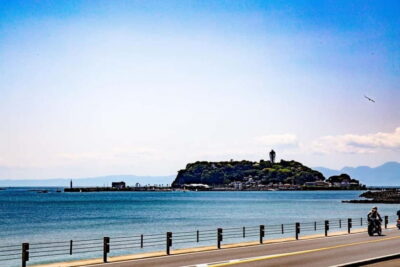
Kamakura & Enoshima Day Trip including Temple Tickets
Read our review →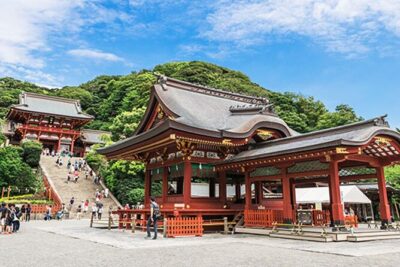
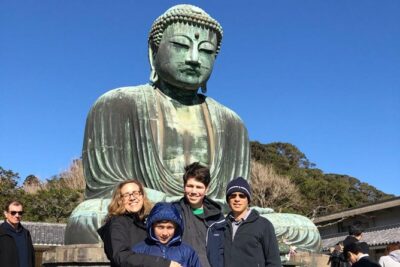
Kamakura Historical Walking Tour with the Great Buddha
Read our review →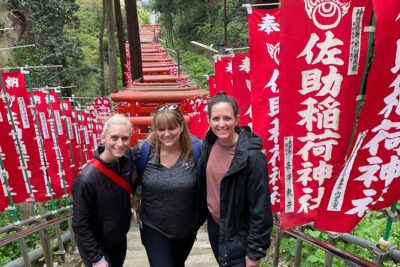
Kamakura Private Tour: Temples, Nature, and the Great Buddha
Read our review →
Kamakura 4hr Private Trip with Government-Licensed Guide
Read our review →
Kamakura Full Day Tour with a Local Expert Guide
Read our review →
Browse the lists this tour appears in