
Reviewed · NARA TOURS
Nara World Heritage PRIVATE TOUR
Nara’s sacred deer are the star of this private walking tour, but they are only the beginning. In a few hours, you move from Todai-ji’s huge wooden gate and giant Buddha to quiet ponds, pagodas, and the open paths of Nara Park. It is a useful first look at Japan’s old capital without spending half a day sorting out the route yourself.
I like the private format, which lets your group keep a sensible pace and ask for help when the heat or crowds become tiring. I also like that the tour covers both famous sights and calmer corners, including Ukimido Pavilion, while supplying temple admissions and a packet of deer crackers.
The main consideration is the guide. Several guests praised George, Kimu, and Kim for being warm, patient, and well informed, while two reviews described a guide who stuck too closely to a script or seemed uninterested. That makes guide assignment the one part of the experience you cannot fully control.
Key points to know before booking

- Feed Nara’s sacred deer: One packet of crackers is included, giving you a simple and memorable introduction to the animals that roam the park.
- See Todai-ji in about an hour: The route includes the Great South Gate and the temple famous for its enormous Buddha statue.
- Enjoy a private walking route: Only your group takes part, so the pace can be more personal than on a large group outing.
- Finish near Kintetsu-Nara Station: The stated end point is convenient for continuing your day, though the guide may also disperse you nearer your destination.
- Plan around the heat: Nara can exceed 35 degrees Celsius in August, and the tour spends much of its time outdoors.
- Book ahead for a preferred date: The experience is often reserved about 31 days in advance, and confirmation arrives within 48 hours, subject to availability.
Why this private Nara route works for a first visit
Nara can look easy on a map. Todai-ji, Nara Park, Ukimido Pavilion, and Kofuku-ji all sit within the same broad sightseeing area. In practice, the grounds are large, the deer paths branch off in every direction, and the cultural details are easy to miss if you simply follow the crowd.
This tour gives you a clear three to four hour framework. You begin at the Todai-ji Museum area and walk through the temple district, across Nara Park, beside Sagiike Pond, and toward Kofuku-ji before finishing at Kintetsu-Nara Station.
I see the route as a strong introduction rather than a complete study of Nara. You get the main sights, a little local interpretation, and enough orientation to return on your own. One review made this exact point: three hours is enough to learn the area, then continue exploring anything that catches your eye.
The private setup matters most for families and first-time visitors. Children can slow the pace, you can pause for water, and you are not trying to keep up with a large group. The tour has also worked well for families with young children, including boys aged five and eight, although hot weather can make the walk harder for everyone.
More history-led days in Nara:
- World Heritage Kyoto & Nara Uji Authentic Matcha Experience
★ 5.0 · 1,573 reviews - Nara: Bike Tour in Ancient Capital UNESCO World Heritage
★ 5.0 · 43 reviews - World Heritage Shirakawa-go and Experience Tours from Kanazawa
★ 5.0 · 4,049 reviews
Starting at Todai-ji Museum
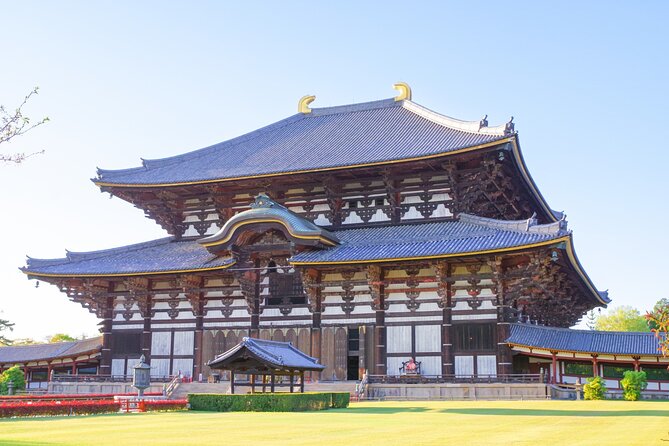
The meeting point is Todai-ji Museum, at 100 Suimoncho inside the Todai-ji General Cultural Center. The listed stop lasts about 10 minutes and has no separate admission charge.
This opening point is practical because it places you right in the Todai-ji temple area. Do not expect the museum stop alone to fill your morning. Its main value is orientation, meeting your guide, and beginning the historical part of the walk before the large temple buildings come into view.
Your confirmation arrives within 48 hours of booking, subject to availability. Since the tour is often booked around a month ahead, I would not leave a particular morning until the last minute if your Nara schedule is tight.
Walking under Todai-ji’s Great South Gate
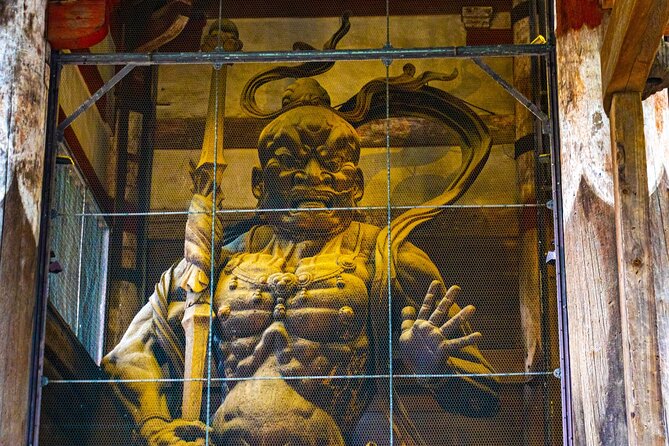
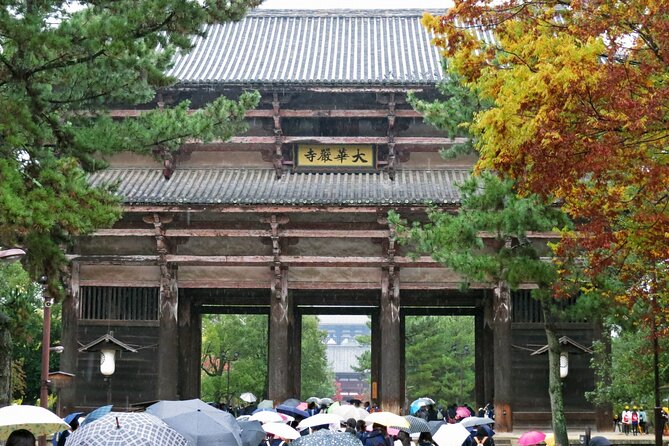
The Todai-ji Nandaimon, or Great South Gate, receives about 10 minutes on the route. It was rebuilt in the 13th century and is a powerful example of Kamakura-period wooden architecture.
The gate gives you a sense of scale before you enter the main temple grounds. Look up at the heavy timber construction and take a moment to notice how the gate frames the approach. The short scheduled stop is enough for an introduction, but you may want extra time for photographs if the area is crowded.
This is also where a good guide can make a real difference. A bare description of dates and names will tell you what the gate is. A thoughtful explanation can help you understand why such a large wooden entrance was built and how it fits into the temple complex.
That distinction matters here. The tour is designed around efficient sightseeing, so the guide may keep moving to protect the schedule. If you want more time at architecture, ask early. In a private group, that request is easier to handle than it would be on a fixed large-group outing.
Spending an hour inside Todai-ji
Todai-ji receives the longest stop, about 1 hour and 5 minutes, and entrance is included. This is the core of the tour.
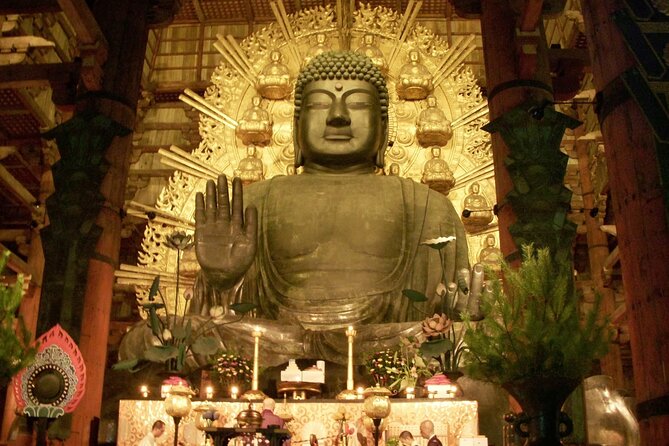
The temple is a World Cultural Heritage site and is famous for its Daibutsu, the large Buddha statue housed inside the main hall. The building, the statue, and the surrounding grounds all work together to create the big visual moment of the morning.
The attraction is not only the statue itself. You also get the effect of approaching it through broad temple grounds surrounded by nature. The scale can be difficult to grasp from photographs, so standing in the hall gives the experience its proper weight.
Admission being included simplifies the visit. You do not need to stop and work out separate temple tickets during a short tour. That is a modest convenience, but it helps keep the route moving.
The tradeoff is time. One hour and five minutes sounds generous, yet Todai-ji is the place most likely to tempt you into lingering. If you want a slow visit, quiet reflection, or extensive photographs, this tour may feel brisk. If you want the essential temple experience before continuing through Nara, the timing is sensible.
The guide quality matters especially here. George has been praised for explaining the site in a way that adds useful local detail, while Kimu and Kim have also been described as attentive and well informed. At the same time, one dissatisfied guest found the commentary too scripted. You should expect interpretation, but the amount of conversation and personal exchange may depend on the individual guide assigned to your group.
A few more Nara half-days to weigh up
- Nara Half Day Trip Walking Tour (Private Option Available)
★ 5.0 · 937 reviews - Nara Early Morning Tour (Kyoto or Osaka Departure Available)
★ 5.0 · 676 reviews - Osaka: Nara and Uji Day Trip with Deer Park and Hot Spring
★ 4.4 · 302 reviews - Kyoto/Osaka: Kinkakuji, Bamboo Forest, and Nara Deer Park
★ 4.4 · 265 reviews
Meeting Nara’s deer in the park
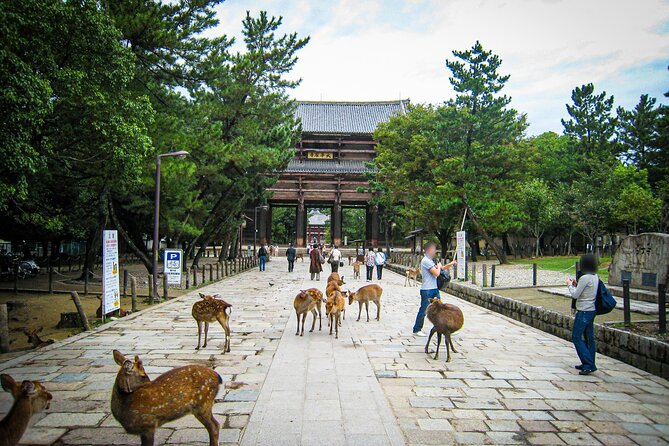
After Todai-ji, the route spends about 35 minutes in Nara Park. Admission is free, and one packet of deer crackers is included.
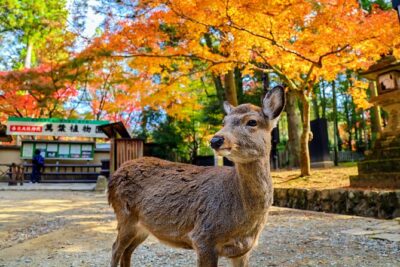
The deer are not simply a cute photo opportunity. In Nara, they are revered as messengers of the gods and roam freely through the city’s historic area. Feeding one gives you a small, direct connection with a custom that feels specific to Nara rather than imported for sightseeing.
Keep the crackers in mind as part of the experience, not as a full meal for the deer. You get one packet, so use it carefully and follow the guide’s instructions. The animals are accustomed to people, but they are still animals, and your attention should remain on safe, respectful feeding.
Thirty-five minutes is enough to approach the deer, take photographs, and enjoy the setting. It is not a long wildlife encounter. The park covers about 660 hectares and is home to around 1,200 freely roaming deer, so you will see only a small part of it on this route.
That is one reason the private tour can be useful. A guide can lead you toward the main deer area while keeping the visit connected to the temples and park setting. If you explored alone, you could certainly find the deer, but you might spend more time deciding where to go next.
The heat deserves serious attention. A family completed this tour with children when the temperature was around 39 degrees Celsius, but the conditions were plainly difficult. Nara summers can be especially hot, with August temperatures often above 35 degrees. Bring water, use a parasol for shade if you have one, and choose light clothing. The tour operator specifically warns about heatstroke, and that warning is worth taking seriously.
A quieter pause at Ukimido Pavilion
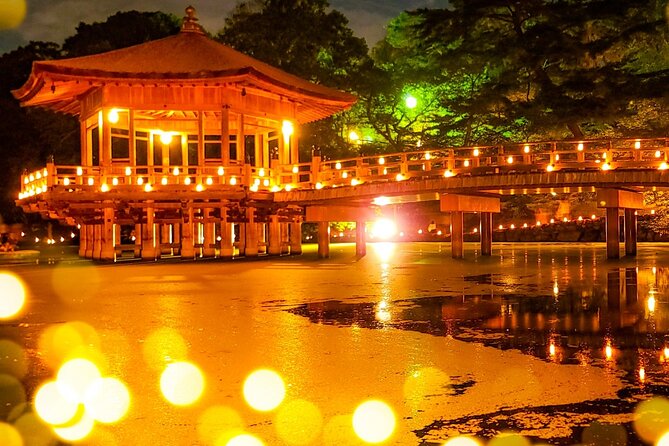
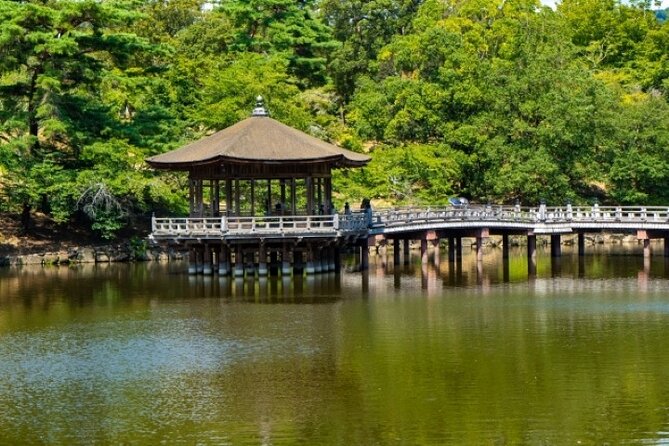
Ukimido Pavilion receives about 30 minutes. This hexagonal hall sits on Sagiike Pond, surrounded by trees, with the building reflected in the water on a clear day.
This is the calmest section of the route. Todai-ji delivers scale, and Nara Park brings deer and open paths. Ukimido offers a slower view, with the pavilion, pond, sky, and trees forming a simple picture that rewards patience.
The stop is also a useful reminder that Nara is more than its headline temples. You are still close to the main sightseeing district, but the mood changes beside the pond. Take your time here if you enjoy photographs or want a break from the more crowded temple approaches.
The reflection depends on conditions. Cloud, wind, or people near the water can change the view, so I would treat the pavilion as a pleasant pause rather than promise a perfect photograph. The scheduled 30 minutes gives you enough time to see it properly without making the tour feel stalled.
Ending at Kofuku-ji and the Five-Story Pagoda
The final listed stop is Kofuku-ji, with about 30 minutes and no separate admission charge shown for this stop. The temple is known for its Five-Story Pagoda, a striking wooden structure about 50 meters tall and originally built in 730.
The pagoda gives the closing part of the walk a strong architectural finish. After the immense interior of Todai-ji and the natural setting of the park and pond, Kofuku-ji brings you back to a clear urban landmark.
The tour ends at Kintetsu-Nara Station, at 29 Nishimikadocho. That makes the route practical for continuing your day in Nara or leaving the sightseeing district by train. Because this is a private activity, the guide may also disperse you at a location that suits your destination, with the station serving as the official guide point.
The route timing adds up to roughly 160 minutes at the listed stops, before walking time and transitions. That explains the advertised three to four hour duration. Expect a half-day outing with regular walking, not a short stop at each monument.
How much value do you get for $96.67?
At $96.67 per person, this is not the cheapest way to see Nara’s public spaces. You can walk through Nara Park without paying an entrance fee, and you can view several buildings from outside without joining a tour.
The value comes from the combination of a private guide, included temple and shrine admissions, route planning, and the deer-feeding experience. For a first visit, that can save you the mental work of choosing an order and finding the main sights within a limited window.
It is easier to justify the price if you are visiting Nara from Kyoto or fitting Nara into a packed Japan itinerary. You see a lot in a short period, and you finish in a useful location. It is also more attractive for families, since a private guide can respond to children and adjust the pace.
The calculation is less convincing if you already know Nara well, prefer wandering alone, or want to spend a full day inside Todai-ji and the surrounding temple grounds. You would be paying mainly for interpretation and convenience, not for exclusive access to the park.
Admission to the listed temples and shrines is included, as is one packet of deer crackers. Extra street food and drinks are not included, so budget separately for refreshments, especially during the hotter months.
The guide can shape the whole morning
The strongest praise centers on the guides. George has been described as friendly, patient with children, and able to add details beyond basic textbook facts. Kimu and Kim have also received praise for their intelligence, attention, politeness, and local understanding.
Those qualities matter because the route itself is straightforward. You can reach Todai-ji, the deer, Ukimido, and Kofuku-ji without a guide. What you cannot get as easily is a clear explanation of why the sites matter, plus someone who notices when your group needs a pause or a change of pace.
There is also a real caution. One guest described a guide who followed a preplanned script and did not interact much. Another called the experience poor because the guide seemed disinterested and lacked patience. These are not minor complaints in a private tour, where personal attention is the main reason to pay more.
I would book this experience with realistic expectations. You should receive a professional local guide, but the style may range from conversational and flexible to more formal and prepared. At the start, tell the guide what interests you: architecture, Buddhist art, local customs, children’s needs, or photography. That gives the morning a better chance of feeling personal.
Who should choose this Nara tour?
I would recommend it most strongly to first-time visitors who have three or four hours and want the essential Nara sights arranged for them. It is also a good fit for families, couples, and small private groups that value flexibility over the lowest possible price.
The tour suits you if you want to:
- Feed the deer with a guide nearby
- Enter Todai-ji without arranging each admission yourself
- See the main Nara sights in a compact half-day
- Learn historical and local details as you walk
- Finish near Kintetsu-Nara Station
- Avoid planning your own route through a large park
I would think twice if you dislike walking in hot weather, need a slow museum-style visit, or want a highly predictable guiding style. The operator requires good weather, and cancellations caused by poor conditions lead to another date or a full refund, but ordinary summer heat is not a reason the tour will stop. You need to prepare for it.
Free cancellation is available up to 24 hours before the start time. Changes or cancellations inside that window are not accepted for a refund, so keep your plans settled once the deadline passes.
Should you book it?
Book this Nara private tour if you want a well-planned first look at Todai-ji, the deer, Ukimido Pavilion, and Kofuku-ji without spending your day on logistics. The included admissions, private format, useful ending point, and strong guide performances make the $96.67 price reasonable for many short-stay visitors.
I would skip it if you are happy to explore independently and want to linger at one temple. The route is efficient, and that means the schedule may feel quick. Also, guide style can vary, so ask for an interactive approach at the beginning and speak up about heat, children, or extra time at a favorite stop.
For most first visits, this is a practical way to get your bearings fast, meet Nara’s deer, and leave with enough understanding to continue on your own.
FAQ
How long does the Nara World Heritage Private Tour last?
The tour lasts approximately three to four hours. The scheduled visits total about 160 minutes, with the remaining time used for walking and moving between sites.
What places are included on the route?
The route includes Todai-ji Museum, Todai-ji’s Great South Gate, Todai-ji Temple, Nara Park, Ukimido Pavilion, and Kofuku-ji.
Is this a private tour?
Yes. Only your group participates in the activity.
Are temple and shrine entrance fees included?
Yes. Entrance fees for all temples and shrines visited on the tour are included.
Are deer crackers included?
Yes. The tour includes one packet of crackers to feed the deer in Nara Park.
Where does the tour begin?
The meeting point is Todai-ji Museum, at 100 Suimoncho, Nara, inside the Todai-ji General Cultural Center.
Where does the tour end?
The stated end point is Kintetsu-Nara Station. Since the tour is private, the guide may disperse your group at another location according to your destination.
Is the tour suitable in hot weather?
The tour takes place outdoors and requires walking. Nara can exceed 35 degrees Celsius in August, so hydration and shade protection, such as a parasol, are strongly recommended.
Can I cancel for a full refund?
You can cancel at least 24 hours before the experience start time for a full refund. Cancellations or changes made less than 24 hours before the start time are not accepted for a refund.
Just added around Nara
- All must-sees in 3 hours – Nara Park Classic Tour! From JR Nara!★ 5.0 · 108 reviews
- Private Nara Tour and Sake Tasting (Departing from Kyoto/Nara)★ 5.0 · 40 reviews
- Hammer a Pattern on Your Ring Workshop★ 5.0 · 57 reviews
- Nara Sake Tasting Tour at Local Brewerie(tasting fee included)★ 5.0 · 12 reviews
- Nara Private Tour: Flexible Pickup from Kyoto, Osaka, or Nara★ 5.0 · 17 reviews
- Nara – Heart of Nature Cross Bike Tour★ 5.0 · 19 reviews
- Nara Highlight Walking Tour with Furoshiki Experience with Lunch★ 5.0 · 73 reviews
- Perfect Nara Park Half-Day Bus Tour with English Speaking Guide★ 5.0 · 49 reviews
Nara Tours, compared.
World Heritage Kyoto & Nara Uji Authentic Matcha Experience
Read our review →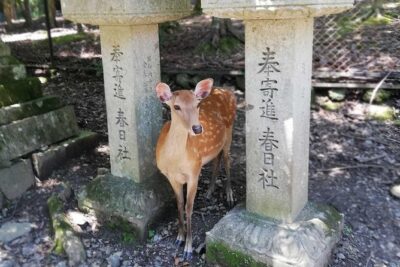
Nara Half Day Trip Walking Tour (Private Option Available)
Read our review →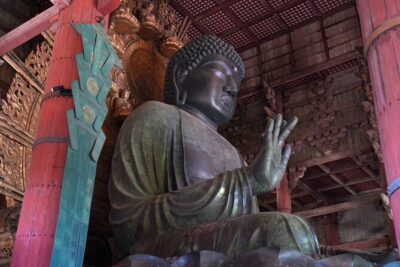
Nara Early Morning Tour (Kyoto or Osaka Departure Available)
Read our review →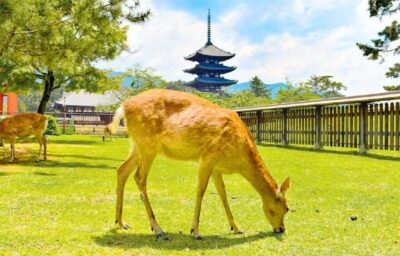
Nara and Uji Day Trip with Deer Park and Hot Spring
Read our review →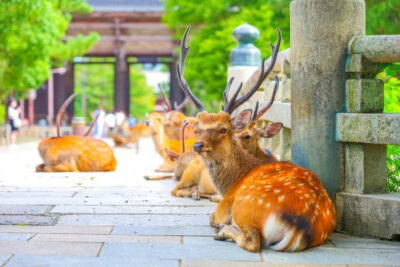
Kyoto/Osaka: Kinkakuji, Bamboo Forest, and Nara Deer Park
Read our review →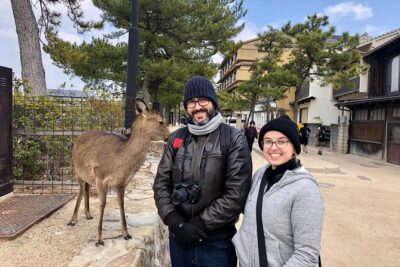
Nara 6hr Private Tour with Government-Licensed Guide
Read our review →
E-Bike Nara Highlights – Todaiji, Knives, Deer, Shrine
Read our review →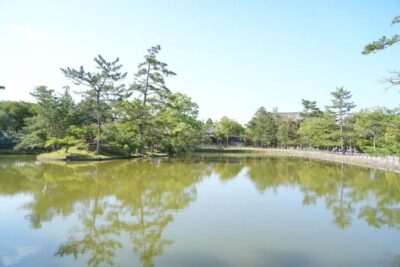
Nara Early Bird Tour (Kyoto Departure Option Available)
Read our review →Browse the lists this tour appears in