
Reviewed · TOKYO TOURS
Tokyo Shinjuku Chopsticks Making Class
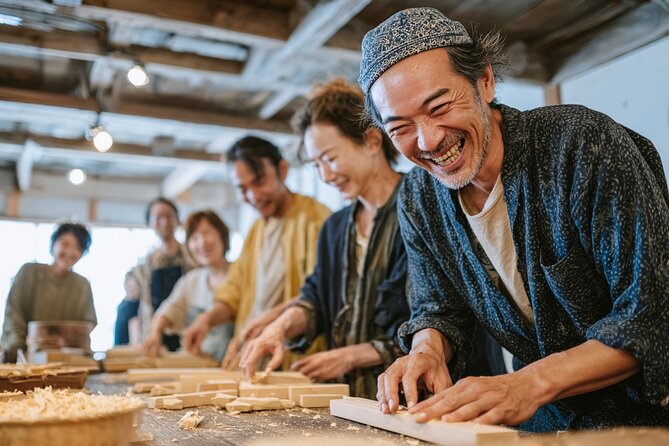
The best part of this one-hour Shinjuku workshop is the simple transformation: two rough sticks become a useful souvenir shaped by your own hands. You plane the wood with a traditional kanna, smooth it, oil it, and leave with chopsticks that carry the small marks of your effort.
I like the choice of wood and the clear, hands-on format. Two types are included, while premium woods cost extra, and the staff explain each stage in English. The main caution is crowding. At busy times, help can feel stretched, and some visitors found the tools blunt or the upselling for premium wood and engraving too strong.
Key points to know before booking
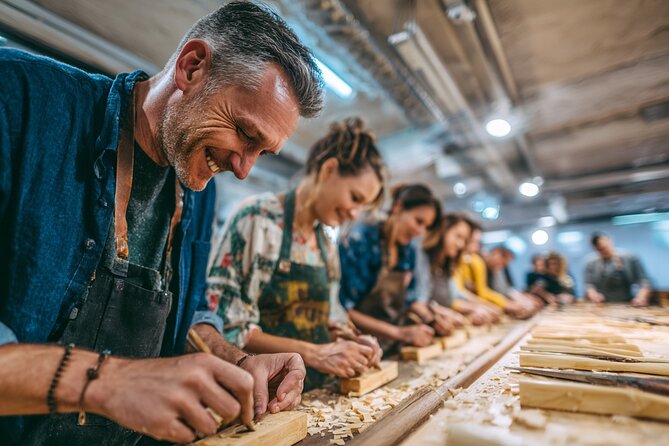
- You make a practical souvenir: Shape, sand, and oil your own pair of chopsticks rather than simply buying one.
- The kanna is the star tool: This traditional Japanese hand plane lets you feel the wood grain as you remove thin shavings.
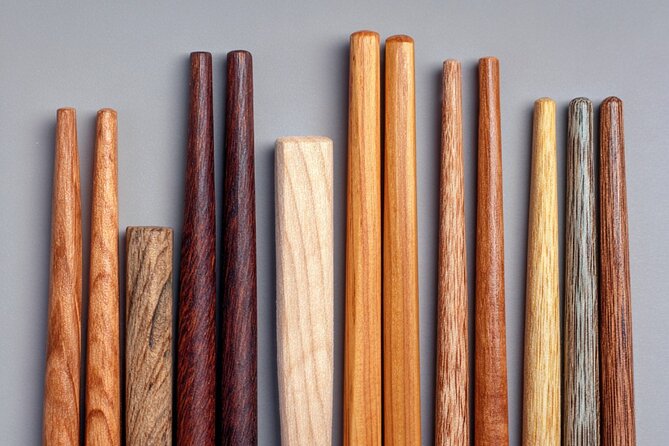
- Two wood choices are included: Premium varieties are available for an added charge if you want a different color, scent, or texture.
- English support is strong: Staff members such as Tom, Yuki, Nana, Ken, Sayaka, Masa, and others have helped international visitors through the steps.
- Engraving costs extra: Personalizing the finished chopsticks is available for 2,000 yen, according to the experience details shared by participants.
- Timing affects the experience: The workshop can accommodate up to 32 people, but midday crowds may mean less one-on-one help.
Turning plain sticks into a Tokyo souvenir
This is not a lecture followed by a quick craft. You work on the chopsticks from start to finish.
You begin with raw wooden sticks and choose the wood you want to use. The included choices give you a simple way to keep the price near the advertised $20 per person. Premium woods offer more variety in texture, scent, and color, but the upgrade changes the value calculation quickly.
The staff then introduce the kanna, a small traditional Japanese hand plane. Your task is to shave the surface gradually, learning how much pressure to use and how to follow the grain. This takes some practice. A chopstick may look simple, but making two matching pieces calls for patience and a light touch.
That learning curve is part of the appeal. You are not just decorating a pre-cut souvenir. You are shaping an object that needs to feel comfortable in your hand and work at the table.
After the rough shaping, you smooth the wood with sandpaper and apply oil for the final finish. The process is tidy and easy to understand, though it still requires some muscle, particularly with harder wood. One child with woodworking experience reportedly enjoyed putting those skills to use, while other participants found the first stick harder than expected.
More hands-on workshops in Tokyo:
- Sushi Making Tokyo Roll and Authentic Japanese Sushi Class
★ 5.0 · 3,971 reviews - Tokyo: Roll and Authentic Sushi Making Class in Asakusa
★ 4.9 · 1,957 reviews - Tokyo: Sushi Making Class in a Happi Coat near a Famous Spot
★ 4.9 · 1,377 reviews
Why the hand plane makes this more than a craft shop visit
Many Tokyo souvenirs are easy to buy and easy to forget. These chopsticks take effort, even if the finished product is modest.
The kanna gives the activity a clear Japanese connection. You are using a traditional tool, feeling the resistance of natural wood, and saving the curls and shavings produced during the work. The shavings may seem like a small extra, but keeping them gives you a tangible reminder of the process rather than only the finished pair.
The work also slows your sightseeing pace. Shinjuku can fill an itinerary with tall buildings, bright signs, and busy streets. An hour at a workbench offers a useful change of rhythm. You concentrate on the grain, the blade, and the shape in front of you.
I especially like that the result is functional. You can use the chopsticks at home, give them as a gift, or display them as a personal reminder of Japan. They are not museum-quality carpentry, and the activity does not promise that level of precision. The value is in making them yourself.
Choosing wood without losing track of the price
The base price is about $20 per person, which is reasonable for an hour of guided activity and a finished pair of chopsticks. It is a good fit if you want an activity that includes a take-home item and does not require a full day.
The included wood choices are enough to complete the experience. You do not need to upgrade to enjoy the central craft. Still, the premium varieties may tempt you, particularly if you want a more distinctive grain or color.
This is where you should set a budget before you sit down. Extra charges apply to premium wood, and engraving costs 2,000 yen. Several participants felt the engraving should have been part of the main price, while others happily paid for a name or message because it made the souvenir more personal.
My advice is simple: decide if the making matters more to you than the final wood selection. If the activity is your priority, use one of the included woods and enjoy the process. If you are making a gift or want a keepsake with a particular look, the upgrades may be worthwhile, but ask about the price before choosing.
The step-by-step work at the bench
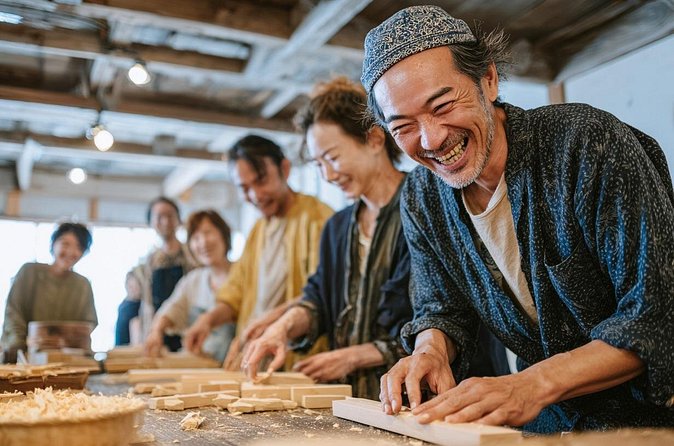
The class is beginner-friendly, but it is not entirely effortless.
First, you learn how to hold and use the kanna. The aim is to remove controlled shavings rather than force the blade through the wood. Staff members check your technique and help if the wood catches or the surface becomes uneven.
Next comes shaping. You work along the sticks until the edges and faces begin to look like chopsticks rather than square stock. This is the stage where patience matters most. If you shave too much from one side, you may need staff help or another piece of wood. Participants have appreciated being allowed to try again after mistakes.
Sanding follows. This step refines the surface and removes rough spots left by the plane. It is less dramatic than shaving, but it determines how comfortable the chopsticks feel.
Finally, you oil the wood. The oil brings out the grain and gives the finished pair a more complete look. Staff explain the order of shaving, sanding, and oiling, and English support is available throughout the session.
The process normally takes about an hour. That is enough time for a satisfying project, but not enough for long pauses if the room is full. Arriving early may help you get settled, though early seating depends on space.
A few more Tokyo half-days to weigh up
- Mt Fuji and Hakone 1-Day Bus Tour Return by Bullet Train
★ 5.0 · 26,383 reviews - 1-Day Tokyo Bus Tour
★ 5.0 · 14,250 reviews - Tokyo: TOKYO SKYTREE® Admission ticket
★ 4.5 · 11,192 reviews - Tokyo: teamLab Planets TOKYO Digital Art Museum Entry Ticket
★ 4.6 · 9,779 reviews
Staff help and the English-language experience
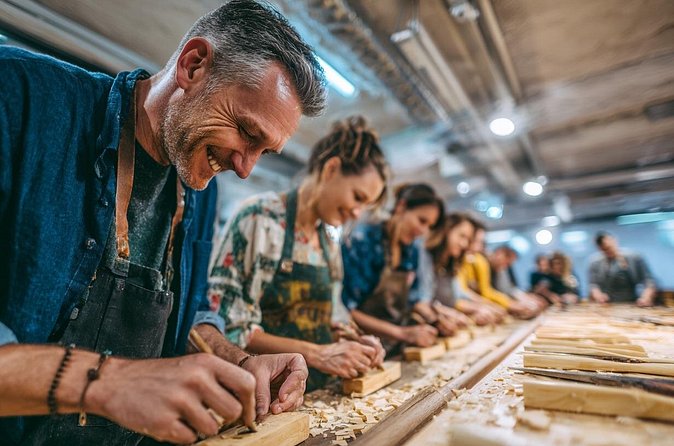
The strongest part of the workshop is the staff guidance.
Names that appear in participant accounts include Masa, Tom, Yuki, Nana, Ken, Sayaka, Mimi, Yin, Katana, Mauro, Kiwa, and Shae. You should not assume a particular instructor will lead your session, but the repeated pattern is clear: English-speaking staff explain the tools and remain available for questions.
Masa was praised for patient help after a first attempt went wrong. Tom and Yuki were noted for explaining the process clearly in English, and Ken and Sayaka received praise for attentive assistance. Nana, Mauro, Yin, Mimi, Katana, Kiwa, and Shae were also singled out for friendly or helpful instruction.
That personal help matters because the kanna technique is not obvious. A printed explanation would not show you how hard to press or how to correct a rough cut. At a quieter time, staff can check your work more often and answer questions as they arise.
The limitation is capacity. The maximum group size is 32, and the setup uses several tables with multiple workstations. This makes the activity organized and efficient, but a full session can feel hectic. Some participants had to wait for assistance, and explanations did not always feel equally thorough from one staff member to another.
If you can choose your time, avoid the busiest middle-of-day period. That does not guarantee a quiet room, but it may improve your access to an instructor.
A good activity for families and mixed ages
This workshop works well for a family group because everyone can perform the same task at their own pace.
One multigenerational group ranging from age 10 to 84 enjoyed the activity together. That makes sense: the basic steps are accessible, the project is short, and the finished item gives everyone something to take home.
Younger participants may need closer supervision with the hand plane. The activity also requires some physical effort, especially when working harder wood. The staff can guide beginners, but this is not a passive demonstration where you simply watch someone else make the item.
Groups of six have been able to sit together, which helps keep the social side of the activity intact. It also works for solo visitors and pairs who want a creative break from sightseeing. If your group has different interests, the one-hour length keeps the commitment manageable.
The activity suits people who enjoy making things more than people seeking a polished, expert-level product. Your pair may have slight differences, and that is part of the personal character of the souvenir.
Location, timing, and practical details
The meeting point is 7-chōme-4-5 Nishishinjuku, Shinjuku City, Tokyo 160-0023, Japan. The activity ends at the same location, so you do not need to arrange a separate return transfer.
Pay close attention to the address when you go. One participant had trouble because booking directions and map information led to different locations. Check the exact meeting point before leaving and allow time to find the workshop.
The mobile ticket is useful for a quick booking check, and confirmation is sent when you book. The experience is near public transportation, but the supplied details do not identify a particular station or walking time, so use the full address rather than relying only on a venue name.
Service animals are allowed. The group limit is 32 people, although the working space may feel crowded before that limit is reached.
Free cancellation is available if you cancel at least 24 hours before the local start time. Changes or cancellations within 24 hours are not accepted for a refund. That cutoff matters if your Tokyo schedule is still shifting.
Engraving and the question of personalization
Engraving can turn a nice craft into a more clearly personal souvenir.
The available option costs 2,000 yen, and participants have used it for names or other personal marks. It is especially sensible if you are making a gift or want a keepsake that cannot be confused with a shop-bought pair.
Still, do not treat it as an automatic part of the experience. It is an extra charge, and some people felt the cost was high after already paying for premium wood. Ask about the engraving price and process before committing.
The plain finished chopsticks are enough for most people. The strongest memory comes from making them, not from adding text afterward.
The main weaknesses to consider
The workshop has a very high overall rating, but the lower scores point to practical issues worth taking seriously.
The first is crowd control. A busy class can feel rushed or disorganized, even when staff are trying to help everyone. The room may have enough workstations, but the number of instructors available at a given moment affects how much guidance you receive.
The second is tool condition. A few participants found the blades blunt, which makes shaving harder and can reduce the satisfaction of using the kanna. Other people still completed attractive chopsticks, but your experience may depend partly on the particular tool and wood you receive.
The third is sales pressure. Premium wood and engraving are optional, yet some participants felt pushed toward both. You can politely decline and use the included wood. The core class remains available without every add-on.
Finally, meeting instructions need care. Use the precise Nishishinjuku address and verify it before setting out. A wrong turn is frustrating when the class has a fixed start time.
Who will get the most from this workshop
I would choose this experience for:
- Families seeking a shared activity that suits several ages
- First-time visitors who want a Japanese craft with a usable result
- Solo visitors who prefer making something to watching a performance
- Couples or friends looking for a small personal souvenir
- Anyone with an interest in woodworking, hand tools, or natural materials
I would be more cautious if you dislike upselling, need quiet personal instruction, or expect professional woodworking standards. You may also want to skip it if your schedule is so tight that a delayed start or crowded session would cause trouble.
Should you book the Shinjuku chopsticks class?
Yes, if you see the $20 price as payment for a hands-on hour and a handmade keepsake, rather than simply a pair of chopsticks. The staff generally provide friendly English guidance, the process has real physical involvement, and the finished item is useful long after your Tokyo visit.
Book with three small conditions in mind: confirm the Nishishinjuku address, avoid the busiest time if possible, and decide in advance how much you want to spend on premium wood or engraving. Use the included wood if you want the best value.
This is a charming, compact choice for a family, a first Tokyo afternoon, or a rainy-day change from sightseeing. It is not a quiet private lesson, and busy sessions can expose weaknesses in staffing and tools. For most people who enjoy making their own souvenir, though, the chance to plane, sand, oil, and carry home a pair of chopsticks gives the hour a genuine sense of place.
FAQ
Where does the chopsticks-making class take place?
The meeting point is 7-chōme-4-5 Nishishinjuku, Shinjuku City, Tokyo 160-0023, Japan.
How long does the activity last?
The workshop lasts approximately one hour.
Where does the activity end?
It ends back at the meeting point in Nishishinjuku.
What tool will I use to make the chopsticks?
You will use a traditional kanna, a small Japanese hand plane, to shape the raw wooden sticks.
Do I need woodworking experience?
No. The activity is designed for beginners, and staff guide you through shaping, sanding, and oiling.
Are wood choices included in the price?
Two types of wood are free with the experience. Premium woods are available for a small additional charge.
Can I engrave my chopsticks?
Yes. Engraving is available for an additional 2,000 yen.
What is the cancellation policy?
You can cancel at least 24 hours before the start time for a full refund. Cancellations or changes made within 24 hours are not accepted for a refund.
Just added around Tokyo
- Private Arrival Transfer : Narita International Airport to Central Tokyo City★ 4.5 · 12 reviews
- Narita Airport(NRT): Private Transfer to Tokyo/Yokohama 1-9pax★ 5.0 · 47 reviews
- Private Transfer from Narita Airport to Yokohama Port and City★ 4.5 · 17 reviews
- [Narita Airport Terminals 1, 2] 40-60km Sawara Itako Historic Bike Tour★ 5.0 · 13 reviews
- 3 Day Japan Highlights Tour: Tokyo, Mt.Fuji, Nara, Kyoto, Osaka★ 5.0 · 22 reviews
- Small Town in the Big City: Tasting Tokyo’s Kichijoji★ 5.0 · 195 reviews
- Small Town in the Big City: Tasting Tokyo’s Kichijoji★ 5.0 · 16 reviews
- The 10 Tastings of Tokyo With Locals: Private Street Food Tour★ 5.0 · 48 reviews
Tokyo Tours, compared.

Mt Fuji and Hakone 1-Day Bus Tour Return by Bullet Train
Read our review →

teamLab Planets TOKYO Digital Art Museum Entry Ticket
Read our review →
Mt Fuji & Hakone Cruise, Drum Show Bullet Train 1 Day from Tokyo
Read our review →
Sumo Show Experience with Chicken Hot Pot and a Photo
Read our review →
Shinjuku Food Tour (13 Dishes at 4 Local Eateries)
Read our review →
Tokyo Mt Fuji 5th St & Hakone Cruise Bus Tour w/Bullet Train
Read our review →
Flagship 2-Hours Official Street Go-Kart Tour – Tokyo Bay Shop
Read our review →Browse the lists this tour appears in