
Reviewed · TOKYO TOURS
Asakusa: Tokyo Skytree Exploration and History Tour
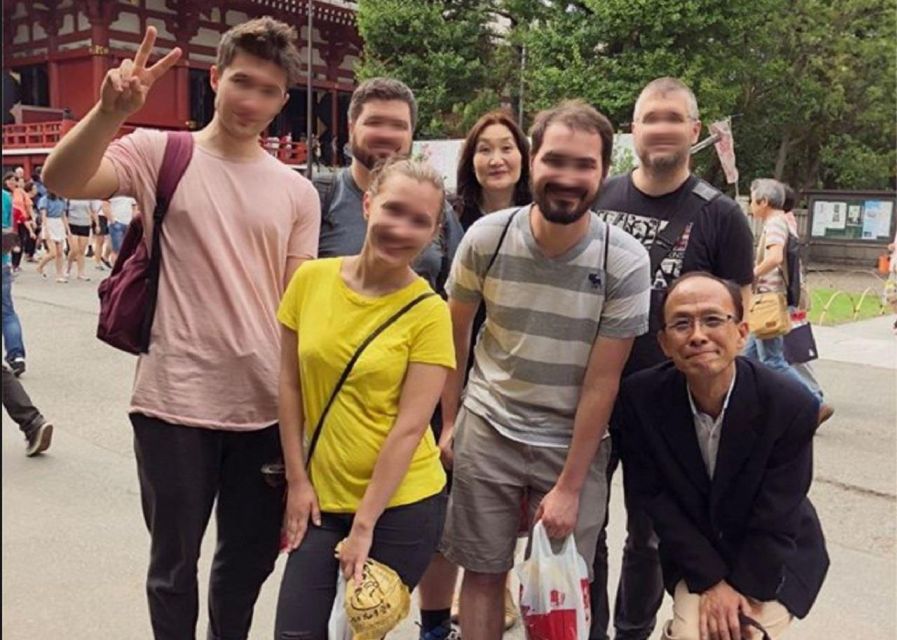
The clever part of this 210-minute tour is the story it builds on foot. Asakusa’s gates, temple grounds, shopping street, and riverfront become chapters in Japan’s move from a closed feudal society to the modern city below Tokyo Skytree. I like the clear historical thread and the quick train ride that links old Tokyo with its newest landmark. I also like the small group size, capped at eight.
The main drawback is physical: you’ll walk and use stairs through crowded Asakusa before spending time on your feet at Skytree. A few people have also found a softly spoken guide hard to hear, so stay close and use the provided headset or audio support when offered.
Key points to know before booking
- A history walk with a purpose: The route uses Kaminarimon, Nakamise, Sensō-ji, and the Sumida River to explain Japan’s wider political and religious story.
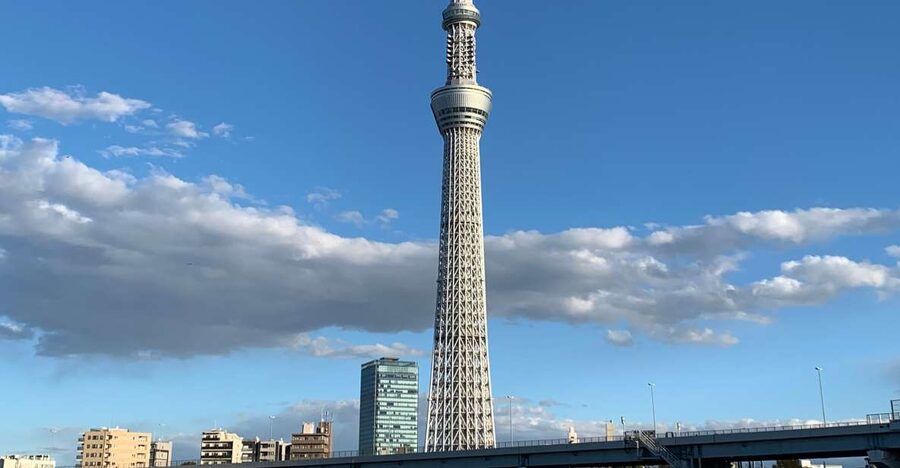
- Two Skytree levels included: Your ticket covers the Tembo Deck at 350 meters and the Tembo Galleria at 450 meters.
- A very small group: Up to eight participants makes questions, photos, and personal help easier.
- Old Tokyo meets new Tokyo: A short train ride from Asakusa to Skytree gives the tour a satisfying change of scale.
- Helpful guides: Aki, Keiko, Yasu, and Machiko or Machico have led this experience, with strong praise for their care and local explanations.
- Plan for the ticket rules: Skytree admission is included, but the JPY160 train fare is not, and the activity is non-refundable.
Why this Asakusa to Skytree route works
Many Tokyo tours show you a temple, a market, and a tower as separate photo stops. This one has a better idea. It begins with the question of how Japan became the country you see today, then uses Asakusa to give that question a physical setting.
Along the Sumida River, your guide explains Japan’s period of isolation and the pressure that eventually forced the country to reopen to the outside world. That background gives the rest of the walk more weight. You are not simply looking at an old gate. You are hearing why religion, trade, power, and foreign influence mattered here.
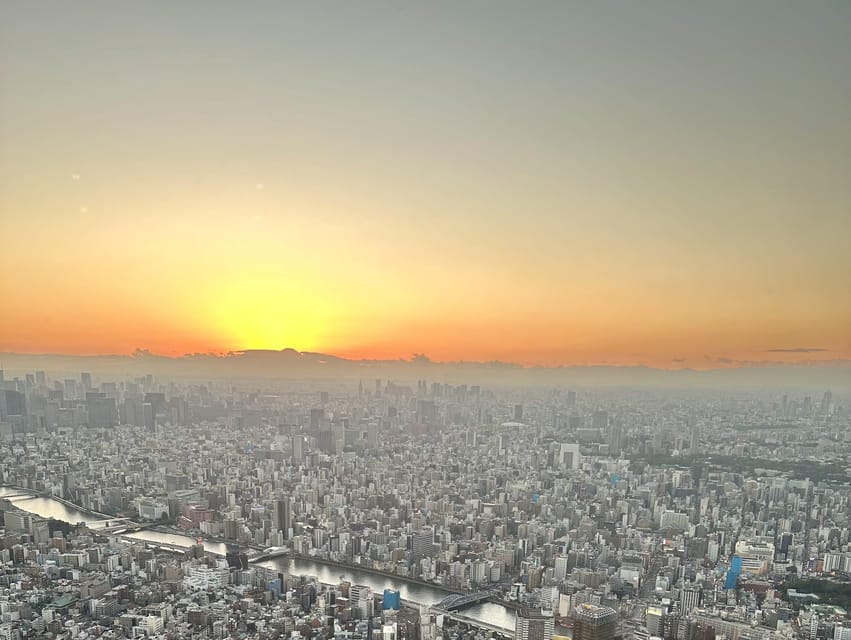
I especially like the change in scale. Asakusa gives you tiled roofs, incense, lanterns, food stalls, and temple courtyards. Tokyo Skytree then lifts you above the city at 350 and 450 meters. The result is a useful before-and-after picture: the compact old district below, and the huge modern metropolis spreading far beyond it.
The tour costs $116 per person. That is not a bargain-priced neighborhood stroll, but it includes both Skytree observation decks, an English-speaking guide, and a small group. If you already plan to visit Skytree and want only admission, you may pay less by arranging it yourself. If you want the tower connected to Asakusa’s story, the added cost can make sense.
More history-led days in Tokyo:
- Tokyo: Imperial Palace and Shogun Historical Walking Tour
★ 5.0 · 2,251 reviews - Tokyo: Imperial Palace Japanese History Walking Tour
★ 4.9 · 987 reviews - Yanaka Walking Tour: Historic and Traditional District of Tokyo
★ 5.0 · 530 reviews
Meeting at Asakusa Station and the Sumida River
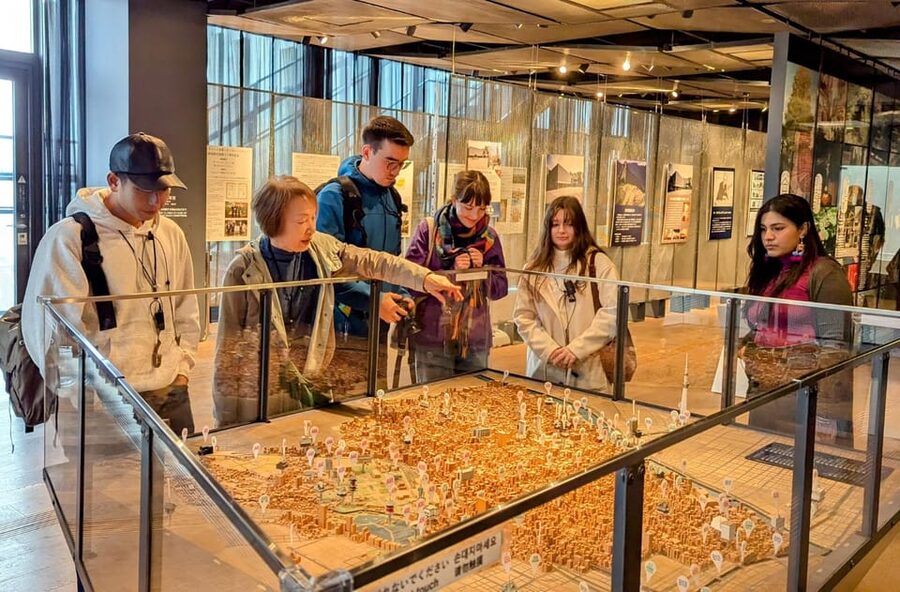
The meeting point is in front of the Burger King beside Exit 4 of Asakusa subway station on the Ginza Line, station G19. Step outside Exit 4 rather than waiting underground. This is a useful detail in a busy station area, where meeting a guide inside can be needlessly confusing.
The first walk heads toward the Tokyo Cruise Asakusa Pier. You spend about 15 minutes here with a guide, taking in the Sumida River and the setting that shaped this part of Tokyo. The river is more than a scenic opening. It helps explain Asakusa’s position as a historic approach to the city and provides the route’s link between Japan’s past and its contact with the wider world.
You do not need a background in Japanese history to follow the explanations. The tour is designed to give you the broad story as you move. That makes it a good first or second-day activity, when you are still trying to understand how Tokyo’s districts fit together.
Reading Tokyo from the Culture Tourist Information Center
The Asakusa Culture Tourist Information Center is next, with about 15 minutes of guided sightseeing. This stop helps you get your bearings before the route enters the busiest historic streets.
Your guide uses the surrounding view and landmarks to place Asakusa in context. This is also the point where you can ask practical questions about the district. The route is not just a march between fixed stops, and the small group allows more room for questions than a large coach tour.
Kaminarimon and the approach to Sensō-ji
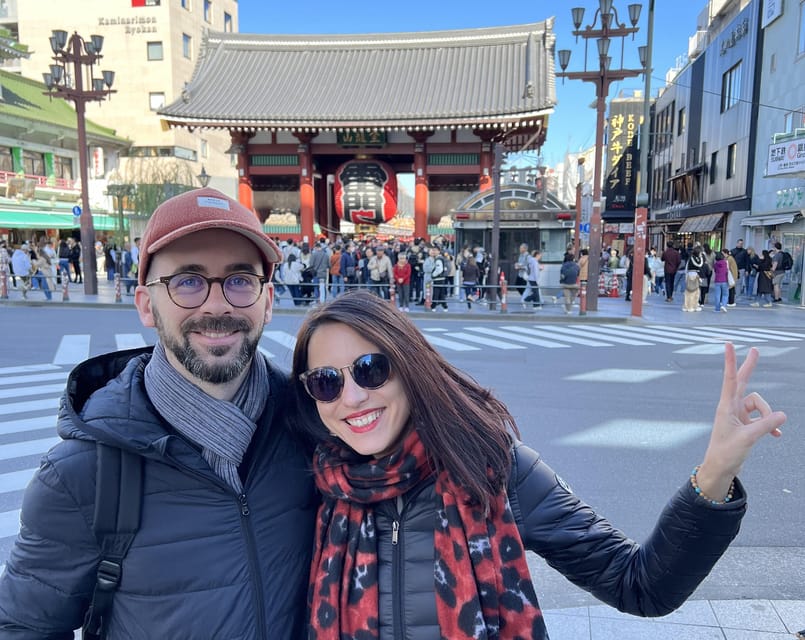
Kaminarimon, or Thunder Gate, receives its own 15-minute stop. It is one of Asakusa’s most recognizable sights, but a good guide can make it more than a quick photograph. You learn to notice the gate’s symbols and the way it frames the approach to Sensō-ji.
From here, the route continues along Nakamise Shopping Street for around 30 minutes. This is the longest walking stop and one of the most enjoyable. The street leads toward the temple and is lined with shops selling souvenirs, snacks, and traditional-style goods.
You have some room to look and shop, but this is still a guided walk, not an open-ended market visit. Keep an eye on the group and do not expect unlimited browsing time. The crowd can be thick, and one guide has had to work hard to keep the group together during busy periods.
Some tours treat Nakamise as a commercial nuisance between monuments. This experience gives it a proper place in the story. The street shows how religious sites, commerce, and visitors have long worked together in Asakusa. You may also get chances to taste local treats, depending on the guide and the flow of the walk.
A few more Tokyo half-days to weigh up
- Mt Fuji and Hakone 1-Day Bus Tour Return by Bullet Train
★ 5.0 · 26,383 reviews - 1-Day Tokyo Bus Tour
★ 5.0 · 14,250 reviews - Tokyo: TOKYO SKYTREE® Admission ticket
★ 4.5 · 11,192 reviews - Tokyo: teamLab Planets TOKYO Digital Art Museum Entry Ticket
★ 4.6 · 9,779 reviews
Hōzōmon, Sensō-ji, and Asakusa Shrine
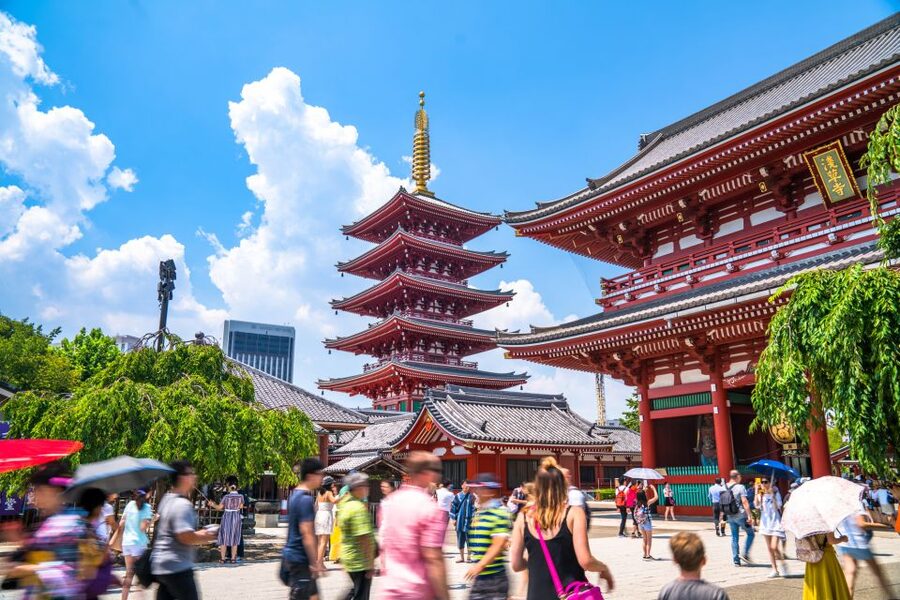
The Hōzōmon Gate follows, with about 15 minutes of guided sightseeing. It is a useful contrast with Kaminarimon, and the two gates help you see how the approach to Sensō-ji is arranged. Your guide explains the meaning behind the buildings and symbols rather than leaving you to guess from appearances.
At Sensō-ji Temple, you spend another 15 minutes. This is the spiritual center of the walk and the place where the earlier explanations about religion and symbolism come together. The tour helps you understand why the temple matters to both local life and Tokyo’s identity.
You will not have hours to explore every corner of the temple grounds. The strength here is interpretation, not exhaustive coverage. If you want quiet temple time, return later on your own. Asakusa changes greatly with the hour, and a second visit gives you more freedom for prayer, photos, or browsing.
The final Asakusa stop is Asakusa Shrine, also about 15 minutes. Its presence beside Sensō-ji gives your guide a chance to explain the relationship between Japanese Buddhist and Shinto traditions. That connection is easy to miss when you race from one famous building to the next.
The walk can be tiring, especially in hot or wet weather. One June visit took place in 30-degree sunshine, and the guide made a point of offering rest and drink breaks. Another group walked in heavy rain and continued with the help of an attentive guide. Still, you should wear comfortable shoes, carry water, and stay aware of the weather.
The two-minute ride to Tokyo Skytree
After Asakusa, you take a short train ride across the Sumida River to Tokyo Skytree Station. The fare is JPY160 per person and is not included in the tour price.
This brief ride is one of the route’s best transitions. You leave behind temple roofs and narrow market streets, then arrive at a tower built to look over the entire modern city. It is a simple piece of transport, but it gives the tour a clean change of pace without wasting much time.
The guide accompanies you to Skytree and helps with the move from the street to the observation levels. The included tickets let you skip the regular ticket line, an important advantage at a major attraction that can be difficult to enter at short notice.
Tokyo Skytree at 350 meters
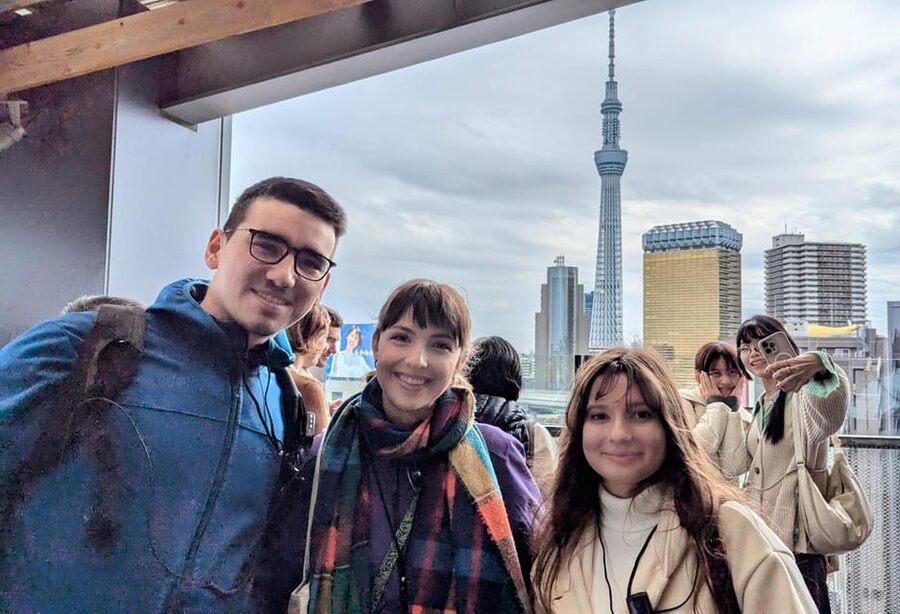
The first observation level is the Tembo Deck at 350 meters. You have about 30 minutes here with guided sightseeing.
This is where the historical walk pays off. From above, your guide can point out major parts of Tokyo spread across the city. Instead of seeing an endless mass of buildings, you get help identifying landmarks and understanding how the districts relate to one another.
On a clear day, the height gives you a dramatic sense of Tokyo’s size. On a hazier day, the view may be less sharp, but the scale is still the main attraction. Your guide’s explanations are especially useful for first-time visitors who do not yet recognize Tokyo’s major areas.
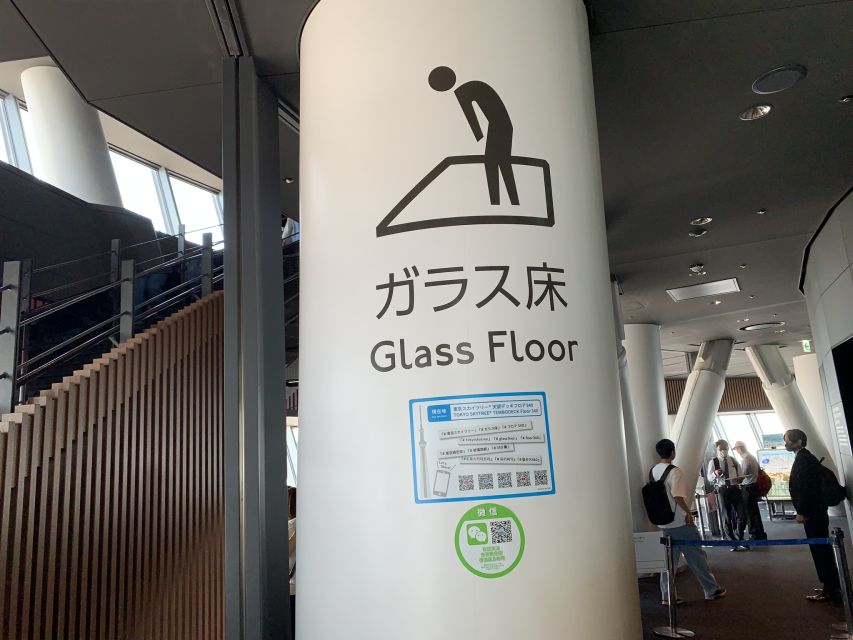
The tower also offers a glass-floor experience, giving you a direct view down toward the streets. It is optional in spirit, so you can step onto it for the thrill or simply enjoy the windows and views around the deck.
A commemorative photo is available, with a downloadable copy offered for purchase. That cost is extra, so treat it as an optional souvenir rather than part of the tour price. You can also send a Skytree-exclusive postcard anywhere in the world, a nice small ritual if you enjoy physical souvenirs over phone photos.
Walking the Tembo Galleria at 450 meters
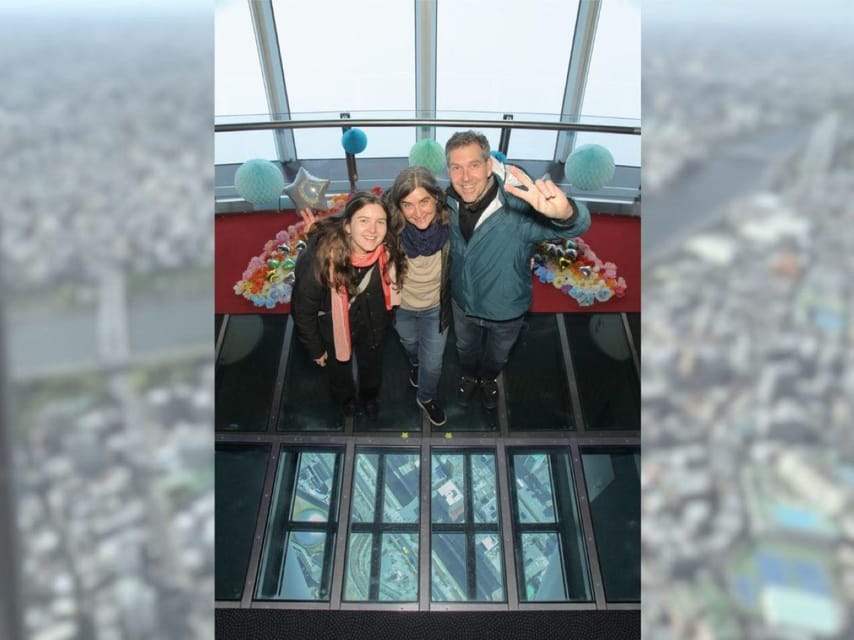
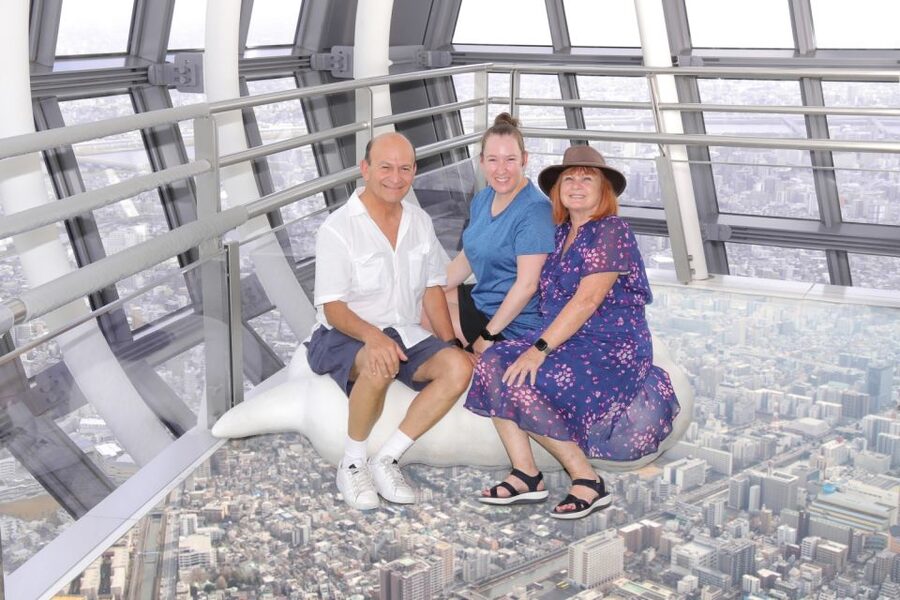
The tour continues to the Tembo Galleria at 450 meters for another 30 minutes. This higher level adds to the sense of distance and height, though the weather still controls how much you can see.
I would not book this tour only for a guaranteed perfect view. Tokyo weather can change the experience, and the tower itself cannot control haze, rain, or cloud. Book it because you want both the height and the guide’s help making sense of the city.
The Galleria is also a chance to slow down after the Asakusa walk. The pace is described as relaxed rather than rushed, and guides have made an effort to help with photographs and questions. If you have mobility or stamina concerns, tell the guide early and stay near the group. The route involves a fair amount of walking and some up-and-down movement.
Free time at the tower base
The formal tour ends at Tokyo Skytree, rather than returning you to Asakusa. That is convenient if you want to continue exploring eastern Tokyo or make Skytree your base for the rest of the afternoon.
You get free time to explore the large shopping complex at the foot of the tower. This is useful for souvenirs and local treats, especially because the guided portion leaves little time for relaxed shopping in Nakamise.
You should plan your onward route before the tour ends. Hotel pickup and drop-off are not included, and the activity does not return you to your hotel. The endpoint is clear, but you are responsible for getting from Skytree to your next stop.
Guides, group size, and communication
The small group is limited to eight people. That matters in Asakusa, where crowds can split a group quickly, and at Skytree, where you may want help with landmarks or photos.
Several guides have led the experience, including Aki, Keiko, Yasu, and Machiko or Machico. Their styles may differ, but the most praised qualities are consistent: careful explanations, warmth, patience, and attention to comfort. Yasu has been appreciated for making historic sites easier to understand, while Keiko has helped visitors navigate large crowds and pointed out places to visit across Tokyo.
English is the tour language. An English audio guide is included, and one group used a headset during the walk. One person found a softly spoken guide difficult to hear, so I would stay close, mention any hearing concern at the start, and use the audio support provided.
The guides also appear willing to add practical help when needed. One helped organize a taxi to a subway station, while another brought vegan restaurant guides after learning about a participant’s diet. These details are not guaranteed services, but they show the kind of personal attention a small group can allow.
Is $116 a fair price?
The value depends on how you would otherwise arrange the day. The price includes the guided Asakusa walk and admission to both Skytree observation levels. You still pay the JPY160 train fare, and optional photo downloads cost extra.
For someone who already knows Asakusa and only wants a tower ticket, this is more than necessary. For a first visit, the combination is easier to justify. You get a guide who explains the gates, temple, shrine, and river, then helps you read Tokyo from above.
The non-refundable policy needs serious attention. Skytree tickets are bought in advance, and the date cannot be changed once purchased. The activity is also listed as non-refundable. The operator explains that if you commit to early ticket purchase and cancel during an otherwise available cancellation period, half the tour cost may be charged. Read the booking terms carefully before confirming.
Who should book this Asakusa experience?
I would recommend it to first-time visitors who want a clear introduction to Tokyo’s older districts without giving up a major modern attraction. It also suits families and mixed-age groups because the guide can answer questions, organize the route, and help with photos.
It is a good choice if you prefer explanations to a simple checklist of sights. The walk connects Japan’s isolation and reopening, religious practice, local commerce, and modern urban growth in one compact outing.
You should think twice if you dislike guided pacing, want long shopping stops, or find several hours of walking difficult. Hot sun, cold rain, crowds, and stairs can all make the route more demanding. Older visitors may want to ask for a short seated drink break, even though the timing of breaks depends on the guide and day.
Should you book this tour?
Book it if you want Asakusa to make sense, not just look attractive in photographs. The temple district is much more rewarding when someone explains the meaning behind Kaminarimon, Nakamise, Sensō-ji, and Asakusa Shrine, then connects them to the wider story of Japan.
The strongest reason to choose it is the combination of a small English-speaking group, both Skytree decks, and a well-planned transition from the Sumida River to the city’s highest views. Skip it if you only want independent wandering or if a fixed, non-refundable plan feels risky. For most first-time visitors with reasonable walking stamina, it is a useful and well-shaped way to see Tokyo’s past and present in one morning or afternoon.
FAQ
How long does the Asakusa and Tokyo Skytree tour last?
The activity lasts 210 minutes, or three and a half hours.
Where does the tour meet?
You meet in front of the Burger King next to Exit 4 of Asakusa subway station, station G19 on the Ginza Line. Step outside Exit 4.
Where does the tour finish?
The tour finishes at Tokyo Skytree.
Is transportation between Asakusa and Tokyo Skytree included?
The tour includes the short train ride as part of the route, but you must pay the JPY160 fare from Asakusa Station to Tokyo Skytree Station.
Are Tokyo Skytree tickets included?
Yes. Admission to the lower Tembo Deck at 350 meters and the upper Tembo Galleria at 450 meters is included.
What language is the tour conducted in?
The live tour guide speaks English, and an English audio guide is included.
How large is the group?
The group is limited to eight participants.
Can I cancel or change my booking?
The activity is non-refundable. Skytree tickets purchased in advance cannot be canceled or changed to another date. Check the current booking terms carefully before confirming.
Just added around Tokyo
- Private Arrival Transfer : Narita International Airport to Central Tokyo City★ 4.5 · 12 reviews
- Narita Airport(NRT): Private Transfer to Tokyo/Yokohama 1-9pax★ 5.0 · 47 reviews
- Private Transfer from Narita Airport to Yokohama Port and City★ 4.5 · 17 reviews
- 3 Day Japan Highlights Tour: Tokyo, Mt.Fuji, Nara, Kyoto, Osaka★ 5.0 · 22 reviews
- [Narita Airport Terminals 1, 2] 40-60km Sawara Itako Historic Bike Tour★ 5.0 · 13 reviews
- Small Town in the Big City: Tasting Tokyo’s Kichijoji★ 5.0 · 195 reviews
- Small Town in the Big City: Tasting Tokyo’s Kichijoji★ 5.0 · 16 reviews
- The 10 Tastings of Tokyo With Locals: Private Street Food Tour★ 5.0 · 48 reviews
Tokyo Tours, compared.

Mt Fuji and Hakone 1-Day Bus Tour Return by Bullet Train
Read our review →

teamLab Planets TOKYO Digital Art Museum Entry Ticket
Read our review →
Mt Fuji & Hakone Cruise, Drum Show Bullet Train 1 Day from Tokyo
Read our review →
Sumo Show Experience with Chicken Hot Pot and a Photo
Read our review →
Shinjuku Food Tour (13 Dishes at 4 Local Eateries)
Read our review →
Tokyo Mt Fuji 5th St & Hakone Cruise Bus Tour w/Bullet Train
Read our review →
Flagship 2-Hours Official Street Go-Kart Tour – Tokyo Bay Shop
Read our review →Browse the lists this tour appears in