Reviewed · KYOTO TOURS
From Kyoto: Nara Guided Morning Tour
Nara’s famous deer are only part of the story. The real prize is seeing them against the grand setting of Todaiji Temple, where the Great Buddha sits inside one of the world’s largest wooden buildings. Add the lantern-lined paths of Kasuga Taisha, and this four-hour outing gives you a quick but meaningful taste of ancient Japan.
I like the early departure because Nara is calmer before the day fills up. I also like the mix of shrine, temple, and open park, rather than spending the whole morning at one monument. The main drawback is simple but important: the coach takes you from Kyoto to Nara, but you must arrange your own return from Kintetsu Nara Station.
Key points at a glance
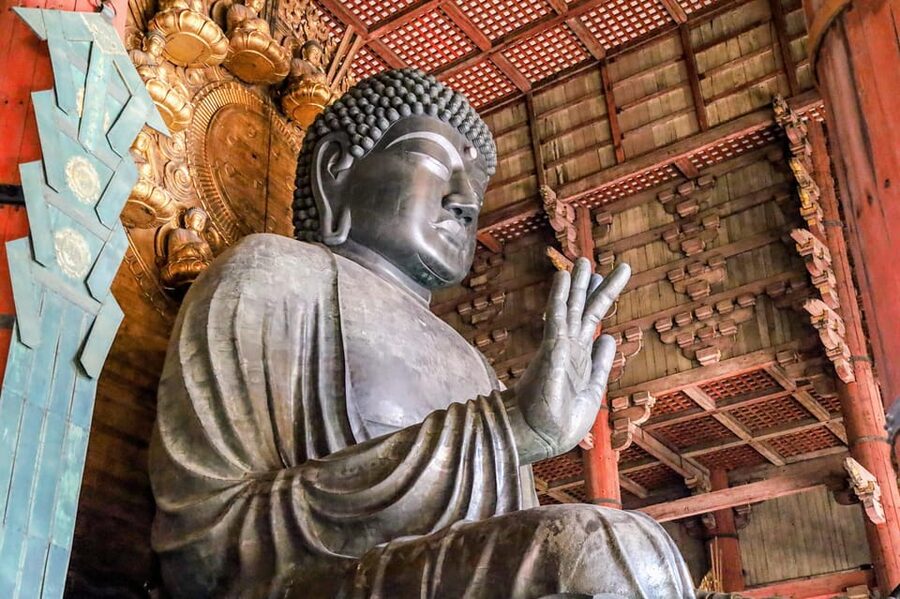
- The Great Buddha is the morning’s grand finale: Todaiji’s enormous wooden hall and bronze Buddha are the tour’s most powerful sight.
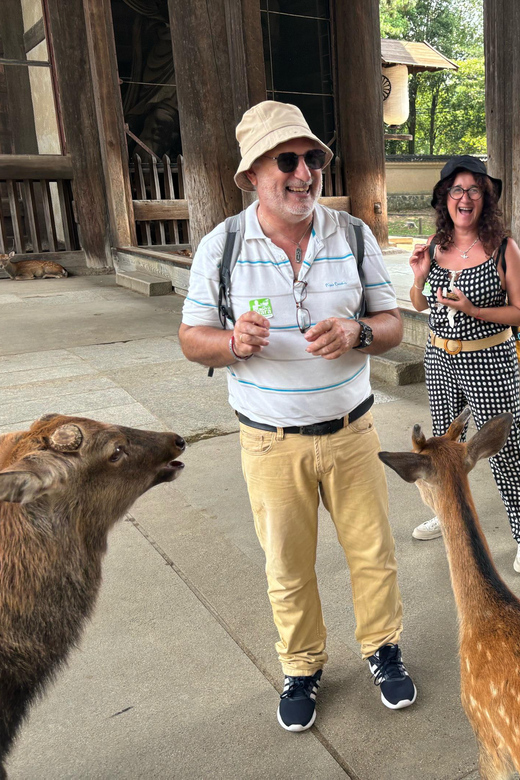
- Deer crackers bring instant attention: Feed only with special crackers, keep them in your pocket, and show empty hands when the food is gone.
- Kasuga Taisha feels most atmospheric early: Stone lanterns line the forest paths, with many more lanterns inside the shrine precinct.
- Your guide adds the local context: Guides including Ciel, Tommy, Nagomi, Den, Mai, and Nanami have been praised for clear explanations, humor, and practical help.
- The return trip is not included: The tour ends at Kintetsu Nara Station around noon, so plan the trip back to Kyoto before you leave.
- Expect hills, stairs, and steady walking: Comfortable shoes matter more here than fancy clothes.
Why this short Nara tour works
Nara is an easy side trip from Kyoto, but planning the right route can take time. This tour handles the outbound transport and connects three major sights in one morning. At $77 per person, it is not the cheapest way to reach Nara, but you are paying for a guide, a reserved air-conditioned coach, admission to Todaiji, and a clear plan.
I see the value most clearly if you have only one free morning. You avoid working out a route between the shrine, park, and temple, and you get explanations as you go. The bus also gives you a cool, dry place to start and finish the ride, with free Wi-Fi on board.
The tradeoff is independence. You do not get hours to wander Nara’s shopping streets, browse small museums, or linger at every temple corner. This is a focused introduction, not a full day in the city.
The guides are a major part of the experience. Ciel, Tommy, Nagomi, Den, Mai, Nanami, Aoi, Harry, Rina, Yuta, Sakura, and others have led recent departures. The strongest pattern is easy to understand: the guides keep the group moving while adding small cultural details, taking photos, answering questions, and giving practical advice.
More early starts in Kyoto:
- Kyoto Early Morning Tour with English-Speaking Guide
★ 5.0 · 1,427 reviews - Kyoto: Early Morning Tour with English-Speaking Guide
★ 4.9 · 1,128 reviews - Kyoto Morning Tour from Kyoto or Osaka
★ 4.0 · 281 reviews
Meeting in Kyoto at 7:50 AM
The meeting point is in front of the Kyoto Avanti building, on the Tully’s Coffee side, at 31 Higashikujo Nishiyamao-cho in Kyoto’s Minami Ward. You need to arrive by 7:50 AM for the 8:00 departure.
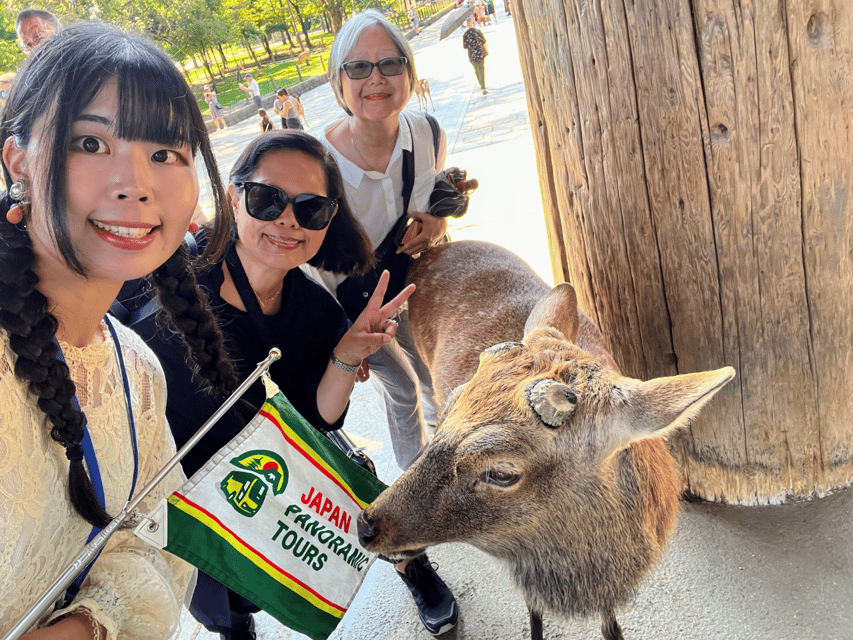
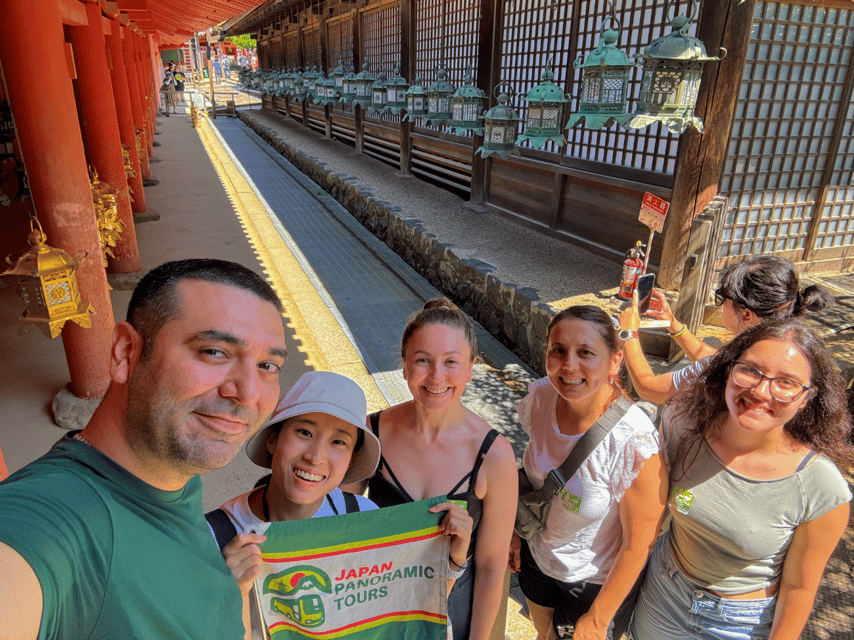
Look for the green and white Japan Panoramic Tours flag. Kyoto Station is the useful landmark, but do not assume the bus leaves from a platform inside the station. Give yourself extra time to find the Avanti building and the coffee shop side of the meeting point.
This departure is strict. The bus leaves on time, and there is no refund for arriving late or missing the tour. The same 24-hour rule applies to cancellations and date changes. If you are the sort of person who prefers a slow breakfast, this early start may feel demanding, but it gives you a better shot at a quieter first hour in Nara.
The ride south through historic Kyoto and Nara
The coach ride to the Nara area takes about an hour. You pass views connected with Fushimi Castle and the former palace site of Heijokyo, a useful reminder that this region was once the center of Japanese government and court life.
The air conditioning matters in warm months, especially after you begin walking. Free Wi-Fi is a nice extra, though I would treat it as a convenience rather than the reason to book. Bring water anyway.
The tour uses a live English-speaking guide. Audio headsets are available in Spanish, French, German, Italian, Portuguese, and Ukrainian. That arrangement is useful when a group includes several languages, but the live guiding itself is in English, so check that this suits your group.
Traffic, weather, or operating needs can change the order of the stops. The supplied schedule places Kasuga Taisha first, followed by free time in Nara Park and then Todaiji. The general description presents Todaiji earlier, so keep your plans flexible rather than expecting a fixed sequence.
Kasuga Taisha and its 3,000 lanterns
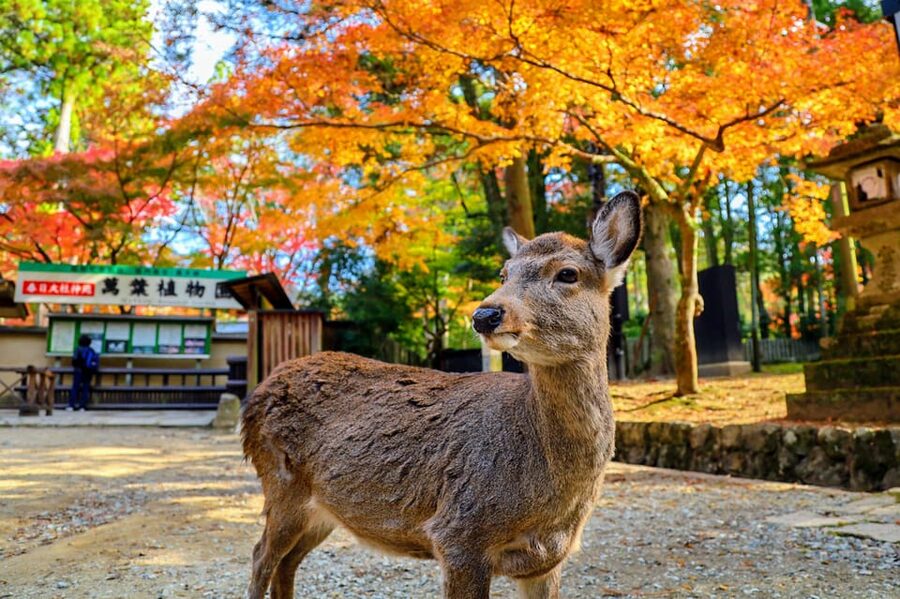
Kasuga Taisha is one of Nara’s most important Shinto shrines and part of the UNESCO World Heritage listing covering the city’s historic monuments. The approach is one of the most memorable parts of the morning.
Stone lanterns line the paths toward the shrine. Inside the grounds, hanging bronze lanterns add another layer of detail. They are lit during special festivals, but even unlit, the rows of lanterns give the place a quiet, ceremonial feel.
You have about 40 minutes with a guide here. That is enough for an introduction and the main approach, but not enough for a slow examination of every path. You will walk uphill in places and may use stairs, so the shrine is not an effortless stop.
I like beginning here because the setting feels more subdued than the open deer park. Listen for the guide’s explanation of the shrine’s customs, then take a few minutes to notice the smaller details: lantern shapes, wooded paths, and the way the site shifts from public approach to sacred precinct.
A few more Kyoto half-days to weigh up
- PERFECT KYOTO 1-Day Bus Tour
★ 5.0 · 13,518 reviews - Kyoto: Fushimi Inari, Kinkakuji, Bamboo Grove 1 Day Bus Tour
★ 4.8 · 4,316 reviews - Kyoto: Tea Ceremony in a Traditional Tea House in Kiyomizu
★ 4.9 · 3,519 reviews - Kyoto Geisha Walking Tour: Gion District & Hidden Gems
★ 4.7 · 3,273 reviews
Nara Park and the deer
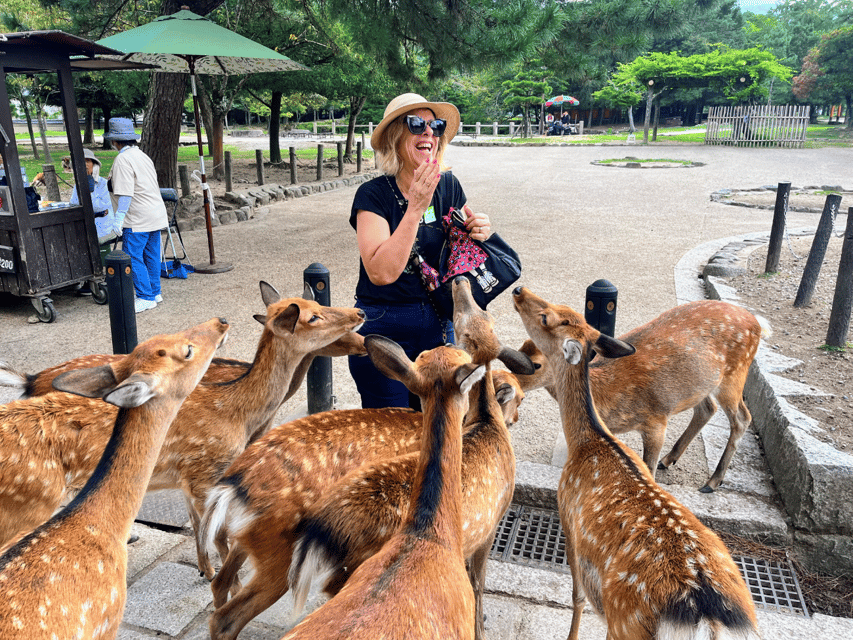
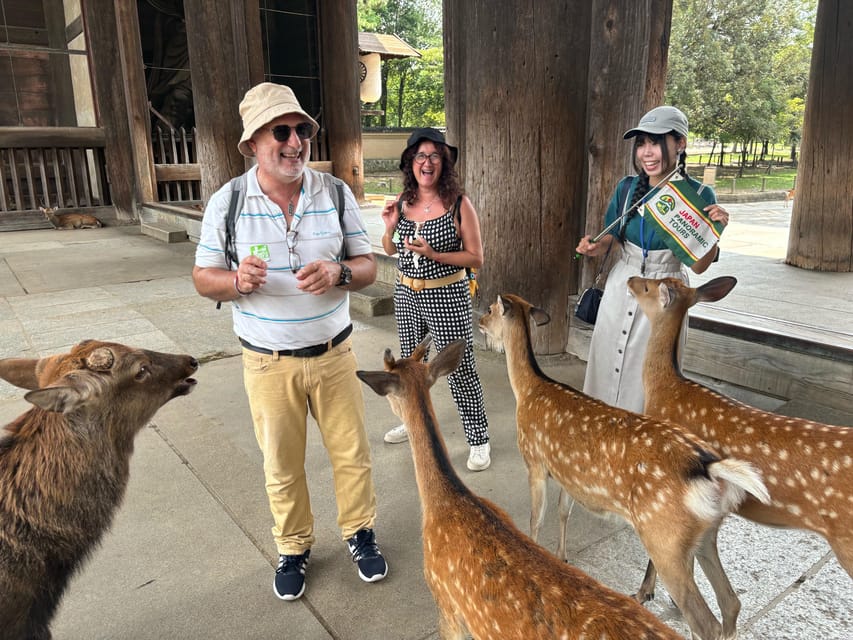
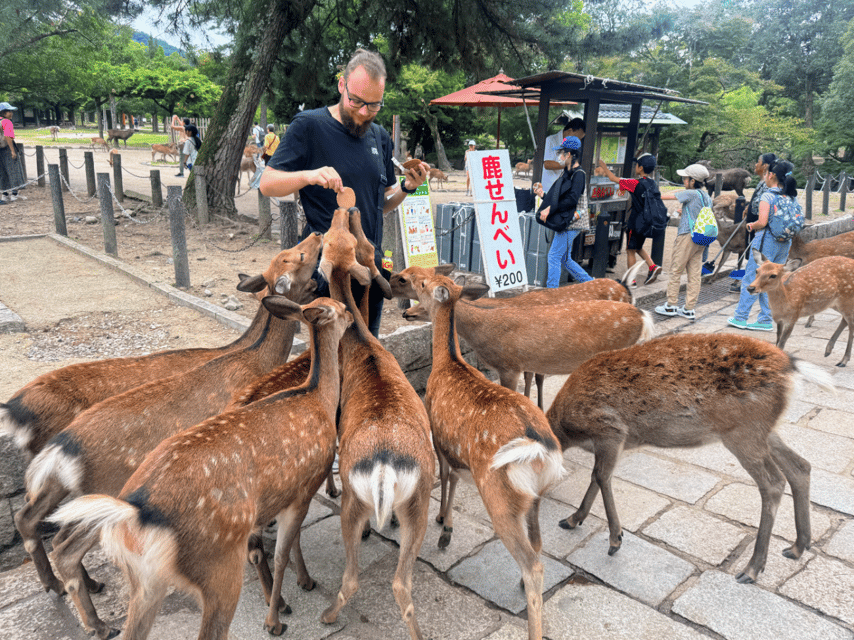
Nara Park is the tour’s most playful stop. More than 1,400 deer roam freely through the park and around the temple approaches. They are regarded as sacred messengers of the gods, but they are also very alert to anyone carrying food.
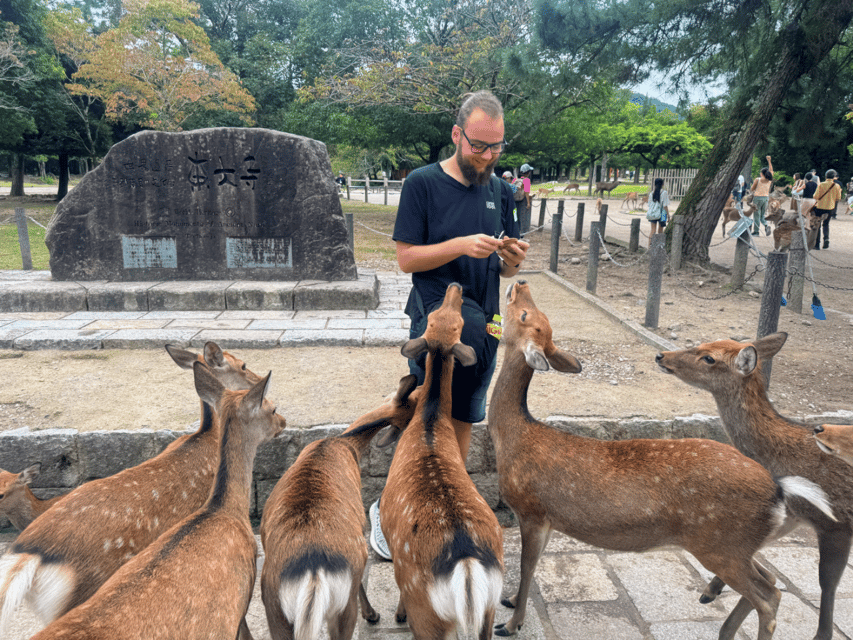
You can buy special deer crackers in the park and feed the animals responsibly. Keep the crackers hidden in a pocket or closed hand until you are ready. Once the deer spot food, they may gather quickly, nip at clothing, or use a gentle headbutt to persuade you to hand over another piece.
The best tip from the guides is to show your empty hands after the crackers are gone. That helps the deer understand that the food is finished. Do not feed them ordinary snacks, and do not tease them with food.
The scheduled free time is about 30 minutes. That gives you enough time to feed a few deer, take photos, and enjoy the park, but the clock matters. If deer are your main reason for coming to Nara, you may wish for longer.
Keep your phone, wallet, and other belongings secure. Crowds can gather around the animals, and the deer are quick when food is involved. A hat, sunscreen, and water are sensible, especially in summer. Rain gear is just as useful on a wet morning, since much of this section is outdoors.
Todaiji and the Great Buddha
Todaiji is the architectural high point of the morning. You approach through the Nandaimon Gate, a monumental entrance guarded by two fierce wooden statues. The gate alone gives you a sense of the scale ahead.
Inside the temple complex, the Great Buddha Hall, or Daibutsuden, houses the Great Buddha of Nara. The hall is an immense wooden structure, and the bronze Buddha gives the interior a strong sense of weight and calm. Admission to Todaiji is included, so you do not need to buy a separate temple ticket.
The guided visit lasts about 50 minutes. That is a good length for hearing the main story, seeing the Buddha, and taking in the hall without turning the stop into a long lecture. Guides such as Den, Tommy, Harry, and Rina have been praised for making the explanations clear and lively, which matters when the group is moving through a major site on a tight schedule.
The temple can feel crowded, especially later in the day, but the morning timing helps. You still need to stay with the group and follow the return instructions. Flash photography is not allowed, and you should be ready for stairs and uneven walking elsewhere on the route.
For me, Todaiji gives the tour its lasting sense of place. The deer are fun, but the Great Buddha explains why Nara matters. This is where the morning shifts from a pleasant animal encounter to a serious look at Japan’s religious and artistic past.
Finishing at Kintetsu Nara Station
After the temple visit, the coach ride to the finish takes about 10 minutes. The tour ends at Kintetsu Nara Station around noon.
This is the point that needs the clearest planning. There is no return coach to Kyoto on this half-day option. You must buy your own train or other transport back. Several people have found this surprising, even after completing the morning without trouble.
The good news is that station staff can help, and guides sometimes offer directions or suggestions for lunch. Still, I would check your route before the tour begins. If you are traveling with children, carrying large bags, or feeling uneasy about Japanese train stations, allow extra time and keep the station name written down.
Ending in central Nara also gives you a choice. You can return to Kyoto straight away, eat lunch in Nara, or continue exploring if your schedule allows. The tour does not lock you into a group for the rest of the day.
Walking, weather, and comfort
This is not a difficult hiking trip, but it is not a sit-down sightseeing ride either. You walk through shrine grounds, park paths, temple approaches, and areas with stairs and hills. Wear shoes you can trust for several hours.
The weather changes the feel of the tour. On a hot day, the deer park can be tiring, so bring water, sunscreen, and a hat. On a wet day, an umbrella or raincoat will help, since the most memorable sections are outside. One guide kept a rainy group engaged despite intense weather, but good clothing will make the experience easier for you.
The tour is not suitable for wheelchair users or people with mobility impairments. If stairs, slopes, or moderate walking are a concern, a different Nara plan may be more comfortable.
Cash is worth carrying for deer crackers and small personal purchases. Meals and drinks are not included, and alcohol is not allowed in the vehicle. Smoking, intoxication, littering, bikes, drugs, explosive substances, and flash photography are also prohibited.
Is $77 a fair price?
For a four-hour outing, $77 is a midrange price. The cost makes sense if you value a guide and want the morning organized from Kyoto. Included admission to Todaiji adds some practical value, as does the air-conditioned coach with Wi-Fi.
The price is less attractive if you are comfortable taking public transport and reading your own guidebook. Nara is reachable independently, and the half-day tour does not cover your return fare. You should add that transport cost to your personal budget.
I would compare the price with the value of your time. If you have only one morning and want the essential sights explained in English, the tour earns its keep. If you want a slow day, a large lunch, or extended time with the deer, independent travel gives you more freedom.
Free cancellation is available up to 24 hours before the tour, and you can reserve now and pay later. That gives you some flexibility, but the late-arrival rule remains strict.
Who should book this morning tour?
I would choose this trip if you are staying in Kyoto and want a clean first look at Nara without spending a full day on planning. It suits families, first-time visitors to Japan, solo travelers who appreciate help with photos and directions, and anyone who wants cultural context along with the major sights.
It is also a good fit if you want a short outing before an afternoon in Kyoto. You finish around noon, although you must still make your own way back.
I would hesitate if you need step-free access, dislike early starts, or want to explore Nara at your own pace. I would also think twice if the return journey from Nara would cause stress. In that case, a full-day option with transportation arrangements may be worth comparing.
Should you book it?
Book this tour if you want Nara’s essential trio, Kasuga Taisha, Nara Park, and Todaiji, handled in one compact morning. The guides are the strongest part of the experience, with names such as Ciel, Tommy, Nagomi, Den, and Mai repeatedly praised for warmth, humor, clear instructions, and helpful local tips.
Go in prepared: arrive early, wear good shoes, bring cash and weather protection, and plan your own trip back to Kyoto. If you can accept the one-way transport, $77 is a reasonable price for a well-organized introduction to Nara and its extraordinary Great Buddha.
FAQ
Where does the tour meet in Kyoto?
The meeting point is in front of the Kyoto Avanti building at the Tully’s Coffee side, at 31 Higashikujo Nishiyamao-cho in Kyoto’s Minami Ward. Look for the green and white Japan Panoramic Tours flag.
What time should I arrive?
Arrive at 7:50 AM for the 8:00 AM departure. The bus leaves on time, and there are no refunds for latecomers or no-shows.
Does the tour return to Kyoto?
No. The half-day tour ends at Kintetsu Nara Station around noon. You arrange and pay for your own return to Kyoto.
What languages are available?
The live tour guide speaks English. Audio headsets are available in Spanish, French, German, Italian, Portuguese, and Ukrainian.
Is admission to Todaiji Temple included?
Yes. Admission to Todaiji Temple is included in the tour price.
Can I feed the deer?
Yes, but feed them only the special crackers sold in Nara Park. Keep the crackers concealed until you are ready, and show your empty hands when you have finished.
Is the tour suitable for wheelchair users?
No. The tour is not suitable for wheelchair users or people with mobility impairments because it includes moderate walking, stairs, and hills.
Just added around Kyoto
- Kyoto: Zen Meditation at a Private Temple with a Monk★ 5.0 · 25 reviews
- Kyoto: Gion Geisha District & Sake-in-Hand Walking Tour★ 5.0 · 37 reviews
- Private Pewter Sake Cup Experience with a Kyoto Artisan★ 5.0 · 31 reviews
- Your Private Vacation Photography Session In Kyoto★ 5.0 · 110 reviews
- Private Guided Traditional Buddhist Cooking in Japan★ 5.0 · 16 reviews
- Kyoto Wagashi(Japanese sweets) Cooking Class near Fushimiinari★ 5.0 · 60 reviews
- Traditional Japanese Music show & Experience Tour in Kyoto★ 5.0 · 57 reviews
- Kyoto:Family-Friendly Kimono & Yukata Experience at WARGO★ 5.0 · 147 reviews
Kyoto Tours, compared.
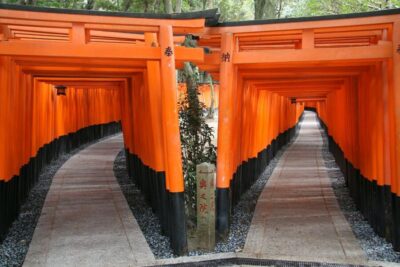
Fushimi Inari, Kinkakuji, Bamboo Grove 1 Day Bus Tour
Read our review →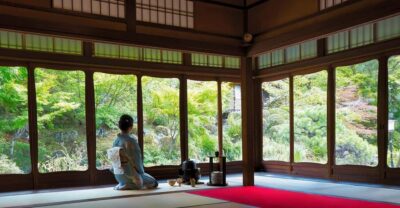
Tea Ceremony in a Traditional Tea House in Kiyomizu
Read our review →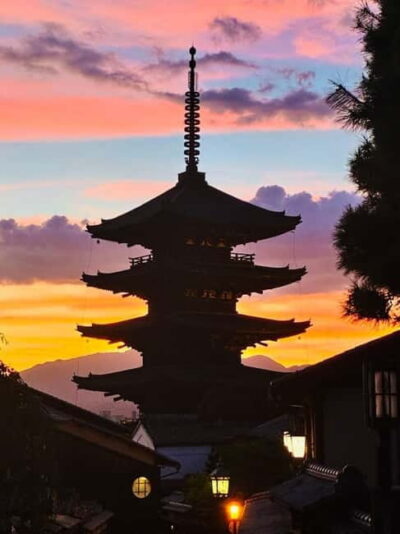
Kyoto Geisha Walking Tour: Gion District & Hidden Gems
Read our review →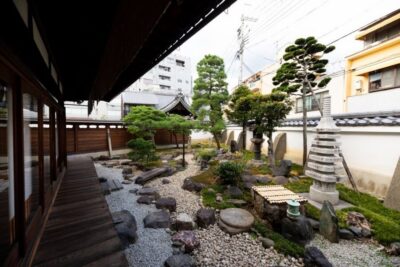
Gion Magical Night Walking Tour with Geisha Trivia
Read our review →