
Reviewed · KYOTO TOURS
Guide tour of Japanese bathing culture at Funaoka Onsen
Japanese bathing is not just about getting clean. It is a careful ritual built around washing first, soaking second, and sharing a quiet public space with other people. This 90-minute Kyoto experience gives you the rules before you enter Funaoka Onsen, a much better plan than trying to guess what to do beside the taps.
I like two things right away. First, the tour begins in Sarasa Nishijin, a cafe made from a former public bathhouse, so you learn the story in a setting tied to the subject. Second, guide Atsuki explains the process before you bathe, which can take the worry out of your first Japanese sento visit. The main consideration is simple: bathing is nude and separated by gender, so couples will not enter together, and the guide’s English is limited.
Key points to know before booking
- You learn the rules before bathing: Atsuki covers washing, soaking, etiquette, and the health side of Japanese baths before you enter.
- The opening cafe occupies a former bathhouse: Sarasa Nishijin gives the introduction a strong sense of place.
- Funaoka Onsen is a local Kyoto institution: This preserved public bathhouse has served Kyoto residents for generations.
- The bath itself is nude and gender-separated: You need to be comfortable bathing without a swimsuit.
- The group is capped at five people: That keeps the instruction personal and makes it easier to ask questions.
- The experience costs $45.72 and lasts about 90 minutes: It is priced as a cultural lesson plus a bath visit, not simply admission to an onsen.
Why a Kyoto bath deserves more than a quick soak
Kyoto offers endless temples, gardens, and shrines. After several hours of removing shoes, following paths, and taking in one historic building after another, a public bath can feel like a useful change of pace. Here, the point is not to rush in, sit briefly, and rush out. You are shown how the custom works and why the order matters.
The basic idea is easy to miss if you are new to Japanese bathing. The bath is for soaking and relaxing, not for washing your body. You clean yourself at the shower area first, then enter the shared tubs. That distinction is the heart of the lesson, and it helps you avoid the common mistake of treating the tub like a swimming pool.
A bathhouse also gives you a glimpse of ordinary Japanese life. This is not a staged performance in a tourist attraction. Funaoka Onsen is a public bath used by local residents, and the experience asks you to follow the same etiquette as everyone else. That can feel more personal than simply looking at a building from the outside.
More spa and hot spring stops in Kyoto:
- Kyoto: Hike and Hot Springs in Kurama
★ 5.0 · 49 reviews - From Osaka: Himeji Castle, Arima Onsen & Mt. Rokko Day Tour
★ 4.6 · 339 reviews - Osaka: Nara and Uji Day Trip with Deer Park and Hot Spring
★ 4.4 · 302 reviews
Starting at Sarasa Nishijin, a former public bathhouse
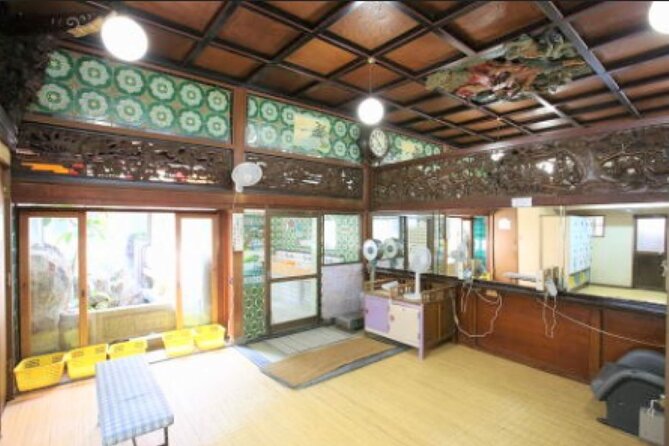
The opening stop is Sarasa Nishijin, a cafe created from a former public bathhouse. You spend about 15 minutes there with a drink while Atsuki explains the role of public baths and the meaning of bathing customs in Japan.
The setting does useful work. Instead of receiving a dry list of rules at the entrance to Funaoka Onsen, you begin in a place that still carries the shape and atmosphere of its earlier purpose. You can focus on the explanation, ask questions, and pick up the basic sequence before changing into bathing mode.
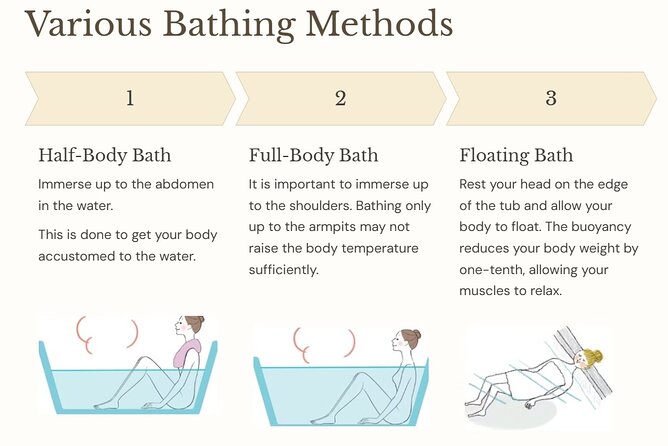
This introduction covers the history of Japanese public baths, proper bathing behavior, and the health benefits connected with soaking. You also receive a guide to bathing techniques that you can take with you. That small handout matters because the lesson is not only for this one visit. The same general steps apply at other Japanese hot springs and public baths.
The opening stop is short, so do not expect a long lecture on every period of Japanese history. Its job is to give you enough context to feel comfortable and respectful at the next stop. For most first-time bathers, that is the right balance.
Funaoka Onsen and the one-hour bathing visit
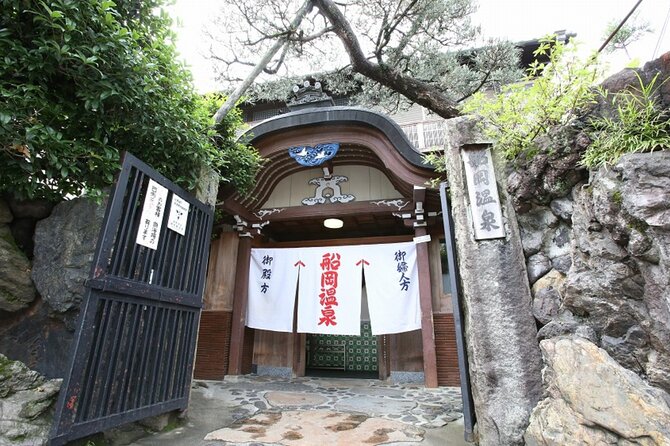
From there, the experience moves to Funaoka Onsen. The activity description lists Funaoka Onsen as the meeting point at 82-1 Murasakino Minamifunaokacho in Kyoto’s Kita Ward, and the experience ends back there. It is near public transportation, which helps if you are fitting this into a day outside central Kyoto.
Before you enter the bath, Atsuki uses materials to review the bathing method. This second explanation is practical. You can confirm the order of washing, learn what to do with your small towel, and understand how to behave around the tubs before you are standing in the bathhouse trying to remember everything at once.
The bathing portion lasts about one hour. That is enough time to try the process without turning the visit into an exhausting half-day activity. You can follow the instructions, soak, and let the experience settle into a slower rhythm.
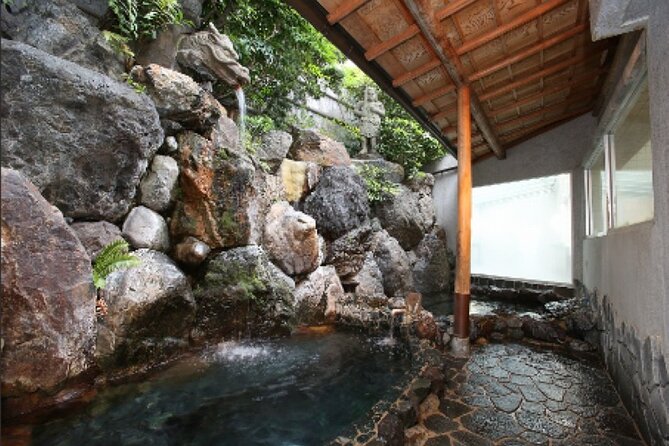
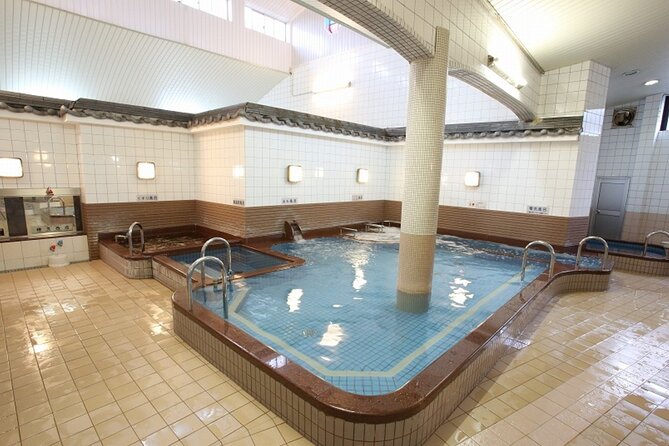
Funaoka Onsen itself is one of Kyoto’s well-known public bathhouses. It has an interesting origin story tied to competition with traditional geothermal hot springs, since public baths such as this one created a bathing experience without relying on a natural hot spring source. That background adds another layer to the visit: you are learning not only how to bathe, but also how different kinds of Japanese bathing facilities developed.
The bathhouse is preserved and has been used by Kyoto residents for generations. That does not mean the experience is formal or museum-like. You are entering a working public bath, so the value comes from using it properly rather than simply admiring its architecture.
The etiquette lesson is the real value
If you have never used a Japanese bath, the etiquette lesson may be worth more than the soak itself. Many people worry about small mistakes: washing in the wrong place, bringing a towel into the tub, talking too loudly, or failing to understand what is expected. Atsuki’s explanations are designed to remove that uncertainty.
The sequence is straightforward:
- Wash your body thoroughly before entering a shared tub.
- Keep the washing area orderly.
- Use the tub for soaking, not scrubbing.
- Keep your towel out of the bathwater.
- Follow the gender-separated layout.
- Leave the space in a condition that feels considerate to the next person.
The supplied information does not spell out every rule in detail, so Atsuki’s live instruction remains important. His English is described as limited, and you should expect simple explanations rather than a polished lecture in fluent English. Still, the format works well for a hands-on lesson because the bathing steps can be demonstrated and repeated.
I would choose this experience if you feel nervous about going to a public bath alone. It is especially useful for a solo visitor who wants an introduction before trying other bathhouses independently. Once you understand the routine, you can carry it to future onsen and sento visits around Japan.
A few more Kyoto half-days to weigh up
- PERFECT KYOTO 1-Day Bus Tour
★ 5.0 · 13,518 reviews - Kyoto: Fushimi Inari, Kinkakuji, Bamboo Grove 1 Day Bus Tour
★ 4.8 · 4,316 reviews - Kyoto: Tea Ceremony in a Traditional Tea House in Kiyomizu
★ 4.9 · 3,519 reviews - Kyoto Geisha Walking Tour: Gion District & Hidden Gems
★ 4.7 · 3,273 reviews
Nude bathing and gender separation
This is the point to consider carefully before you pay. Funaoka Onsen requires nude bathing, with men and women in separate bathing areas. Swimsuits are not part of this experience, and couples are separated during the bath.
For some people, that is the central cultural experience. For others, it is a firm reason not to book. Neither response is wrong. You should decide before arriving rather than assume that a tourist-oriented activity will provide a mixed-gender or swimsuit option.
The guide can explain the custom and help you understand the process, but he cannot change the bathhouse rules. If you are traveling with a partner, you may share the introduction and the overall activity, but the actual bathing will take place separately.
The health restrictions also deserve attention. You should not join if you have severe heart or lung disease, recent gastrointestinal bleeding, an advanced malignant tumor, or severe anemia. You should also skip the bath if you feel unwell, have a fever, or have consumed alcohol. If a doctor has advised you not to use hot springs, follow that advice.
These are sensible precautions for hot-water bathing, but the responsibility is yours. Do not treat the short duration as proof that the activity is harmless for every body.
What guide Atsuki adds
Atsuki is a local Japanese guide who focuses on the bathing process rather than offering a broad Kyoto sightseeing tour. His role is specific: explain the background, show you the proper steps, and help you relax enough to enjoy the bath.
The strongest part of his guidance is the reassurance before entering. If you are worried about doing something wrong, a clear explanation can change the whole mood. Instead of watching other bathers and copying them nervously, you begin with a plan.
You should also set your expectations around language. The information provided says that Atsuki is not very good at English. That may make the conversation slower and less detailed than you expect from a guide who works in fluent English. The bathing routine itself is concrete, though, and the take-home material gives you something to refer to afterward.
This is a maximum five-person experience. A group that small is useful here because the topic is personal, and you may want to ask a basic question without speaking in front of a large crowd. It also gives Atsuki a better chance to notice when someone is uncertain.
Is $45.72 a fair price?
At $45.72 per person, this costs much more than simply paying for entry to a public bath. You are paying for the explanation at Sarasa Nishijin, the local guide, the cultural background, the bathing instruction, and the confidence to use similar facilities later.
The value is strongest for a first-time visitor. If you already understand Japanese bath etiquette and have used several sento or onsen, you may find the guided lesson less necessary. In that case, you could visit a bathhouse independently and spend the difference on another activity.
For a newcomer, the price can make sense. A small error in a shared bathhouse may leave you embarrassed or uncomfortable, while a short lesson gives you a clear framework. You also get more than a one-off attraction because the techniques apply elsewhere in Japan.
The average booking lead time is 34 days. That suggests you should not assume you can leave this until the last morning of your Kyoto stay, especially if you want a particular date. Confirmation is provided at booking, and the mobile ticket is convenient for a day when you are moving between sights.
Free cancellation is available up to 24 hours before the start time. If you cancel inside that window, you do not receive a refund, and late changes are not accepted.
Who will enjoy this Kyoto experience?
I would recommend it most strongly to:
- First-time visitors to a Japanese public bath
- Solo visitors who want clear guidance before going alone
- People interested in daily customs, wellness, and local traditions
- Anyone looking for a quiet break after temple and shrine visits
- Visitors who want a short activity rather than a full-day tour
- Couples who understand that the bathing areas are separated
It is less suitable if you want a mixed-gender bath, need to wear a swimsuit, dislike hot-water bathing, or expect a long English-language history talk. It is also not a good match if you have been told by a doctor to avoid hot springs or if you plan to drink alcohol beforehand.
The experience is open to most people, but the bathhouse setting is the key filter. Think about comfort and health first, then cultural curiosity.
Small details that make the visit easier
The listed starting point is Funaoka Onsen, even though Sarasa Nishijin is the first stop described. Check the meeting instructions carefully before heading out, and allow enough time to reach the Kita Ward address by public transportation.
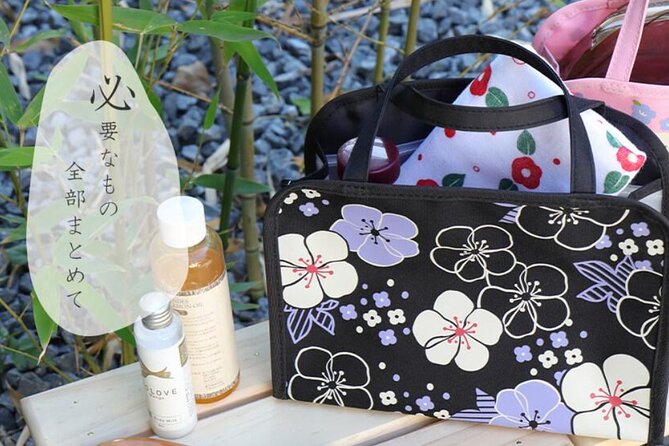
Wear something easy to change in and out of. The provided information does not specify what personal items are supplied, so you should not assume that every toiletry or bathing accessory is included simply because admission is covered.
Plan the rest of your day with some flexibility. A bath can be relaxing after a busy morning, and several people specifically valued it as a calmer pause after shrine visits. You may not want to schedule a rushed attraction immediately afterward.
Most important, arrive sober and feeling well. Hot water and alcohol are a poor combination, and the participation rules exclude anyone with a fever or other illness on the day.
Should you book the Funaoka Onsen bathing tour?
Book it if you want to understand Japanese bathing culture from the inside and need help with the etiquette. The combination of Sarasa Nishijin, Atsuki’s instruction, and a full hour at an established Kyoto bathhouse gives you a practical introduction rather than a quick photo stop.
Skip it if nude, gender-separated bathing is a deal breaker, or if you already know how to use Japanese public baths. Also think twice if you need highly fluent English, since the guide’s language ability is limited.
For the right person, $45.72 buys peace of mind, cultural context, and a skill you can use again. That is a fair price for a first bathhouse experience, especially in a group capped at five people.
FAQ
How long does the Japanese bathing experience last?
The experience lasts approximately 1 hour and 30 minutes. About 15 minutes takes place at Sarasa Nishijin, followed by about one hour at Funaoka Onsen.
Where does the activity meet?
The listed meeting point is Funaoka Onsen at 82-1 Murasakino Minamifunaokacho, Kita Ward, Kyoto, 603-8225, Japan. The activity ends back at the meeting point.
Is the bathing nude?
Yes. Funaoka Onsen requires nude bathing, and the bathing areas are separated by gender.
Can couples bathe together?
No. The bathing areas are gender-separated, so couples will be apart during the actual bath.
Who leads the experience?
The guide is Atsuki, a local Japanese guide and an independent guide who is not an employee of Funaoka Onsen.
Is the tour conducted in fluent English?
The provided information says that the guide is not very good at English. Expect basic guidance supported by materials and practical instruction.
Can I cancel for a refund?
You can cancel for a full refund up to 24 hours before the experience start time. Cancellations or changes made less than 24 hours before the start time are not accepted for a refund.
Just added around Kyoto
- Kyoto: Zen Meditation at a Private Temple with a Monk★ 5.0 · 25 reviews
- Kyoto: Gion Geisha District & Sake-in-Hand Walking Tour★ 5.0 · 37 reviews
- Private Pewter Sake Cup Experience with a Kyoto Artisan★ 5.0 · 31 reviews
- Your Private Vacation Photography Session In Kyoto★ 5.0 · 110 reviews
- Private Guided Traditional Buddhist Cooking in Japan★ 5.0 · 16 reviews
- Kyoto Wagashi(Japanese sweets) Cooking Class near Fushimiinari★ 5.0 · 60 reviews
- Traditional Japanese Music show & Experience Tour in Kyoto★ 5.0 · 57 reviews
- Kyoto:Family-Friendly Kimono & Yukata Experience at WARGO★ 5.0 · 147 reviews
Kyoto Tours, compared.


Fushimi Inari, Kinkakuji, Bamboo Grove 1 Day Bus Tour
Read our review →
Tea Ceremony in a Traditional Tea House in Kiyomizu
Read our review →
Kyoto Geisha Walking Tour: Gion District & Hidden Gems
Read our review →

Gion Magical Night Walking Tour with Geisha Trivia
Read our review →

Gion Geisha District Walking Tour – Stories of Geisha
Read our review →Browse the lists this tour appears in