
Reviewed · HALF-DAY
Ise Jingu(Ise Grand Shrine) Half-Day Private Tour with Government-Licensed Guide
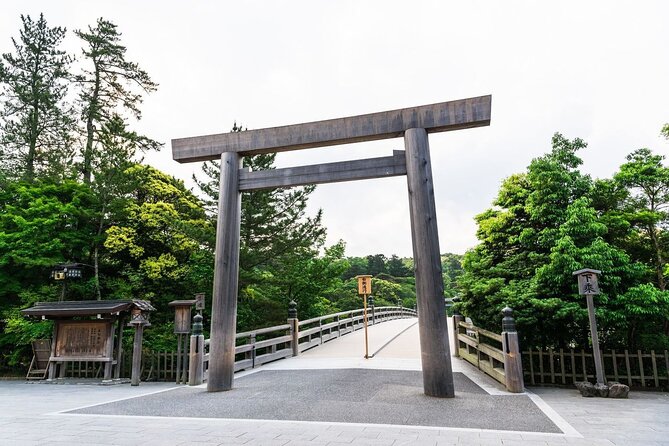
Ise Jingu is not simply a stop for admiring old buildings. It is Japan’s most important Shinto shrine complex, where the route, river, gates, prayers, and even the restricted paths used by the emperor carry meaning. A private guide helps you read those details instead of walking through them as scenery.
I like the one-group format, which gives you room to ask direct questions and request a pace that suits your party. I also like the choice between major shrine visits and local sights, including Okage Yokocho and Meoto Iwa. Guide Tetsuya Tanahashi is especially useful with transport advice, while guides such as Yoshi and Nishio have helped visitors understand prayer customs and shrine traditions.
The main catch is time. Four hours is enough for two or three carefully chosen places, but it can feel tight if you want Geku, Naiku, Meoto Iwa, and the shopping streets in one outing. Transportation, entrance fees, lunch, and other personal costs are not included, so the final price will be higher than the listed $108.38 per person.
Key points to know before booking
- Choose two or three sights: The experience is customizable, but the four-hour schedule is not designed for every stop at once.
- Meet on foot or by public transport: Private transportation is not included, and taxi or bus costs are yours to cover.
- See both sides of Ise Jingu: Geku and Naiku are separate shrine areas, with Naiku devoted to Amaterasu Omikami.
- Learn how Shinto worship works: Your guide can explain purification, prayer, shrine workers, sacred routes, and customs that are easy to miss.
- Add local color: Okage Yokocho offers food and shops, while Meoto Iwa brings a coastal view and two sacred rocks.
- Private means flexible: Only your group takes part, and you can discuss the meeting point, timing, and route with the guide.
Why a guide changes your visit to Ise Jingu
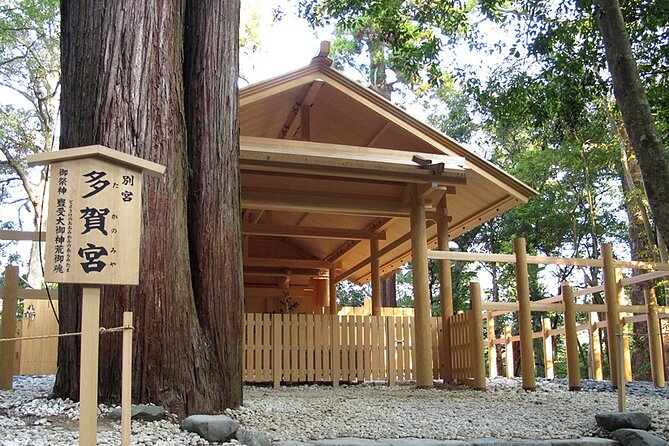
Ise Jingu is made up of two major shrines, Geku and Naiku, with other related sites around Ise. The complex is tied to Amaterasu Omikami, the sun goddess and one of the central deities of Shinto belief.
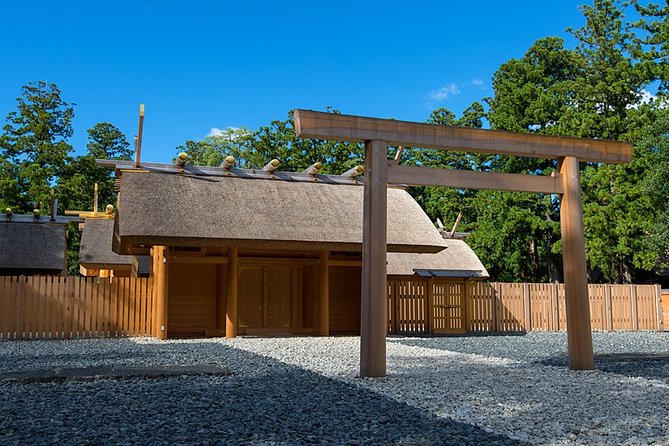
Without context, you may notice clean gravel paths, tall trees, wooden buildings, ropes, gates, and visitors washing their hands before praying. With a guide, those actions become part of a clear ritual pattern. You can ask why people purify themselves, how to approach a shrine, and what makes Ise different from an ordinary neighborhood shrine.
I like this kind of guiding because it adds meaning without asking you to turn the visit into a lecture. Guides such as Yoshi have explained how to pray, who works at the shrines, and which route is reserved for the emperor. That sort of detail gives you a better sense of the place while you are standing in it.
The private format matters here. Ise is a serious religious site, not just a sightseeing attraction, so you may want to ask questions about customs that would be awkward to raise in a large group. Your guide can also adjust the amount of explanation to your interests.
More licensed-guide days in Japan:
- Tokyo 6hr Private Tour with Government-Licensed Guide
★ 5.0 · 3,902 reviews - Tokyo 4hr Private Tour with Government-Licensed Guide
★ 5.0 · 1,394 reviews - Kyoto 6hr Private Tour with Government-Licensed Guide
★ 5.0 · 1,369 reviews
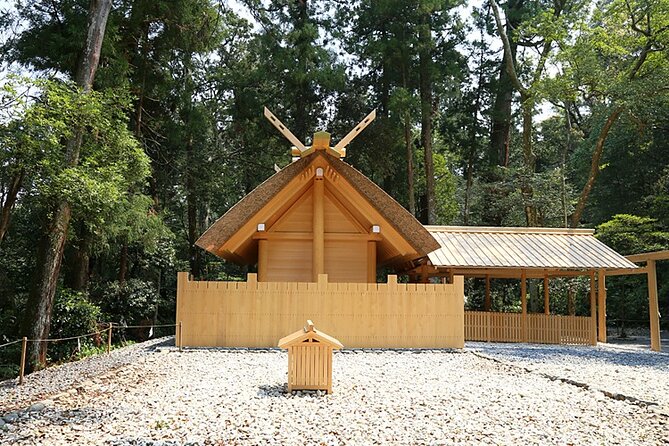
Naiku, the shrine of Amaterasu Omikami
Naiku is the spiritual center of an Ise visit. It is officially associated with Amaterasu Omikami, the sun goddess, and is the shrine most people picture when they think of Ise Jingu.
The approach gives you a sense of the scale and order of the grounds. You will walk through a sacred setting with trees, open paths, and structures that are maintained according to long-held rules. The innermost buildings are not open for ordinary viewing, so you should not expect to walk through every part of the shrine.
That limited access is part of the experience, but it can also surprise visitors who expect a museum-style tour. A guide helps explain what you are seeing and why certain areas remain restricted. One useful point raised during past tours is the care given to the buildings and structures, which are maintained through established Shinto practices.
Plan to give Naiku time rather than treating it as a quick photo stop. The listed schedule allows about an hour here, though the walking pace and the number of questions you ask will affect how much you cover.
Geku, a different side of Ise
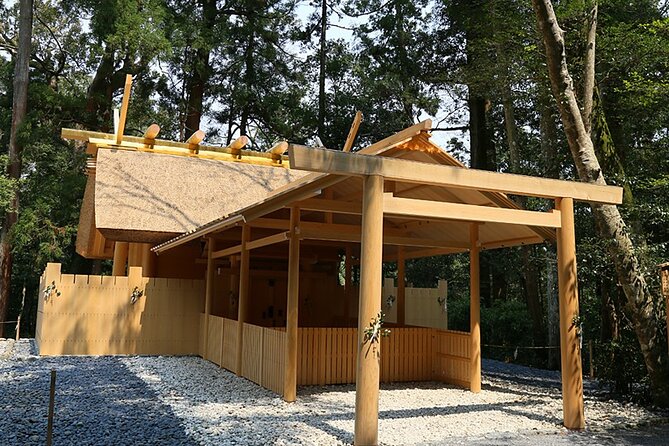
Geku is the other major shrine area and is officially known as Toyouke Daijingu. The experience description places about an hour here, making it possible to visit Geku and Naiku in one half-day if you keep the route focused.
Seeing both shrines gives you a fuller picture of Ise. A visit to only Naiku can leave you with the impression that Ise is one large shrine, while the two main areas have different roles and settings. Your guide can explain how they relate to one another and how visitors traditionally approach them.
Geku is also useful for travelers who want more than a quick introduction to Shinto buildings. Ask your guide to point out features that connect the architecture, rituals, and daily care of the shrine. Tetsuya Tanahashi has been praised for preparing a route through both shrine compounds and explaining how the buildings are looked after.
The practical problem is distance and transport. Geku and Naiku are not presented as a single compact stop, and the tour does not include a private vehicle. If both are priorities, discuss the route before the day begins and ask whether a taxi or public bus makes the most sense.
Isuzugawa River and the quiet side of Naiku
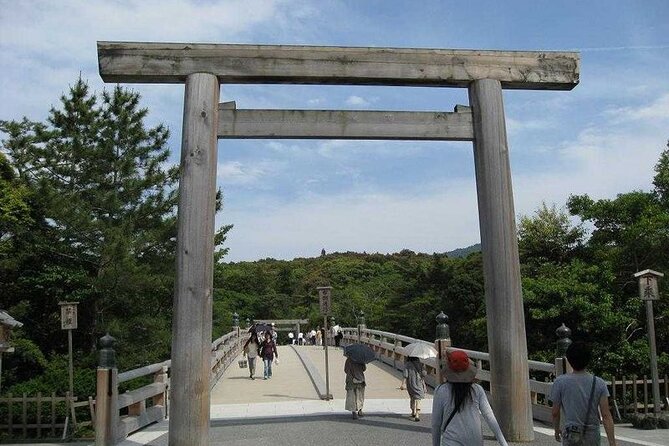
The Isuzugawa River runs beside the Naiku grounds and adds a natural pause to the shrine visit. It is used by pilgrims and sightseers for purification, and the river helps explain why Naiku feels like more than a collection of buildings.
This stop has no admission charge listed, but it still deserves attention. The river, paths, and surrounding greenery give you space to slow down after the formal approach to the shrine. A guide can connect the water to purification practices rather than leaving it as a pleasant view with no explanation.
You may not need a full hour here on its own. It works best as part of a Naiku visit, especially if you want a less hurried route. If your group has limited mobility or prefers fewer walking stretches, tell the guide in advance so the route can be adjusted.
A few more Japan half-days to weigh up
- Kyoto Arashiyama Bamboo forest & Garden Half-Day Walking Tour
★ 5.0 · 413 reviews - Miyajima Half-day Trip Historical Walking Tour
★ 5.0 · 284 reviews - Half-day Tokyo Afternoon Tour by Hato Bus
★ 4.0 · 269 reviews - Naha, Okinawa: Kerama Islands Half-Day Whale Watching Tour
★ 4.4 · 241 reviews
Okage Yokocho for food, shops, and a different Ise
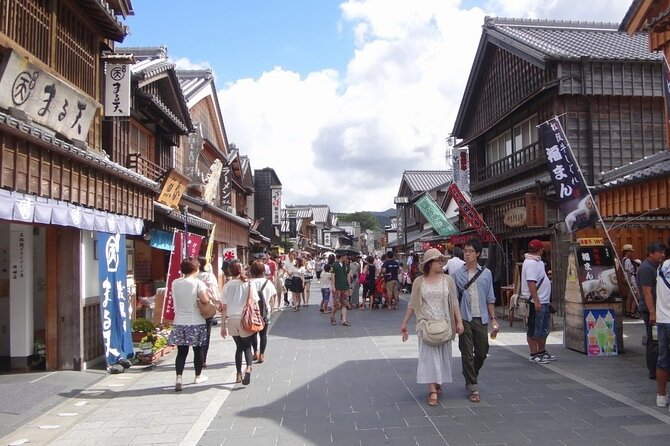
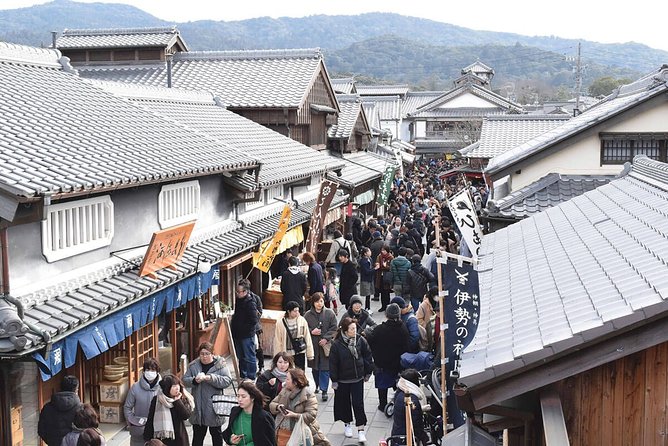
Okage Yokocho sits in front of the Naiku gate and recreates the townscape of Ise from the Edo and Meiji periods. It was built in 1993, so this is not an untouched old quarter. Its value is in the way it presents traditional-looking streets, local shopping, and places to eat near the shrine.
I like adding Okage Yokocho after the shrine because it changes the mood. You can move from prayer and quiet paths to snacks, small shops, and everyday local commerce without leaving the main Naiku area.
The one-hour allocation makes sense if you want time to browse and eat. Lunch is not included, and neither are personal purchases, so use this stop to sample something or shop only if it fits your budget.
Do not confuse a recreated historic townscape with an original Edo street. The setting is designed, but it remains a useful place to see how Ise presents its cultural identity to visitors. Your guide can also point out which parts are most worth your time if you have only a short break.
Meoto Iwa, the wedded rocks at Futami
Meoto Iwa is the most different stop on the route. These two sacred rocks sit in the sea near Futami, a small town within Ise City. The larger rock is paired with a smaller one, and the formation is known as the wedded rocks.
The view gives your half-day a coastal element and shows that the area around Ise offers more than shrine compounds. It is also a meaningful Shinto site, not simply a scenic lookout. Your guide can explain the religious role of the rocks and how they connect with the wider customs of the region.
The drawback is simple: Meoto Iwa takes time to reach. One direct account of the tour noted that a taxi was important for fitting Geku, Naiku, and the rocks into four hours on a busy Sunday. That is useful advice. If Meoto Iwa is a must-see, budget separately for transport and consider making it one of your two or three selected sites rather than adding it on top of everything else.
What four hours can realistically cover
The tour is advertised as about four hours, with a customizable choice of two or three sites. That wording is important. The possible stops include Naiku, Geku, Isuzugawa, Okage Yokocho, and Meoto Iwa, but you should not assume that all five will receive proper attention.
Here are sensible combinations:
- Naiku, Isuzugawa, and Okage Yokocho: Best for a slower look at the main shrine area, river, shopping street, and food stops.
- Geku and Naiku: Best for travelers focused on the religious core of Ise Jingu.
- Naiku and Meoto Iwa: Best for combining the main shrine with the coastal rocks, provided you arrange efficient transport.
- Geku, Naiku, and Meoto Iwa: Possible with a tight plan and taxi use, but not ideal for a leisurely day.
- Naiku, Okage Yokocho, and Meoto Iwa: A good mix of shrine, local street, and scenery if Geku is less important to you.
The private setup gives you a better chance of making the right choice. You can explain your priorities before meeting, and guides have been willing to discuss meeting times, routes, and transport by email. Nishio, for example, has arranged routes that include Geku, a bus toward Naiku, Sarutahiko Shrine, Oharai-machi, and Naiku, though the exact route depends on what you request.
Transport is the detail that can make or break the tour
The price covers a licensed local English-speaking guide, not a vehicle. Pickup is offered within a designated area, but the meeting and movement are on foot or by public transport. Private transportation, fares, entrance fees, lunch, and personal expenses are separate.
That setup keeps the basic cost lower, but it puts more planning on you. I would contact the guide before the day and confirm:
- The exact meeting point
- Which two or three sites you want
- Whether bus or taxi travel is needed
- How much walking your group prefers
- Which entrance or guide fees may apply
The guide’s entry fees are covered only for sights included in the expected route. Do not assume that every possible attraction or added stop is covered.
A Sunday or another busy day may slow you down, especially if you rely on public transport. Tetsuya Tanahashi has given advance taxi advice for precisely this reason. If your schedule is fixed, paying for a taxi may be a good use of money because it protects the limited four-hour window.
Is $108.38 per person good value?
At $108.38 per person, this is not the cheapest way to walk around Ise. You are paying for a private guide rather than simply buying admission or joining a large group.
The value is strongest for first-time visitors who want the religious customs explained clearly. It is also useful for families or small groups with different interests, since the route can be adjusted instead of following a fixed script.
For two people, the guide cost adds up quickly, and transportation still comes separately. For a larger private group, group discounts may improve the price per person. The tour also tends to be booked well ahead, with an average lead time of about 46 days, so waiting until the last minute may make planning harder.
I would compare the cost with your priorities. If you already understand Shinto customs and mainly want to stroll at your own pace, you may prefer an independent visit. If you want to understand what you are seeing, avoid wasting time between Geku and Naiku, and ask detailed questions, the private format earns its keep.
Which guide style may suit you
The provider assigns a licensed local English-speaking guide, and named guides associated with this experience include Tetsuya Tanahashi, Yoshi, and Nishio. You may not be able to select a particular guide, so treat the names as examples of the available guiding style rather than a guarantee.
Tetsuya Tanahashi is a good fit for a tightly planned day because transport and timing advice are part of the practical help you need. Yoshi’s approach has included explanations of prayer, shrine staff, sacred routes, and the meaning of Shinto practices. Nishio has worked with guests to shape the meeting place and route by email.
The strongest feature across these examples is the personal contact before the tour. Use it. Send a short message explaining your interests, your arrival point, and the places you consider essential.
Who should book this Ise tour?
I would recommend it to:
- First-time visitors to Ise
- People curious about Shinto worship and shrine etiquette
- Small families or private groups who want their own pace
- Visitors with only half a day in Ise
- Anyone who wants to combine shrine visits with Okage Yokocho or Meoto Iwa
- Travelers who appreciate help with public transport and route planning
I would be more cautious if you want a relaxed full-day visit to every major site. Four hours is a useful introduction, not a complete survey of Ise.
The tour is private, and most people can participate. Service animals are allowed, and the meeting area is near public transportation. You should still discuss walking needs and the route in advance, since the tour is conducted on foot and by public transport rather than in a private vehicle.
Should you book it?
Book this tour if you want Ise Jingu to make sense, not just look beautiful. The guide can show you how to approach the shrines, explain Amaterasu Omikami and Shinto customs, and help you choose between Geku, Naiku, Okage Yokocho, Isuzugawa, and Meoto Iwa.
Choose only two or three priorities, and plan transportation before you arrive. If you do that, $108.38 per person is a fair price for focused private guidance. If you try to see every listed stop in four hours without a taxi, the day may feel rushed.
Free cancellation is available up to 24 hours before the start time. After that point, the amount paid is not refunded, and late changes are not accepted.
FAQ
How long is the Ise Jingu private tour?
The tour lasts approximately four hours.
Is the tour private?
Yes. Only your group participates, and the tour is not combined with another group.
How many sites can I visit?
The tour includes a customizable choice of two or three sites from the available options.
Which places can be included?
Possible stops include Ise Jingu Naiku, Ise Shrine Geku, the Isuzugawa River, Okage Yokocho, and Meoto Iwa at Meoto Yokocho.
Is transportation included?
No. The guide meets you on foot within the designated area, and movement during the tour uses walking or public transport. Private transportation and transportation fees are not included.
Is lunch included?
No. Lunch and personal expenses are separate.
Are entrance fees included?
Entrance fees are not included. Guide entry fees are covered only for sights listed under the expected tour stops.
Is an English-speaking guide provided?
Yes. The experience includes a licensed local English-speaking guide. Named guides connected with the tour include Tetsuya Tanahashi, Yoshi, and Nishio.
Can I cancel for a refund?
Yes. You can cancel at least 24 hours before the start time for a full refund. Cancellations and changes made less than 24 hours before the start time are not accepted for a refund.
Just added around Japan
- Private Arrival Transfer : Narita International Airport to Central Tokyo City★ 4.5 · 12 reviews
- Narita Airport(NRT): Private Transfer to Tokyo/Yokohama 1-9pax★ 5.0 · 47 reviews
- Private Transfer from Narita Airport to Yokohama Port and City★ 4.5 · 17 reviews
- [Narita Airport Terminals 1, 2] 40-60km Sawara Itako Historic Bike Tour★ 5.0 · 13 reviews
- 3 Day Japan Highlights Tour: Tokyo, Mt.Fuji, Nara, Kyoto, Osaka★ 5.0 · 22 reviews
- All must-sees in 3 hours – Nara Park Classic Tour! From JR Nara!★ 5.0 · 108 reviews
- Private Nara Tour and Sake Tasting (Departing from Kyoto/Nara)★ 5.0 · 40 reviews
- Hammer a Pattern on Your Ring Workshop★ 5.0 · 57 reviews
Half-Day, compared.
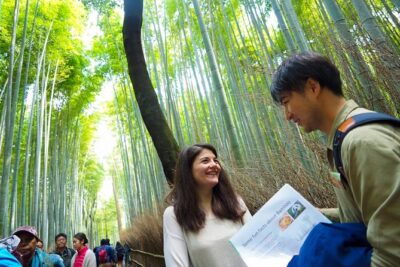
Kyoto Arashiyama Bamboo forest & Garden Half-Day Walking Tour
Read our review →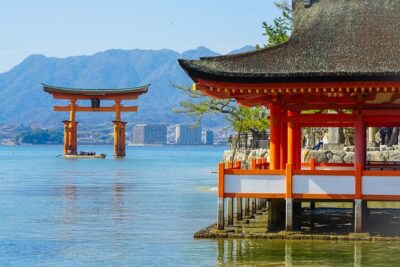
Miyajima Half-day Trip Historical Walking Tour
Read our review →

Naha, Okinawa: Kerama Islands Half-Day Whale Watching Tour
Read our review →
Himeji Half-Day Private Tour with Government-Licensed Guide
Read our review →

Miyajima Half-day Private Tour with Government Licensed Guide
Read our review →Browse the lists this tour appears in