
Reviewed · KYOTO TOURS
Kyoto : Geiko Maiko Dance of Kyoto & Visits of Gion Museum
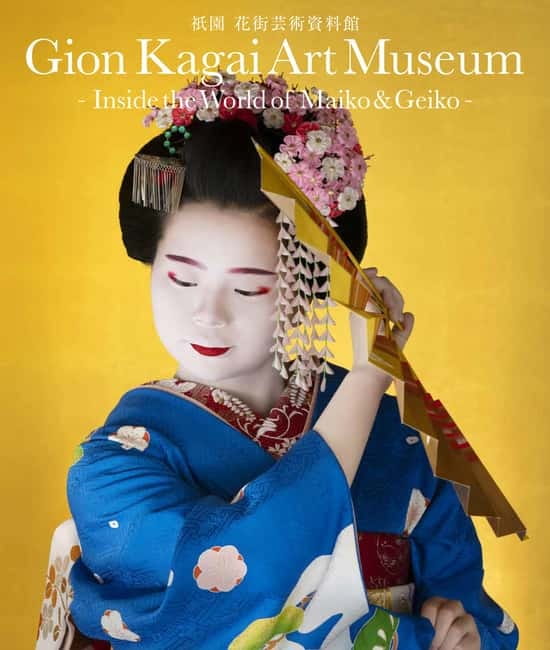
Kyoto’s geiko and maiko dance is a quiet art of controlled gestures, lowered eyes, fans, and small turns that carry more meaning than a stage show packed with spectacle. This experience brings you close to that tradition, with two Kyomai songs performed by one geiko or maiko, and sometimes two performers at later sessions.
I like the short 15-minute format, which fits neatly into a busy day around Gion. I also like the museum’s English QR-code translations, seasonal hair ornaments, formal kimono, and small Japanese garden. The main drawback is simple: the dance is brief, and there is no photography or audio recording during the performance.
Key points to know before you book
- Two Kyomai songs in about 15 minutes: The performance is graceful and focused rather than long or theatrical.
- Geiko and maiko are not the same: A geiko is a professional performer, while a maiko is still training to become one.
- Five daily performance times: Sessions are scheduled at 13:30, 14:20, 15:00, 16:00, and 16:30.
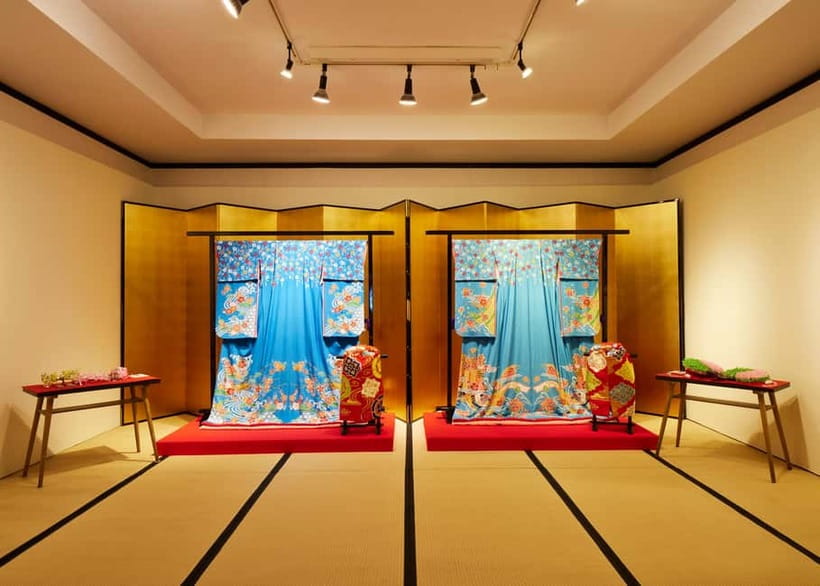
- A small but useful museum: Look for hand-painted Yuzen kimono, Nishijin brocade obi, kanzashi hair ornaments, makeup tools, and personal items.
- Photography is restricted during the dance: Optional photo sessions with a geiko or maiko are sold separately at the museum.
- The $25 price includes museum admission: You can remain in the museum after the dance and visit the garden, cafe, and shop.
Why this short Kyoto performance works
Many Kyoto cultural activities ask for a large block of your day. This one does not. The dance itself lasts about 15 minutes, so you can fit it between a walk through Gion, a visit to Yasaka Shrine, or an afternoon meal without rebuilding your schedule around it.
That short length is both the attraction and the limitation. You get a concentrated look at Kyomai, but not a full evening of music, dance, explanation, and audience interaction. I see this as a good introduction for a first visit to Kyoto, especially if you want something more direct than simply walking through the Gion streets and hoping to spot a performer.
The setting matters. A geiko or maiko is not appearing in a large modern theater, but in a museum devoted to the art culture of Kyoto’s kagai districts. That gives the dance a useful frame. Before or after the performance, you can look at the clothing, hair ornaments, cosmetics, and photographs connected with the world you have just seen on stage.
More geisha-district evenings:
- Kyoto Geisha Walking Tour: Gion District & Hidden Gems
★ 4.7 · 3,273 reviews - Kyoto: Gion Magical Night Walking Tour with Geisha Trivia
★ 4.9 · 2,393 reviews - Kyoto: Gion Geisha District Walking Tour – Stories of Geisha
★ 4.7 · 2,187 reviews
Arriving at the Gion Kagai Art Museum
The meeting point is the museum entrance. The instructions are straightforward, but you should still allow time to find the building and check in. The museum asks you to arrive 10 minutes before your scheduled performance.
That early arrival is not wasted. You need time to get oriented, confirm the room, and settle before the dance begins. A late arrival would be especially awkward here, since the performance is short and quiet. Missing the first few minutes would mean losing a large share of the actual show.
Staff members have been helpful with directions, including assisting people who were unsure where to enter. English support is available in practical ways, and the museum provides information through QR-code translations. Do not expect a long personal introduction from a guide, though. The experience is more self-guided than tour-led.
The building also gives you something to do before or after the scheduled dance. You are not simply entering for a 15-minute ticketed show and leaving immediately.
Watching the Inoue-style Kyomai dance
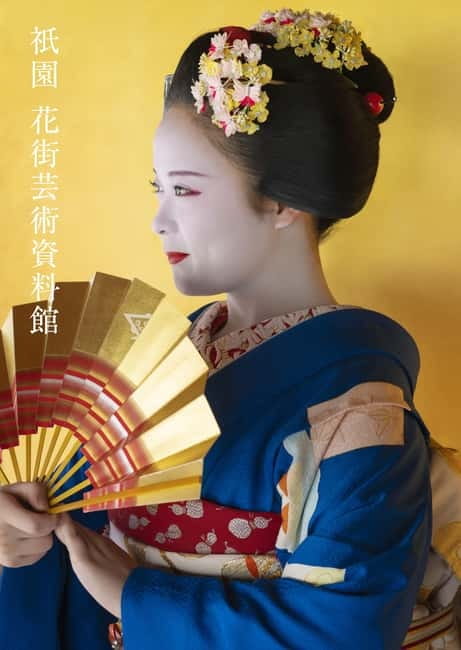
Kyomai, also called Kyoto Mai, is performed in the Inoue style at this museum. The program includes two songs and lasts approximately 15 minutes. Most sessions feature one geiko or maiko, while the third and fourth sessions on some days may feature two performers.
The appeal is in the precision. The movement can look restrained at first, but that restraint is the point. A slight turn of the head, a carefully held fan, or a measured step carries the action. The performer’s facial expression and body language remain controlled, giving the dance a calm intensity.
You should not expect a narrated show. The music and movements are presented without a full English explanation of each song. A printed information sheet may help with the general background, but it may not explain every line or gesture in the performance.
That lack of explanation has two effects. It lets you watch without interruption, but it can also leave you unsure about the story or symbolism. If you want a detailed lesson in the dance, this experience may feel incomplete. If you are happy to watch closely and take in the mood, the quiet format works well.
No photos are permitted during the dance, and audio recording is also not allowed. This rule is worth remembering because the performers’ costumes and makeup invite you to reach for your phone. Put it away and watch the hands, posture, and timing instead.
The 13:30 and 14:20 sessions are useful for an early afternoon plan. The 15:00, 16:00, and 16:30 sessions offer more flexibility if you are spending the morning at another Kyoto sight. Since the third and fourth sessions may sometimes include two performers, those times could appeal to you if seeing both a geiko and maiko is important. The schedule does not promise two performers, so treat that as a possibility rather than a guarantee.
Understanding geiko, maiko, and the Gion kagai districts
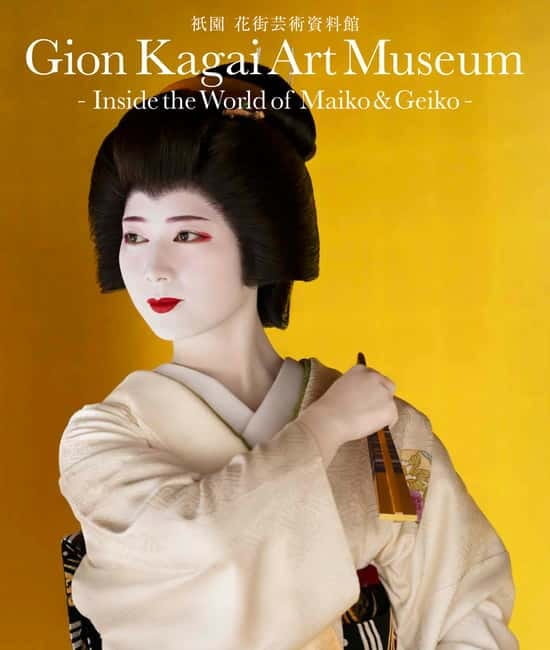
The terminology here matters. In Kyoto’s kagai districts, women who perform traditional dance and music in banquet rooms and on stage are called geiko, not geisha. Women training to become geiko are called maiko.
A maiko and a geiko may look similar to a visitor, but they represent different stages of training. The museum helps explain the clothing, makeup, hair ornaments, and customs that shape those appearances.
This context keeps the experience from becoming a simple costume spectacle. The hair, kimono, and makeup are working parts of a formal performance tradition. They require time, skill, and discipline, and the museum’s displays help you notice details you might otherwise miss.
The subject can also be misunderstood because much of the kagai world is private. Visitors do not normally walk into the traditional banquet rooms where this culture developed. A museum performance offers a more respectful public window, though it remains only a glimpse of a much larger tradition.
More museums and galleries in Kyoto:
- Kyoto: Tea Museum Tickets and Matcha Grinding Experience
★ 4.9 · 739 reviews - Skip the lines Basic Ticket at SAMURAI NINJA MUSEUM KYOTO
★ 4.5 · 632 reviews - Kyoto Sword Experience – includes Museum Ticket/Ninja Experience
★ 4.5 · 149 reviews - Kyoto: Samurai Ninja Museum guided tour
★ 4.8 · 145 reviews
The permanent exhibition: kimono, obi, and seasonal hair ornaments
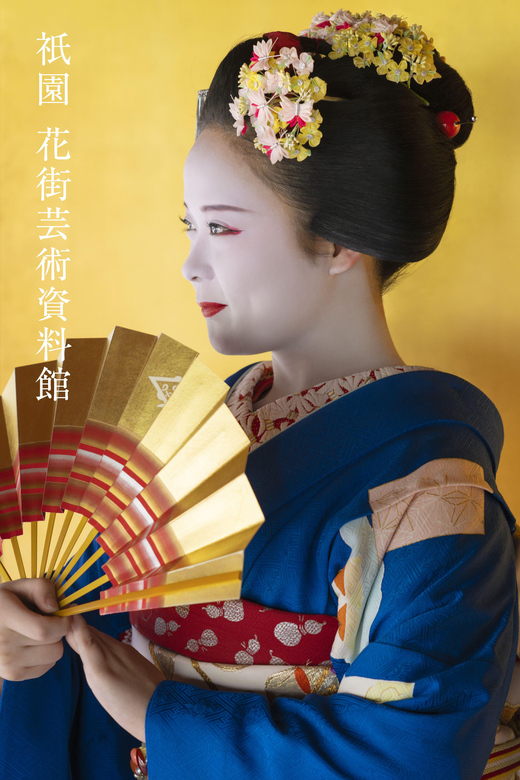
The permanent exhibition is the main reason to allow extra time beyond the dance. It introduces the art culture of the kagai districts through clothing, objects, photographs, and personal items.
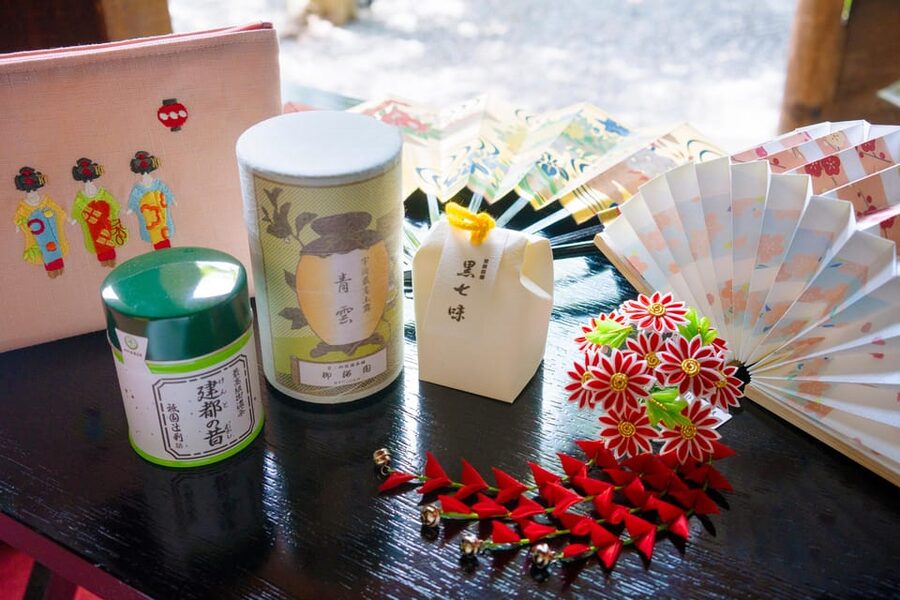
Look closely at the hand-painted Yuzen kimono. Yuzen dyeing is known for detailed painted decoration, and the garments give you a chance to study the work at close range rather than seeing a performer pass across a stage. The Nishijin brocade obi sashes show another side of Kyoto textile craft, with dense woven patterns and formal finish.
The kanzashi hair ornaments are especially useful for understanding seasonal presentation. Different ornaments are associated with different times of year, so the hair is not just decorative. It reflects the calendar and the rules of appearance within the maiko tradition.
You can also see black crested formal kimono, makeup used by maiko, and personal belongings. These everyday or backstage items make the display more human. The formal costume catches your eye first, but the smaller tools explain how a performer prepares and maintains that appearance.
Photographs of the kagai districts add atmosphere and setting. They help connect the displayed objects with the streets, banquet rooms, and performance culture of Kyoto. The English information is accessed by scanning QR codes, so bring a phone that can read them if you want the fullest explanation.
The museum is not huge. That is good news if you have limited time, but it means you should not expect a vast collection. You can see the central displays in a reasonable visit, then spend more time with the translations and videos if the subject interests you.
The lower-level film and the value of a little preparation
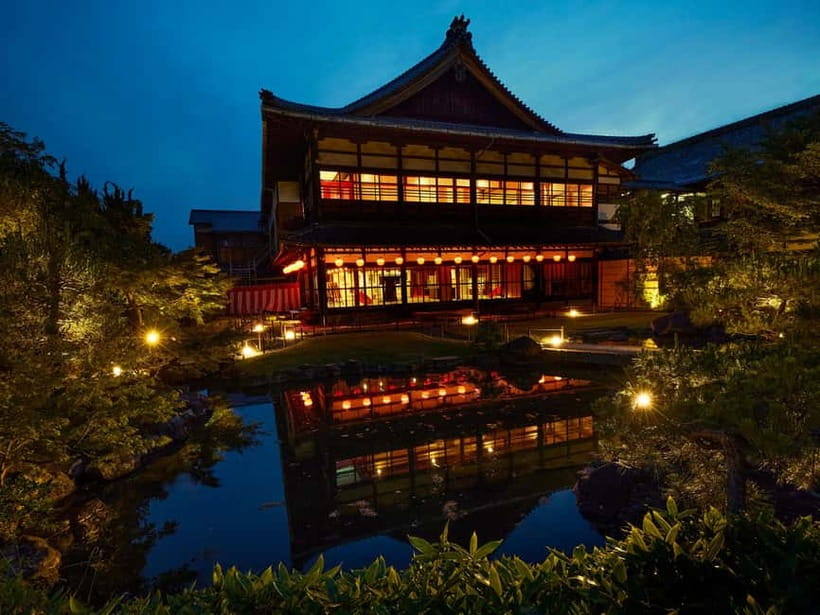
A film on the lower level explains more about the dance and its Kyoto setting. I would make time for it, especially if this is your first introduction to geiko and maiko culture.
The film gives you a basic vocabulary for the live performance. After seeing it, you may pay more attention to the fan, the position of the arms, the pace of the steps, and the way the performer uses stillness. Without that background, the dance can seem beautiful but hard to interpret.
The museum information is available in English through QR codes, which is helpful but not quite the same as having a live guide explain the program. You will need to use your phone and read at your own pace. Some people will like that freedom. Others may wish for a short introduction before the first song or a question-and-answer period afterward.
If you want more interaction, check at the museum about a photo session. These tickets are separate from admission and performance entry. The added session costs about 2,000 yen, and availability is handled at the museum. You cannot assume the standard ticket includes a photo.
Chisen water garden, art cafe, and museum shop
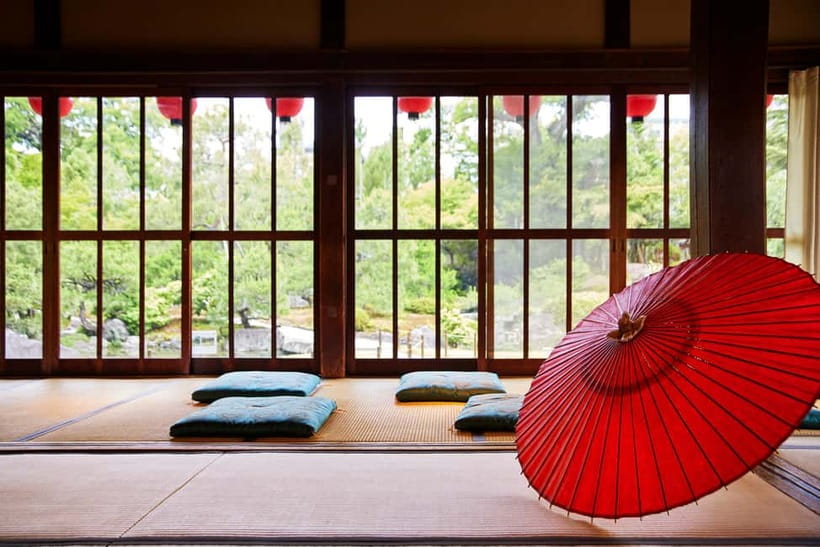
The Chisen water Japanese garden gives the visit a welcome pause. It is not presented as a major temple garden or a destination requiring a separate trip. Instead, it works as a quiet part of the museum visit, giving you a place to slow down after the displays and performance.
I like this combination because the dance itself asks for stillness, and the garden continues that mood. You can take your time there after the performance rather than rushing straight back into Kyoto’s busy streets.
The art cafe adds another option if you want to linger. The supplied information does not specify a menu, so think of it as a convenient place within the museum rather than a reason to visit on its own.
The museum shop is small but useful for browsing after the exhibit. It gives you a chance to take home a memento connected with the museum’s art and performance theme. Again, the shop is an extra rather than the main value of the ticket, but it rounds out the visit.
Is $25 a fair price for 15 minutes?
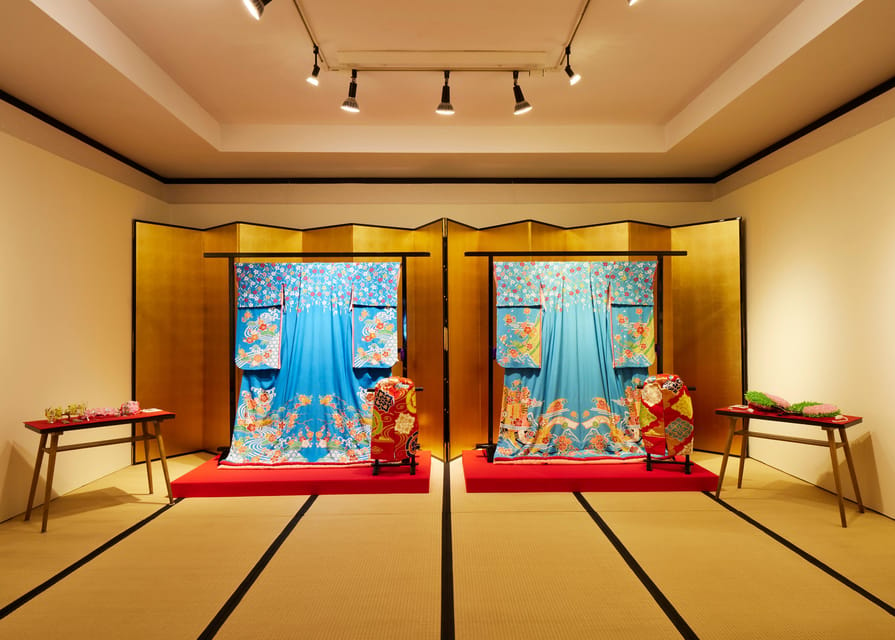
At first glance, $25 may seem high for a performance lasting only 15 minutes. If you measure the ticket purely by stage time, it is not a bargain.
The calculation changes because admission to the Gion Kagai Art Museum is included, and you can remain inside after the two dances. You are paying for a short live performance plus a museum visit, garden, film, cafe, and shop access. If you spend 45 minutes to an hour exploring the displays, the price becomes easier to justify.
I would call it fair value for someone who specifically wants to see Kyomai performed by a geiko or maiko. There are cheaper cultural attractions in Kyoto, but they may not offer this same close, scheduled encounter. The value is less convincing if you are mainly interested in a long performance or expect a guided lesson.
The optional photo session is an extra cost, so include that in your budget if a picture is important to you. Since photography is forbidden during the dance, this is the official way to arrange a keepsake with a performer.
Who will enjoy this experience most?
I would recommend it to first-time Kyoto visitors who want a clear introduction to geiko and maiko culture without committing to a full evening program. Families with older children may also appreciate the short format, particularly if the children can use the QR-code material and remain attentive during a quiet performance.
It suits photographers in one limited sense: the museum and garden may offer visual interest, but you cannot photograph the dance itself. If the main goal is live performance photography, choose another activity.
It also works well for people who have already seen Kyoto’s major temples and want a cultural stop focused on performing arts. The museum gives you something to study, while the live dance makes the objects easier to understand.
You may want to skip it if your schedule is so tight that you cannot arrive 10 minutes early. You should also reconsider if you want a long, narrated presentation, a translation of each song, or a chance to ask questions directly after the dance.
Practical tips for a smoother visit
Book around the performance time that best fits your day, but do not arrive at the last second. The museum asks you to come 10 minutes early, and the performance is too short to absorb a late start.
If you want the possible two-performer session, look at the 15:00 or 16:00 time slots. The schedule only says that those sessions may feature two geiko or maiko, so do not book on the assumption that both will appear.
Use the museum’s QR codes for English information, and allow time for the lower-level film. The dance makes more sense when you know a little about the tradition behind the movements.
Keep your phone and camera put away during the performance. Pets, oversize luggage, drones, alcohol, drugs, and audio recording are not allowed. The activity is non-refundable, so check your plans before purchasing.
Should you book the Gion Kagai Art Museum dance?
Book it if you want a polished, compact look at Kyoto’s geiko and maiko tradition, with a live Kyomai performance at the center. The museum, English QR-code material, film, garden, cafe, and shop give the short dance more weight than the 15-minute running time suggests.
I would not book it expecting a full theatrical evening or a detailed lecture. The performance is brief, photography is prohibited, and the meaning of the songs may remain partly unexplained. But for $25, it is a sensible addition to a busy Gion itinerary, especially if you value a direct cultural encounter and want to leave room for the rest of Kyoto.
FAQ
How long does the Kyomai performance last?
The performance lasts approximately 15 minutes and includes two Kyomai songs.
How many performers appear?
The usual format features one geiko or maiko. On some days, the third and fourth sessions may feature two performers.
What are the performance times?
The scheduled sessions are at 13:30, 14:20, 15:00, 16:00, and 16:30.
What does the ticket include?
The ticket includes admission to the Gion Kagai Art Museum and the performance fee for the Kyomai dance.
Can I stay in the museum after the performance?
Yes. You can remain in the museum after the dance and continue exploring the permanent exhibition and other areas.
Is photography allowed during the dance?
No. Photography is not allowed during the dance performance.
Can I make an audio recording?
No. Audio recording is not allowed.
Is there a photo session with a geiko or maiko?
Yes. Tickets for photo sessions are available at the museum separately from the main admission. The added session costs about 2,000 yen.
How early should I arrive?
You should arrive at the museum 10 minutes before your scheduled performance.
Is the activity refundable?
No. The activity is non-refundable.
Just added around Kyoto
- Kyoto: Zen Meditation at a Private Temple with a Monk★ 5.0 · 25 reviews
- Kyoto: Gion Geisha District & Sake-in-Hand Walking Tour★ 5.0 · 37 reviews
- Private Pewter Sake Cup Experience with a Kyoto Artisan★ 5.0 · 31 reviews
- Your Private Vacation Photography Session In Kyoto★ 5.0 · 110 reviews
- Private Guided Traditional Buddhist Cooking in Japan★ 5.0 · 16 reviews
- Kyoto Wagashi(Japanese sweets) Cooking Class near Fushimiinari★ 5.0 · 60 reviews
- Traditional Japanese Music show & Experience Tour in Kyoto★ 5.0 · 57 reviews
- Kyoto:Family-Friendly Kimono & Yukata Experience at WARGO★ 5.0 · 147 reviews
Kyoto Tours, compared.
Fushimi Inari, Kinkakuji, Bamboo Grove 1 Day Bus Tour
Read our review →
Tea Ceremony in a Traditional Tea House in Kiyomizu
Read our review →
Kyoto Geisha Walking Tour: Gion District & Hidden Gems
Read our review →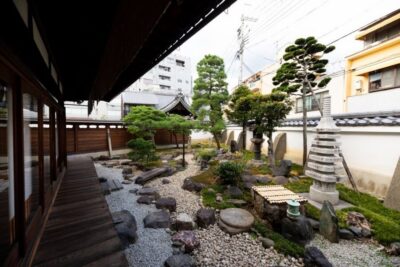
Gion Magical Night Walking Tour with Geisha Trivia
Read our review →
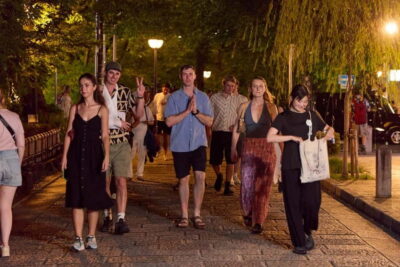
Gion Geisha District Walking Tour – Stories of Geisha
Read our review →Browse the lists this tour appears in