
Reviewed · KYOTO TOURS
Kyoto: Replica food making experience
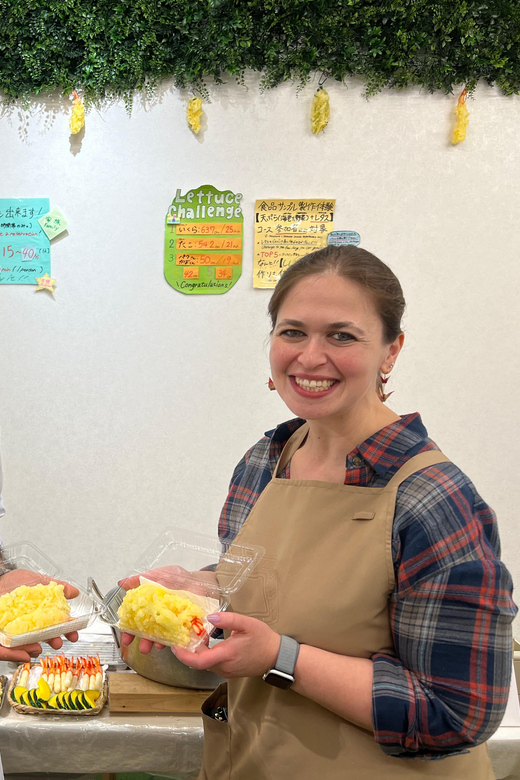
Kyoto’s restaurant windows are often lined with perfect plastic sushi, noodles, and tempura. Here, you get to learn how that fake food is made, using hot water, melted wax, and a surprising amount of hand skill. You shape shrimp and pumpkin tempura, then pack your finished pieces like supermarket goods.
I like two things right away: you make a real souvenir, rather than simply buying one, and the small group size, limited to four people, gives you room to ask questions and get help. The workshop also offers a welcome change from temples and crowded shopping streets.
The main thing to consider is the hot wax. Children under six cannot join, and younger children may need parental help. You should arrive on time, since the instructor explains the process to the group together.
Key points at a glance
- Traditional wax technique: Pour melted wax into hot water, then shape it before it hardens.
- Make your own tempura: Create shrimp and pumpkin replicas, with lettuce available as an option.
- Small four-person group: The format allows patient, hands-on instruction.
- Useful Kyoto location: Meet diagonally across from Kani Douraku, marked by its enormous crab sign.
- A souvenir with a story: Your finished food is packaged like a real supermarket item, though it is strictly for display.
- Good family activity: Children six and older can take part, with adults helping when needed.
Why Kyoto’s fake food is worth your time
Replica food, known in Japan as sampuru, is more than a novelty. Restaurants use lifelike models to show diners what a dish looks like before they sit down. For visitors who cannot read a Japanese menu, these displays offer an instant visual guide.
That makes this workshop a useful cultural stop, not just a craft class. You begin to notice the skill behind those shiny tempura prawns and carefully arranged bowls seen outside restaurants across Japan. The details matter: the shape of the batter, the roughness of the coating, and the way ingredients are positioned all help a plastic dish look edible.
I especially like that the activity explains the traditional wax method rather than giving you a pre-made object to decorate. You handle the material, make mistakes, try again, and see how small changes affect the final texture. One useful lesson is that the height from which you drop the wax can change the look of the batter.
The finished item may fool someone at a quick glance. That is part of the fun. Just keep it away from the dinner table, since the replica looks remarkably tasty but is not food.
More food tours in Kyoto:
- Kyoto Night Foodie Tour in Gion (9+ dishes + 6 Sake tastings)
★ 5.0 · 1,762 reviews - 3-Hour Kyoto Insider Sake Brewery Tour with Tastings & Pairings
★ 5.0 · 917 reviews - Arashiyama Bamboo, Temple, Monkeys, or Secret Sake Brewery
★ 4.8 · 886 reviews
Finding the workshop near the giant crab sign
The meeting point is diagonally across from Kani Douraku, the restaurant famous for its large crab sign. That landmark should make the location easier to identify in central Kyoto, especially if you are already exploring the shopping streets around Nishiki Market.
The workshop is also in the Sanjo Meiten-gai shopping arcade area, giving you plenty to do before or after your hour at the table. This is a practical advantage. You can combine the craft with shopping, a visit to Nishiki Market, or lunch nearby rather than making a special trip across town for a short activity.
I would allow extra time to find the exact meeting point. The directions rely on the crab sign and the diagonal position across from it, so arriving early is sensible. The activity asks you to arrive at your reserved time because the opening instructions are given all at once.
The location also suits the subject. After making wax tempura, you are close to real food displays and real restaurants. You may find yourself looking at restaurant samples with a sharper eye, noticing the texture and arrangement in a way you would not have before.
The first lesson: turning wax into a food surface
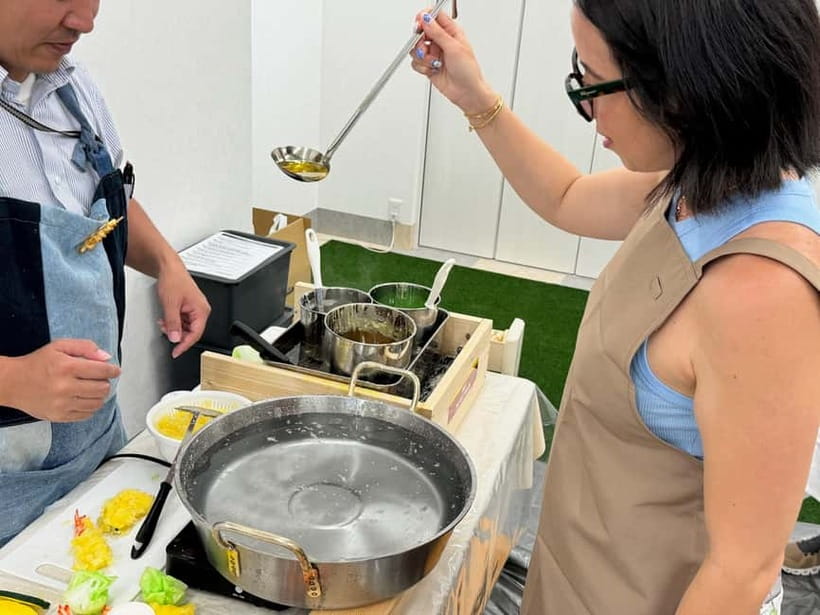
The workshop begins with an explanation of how the replica is made and what you will do. The instructor demonstrates the process, then lets you practise before you work on the piece you will take home.
The basic method is simple to describe but tricky to control. Melted wax is poured into hot water, where it starts to set. You then shape it while it remains workable. Timing is important: wait too long and it becomes difficult to form, but move too quickly and the shape may not hold.
This is where the small group matters. With no more than four participants, the instructor can watch your technique and offer corrections. English and Japanese instruction is available. Communication can also include gestures and translation tools when needed, and the process is visual enough that you do not need advanced Japanese to follow along.
The activity is hands-on from the start. You are not expected to produce a perfect piece immediately, and practice is part of the lesson. That makes the class approachable for children over six, couples, and adults who do not think of themselves as crafty.
You should still take the material seriously. The wax is hot, so adults need to supervise children and may be asked to help. An apron or chef jacket may be available, and one participant suggested wearing clothing you do not mind getting wax on. That is sensible advice for a craft involving hot liquid and quick hand movements.
Making shrimp and pumpkin tempura
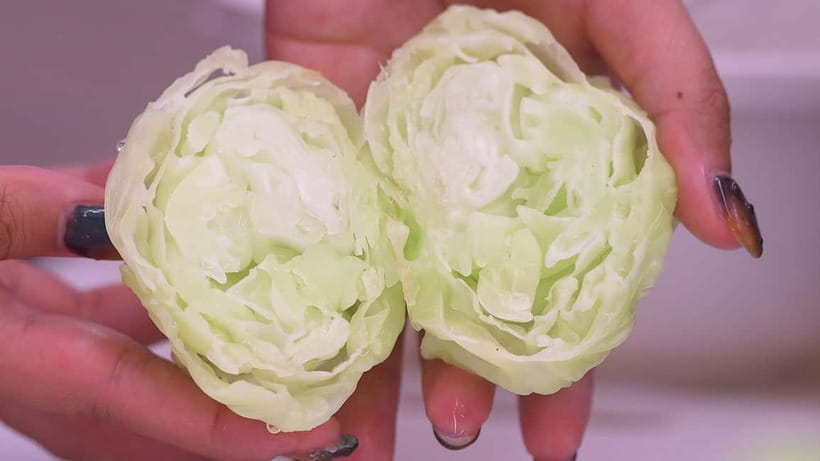
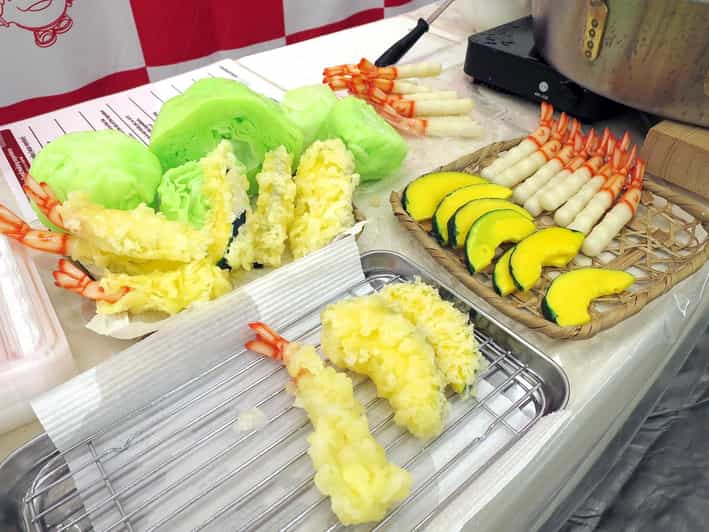
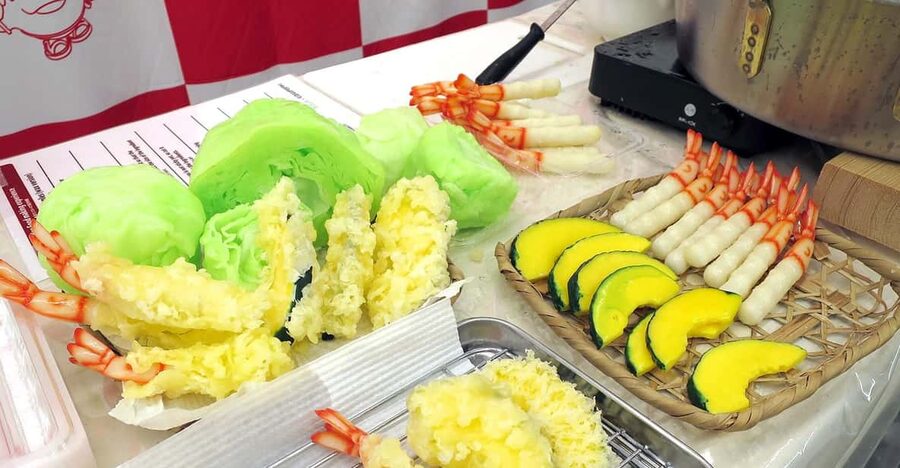
The main project is a tempura bowl featuring shrimp and pumpkin. You create the ingredients and then give them a batter coating that has to look light, crisp, and irregular.
The shrimp is a good test of control. It needs to look curved and substantial, while the batter must appear to cling naturally. Pumpkin has a different shape and surface, so making both pieces gives you a better feel for the method. You are not simply repeating one form.
The fun comes from the gap between the plain wax and the finished effect. A few drops in the right place can suggest crisp batter. The instructor can show you how to change the texture by altering the height and flow of the wax. Your piece will not be identical to a shop-made sample, but that is part of its charm. It carries the marks of your own work.
A lettuce replica may also be available as an option. This gives you another type of food texture to attempt and can add variety to the final display. Check the exact choices when booking, since the listed main activity is the shrimp and pumpkin tempura bowl.
The workshop lasts about one hour, though one participant described completing the hands-on portion in around 45 minutes. That leaves a little flexibility for instruction, practice, photographs, and packaging. Do not schedule a major attraction immediately afterward if you need to leave at an exact minute.
Same base, a completely different sort of day:
- PERFECT KYOTO 1-Day Bus Tour
★ 5.0 · 13,518 reviews - Kyoto: Fushimi Inari, Kinkakuji, Bamboo Grove 1 Day Bus Tour
★ 4.8 · 4,316 reviews - Kyoto: Tea Ceremony in a Traditional Tea House in Kiyomizu
★ 4.9 · 3,519 reviews - Kyoto Geisha Walking Tour: Gion District & Hidden Gems
★ 4.7 · 3,273 reviews
A souvenir that looks ready for the grocery shelf
At the end, your replica is packaged in a way that resembles real supermarket food. This small detail makes the souvenir more amusing and more useful for display. It also protects the piece during the first part of your journey home.
The package helps explain the joke to friends and family. A carefully made tempura bowl is already fun, but a supermarket-style presentation makes it look even more convincing. You can place it on a shelf, use it as a conversation piece, or show it to someone who assumes you have brought home a snack.
Remember the important rule: it is not edible. The materials are for display only, and the realistic appearance is the whole point. If you are packing it in checked luggage or a suitcase, keep it protected from crushing and heat as far as you can. The provided information confirms that you receive the item as a souvenir, but it does not specify a dedicated travel box beyond the food-style packaging.
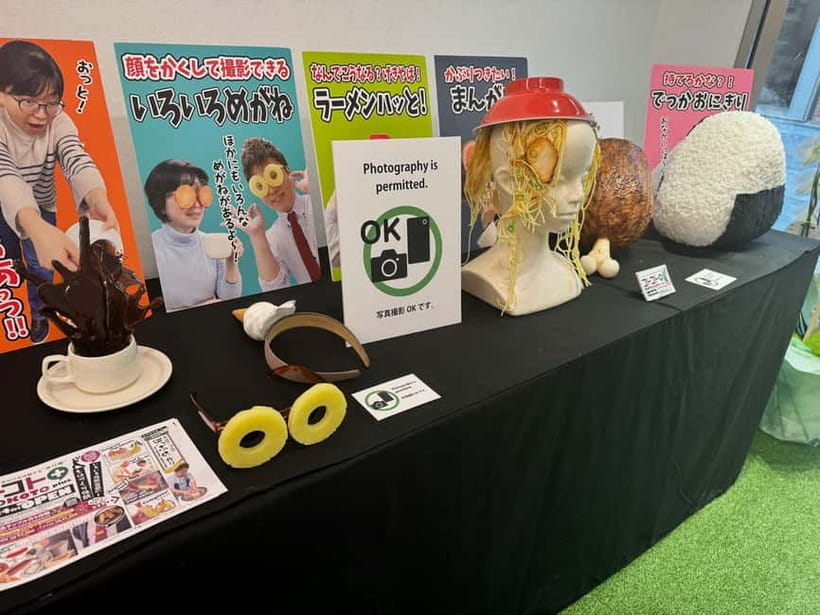
There is also a photo-friendly side to the workshop. The studio has examples of replica food, including oversized pieces that can make playful photographs. If you enjoy taking pictures of unusual hands-on activities, leave a few minutes for this after the craft.
Why the small group improves the class
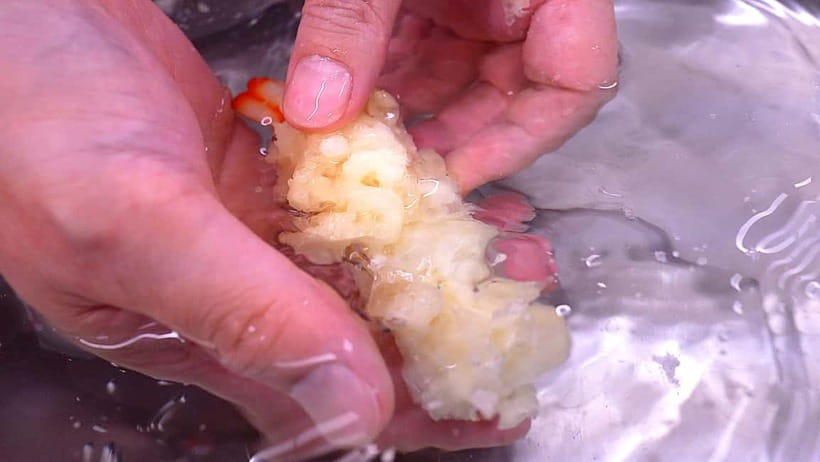
A four-person limit is one of the strongest features here. Replica food making involves timing, hand pressure, and small adjustments, so a large class would make it harder to see what you are doing.
In a small group, you can ask for help without holding up a crowd. That matters if the wax hardens before your shape is ready, or if you are unsure how much batter texture to add. The instructors are described as patient, kind, friendly, and willing to explain the process clearly.
The teaching style seems suited to mixed-language groups. English and Japanese are offered, but the demonstrations do much of the work. Simple directions, visual examples, and translation apps can fill any gaps. You should not expect a long lecture in English, but you can expect direct help with the craft.
The small format can also make the activity feel personal. A solo visitor may receive close attention, while a family of four can fill the whole group. Couples and friends can work side by side without being lost in a crowd.
Best for families, couples, and a break from temples
Families with children six and older are a natural fit. The activity has a clear goal, quick results, and a souvenir to take home. Children can see the wax change shape in front of them, which is more engaging than a passive museum visit.
Adults should remain involved with younger children because of the hot material. The workshop may ask parents to assist, and that is reasonable. Children aged nine to fifteen have been able to stay engaged with the activity, but attention spans and comfort with craft work will vary.
Couples also have good reason to book. The finished tempura bowl makes a personal memento of a honeymoon or holiday, and you can compare your creations without needing advanced artistic skill. One participant who had almost no Japanese found that patient instruction and translation were enough to manage the process.
I also recommend it to anyone who wants a quieter hour in central Kyoto. After a morning of shrines, markets, and busy streets, sitting down to make something can reset your pace. The activity is social without requiring a full-day commitment.
It may be less suitable if you dislike messy crafts, have difficulty working with hot materials, or want a long cultural lecture. The focus is on making. The cultural explanation is useful, but most of your hour is spent shaping wax.
Is $22 good value for one hour?
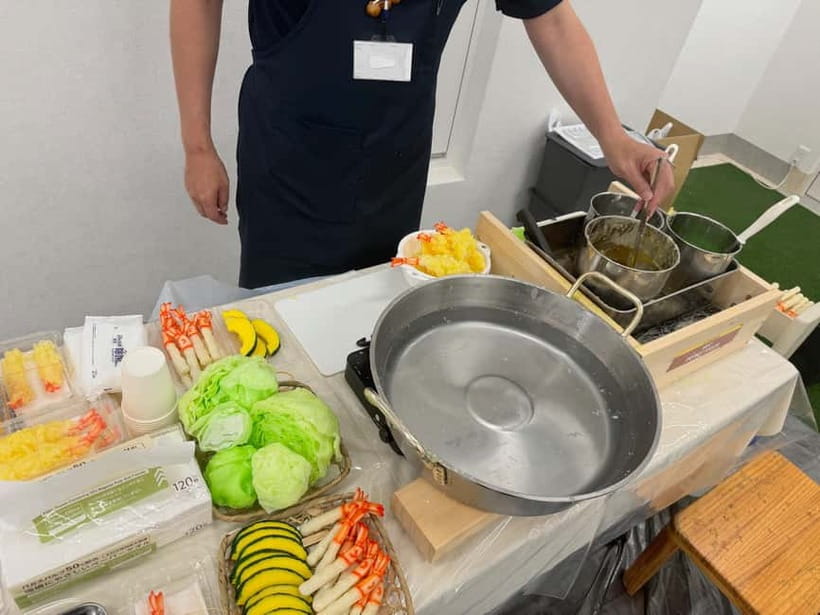
At $22 per person, this is reasonably priced for a short, guided activity in central Kyoto. You receive the instruction, all materials, and the replica you make, so the cost is not simply an admission fee. The souvenir has more meaning because you produced it yourself.
The value is strongest if you want something beyond sightseeing. A temple visit may offer more historical importance, but it will not give you a hands-on keepsake. A shop-bought replica may be more polished, but it lacks the story of learning the wax technique.
The one limitation is duration. One hour goes quickly, and you should not book this expecting a large workshop or a full meal. The finished object is the reward, not food, and the activity will appeal most to people who enjoy making things.
Free cancellation up to 24 hours before the reserved time and the option to reserve now and pay later make it easier to fit into a Kyoto schedule. Starting times vary, so check availability before building your day around it.
Small practical details that will improve your visit
Arrive at the booked time, ideally a little early. The instructor needs to give the basic explanation to everyone together, and arriving late could mean missing the most important safety and technique instructions.
Wear practical clothing. Aprons and chef jackets may be available, but wax can still be awkward around sleeves and fabric. One participant specifically suggested a change of clothes, so avoid wearing your most delicate outfit.
Plan the activity around food, not instead of it. The replicas look convincing, and making tempura may leave you hungry. The workshop is near restaurants and the Nishiki Market area, so lunch or a snack afterward is easy to consider.
Keep the finished piece protected once you leave. It is packaged for taking home, but treat it as a crafted object rather than a durable toy. The package should also help you explain to anyone at home that the item is display-only.
Should you book the Kyoto replica food workshop?
I would book this if you want a short, unusual Kyoto activity with a souvenir you cannot simply pick up anywhere. The strongest reasons are the traditional wax method, the patient small-group teaching, the central location, and the chance to see Japanese restaurant culture from the inside.
It is especially good for families with children over six, couples, and anyone looking for a break from temples and shopping. The $22 price is fair because materials, instruction, and your finished piece are included.
Skip it if you want a serious cooking class, an extended history lesson, or an activity without hot materials. For everyone else, this is a clever use of one hour. You leave with a convincing tempura bowl, a better understanding of Japan’s replica food tradition, and a souvenir with a story attached.
FAQ
Where is the replica food workshop in Kyoto?
The meeting point is diagonally across from Kani Douraku, identified by its large crab signboard. It is in the Sanjo Meiten-gai shopping arcade area, near Nishiki Market.
How long does the activity last?
The scheduled duration is one hour. The hands-on portion may take around 45 minutes, with the remaining time allowing for instruction, photos, and finishing the souvenir.
What food replicas can I make?
The main activity involves making shrimp and pumpkin tempura with melted wax. Lettuce may also be available as an optional replica.
Is the finished food edible?
No. The replica is made for display only and should not be served or eaten.
Is the workshop offered in English?
Instruction is available in English and Japanese. The demonstrations are hands-on, and translation tools may help if further explanation is needed.
Can children take part?
Children under six are not suitable for this activity. Older children can participate, but parental assistance may be requested, especially when handling hot wax.
What happens if I need to cancel?
You can cancel up to 24 hours before the reserved time for a full refund. You can also reserve now and pay later, subject to the available booking terms.
Just added around Kyoto
- Kyoto: Zen Meditation at a Private Temple with a Monk★ 5.0 · 25 reviews
- Kyoto: Gion Geisha District & Sake-in-Hand Walking Tour★ 5.0 · 37 reviews
- Private Pewter Sake Cup Experience with a Kyoto Artisan★ 5.0 · 31 reviews
- Your Private Vacation Photography Session In Kyoto★ 5.0 · 110 reviews
- Private Guided Traditional Buddhist Cooking in Japan★ 5.0 · 16 reviews
- Kyoto Wagashi(Japanese sweets) Cooking Class near Fushimiinari★ 5.0 · 60 reviews
- Traditional Japanese Music show & Experience Tour in Kyoto★ 5.0 · 57 reviews
- Kyoto:Family-Friendly Kimono & Yukata Experience at WARGO★ 5.0 · 147 reviews
Kyoto Tours, compared.


Fushimi Inari, Kinkakuji, Bamboo Grove 1 Day Bus Tour
Read our review →
Tea Ceremony in a Traditional Tea House in Kiyomizu
Read our review →
Kyoto Geisha Walking Tour: Gion District & Hidden Gems
Read our review →

Gion Magical Night Walking Tour with Geisha Trivia
Read our review →

Gion Geisha District Walking Tour – Stories of Geisha
Read our review →Browse the lists this tour appears in