
Reviewed · KYOTO TOURS
Kyoto tour with English Speaking Chauffeur
Kyoto is easier to tackle by private car than by trying to stitch together buses, trains, and long walks. This 9 to 11-hour private tour takes you from Arashiyama to Fushimi Inari, with an English-speaking chauffeur and room for up to five people. I like the direct rides between far-flung sights, and I like that you can shape the day around your own priorities.
The strongest guides, including Rashi, Yasiru, and Mike, have been praised for being punctual, courteous, and easy to speak with. The main caution is simple: this is first a chauffeur service, not automatically a full guiding service. One experience was described as little more than transport, so you should confirm how much site commentary you want before booking.
Key points at a glance
- A full Kyoto sweep: Cover western, northern, eastern, central, and southern Kyoto in one long day.
- Private transport for up to five: Your group keeps the vehicle, rather than sharing space with strangers.
- Flexible planning: Bring your own must-see list or ask the chauffeur to suggest a route.
- Top guides named by customers: Rashi, Yasiru, and Mike received special praise for punctuality, English, and professional service.
- Admission costs are extra: Budget ¥2,300 per person for the three listed paid sights, before food and drinks.
- Best for tired or time-limited visitors: Direct drop-offs and parking help reduce the strain of Kyoto’s spread-out attractions.
A private car is the practical advantage
Kyoto’s famous sights are scattered across the city. Arashiyama is in the west, Kinkakuji is in the north, Ginkakuji and Gion are east of central Kyoto, and Fushimi Inari is far to the south. Seeing all of them by public transport in one day means watching the clock, changing routes, and walking to and from stations.
This tour removes much of that work. Your group rides in an air-conditioned vehicle, and fuel, parking fees, highways, and toll roads are included. The driver handles the road and finds a place to stop while you focus on the temples, shrines, food, and streets outside.
You should still keep your expectations realistic. Kyoto traffic can be slow, especially when several major sights are crowded at the same time. The tour allows extra time at no additional cost if delays affect the day, but that does not create more daylight. A nine to 11-hour day can cover a lot, yet each stop remains fairly short.
The two hours assigned to pickup and drop-off are part of the stated schedule. Depending on where you are staying, that transfer time may take more or less than two hours. Pickup from Kyoto is included, while pickup from Osaka costs ¥15,000 and pickup from Kobe costs ¥25,000.
A few more Kyoto half-days to weigh up
- Kyoto Private Car Tour – Full Day with Local Guide & Nara Option
★ 5.0 · 169 reviews - Private car tour in Kyoto (up to 4)
★ 5.0 · 123 reviews - Private car tour in Kyoto (up to 9)
★ 5.0 · 74 reviews
Arashiyama begins with river views and bamboo
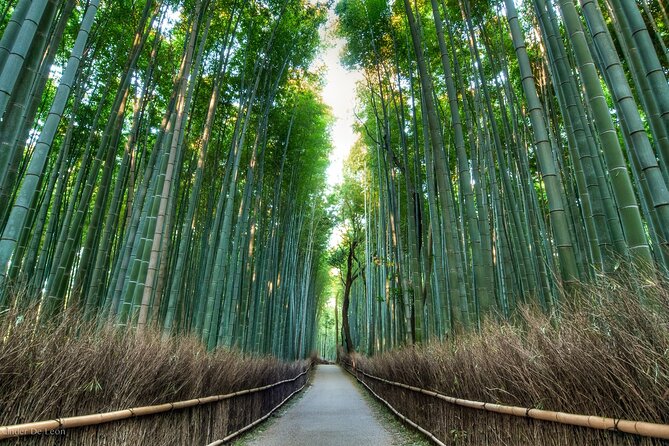
The first listed stop is Arashiyama, with about 90 minutes to explore. That is enough for a quick look at Togetsukyo Bridge and the famous bamboo paths, but not enough for a slow day in the district.
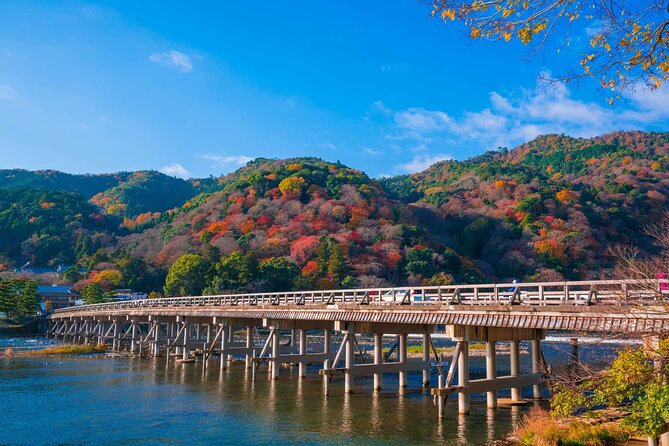
Togetsukyo Bridge gives you the classic Arashiyama view: a broad river, wooded hills, and a graceful bridge that has become one of Kyoto’s familiar scenes. The bridge itself is quick to see, so you can use the remaining time for the bamboo groves and nearby temple grounds if your route allows.
The bamboo paths are atmospheric, but they are not a private woodland walk. The lanes can feel crowded, and the most photographed stretch is fairly short. I would treat this stop as a first taste of western Kyoto rather than an attempt to see every corner of Arashiyama.
Ask your chauffeur exactly where the vehicle will leave you and where to meet afterward. That small detail matters here because the district covers several streets, and a late return can cost you time at later stops.
Kinkakuji gives you Kyoto’s postcard moment
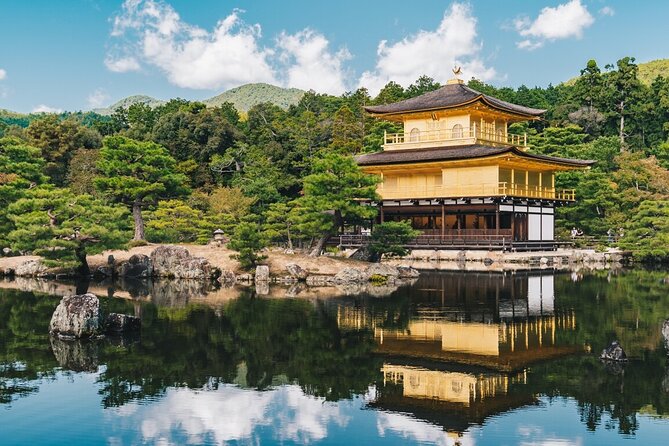
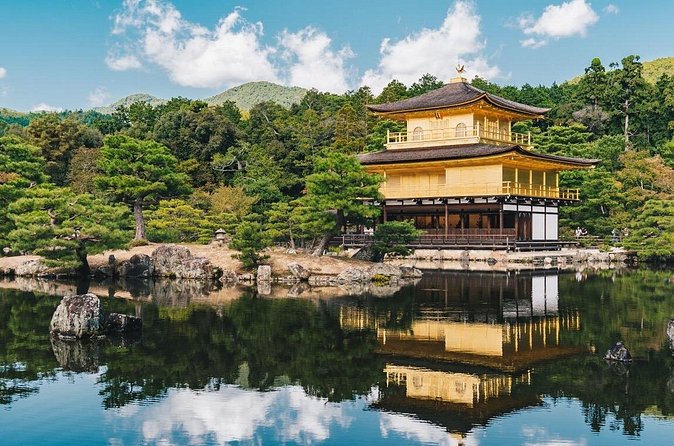
Kinkakuji, the Golden Pavilion, receives about one hour. Its gold-leaf exterior reflects in the pond, with gardens and carefully arranged views around it. The building is the visual star, but the surrounding grounds make the visit more than a quick photograph.
Admission is not included. The stated charge is ¥500 per person, so a group of five would pay ¥2,500 for this stop. You should carry enough Japanese yen for admissions and food, since the tour price covers the vehicle rather than personal spending.
One hour works well for a first visit. You can walk the main route, see the pavilion from the usual viewpoints, and continue through the gardens without turning the stop into a long temple visit. If you want detailed religious or architectural context, ask whether your chauffeur provides commentary or only an introduction at the entrance.
Gion rewards a slower walk
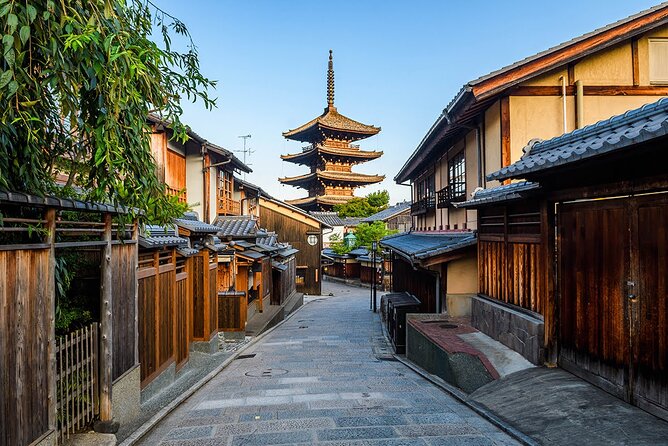
Gion receives one hour, free of admission. This is Kyoto’s traditional entertainment district, with wooden machiya houses, narrow lanes, old tea houses, and streets that preserve a more formal side of the city.
The charm here is in the details. Look at the dark wood fronts, modest signs, tiled roofs, and carefully maintained entrances. Gion is not a museum, so you are walking through a working district. Be respectful around private homes and tea houses, and do not treat geiko or maiko as performers available for photographs.
An hour lets you get a feel for the district, but it passes quickly. You may have to choose between a relaxed walk and stopping for a snack or shop. Since the vehicle cannot take you through the narrowest lanes, your chauffeur will drop you near a practical access point and arrange a meeting place.
This is also a good place to ask for help with timing. If traffic has already eaten into the day, Gion can be enjoyed with a short walk, while a temple with a fixed closing time may deserve priority.
Same base, a completely different sort of day:
- PERFECT KYOTO 1-Day Bus Tour
★ 5.0 · 13,518 reviews - Kyoto: Fushimi Inari, Kinkakuji, Bamboo Grove 1 Day Bus Tour
★ 4.8 · 4,316 reviews - Kyoto: Tea Ceremony in a Traditional Tea House in Kiyomizu
★ 4.9 · 3,519 reviews - Kyoto Geisha Walking Tour: Gion District & Hidden Gems
★ 4.7 · 3,273 reviews
Ginkakuji shows the quieter side of Kyoto
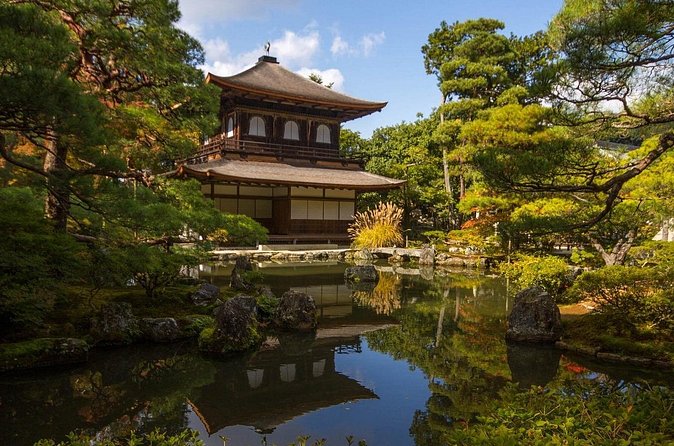
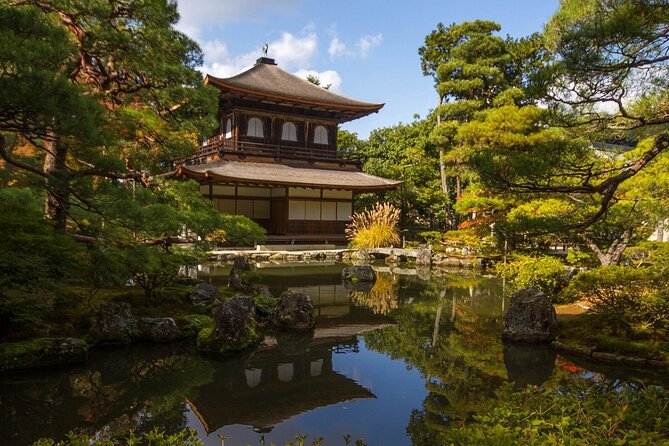
Ginkakuji, the Silver Pavilion, is another one-hour stop. Despite its name, the pavilion is not covered in silver. Its appeal comes from restrained design, mossy grounds, and the carefully shaped sand garden associated with the temple.
The contrast with Kinkakuji is part of the fun. Kinkakuji catches your eye at once. Ginkakuji asks you to notice proportion, texture, empty space, and the calm arrangement of the gardens. The visit is less about one dazzling facade and more about a measured Japanese aesthetic.
Admission is listed separately at ¥500 per person. For two paid pavilions and Nijo Castle, the total is ¥2,300 per person before meals. That amount is modest beside the overall vehicle cost, but it is worth adding to your budget in advance.
The one-hour allocation is sensible for a brisk visit. If you want to linger in the garden or walk nearby, you may need to shorten another stop. As with Kinkakuji, ask how much explanation you will receive. A chauffeur who knows the route can save time, but that does not always mean you will receive a temple tour.
Fushimi Inari brings the most memorable walk
Fushimi Inari Taisha receives about one hour and has no admission fee. The shrine is famous for its thousands of vermilion torii gates, which form corridors up the wooded slopes behind the main shrine area.
The full mountain route takes much longer than an hour. You can see the lower gates and shrine buildings in the time provided, but you should not expect to complete the entire climb. This is one of the clearest places where a private tour gives you a choice: enjoy a short sample and keep moving, or spend longer here by trimming another stop.
Fushimi Inari is dedicated to Inari, the Shinto deity linked with rice and prosperity. You will see fox figures around the shrine because foxes are regarded as Inari’s messengers. Even without a long explanation, the repeated gates create a strong visual experience.
Wear comfortable shoes. The route includes steps and slopes, and one hour can disappear quickly if you stop often for photographs. Agree on a meeting point before walking upward, especially if your group moves at different speeds.
Nishiki Market is Kyoto’s best food break
Nishiki Market receives 90 minutes and has no admission charge. Known as Kyoto’s Kitchen, the covered arcade contains more than a hundred stalls and shops selling food and local products.
This is the natural place to build in lunch or snacks, though food and drinks are not included. You might find pickles, seafood, sweets, seasonings, and other Kyoto specialties, but the exact stalls and products can change. The market is more enjoyable if you sample a few small items rather than stop for a long formal meal.
Nishiki is also a useful change of pace after several temples. Instead of quiet gardens and formal gates, you get close-up views of ingredients, shop displays, and everyday food culture. It is a place to use your senses, but keep your hands and camera under control in narrow sections.
Ninety minutes gives you time to walk a meaningful stretch and eat something. It does not allow for an unhurried inspection of every shop. If food is a major reason for booking, tell the chauffeur early so the schedule does not leave you rushing through the market.
Kyoto Imperial Palace adds a broad historical setting
The Kyoto Imperial Palace receives one hour and has no admission fee according to the supplied details. The former imperial residence sits inside a large park-like area enclosed by walls and gates.
This stop feels different from the smaller temple compounds. The scale is broad, and the grounds provide a break from crowded commercial streets. You can focus on the gates, palace buildings, open spaces, and formal design rather than expecting a compact attraction that can be seen in a few minutes.
One hour is enough for an overview, but the palace grounds can make the visit feel shorter than the walking distance suggests. Keep an eye on the meeting time. The private vehicle is useful here because it lets you arrive directly and avoid adding station transfers to an already long day.
Nijo Castle offers the day’s strongest paid history stop
Nijo Castle receives one hour, with admission listed at ¥1,300 per person. Built in the early 17th century, it is a UNESCO World Heritage Site known for its architecture and the Ninomaru Palace.
The castle gives you a different view of Kyoto from the temples and shrine. Here, the focus is on fortified gates, palace interiors, and the setting associated with Japan’s shogunal period. The Ninomaru Palace is especially important, so use your hour carefully rather than spending all your time at the entrance.
For a group of five, the listed admission would total ¥6,500. Add the ¥2,500 for Kinkakuji and ¥2,500 for Ginkakuji, and the group’s three paid admissions come to ¥11,500, or ¥2,300 each. These charges are separate from the tour price.
Nijo Castle may be the stop most likely to suffer if traffic causes delays. Decide in advance which sights are essential. The driver can help with road timing, but you should not assume every stop will receive its full hour on a busy day.
The chauffeur question matters more than the car
The experience is sold around an English-speaking chauffeur, and the strongest accounts give you useful clues about the service. Rashi was praised for arriving on time, parking, walking the group to the entrance, and offering a short overview of what to expect. Yasiru was described as respectful and easy to communicate with in English. Mike was praised for speaking very good English and answering questions during the day.
Those details show what the best version of this tour can feel like: a calm private ride, practical help at each stop, and conversation when you want it. You are not left figuring out every transfer or parking area alone.
But you need to clarify the role before booking. One experience described the service as only a driver, with little information about the sights and no clear plan. That is the central weakness of this product. If you expect a licensed cultural guide who walks through each temple with you, ask directly if that service is included or available as an extra.
I would send your must-see list before the day. Name your top three priorities, note any food interests, and ask how the route will be ordered. That simple preparation can turn a basic car service into a much more efficient day.
What the ¥500 price means for a group of five
The listed price is $500 per group of up to five people. At full capacity, that works out to $100 per person before admission fees and food. For a couple, the per-person cost is much higher, so the value improves most when you can fill the vehicle.
You are paying for private transport, not simply entry to attractions. Fuel, parking, highways, toll roads, and an air-conditioned vehicle are included. That is meaningful in Kyoto, where parking and long cross-city transfers can complicate a self-planned day.
I would compare the price with your energy level, not only with public transport fares. If you are happy managing routes and walking between stations, the car may feel expensive. If you are tired at the end of a Japan trip, traveling with children or older relatives, or trying to cover both Arashiyama and Fushimi Inari in one day, the convenience becomes easier to justify.
The 97 percent recommendation rate and 4.9 rating from 29 submitted ratings indicate a strong overall record, but the low-scoring experience points to the need for clear expectations. The driver’s English and attitude can shape the day as much as the vehicle itself.
Who should book this Kyoto day?
I would choose this tour if you want to cover many headline sights in one day and value door-to-door transport. It suits a private group that prefers its own schedule, wants to avoid repeated train and bus changes, or has limited time in Kyoto.
It is also a sensible choice at the end of a longer Japan trip. A private vehicle lets you rest between stops, and the extra time allowed for traffic provides some breathing room. You can ask for recommendations, but I would still arrive with a short priority list.
I would hesitate if your main goal is detailed temple interpretation. This is not clearly a walking tour with a dedicated guide at every site. For that purpose, book only after confirming the level of English commentary and whether the chauffeur accompanies you beyond the entrance.
Free cancellation is available until 24 hours before the start time. Changes made inside that period are not accepted, and poor weather can lead to a new date or a full refund. Most people can participate, but the supplied details do not promise special accessibility arrangements, so ask before booking if your group has specific mobility needs.
FAQ
How long does the Kyoto chauffeur tour last?
The experience lasts approximately 9 to 11 hours. About two hours of the schedule are allocated to pickup and drop-off, with the exact transfer time depending on location.
How many people can join the private tour?
Up to five people can travel together in the private group. Only your group participates in the activity.
Is pickup included?
Pickup is offered in Kyoto. Pickup from Osaka costs ¥15,000, while pickup from Kobe costs ¥25,000.
Are attraction tickets included?
No. Tickets for Kinkakuji and Ginkakuji cost ¥500 per person each, and Nijo Castle costs ¥1,300 per person. Fushimi Inari, Gion, Nishiki Market, and Kyoto Imperial Palace are listed without admission charges.
What is included in the tour price?
The price includes an air-conditioned vehicle, fuel surcharge, parking fees, highways, and toll roads. Food, drinks, and attraction admissions are not included.
Can I choose the places I visit?
Yes. You can create your own plan or ask the English-speaking chauffeur for suggestions. It is wise to provide your priority sights before the tour so the route can be organized around them.
What happens if the weather is poor?
The experience requires good weather. If it is canceled because of poor weather, you will be offered another date or a full refund. You can cancel for a full refund up to 24 hours before the start time.
Should you book this private Kyoto tour?
Book it if convenience and coverage matter more to you than the lowest possible price. The private car makes a demanding Kyoto day far less tiring, and the route brings together Arashiyama, the Golden Pavilion, Gion, Ginkakuji, Fushimi Inari, Nishiki Market, the Imperial Palace, and Nijo Castle.
Before paying, confirm two things: your pickup location and whether the chauffeur will provide real site explanations or mainly drive and assist with entrances. With that expectation settled, this can be an efficient way for a group of up to five to see a broad slice of Kyoto in one day.
Just added around Kyoto
- Kyoto: Zen Meditation at a Private Temple with a Monk★ 5.0 · 25 reviews
- Kyoto: Gion Geisha District & Sake-in-Hand Walking Tour★ 5.0 · 37 reviews
- Private Pewter Sake Cup Experience with a Kyoto Artisan★ 5.0 · 31 reviews
- Your Private Vacation Photography Session In Kyoto★ 5.0 · 110 reviews
- Private Guided Traditional Buddhist Cooking in Japan★ 5.0 · 16 reviews
- Kyoto Wagashi(Japanese sweets) Cooking Class near Fushimiinari★ 5.0 · 60 reviews
- Traditional Japanese Music show & Experience Tour in Kyoto★ 5.0 · 57 reviews
- Kyoto:Family-Friendly Kimono & Yukata Experience at WARGO★ 5.0 · 147 reviews
Kyoto Tours, compared.


Fushimi Inari, Kinkakuji, Bamboo Grove 1 Day Bus Tour
Read our review →
Tea Ceremony in a Traditional Tea House in Kiyomizu
Read our review →
Kyoto Geisha Walking Tour: Gion District & Hidden Gems
Read our review →

Gion Magical Night Walking Tour with Geisha Trivia
Read our review →

Gion Geisha District Walking Tour – Stories of Geisha
Read our review →Browse the lists this tour appears in