
Reviewed · TOKYO TOURS
Tokyo Bike Tour: Shibuya, Harajuku & Hidden Gems
Tokyo makes more sense from a bicycle seat. This three-hour ride links Shibuya Crossing, Harajuku, Aoyama, and Gaien with quiet lanes that are easy to miss on foot or from a train window. You cover a lot of ground, then stop to walk around major sights and hear the local story behind them.
I like the small group, limited to six riders, and I like the local focus. Guide Taichi, an experienced cyclist based around Shibuya, adds personal notes about cafes, restaurants, history, and city life that you will not get from simply following a map.
The catch is simple: you need to feel comfortable riding in city traffic at about 15 kilometers per hour. There are occasional narrow or crowded stretches, some uphill riding, and no place for sandals, large bags, or hesitant cyclists.
Key points to know before you ride
- Six riders maximum: The small group makes it easier to ask questions and keep the pace under control.
- A smart first-day overview: The route connects Shibuya, Harajuku, Omotesando, Aoyama, and Gaien in three hours.
- Local guide Taichi: Expect English commentary, cycling help, and practical tips about places to eat and drink.
- Famous sights plus quiet streets: You will see Shibuya Crossing and Hachikō, but also lesser-known lanes and viewpoints.
- Real city cycling: You must ride confidently, obey Japanese traffic rules, and manage a normal cycling pace.
- Flexible booking: The $63 price includes a bicycle and helmet, with free cancellation up to 24 hours before departure.
Why a bicycle works so well in western Tokyo
Shibuya and Harajuku are close on a map, but the experience changes from one block to the next. You can move from a broad avenue filled with shops to a narrow residential lane, then reach a park or cemetery without spending time underground on the train.
Walking the entire route would take far longer than three hours. Public transport would be faster for point-to-point travel, but it would also hide the small changes between neighborhoods. A bicycle gives you the middle ground: you cover distance efficiently while still seeing the streets at eye level.
This is especially useful on a first visit. The route gives you a rough mental map of several districts before you return to explore them on your own. You see where Harajuku ends, where Omotesando begins, how Aoyama differs from Shibuya, and how the open spaces around Gaien fit into central Tokyo.
The tour is not a race, but it is active. You ride at roughly 15 kilometers per hour, stop often, and walk at several major points. The short breaks help, though three hours on a bicycle still requires reasonable fitness and balance.
More Hidden Gems Walks in Tokyo
- 3h Tokyo E-Bike Tour: Hidden Gems, and Local Life with guide
★ 5.0 · 670 reviews - Tokyo: Custom Hidden Gems & Highlights Tour with Local Guide
★ 4.7 · 272 reviews - Tokyo: 3-hour Guided E-Bike Tour of the City’s Hidden Gems
★ 4.8 · 251 reviews
Meeting near Yoyogi and getting ready to ride
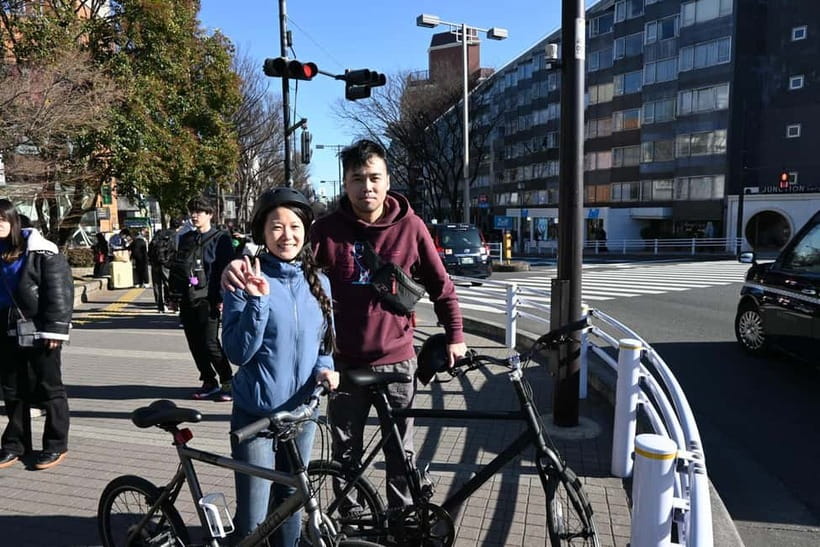
The tour begins at Umayamichi Park, at the park next to Freshness Burger. The meeting point is convenient for central Tokyo, about one minute on foot from Yoyogi Station and roughly ten minutes from Shinjuku Station.
That location matters. You do not need to cross half of Tokyo before the ride begins, and Yoyogi is a useful base if you are staying around Shinjuku. Arrive ready to ride, since the opening safety briefing lasts only about five minutes.
Your bicycle and helmet are included. Wear comfortable clothes and closed-toe shoes. Bring a drink, but leave large luggage, bulky bags, umbrellas, headphones, and loose items behind. Short skirts can be awkward on a bicycle, and sandals or open-toed shoes are not allowed.
The guide explains the basics before setting off. Pay attention to the traffic instructions, particularly if you are used to cycling in a place with different road rules. You will cross at traffic lights, ride on city streets, and sometimes pass through narrow or crowded sections.
From Yoyogi Park to the first quiet lanes
Early in the route, the group pauses at a secret stop for a scenic view. The exact nature of these private-feeling stops is part of the appeal: they are not presented as the headline sights, but they help you see how the city fits together.
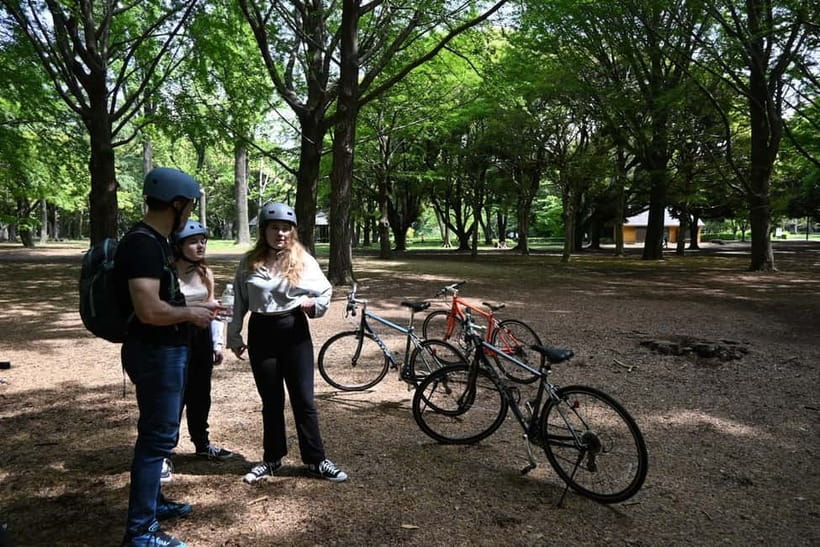
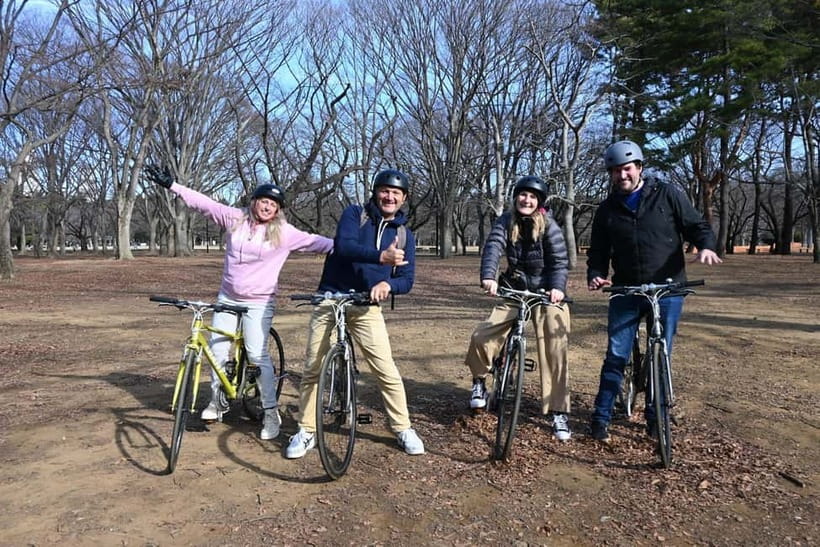
Yoyogi Park follows, with about 15 minutes for photographs and views. The park gives you a welcome change from pavement and traffic. It also helps set the tone for the ride, which shifts between well-known districts and calmer spaces.
Do not expect a long park visit. Fifteen minutes is enough for a short look and a few photographs, not a full wander through every path. If you want a leisurely picnic or an extended visit to Yoyogi Park, return later on your own.
From there, the route moves through Shibuya City. This section is less about one major stop and more about watching the city change as you ride. You get a practical sense of the district rather than simply arriving at a station and stepping into a shopping area.
Shibuya Crossing and the Hachikō stop
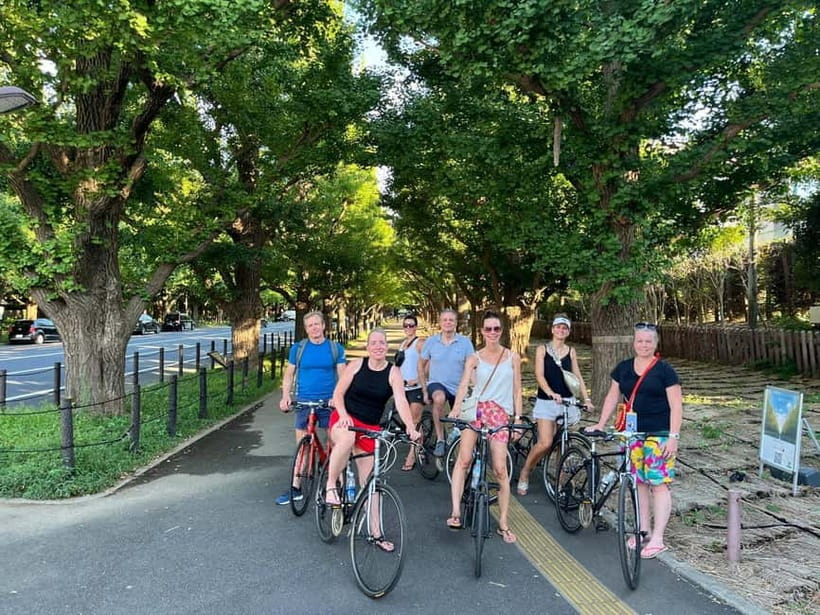
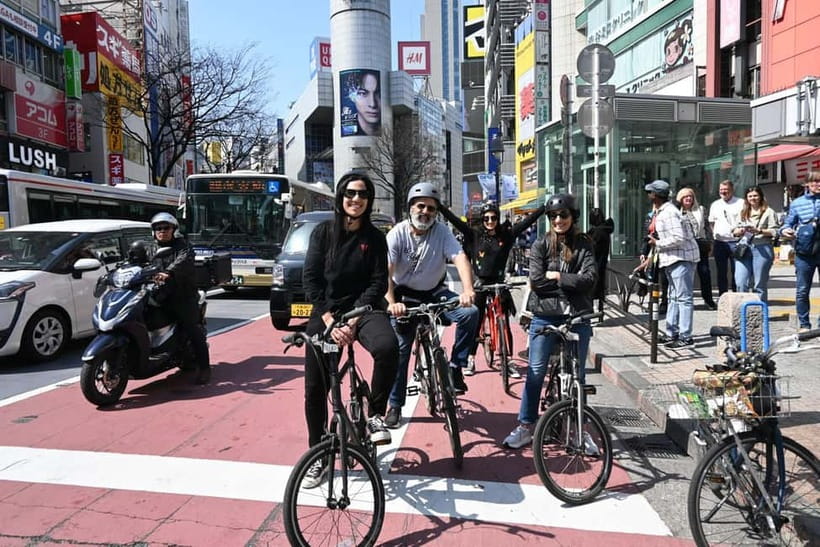
Shibuya Crossing is the tour’s most recognizable scene. You stop for a guided visit, walk around the area, and take in the famous crossing from ground level.
The stop lasts about ten minutes, so keep your expectations realistic. This is a quick introduction and photo opportunity, not a long shopping break or an in-depth visit to every viewing point. The advantage is that the tour handles the approach by bicycle, allowing you to see the district without spending the morning walking between major intersections.
The Hachikō Statue comes next, with another ten-minute stop for photographs, a short walk, and commentary. Hachikō is one of Tokyo’s best-known meeting points, and the statue gives your guide a natural opening to explain a piece of local culture and public life.
You should expect crowds around both Shibuya Crossing and Hachikō. Your bicycle makes it easier to connect these areas, but you still need to walk carefully and stay with the group once you park.
A further secret stop adds another ten minutes of photographs, walking, and explanation. These pauses are valuable because they break up the ride and give you a chance to ask questions. With no more than six people, it should be easier to hear the guide than on a large bus or mass walking tour.
More off-the-list walks in Tokyo:
- Private Mt Fuji Tour from Tokyo: Scenic BBQ and Hidden Gems
★ 5.0 · 146 reviews - Shibuya & Harajuku: Hidden Gems & Highlights Private Tour
★ 4.7 · 139 reviews - Tokyo: 3-Hour Bike or E-Bike Tour of City’s Hidden Gems
★ 4.7 · 81 reviews - Tokyo: Full Course Tour: Explore 10 Must-Sees & Hidden Gems
★ 5.0 · 35 reviews
Harajuku, Omotesando, and the contrast between them
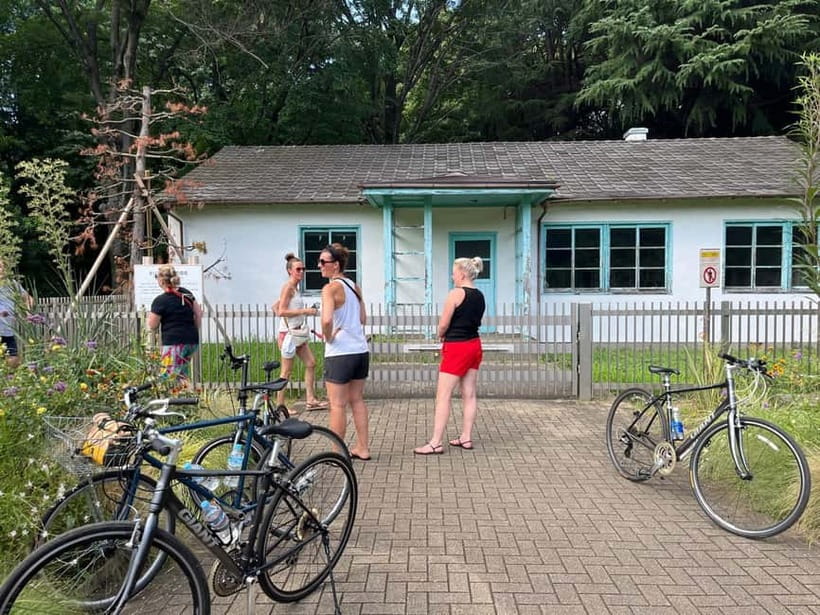
The ride continues into Harajuku for a short photo stop and scenic views. Harajuku is often treated as a single shopping zone, but cycling gives you a broader look at the area. You pass through it rather than spending the whole visit on one commercial street.
A second quiet stop follows, again giving you time for photographs and a look at a less obvious part of the neighborhood. Since these stops are not fully described in advance, you should think of them as pleasant discoveries rather than fixed attractions you can research beforehand.
Omotesando comes next. The stop lasts about five minutes, enough to look at the avenue and take photographs. This is a useful contrast with Harajuku, since the two areas sit close together but have different moods and styles.
The short timing keeps the tour moving. That is good if you want a broad first look at western Tokyo, but less ideal if your main goal is shopping, browsing boutiques, or lingering over architecture. You can mark places that interest you and return later.
Aoyama and the quieter side of central Tokyo
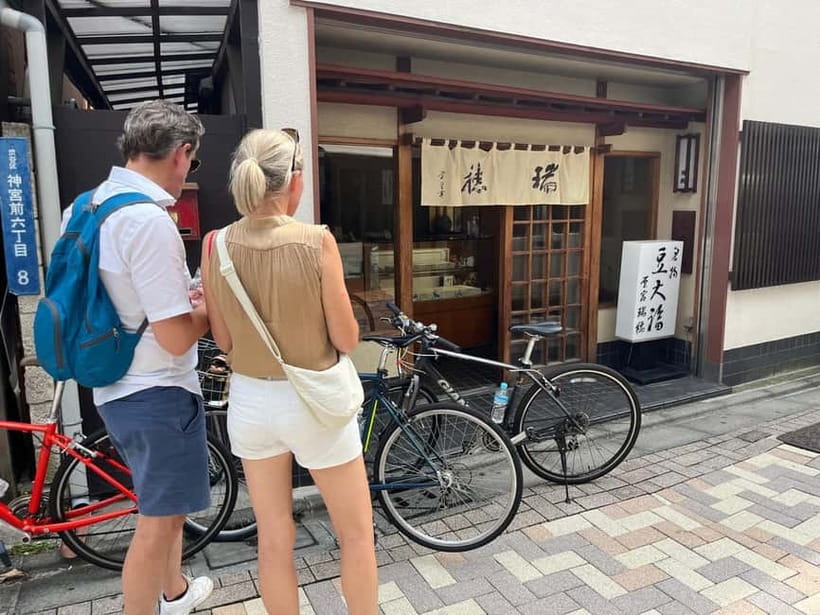
Aoyama receives a longer section, about 20 minutes of scenic riding and photographs. This is one of the tour’s more useful transitions. You leave the biggest tourist sights behind and see a district where streets, businesses, and local routes matter more than a single famous landmark.
The guide’s local knowledge is especially helpful here. Taichi can point out cafes and restaurants, answer questions about the neighborhood, and add personal observations from his life in Tokyo. That kind of advice is most useful when you are deciding where to return after the tour.
The ride then reaches Aoyama Cemetery for a 20-minute stop with walking, photographs, and guided explanation. A cemetery may sound like an unusual tourist stop, but that is precisely why it adds balance to the route. It offers open space and a quieter atmosphere after the noise of Shibuya and Harajuku.
This is also one of the longer walking portions, so it helps to wear proper shoes. You should expect a pause rather than a quick photo from the bicycle. The cemetery is not being treated as a novelty; it is part of the district’s character and gives the guide room to discuss local history and place.
Gaien Ginkgo Avenue and the National Stadium
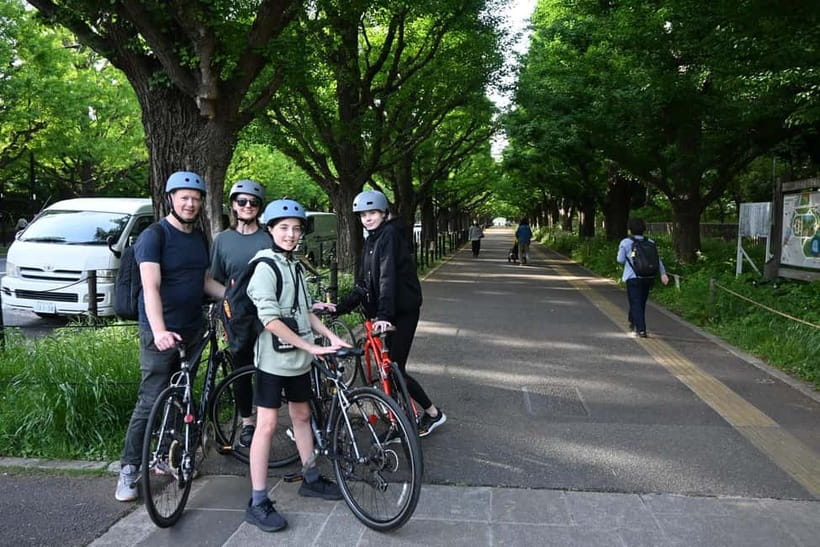
The final stretch heads through Meiji Jingu Gaien Ginkgo Avenue. The stop is brief, about five minutes, but the avenue provides another change of scenery. Depending on the season, the trees may look very different, so the visual appeal will vary with the time of year.
Japan National Stadium is the last listed photo stop, also about five minutes. You see the exterior and take photographs before returning to Umayamichi Park.
The ending is efficient rather than ceremonial. There is no long final activity, but the route closes its loop neatly and returns you to the starting point near Yoyogi. That makes it practical to continue sightseeing in Shinjuku, Harajuku, or Shibuya afterward.
What the guide adds to the experience
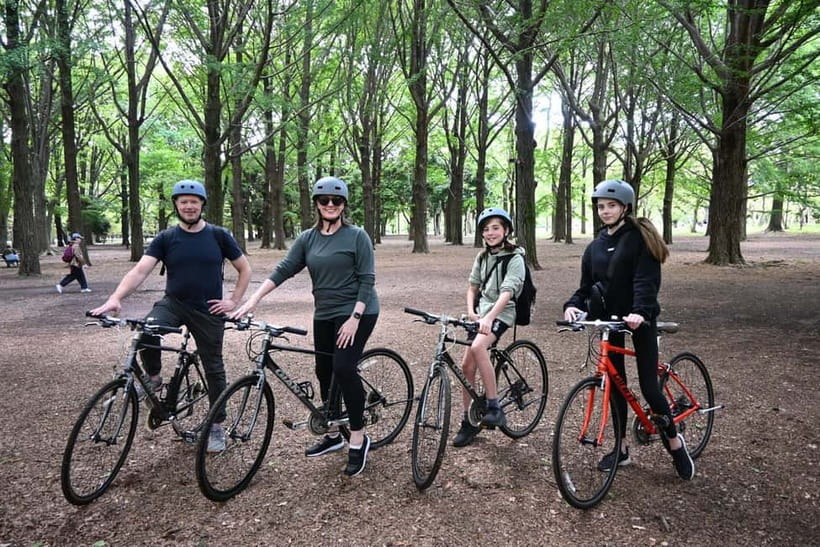
The strongest reason to choose this ride is not simply the bicycle. It is the combination of a small group and a guide who knows the streets well.
Taichi is described as an experienced cyclist and a local guide who has led this kind of route since 2018. The useful distinction is that he is not only reciting landmark facts. He can explain how to move through the districts, offer cafe and restaurant suggestions, and respond to your questions as you ride.
The English-language format makes the tour accessible to visitors who want more than a silent cycle behind a leader. The group size, capped at six, should also keep the commentary personal. You can ask why a street matters, how bicycle rules work, or where to return for food.
Safety is a major part of the guide’s role. Japanese cycling rules may differ from what you know at home, so follow the instructions closely. The guide leads you through traffic, but you remain responsible for riding attentively and staying with the group.
One useful sign of flexibility is that the guide has adjusted the experience when riders felt uneasy on city bicycles, using more walking instead. You should not assume a walking tour is guaranteed, but it suggests that the leader pays attention to comfort rather than forcing a nervous rider into traffic.
Is $63 a fair price for three hours?
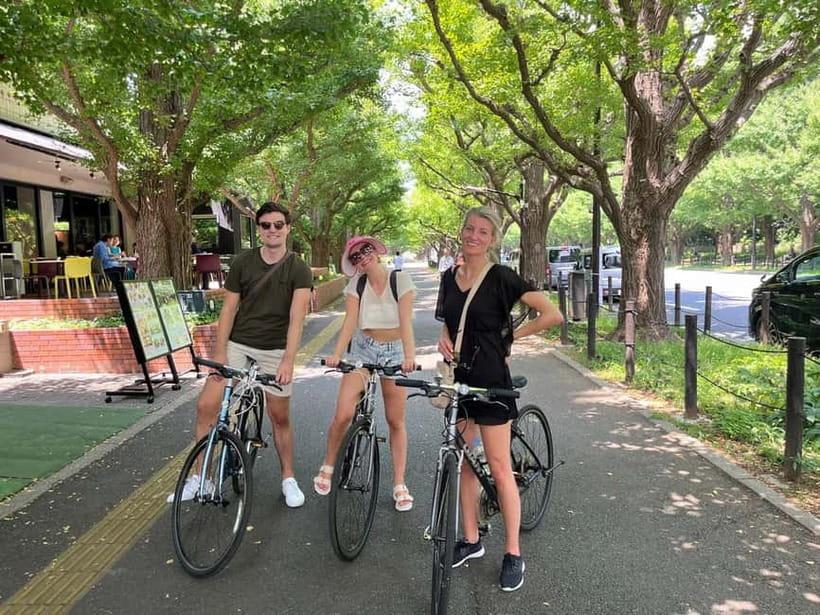
At $63 per person, the price is reasonable if you value coverage, a small group, and local guidance. The bicycle and helmet are included, and you see several major districts without paying separate transport fares between each one.
The value is strongest for a first-time visitor. In three hours, you get an orientation to Shibuya, Harajuku, Omotesando, Aoyama, and Gaien. You also receive suggestions for places to eat and drink, which can help you spend the rest of your trip more wisely.
The calculation changes if you already know these neighborhoods well or dislike organized sightseeing. You may prefer to rent a bicycle independently and set your own pace, although you would lose the guide’s route planning, traffic support, and local commentary.
This is not a bargain basement activity, but the six-person limit keeps it from feeling like a large commercial group. For many visitors, the time saved and the access to quieter streets justify the cost.
Who should book, and who should skip it?
I would choose this tour for a first visit to Tokyo, particularly if you want to understand the western central districts before exploring them in detail. It suits adults and older teenagers who can ride confidently and who enjoy a mix of landmarks, photographs, local stories, and steady movement.
It is not suitable for children under 13, pregnant women, non-cyclists, people over 75, or anyone outside the stated height range of 155 to 200 centimeters. The ride also does not suit someone who wants a slow, flat route with no traffic.
You should be able to ride for three hours with short pauses, manage a typical city pace, and cross streets at traffic lights. Some uphill sections are included, though the bicycles have working gears.
The tour runs in light rain, but sudden weather changes can lead to cancellation. Free cancellation is available up to 24 hours before departure, and you can reserve now and pay later, which helps if your Tokyo schedule is still moving around.
Final call: a strong first-day Tokyo ride
Book this tour if you want to see more than the standard Shibuya photographs and would rather understand how several neighborhoods connect. The strongest features are the six-person limit, Taichi’s local guidance, and the mix of famous sights with quieter streets.
Skip it if city cycling makes you anxious, if you need lots of time at each stop, or if you want a purely walking-based cultural tour. For a confident rider, though, $63 buys a useful three-hour introduction to a large part of Tokyo, with enough local detail to shape the rest of your visit.
FAQ
Where does the Tokyo bike tour begin?
The tour begins at Umayamichi Park, at the park next to Freshness Burger. It is about one minute on foot from Yoyogi Station and around ten minutes from Shinjuku Station.
How long does the tour last?
The cycling tour lasts three hours, including riding, short walks, photographs, scenic stops, and guided explanations.
What areas does the route cover?
The route includes Shibuya, Shibuya Crossing, Harajuku, Omotesando, Aoyama, Aoyama Cemetery, Meiji Jingu Gaien Ginkgo Avenue, and Japan National Stadium. It also includes several less-publicized stops.
Is a bicycle and helmet included?
Yes. The activity includes both a bicycle and a helmet.
How fit or experienced do I need to be?
You need to ride confidently on city streets at about 15 kilometers per hour. You will cross at traffic lights and pass through occasional narrow or crowded areas. The route can include uphill sections.
Can I cancel if my plans change?
Yes. You can cancel up to 24 hours before departure for a full refund. You can also reserve the tour and pay later.
More Bike Tours in Tokyo
- Tokyo Guided Small-Group Biking Tour
★ 5.0 · 1,250 reviews - Tokyo Great Cycling Tour
★ 5.0 · 811 reviews - Tokyo Top Highlights 3h Guided E-bike Tour
★ 5.0 · 714 reviews - Tokyo: 3-Hour Bike or E-Bike City Highlights Tour
★ 4.8 · 435 reviews
Just added around Tokyo
- Private Arrival Transfer : Narita International Airport to Central Tokyo City★ 4.5 · 12 reviews
- Narita Airport(NRT): Private Transfer to Tokyo/Yokohama 1-9pax★ 5.0 · 47 reviews
- Private Transfer from Narita Airport to Yokohama Port and City★ 4.5 · 17 reviews
- [Narita Airport Terminals 1, 2] 40-60km Sawara Itako Historic Bike Tour★ 5.0 · 13 reviews
- 3 Day Japan Highlights Tour: Tokyo, Mt.Fuji, Nara, Kyoto, Osaka★ 5.0 · 22 reviews
- Small Town in the Big City: Tasting Tokyo’s Kichijoji★ 5.0 · 195 reviews
- Small Town in the Big City: Tasting Tokyo’s Kichijoji★ 5.0 · 16 reviews
- The 10 Tastings of Tokyo With Locals: Private Street Food Tour★ 5.0 · 48 reviews
Tokyo Tours, compared.

Mt Fuji and Hakone 1-Day Bus Tour Return by Bullet Train
Read our review →

teamLab Planets TOKYO Digital Art Museum Entry Ticket
Read our review →
Mt Fuji & Hakone Cruise, Drum Show Bullet Train 1 Day from Tokyo
Read our review →
Sumo Show Experience with Chicken Hot Pot and a Photo
Read our review →
Shinjuku Food Tour (13 Dishes at 4 Local Eateries)
Read our review →
Tokyo Mt Fuji 5th St & Hakone Cruise Bus Tour w/Bullet Train
Read our review →
Flagship 2-Hours Official Street Go-Kart Tour – Tokyo Bay Shop
Read our review →Browse the lists this tour appears in