
Reviewed · TOKYO TOURS
Tokyo: Sumo Morning Practice Viewing Tour at a Real Stable
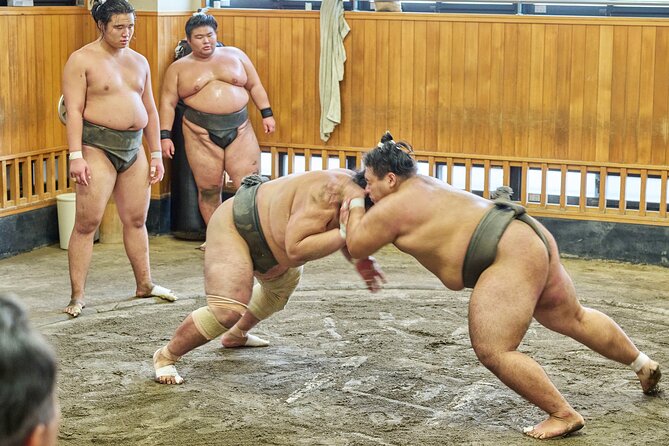
Tokyo’s sumo wrestlers train before most of the city wakes up. At this two-hour visit, you sit close to the ring and watch real practice, not a staged demonstration. You hear the slap of bodies, see the speed behind the sport, and learn why each ritual matters. Mao, Yuki, Tomo, and Kawa are among the guides who lead this experience.
I like two things here. First, the stable is a working place where wrestlers live, eat, and train, so the experience feels unusually genuine. Second, the guide’s explanation gives you a way to read what you see, from ring rules to Shinto customs. The main drawback is strict behavior: you must stay quiet, seated, modestly dressed, and remain until practice ends.
Key points to know before booking
- Real morning practice: Watch wrestlers train at a working stable rather than attend a staged tourist performance.
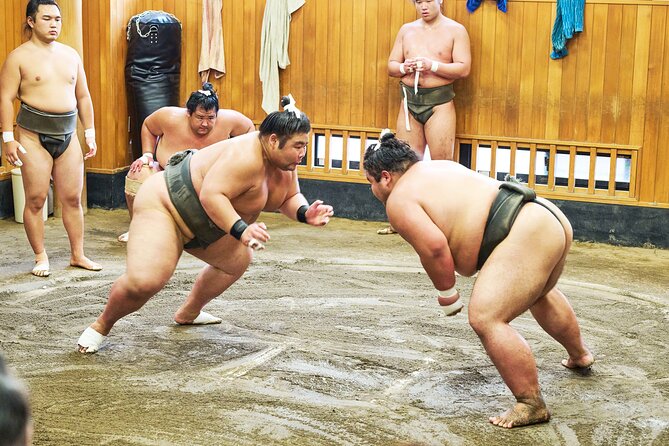
- Close view of the ring: You sit beside the practice area, close enough to hear the force of each collision.
- English explanations: Guides such as Mao and Yuki explain sumo rules, history, rituals, and daily life.
- A quiet cultural visit: Phones must be silent, movement is limited, and noise is not allowed during practice.
- Early timing matters: You must stay until the end, usually around 9:00 to 10:00 AM, and late arrival may mean no entry.
- Best for older children and adults: The activity is not suitable for anyone under 11.
Why a sumo stable is different from a tournament
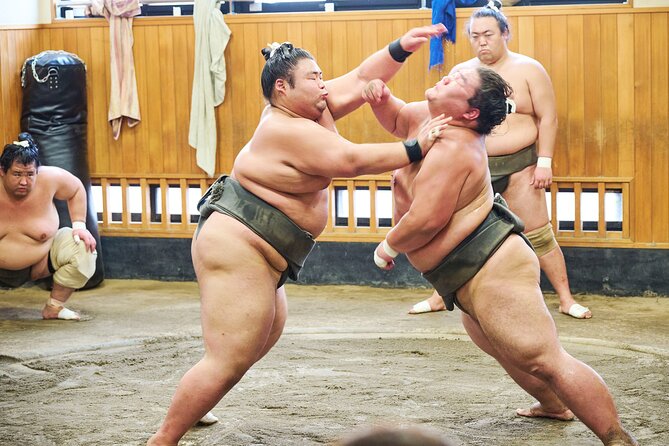
A professional sumo tournament is a public event. A stable is the wrestlers’ workplace and home base. This tour takes you behind the tournament spectacle, to the place where wrestlers repeat the same movements, build strength, and prepare for competition.
That difference matters. You are not watching a short performance designed for an audience. The wrestlers carry on with practice while you observe from the side. Their focus is on training, not entertaining you. That can make the visit feel more restrained than a typical Tokyo attraction, but it also gives the experience its value.
Sumo is often described as a form of wrestling, and the basic goal is easy to understand. A wrestler wins by forcing his opponent out of the circular ring or making any part of the opponent’s body touch the ground. The action can look simple at first. Once your guide points out the footwork, balance, force, and timing, the bouts become much easier to follow.
The sport also comes from Shinto traditions. Ritual actions in and around the ring are not decoration added for tourists. They connect the sport to religious customs and ideas of purification, respect, and sacred space. Your guide explains these elements before you enter, which helps you notice details that would otherwise pass quickly.
More Sumo Experiences in Tokyo
- Tokyo: Sumo Show Experience with Chicken Hot Pot and a Photo
★ 4.8 · 6,678 reviews - Tokyo: Sumo Show and Dining Experience
★ 4.8 · 2,742 reviews - the SUMO show
★ 5.0 · 1,960 reviews
Meeting at Kiyosumi-Shirakawa Station
The meeting point is outside Kiyosumi-Shirakawa Station at Exit A1. You can reach the station on the Toei Oedo Line or the Hanzomon Line. Look for the guide holding a Local Guide Stars sign.
This is one part of the morning where you should be conservative with time. The stable may require a train ride after the group meets, and the tour operator warns that late arrival can prevent entry. Allow at least 30 extra minutes for your route and station changes. One delayed group caused a shorter stable visit, so arriving early is not just polite. It protects your own viewing time.
Kiyosumi-Shirakawa is not the same as meeting directly outside a major tourist sight. Check your route before leaving your hotel, and do not assume a short-looking Tokyo journey will be quick. Station transfers, platform walks, and early morning train timing can all add minutes.
The full activity lasts about two hours, but the practice itself may run a little shorter or longer. If you have a flight, reservation, or other fixed appointment afterward, tell the guide in advance and plan a generous buffer.
The guide’s introduction makes the action easier to follow
Before entering the stable, your English-speaking guide explains the sport and its place in Japanese life. This introduction is not filler. Without it, you might see a sequence of stomps, slaps, crouches, and short bouts without understanding what each part means.
Mao has received particularly strong praise for clear English, careful preparation, and patient answers. Yuki is also noted for friendly, useful explanations, while Tomo is described as helpful without overwhelming the group with too much information. Kawa has guided visitors through both sumo and aspects of everyday Japanese life.
The guide covers rules, rituals, training, and the tournaments the wrestlers are working toward. You learn what a rikishi, or sumo wrestler, is trying to achieve and why the path to a top professional rank demands such total commitment.
This is also your chance to ask questions before the quiet practice begins. Once you enter, the stable’s rules become strict. A good guide prepares you so you can watch without whispering, shifting around, or pulling out your phone.
Sitting beside the ring during morning practice
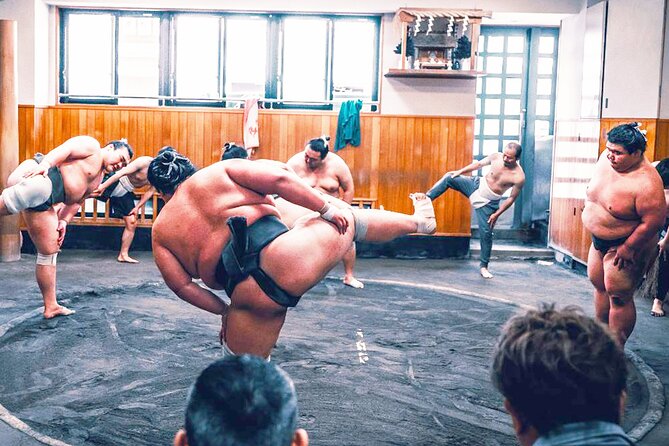
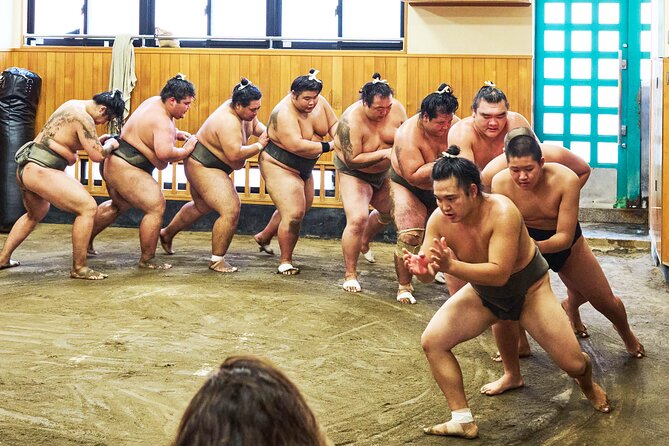
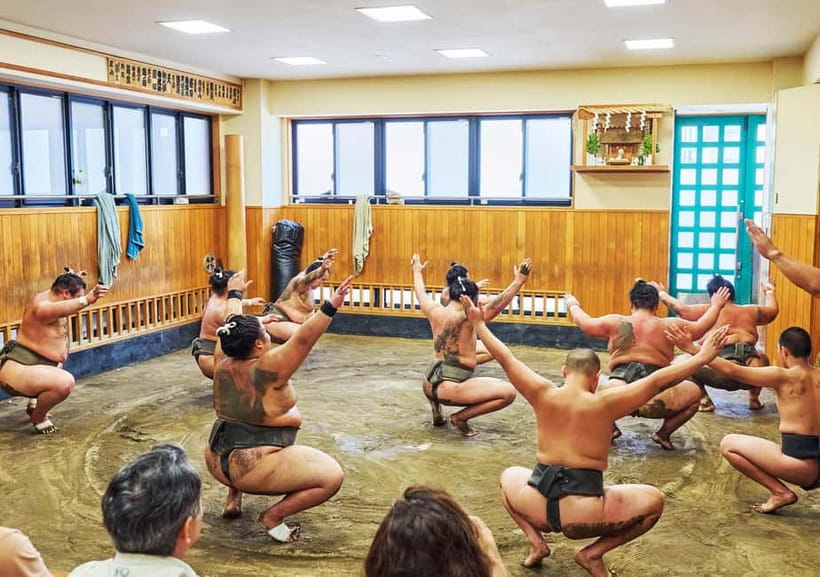
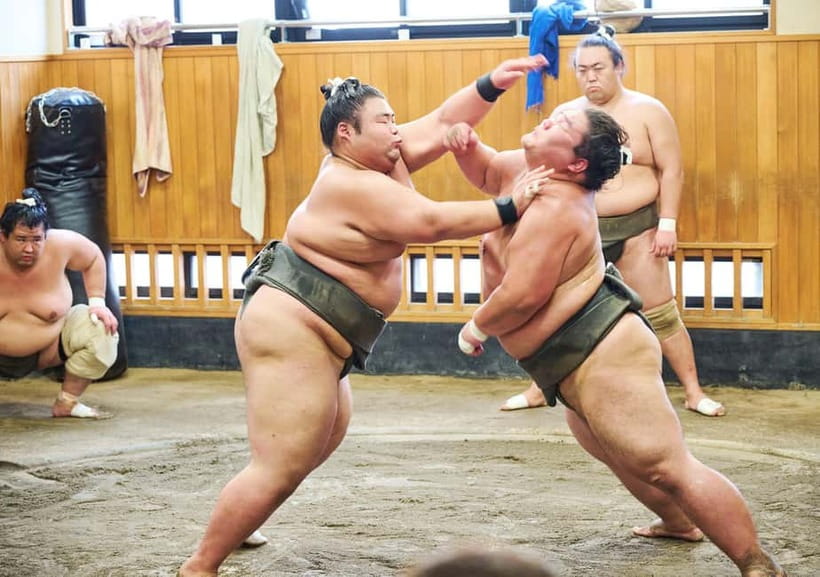
The main event is simple: you sit at the side of the ring and watch the wrestlers train. The viewing position is close, and the sound is part of the experience. You can hear flesh slap, feet stamp, and bodies collide with much more force than a television broadcast suggests.
The wrestlers do not perform for the group. They continue their normal practice and pay little attention to the people watching. That lack of interaction during training is a plus, not a flaw. It keeps the session from becoming a show.
You might see young wrestlers working toward professional ranks, along with more experienced rikishi. The group may also be fortunate enough to see a yokozuna, the highest rank in sumo, though the appearance of any particular wrestler depends on the practice schedule.
Watch the small movements as closely as the bouts. Sumo is built around balance, position, timing, and the ability to use force at exactly the right moment. A short exchange can end quickly, but the training behind it is years long.
The room is quiet apart from the practice itself. You cannot stand up or move around during the session. Keep your phone on silent, do not eat or drink except for water, and use the restroom before entering. These rules may feel demanding, but they protect the wrestlers’ concentration and preserve the stable as a place of work.
More sumo mornings and shows:
- Tokyo Shinjuku Sumo Show & Experience with Photo
★ 5.0 · 1,750 reviews - Tokyo: Sumo Show and Experience in Shinjuku
★ 4.8 · 1,001 reviews - Tokyo: Sumo Tournament Tour with Chair Seat Tickets
★ 4.6 · 753 reviews - Tokyo:Luxury Sumo Show Experience & Japanese cuisine & Drink
★ 4.7 · 577 reviews
A glimpse of the sumo lifestyle
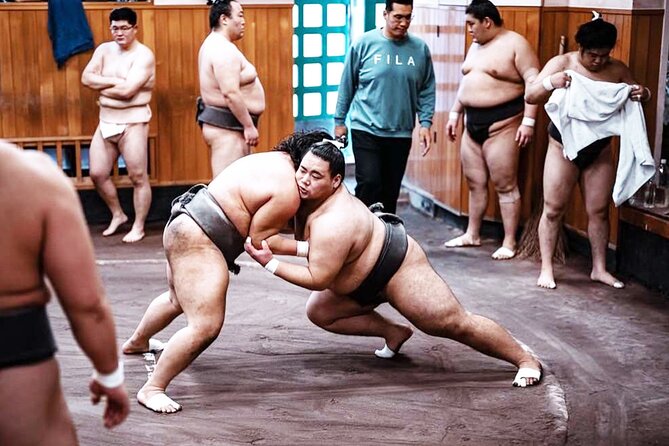
The stable is not only a gym. It is where the wrestlers live, eat, and dedicate themselves to sumo. That makes the visit more than a sports lesson. You gain a short look at a demanding way of life built around training and tournament goals.
The experience does not promise a full tour of private living areas, and you should not expect a casual open house. Instead, the value comes from seeing the practice environment and understanding how much discipline surrounds the ring.
The guide helps connect the physical work to the wider tradition. Sumo’s movements have a spiritual purpose as well as a competitive one, and the rituals give the sport a solemn rhythm. The combination of religious custom and intense athletic effort is what makes sumo different from an ordinary wrestling match.
After training, you may have an opportunity to speak with wrestlers and possibly take photographs, depending on the circumstances and stable rules. The supplied details specify that conversations take place outside training hours, so do not expect to interrupt practice for questions or pictures.
The rules that shape your morning
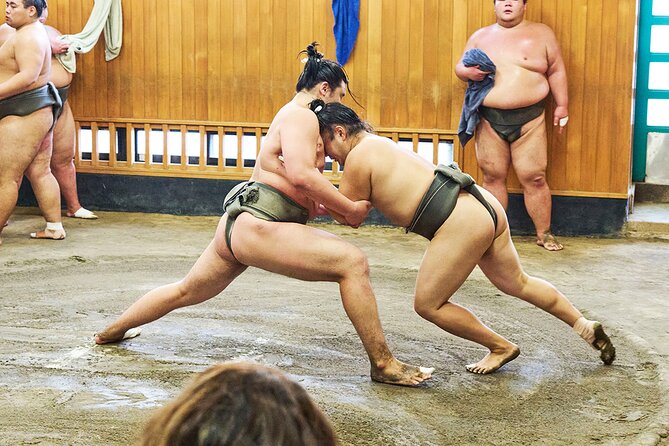
This is not a free-moving sightseeing stop. You must stay until the end of practice, usually around 9:00 to 10:00 AM. Once you leave the stable, you cannot re-enter.
Dress modestly. Keep your phone silent, remain seated, and avoid all noise. Since the stable is a workplace, the guide may need to enforce these instructions firmly. If you want a relaxed attraction where you can stand, chat, and take pictures whenever you like, choose something else in Tokyo.
The no-reentry rule makes timing important in another way. Arrive at the meeting point early, use the restroom beforehand, and bring only what you need. You are committing to the full session, not dropping in for ten minutes.
The tour is not suitable for children under 11. Older children who can remain quiet and still may find the physical action fascinating, but parents should judge their child’s patience honestly. A restless child will have a hard time here, and the stable is not the place for repeated reminders.
What the $98 price gets you
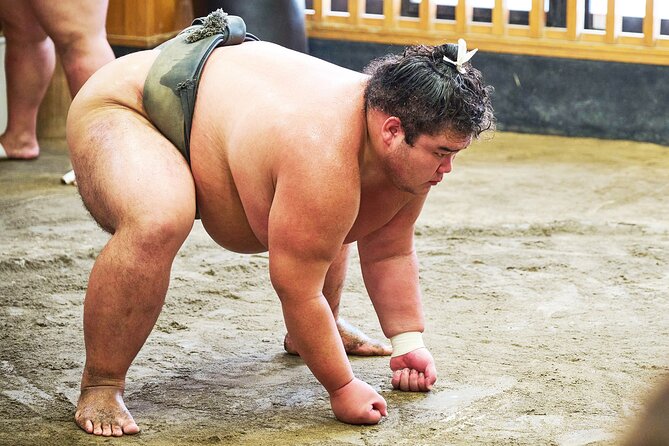
At $98 per person, this is not a budget activity. You are paying for access to a place that is normally closed to the public, an English-speaking guide, transport coordination if the group takes a train to the stable, and an explanation that gives the practice meaning.
The key value is access. A sumo stable has traditionally been open mainly to sponsors and people with a direct connection to the sport. Even many people living in Japan do not casually walk into one. For a visitor with limited time in Tokyo, that rare access can justify the price.
The two-hour length also works in your favor. You get a focused morning experience without giving up an entire day. The price is harder to justify if you are only mildly curious about sumo or dislike quiet, rule-bound visits. It makes more sense if you want an authentic cultural activity and are willing to treat the stable with respect.
Group size can vary. One session had 11 people, while another group had 14. Both are small enough for a close viewing position, but a larger group can make late arrivals and movement more disruptive. Your guide’s control and clear instructions matter here.
Free cancellation up to 24 hours ahead and reserve-now, pay-later booking give you some useful flexibility. Still, the practical issue is not the payment schedule. It is getting to Kiyosumi-Shirakawa on time.
Who will get the most from this experience
I would choose this tour if you want to understand sumo beyond costumes, tournament ceremonies, and television clips. It suits adults, older children, sports fans, photographers who can follow strict rules, and anyone interested in the connection between athletics and Shinto tradition.
It is especially good for a first visit to Japan because the guide explains both the sport and parts of Japanese life around it. You leave with more than a few dramatic images. You understand why the ring, rituals, ranking system, and training routine matter.
You may want to skip it if you need a flexible morning schedule, cannot sit quietly for an extended period, or have a hard appointment soon afterward. Practice can vary in length, and leaving early is not allowed.
Do not book this expecting a guaranteed yokozuna sighting or a long personal meeting with wrestlers. Those moments may happen, but the dependable feature is watching a genuine training session from close range.
Practical ways to make the visit better
- Check the route to Exit A1 the night before and allow at least 30 minutes of extra travel time.
- Eat breakfast before the meeting point, since food is not allowed during practice.
- Use the restroom before entering the stable.
- Wear modest clothing and comfortable clothes that allow you to sit still.
- Put your phone on silent before the session starts.
- Listen carefully to the pre-visit explanation, since the practice itself must remain quiet.
- Keep your schedule open after the tour in case the session runs longer than expected.
- Follow the guide’s instructions about photos and conversations with wrestlers.
Should you book the Tokyo sumo stable visit?
Book it if you want a close look at sumo as a serious discipline, not a tourist performance. The strongest parts are the authentic working setting, the sound and force of practice at close range, and guides such as Mao and Yuki who make the rituals and rules understandable.
The tradeoff is real. You pay $98, must arrive early, cannot make noise or move around, and must stay until practice ends. Yet those limits are also why the visit feels genuine. If you can accept the etiquette and give the morning your full attention, this is one of Tokyo’s more unusual cultural experiences. If you need freedom and convenience, spend the morning elsewhere.
FAQ
Where does the tour meet?
Meet in front of Kiyosumi-Shirakawa Station at Exit A1. The station is served by the Toei Oedo Line and the Hanzomon Line. Your guide holds a Local Guide Stars sign.
How long does the tour last?
The listed duration is two hours. The practice and tour may be a little shorter or longer than expected, so allow extra time afterward.
Is the sumo stable open to the general public?
The stable is normally closed to the public and was once mainly accessible to sponsors. This tour provides a scheduled visit to a real training stable.
Can I talk to the wrestlers?
You may have an opportunity to speak with the wrestlers outside training hours. You must not interrupt the practice session.
Can children join the activity?
The tour is not suitable for children under 11 years of age.
What happens if I leave the stable early?
You must stay until the end of practice, usually around 9:00 to 10:00 AM. Once you leave the stable, re-entry is not possible.
More Morning in Tokyo
- Tokyo: Sumo Morning Practice Viewing Tour
★ 4.8 · 570 reviews - Tokyo: Sumo Morning Training Visit
★ 4.4 · 370 reviews - Tokyo: Sumo Morning Practice Tour at Sumida City
★ 4.8 · 308 reviews - Tokyo Sumo Morning Practice Tour at Stable
★ 5.0 · 298 reviews
Just added around Tokyo
- Private Arrival Transfer : Narita International Airport to Central Tokyo City★ 4.5 · 12 reviews
- Narita Airport(NRT): Private Transfer to Tokyo/Yokohama 1-9pax★ 5.0 · 47 reviews
- Private Transfer from Narita Airport to Yokohama Port and City★ 4.5 · 17 reviews
- [Narita Airport Terminals 1, 2] 40-60km Sawara Itako Historic Bike Tour★ 5.0 · 13 reviews
- 3 Day Japan Highlights Tour: Tokyo, Mt.Fuji, Nara, Kyoto, Osaka★ 5.0 · 22 reviews
- Small Town in the Big City: Tasting Tokyo’s Kichijoji★ 5.0 · 195 reviews
- Small Town in the Big City: Tasting Tokyo’s Kichijoji★ 5.0 · 16 reviews
- The 10 Tastings of Tokyo With Locals: Private Street Food Tour★ 5.0 · 48 reviews
Tokyo Tours, compared.

Mt Fuji and Hakone 1-Day Bus Tour Return by Bullet Train
Read our review →

teamLab Planets TOKYO Digital Art Museum Entry Ticket
Read our review →
Mt Fuji & Hakone Cruise, Drum Show Bullet Train 1 Day from Tokyo
Read our review →
Sumo Show Experience with Chicken Hot Pot and a Photo
Read our review →
Shinjuku Food Tour (13 Dishes at 4 Local Eateries)
Read our review →
Tokyo Mt Fuji 5th St & Hakone Cruise Bus Tour w/Bullet Train
Read our review →
Flagship 2-Hours Official Street Go-Kart Tour – Tokyo Bay Shop
Read our review →Browse the lists this tour appears in