
Reviewed · TOKYO TOURS
Tokyo: The Best of Izakaya in Shinjuku Food & Cultural Tour
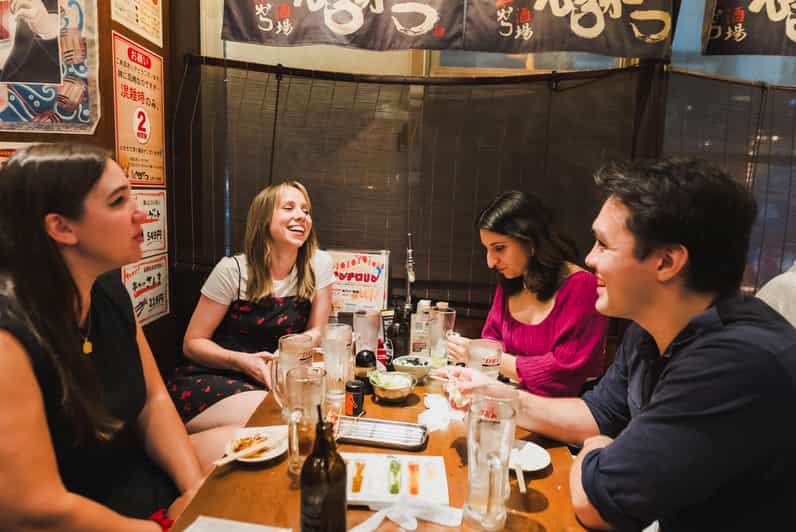
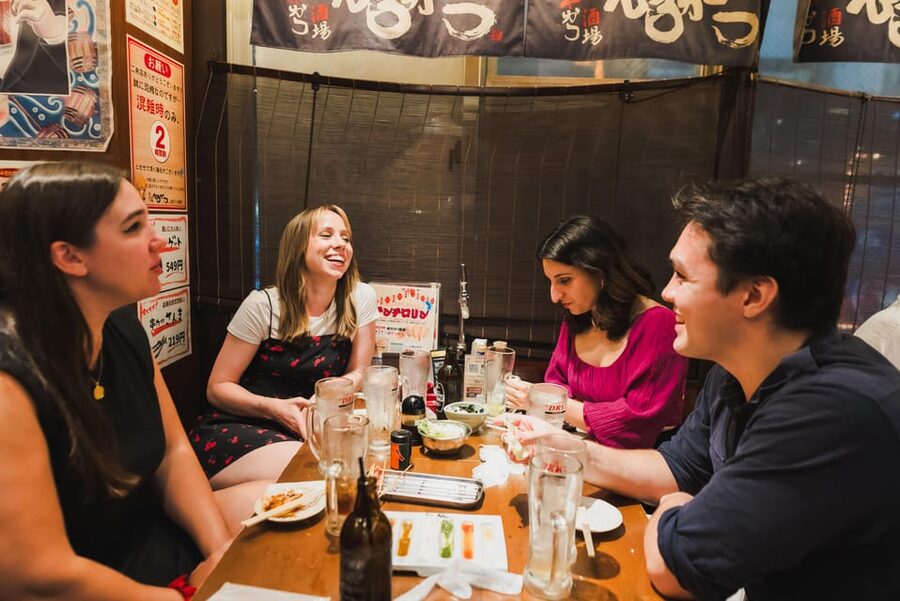
Shinjuku after dark is best understood one plate at a time. This three-and-a-half-hour food walk takes you from the neon streets of Kabukicho to narrow Golden Gai, then settles into local izakayas for enough food to replace dinner.
I like the range: chicken skewers, sashimi, dumplings, croquettes, tonkotsu, sake, and other dishes make this more than a quick tasting. I also like the small group, capped at 10, and guides such as Max, Joe, Chizuru, and Ayaka, who bring food, language, and neighborhood stories together.
The main drawback is price. At $129 per person, you pay far more than you would for a cheap Tokyo meal, so the value depends on how much you want help finding places, ordering, and understanding what is on the table.
Key points to know before you book
- 14 or more food tastings usually add up to a full dinner, not a few token bites.
- Two local restaurant stops give you different izakaya settings and styles of Japanese food.
- Golden Gai, Omoide Yokocho, and Kabukicho provide a compact look at old and modern Shinjuku.
- Two alcoholic drinks are included, with sake among the main attractions.
- Groups are limited to 10, which helps the guide explain dishes and keep the evening sociable.
- Food allergies and restrictions can be accommodated when you provide the information in advance.
Why this Shinjuku food tour works
Shinjuku can feel like several cities packed into one district. The station handles enormous crowds, department stores fill the main avenues, Kabukicho glows with signs, and tiny drinking alleys sit just a few minutes away. A first-time visitor can easily walk past the best food simply because the entrances are small, the menus may be Japanese-only, and the restaurants are often designed for regular customers.
That is where this tour earns its keep. You are not just handed a skewer and sent on your way. The guide leads you through the area, explains what you are seeing, and then orders a spread of dishes at places you may not have found quickly on your own.
The experience begins at 17:00 and finishes around 20:30, although the activity is also described as lasting three hours. Plan for roughly three to three-and-a-half hours. The walking portion takes about 40 to 50 minutes, followed by most of the evening at food stops.
The tone is social rather than formal. Guides including Hawaii Joe, Max, Nobu, Chizuru, Megan, Julian, Ayaka, and Taiga have been praised for keeping groups talking and helping solo participants feel included. Since the guide can change, book this for the food and format first, not for one particular person.
More Bar Hopping Tours in Tokyo
- Tokyo Bar Hopping Tour in Shinjuku (All-You-Can-Drink + Dinner)
★ 5.0 · 3,587 reviews - Best of Shinjuku: Izakaya Food Tour (4 Stops, 14+ Tastings)
★ 5.0 · 1,863 reviews - Tokyo: Shinjuku Local Bar and Izakaya Guided Walking Tour
★ 4.9 · 1,794 reviews
Starting at Kirin City Shinjukuhigashi
Meet in front of Kirin City Shinjukuhigashi, a beer hall in the Shinjuku area. Look for a guide carrying a Ninja Bowl logo tote bag. This is a useful detail because Shinjuku has many signs, exits, and busy corners, and the station area can be confusing when you are trying to find a group at the appointed time.
The tour does not include transportation. You need to make your own way to the meeting point and from the final address after the evening ends. Since the route involves walking through central Shinjuku, wear shoes that handle pavement comfortably.
The first part helps you get your bearings. Instead of heading straight into a restaurant, you spend time walking through the surrounding streets and learning how the district shifts from commercial Tokyo to small-scale nightlife.
Golden Gai, tiny bars and postwar Tokyo
Golden Gai is one of the most memorable parts of the route. Its lanes are narrow, its buildings are compact, and its tiny bars are stacked closely together. The area has an unusual, almost improvised look that contrasts sharply with Shinjuku’s giant signs and polished shopping streets.
You spend about 30 minutes here. The guide gives you context about the district and points out details that are easy to miss when walking alone. The value is not that you enter every bar. Instead, you get a short, guided look at a preserved piece of Shinjuku nightlife.
Golden Gai can also be visually crowded and physically tight. If you prefer broad streets and quiet sightseeing, this portion may feel cramped. For most people, though, the contrast is the point: within minutes, you move from Tokyo’s high-rise energy into lanes lined with very small drinking rooms.
The walk also gives you a chance to ask basic questions before the food begins. Guides have explained Japanese phrases, customs, and the proper way to enjoy sake, making the evening easier for anyone who has not eaten at an izakaya before.
The main meal, two izakayas and 14-plus dishes
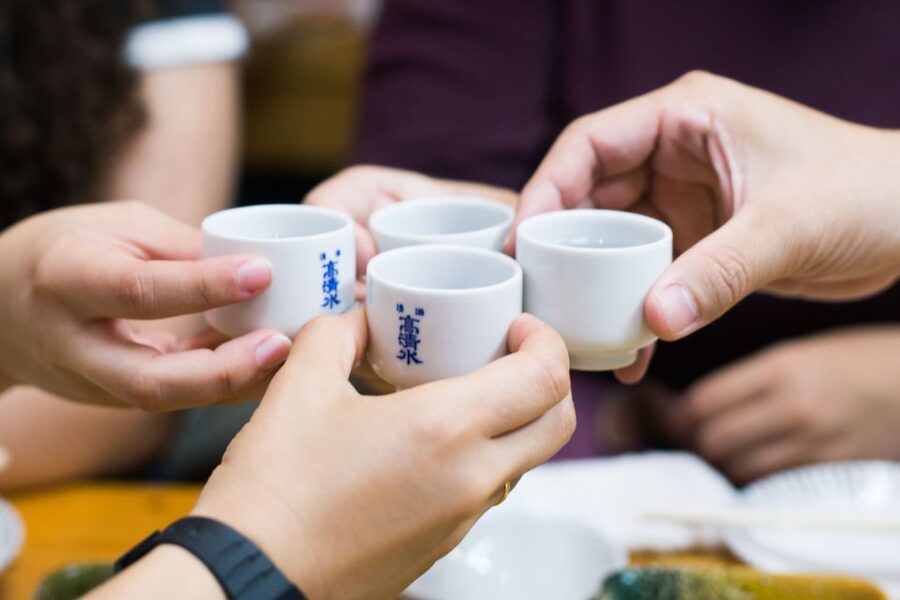
The heart of the experience is about two and a half hours of eating in Shinjuku. You visit two popular local restaurants, although the exact venues and menu can change with the day’s ingredients. That flexibility matters in Japan, where fresh seafood and seasonal produce can shape the menu.
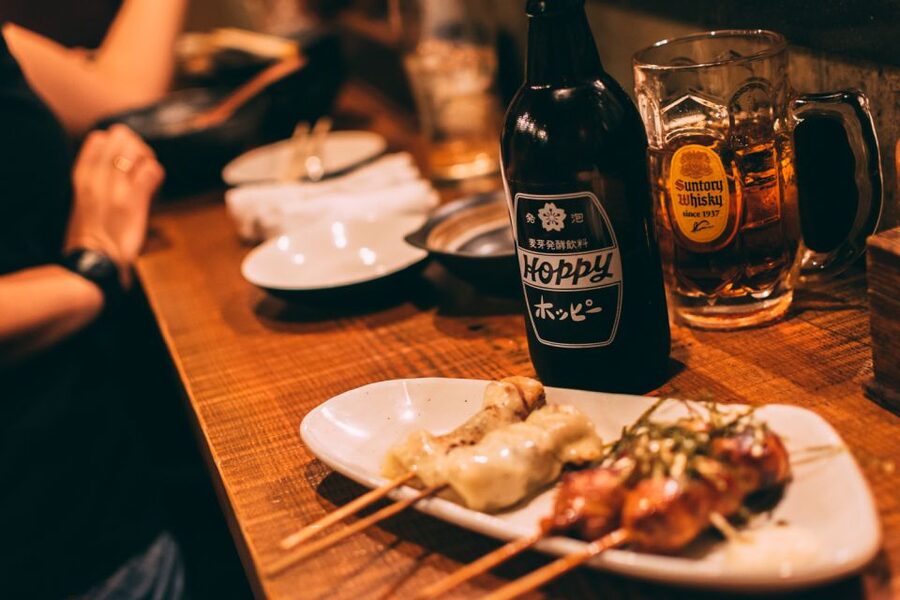
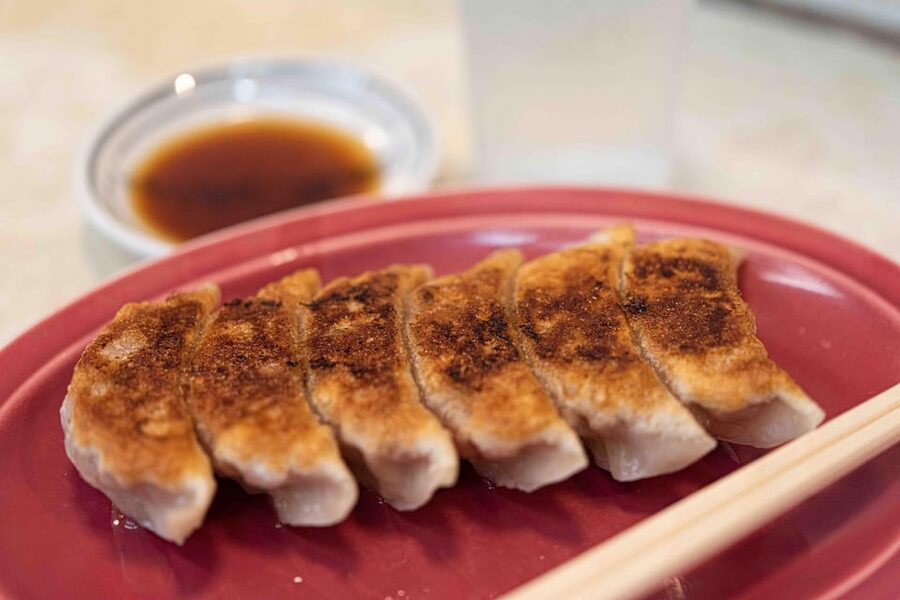
Expect a broad selection rather than one long dinner built around a single dish. Typical tastings include:
- Chicken skewers
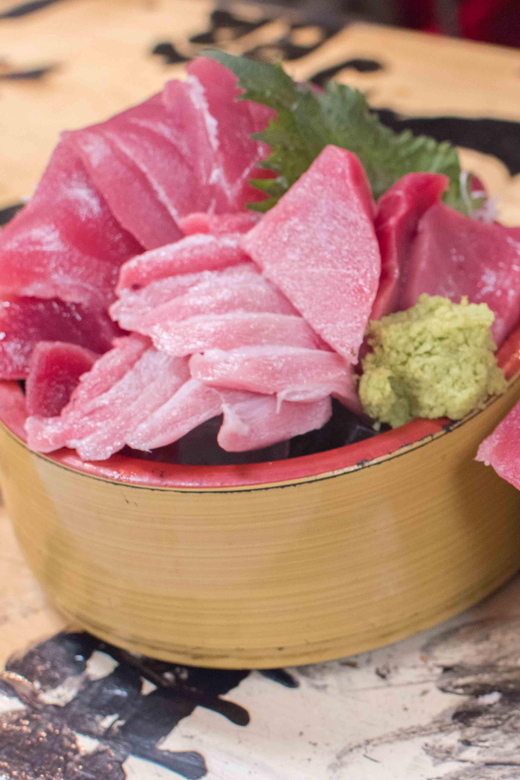
- Fresh sashimi
- Handmade Japanese croquettes
- Dumplings
- Tonkotsu
- Traditional izakaya snacks
- Lemon sorbet or another small dessert
- Japanese sake and other drink choices
The tour promises 14 or more food samples, and the portions are often much larger than the word tasting suggests. Several people have found the meal filling enough to count as dinner, with some saying they could not finish every serving.
That is excellent news if you arrive hungry. It is less useful if you have already eaten a large meal. I would plan this as your dinner and keep lunch moderate, especially if you want to try every dish.
The variety also helps you make sense of izakaya dining. An izakaya is not simply a Japanese pub with one specialty. It is a place to order several dishes for the table, share food, drink, and linger. This tour lets you sample that pattern without having to decode a menu while standing outside an unfamiliar restaurant.
More izakaya nights in Tokyo:
- Shibuya Meltdown Nightlife Tour: All-You-Can-Drink Bar Hopping
★ 5.0 · 1,058 reviews - Tokyo: Shinjuku Local Bar & Izakaya Crawl Tour
★ 5.0 · 890 reviews - Tokyo: Shinjuku Bar Hopping with All-You-Can-Drink & Dinner
★ 4.9 · 440 reviews - Shibuya: Local Bar & Izakaya Crawl
★ 4.9 · 354 reviews
Sashimi, skewers and the changing menu
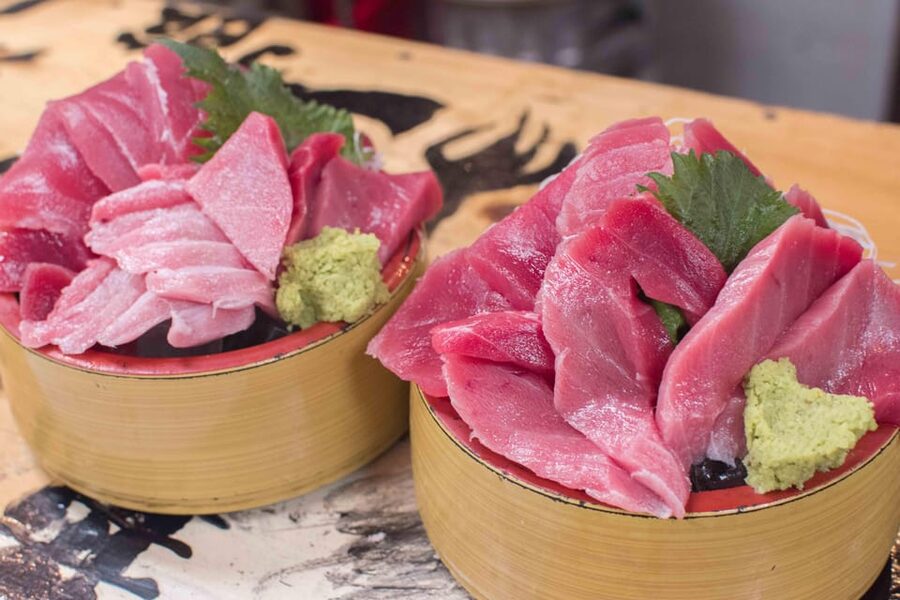
Fresh sashimi is one of the strongest parts of the food lineup. The menu changes with available ingredients, so the exact fish is not fixed. That means you should not book expecting a particular type of seafood, but it also means the meal is not locked into a standard list prepared long in advance.
Chicken skewers offer a different experience. They are simple in appearance but show how an izakaya can turn grilled food into a social meal. Croquettes and dumplings add crisp or savory textures, while tonkotsu brings a fuller, more substantial flavor.
Guides explain the dishes as they arrive. This is especially useful when you are trying something unfamiliar or deciding how much sauce, seasoning, or accompaniment to use. Several guides have also helped with pronunciation, which gives you a few practical words to carry into the rest of your Japan trip.
Do not expect the tour to function like a cooking class. You are learning through eating, conversation, and local context rather than hands-on preparation. The focus is on choosing and enjoying food in the setting where local diners eat it.
Sake and the drinking culture
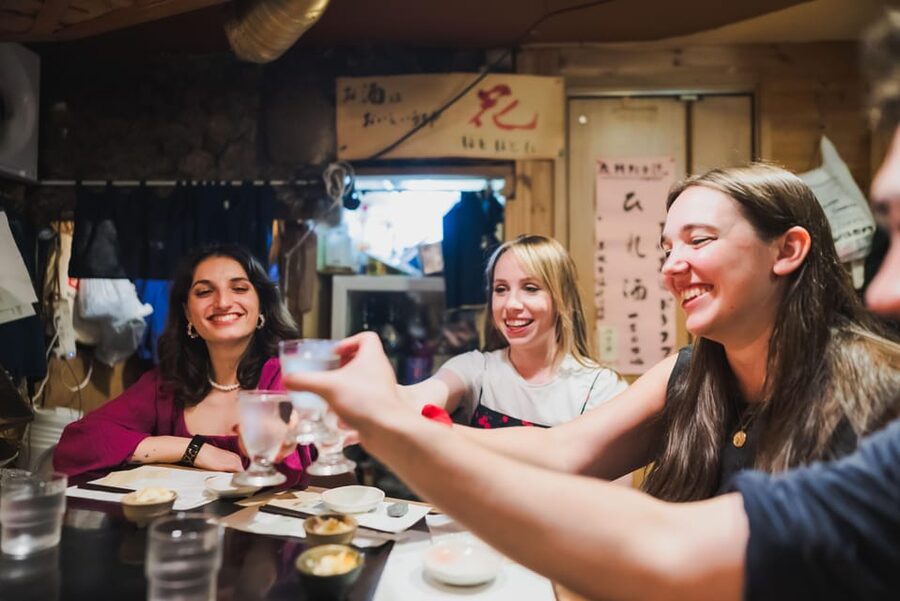
Two alcoholic drinks are included, and sake is a major reason to consider this tour. You may taste a smooth sake that is difficult to find in your home country, along with other drink choices at the first stop.
The guide can explain how to approach sake and how drinking fits into Japanese food culture. That is more helpful than simply being given a glass, particularly if your only previous experience has been with one familiar brand outside Japan.
The beverage selection is not limited to people who already know what they like. You can ask for guidance, and the group format makes it easy to compare impressions without turning the evening into a formal tasting seminar.
Non-drinkers are welcome. You can skip the alcohol and still receive more than 10 food samples and the izakaya experience. This makes the tour workable for mixed groups, though the atmosphere naturally includes discussion of drinking customs.
Omoide Yokocho and old-style Shinjuku
Omoide Yokocho is another short sightseeing stop, listed at about 15 minutes. Its compact lanes and small restaurants offer a second look at the older side of Shinjuku, distinct from the tall buildings and wide roads near the station.
The stop is brief, so think of it as part of the neighborhood walk rather than a full historical visit. You will have enough time to see the area, take in its character, and hear the guide’s explanation before moving on.
This is one reason the tour works well early in a Tokyo visit. You get practical orientation to a district that you can revisit later. One useful pattern from the evening is to note the places that catch your eye, then return when you have more time.
Kabukicho after dark
Kabukicho brings the route back into Shinjuku’s modern nightlife center. The area is famous for its neon, entertainment venues, restaurants, and dense foot traffic. The guide helps you read the district rather than simply walk through it.
The listed visit lasts about 30 minutes. You are not booking a nightlife show or a bar crawl. The focus is on seeing the area, understanding its place in Tokyo, and reaching the food stops through streets that can be hard to interpret on your own.
The atmosphere can be loud and crowded, especially around the main roads. Keep track of the group and listen carefully for meeting instructions. The small-group format helps, but Shinjuku is still Shinjuku: bright signs, many exits, and plenty of distractions.
A guide-led evening, not just a restaurant crawl
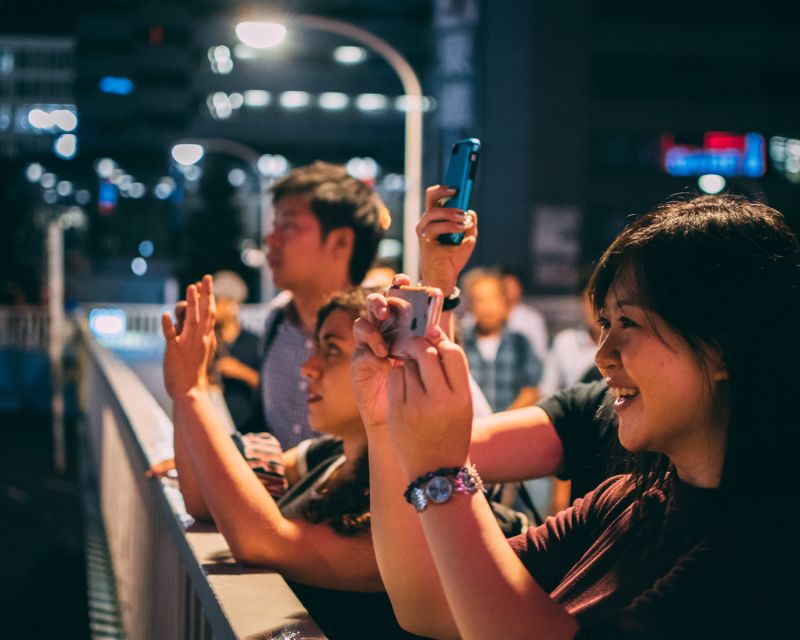
The guide is central to the experience. Food alone can be found cheaply in Tokyo, but a guide removes several small obstacles. You do not need to guess which doorway is the right one, translate every dish, or work out how several unfamiliar plates fit together.
Guides such as Max have been praised for passion and clear explanations. Joe has combined food knowledge with stories about architecture and the neighborhood. Chizuru has focused on food customs and Japanese culture, while Ayaka has taken groups away from the main roads to places they might otherwise miss.
Nobu has helped groups relax with language tips and an outgoing style. Julian has also been praised for making solo participants feel welcome and for offering suggestions beyond the route. These details matter because a food tour can feel stiff if the guide only recites facts. Here, the strongest guide experiences appear to combine explanation with easy conversation.
The small group limit of 10 is a real advantage. You can hear the guide, ask questions, and share plates without being lost in a large crowd. It is also a good setup for solo visitors who want company without committing to a private tour.
What $129 buys you
At $129, this is not the budget way to eat in Tokyo. You can certainly find inexpensive meals around Shinjuku, and a person who already feels comfortable ordering Japanese food may prefer to spend the money at one or two restaurants of their own choice.
The price becomes easier to justify if you value the full package. You receive a guide, meals, two alcoholic drinks, neighborhood walking, explanations of food and culture, and access to places selected for the group. The quantity also matters. This is not a tour built around tiny decorative samples. The food often adds up to a full dinner.
You are also paying for time saved. Finding several suitable izakayas, checking menus, handling dietary needs, and ordering a varied meal can take effort, especially on a first visit. If you want a ready-made introduction to Shinjuku dining, the fee is reasonable for a guided evening, though it remains a splurge.
One fair criticism is that Tokyo food can be cheap enough to make the price feel high. If your main goal is simply to eat a lot for less money, skip the tour and choose a local restaurant yourself. If your goal is to understand the area while trying many dishes without guesswork, the calculation changes.
Food restrictions, timing and group fit
Food requests can be accommodated based on allergies and restrictions. Give the operator the details when booking, and remind the guide at the start. The menu changes with fresh ingredients, so do not assume every dish can be replaced in the same way.
The evening starts at 17:00, a useful time for an early dinner in Tokyo. It ends around 20:30 at an address in western Shinjuku. Check the route from your hotel before booking, and allow time to reach the meeting point in front of Kirin City Shinjukuhigashi.
This tour suits first-time visitors, food-focused couples, small groups of friends, and solo visitors who want a social evening. It is also helpful for anyone nervous about entering small Japanese restaurants alone.
It may be less suitable if you dislike seafood, do not want a large dinner, prefer a private experience, or want a tightly fixed menu. The exact dishes depend on the day’s ingredients, and the route includes walking through crowded nightlife areas.
The tour is conducted in English with a live guide. You can cancel up to 24 hours before the start for a full refund, and you can reserve now and pay later. Those policies are useful when your Tokyo schedule is still shifting.
Should you book this Shinjuku food tour?
Book it if you want an easy, social introduction to izakaya dining and Shinjuku nightlife. The strongest reasons are the generous amount of food, the two restaurant settings, the sake, and the chance to see Golden Gai, Omoide Yokocho, and Kabukicho with someone who can explain what you are seeing.
I would especially recommend booking it near the start of your Tokyo stay. You can use the guide’s food and neighborhood suggestions for later meals, and you will leave with a better sense of how to order and where to look.
Skip it if you are watching your budget closely or already have a confident plan for eating around Shinjuku. At $129, the tour is about access, context, and convenience, not bargain dining. For many people, the full meal and lively guide make that worthwhile. Just arrive hungry, wear comfortable shoes, and save room for sake.
FAQ
Where does the tour begin?
Meet in front of Kirin City Shinjukuhigashi, a beer hall in Shinjuku. Look for a guide carrying a Ninja Bowl logo tote bag.
Where does the tour finish?
The tour finishes at Japan, 〒160-0023 Tokyo, Shinjuku City, Nishishinjuku, 7-chōme-7-26, Wakōre Shinjuku Daiichi Building.
How long does the experience last?
The tour runs from about 17:00 to 20:30, or roughly three to three-and-a-half hours. The walking portion lasts around 40 to 50 minutes.
How many dishes are included?
You receive 14 or more Japanese food tastings. The menu can include chicken skewers, sashimi, handmade croquettes, dumplings, tonkotsu, and other izakaya dishes.
Are drinks included?
Yes. The price includes two alcoholic drinks of your choice. Sake is among the drinks you may try.
Can I join if I do not drink alcohol?
Yes. Non-drinkers can skip the alcohol and still receive more than 10 food samples and the izakaya experience.
Can food allergies or dietary restrictions be accommodated?
Food requests can be accommodated based on allergies and restrictions. Provide your requirements when arranging the tour.
What language is the tour offered in?
The live tour guide conducts the experience in English.
How large is the group?
The tour is limited to 10 participants, making it a small-group experience.
Is transportation included?
No. Transportation is not included, so you are responsible for reaching the meeting point and leaving the final location.
More Food Tours in Tokyo
- Tokyo: Shinjuku Food Tour (13 Dishes at 4 Local Eateries)
★ 5.0 · 6,603 reviews - Tokyo Tsukiji Fish Market Food and Culture Walking Tour
★ 5.0 · 3,184 reviews - Tokyo: Shinjuku Food Tour (15 Dishes and 4 Eateries)
★ 4.9 · 2,033 reviews - Tokyo: Tsukiji Fish Market Food and Walking tour
★ 5.0 · 1,724 reviews
More Drinks-Led Nights in Tokyo
- Tokyo: Pub Crawl and Bar Tour
★ 4.5 · 951 reviews - Ramen and Sushi Cooking Class with Sake Pairing Set in Tokyo
★ 5.0 · 291 reviews - Sake Tasting Masterclass in Shinjuku (8+ Varieties with a Pro)
★ 5.0 · 271 reviews - Sake Omakase in Tokyo: Guided Tasting by Certified Sommeliers
★ 5.0 · 239 reviews
Just added around Tokyo
- Private Arrival Transfer : Narita International Airport to Central Tokyo City★ 4.5 · 12 reviews
- Narita Airport(NRT): Private Transfer to Tokyo/Yokohama 1-9pax★ 5.0 · 47 reviews
- Private Transfer from Narita Airport to Yokohama Port and City★ 4.5 · 17 reviews
- [Narita Airport Terminals 1, 2] 40-60km Sawara Itako Historic Bike Tour★ 5.0 · 13 reviews
- 3 Day Japan Highlights Tour: Tokyo, Mt.Fuji, Nara, Kyoto, Osaka★ 5.0 · 22 reviews
- Small Town in the Big City: Tasting Tokyo’s Kichijoji★ 5.0 · 195 reviews
- Small Town in the Big City: Tasting Tokyo’s Kichijoji★ 5.0 · 16 reviews
- The 10 Tastings of Tokyo With Locals: Private Street Food Tour★ 5.0 · 48 reviews
Tokyo Tours, compared.

Mt Fuji and Hakone 1-Day Bus Tour Return by Bullet Train
Read our review →
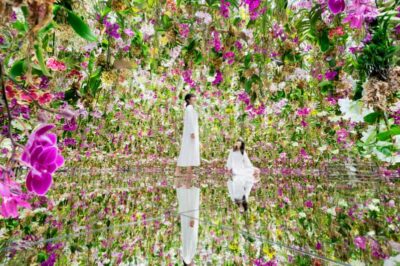
teamLab Planets TOKYO Digital Art Museum Entry Ticket
Read our review →
Mt Fuji & Hakone Cruise, Drum Show Bullet Train 1 Day from Tokyo
Read our review →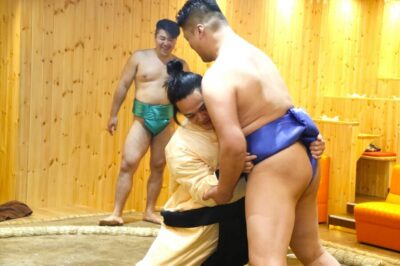
Sumo Show Experience with Chicken Hot Pot and a Photo
Read our review →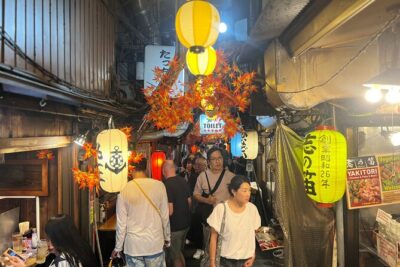
Shinjuku Food Tour (13 Dishes at 4 Local Eateries)
Read our review →
Tokyo Mt Fuji 5th St & Hakone Cruise Bus Tour w/Bullet Train
Read our review →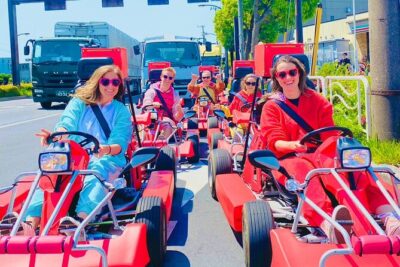
Flagship 2-Hours Official Street Go-Kart Tour – Tokyo Bay Shop
Read our review →Browse the lists this tour appears in