
Reviewed · KYOTO TOURS
2 Types of Japanese Sweets making and Tea Ceremony
This Kyoto workshop turns familiar tea-house treats into something you can make with your own hands. You shape wasanbon ohigashi, create two seasonal nerikiri sweets from Kyoto bean paste, then prepare matcha in a casual tea setting. I like the unusual three-part format and the use of single-origin matcha. The main thing to consider is that this is a guided cultural class, not a full formal tea ceremony.
I also like the $28 price for 125 minutes of hands-on work, especially since you make three sweets in total. Maiko has been attentive and informative, and English explanations have been provided clearly in some sessions. Still, the room can feel classroom-like if other participants are noisy, and the English support is not guaranteed in the same way at every session.
Key points to know before booking
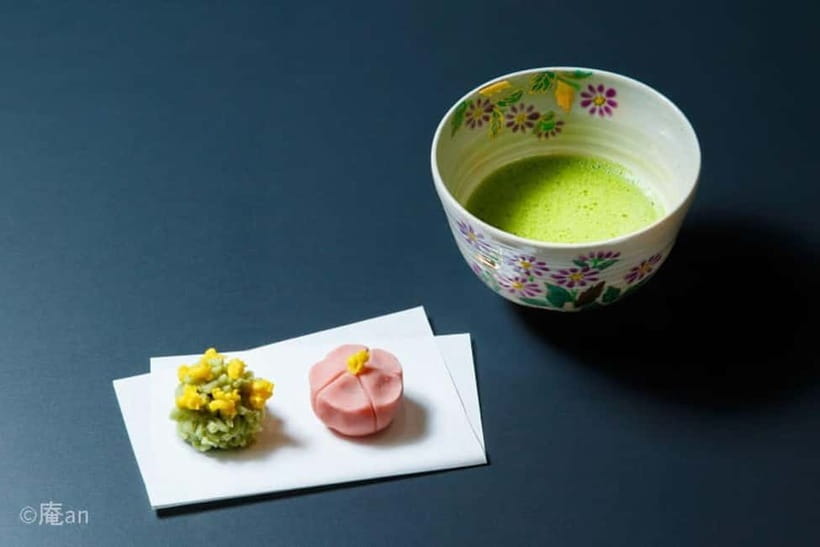
- Three food-and-tea activities: Make wasanbon ohigashi, two seasonal nerikiri sweets, and your own matcha.
- Kyoto-sourced ingredients: The white and red bean pastes come from long-established Kyoto shops.
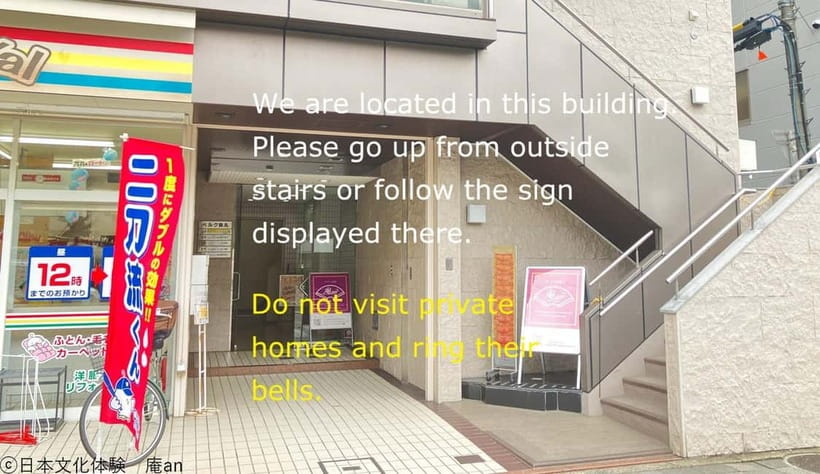
- A good Gojo location: The venue is one minute from Exit 1 of Gojo Station, with the entrance facing Gojo-dori.
- Casual rather than formal tea: You learn about tea, watch matcha grinding, and prepare a cup yourself.
- English help is available: The instructor is Japanese, and translation is provided as much as possible.
- Allow the full 125 minutes: The schedule includes making, short breaks, tea instruction, photographs, and time to eat and drink.
Three Japanese traditions in one 125-minute workshop
The clever part of this activity is its mix. Many Japanese food classes focus on one recipe, while this program gives you three related ways to understand Japanese sweets and tea.
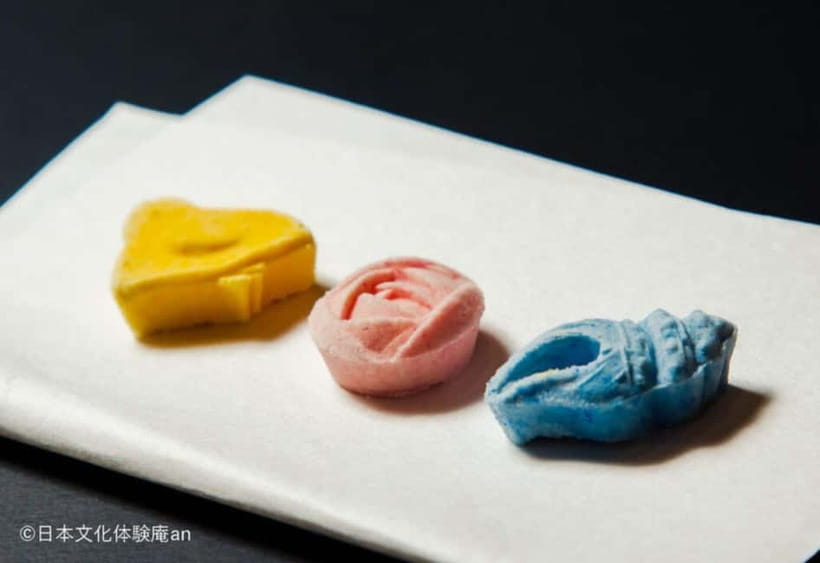
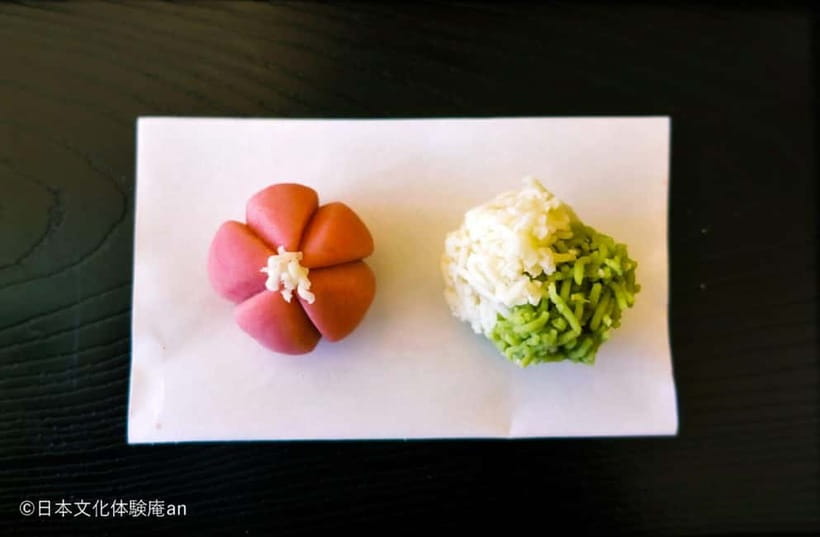
You begin with ohigashi, a dry sweet made from wasanbon, a refined traditional Japanese sugar. You then make two different nerikiri sweets, one flower-shaped and one kinton-style. Finally, you move from sweets to tea and prepare your own matcha.
That sequence makes sense. Ohigashi introduces the precision of molded sweets. Nerikiri gives you a softer bean-paste mixture and a seasonal design. Matcha brings the parts together, since Japanese sweets are traditionally served to balance the tea’s bitter edge.
I would not book this expecting a silent, highly formal tea ceremony in a historic tearoom. The session is designed to be approachable. You receive explanations, watch demonstrations, make your own tea, and take part in a relaxed ceremony experience. For most people, that is a useful first step into the subject. For someone seeking a strict, ceremonial performance, it may feel too informal.
More Tea Ceremonies in Kyoto
- Kyoto: Tea Ceremony in a Traditional Tea House in Kiyomizu
★ 4.9 · 3,519 reviews - Kyoto: Tea Ceremony Ju-An at Jotokuji Temple
★ 4.9 · 3,207 reviews - Kyoto: 45-Minute Tea Ceremony Lesson Experience
★ 4.3 · 2,378 reviews
Getting to the Gojo venue from Kyoto Station
The meeting point is particularly handy if you are using Kyoto’s subway. The venue is one minute from Exit 1 of Gojo Station on the Karasuma Line, and the entrance faces the main street, Gojo-dori.
That location matters because you do not need to build a long trip around the class. You can fit it between sightseeing stops in central Kyoto, though you should still arrive early. The organizer will not hold the session for late arrivals, and a missed start can be costly.
Use the supplied map link when you book, and look for the entrance facing Gojo-dori rather than relying only on the station name. The building has no elevator, and you need to use stairs to reach the venue. The activity is marked as wheelchair accessible, but the stair information is important, so contact the provider before booking if you need step-free access.
The operation hours are 10:00 to 17:00. Reservations received after 17:00 are handled the next day, so do not expect an evening response from the operator.
Ohigashi and the careful work of wasanbon
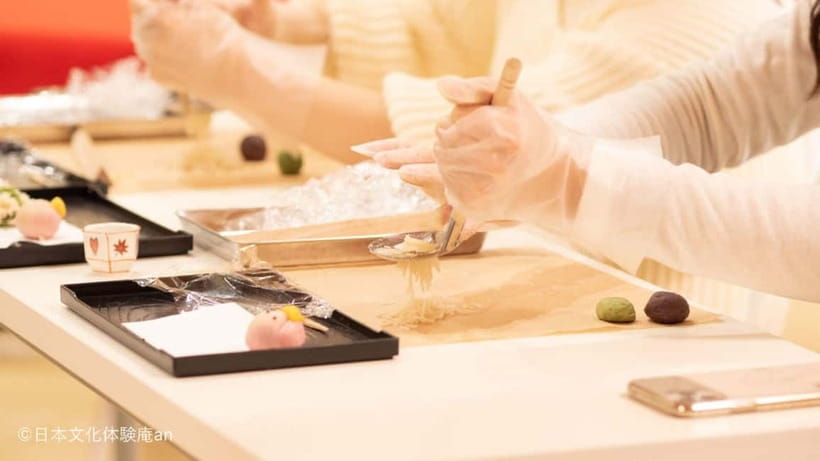
The first hands-on section is ohigashi making. These are dry Japanese sweets formed from wasanbon, a traditional Japanese sugar prized for its fine texture and clean sweetness.
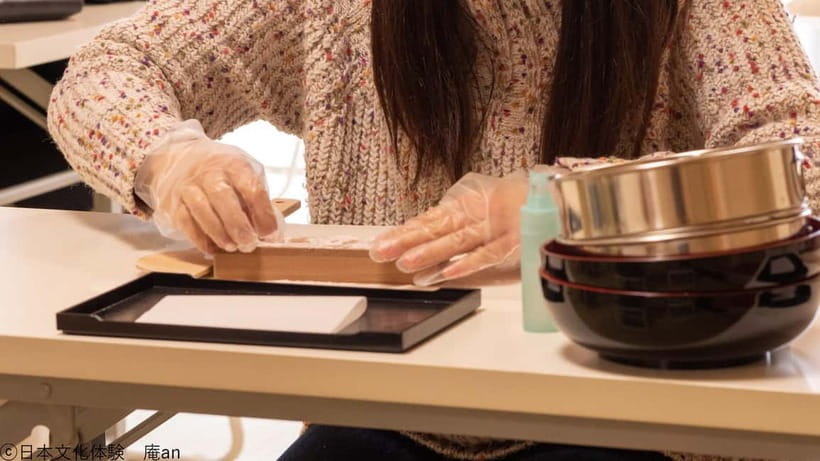
This is a small but useful introduction to the discipline behind Japanese confectionery. The work is not simply about making something sweet. Shape, pressure, and presentation matter, and a dry sweet needs to look neat because it is often served alongside tea.
You receive an explanation of traditional Japanese sweets before starting. That context helps you understand why the activity begins with a dry confection instead of jumping straight to the more colorful nerikiri.
One practical point: adding color costs an extra 200 JPY. If you want the full visual effect, budget for that small supplement. If you prefer to keep the cost down, the basic experience still includes the three main activities.
The ohigashi section is scheduled to take about 20 minutes before a break. That makes it manageable for children and first-time participants, though very young children may need close help with the fine shaping work.
Making two seasonal nerikiri sweets
After the first break, you make two nerikiri sweets. Nerikiri is a soft Japanese confection made with bean paste, and its designs often reflect flowers, plants, or other seasonal images.
Here, one sweet has a flower shape. The second is a kinton nerikiri, a style with a more delicate, textured appearance. Making both gives you a useful contrast. You are not repeating the same task twice, and the changing shapes show how one basic sweet mixture can become different seasonal designs.
The white and red bean pastes used in the class come from long-established Kyoto shops. That is one of the better details of the program. Bean paste is central to many Japanese sweets, and the ingredient itself does much of the work. You can see why the quality and texture of the paste matter when you shape it.
I like this part best for anyone interested in Japanese design. The sweets are edible, but they are also small seasonal objects. You are making food that reflects the time of year, not just following a generic dessert recipe.
The schedule places another break after the nerikiri session, with tea instruction beginning around the 95-minute mark. The breaks prevent the class from becoming one long stretch of careful handwork. They also give you time to look at what you made before moving on.
A take-out box costs an additional 100 JPY. That is worth considering if you want to carry the sweets away instead of eating them during the session. A completion certificate is also available for 300 JPY, but it is optional and adds little practical value unless you enjoy collecting mementos.
Same base, a completely different sort of day:
- PERFECT KYOTO 1-Day Bus Tour
★ 5.0 · 13,518 reviews - Kyoto: Fushimi Inari, Kinkakuji, Bamboo Grove 1 Day Bus Tour
★ 4.8 · 4,316 reviews - Kyoto Geisha Walking Tour: Gion District & Hidden Gems
★ 4.7 · 3,273 reviews - Kyoto: Gion Magical Night Walking Tour with Geisha Trivia
★ 4.9 · 2,393 reviews
Matcha preparation and a relaxed tea experience
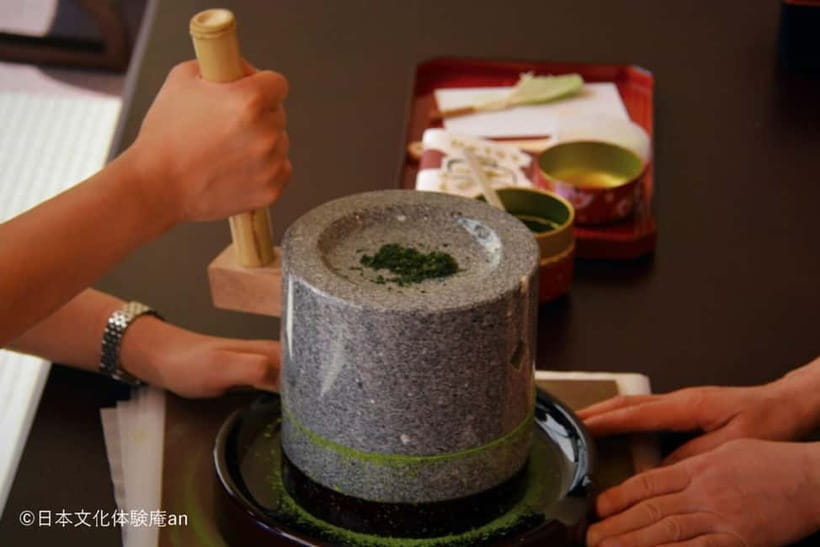
The tea section begins with an explanation of tea, followed by a matcha grinding demonstration. You then prepare your own matcha and take part in the tea ceremony experience.
The use of single-origin special matcha gives this part more substance than simply mixing green powder with hot water. You get a chance to pay attention to the ingredient and to see how matcha fits with Japanese sweets.
The wording around the ceremony is important. This is a casual introduction rather than a full formal tea ceremony. You make a cup yourself and learn how the tea is handled, but the session may feel more like an informative demonstration and workshop than a traditional ceremony conducted entirely by a tea master.
That difference should not put you off if your goal is to understand the basics. Preparing matcha yourself is more memorable than only watching someone else do it. It also gives you a better sense of the connection between bitter tea, sweet bean paste, and careful presentation.
A picture period follows the tea activity. The session ends at about 115 minutes, followed by eating and drinking time. The room departure is scheduled for the 125-minute mark, so you should not plan a tight connection immediately afterward.
How much English help can you expect?
The instructor language is Japanese, but English translation is provided as much as possible. The experience may work well for you if you are comfortable following demonstrations and asking simple questions.
Maiko received specific praise for being attentive and informative, and one participant found her English good. Another session included English translation throughout, which made the sweet-making easy to follow.
At the same time, the organizer does not promise full English instruction for every session. Contact the provider in advance if clear English guidance is essential to your enjoyment. This is especially sensible if you have dietary, mobility, or other practical questions.
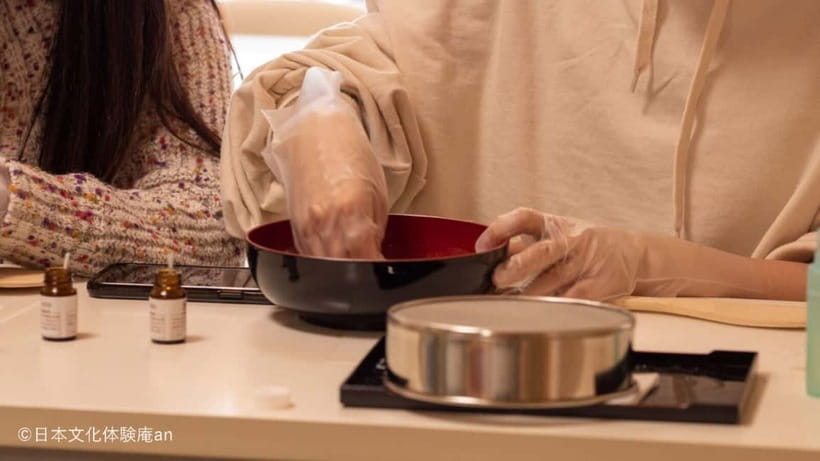
The class depends partly on watching the instructor’s hands. Even without perfect language coverage, the demonstrations should give you a visual guide to the process. Still, this is not the place to assume that every explanation will be translated word for word.
The room atmosphere and what can affect your visit
The quality of the session can depend on the people sharing the room. A noisy group can make it harder to hear explanations and can reduce the calm feeling you might expect from a tea-based activity.
One participant found the setting clinical and classroom-like rather than intimate. That is a fair caution. You are attending a structured workshop with a timed program, not entering a private tea room for a quiet conversation.
I would frame the atmosphere this way: the class offers access and value, but not necessarily solitude. If you enjoy learning by demonstration and do not mind a group setting, the room format should be fine. If you want a hushed, highly personal cultural encounter, you may find it less satisfying.
The instructor’s attitude helps. Maiko was described as attentive and informative, and another participant found the instructor friendly and enthusiastic. Those qualities matter in a hands-on class because a small shaping mistake is easier to fix when the teacher is watching and encouraging.
You should also arrive ready to participate. People who do not take part in the experience cannot enter, and the provider will not delay the program for late arrivals.
Is $28 good value in Kyoto?
At $28 per person, this is a strong-value activity if you want more than a short demonstration. You receive 125 minutes of instruction and hands-on work across sweets and tea, rather than paying for a single tasting.
The value is strongest when you count the three distinct tasks. You make one ohigashi sweet, two nerikiri sweets, and a cup of matcha. You also receive explanations about traditional sweets, see a matcha grinding demonstration, and have time to eat and drink at the end.
The base price does not include every extra. Adding color costs 200 JPY, a sweets box costs 100 JPY, and a completion certificate costs 300 JPY. These are modest charges, but you should know about them before you arrive.
I would skip the certificate unless you specifically want one. The color option may be worthwhile if appearance matters to you, while the take-out box is useful only if you want to save the sweets for later.
Compared with a standard sightseeing stop, the workshop gives you a skill and a cultural explanation. Compared with a highly formal tea ceremony, it is less ceremonial but also less intimidating and less expensive. That balance makes it a sensible choice for a first introduction.
Who will enjoy this class most?
I would recommend it to you if you enjoy food, design, and short cultural activities that do not require a full day. It suits couples, families with older children, and solo visitors who want a structured way to learn about Japanese sweets.
It is also a good rainy-day plan in Kyoto. The venue is close to a subway station, and the program keeps you indoors while still giving you something active to do.
Families should note that children under two who sit on a parent’s lap are free. The activity still involves careful handwork and listening, so the best fit depends on the child’s ability to stay involved during demonstrations.
You may want a different experience if your main goal is a formal tea ceremony, a private session, or guaranteed fluent English. The class is casual and practical, with an educational room setup rather than a secluded traditional setting.
The current rating is 4.6 from 17 ratings, which fits the overall picture: strong value and friendly instruction, with some limits around atmosphere and the depth of the tea ceremony.
Booking details that matter
Free cancellation is available up to 24 hours in advance for a full refund. After that point, cancellation fees apply, and changing the date or time after a fee has been incurred can bring another specified charge.
Do not count on reimbursement for transportation costs if you cancel. Also remember that cancellation timing after 17:00 is treated as the next day for processing purposes.
Reserve ahead if you need English assistance, want to ask about step-free access, or hope to arrange the venue for a particular group. The provider asks you to contact them if you would like to reserve the property.
Because the session runs on a fixed timetable, arrive with enough time to find the entrance and climb the stairs. The program will not wait for a delayed subway ride or a slow arrival.
Should you book the Japanese sweets and tea workshop?
Book it if you want a reasonably priced, hands-on Kyoto activity with three clear parts: wasanbon ohigashi, two seasonal nerikiri sweets, and matcha. The Kyoto bean paste, single-origin tea, and central Gojo location add real value.
Go in with the right expectations. You are joining a casual class, not a full formal tea ceremony. English help is available but may vary, and a noisy group can affect the mood.
For a first look at Japanese confectionery and tea, I think the balance is good. Choose it for participation, clear structure, and value. Skip it if you need a private, silent setting or guaranteed full English instruction.
FAQ
Where is the Japanese sweets and tea experience located?
The venue is one minute on foot from Exit 1 of Gojo Station on Kyoto’s Subway Karasuma Line. The entrance faces Gojo-dori.
How long does the activity last?
The full program lasts 125 minutes, including the making sessions, breaks, tea instruction, picture time, and eating and drinking time.
What sweets will I make?
You will make wasanbon ohigashi, a flower-shaped nerikiri, and a kinton nerikiri. The two nerikiri sweets match the season.
Is matcha included?
Yes. You will watch a matcha grinding demonstration, learn about tea, make your own matcha, and take part in a casual tea ceremony experience.
Is this a formal Japanese tea ceremony?
The activity is described as a casual tea experience. You make your own cup of matcha and receive explanations, but it may not match the format of a full formal tea ceremony.
Is English instruction available?
The instructor language is Japanese, and English translation is provided as much as possible. Contact the provider before booking if you need specific English assistance.
Are extra costs required?
The main three-part experience is included. Adding color costs 200 JPY, a sweets take-out box costs 100 JPY, and an experience completion certificate costs 300 JPY.
Is the venue wheelchair accessible?
The activity is listed as wheelchair accessible, but the building has no elevator and stairs are required to reach each venue. Contact the provider before booking to discuss your needs.
What is the cancellation policy?
You can cancel up to 24 hours in advance for a full refund. Cancellation fees apply after that point, and reservations or cancellation requests received after 17:00 are processed the next day.
More Dessert Tours in Kyoto
- Kyoto: Japanese Traditional Sweets Making and Tea Ceremony
★ 4.4 · 314 reviews - Kyoto Wagashi(Japanese sweets) Cooking Class near Fushimiinari
★ 5.0 · 60 reviews - Kyoto: Wagashi (Japanese sweets) Cooking near Fushimiinari
★ 5.0 · 40 reviews - Kyoto: Traditional Tea Ceremony with Matcha & Sweets in Gion
★ 4.9 · 27 reviews
Just added around Kyoto
- Kyoto: Zen Meditation at a Private Temple with a Monk★ 5.0 · 25 reviews
- Kyoto: Gion Geisha District & Sake-in-Hand Walking Tour★ 5.0 · 37 reviews
- Private Pewter Sake Cup Experience with a Kyoto Artisan★ 5.0 · 31 reviews
- Your Private Vacation Photography Session In Kyoto★ 5.0 · 110 reviews
- Private Guided Traditional Buddhist Cooking in Japan★ 5.0 · 16 reviews
- Kyoto Wagashi(Japanese sweets) Cooking Class near Fushimiinari★ 5.0 · 60 reviews
- Traditional Japanese Music show & Experience Tour in Kyoto★ 5.0 · 57 reviews
- Kyoto:Family-Friendly Kimono & Yukata Experience at WARGO★ 5.0 · 147 reviews
Kyoto Tours, compared.
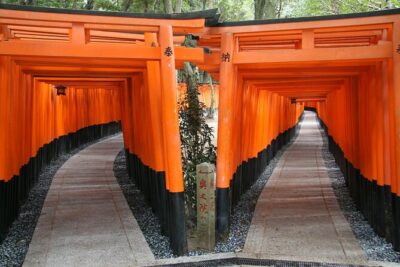
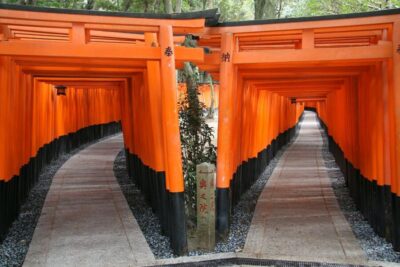
Fushimi Inari, Kinkakuji, Bamboo Grove 1 Day Bus Tour
Read our review →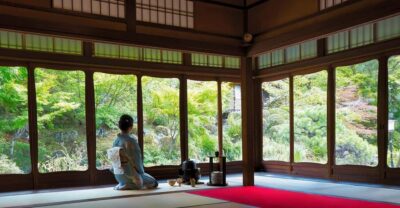
Tea Ceremony in a Traditional Tea House in Kiyomizu
Read our review →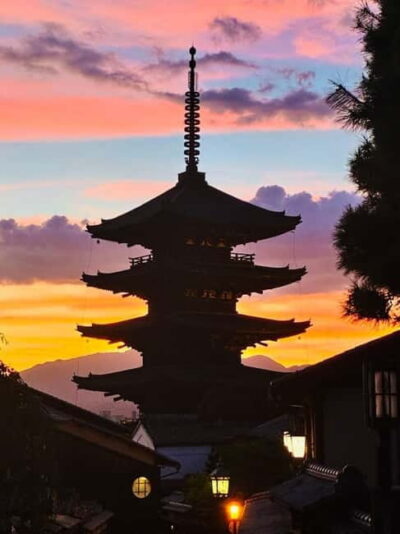
Kyoto Geisha Walking Tour: Gion District & Hidden Gems
Read our review →
Gion Magical Night Walking Tour with Geisha Trivia
Read our review →
Gion Geisha District Walking Tour – Stories of Geisha
Read our review →Browse the lists this tour appears in