
Reviewed · NARA TOURS
Nara:Authentic Tea Ceremony(Max 5 ppl) -Master Matcha Making
The most appealing part of this Nara tea ceremony is its setting: a 120-year-old Japanese farmhouse where the pace drops as soon as you enter. This is not just a quick cup of matcha. You learn why the utensils matter, how the ceremony works, and how to whisk your own tea.
I especially like the hands-on instruction and the chance to compare single-origin matcha from Nara before choosing a favorite. I also like the small scale. Depending on the booking, you may have a one-on-one session or a private lesson for your own group. The main consideration is time: one hour gives you a fine introduction, but not a long, formal tea-school lesson.
Key points
- A 120-year-old farmhouse: The traditional house gives the lesson a quiet, genuine sense of place.
- Your own matcha bowl: You whisk the tea yourself and receive tips on technique.
- Nara tea comparison: Taste single-origin matcha to notice differences in aroma and flavor.
- Small-group format: The experience is limited to six people and is often private for a couple or family.
- English or Japanese guidance: Hosts such as Kurabi, Mike, Hasumi, Tate, and Mark have led sessions.
- Tea with seasonal wagashi: Traditional Japanese sweets balance matcha’s gentle bitterness.
Entering a 120-year-old Nara farmhouse
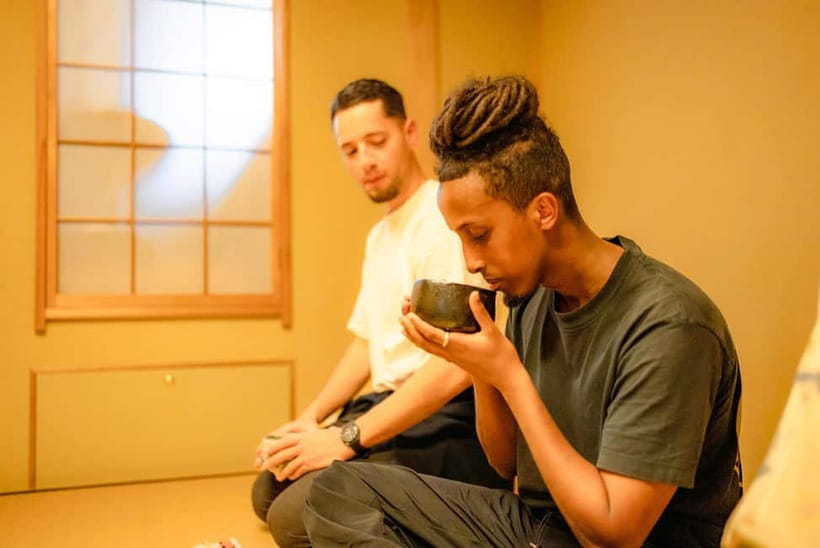
Nara is full of temples, deer, and grand monuments. This activity gives you something quieter: time in an old Japanese home with the attention fixed on tea.
The farmhouse is more than a backdrop. Its age and traditional character help explain why the ceremony feels different from an ordinary café visit. You are not simply ordering a matcha drink and moving on. The room, tools, movements, and pauses all form part of the lesson.
Some sessions begin with a walk through an older part of Nara before reaching the guesthouse or farmhouse. That short walk can help you shift from sightseeing mode to a slower rhythm. One practical detail is worth noting: a past participant needed to connect with the host by WhatsApp after having trouble locating the meeting point. Keep your phone available and check the meeting instructions carefully.
The setting is especially appealing if your Nara schedule is packed with major sights. After a morning around temples or a crowded deer park, an hour of calm can feel like a useful change of gear.
More tea ceremonies in Nara:
- World Heritage Kyoto & Nara Uji Authentic Matcha Experience
★ 5.0 · 1,573 reviews - Nara:5 Type of Tea Tasting & Mindful Tea Ceremony
★ 5.0 · 28 reviews - Nara:Tea Tasting&Private Tea Ceremony -Master Matcha Making-
★ 5.0 · 19 reviews
Meeting the tea master
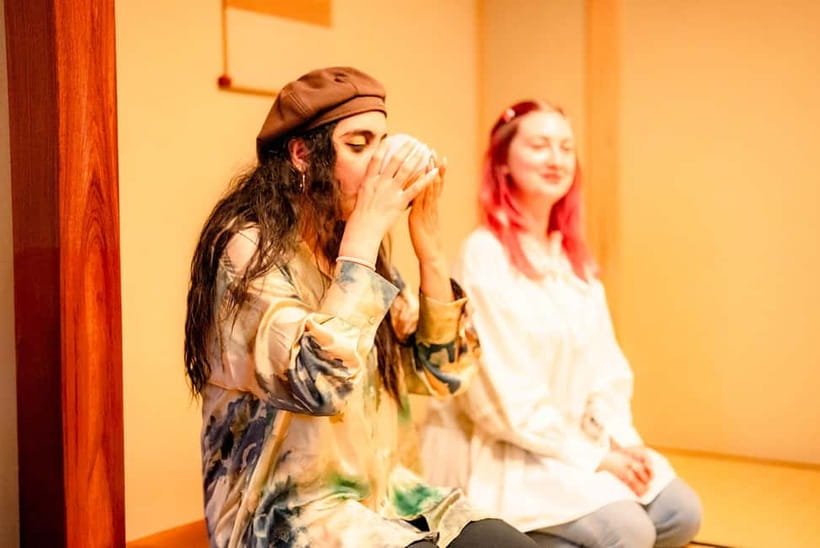
The host may be Kurabi, Mike, Hasumi, Tate, Mark, or another member of the team, depending on the date. The teaching style described across the sessions is friendly and conversational rather than stiff. Formal etiquette is explained, but the tone can include humor and plenty of questions.
English and Japanese are offered. English-speaking visitors have been able to follow explanations about the ceremony, tea preparation, utensils, and cultural meaning without needing prior experience.
You should not expect to be tested on Japanese manners. The point is to understand what you are doing, not to perform a perfect ceremony for an audience. The guide explains the order of events and the reasons behind the gestures, then gives you a chance to try.
That balance matters. A ceremony can feel intimidating if you are worried about using the wrong hand or missing a cue. Here, the instruction is designed for beginners, with personal feedback as you prepare the tea.
Learning the meaning behind the utensils and etiquette
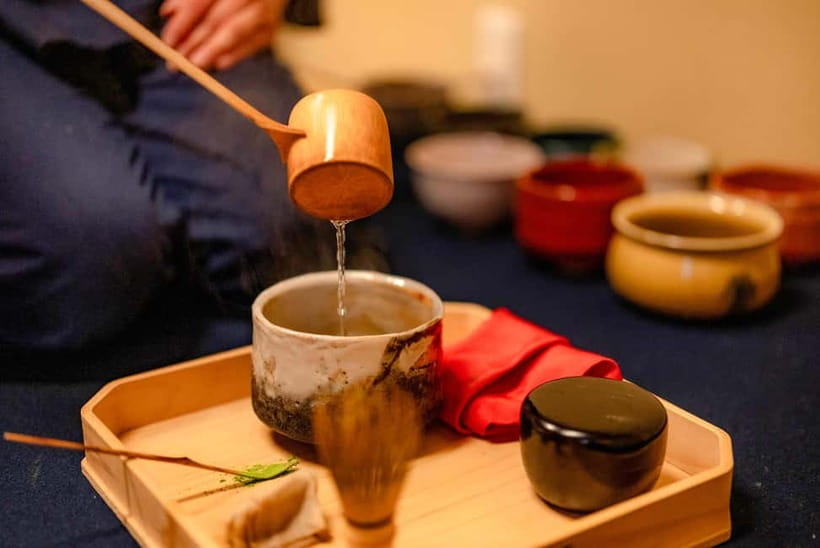
The first part of the lesson covers the background of the tea ceremony. You learn about its development, the basic formalities, and the role of the traditional tools.
This context makes the later movements more meaningful. A bowl, whisk, scoop, and tea container are not simply props. Each has a place in the process, and the order of preparation gives the ceremony its calm structure.
I like that this part is not treated as a memorized performance. The guide explains the why behind the customs. That is useful when you visit another tea house in Japan, because you will recognize some of the same ideas even if the exact style differs.
The lesson also gives you room to ask questions. If you are curious about matcha production, Japanese tea culture, or the difference between a casual tea service and a formal ceremony, this is the point to ask. The hosts have also offered practical suggestions about Nara food, sake shops, matcha cafés, and places to visit, though those recommendations are an extra benefit rather than a formal part of the itinerary.
Tasting Nara single-origin matcha
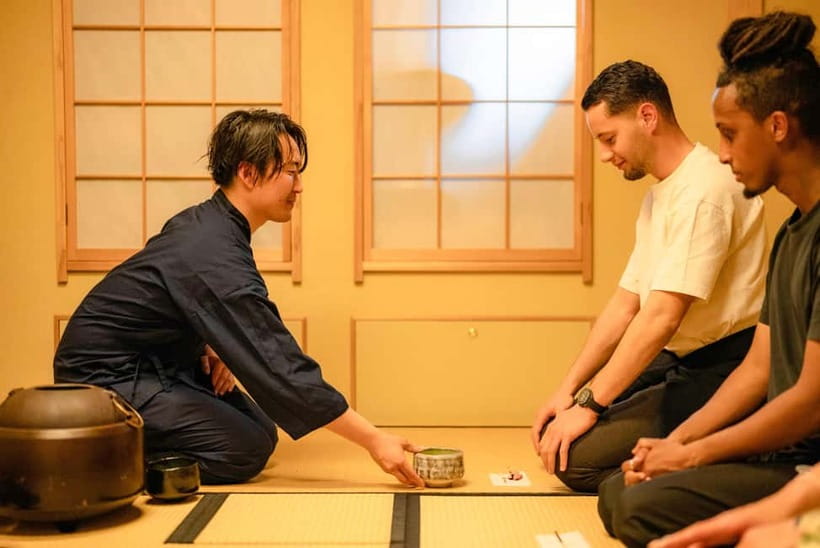
Before making your own bowl, you taste matcha selected from Nara. The chance to compare single-origin teas is one of the strongest reasons to choose this activity over a standard ceremony where you receive only one prepared drink.
Matcha can taste smooth, grassy, sweet, bitter, or slightly savory. The differences may be subtle if you have never tried several teas side by side, so the guide’s explanations help you pay attention to aroma, texture, and finish.
You do not need to arrive with a trained palate. Start with simple questions. Which tea feels softer? Which has more bitterness? Which would you want to drink again? The point is not to identify technical tasting notes. It is to find the style you prefer.
Some individual sessions have also included tea from outside Nara, such as Uji matcha, when the host had an additional recommendation to share. Treat that as a possible bonus, not a guaranteed part of every booking. The dependable feature is the Nara matcha tasting and comparison.
This tasting also gives the price more value. At $46 per person, you are paying for instruction and a cultural lesson, not just a sweet and a cup of green tea.
A few more Nara half-days to weigh up
- Nara Half Day Trip Walking Tour (Private Option Available)
★ 5.0 · 937 reviews - Nara Early Morning Tour (Kyoto or Osaka Departure Available)
★ 5.0 · 676 reviews - Osaka: Nara and Uji Day Trip with Deer Park and Hot Spring
★ 4.4 · 302 reviews - Kyoto/Osaka: Kinkakuji, Bamboo Forest, and Nara Deer Park
★ 4.4 · 265 reviews
Whisking your own bowl of matcha
The most active part of the hour begins when you prepare the tea yourself. The master demonstrates the technique, then hands the process over to you.
You learn how to handle the traditional tools and whisk the matcha until it develops a fine, creamy texture. Your first bowl may not look like the master’s. That is part of the fun. The guide watches your movements and offers practical corrections, rather than leaving you to guess why the tea is too thin or uneven.
The whisking is repetitive in a pleasing way. Your attention narrows to the bowl and the movement of the whisk. It is a small task, but one that can make the ceremony feel personal. You are not only observing Japanese culture from the side. You are taking part in one modest piece of it.
This hands-on section is particularly good for families and couples. Children old enough to follow instructions may enjoy the physical act of whisking, while adults often appreciate learning a skill they can repeat at home.
You should also expect your own bowl to be judged by taste, not appearance. The host’s goal is to help you make matcha you enjoy. Several sessions have included tips for producing a smoother, creamier drink, which means the lesson can continue after you leave.
Balancing matcha with seasonal wagashi
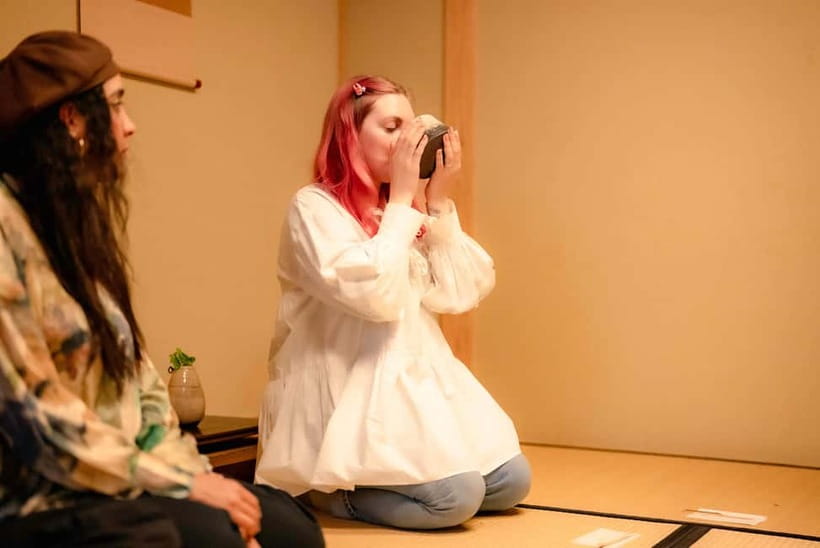
The tea is served with wagashi, traditional Japanese sweets chosen to complement matcha. Their sweetness helps balance the tea’s more bitter notes and gives you a better sense of how the ceremony is meant to be enjoyed.
Wagashi are not an afterthought here. The sweet and the tea are paired as part of the experience, so take a moment to taste one before and after a sip of matcha. You may notice that the tea seems softer after the sweetness.
The exact seasonal sweet is not specified in advance, so you should not book this expecting one particular confection. That uncertainty is normal for seasonal food, and it is part of the appeal. The important point is that an authentic Japanese sweet is included with the ceremony.
Some hosts have also served freshly made sweets or offered extra tea during a session. Again, those details may vary. The reliable inclusion is traditional wagashi with the prepared matcha.
How private is the experience?
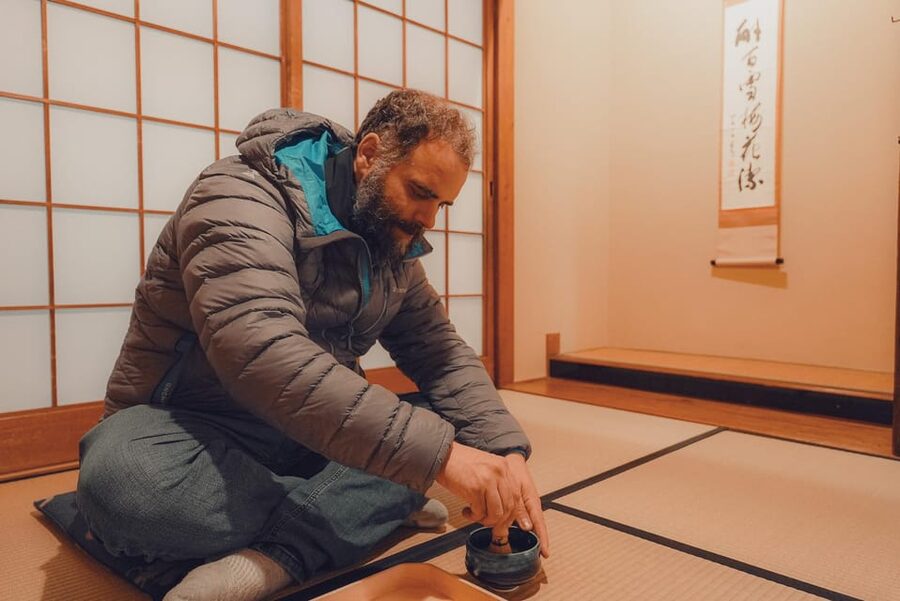
The activity is described as a small group, with a maximum of six participants. It is also promoted as a one-on-one tea ceremony, and several sessions have been private for a family of four or for an individual.
That wording suggests the exact format depends on the booking date and party size. If you are traveling alone or as a couple, you might receive very personal attention. If several bookings overlap, the session can still remain small, but you may share the instruction with other participants.
For many people, this is the right size. A large group would make the farmhouse feel less peaceful and reduce the amount of time available for personal practice. A small group lets you ask questions and receive corrections while keeping the ceremony informal enough for beginners.
If absolute privacy is important to you, check the group details when selecting a time. The information provided gives a limit of six rather than a firm promise that every departure is private.
Is one hour enough?
For a first introduction, yes. The hour can cover the setting, tea ceremony background, etiquette, utensils, tasting, demonstration, your own preparation, and wagashi.
It is not enough for a long formal ceremony with an extended discussion of Japanese tea schools. That is the main limitation. The lesson gives you a clear window into the tradition, but it remains an introductory activity.
The short length is also useful. You can fit it between Nara sights without giving up half a day. A morning booking works well if you want to begin with something calm, while an afternoon session can provide a break after visiting temples.
The activity does not list a fixed starting time. You need to check availability for the day you want. Since the duration is only one hour, it is easy to combine with other plans, but leave enough room for finding the meeting point and walking to the house.
What makes the $46 price worthwhile?
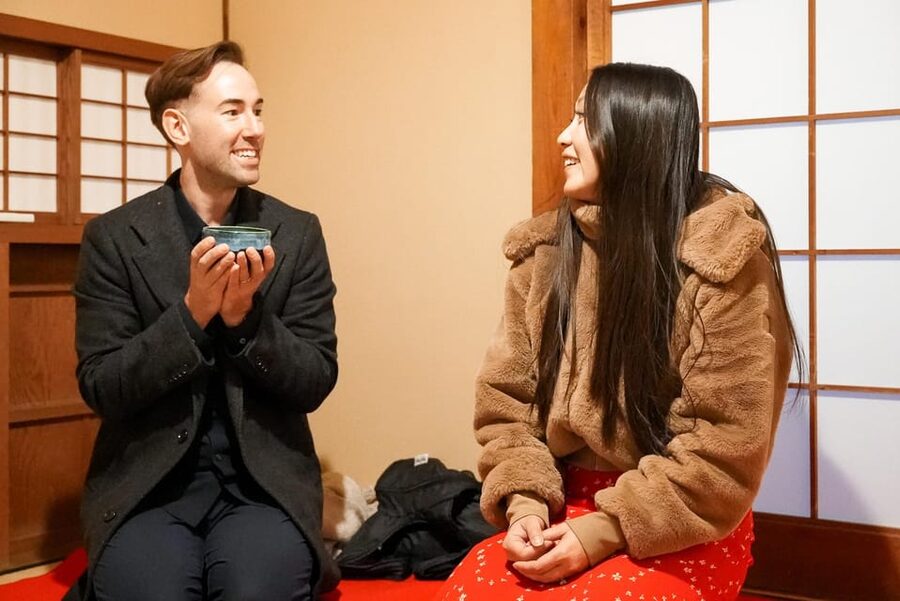
At $46 per person, this is more expensive than buying matcha in a café, but that is not the right comparison. A café gives you a finished drink. This experience gives you a setting, a lesson, a tasting, guided practice, traditional sweets, and time with a tea master.
The strongest value comes from the personal instruction. If you are curious about tea but do not know how to prepare matcha, the chance to make it yourself adds something you cannot get from simply watching a ceremony.
The old farmhouse also matters. You are paying for access to a traditional setting that would be difficult to create in a modern café. The small group keeps the lesson focused, and the English option makes the cultural details easier to follow.
The price may feel less worthwhile if you only want a quick taste of matcha or already have extensive tea ceremony training. For most first-time visitors, though, the combination of culture and participation makes it a fair hour-long activity.
Helpful local advice after the tea
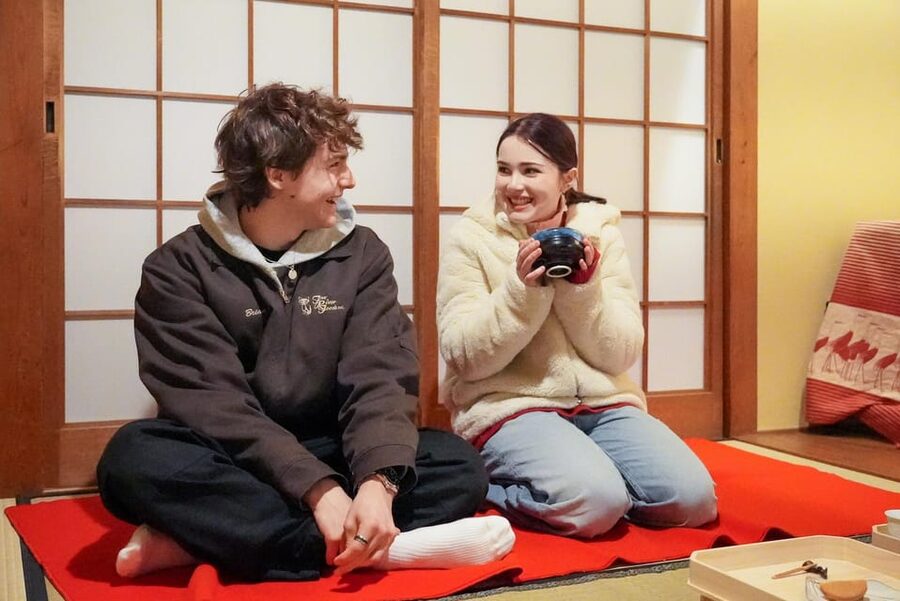
The formal experience ends after the tea, sweets, and matcha practice, but the host may be able to improve the rest of your day.
Guides have suggested Nara restaurants, ramen shops, yakiniku, sake stores, matcha cafés, and less-visited bars. One host even helped arrange a restaurant reservation, while another helped a participant find the next bus to Nara’s deer park.
Do not treat every recommendation as part of the paid service. The useful point is that hosts such as Mike and Kurabi know the local area and may offer advice that is more specific than a generic list of attractions.
This can be especially helpful if Nara is only one stop on a larger Japan trip. Some hosts have also shared suggestions for Kyoto and Osaka, including places to eat and buy matcha. Ask politely at the end if you want advice, and have your day’s plan ready so the suggestions can be practical.
Who should book this tea ceremony?
I would choose this for a first visit to Nara, especially if you want a cultural activity that goes beyond taking photos at temples.
It suits:
- Couples looking for a quiet shared activity
- Families who want something interactive
- Solo visitors who value personal teaching
- Tea lovers curious about matcha quality
- First-time visitors to Japan who want an easy introduction to etiquette
- Anyone who wants a slower hour between major sightseeing stops
It is also a good choice for people who worry that a formal ceremony will feel too serious. The hosts explain the ritual but keep the mood warm and approachable.
You may want to skip it if you dislike bitter tea, sweets, or structured cultural activities. You should also temper your expectations if you want a lengthy, highly formal ceremony. This is a compact lesson with active participation, not a full-day study of tea practice.
Booking details worth knowing
The activity costs $46 per person and lasts one hour. Instruction is available in English or Japanese, and the group is limited to six participants.
Matcha preparation, serving, the tea ceremony overview, traditional utensils, personal whisking practice, and wagashi are included. The advertised cancellation policy allows a full refund if you cancel at least 24 hours ahead, and you can reserve now and pay later.
The meeting location details should be checked carefully before you go. Since one session involved a walk of about 10 minutes from the meeting point to the guesthouse, allow a little time rather than arriving at the last second.
Should you book Kurabi’s Nara tea experience?
Book it if you want to understand matcha by making it, tasting more than one tea, and asking questions in a quiet old house. The strongest features are the small scale, friendly teaching, farmhouse setting, and practical whisking advice you can use at home.
I would be clear about the format before paying if you require a fully private ceremony. The activity is capped at six, but not every session is guaranteed to be one-on-one. I would also choose another option if your main goal is a grand, lengthy ritual.
For most visitors, this is a smart use of one hour in Nara. It gives you a real cultural activity, not just a themed photo opportunity, and the local food and sightseeing tips can help shape the rest of your stay.
FAQ
How long does the Nara tea ceremony last?
The activity lasts one hour.
How much does the experience cost?
The listed price is $46 per person.
How many people can join?
The activity is limited to six participants. It may be arranged as a one-on-one lesson or a private session for your own party, depending on the booking.
Is the tea ceremony available in English?
Yes. The instructors speak English and Japanese.
What is included in the experience?
You receive instruction from a tea master, an explanation of tea ceremony history and etiquette, an introduction to traditional utensils, guided matcha preparation, personal whisking feedback, prepared matcha, and seasonal wagashi.
Can I cancel for a full refund?
Yes. You can cancel up to 24 hours in advance for a full refund.
Do I have to pay when I book?
No. The reserve-now, pay-later option lets you book without paying immediately.
Just added around Nara
- All must-sees in 3 hours – Nara Park Classic Tour! From JR Nara!★ 5.0 · 108 reviews
- Private Nara Tour and Sake Tasting (Departing from Kyoto/Nara)★ 5.0 · 40 reviews
- Hammer a Pattern on Your Ring Workshop★ 5.0 · 57 reviews
- Nara World Heritage PRIVATE TOUR★ 4.5 · 15 reviews
- Nara Sake Tasting Tour at Local Brewerie(tasting fee included)★ 5.0 · 12 reviews
- Nara Private Tour: Flexible Pickup from Kyoto, Osaka, or Nara★ 5.0 · 17 reviews
- Nara – Heart of Nature Cross Bike Tour★ 5.0 · 19 reviews
- Nara Highlight Walking Tour with Furoshiki Experience with Lunch★ 5.0 · 73 reviews
Nara Tours, compared.
World Heritage Kyoto & Nara Uji Authentic Matcha Experience
Read our review →
Nara Half Day Trip Walking Tour (Private Option Available)
Read our review →
Nara Early Morning Tour (Kyoto or Osaka Departure Available)
Read our review →
Nara and Uji Day Trip with Deer Park and Hot Spring
Read our review →
Kyoto/Osaka: Kinkakuji, Bamboo Forest, and Nara Deer Park
Read our review →
Nara 6hr Private Tour with Government-Licensed Guide
Read our review →
E-Bike Nara Highlights – Todaiji, Knives, Deer, Shrine
Read our review →
Nara Early Bird Tour (Kyoto Departure Option Available)
Read our review →Browse the lists this tour appears in