
Reviewed · NARA TOURS
Nara:5 Type of Tea Tasting & Mindful Tea Ceremony
The most memorable part of this Nara experience is its setting: a 120-year-old traditional Japanese house overlooking a small garden. Inside, host Mike guides you through five teas, seasonal wagashi, and the quiet movements of a matcha ceremony. I especially like the chance to compare roasted teas with fragrant matcha, then choose a favorite for a carefully brewed pot. I also like that this is a small private group, so your matcha practice gets personal help instead of a quick demonstration.
The main thing to consider is the seating. You may need to sit on the floor for much of the visit, and one account describes the full visit as lasting about two hours, even though the stated duration is 90 minutes. If you need a chair, have limited mobility, or are on a tight schedule, confirm those details before booking.
Key points to know before booking
- Five teas from Nara prefecture: Compare matcha, roasted teas, and other Japanese varieties selected by the tea master.
- A 120-year-old wooden house: The calm tea room and small garden provide a more personal setting than a large cultural show.
- Hands-on matcha preparation: You whisk your own tea and receive one-on-one guidance.
- Seasonal wagashi included: Two traditional Japanese sweets are served to balance the teas.
- Private, English-language experience: The group is kept small, with some sessions limited to four people.
- Best for patient culture lovers: Children under 12 and pregnant women are not permitted, and floor seating may not suit everyone.
Nara is famous for temple roofs, deer, and broad public spaces. This tea gathering offers a different side of the city. You step into a traditional home, leave the noise behind, and spend time paying attention to small things: the color of the tea, the sound of whisking, the shape of a sweet, and the way a bowl is handled.
At $61 per person, this is not a quick cup of tea. You are paying for instruction, several teas, sweets, and a private cultural encounter in a historic house. I see it as a good value if you want to understand Japanese tea rather than simply taste it. If you only want a snack and a souvenir cup, it is more than you need.
The experience lasts 90 minutes according to the stated schedule. Allow extra time around it, though, since the slower pace and floor seating can make the visit feel longer. One description of the visit puts the time in the house at about two hours, so ask the provider for the exact schedule if you have a train, temple visit, or restaurant reservation afterward.
The setting does much of the work here. The tea room occupies a renovated Japanese house that is about 120 to 125 years old, depending on the description. It overlooks a small garden, giving you a simple view of greenery and traditional architecture while you drink.
This is not presented as a grand palace ceremony. That is a strength. The house creates a close, domestic feeling, and the small group size lets you hear the instructor clearly. Some sessions welcome no more than four people, and the activity is sold as a private group experience. That makes it easier to ask basic questions without feeling that you are holding up a crowd.
You should be ready to walk to the house and sit on the floor. The floor seating is part of the traditional atmosphere, but it can be hard on knees, hips, or backs. The activity is marked wheelchair accessible, yet the practical experience may still involve floor sitting, so contact Kurabi ahead of time if you need a chair or a specific access arrangement.
The first main part is a flight of five teas selected by the tea master. This is a smart way to learn because tea can seem like one broad category until you taste several styles side by side.
You may encounter fragrant matcha, mellow roasted teas, and other Japanese varieties from Nara prefecture. The important point is comparison. One tea may seem grassy and aromatic, another warm and toasted, and another softer and rounder. You do not need to arrive with a trained palate. The host explains what you are drinking and gives you time to notice the differences.
I like this part because it turns tea into a conversation. You can ask about aroma, preparation, and the role each tea plays in Japanese daily life. It also gives you a practical souvenir of knowledge: after five samples, you are more likely to know what to look for in a Japanese tea shop.
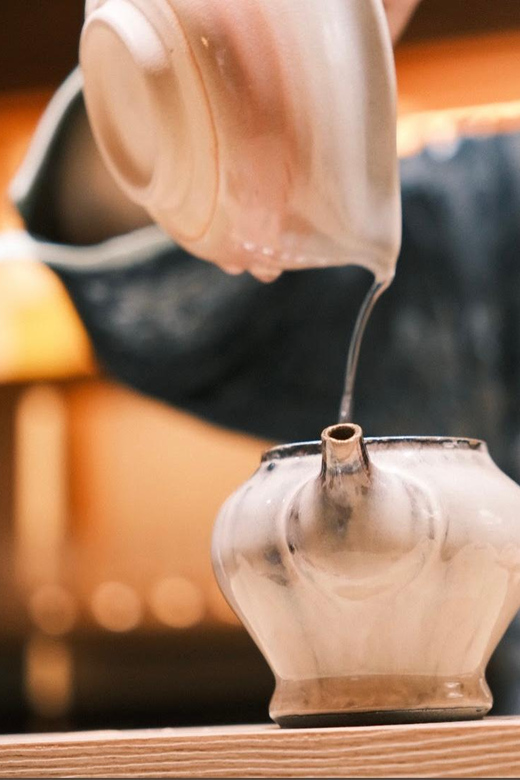
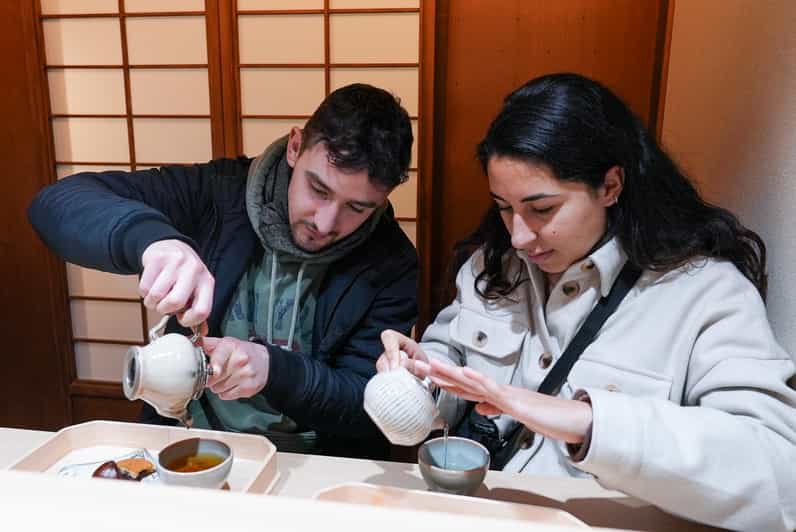
The tasting is not just a row of tiny cups with no follow-up. After trying the five teas, you choose a favorite. The tea master then prepares that selection in a pot, using careful pours to draw out its flavor. This second serving gives you a fuller taste and lets you compare a sample with a properly brewed cup.
The exact five teas can change with the season and the tea master’s selection. That is a good thing for repeat visitors, but it means the experience is not a fixed menu. If you have a favorite type of tea or want to avoid caffeine, ask what will be served when you book.
The tea ceremony follows the tasting. Here, the host explains the background, etiquette, tools, and gestures that give the ceremony its meaning. You are not asked simply to copy a set of movements without context. The instruction helps you understand why the objects and actions matter.
Then it is your turn to whisk matcha. You prepare your own bowl under the tea master’s direction and receive personal feedback as you work. This hands-on section is one of the best reasons to choose this experience over a demonstration. You get to feel the motion of the whisk, see the tea change, and taste the result you made yourself.
Matcha preparation rewards a calm hand. The point is not to produce a perfect bowl on the first try. It is to slow down, follow the guidance, and pay attention to the process. The quiet setting makes that easier than it would be in a crowded class.
The ceremony also gives you a closer look at Japanese hospitality. The bowl, scoop, whisk, and serving movements are not random props. Each tool has a role, and the host explains the customs surrounding them. The experience is still accessible to beginners, so you do not need prior knowledge of tea ceremony etiquette.
A particularly interesting detail from the host’s world is the craft of making bamboo tea whisks. That subject has been part of the conversation during this experience, giving you a link between the tea itself and the traditional tools used to prepare it. If that topic interests you, ask Mike about the whisk and its construction.
Two kinds of Japanese sweets are included. These wagashi are traditionally served with tea, and their gentle sweetness helps balance matcha and roasted varieties.
The sweets are seasonal, so the shapes, colors, and flavors can change. That makes them more than a standard dessert plate. They connect the tasting to the time of year and give you another small lesson in Japanese food culture.
Wagashi can be delicate in both taste and appearance. Eat them slowly rather than treating them like a quick cookie between teas. The sweetness prepares your mouth for the next sip, especially if you find matcha sharp or unfamiliar.
Sake has appeared during at least one family visit, but it is not part of the stated inclusions. The reliable expectation is five teas and two kinds of Japanese sweets. If sake matters to you, ask before booking rather than assuming it will be served.
The activity is listed as a private group, and the small scale changes the feel of the lesson. A large ceremony can be impressive, but it may leave you watching from a distance. Here, you have more room to ask about the tea, the house, local places to visit, and the meaning of the ceremony.
The host also offers practical local conversation. You can ask for tips on places to visit in Japan, or focus on Nara and the surrounding area. This is useful when you have already seen the main sights and want a little guidance from someone who lives close to them.
Host Mike is described as warm, helpful, and good-humored. His role is more than serving tea. He explains the ritual, answers questions, and helps visitors feel comfortable with unfamiliar customs. That matters because Japanese tea ceremony can seem formal at first. A friendly guide makes it easier for you to take part without worrying about making a mistake.
English instruction is available. The experience is designed for an international audience, but the ceremony itself still asks for patience and attention. You will get more from it if you listen carefully and avoid rushing from one stage to the next.
The listed duration is 90 minutes, with starting times based on availability. The setting encourages a slow pace, and one account advises allowing about two hours in the house. I would not place this between two tightly scheduled activities. Give yourself time to arrive, settle in, and leave without watching the clock.
The activity is not suitable for children under 12. That age rule makes sense for a quiet, floor-seated ceremony that depends on careful movements. It is also not suitable for pregnant women according to the stated conditions.
The experience is marked wheelchair accessible, but floor seating remains an important practical question. Accessibility can mean you can enter the venue, while the ceremony itself may still use traditional seating. If you use a wheelchair or need a standard chair, ask Kurabi exactly how the room can be arranged.
You should also consider your interest level. This is a strong choice if you like food culture, traditional arts, small-group teaching, and quiet settings. It is less suitable if you want a fast sightseeing stop, a theatrical performance, or a ceremony designed mainly for photographs.
The $61 price includes five Japanese teas, the more substantial pot-brewed serving of your chosen tea, two kinds of wagashi, tea ceremony instruction, and personal matcha practice. It also buys access to a private setting and an English-speaking host who can explain the customs in context.
Compared with paying for a single drink, the price is high. Compared with a private cultural lesson, it is more reasonable. You are getting tasting, instruction, food, and conversation in one visit, rather than only watching a formal ceremony.
The private format is especially important to the value. If you are traveling as a couple or family, you can ask questions and take part at your own pace. One family visit even gave a son the chance to act as tea master in training and serve his mother, a small personal touch that a large public ceremony could not easily offer.
I would call it good value for anyone who wants a meaningful cultural activity in Nara. The value drops if you do not like tea, dislike sitting on the floor, or have no interest in etiquette and traditional tools. In that case, spend your money on a shorter tasting or another hands-on activity.
You can cancel up to 24 hours in advance for a full refund. The reserve-now, pay-later option also helps if your Japan schedule is still shifting.
English is the stated language, and the activity is offered as a private group. Check the available starting times before committing, especially if you are fitting this around Nara’s temples, rail connections, or a day trip.
I would book this experience if you want a calm, personal introduction to Japanese tea and do not mind sitting on the floor. The combination of five local teas, a chosen pot-brewed serving, matcha practice, seasonal wagashi, and a traditional house gives the 90 minutes real substance.
I would also recommend it to repeat visitors who have already covered Nara’s main sights. The conversation with Mike and the chance to ask for local suggestions add a human touch that a standard attraction cannot provide.
Skip it if your schedule is packed, you need guaranteed chair seating, or you are looking for a purely visual ceremony. For everyone else, this is a thoughtful way to spend part of a Nara day, with enough hands-on work to make the tea ceremony your own.
FAQ
More tea ceremonies in Nara:
- World Heritage Kyoto & Nara Uji Authentic Matcha Experience
★ 5.0 · 1,573 reviews - Nara:Authentic Tea Ceremony(Max 5 ppl) -Master Matcha Making
★ 5.0 · 119 reviews - Nara:Tea Tasting&Private Tea Ceremony -Master Matcha Making-
★ 5.0 · 19 reviews
How long does the Nara tea experience last?
The stated duration is 90 minutes. Because the visit is calm and may involve floor seating, allow extra time. One description of the experience advises being prepared to spend about two hours at the house.
How many teas will I taste?
You will taste five kinds of Japanese tea selected by the tea master. After the tasting, you choose a favorite for a special pot-brewed serving.
Do I get to prepare my own matcha?
Yes. You will whisk your own matcha under the tea master’s guidance and receive personalized feedback.
More food tours in Nara:
- Private Nara Tour and Sake Tasting (Departing from Kyoto/Nara)
★ 5.0 · 40 reviews - Nara Sake Tasting Tour at Local Brewerie(tasting fee included)
★ 5.0 · 12 reviews - Tokyo: Shinjuku Food Tour (13 Dishes at 4 Local Eateries)
★ 5.0 · 6,603 reviews - Tokyo Tsukiji Fish Market Food and Culture Walking Tour
★ 5.0 · 3,184 reviews
What food is included?
The experience includes two kinds of traditional Japanese sweets, known as wagashi. The sweets are seasonal and are served to complement the tea.
Is the activity taught in English?
Yes. English is the stated language for the instructor.
Is the experience private?
Yes. It is offered as a private group experience, and some sessions are limited to four people.
Who cannot take part?
Children under 12 and pregnant women are listed as unsuitable for this activity. The ceremony may also require sitting on the floor, so anyone with mobility needs should confirm the seating arrangement before booking.
Just added around Nara
- All must-sees in 3 hours – Nara Park Classic Tour! From JR Nara!★ 5.0 · 108 reviews
- Private Nara Tour and Sake Tasting (Departing from Kyoto/Nara)★ 5.0 · 40 reviews
- Hammer a Pattern on Your Ring Workshop★ 5.0 · 57 reviews
- Nara World Heritage PRIVATE TOUR★ 4.5 · 15 reviews
- Nara Sake Tasting Tour at Local Brewerie(tasting fee included)★ 5.0 · 12 reviews
- Nara Private Tour: Flexible Pickup from Kyoto, Osaka, or Nara★ 5.0 · 17 reviews
- Nara Highlight Walking Tour with Furoshiki Experience with Lunch★ 5.0 · 73 reviews
- Nara – Heart of Nature Cross Bike Tour★ 5.0 · 19 reviews
Nara Tours, compared.
World Heritage Kyoto & Nara Uji Authentic Matcha Experience
Read our review →
Nara Half Day Trip Walking Tour (Private Option Available)
Read our review →
Nara Early Morning Tour (Kyoto or Osaka Departure Available)
Read our review →
Nara and Uji Day Trip with Deer Park and Hot Spring
Read our review →
Kyoto/Osaka: Kinkakuji, Bamboo Forest, and Nara Deer Park
Read our review →
Nara 6hr Private Tour with Government-Licensed Guide
Read our review →
E-Bike Nara Highlights – Todaiji, Knives, Deer, Shrine
Read our review →
Nara Early Bird Tour (Kyoto Departure Option Available)
Read our review →Browse the lists this tour appears in