
Reviewed · TOKYO TOURS
Tokyo: 3-Hour Bike or E-Bike Tour of City’s Hidden Gems
Tokyo is at its most interesting when you can cover ground quickly, then hop off wherever something catches your eye. This three-hour ride links Zojo-ji Temple, the Imperial Palace, Akasaka Palace, Cat Street, Miyashita Park, and Shibuya Crossing without trapping you underground on the metro.
I like the quality Bianchi and Fuji bikes, and I like the route’s mix of major sights and quieter streets. Guides such as Casey, Shin, Naoki, Marika, Miguel, and KG have been praised for clear explanations, friendly care, and taking photos. The catch is that you mostly stop for views and short walks, not long interior visits, and the ride can feel like a workout in hot weather.
Key points to know before you book
- A real cross-city ride: You cover central Tokyo by bicycle instead of seeing each area as an isolated train stop.
- A strong bike choice: Bianchi and Fuji cross bikes are supplied, with an e-bike option for riders who lack stamina.
- A mix of old and new Tokyo: Zojo-ji and the Imperial Palace lead to Aoyama, Cat Street, Miyashita Park, and Shibuya.
- Small groups help: A compact group is easier to guide through city streets and easier to adjust to your interests.
- Budget for the helmet: Helmets cost an extra ¥1,000 each and must be paid in cash on site.
- Expect cycling, not a walking tour: The pace is active, and people under 12 or unable to ride a bike cannot join.
Why a bicycle works so well in central Tokyo
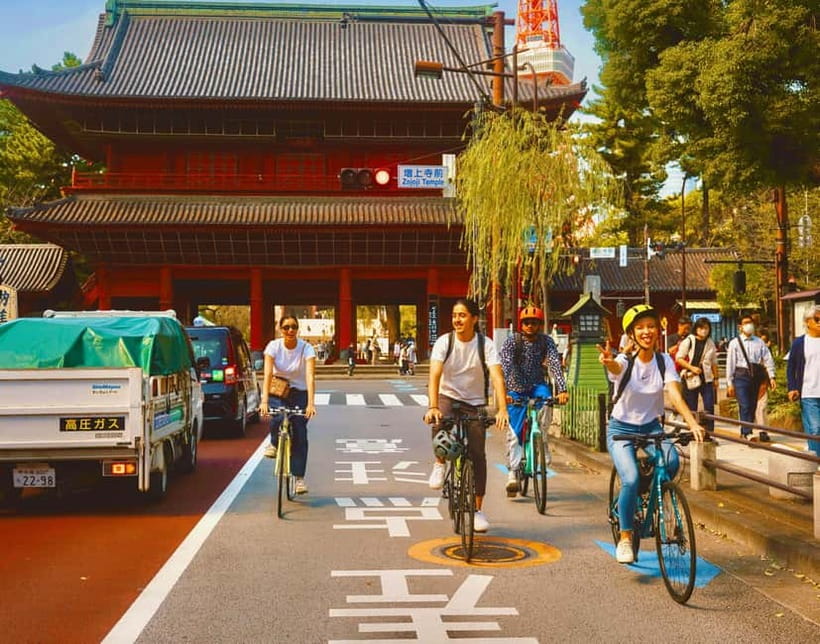
Tokyo is huge, but many of its central districts sit close enough together to connect by bike. The train is faster for long distances, yet it hides the small shifts between neighborhoods. On two wheels, you notice temple walls giving way to office blocks, quiet residential lanes opening onto grand avenues, and polished shopping districts sitting near older streets.
This route is especially useful if you have only a short time in the city. It gives you an introduction to several areas in one morning or afternoon, with enough stops to get your bearings. You will not become an expert on every neighborhood in three hours, but you will leave with a better sense of how central Tokyo fits together.
The ride is not presented as an endurance event, but you should be comfortable cycling for an extended period. One rider described it plainly as a workout session, while another found cycling the ideal way to reach areas too spread out to cover on foot. That is the right expectation: casual riders can join, but this is not a slow sightseeing stroll.
More Hidden Gems Walks in Tokyo
- 3h Tokyo E-Bike Tour: Hidden Gems, and Local Life with guide
★ 5.0 · 670 reviews - Tokyo: Custom Hidden Gems & Highlights Tour with Local Guide
★ 4.7 · 272 reviews - Tokyo: 3-hour Guided E-Bike Tour of the City’s Hidden Gems
★ 4.8 · 251 reviews
Meeting Commodore Perry near Daimon Station
The meeting point is around the Statue of Commodore Perry, about a three-minute walk from Daimon Station’s A6 exit. Allow extra time to find the statue. The location is close to Tokyo Tower and easy enough to reach once you know where you are going, but one rider found the meeting spot unclear.
Bring comfortable clothes, sturdy shoes, and water. A small pouch attached to the bike holds a phone, wallet, or keys, which saves you from repeatedly reaching into a backpack. Bike insurance is included.
Helmets are available, but they are not included in the price. Bring ¥1,000 in cash per helmet. This is an important detail for families and cautious riders, especially since the streets can be busy and the tour moves through several city districts.
Zojo-ji Temple and Shiba Park
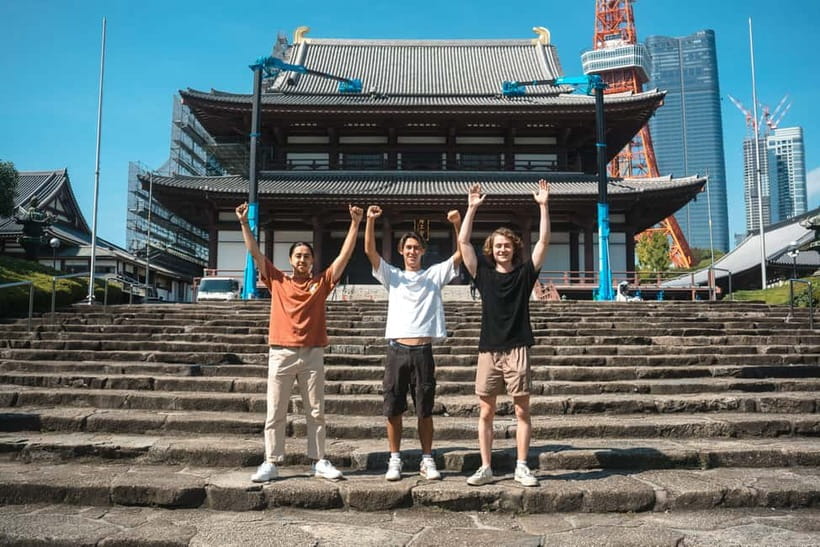
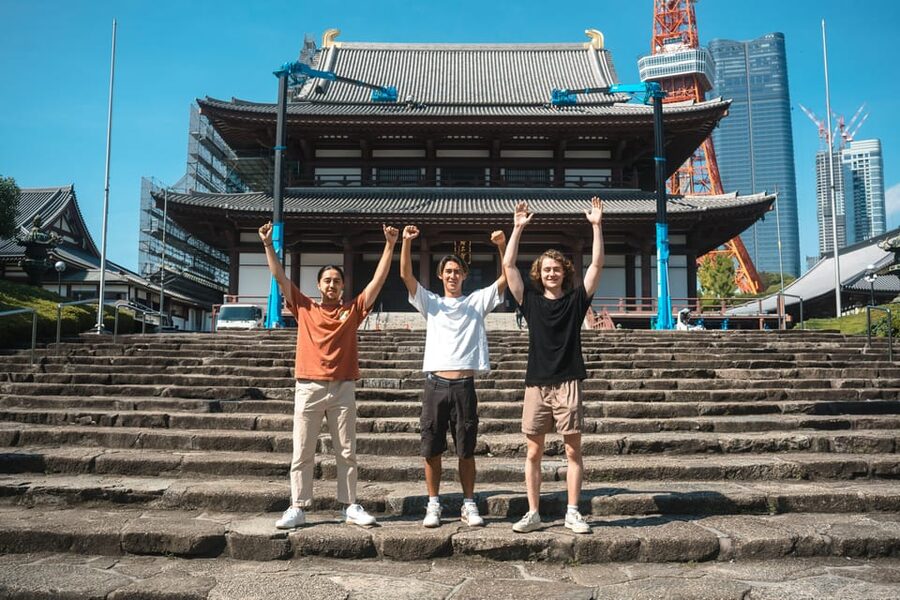
The first major stop is Zojo-ji Temple, with about 15 minutes for a guided visit and photos. The temple sits near Tokyo Tower, giving you one of the city’s most recognizable contrasts: a traditional Buddhist setting with a modern communications tower rising behind it.
This is a good opening stop because it gives the guide room to explain basic ideas about Japanese temples, shrines, and local traditions. One participant particularly valued learning the difference between temples and shrines, a small point that can make later sightseeing much easier.
Fifteen minutes is enough for an introduction and some photographs, but not for a leisurely study of every building. If you want a detailed temple visit, return later on foot. Here, the value is the setting, the explanation, and the quick transition from Tokyo’s older culture to its modern city center.
The Imperial Palace and Ote-mon Gate
The bikes then head toward the Tokyo Imperial Palace. You stop for roughly 10 minutes, followed by a shorter five-minute photo stop at Ote-mon Gate.
The palace grounds are important not only because of the imperial connection, but because they offer a broad, open pause after city riding. Ote-mon Gate gives you a clear look at the defensive design of the former Edo Castle area. The guide can add historical context without asking you to spend half the day inside a museum.
Do not book this ride expecting an extended palace tour. The palace stop is mainly about orientation, exterior views, and photographs. One rider was lucky enough to see the emperor, but that was clearly an unusual moment, not something to count on.
More off-the-list walks in Tokyo:
- Private Mt Fuji Tour from Tokyo: Scenic BBQ and Hidden Gems
★ 5.0 · 146 reviews - Shibuya & Harajuku: Hidden Gems & Highlights Private Tour
★ 4.7 · 139 reviews - Tokyo: Full Course Tour: Explore 10 Must-Sees & Hidden Gems
★ 5.0 · 35 reviews - Tokyo: Private Customized Hidden Gems Tour with Local Guide
★ 5.0 · 30 reviews
Akasaka Palace and the New National Stadium
The route continues to the State Guest House Akasaka Palace, where you have about 10 minutes for photos. Its formal architecture shifts the mood again. After temples and palace gates, this stop shows a more ceremonial, Western-influenced side of Tokyo.
Next comes the New National Stadium, another 10-minute photo stop. The contrast is useful: you move from old imperial references to a modern sports venue, seeing how Tokyo keeps several eras in view at once.
These stops are quick, so your guide’s comments matter. The strongest part of the experience is not simply collecting photographs. It is hearing why each place matters, then seeing how the city changes as you ride between them.
The lesser-known stops that give the ride character
After the major landmarks, the route includes a less familiar stop for about 15 minutes. The exact location is not specified, which gives the guide some room to shape the ride around the group and conditions. Several guides have been praised for adapting the route to riders’ interests, including Shin, who adjusted the experience for a pair of well-traveled guests.
There is also a brief visit around Minamiaoyama 3 Chome. Aoyama is a useful place to see a more polished, design-focused side of Tokyo, but the stop lasts only about five minutes. Think of it as a quick look rather than a neighborhood walk.
This portion is where the bike format earns its keep. You can pass through districts that would feel disconnected on the train, stopping just long enough to notice a street or corner that you might otherwise miss. The route does not promise secret access or long local encounters, but it does give you a broader feel for central Tokyo.
Cat Street, Miyashita Park, and Shibuya Crossing
Cat Street receives another short visit of about five minutes. The name is memorable, and the area connects the polished shopping districts of Omotesando and Harajuku with a more relaxed street feel. You will not have much time for browsing, so save serious shopping for another day.
Miyashita Park follows, with only about three minutes. That is enough for a quick look and a photo, but not enough to explore the park’s shops, public spaces, or food options in detail. Treat this as a passing snapshot of how Tokyo has reused urban space.
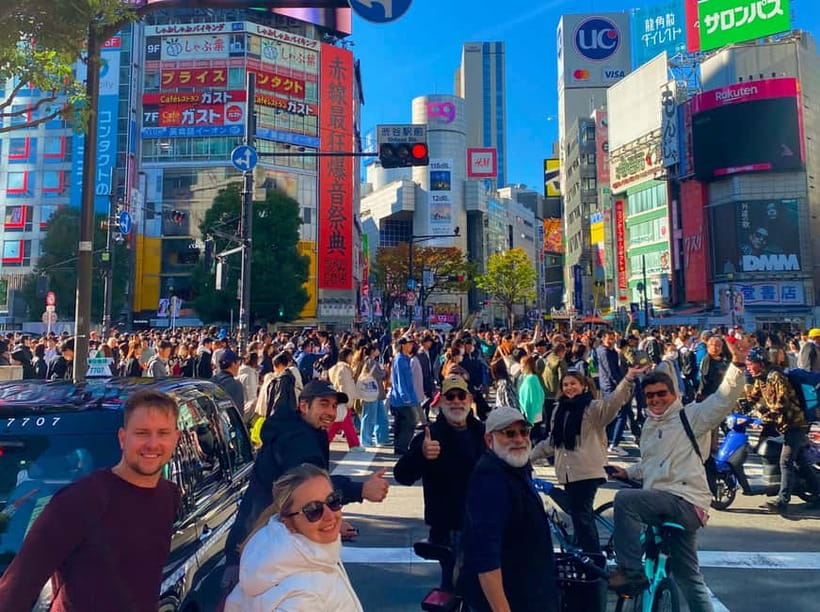
The final major stop is Shibuya Crossing, with around five minutes for photos and a brief visit. It is one of Tokyo’s essential city scenes, and arriving by bike gives the stop a satisfying place in the route. You have already passed quieter streets and historic sites, so the crowds and giant screens feel like a lively final act.
The tour ends at the Bell of Peace. Since the finish is different from the start, check your onward plans before booking. The activity information does not provide a detailed finish-to-station route, so ask the guide if you need exact directions afterward.
Bikes, e-bikes, and the physical effort
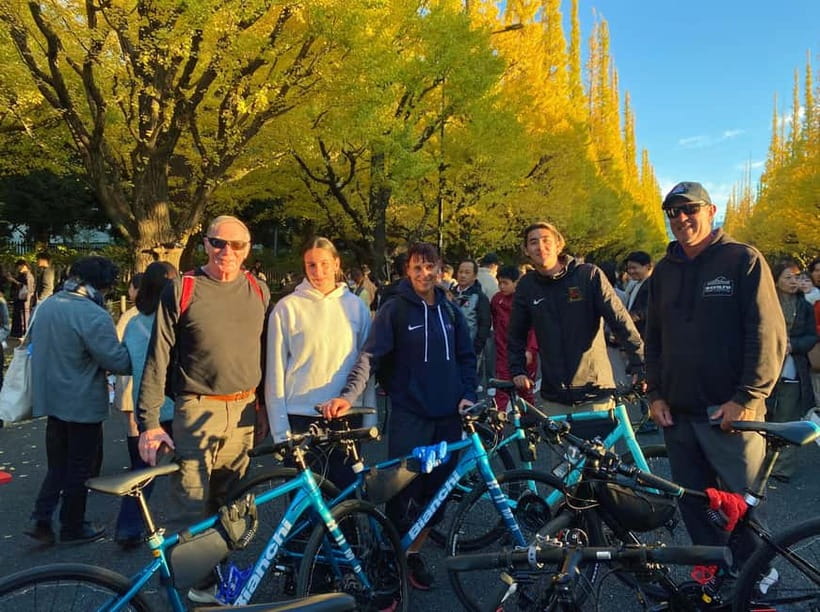
The standard bikes are high-quality cross bikes from Bianchi and Fuji. One rider specifically found a Bianchi easy to ride around the city, and another praised the bikes for making the ride more enjoyable. These are practical details, not decoration. A poorly fitted or heavy rental bike can turn a three-hour tour into a chore.
An e-bike option is available. Choose it if you do not cycle often, lack stamina, or feel uneasy about covering a long distance. The e-bike is not just for older riders. Tokyo’s heat, city traffic, and sustained riding can tire anyone, especially in summer.
You still need to know how to ride a bicycle. The tour is not suitable for children under 12, pregnant women, people with back problems, or anyone unable to cycle. The supplied information does not specify height limits, bike fitting details, or the exact distance, so contact the provider if those points matter to you.
The guides have earned praise for watching out for riders, choosing stopping points, and helping the group move safely through busy streets. That makes a difference in a city where traffic, pedestrians, and frequent intersections require attention. Still, you are responsible for riding carefully, following instructions, and judging your own comfort.
The guides make the difference
The tour is offered in English and Japanese, with English-speaking guides available. The best guide experience here is conversational rather than lecture-heavy. Casey has been praised for giving the right amount of information, taking photos, and helping riders stop and explore. Shin has been described as flexible and personable, while Miguel and KG were singled out for humor and explanations about history, culture, and daily life.
Guide quality matters because several stops are brief. A good guide can explain a temple or gate in a few clear minutes, point out what deserves your attention, and keep the group moving. The strongest accounts describe guides who were friendly, professional, safety-conscious, and willing to adjust the route.
Private and small-group options are available. A smaller group is easier to manage at crossings and more pleasant when stopping for photos. It may also give you a better chance to ask questions or request a little more time in an area, though the exact flexibility depends on the guide and the day.
Is $60 a fair price?
At $60 per person, the tour sits in a reasonable range for a three-hour guided activity in Tokyo. The price includes the guide, Bianchi or Fuji cross bike, e-bike option, local stories, the bike pouch, and insurance. You are paying for equipment, route planning, and the ability to cover several districts without arranging rentals and navigation yourself.
The value is strongest if you are short on time or want a city overview before exploring independently. In three hours, you reach temple grounds, palace surroundings, formal civic buildings, Aoyama, Harajuku-area streets, and Shibuya. Reaching all of those areas by foot would be tiring, while doing it by train would break the experience into separate transfers.
The value is weaker if you want long visits inside buildings or plenty of free time at each stop. Many locations are photo stops lasting from three to 15 minutes. Add the ¥1,000 helmet fee in cash, and remember that food, drinks, and personal expenses are not listed as included.
Free cancellation is available up to 24 hours in advance, and you can reserve now and pay later. Starting times vary, so check availability when choosing your date.
Who should book this ride?
I would choose this tour for a first visit to Tokyo, especially if you want a quick introduction to central districts. It also suits repeat visitors who have already seen the major sights and want to connect familiar areas with quieter streets.
It is a good match for:
- Active sightseers who prefer movement to standing in queues.
- First-time visitors who want to understand how several central areas connect.
- Couples and friends who enjoy photos, short stops, and a social pace.
- Riders with limited stamina who select the e-bike.
- People with only a few days who want a broad orientation before choosing where to return.
I would skip it if you dislike city cycling, want a slow temple visit, or cannot comfortably ride for much of three hours. The route is active, the stops are short, and summer heat can make the ride harder than expected. The e-bike helps with effort, but it does not turn the activity into a car tour.
Should you book it?
Book this bike tour if you want to see Tokyo as a connected city rather than a checklist of train stations. The combination of Zojo-ji, the Imperial Palace, Akasaka, Aoyama, Cat Street, and Shibuya gives you a useful cross-section of old and new Tokyo, while the guides add context and keep the ride manageable.
Choose the e-bike if you rarely cycle, bring cash for the helmet, and arrive early enough to find the Commodore Perry statue. If your priority is entering major sights and spending an hour at each one, choose a walking tour or arrange separate visits. For an active, efficient introduction with good bikes and attentive guides, $60 is a sensible buy.
FAQ
How long is the Tokyo bike tour?
The tour lasts three hours.
Where does the tour meet?
Meet the guide near the Statue of Commodore Perry. It is about a three-minute walk from Daimon Station’s A6 exit.
Where does the tour finish?
The ride finishes at the Bell of Peace.
What languages are available?
The tour is offered in English and Japanese.
Are bikes included?
Yes. The experience includes high-quality Bianchi and Fuji cross bikes, with an e-bike option available.
Do I need to bring a helmet?
Helmets are available on site for ¥1,000 each. Bring the fee in cash.
Is bike insurance included?
Yes, bike insurance is included.
Can children join the tour?
Children under 12 cannot join.
What should I bring?
Bring comfortable shoes, water, and comfortable clothes. A small bike pouch is provided for your phone, wallet, and keys.
More E-Bike Rides in Tokyo
- Tokyo: 3h Private E-bike Tours, Starting at Your Hotel
★ 5.0 · 36 reviews - Hidden Kyoto E-Biking tour
★ 5.0 · 1,843 reviews - 5 Top Highlights of Kyoto Full Day Bike Tour (E-bike option)
★ 5.0 · 511 reviews - E-Bike Tours of the highlights of Kyoto!!!
★ 5.0 · 291 reviews
More Bike Tours in Tokyo
- Tokyo Guided Small-Group Biking Tour
★ 5.0 · 1,250 reviews - Tokyo Great Cycling Tour
★ 5.0 · 811 reviews - Tokyo Top Highlights 3h Guided E-bike Tour
★ 5.0 · 714 reviews - Tokyo: 3-Hour Bike or E-Bike City Highlights Tour
★ 4.8 · 435 reviews
Just added around Tokyo
- Private Arrival Transfer : Narita International Airport to Central Tokyo City★ 4.5 · 12 reviews
- Narita Airport(NRT): Private Transfer to Tokyo/Yokohama 1-9pax★ 5.0 · 47 reviews
- Private Transfer from Narita Airport to Yokohama Port and City★ 4.5 · 17 reviews
- [Narita Airport Terminals 1, 2] 40-60km Sawara Itako Historic Bike Tour★ 5.0 · 13 reviews
- 3 Day Japan Highlights Tour: Tokyo, Mt.Fuji, Nara, Kyoto, Osaka★ 5.0 · 22 reviews
- Small Town in the Big City: Tasting Tokyo’s Kichijoji★ 5.0 · 195 reviews
- Small Town in the Big City: Tasting Tokyo’s Kichijoji★ 5.0 · 16 reviews
- The 10 Tastings of Tokyo With Locals: Private Street Food Tour★ 5.0 · 48 reviews
Tokyo Tours, compared.

Mt Fuji and Hakone 1-Day Bus Tour Return by Bullet Train
Read our review →

teamLab Planets TOKYO Digital Art Museum Entry Ticket
Read our review →
Mt Fuji & Hakone Cruise, Drum Show Bullet Train 1 Day from Tokyo
Read our review →
Sumo Show Experience with Chicken Hot Pot and a Photo
Read our review →
Shinjuku Food Tour (13 Dishes at 4 Local Eateries)
Read our review →
Tokyo Mt Fuji 5th St & Hakone Cruise Bus Tour w/Bullet Train
Read our review →
Flagship 2-Hours Official Street Go-Kart Tour – Tokyo Bay Shop
Read our review →Browse the lists this tour appears in