
Reviewed · TOKYO TOURS
Tokyo : Authentic Samurai Experience in a Private Space.
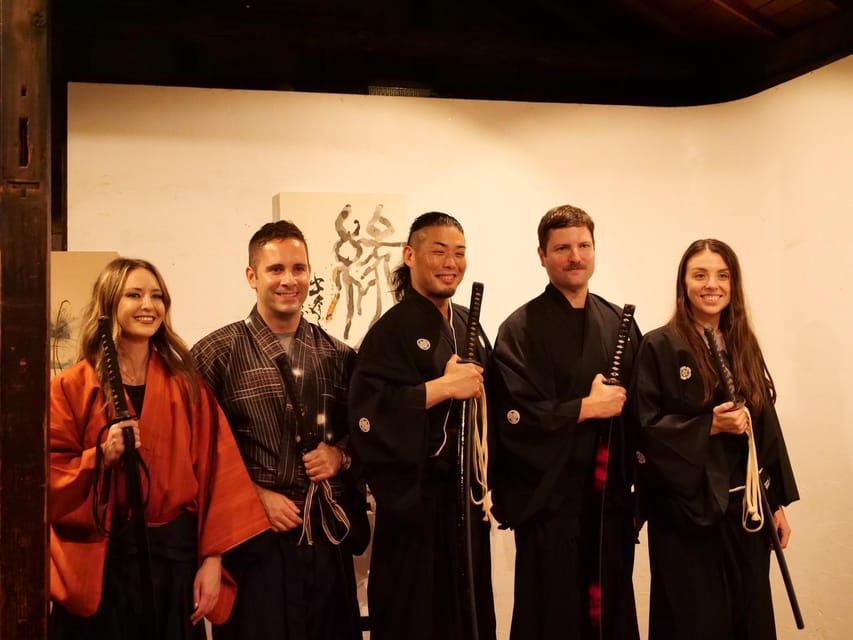
The most unusual part of this 90-minute Tokyo experience is the setting: an old private Japanese house where you put on formal samurai dress, learn Bushido etiquette, and handle a real sword. The session ends with a controlled fight against a samurai instructor, with safety rules in place.
I like the tiny group, limited to just three people, and the patient teaching style of Musashi-oka and the Sensei. I also like the calm finish: Yukari helps with the clothing, takes photos, and serves Japanese tea. The main consideration is the price, $322 per person, which is high for a short activity, and the program is not suitable for children under 10, pregnant women, or people with mobility impairments.
Key points to know before booking
- A real sword in your hands: You learn how to draw, handle, swing, and sheath a katana under instruction.
- An old private house setting: The traditional building gives the session a more personal feel than a large stage show.
- Small group of three: You get room for questions and individual corrections.
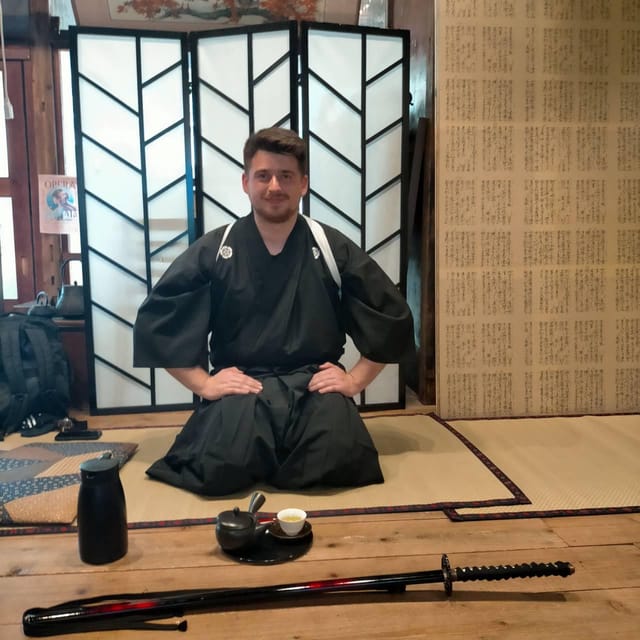
- Formal samurai clothing: Dressing is part of the experience, not just a costume photo at the end.
- Tea and photographs included: Yukari helps with dressing, records the occasion, and serves Japanese tea.
- Beginners are welcome: The instructor explains the movements from the start and keeps safety central.
Entering an old Japanese house for a samurai lesson
This is not a theater performance where you sit in the audience and watch actors trade blows. You take part from the beginning, first changing into formal samurai clothing inside an old private house. That setting matters. It gives the activity a quieter, more intimate tone and helps the clothing and etiquette feel connected to the place.
The meeting point has a signboard nearby. Follow the arrow and enter through the entrance. The available information does not give a detailed transport plan, so check the exact meeting instructions carefully before setting out.
The group is limited to three participants. I see that as a major advantage at this price. You are not one person in a crowd waiting for a turn. The instructor can watch your hands, stance, and sword movement, then offer corrections. It also gives you more freedom to ask about Bushido, samurai customs, or the construction of the sword.
The activity is offered in Japanese and English. That makes it accessible to international visitors, though sword movements are physical and visual, so you will still need to pay close attention to demonstrations and instructions.
More Samurai and Ninja Experiences in Tokyo
- Tokyo: Samurai Restaurant Show Ticket with 2 Drinks
★ 4.5 · 1,307 reviews - Tokyo: Samurai Ninja Museum Guided tour and Experience
★ 4.6 · 1,010 reviews - Tokyo: Samurai Sword & Archery Class from Samurai Descendant
★ 5.0 · 603 reviews
The kimono dressing comes first
The clothing is not an optional photo prop added at the end. It begins the session and prepares you for the role you are about to play. You change into formal samurai dress, learning how the garments are put on and worn.
Yukari helps with the dressing. She also takes photos during the experience, so you do not have to arrange every picture yourself. The clothing adds value in two ways: it gives you the classic Japanese portrait you came for, and it helps you understand that samurai conduct involved presentation and discipline as well as combat.
You should expect the dressing portion to take some of the 90 minutes. That is not wasted time, but it does mean the sword practice is not a full martial arts class. If your main goal is technical training, keep your expectations modest. If you want a compact cultural activity with hands-on practice and photographs, the balance makes sense.
The old house also gives the pictures a stronger setting than a plain studio backdrop. You can take a typical Japanese photo in a traditional private space, with the clothing and sword completing the scene.
Bushido explained through movement and etiquette
Before you start swinging, the instructor introduces the etiquette and ideas connected with Bushido. The program is designed to teach samurai culture from scratch, so you do not need previous martial arts experience.
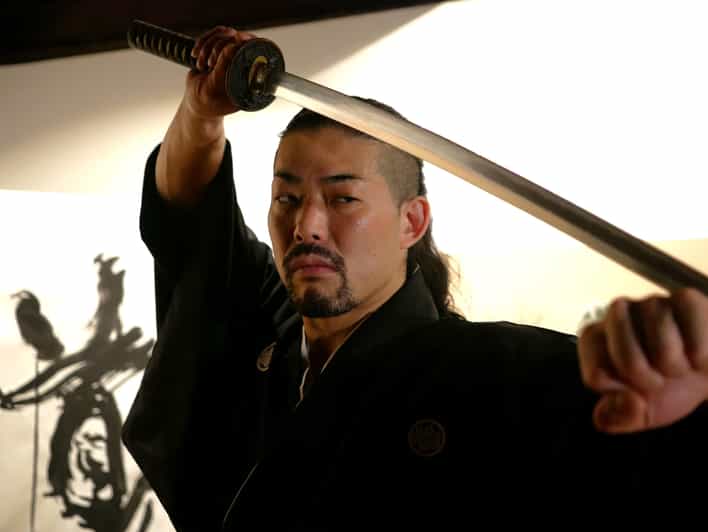
This part is important because the sword is not treated as a toy. The lesson links the weapon to posture, manners, control, and respect. You learn how to handle and move with it instead of simply waving it for a photograph.
The teaching style is a strong part of the experience. Musashi-oka and the Sensei are described as friendly, patient, and easy to understand. The instructor explains each stage, points out mistakes, and helps you improve without making a beginner feel foolish. That is exactly what you want when the equipment is unfamiliar and the movements need care.
An experienced martial artist may find the basic sequence too short. One participant with HEMA experience enjoyed learning how to wear the attire, draw and sheath the sword, use different stances, and swing the katana, but wanted a few more practice swings focused on the cutting motion. That is useful guidance. This is an introduction and cultural activity, not a long-term course.
Learning to draw, sheath, and swing a katana
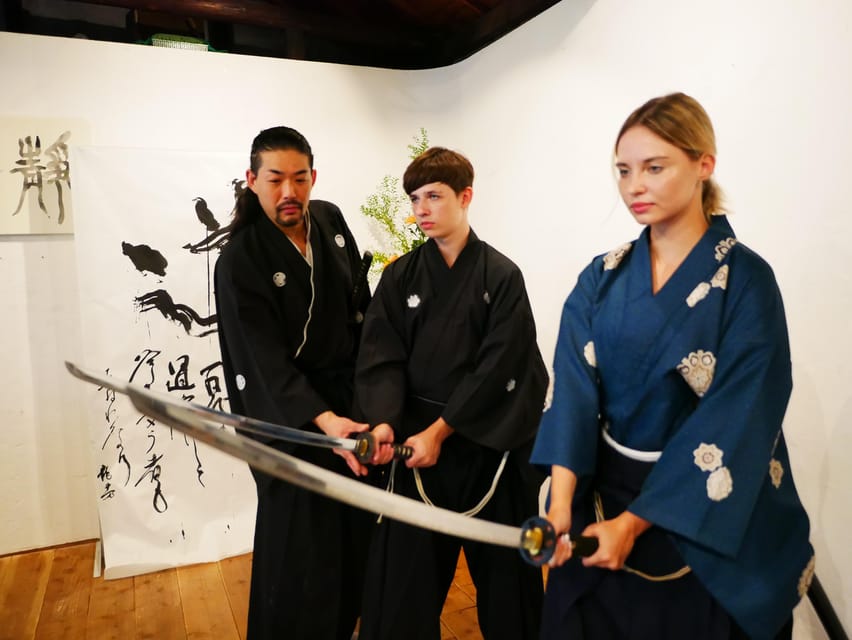
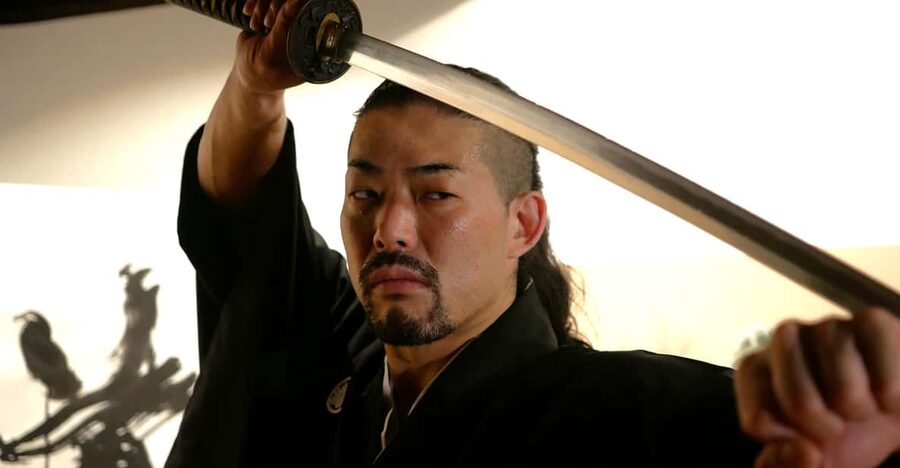
The practical lesson covers the handling of a real sword. You learn how to draw and sheath it, work on stances, and practice the swing. The instructor demonstrates the sequence, then helps you repeat it.
For a beginner, the value is in the close attention to small movements. A sword has weight, length, and a balance that may feel different from what you expect. The instructor’s corrections help you keep the movement controlled rather than turning it into a wild chop.
Safety is taken seriously. No one will point the blade at you. If you dislike being near the edge of the blade, tell the staff before the session begins. That is a practical point, not a minor footnote. You should be comfortable with the equipment before you start.
One useful extra request came from a participant who wanted to see how the samurai sword is assembled. The instructor willingly took the sword apart to show its parts. This is not listed as a standard part of the program, so you should ask politely at the end if the schedule allows. It could add a valuable bit of history and craft for anyone interested in weapons.
More samurai and ninja sessions in Tokyo:
- Best Samurai Experience in Tokyo
★ 5.0 · 458 reviews - Ninja Experience (Family Friendly) at Samurai Ninja Museum TOKYO
★ 5.0 · 441 reviews - Tokyo: Samurai Entertainment Night Show in Kanda Shrine
★ 4.6 · 417 reviews - Tokyo Sword Experience – includes Museum Ticket/Ninja Experience
★ 5.0 · 314 reviews
The final samurai match
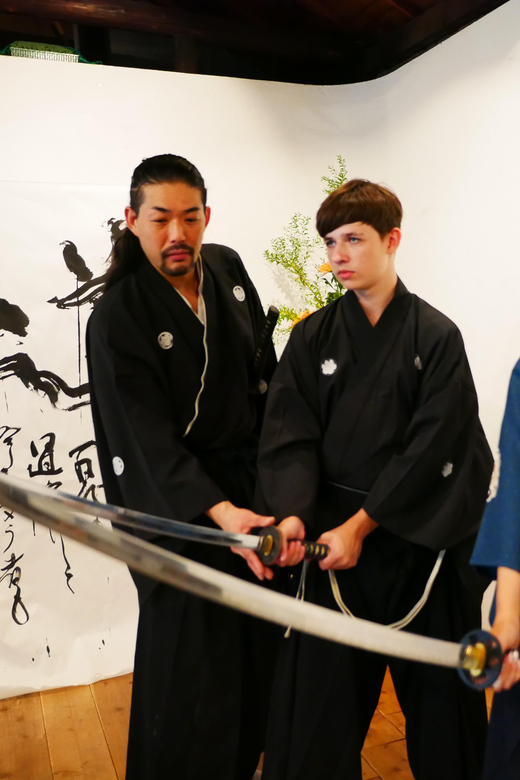
The climax is a fight against a real samurai instructor. The wording may sound dramatic, but this is a controlled demonstration and practice exchange, not an unsupervised duel. The safety precautions are built into the session, and the instructor directs the action.
This final part gives the earlier lessons a purpose. After learning the stance and sword movement, you get to use them in a structured encounter. It can be exciting without requiring you to have a fighting background.
At the same time, you should not book this expecting a long action scene. The full activity lasts only 90 minutes, and that time includes dressing, instruction, photos, the final match, and tea. The match is one section of a broader cultural program.
Tatami cutting may also be included in the practical sword work. One participant described cutting tatami and then attempting the technique from a seated position. The supplied program does not spell out exactly when tatami cutting happens or guarantee the seated version, so consider it a possible part of the hands-on training rather than a promise.
Tea, photos, and a slower ending
After the sword work, you sit down for Japanese tea. This change of pace is welcome. The session moves from clothing and etiquette to physical practice, then finishes with conversation and a drink.
Yukari serves the tea and helps make the last few minutes feel social rather than rushed. You can talk with the other participants and ask follow-up questions about Japanese culture. The tea is also a reminder that the activity is not only about combat. It pairs discipline and ceremony with hospitality.
The photos are another practical benefit. Yukari takes pictures and videos during the session, giving you a record of the clothing, sword handling, and traditional house. Because the group is so small, you should have a better chance of getting useful photographs than you would in a busy group attraction.
The building itself is part of the memory. You are not simply dressed in a modern room and sent home with a prop. The old private house gives the final portraits a sense of place, though the available details do not specify exactly how many photos or videos are provided.
Is $322 per person good value?
At $322 per person, this is an expensive 90-minute activity. You are paying roughly $3.58 per minute, though that calculation does not capture the private setting, small group, clothing, instruction, real sword, tea, and photos.
I would not recommend it to someone looking only for a cheap cultural activity. Tokyo offers many less costly ways to drink tea, wear a kimono, or see samurai-themed entertainment. The price makes more sense if you specifically want hands-on sword handling with a professional instructor in a group of no more than three.
The small group is the key value point. Individual guidance is difficult to provide in a large class. Here, the instructor can correct your technique and answer questions. The private-house setting also gives the session a personal character that a commercial stage show cannot easily match.
History and weapon enthusiasts may find the price easier to justify, especially if they ask about the sword’s construction and take full advantage of the instruction. Beginners who want a memorable Japanese cultural activity may also find it worthwhile, provided they are happy with a short introduction rather than serious training.
Who should book this experience?
I would choose this for adults and older children who are curious about samurai culture, Japanese etiquette, traditional dress, or sword technique. It works well for couples, friends, and solo visitors who prefer a small group and direct contact with the instructor.
It is also a good fit for someone who wants a different kind of Japan photograph. You get the clothing, sword, and old-house setting in one activity, rather than arranging each part separately.
People with previous sword experience should understand the limits. You may enjoy comparing techniques, asking technical questions, and trying tatami cutting if it is available, but you may want more practice time than the 90-minute schedule allows.
This is not suitable for pregnant women, people with mobility impairments, or children under 10. Scooters are not allowed. If you are uncomfortable with a blade’s edge, tell the staff first, even though no one will point the blade at you.
Cancellation is flexible: you can cancel up to 24 hours before the activity for a full refund. You can also reserve now and pay later, which helps if your Tokyo schedule is still changing.
My practical verdict
Book this if you want a personal samurai lesson, not a passive show. The strongest reasons are the three-person limit, the patient English and Japanese instruction, the real sword, the formal clothing, and the old-house setting.
Skip it if $322 feels too high for 90 minutes or if you want a long technical training session. The program is short, and the sword practice is part of a wider cultural experience that also includes dressing, Bushido etiquette, photos, and tea.
For the right person, the combination is memorable. You learn the basics, handle a real katana carefully, face the instructor in a controlled match, and finish with tea rather than a hurried exit. That mix of ceremony, practice, and hospitality is what gives the experience its value.
FAQ
How long does the samurai experience last?
The experience lasts 90 minutes.
How many people are in each group?
The group is limited to three participants.
Is the activity available in English?
Yes. The instructor service is available in Japanese and English.
Is a kimono included?
Yes. The experience includes dressing in formal samurai clothing.
Do I use a real sword?
Yes. A real sword is included, and you learn how to handle and swing it under instruction.
Will I fight a samurai instructor?
Yes. The program includes a controlled sword fight against a real samurai, with safety precautions.
Is Japanese tea included?
Yes. Japanese tea is served after the samurai session.
Can I cancel for a full refund?
Yes. You can cancel up to 24 hours in advance for a full refund.
Just added around Tokyo
- Private Arrival Transfer : Narita International Airport to Central Tokyo City★ 4.5 · 12 reviews
- Narita Airport(NRT): Private Transfer to Tokyo/Yokohama 1-9pax★ 5.0 · 47 reviews
- Private Transfer from Narita Airport to Yokohama Port and City★ 4.5 · 17 reviews
- [Narita Airport Terminals 1, 2] 40-60km Sawara Itako Historic Bike Tour★ 5.0 · 13 reviews
- 3 Day Japan Highlights Tour: Tokyo, Mt.Fuji, Nara, Kyoto, Osaka★ 5.0 · 22 reviews
- Small Town in the Big City: Tasting Tokyo’s Kichijoji★ 5.0 · 195 reviews
- Small Town in the Big City: Tasting Tokyo’s Kichijoji★ 5.0 · 16 reviews
- The 10 Tastings of Tokyo With Locals: Private Street Food Tour★ 5.0 · 48 reviews
Tokyo Tours, compared.

Mt Fuji and Hakone 1-Day Bus Tour Return by Bullet Train
Read our review →

teamLab Planets TOKYO Digital Art Museum Entry Ticket
Read our review →
Mt Fuji & Hakone Cruise, Drum Show Bullet Train 1 Day from Tokyo
Read our review →
Sumo Show Experience with Chicken Hot Pot and a Photo
Read our review →
Shinjuku Food Tour (13 Dishes at 4 Local Eateries)
Read our review →
Tokyo Mt Fuji 5th St & Hakone Cruise Bus Tour w/Bullet Train
Read our review →
Flagship 2-Hours Official Street Go-Kart Tour – Tokyo Bay Shop
Read our review →Browse the lists this tour appears in