
Reviewed · TOKYO TOURS
Tokyo: Samurai Sword Academy in the Hometown of Last Samurai
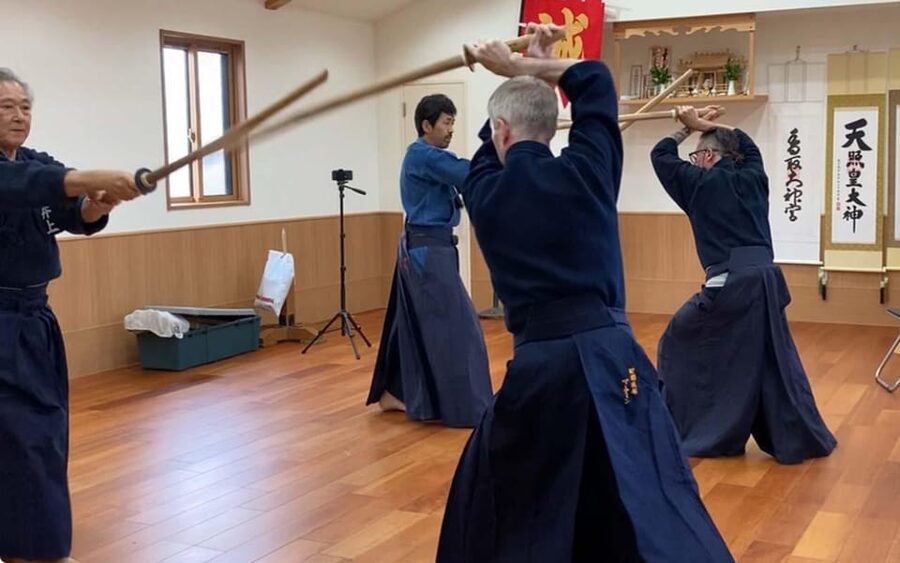
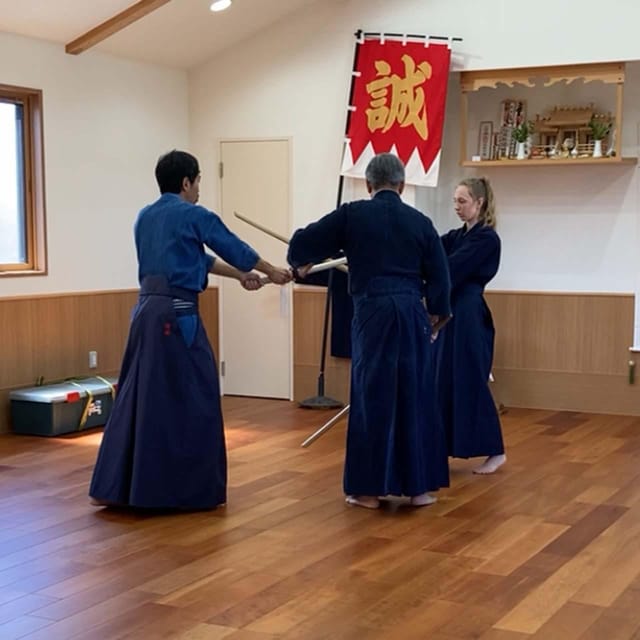
The most unusual thing about this Tokyo-area experience is that you train in the actual Tennen Rishin-ryu Hino Dojo, in the hometown of the Shinsengumi. This is not a staged samurai show. You learn basic posture, footwork, kata, and sword handling under instructors connected to the school’s long tradition.
I like the small class size, limited to four people, and the careful move from wooden-sword practice to a real Japanese sword. I also like the setting: the second floor of the Inoue Genzaburo Museum, a short walk from Hino Station. The main consideration is physical. The activity involves standing, footwork, and controlled sword movements, so it is not suitable for children under 18, people with mobility or heart problems, recent surgery, low fitness, or several other listed conditions.
Key points to know before you book
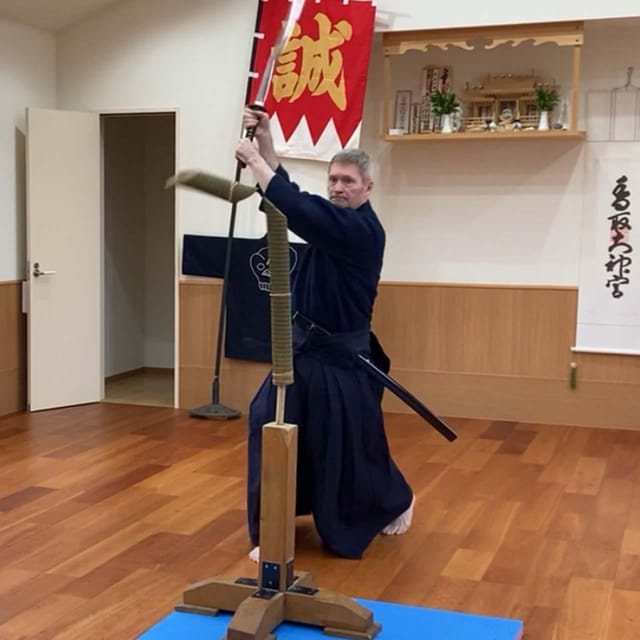
- Train in Tennen Rishin-ryu: Learn the sword school practiced by members of the Shinsengumi during the final years of the Edo period.
- Meet a direct family link to the Shinsengumi: Masao Inoue leads the program and is a descendant of Shinsengumi executive Genzaburo Inoue.
- Move from basics to a real sword: Your session includes posture, footwork, kata, wooden-sword work, and Japanese-sword handling.
- Practice in a genuine dojo: The training hall is part of the Inoue Genzaburo Museum and has the equipment needed for the lesson.
- Keep the class personal: With no more than four participants, the instructors can correct your stance and pace the lesson carefully.
- Allow time for Hino: The venue is about five minutes on foot from Hino Station on the JR Chuo Line, outside central Tokyo.
Why Hino is the right place for this sword lesson
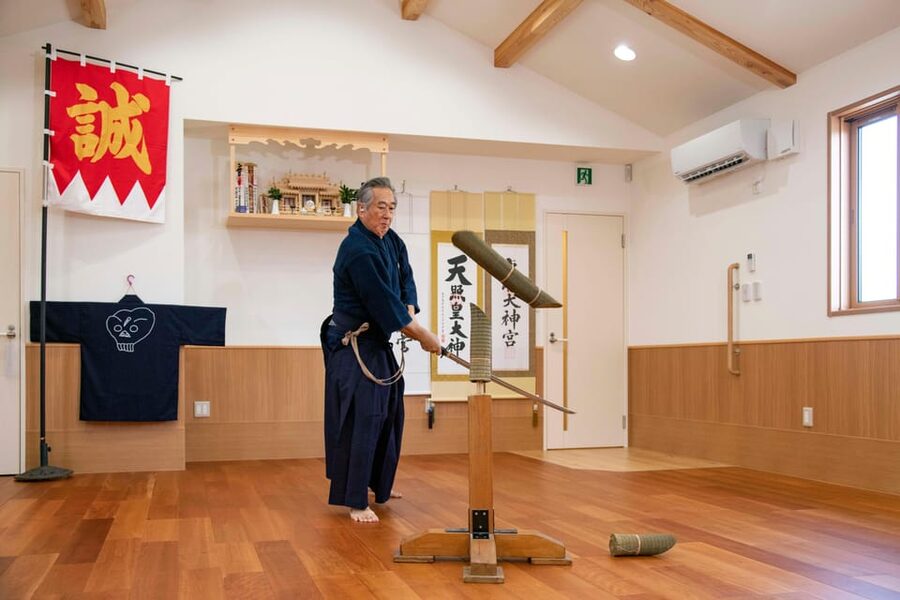
Tokyo offers plenty of samurai-themed entertainment, but Hino gives this activity a stronger sense of place. The city is tied to the Shinsengumi, the group of swordsmen formed at the end of the Edo period by men who practiced Tennen Rishin-ryu.
The Shinsengumi became known as the Last Samurai. That title can sound like marketing shorthand, but here it has a clear local connection. You are not simply dressing up in a uniform and posing with a sword. You are learning in a dojo associated with the sword tradition itself, in the town linked to several of the group’s members.
That setting matters. The lesson takes place on the second floor of the Inoue Genzaburo Museum, only about five minutes from Hino Station. You get a museum connection and a working practice hall in one stop. The atmosphere is part of the experience, especially if you have already read about the late Edo period or seen films about the Shinsengumi.
I would not choose this activity only because you want a photograph in samurai clothing. The uniform is included, but the main point is instruction. You will be expected to listen, repeat movements, and pay attention to your feet and body position.
More Samurai and Ninja Experiences in Tokyo
- Tokyo: Samurai Restaurant Show Ticket with 2 Drinks
★ 4.5 · 1,307 reviews - Tokyo: Samurai Ninja Museum Guided tour and Experience
★ 4.6 · 1,010 reviews - Tokyo: Samurai Sword & Archery Class from Samurai Descendant
★ 5.0 · 603 reviews
Meeting Masao Inoue and the dojo instructors
Masao Inoue, chairman of the Tennen Rishin-ryu Hino Dojo, leads the program. He is a descendant of Genzaburo Inoue, a Shinsengumi executive, which gives the historical introduction a personal link that a general cultural show cannot easily match.
The instructors teach in English and Japanese. The language arrangement is useful, but this remains a physical lesson, not a lecture. You will watch demonstrations, copy movements, and receive corrections. The small group limit is especially valuable here because sword work depends on details that are hard to catch in a crowded class.
The teaching style is serious without being cold. The instructors explain not only what to do, but why posture and foot placement matter. One useful point from the session is that correct footwork helps prevent injury. That practical focus is welcome. It keeps the experience from becoming a collection of dramatic sword poses.
You should expect patience rather than instant mastery. Kata can take time to remember, especially if you have never practiced Japanese martial arts. The instructors are able to slow the lesson down and guide beginners through the sequence.
The two-hour lesson, step by step
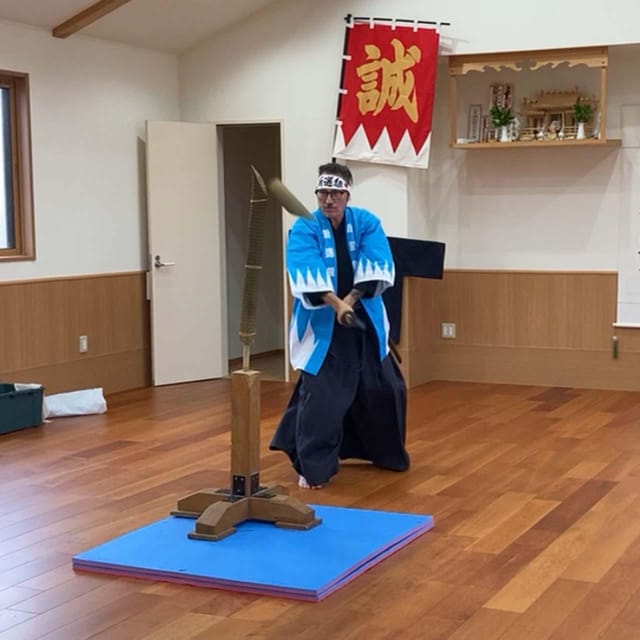
The exact starting time depends on availability, but the activity lasts two hours. The structure builds gradually, which is important because you do not begin by swinging a real sword.
Getting dressed in dogi and hakama
Your practice clothing is included: a dogi and hakama, along with the dandara baori associated with the Shinsengumi. You do not need to bring a special outfit.
The clothing helps set the tone, but it also serves a practical purpose. A proper practice uniform makes the class feel like training rather than theater. The included costume is useful for anyone who wants the full visual connection to the period, though the real value comes from what follows.
Because you will be moving, wear something comfortable underneath and avoid arriving in clothing that restricts your legs. The activity data does not specify changing-room details, so keep your personal packing simple and ask the provider if you need special arrangements.
More samurai and ninja sessions in Tokyo:
- Best Samurai Experience in Tokyo
★ 5.0 · 458 reviews - Ninja Experience (Family Friendly) at Samurai Ninja Museum TOKYO
★ 5.0 · 441 reviews - Tokyo: Samurai Entertainment Night Show in Kanda Shrine
★ 4.6 · 417 reviews - Tokyo Sword Experience – includes Museum Ticket/Ninja Experience
★ 5.0 · 314 reviews
Learning posture and footwork
The first physical work focuses on how to stand and move. This may sound basic, but it is where the lesson earns its keep. A sword movement is not just an arm motion. Your feet, balance, distance, and body position all affect control.
I like this part because it gives you a better understanding of Japanese swordsmanship than a quick demonstration would. You begin to see why the instructors insist on form. Even if you never train again, you leave with a clearer sense of the discipline behind the image of the samurai.
This is also the point where the fitness requirement becomes clear. You need to stand and move for much of the session. People with back problems, mobility impairments, vertigo, heart problems, recent surgeries, or low fitness should not treat this as a casual sightseeing stop.
Practicing with a wooden sword
After the basic movements, you work with a wooden sword. The lesson includes kata, or set forms, that let you practice the sequence in a controlled way before handling a Japanese sword.
The wooden sword stage gives you room to make mistakes. You can focus on the order of movements, the position of your hands, and the timing of your step without the same concern that comes with a sharp blade. The instruction is staged, so beginners can build confidence at a sensible pace.
You may find that the movements are more demanding than they look. The challenge is not brute strength. It is remembering the pattern while keeping your posture and footwork steady. That is why the class size matters. With only four participants, the instructors can give close attention to each person.
Handling a Japanese sword
The program then lets you handle a real Japanese sword. This is the moment many people book the experience for, but it comes after the training for good reason.
The sword is treated as more than a prop. The lesson places it within samurai culture, where the blade was regarded as the soul of the samurai. You will be shown how to handle it as part of a disciplined practice rather than simply lifting it for a picture.
Follow every instruction closely. Keep your attention on the instructor and avoid treating the sword like a toy. The program is designed to teach control, and that respect is part of the cultural experience.
Trying a cutting exercise
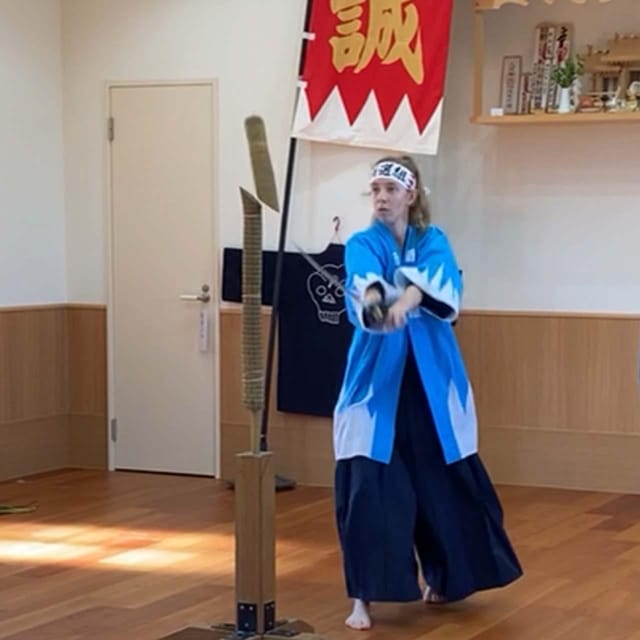
The final practical stage includes an opportunity to cut tatami mats with a real sword. This gives the earlier posture and footwork a clear purpose. You can feel how alignment and movement affect the cut, rather than just repeating an abstract form.
Some descriptions of the session refer to a bamboo cutting exercise, while the activity details and other accounts identify tatami cutting. The safest expectation is a supervised cutting exercise using the materials selected by the dojo on the day.
Do not assume this is a guaranteed action-movie moment. The point is controlled technique, not speed or spectacle. You might find the most satisfying part is realizing that the basic movements you practiced earlier are connected to the final task.
The session may also include an extra surprise at the end. No details are provided, so it is best to let that remain a surprise rather than booking the experience for it.
What makes the instruction feel worthwhile
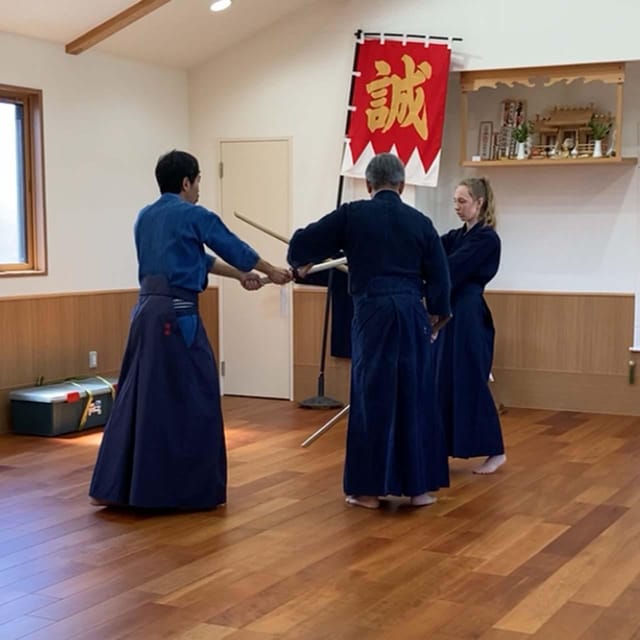
The strongest part of this activity is the balance between history and hands-on training. You learn about the Shinsengumi and Hino, but the history is tied to the room, the school, and the family of the dojo chairman.
You also get a lesson that has real progression. First comes posture and footwork. Then you practice kata with a wooden sword. Finally, you handle a Japanese sword and attempt a cutting exercise. That sequence helps you understand why samurai swordsmanship required discipline and repetition.
I would pay attention to the instructors’ corrections even if you are mainly interested in the cultural side. Small adjustments can change the feel of a movement, and they give you a better sense of how a traditional martial art is passed on.
The setting is another strong point. The training hall is described as spacious and well kept, with quality equipment. That matters when the experience includes sword handling. A cramped room or poorly organized class would undercut the sense of care. Here, the dojo atmosphere supports the lesson.
Is $116 a fair price?
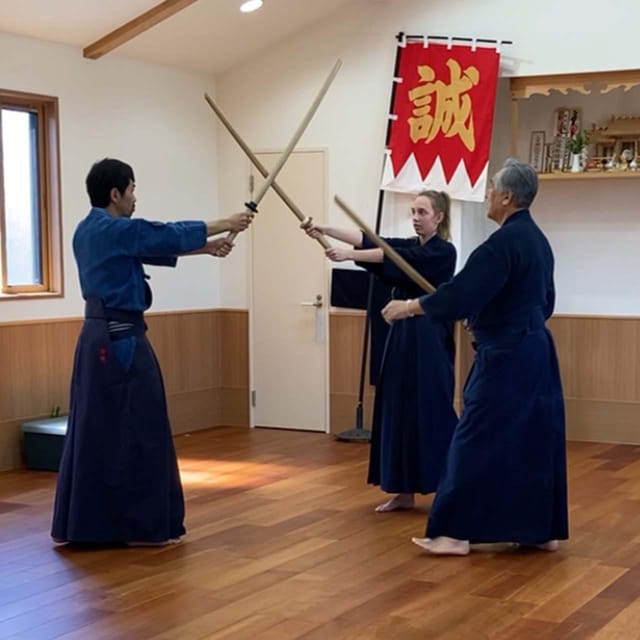
At $116 per person, this is not a budget activity. You are paying more than you would for a short museum visit or a basic dress-up session.
The value comes from the combination. The price includes an instructor and master, swordsmanship training, a wooden sword, a Japanese sword, dogi and hakama, and the Shinsengumi-style dandara baori. You also receive a small-group lesson in an actual dojo, rather than a large presentation designed for quick turnover.
For me, the price makes sense if you want instruction and historical context, not just a souvenir photograph. The four-person limit is a major part of the value. Sword technique needs individual correction, and a large class would make that harder.
It is less attractive if you are unsure about physical activity or want a relaxed cultural talk. This is a lesson, and you will spend much of the two hours paying attention to movement. The cost is easiest to justify for people who are genuinely curious about Japanese martial arts, the Shinsengumi, or traditional sword handling.
Getting to Hino from central Tokyo
The meeting point is on the second floor of the Inoue Genzaburo Museum, a five-minute walk from Hino Station on the JR Chuo Line. That makes the final approach simple once you arrive at the station.
Hino is not in the middle of the usual central Tokyo sightseeing circuit, so plan the outing as a separate part of your day. The short walk from the station is convenient, but you still need to allow enough time for the train journey from wherever you are staying.
I like that the meeting point is specific and easy to identify. You are not being sent to a vague street corner or a hotel lobby. The museum and dojo connection also means you begin the activity in the right historical setting.
The provider offers free cancellation up to 24 hours before the activity for a full refund, and you can reserve now and pay later. Those terms are useful if your Tokyo schedule is still shifting.
Who should book this experience
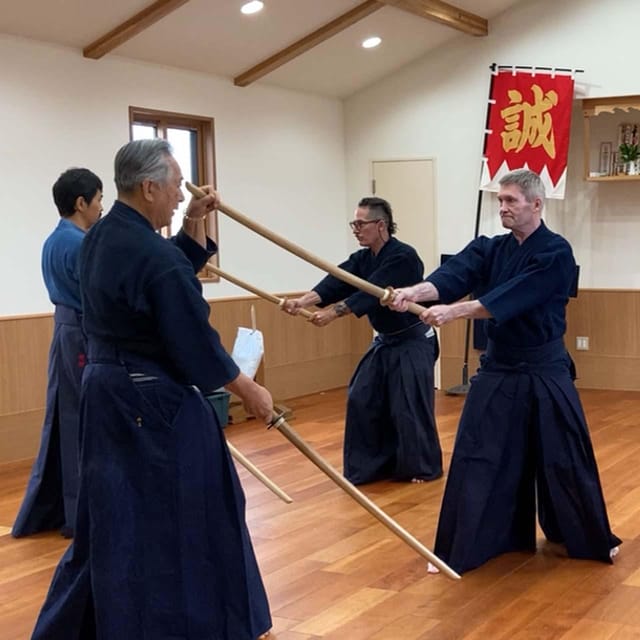
I would recommend it most strongly to adults who want an active cultural experience and are willing to follow instruction carefully. It is a good match for:
- People interested in the Shinsengumi and late Edo-period Japan
- First-time visitors who want something beyond temples and shopping
- Martial arts fans curious about Tennen Rishin-ryu
- Couples or friends who prefer a small class to a large group show
- Visitors who want to handle a real Japanese sword under supervision
- People comfortable with standing, footwork, and repeated practice
The activity is limited to people 18 and older. It is not suitable for pregnant women, wheelchair users, people with mobility or heart problems, people with vertigo, recent surgery, back problems, a cold, or low fitness. The listed restrictions also include people over 75 and those with altitude sickness, even though altitude sickness is an unusual concern for a Tokyo activity.
The language options are English and Japanese. If you need detailed instruction in a language other than those, this is not the right choice.
A few practical ways to prepare
You do not need to bring a wooden sword, Japanese sword, practice uniform, or Shinsengumi coat. All of those are included as part of the experience.
Wear comfortable clothing underneath the supplied uniform. You will be moving your feet and body, so this is not the time for restrictive clothing or shoes that make movement awkward.
Arrive ready to concentrate. You will get more from the session if you treat the dojo with respect and listen before attempting each movement. A little patience pays off, especially during kata practice.
If you are planning other Hino sights, allow enough time around the two-hour lesson. The activity itself is fixed in length, and the meeting point is tied to the museum. The supplied information does not provide a full schedule of nearby attractions, so do not build a tightly timed Hino itinerary without checking opening hours separately.
Should you book the Hino Samurai Sword Academy?
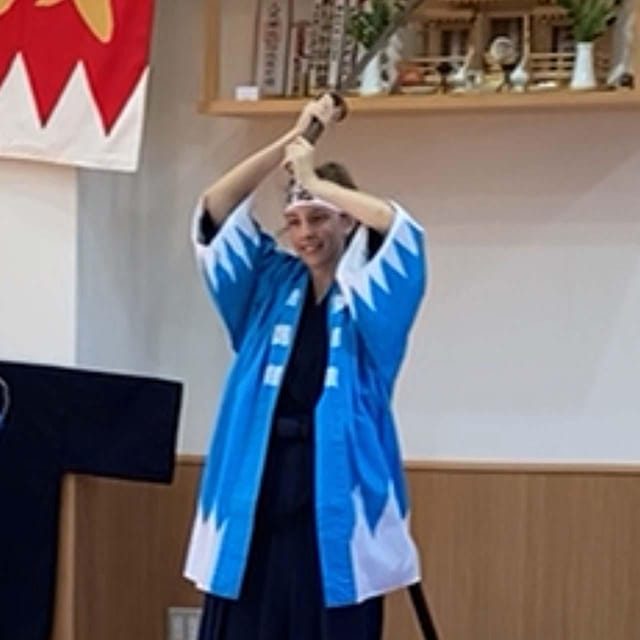
Book it if you want the real work behind the samurai image: stance, footwork, kata, controlled sword handling, and a supervised cutting exercise. The family connection to Genzaburo Inoue, the actual Tennen Rishin-ryu dojo, and the four-person limit give it more substance than a standard tourist performance.
Skip it if you want a passive activity, have any of the listed health restrictions, or feel uneasy around real swords. At $116, it deserves to be chosen for the training and setting, not just the costume.
For the right person, this is a memorable way to connect Hino’s history with your own hands and feet. You leave with more than a samurai pose. You have a basic feel for the discipline that shaped the Shinsengumi.
FAQ
Where does the swordsmanship experience take place?
It takes place on the second floor of the Inoue Genzaburo Museum in Hino, about a five-minute walk from Hino Station on the JR Chuo Line.
How long does the activity last?
The swordsmanship experience lasts two hours.
How many people are in each group?
The activity is offered as a small group with no more than four participants.
Which languages are available?
Instruction is available in English and Japanese.
Who leads the experience?
Masao Inoue, chairman of the Tennen Rishin-ryu Hino Dojo and a descendant of Shinsengumi executive Genzaburo Inoue, leads the program. Instructors also assist with the lesson.
What is included?
The experience includes a master, an instructor, swordsmanship instruction, a wooden sword, a Japanese sword, dogi and hakama practice clothing, and a dandara baori associated with the Shinsengumi.
Is the activity suitable for children?
No. The experience is not suitable for children under 18 years old.
Just added around Tokyo
- Private Arrival Transfer : Narita International Airport to Central Tokyo City★ 4.5 · 12 reviews
- Narita Airport(NRT): Private Transfer to Tokyo/Yokohama 1-9pax★ 5.0 · 47 reviews
- Private Transfer from Narita Airport to Yokohama Port and City★ 4.5 · 17 reviews
- [Narita Airport Terminals 1, 2] 40-60km Sawara Itako Historic Bike Tour★ 5.0 · 13 reviews
- 3 Day Japan Highlights Tour: Tokyo, Mt.Fuji, Nara, Kyoto, Osaka★ 5.0 · 22 reviews
- Small Town in the Big City: Tasting Tokyo’s Kichijoji★ 5.0 · 195 reviews
- Small Town in the Big City: Tasting Tokyo’s Kichijoji★ 5.0 · 16 reviews
- The 10 Tastings of Tokyo With Locals: Private Street Food Tour★ 5.0 · 48 reviews
Tokyo Tours, compared.

Mt Fuji and Hakone 1-Day Bus Tour Return by Bullet Train
Read our review →

teamLab Planets TOKYO Digital Art Museum Entry Ticket
Read our review →
Mt Fuji & Hakone Cruise, Drum Show Bullet Train 1 Day from Tokyo
Read our review →
Sumo Show Experience with Chicken Hot Pot and a Photo
Read our review →
Shinjuku Food Tour (13 Dishes at 4 Local Eateries)
Read our review →
Tokyo Mt Fuji 5th St & Hakone Cruise Bus Tour w/Bullet Train
Read our review →
Flagship 2-Hours Official Street Go-Kart Tour – Tokyo Bay Shop
Read our review →Browse the lists this tour appears in