
Reviewed · KYOTO TOURS
Guided Gion Tour: Explore Kyoto’s Historic Geisha District
Gion is best understood on foot, and this private tour gives you a local guide to explain what you are seeing beyond the handsome wooden buildings. You move through Hanamikoji Street, Yasaka Shrine, Maruyama Park, and nearby temple grounds while keeping an eye out for maiko and geisha.
I like the private format, since your group can ask questions instead of following a large crowd. I also like the choice of timing: an early start brings quieter streets, while an evening walk shows Gion under its streetlights. The main catch is that a geisha or maiko sighting is never guaranteed, and the tour does not include private time with one.
Key points to know before booking
- Private group of up to eight: You pay $350 for the group, not per person, so the price works best when several people share it.
- About two hours on foot: The route covers Gion, the Izumo no Okuni Statue, Chion-in Temple Gate, Yasaka Shrine, Maruyama Park, and Hanamikoji Street.
- Geisha sightings are possible, not promised: The guide takes you to places where you have a better chance of seeing a maiko or geisha, but no meeting or photo session is included.
- Ahmed and Mat have guided groups: Ahmed is specifically praised for his punctuality and clear explanations, while Mat is noted for being considerate and ready for questions.
- Flexible time of day: Morning tours can bring fewer crowds, while evening tours show Gion after the lights come on.
- Good-weather requirement: You receive a different date or a full refund if poor weather causes cancellation.
Why a guide helps in Kyoto’s Gion district
Gion can look simple at first: narrow lanes, dark wooden facades, tea houses, and people moving between shops and shrines. The details become more useful when someone explains the customs and meaning behind them. A private guide can point out the places connected with Kyoto’s traditional performing arts and answer the questions that rarely occur to you until you are standing there.
This matters most in a district where the appeal is often subtle. You are not visiting one grand monument and checking it off a list. You are reading the streets, noticing preserved architecture, and learning how Gion fits into Kyoto’s cultural life.
The guides also take you to areas where you may have a better chance of seeing a maiko or geisha. Keep your expectations sensible. A sighting depends on timing and chance, and the experience is not a scheduled encounter. One particularly important point is that the tour does not include time with a geisha or maiko.
The private setup is useful for families and small groups. You can ask as many questions as you like, and your guide can respond to the interests of your own party rather than giving a fixed speech to a large group.
More geisha-district evenings:
- Kyoto Geisha Walking Tour: Gion District & Hidden Gems
★ 4.7 · 3,273 reviews - Kyoto: Gion Magical Night Walking Tour with Geisha Trivia
★ 4.9 · 2,393 reviews - Kyoto: Gion Geisha District Walking Tour – Stories of Geisha
★ 4.7 · 2,187 reviews
Beginning with Gion and Hanami Street
The main Gion portion takes about an hour, making it the central part of the walk. This is where you see the old architecture, tea houses, and streets associated with Kyoto’s geisha culture.
Hanami Street is one of the places where you might be lucky enough to see a geisha or maiko. The wording matters: the guide can take you to likely areas, but the tour cannot control who appears. If seeing a performer is your only reason for booking, you may find the result uncertain. If you want context about the district itself, the walk offers more dependable value.
This section is also where a guide’s personal style matters most. Ahmed received praise for being punctual and for explaining local customs in a way that gave the streets more meaning. Mat was described as considerate and able to answer questions. There was also one poor account of a guide being distant and not informative, so the service may not feel identical on every departure.
You should also expect a walking tour rather than a performance. The focus is on seeing Gion and understanding its setting, not on entering a tea house or arranging a private meeting with a performer.
The Izumo no Okuni Statue and the story of kabuki
The 15-minute stop at the Izumo no Okuni Statue adds a performing-arts connection to the route. The statue honors Izumo no Okuni, the figure associated with the founding of kabuki theater.
This is a short stop, but it helps connect Gion’s present-day image with Japan’s broader stage traditions. You can ask your guide about Okuni and the way her work changed Japanese entertainment. It is a useful pause between the streets of Gion and the larger religious sites nearby.
Do not expect a long museum-style presentation here. The value comes from the explanation, the location, and the way the stop links Kyoto’s theater culture with its older neighborhoods.
Chion-in Temple Gate in 15 minutes
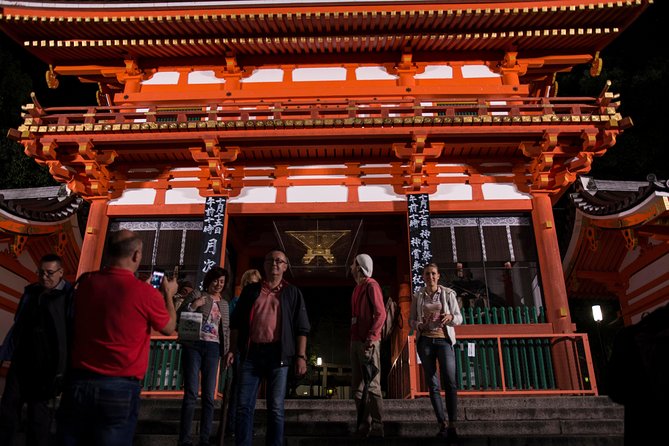
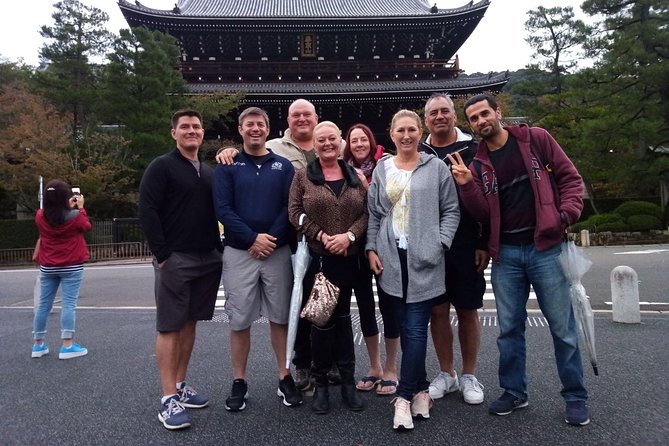
The Chion-in Temple Gate is one of the route’s strongest visual stops. The large wooden entrance reflects the scale and craftsmanship of the temple complex, with carved details that reward a closer look.
The visit is brief, about 15 minutes, and admission is free. That makes the guide’s explanation especially useful. You can learn what you are looking at without spending time arranging tickets or working out the route alone.
A short stop also means you will not have time for a full temple visit. Think of this as an introduction to Chion-in rather than a detailed exploration of the grounds. If temple interiors and extended religious visits are high on your list, you will need separate time beyond this tour.
More history-led days in Kyoto:
- Kyoto Gion: 2-Hour Geisha Culture & History Walking Tour
★ 5.0 · 1,186 reviews - Kyoto Gion Historical Walking Tour
★ 5.0 · 188 reviews - Historical Kyoto E-Bike Tour
★ 5.0 · 181 reviews - Kyoto: Nijo Castle World Heritage Guided Tour with Admission
★ 5.0 · 128 reviews
Yasaka Shrine, Kyoto’s lively spiritual center
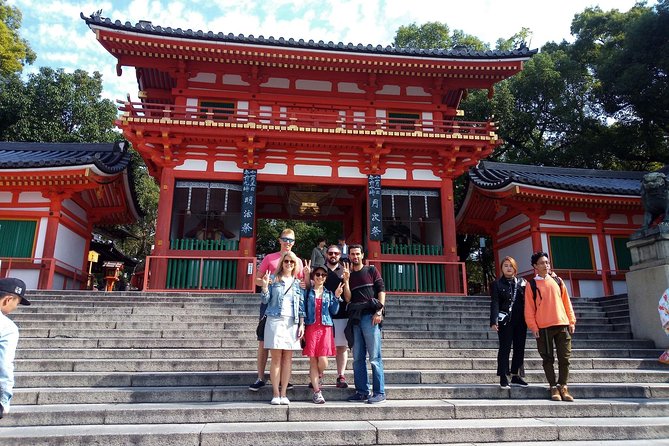
Yasaka Shrine comes next, with about 10 minutes set aside for the visit. Its lantern-lit paths and role in Kyoto’s festivals give the stop a different feel from the quiet wooden lanes of Gion.
The shrine is a good place to ask about the customs you see around you. A guide can make a quick visit more than a photo stop by explaining how the shrine fits into local religious and community life.
Ten minutes is enough to see the main atmosphere and take photos, but it is not a long shrine tour. You will need to keep moving, particularly if your group wants to cover every scheduled stop within the two-hour window.
Maruyama Park for a slower pause
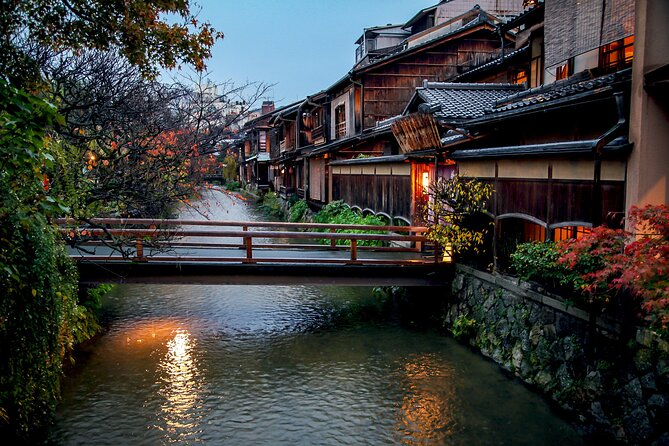
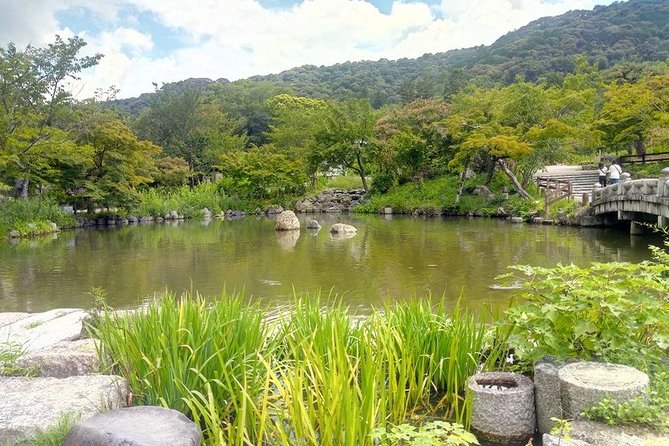
Maruyama Park provides a change of pace after the streets and shrine grounds. Its paths, ponds, and seasonal cherry blossoms offer a more open setting, and the park gives you a chance to pause during the walk.
The scheduled visit lasts about 10 minutes. That is enough for a short stroll and photographs, but not enough for a leisurely park visit in every season. If the weather is hot, this is also the point where pacing becomes important.
One family found the heat difficult and had to stop for a short rest. Some members missed part of the commentary because the walking pace was hard for them. This is a useful warning for anyone visiting Kyoto in warm weather: bring water, wear comfortable shoes, and tell the guide if your group needs a slower pace.
Hanamikoji Street and the classic Gion view
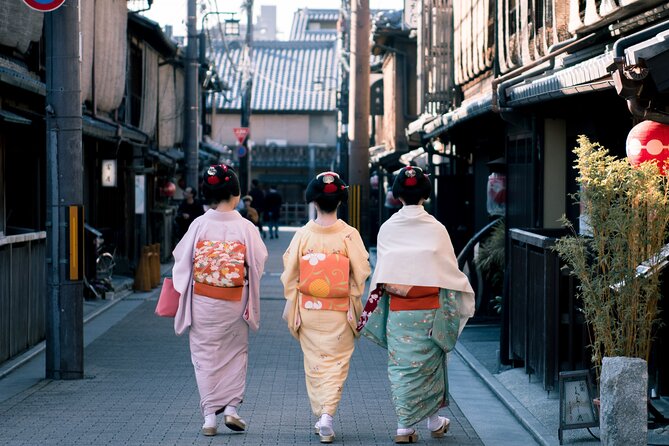
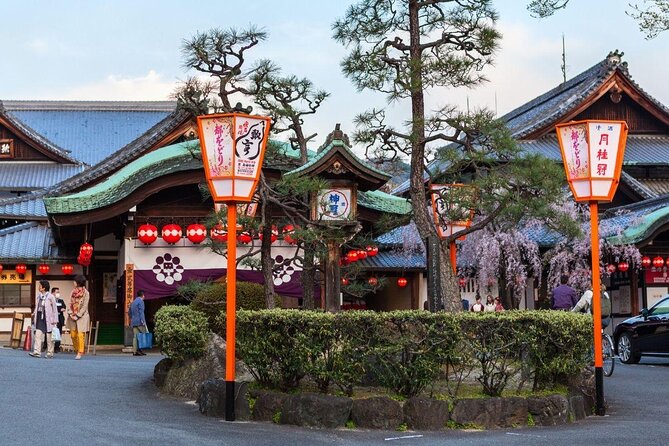
Hanamikoji Street is the final listed stop and another key photo location. Traditional teahouses and wooden machiya houses line the street, giving you one of the clearest views of Gion’s old character.
The stop is planned for about 10 minutes, though the larger Gion section also includes time in the district. You can expect a short walk, photographs, and an explanation of the street’s connection to the local entertainment district.
This is likely to be one of the most memorable parts of the tour for first-time visitors because it looks much like the Kyoto many people hope to see. At the same time, it can be the place where expectations need the most care. The street is a real working district, not a staged set, and a maiko sighting may or may not happen during your visit.
Morning quiet or evening lights?
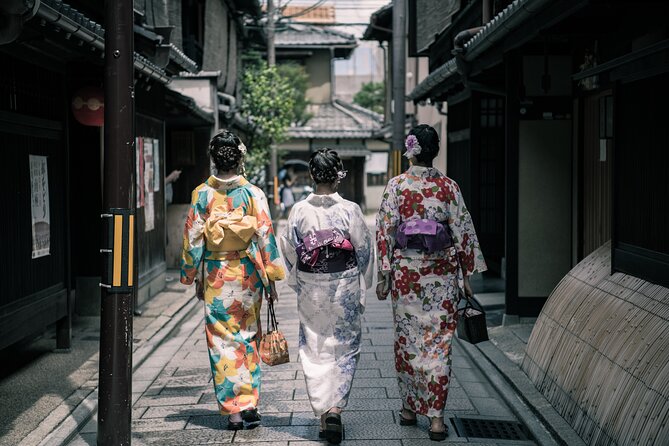
Tours are offered throughout the day, giving you some control over the mood of the experience. An early morning departure is the practical choice if you want fewer people in the streets and a calmer walk. It may also make photography easier.
An evening tour offers a different reward. As the streetlights come on, Gion takes on a more atmospheric appearance, especially around the traditional facades and lantern-lit areas. The tradeoff is that evening timing does not guarantee more sightings of geisha or maiko.
Your choice should depend on what matters most. Pick morning for quieter streets and a gentler start to the day. Pick evening if you care more about the district’s after-dark appearance. Since the tour lasts only about two hours, the selected time has a noticeable effect on the feel of the outing.
What the private format is worth at $350
The price is $350 per group of up to eight people. That makes the cost $43.75 per person if you fill all eight places, before considering any currency differences or booking charges. For two people, the effective price is much higher, so this tour is better suited to a family or group of friends.
The fee covers guiding and management. The listed stops do not require admission tickets, so you are mainly paying for the guide’s time, route planning, and explanations rather than entry to a paid attraction.
I see the best value here in the questions you can ask. If you want to understand Kyoto customs, the geisha district, kabuki connections, and the meaning of the shrines and temples, a private guide can add much more than a self-guided walk.
The value is weaker if you only want a quick photo walk. You can visit these public areas without booking a tour, and the price is substantial for a two-hour outing. The tour makes more sense when several people share the cost and when cultural context matters to you.
This experience is often booked about 40 days in advance. That does not guarantee that every departure sells out, but it does suggest that you should plan ahead if your Kyoto dates are fixed.
Pace, transport, and practical comfort
The tour is mainly a walking experience, with several short stops joined by time in the Gion area. Pickup is offered, and one family’s guide met them at Kyoto Station and took them by bus to Gion. Confirm the pickup details for your booking, since the meeting arrangement can affect how you plan your morning or evening.
The tour is near public transportation, which makes it easier to reach or leave the area. A mobile ticket is provided, and confirmation arrives at booking.
Most people can participate, but the heat and pace deserve attention. A two-hour walk can feel long in Kyoto’s summer weather, particularly for children, older family members, or anyone who needs regular rests. Tell your guide early if the group needs a slower rhythm.
The activity requires good weather. If poor weather cancels the tour, you are offered another date or a full refund. You can also cancel for a full refund up to 24 hours before the start time. Cancellations or changes made within 24 hours are not refunded or accepted.
Who will enjoy this Gion walk most?
I would choose this tour for a first visit to Kyoto when you want an introduction to Gion without spending half a day on a large group excursion. It also suits families and friend groups that prefer to ask questions freely and keep the focus on their own interests.
It is a good match for you if you want:
- A short orientation to Gion’s traditional streets
- Context about geisha, maiko, tea houses, and local customs
- Stops at Yasaka Shrine, Maruyama Park, Chion-in Temple Gate, and Hanamikoji Street
- A chance to see a maiko or geisha without expecting a guaranteed sighting
- Morning or evening scheduling
- A private group rather than a shared tour
I would hesitate if you need a guaranteed encounter with a geisha or maiko, a tea ceremony, temple admission, or an extended visit inside any one site. None of those are part of the stated experience.
The guide also affects the quality of the outing. Ahmed and Mat received especially positive comments for clear explanations, punctuality, consideration, and answering questions. One dissatisfied account described a guide as unfriendly and not informative, so it is fair to allow for some variation.
Should you book the Guided Gion Tour?
Book it if you are sharing the $350 cost with a group and want a focused, private introduction to Kyoto’s most famous traditional district. The combination of Gion streets, Hanamikoji, Yasaka Shrine, Maruyama Park, and the Chion-in Gate gives you a good range of cultural sights in two hours.
Book it with the right expectation: you are paying for access to a guide’s explanations and a well-planned walk, not for a guaranteed geisha sighting. If that distinction works for you, the tour can turn a pretty but confusing neighborhood into a place you understand.
FAQ
How long is the Guided Gion Tour?
The tour lasts approximately two hours.
How many people can join the private tour?
The private tour is available for a group of up to eight people.
How much does the tour cost?
The price is $350 per group of up to eight people.
Does the tour guarantee a geisha or maiko sighting?
No. The guide takes you to places where you are more likely to see a geisha or maiko, but a sighting is not guaranteed.
Does the tour include time with a geisha or maiko?
No. The tour does not include a private meeting or scheduled time with a geisha or maiko.
What places are visited?
The route includes Gion, the Izumo no Okuni Statue, Chion-in Temple Gate, Yasaka Shrine, Maruyama Park, and Hanamikoji Street.
Is pickup available?
Yes. Pickup is offered, and the tour is near public transportation. One listed arrangement involved meeting at Kyoto Station and taking a bus to Gion.
Can I cancel for a refund?
Yes. You can cancel at least 24 hours before the start time for a full refund. Cancellations or changes made less than 24 hours before the tour are not refunded or accepted.
Just added around Kyoto
- Kyoto: Zen Meditation at a Private Temple with a Monk★ 5.0 · 25 reviews
- Kyoto: Gion Geisha District & Sake-in-Hand Walking Tour★ 5.0 · 37 reviews
- Private Pewter Sake Cup Experience with a Kyoto Artisan★ 5.0 · 31 reviews
- Your Private Vacation Photography Session In Kyoto★ 5.0 · 110 reviews
- Private Guided Traditional Buddhist Cooking in Japan★ 5.0 · 16 reviews
- Kyoto Wagashi(Japanese sweets) Cooking Class near Fushimiinari★ 5.0 · 60 reviews
- Traditional Japanese Music show & Experience Tour in Kyoto★ 5.0 · 57 reviews
- Kyoto:Family-Friendly Kimono & Yukata Experience at WARGO★ 5.0 · 147 reviews
Kyoto Tours, compared.


Fushimi Inari, Kinkakuji, Bamboo Grove 1 Day Bus Tour
Read our review →
Tea Ceremony in a Traditional Tea House in Kiyomizu
Read our review →
Kyoto Geisha Walking Tour: Gion District & Hidden Gems
Read our review →

Gion Magical Night Walking Tour with Geisha Trivia
Read our review →

Gion Geisha District Walking Tour – Stories of Geisha
Read our review →Browse the lists this tour appears in