
Reviewed · KYOTO TOURS
Itajime Shibori Scarf Class
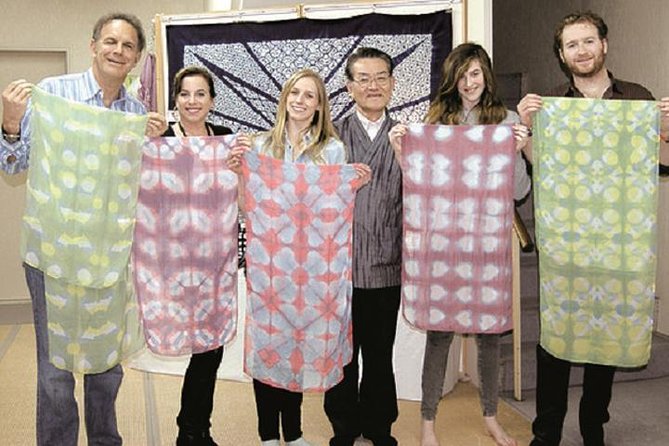
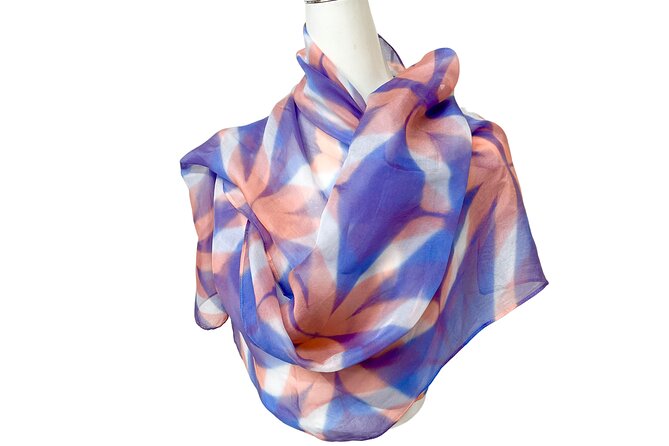
Itajime shibori turns a plain scarf into a small piece of Japanese textile art. You fold and clamp the fabric, choose your colors, and reveal the pattern after dyeing. The best part is that you do not need artistic training. Clear, patient instruction makes the process easy to follow, even for children and teenagers.
I like the hands-on format and the chance to take home something you made yourself. I also like that the class connects the craft to the museum’s displays, including finely worked shibori pieces and information about kimono fabric. The main consideration is the short, variable schedule: allow up to an hour, and remember that finding the classroom on the second floor can take a little attention.
Key points to know before you book
- Your scarf is made with traditional folding and dyeing methods, not simply decorated with a printed design.
- The museum visit adds real context, with shibori displays, a film, and examples of intricate textile work.
- The class suits families and beginners, with a minimum age of 6 and a maximum group size of 10.
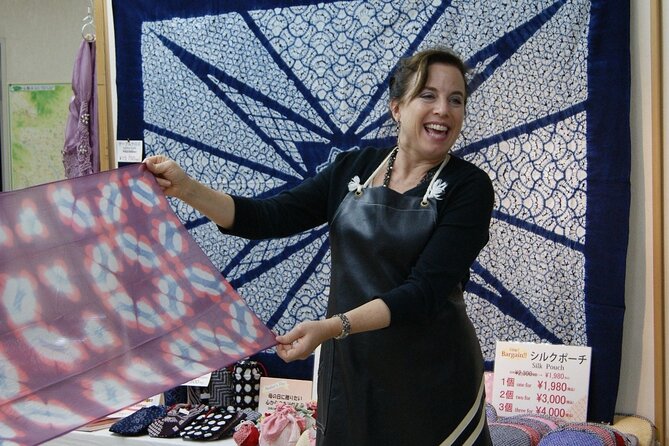
- Staff offer close guidance, and June is one instructor praised for patient, careful help.
- You pay $43.60 per person, a fair price for instruction, museum access, and a handmade souvenir.
- Plan for 30 to 60 minutes, with some time afterward to see the second-floor exhibition while your scarf dries.
Making a scarf in Kyoto, one fold at a time
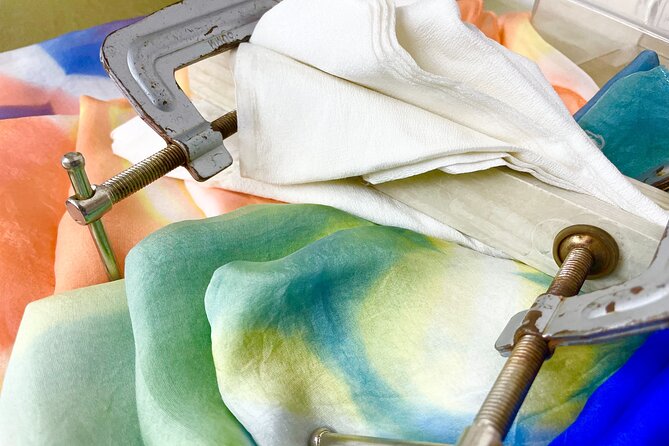
Itajime shibori is a resist-dyeing method. You fold fabric into a planned shape, then use blocks or other traditional tools to stop dye from reaching certain sections. When the fabric opens, the protected areas create the pattern.
That basic idea sounds simple. The result is not. Small changes in a fold or clamp can alter the final design, which gives your scarf a personal quality. You are not copying a factory pattern. You are making a one-off piece, with a little help from the people who teach the craft.
The class begins with a choice of Japanese fabrics and colors. The information provided does not list the exact fabric options, so you should expect the available selection to depend on the day. Staff then explain the steps and guide you through arranging the material before it is dyed.
I appreciate this format because the craft remains accessible. You do not spend hours learning a complex textile process, but you still get a genuine sense of how pattern and color are controlled. The class is short enough to fit into a busy Kyoto day, yet substantial enough to leave you with more than a quick souvenir-shop purchase.
The final reveal is part of the fun. After the fabric is opened and finished, you see how your folds and color choices worked together. Several people especially enjoyed this moment, and one family appreciated receiving a certificate for a child who completed the scarf.
More hands-on workshops in Kyoto:
- Kyoto: 45-Minute Tea Ceremony Lesson Experience
★ 4.3 · 2,378 reviews - Ramen Cooking Class at Ramen Factory in Kyoto
★ 5.0 · 1,937 reviews - Kyoto : Chopsticks Making Workshop in Gion with Engraving Option
★ 5.0 · 958 reviews
What happens during the 30 to 60 minute class
The published duration is approximate, from 30 minutes to one hour. That range makes sense for a craft activity. Your time can vary with the group size, the pace of instruction, and the drying or finishing process.
You begin by selecting fabric and deciding how you want the scarf to look. The instructor then demonstrates the folding and clamping method. Pay attention here. The folds are the part you control, and they shape the areas where dye can or cannot reach.
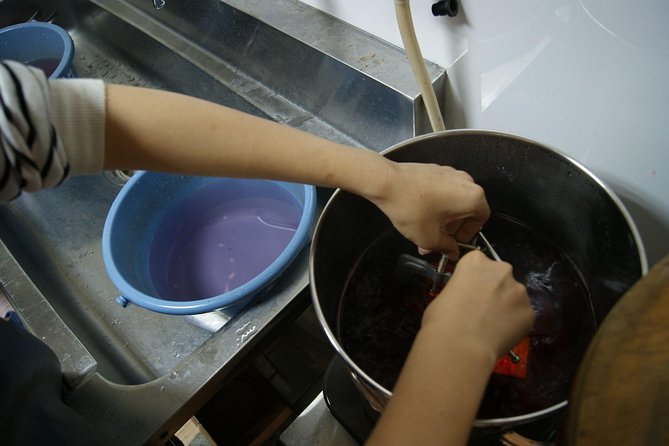
Next comes the dyeing. Staff take you through the practical steps, so you are not left guessing about how to handle the fabric. The class is designed for beginners, and the small maximum of 10 people helps keep the teaching personal.
The scarf is then opened and finished. You may have time to visit the museum while it dries. That makes the waiting period useful rather than wasted, and it gives you a second way to understand the work you have just attempted.
One useful detail: the class has been described as particularly comfortable for solo participants because the instruction can feel personal. Families also fit well, since the minimum age is 6 and children, parents, and teenagers can all take part. Adult pricing applies to all ages, so check the total cost carefully if you are booking for a family.
Why the second-floor museum matters
The museum is not just a room where you make a scarf. Its exhibition helps show how demanding shibori can be when practiced at a high level.
You can see finished textile works on the second floor, and a film explains the process. The display gives you a better sense of the time and precision behind Japanese dyed fabrics, including the work associated with kimono production. After trying a simple technique yourself, those elaborate pieces become easier to understand.
I would make sure you leave time for the museum rather than treating it as an optional extra. The class teaches you one small method. The exhibition shows how many forms and levels of detail the wider craft can contain.
Some of the displays are described as especially beautiful, with intricate masterpieces that help explain why handmade shibori fabric can command respect and higher prices. You may also find textile-related items available for purchase, including shibori pieces and accessories. Any shopping is separate from the class price, so consider it an extra rather than part of the package.
The museum visit also gives the experience a stronger cultural purpose. You are not only making a colorful scarf. You are seeing the difference between a beginner’s project and the work of skilled artisans, then learning why the technique has lasted in Japan.
The people make the class work
A craft class depends heavily on instruction. Here, the staff are repeatedly described as kind, attentive, and willing to explain each step.
June is specifically praised for patient and considerate instruction. Kenji and the museum team are also associated with the warm welcome and personal attention that shape the experience. The supplied information does not identify every staff member’s exact role, so I would think of these names as people you may encounter rather than guaranteed instructors for every booking.
That personal approach matters if you feel unsure about crafts. You do not have to arrive with a strong sense of color or design. One participant who did not consider themselves artistic still enjoyed the whole class, and teenage sons also found it engaging.
The class can be relaxing, too. It is a quiet activity with a clear sequence: choose, fold, dye, reveal. If your Kyoto schedule has been packed with temples and crowded streets, an hour spent working with fabric offers a welcome change of pace.
The staff also seem to take the finishing touches seriously. Scarves are dried and packaged, and the care given at the end helps the object feel like a keepsake rather than a school project. That is a small detail, but it matters when you are carrying handmade items through the rest of your trip.
A few more Kyoto half-days to weigh up
- PERFECT KYOTO 1-Day Bus Tour
★ 5.0 · 13,518 reviews - Kyoto: Fushimi Inari, Kinkakuji, Bamboo Grove 1 Day Bus Tour
★ 4.8 · 4,316 reviews - Kyoto: Tea Ceremony in a Traditional Tea House in Kiyomizu
★ 4.9 · 3,519 reviews - Kyoto Geisha Walking Tour: Gion District & Hidden Gems
★ 4.7 · 3,273 reviews
Location and practical arrival advice

The activity takes place at the Kyoto Shibori Museum in Kyoto. It is near public transportation, and the museum is described as about a two-minute walk from the castle, making it easy to pair with a visit to that major sight.
The exact transit route is not supplied, so check your booking confirmation and map before setting out. The building can be a little hard to identify from the street because the classroom is on the second floor and is not strongly marked outside. Look up for the museum or classroom entrance, and allow a few extra minutes rather than arriving at the last moment.
There are two car parking spaces and bicycle parking spaces at the site. That is useful information, but the very limited car capacity means you should not assume a space will be available. Public transportation is the safer plan for most Kyoto visitors.
A mobile ticket makes the booking easy to carry on your phone. Confirmation is sent at the time of booking. Since the class has a maximum of 10 people, advance booking is sensible, particularly if you have a fixed Kyoto itinerary.
The activity is listed as suitable for most participants, with a minimum age of 6. No more specific accessibility information is provided, so if you have mobility needs, contact the provider before booking rather than assuming the second-floor classroom will suit you.
Is $43.60 a fair price?
At $43.60 per person, this is not the cheapest activity in Kyoto, but it offers more than a short craft demonstration. You receive instruction, fabric, the dyeing activity, a finished scarf to take home, and admission to the museum exhibition.
A handmade scarf also has a practical advantage over many standard souvenirs. It is light, useful, and tied to a specific experience. Each piece will vary according to your folds and color choices, so it carries a story from your trip.
The value is strongest if you would otherwise buy a textile souvenir or spend money on a museum visit. You are combining both in one compact outing. It is also good value for a family activity if your group enjoys making things together, though adult pricing applies to children as well.
The price may feel less attractive if you only want a quick look at shibori or have no interest in crafts. The class is the main reason to book. The museum makes it better, but it does not replace the hands-on portion.
Who will enjoy this most?
I would recommend the class to first-time visitors who want a cultural activity they can actively take part in. It works well between larger sightseeing stops and gives you a tangible reminder of Kyoto.
Families should consider it, especially with children aged 6 and older. The process is clear, the time commitment is manageable, and the finished scarf gives children a sense of accomplishment. Teenagers may also appreciate it more than a standard museum visit because they are making something rather than only looking at objects.
It also suits solo visitors. The small group limit and close instruction can make the class feel personal, even when you arrive alone. If you enjoy fabric, clothing, color, design, or traditional Japanese arts, the museum displays will add plenty of interest.
Couples and friends can compare their finished patterns, which makes the final reveal more social. The activity is also a good choice for a slower morning or afternoon when you want an hour indoors.
I would be less likely to recommend it if your schedule is so tight that a 30- to 60-minute activity would create stress. The duration is short, but you still need time to reach the museum, find the second-floor classroom, complete the class, and see the exhibition.
How to fit it into a Kyoto day
The museum’s location near the castle makes pairing the two activities practical. You could visit the castle area first, then walk to the museum for a calmer craft session, or make the scarf class your starting point before sightseeing nearby.
Allow more than the stated class duration if you want to watch the film and study the second-floor displays. The scarf may be drying while you look around, so the overall visit can feel longer than the hands-on portion alone.
I would also avoid placing it immediately before a train or timed reservation unless you have a generous buffer. The class is listed as approximately 30 to 60 minutes, not a guaranteed fixed length. Kyoto days are easier when you give small experiences room to breathe.
Free cancellation is available if you cancel at least 24 hours before the local start time. Cancellations or changes made within 24 hours are not refunded or accepted, so check your schedule before the deadline.
The main strengths and the one real drawback
The strongest feature is the combination of making and learning. You get to use a traditional method, then see expert examples that put your own work in context.
The second strength is the staff. Personal guidance, patient explanations, and a friendly atmosphere matter more here than flashy presentation. The experience depends on people helping you feel comfortable with an unfamiliar craft, and the available information points to a team that takes that role seriously.
The final strength is the souvenir itself. A scarf is easy to pack and useful at home, while the pattern gives you a reminder of the choices you made in Kyoto.
The drawback is modest but worth noting: the arrival point can be confusing, and the class is upstairs with limited exterior signage. The flexible duration may also require some planning. Neither issue should stop you booking, but both are easy to handle if you check the location and leave extra time.
Should you book the Itajime Shibori Scarf Class?
Book it if you want a small, personal Kyoto experience rather than another stop where you only look at things. The $43.60 price is reasonable for a guided craft, a museum visit, and a finished scarf, especially if you value useful souvenirs and traditional Japanese design.
It is particularly well suited to families, solo visitors, couples, and anyone who likes crafts but does not think of themselves as artistic. Go with enough time to find the second floor and see the exhibition. If you prefer fast sightseeing or have no interest in textile work, spend your hour elsewhere. For most visitors seeking a calm cultural activity near the castle, this is an easy choice to make.
FAQ
How long does the Itajime Shibori Scarf Class last?
The class lasts approximately 30 minutes to one hour. The full visit may take longer if you spend time viewing the second-floor museum displays or the film.
How much does the class cost?
The price is $43.60 per person. Adult pricing applies to all ages, including children.
What is included in the experience?
The experience includes the shibori scarf-making class, the materials and Japanese fabric used for the project, museum admission, and the finished scarf to take home.
What is the minimum age?
The minimum age is 6 years old.
How many people can join the class?
The activity has a maximum of 10 participants.
Can I visit the museum as part of the experience?
Yes. The itinerary includes admission to the Kyoto Shibori Museum, where you can learn about shibori and see textile displays on the second floor.
Is the museum easy to find?
The museum is near public transportation and is described as about a two-minute walk from the castle. The classroom is on the second floor and may not be clearly marked from the street, so allow extra time to locate it.
Can I cancel for a refund?
You can cancel at least 24 hours before the experience start time for a full refund. Cancellations or changes made less than 24 hours before the local start time are not refunded or accepted.
Just added around Kyoto
- Kyoto: Zen Meditation at a Private Temple with a Monk★ 5.0 · 25 reviews
- Kyoto: Gion Geisha District & Sake-in-Hand Walking Tour★ 5.0 · 37 reviews
- Private Pewter Sake Cup Experience with a Kyoto Artisan★ 5.0 · 31 reviews
- Your Private Vacation Photography Session In Kyoto★ 5.0 · 110 reviews
- Private Guided Traditional Buddhist Cooking in Japan★ 5.0 · 16 reviews
- Kyoto Wagashi(Japanese sweets) Cooking Class near Fushimiinari★ 5.0 · 60 reviews
- Traditional Japanese Music show & Experience Tour in Kyoto★ 5.0 · 57 reviews
- Kyoto:Family-Friendly Kimono & Yukata Experience at WARGO★ 5.0 · 147 reviews
Kyoto Tours, compared.


Fushimi Inari, Kinkakuji, Bamboo Grove 1 Day Bus Tour
Read our review →
Tea Ceremony in a Traditional Tea House in Kiyomizu
Read our review →
Kyoto Geisha Walking Tour: Gion District & Hidden Gems
Read our review →

Gion Magical Night Walking Tour with Geisha Trivia
Read our review →

Gion Geisha District Walking Tour – Stories of Geisha
Read our review →Browse the lists this tour appears in