
Reviewed · KYOTO TOURS
Kyoto: Private Flexible 3 hours tour with a local guide
Kyoto is a city where a little local help can save a lot of time. This private, flexible tour lets you choose one to three places, such as Fushimi Inari, Kiyomizu-dera, Gion, Arashiyama, or even a local market. Your guide handles the route and adds context instead of marching you through a fixed checklist.
I like the personal format, especially for families or anyone visiting Kyoto for only a few hours. I also like the practical help: guides such as Steven, Toshiki, Teppei, Nanako, and Kyoichi have helped with temple customs, photos, translation, food choices, taxis, and SIM cards. The main catch is that transportation, food, and some admission fees are extra, and fitting three major sights into two or three hours can be a stretch.
Key points to know before booking
- Choose your own Kyoto stops: Build a route around one to three places, rather than accepting a preset schedule.
- Private means private: Only your party joins the tour, so the pace and questions can fit your group.
- Expect walking and public transport: No private car or driver is included, and transportation costs are separate.
- Fushimi Inari takes effort: The red torii gates continue up a mountain, so even a short visit involves uphill walking.
- Guides add practical local help: The service includes support with taxis, SIM cards, customs, translation, photos, and bookings.
- Best for a focused introduction: The tour works well for families, first-time visitors, and people with limited time, but not for seeing all of Kyoto in one morning.
A private Kyoto plan instead of a fixed route
The best part of this experience is control. You can request a walk through Gion, a shrine visit, a food stop, the bamboo forest, several temples, or a mix of old neighborhoods and major sights. The guide then shapes the route around your interests and the time available.
That matters in Kyoto because the famous places are spread across the city. Fushimi Inari lies south of central Kyoto, while Arashiyama is far to the west. Kiyomizu-dera and Gion sit closer together, making them a more sensible pairing for a short outing. A local guide can help you avoid building a route that looks fine on a map but leaves you spending the whole tour on trains and buses.
You are not joining a large group, so you can ask direct questions and stop for photos without waiting for strangers. Families can ask for a slower pace, while experienced visitors can focus on food, architecture, shopping, or local customs. The guide can also help with practical tasks outside the formal sightseeing plan, including booking a taxi or buying a SIM card.
The guide roster includes Steven, Toshiki, Teppei, Nanako, and Kyoichi, also called Mark. Your assigned guide may differ, but the strongest pattern in the available feedback is personal attention. Steven is praised for adapting routes to different ages and interests. Toshiki is noted for patience, local insight, and a willingness to adjust the plan. Kyoichi helped a visitor cope with extreme summer heat by bringing cooling wipes, a small but useful sign of care.
The score is 4.8 out of 5, with a 94 percent recommendation rate from 18 ratings. That is a strong result, though the small number of ratings means you should still understand the tour format clearly. This is a guide service, not a private sightseeing vehicle or a fully prepackaged day trip.
A few more Kyoto half-days to weigh up
- 3-Hour Kyoto Insider Sake Brewery Tour with Tastings & Pairings
★ 5.0 · 917 reviews - Kyoto: 3-Hour Fushimi Inari Shrine Hidden Hiking Tour
★ 4.9 · 270 reviews - Kyoto Imperial Palace & Nijo Castle Guided Walking Tour – 3 Hours
★ 4.5 · 106 reviews
Fushimi Inari and its long tunnel of red gates
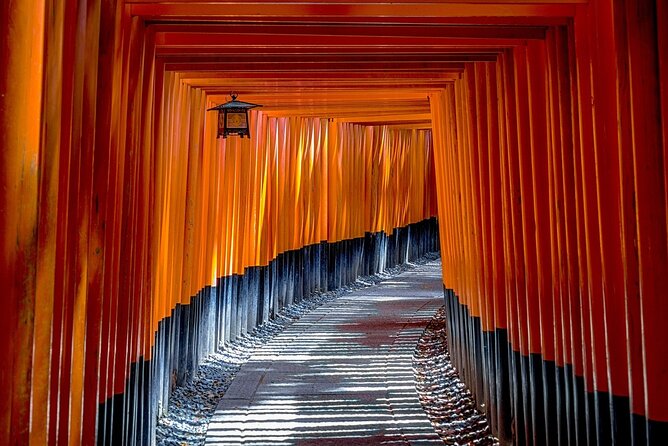
Fushimi Inari-taisha is one of the suggested stops, and it gives you the most instantly recognizable Kyoto scene: rows of orange-red torii gates climbing the wooded slope of Mount Inari.
A one-hour visit can give you a good taste of the shrine, but it will not take you to every section of the mountain. The gates continue much farther uphill than many first-time visitors expect. You can walk through the lower section, enjoy the repeated arches, take photos, and turn back when the heat or incline becomes too much.
The mountain setting is part of the appeal, but it also creates the tour’s clearest physical demand. You should expect uphill walking, steps, and uneven sections. The shrine itself has no admission fee, but comfortable shoes and water matter far more here than a ticket.
Your guide can explain shrine customs and help you understand what you are seeing beyond the photo opportunity. That support is useful if you are unsure how to behave at a Shinto shrine, where to pause, or how the site fits into Kyoto’s religious life. The guide can also keep the visit moving if you have only a short window.
For children, Fushimi Inari can be exciting because the gates create a clear path and a strong visual rhythm. Still, a full mountain walk may be tiring. One family-focused tour used public transport and walking in a way that worked for children aged eight and eleven, but the right pace depends on your group.
Kiyomizu-dera and the view over Kyoto
Kiyomizu-dera is another suggested one-hour stop. Its large wooden temple structure and broad view over Kyoto make it one of the city’s essential visits. The surrounding streets add much to the experience, with traditional buildings, shops, and places to pause before or after entering the temple grounds.
Admission is not included, so plan to pay the entry fee separately. The tour information does not give the current amount, so check close to your visit rather than relying on an old figure.
The temple area works well for visitors who want a mixture of architecture, views, and neighborhood walking. It is also a sensible choice for anyone who does not want a mountain hike as the main activity. You will still walk uphill through the approach area, but the visit feels different from the long ascent at Fushimi Inari.
A guide can point out local customs and answer questions as you go. This is where a private format earns its keep. You can ask why a ritual is performed, how to approach a shrine or temple, or which parts of the surrounding area match your interests. If you care about photography, the guide can also help with pictures, a service specifically included in the experience.
Do not expect to cover every lane and shop around Kiyomizu-dera in one hour. The neighborhood rewards lingering, and a group that enjoys browsing may need to choose between extra shopping time and another major sight.
Gion, traditional streets, and an evening feel
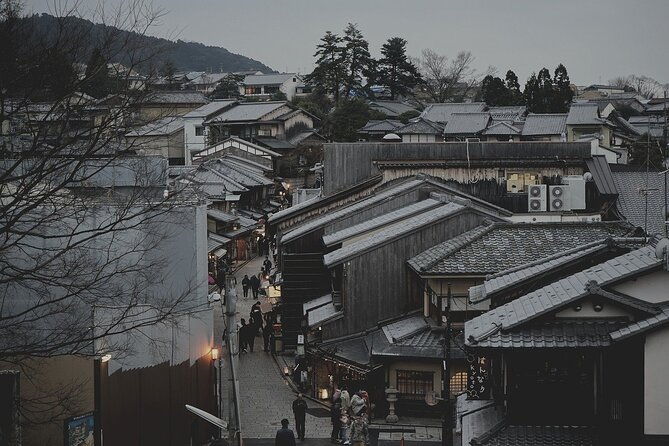
Gion is the most natural choice if you want Kyoto’s older urban character without committing to a long temple visit. You can walk through traditional streets, look at the architecture, browse shops, and take photos.
The district is described as one of Kyoto’s oldest areas, and it gives you a chance to see the city as a neighborhood rather than only as a collection of famous monuments. Pairing Gion with Kiyomizu-dera makes geographic sense, although the exact route depends on your start point and the time of day.
Your guide can explain local etiquette and help you enjoy the area respectfully. Keep your camera ready, but remember that traditional streets are also working neighborhoods. The tour offers access and context, not a promise of a staged performance or a guaranteed sighting of a particular person.
Gion can also fit a family itinerary because it requires no admission ticket and allows you to change pace easily. You might spend more time looking at shops, or move on if younger children lose interest. The absence of a fixed group schedule gives you that choice.
A short Gion walk will not reveal every corner of the district. Think of it as an introduction to Kyoto’s older streets, with your guide helping you decide what deserves more of your limited time.
Same base, a completely different sort of day:
- PERFECT KYOTO 1-Day Bus Tour
★ 5.0 · 13,518 reviews - Kyoto: Fushimi Inari, Kinkakuji, Bamboo Grove 1 Day Bus Tour
★ 4.8 · 4,316 reviews - Kyoto: Tea Ceremony in a Traditional Tea House in Kiyomizu
★ 4.9 · 3,519 reviews - Kyoto Geisha Walking Tour: Gion District & Hidden Gems
★ 4.7 · 3,273 reviews
Arashiyama, markets, and other custom choices
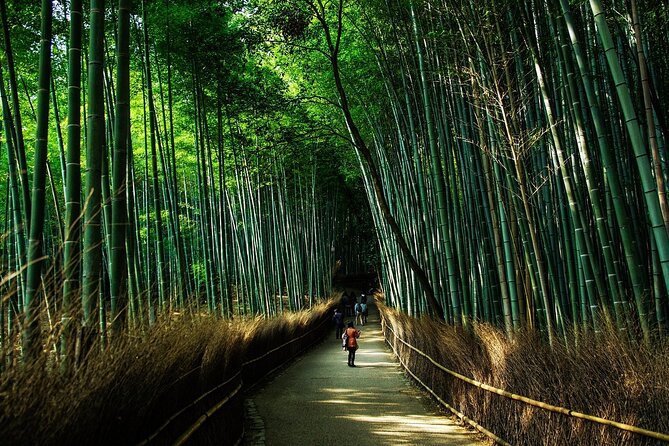
The stated options are not limited to the three sample stops. Arashiyama Bamboo Forest, a local market, major temples, shrines, and food stops have all been part of customized outings.
Arashiyama is tempting, but it needs careful planning. It sits away from Fushimi Inari and Gion, so adding it to a route that also includes several central Kyoto sights may leave little time for walking. If the bamboo forest is your priority, build the tour around Arashiyama rather than treating it as a quick extra.
A market or food-focused route may suit you better if you have already seen the major temples. One guide created an exceptional market and food outing, choosing dishes that were interesting without being so unusual that the meal became a challenge. Food is not included, but a guide’s local suggestions can help you make a better choice than simply picking the first restaurant you see.
The tour can also adapt to interests outside the standard sightseeing list. One customized outing included a church service, while other routes focused on local architecture, several shrines, temples, and traditional districts. The useful question to answer before booking is not how many sites you can squeeze in. Ask yourself what one Kyoto experience you most want to understand.
How the two to three hours really work
The advertised length is approximately two to three hours. The sample itinerary gives one hour each to Fushimi Inari, Kiyomizu-dera, and Gion, but those three stops already fill three hours before transportation between them. You should treat the list as a menu, not a promise that all three will be completed in a short booking.
This is especially important at Fushimi Inari, where the mountain path can absorb your whole visit. Kiyomizu-dera also needs time for the temple and approach streets. Gion is easier to shorten, but the walking connections and public transport still take time.
A private guide can help you use the time well, yet no guide can remove Kyoto’s distances. If you have only two hours, choose one major sight and one nearby area. Kiyomizu-dera plus Gion is the most obvious compact pairing among the listed choices. If Fushimi Inari is your priority, give it the attention it deserves and avoid adding a distant district.
The flexible format also means the exact meeting arrangement needs attention. The start and ticket redemption points are both listed simply as Kyoto, Japan, so confirm the precise meeting place and route with the provider before the day. The service offers pickup, but a private car and driver are not included. Expect to pay separately for trains, buses, taxis, or other transportation.
What the $131.38 price buys you
At $131.38 per person, this is not a budget sightseeing walk. You are paying for a private local guide and the ability to shape the route around your party, rather than paying only for access to sights.
The value improves when your group has a clear need: a short Kyoto stop between other plans, children who need a flexible pace, older family members who need breaks, or interests that do not fit a standard tour. It can also be useful if navigating Japanese transport and temple etiquette feels stressful.
The price is harder to justify if you already know Kyoto well, are comfortable using maps and transit, or want only a simple walk through one neighborhood. You also need to add transport costs, food and drinks, and the Kiyomizu-dera admission fee. Since the tour is priced per person, larger private parties should check the available group discount before booking.
The service includes travel support beyond sightseeing. That can mean help booking a taxi or buying a SIM card, and guides have also assisted with translation, photos, and local advice. For a first day in Japan, that practical layer may be as useful as the commentary at the shrine.
Heat, hills, and the right pace
Kyoto can be punishing in summer. One outing took place in weather around 98 degrees with a heat index of 103, and the guide helped the visitor manage the conditions with cooling wipes. That does not make the route cool or easy, but it shows why a private guide can be valuable on a hot day.
You should still plan conservatively. Fushimi Inari involves a mountain path, and all three main choices require walking. Bring water, wear shoes suited to hills and streets, and tell the guide early if you need to shorten the route.
Families seem especially well suited to this format because the guide can adjust walking and train segments. The experience is also accessible to most participants, and service animals are allowed. The available information does not promise wheelchair-specific routing, so ask the provider directly if you have mobility requirements.
The guide quality matters most
A private tour succeeds or fails largely on the guide. The strongest feedback centers on warm interaction, patience, clear communication, cultural explanations, and flexibility.
Steven is described as friendly, accommodating, and able to pack a great deal into a short visit. He also tailored routes for families and helped make train rides and walking manageable for children. Toshiki is praised for answering questions before and during the outing, explaining local customs, and making thoughtful changes based on personal interests.
Teppei is described as kind and professional, while Nanako led a walking tour that matched the group’s wish to see key Kyoto sights on foot. Kyoichi, or Mark, brought historical knowledge and practical care in difficult heat. These details suggest a service built around individual guides rather than a single standardized script.
There is one important warning. One poor experience involved missed trains, weak navigation, and too little actual touring. That complaint is a reminder to agree on your priorities and route before setting off. A friendly guide is not enough if the day lacks structure. Send your must-see list in advance and ask what can realistically fit in the booked time.
Who should book this Kyoto tour?
I would consider this tour if you are visiting Kyoto for only a few hours, traveling with children, or hoping to ask personal questions about customs, food, neighborhoods, and transport. It is also a good fit if you want a local guide but do not want to share your day with a large group.
The tour is less suitable if you want a private vehicle, a fixed full-day sightseeing program, or guaranteed access to every famous sight. It is not designed to erase travel time, and the two to three hour window requires sensible choices.
Book it when you can name one or two priorities and want help making them work. Skip it when your goal is simply to wander independently through one compact district. With the right expectations, the private format can turn a rushed Kyoto stop into a focused introduction, especially when your guide is one of the strong communicators associated with the service.
FAQ
How long is the Kyoto private tour?
The experience lasts approximately two to three hours.
Is the tour private?
Yes. Only your own party participates, rather than joining a shared group.
Can I choose the places I visit?
Yes. The route is customizable, and you can choose one to three locations based on your interests.
Which Kyoto sights can be included?
Suggested choices include Fushimi Inari-taisha Shrine, Kiyomizu-dera Temple, Gion, and Arashiyama Bamboo Forest. Customized outings can also include markets, food stops, other temples, shrines, and areas of personal interest.
Is transportation included?
No. Transportation fees are separate, and the tour does not include a private car or driver.
Are food and drinks included?
No. Food and beverages are not included.
Is admission to Kiyomizu-dera included?
No. Admission to Kiyomizu-dera is not included. Fushimi Inari-taisha Shrine and Gion are listed with free admission.
Does the tour offer pickup?
Yes. Pickup is offered, but you should confirm the exact meeting location in Kyoto before the tour.
What is the cancellation policy?
You can receive a full refund if you cancel at least 24 hours before the experience start time. Cancellations or changes made within 24 hours are not accepted and are not refunded.
Just added around Kyoto
- Kyoto: Zen Meditation at a Private Temple with a Monk★ 5.0 · 25 reviews
- Kyoto: Gion Geisha District & Sake-in-Hand Walking Tour★ 5.0 · 37 reviews
- Private Pewter Sake Cup Experience with a Kyoto Artisan★ 5.0 · 31 reviews
- Your Private Vacation Photography Session In Kyoto★ 5.0 · 110 reviews
- Private Guided Traditional Buddhist Cooking in Japan★ 5.0 · 16 reviews
- Kyoto Wagashi(Japanese sweets) Cooking Class near Fushimiinari★ 5.0 · 60 reviews
- Traditional Japanese Music show & Experience Tour in Kyoto★ 5.0 · 57 reviews
- Kyoto:Family-Friendly Kimono & Yukata Experience at WARGO★ 5.0 · 147 reviews
Kyoto Tours, compared.


Fushimi Inari, Kinkakuji, Bamboo Grove 1 Day Bus Tour
Read our review →
Tea Ceremony in a Traditional Tea House in Kiyomizu
Read our review →
Kyoto Geisha Walking Tour: Gion District & Hidden Gems
Read our review →

Gion Magical Night Walking Tour with Geisha Trivia
Read our review →

Gion Geisha District Walking Tour – Stories of Geisha
Read our review →Browse the lists this tour appears in