
Reviewed · KYOTO TOURS
The Beauty of Kyoto by Bike: Private Tour
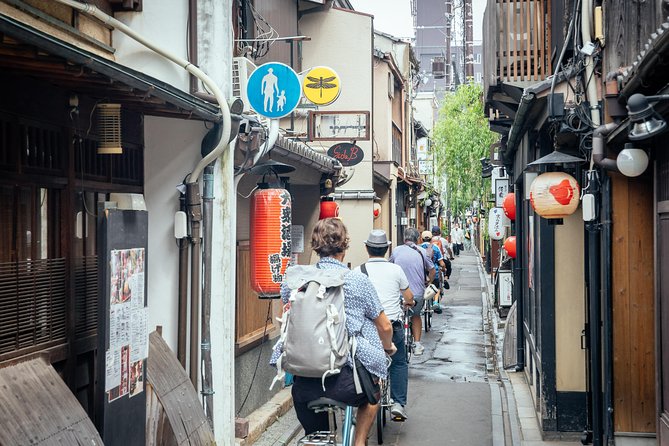
Kyoto is easier to understand from a bicycle seat than through a bus window. This private bike tour uses quiet streets, river paths, and traditional neighborhoods to connect places such as Gion, the Philosopher’s Path, the Imperial Palace area, and the Kamogawa River.
I like the one-to-one attention and the freedom to ask for places that matter to you. I also like that guides such as Eiji, Sebastian, and Naoki have adjusted routes, arranged e-bikes, shared local snacks, and added extra time when possible. The main drawback is traffic: cycling in central Kyoto requires attention, so this may suit confident riders and adults best, though families have managed it successfully.
Key points to know before you book
- Private route, not a fixed group ride: Your guide can adjust the pace and respond to your interests.
- Quiet Kyoto comes first: Traditional lanes, riverside paths, residential areas, and the Philosopher’s Path help you get beyond the main tour-bus routes.
- Several major areas in 2.5 hours: Expect Gion, Kamogawa River, and northern Higashiyama, with other stops depending on your host.
- Guides make the difference: Eiji, Sebastian, and Naoki are specifically praised for clear English, local insight, humor, and route planning.
- E-bikes may be available on request: Some riders found standard bikes easy, while others appreciated electric assistance in warm weather.
- You return to the starting point: The ride begins and ends at J-Cycle Biking Rental in Shimogyo Ward.
Why a bicycle works so well in Kyoto
Kyoto’s most appealing streets are often too narrow for buses and too spread out for a comfortable walk. A bicycle lets you connect temple districts, riverbanks, old neighborhoods, and broad public spaces without spending much of your short visit waiting at traffic lights or changing trains.
The point is not to race from sight to sight. This is a guided city ride with stops for explanation. You might pause beside a bridge, follow a quiet lane, or take a short break near the river while your guide explains how the city fits together.
That private format matters. You are not trying to keep up with 12 strangers, and your guide does not need to give a standard speech at every stop. If you want more history, you can ask for it. If you would rather see ordinary streets and spend less time at famous landmarks, the route can bend that way.
The tour lasts about 2 hours and 30 minutes. That is enough time to get a strong first look at eastern and central Kyoto, but not enough for long visits inside several temples or museums. Think of it as an introduction to the city and a way to find places you may want to revisit on foot later.
More bike days around Kyoto:
- Hidden Kyoto E-Biking tour
★ 5.0 · 1,843 reviews - Bike Tour Exploring North Kyoto plus Lunch
★ 5.0 · 1,087 reviews - Arashiyama Bamboo Forest & Hidden Gems Bike Tour (Early Bird)
★ 5.0 · 613 reviews
Starting at J-Cycle Biking Rental
You meet your host outside J-Cycle Biking Rental at 192 Nakanonochō in Kyoto’s Shimogyo Ward. The tour includes the bicycle, and it ends back at this same meeting point. Hotel transportation is not included, so you need to make your own way there and back.
The first minutes are practical. Your guide gets you set up, checks that the bike suits you, and explains the route. Eiji is praised for getting riders ready quickly, while other guides have taken time to arrange e-bikes when requested.
I would use this moment to say exactly what you want from the ride. Tell your guide if you care most about temples, old streets, rivers, residential areas, food, photography, or general orientation. The private setup gives you a real chance to shape the experience.
The tour is near public transportation, and confirmation arrives when you book. Since the meeting point is in central Kyoto, allow enough time to reach the rental shop without rushing. A late start would cut into the sightseeing time.
The Philosopher’s Path and northern Higashiyama
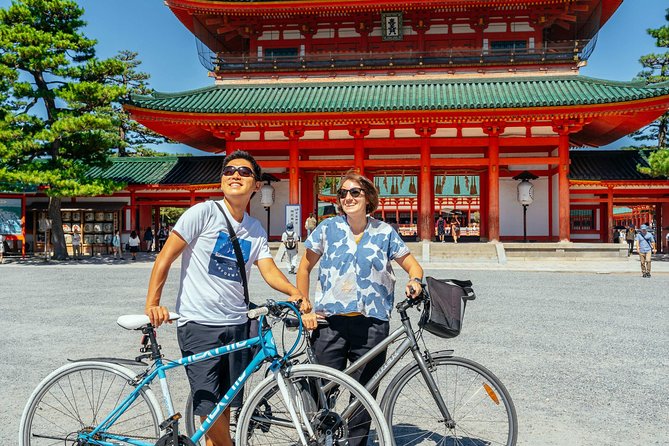
The Philosopher’s Path, or Tetsugaku no michi, is a stone walkway through northern Kyoto’s Higashiyama district. It is one of the gentler parts of the ride, with a slower feel than the city streets and a clear sense of old Kyoto.
The scheduled stop here is about 10 minutes. That sounds brief, but it works well as a pause rather than a full visit. You can look around, take photographs, and ask your guide about the area before continuing.
This is also one of the places where a bicycle gives you useful access. A bus cannot simply pull up beside a narrow path, and walking from central Kyoto takes time. Your guide handles the route while you focus on the surroundings.
Do not expect a long, quiet walk along the entire path as part of this tour. The bicycle remains the main way to cover ground. If this is the place you most want to experience, tell your host in advance. One rider specifically requested the Philosopher’s Path, and the guide adjusted the ride to include it.
Gion Shinbashi and the old Kyoto atmosphere
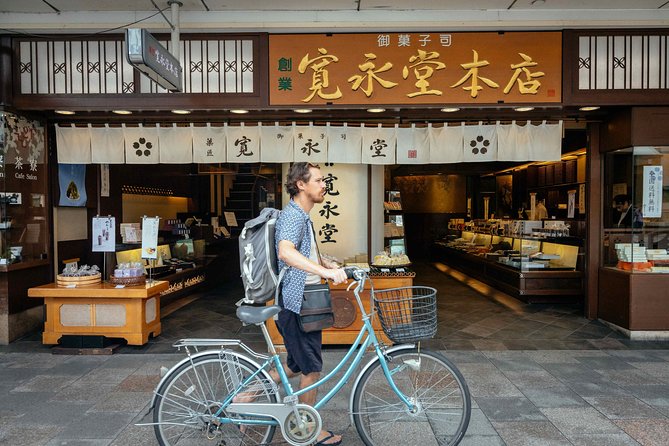
Gion is Kyoto’s best-known traditional entertainment district, but the small Gion Shinbashi area beside the Shirakawa River offers a more intimate stop. The water, bridges, narrow streets, and preserved architecture create a strong contrast with the wider modern roads nearby.
The stop is listed at about 10 minutes. That gives you a quick look and a chance to hear the cultural background from someone who knows the neighborhood. Your guide can help you understand what you are seeing without turning the visit into a long lecture.
Gion is also a place where cycling requires care. Streets can be narrow, and people may be walking in places that feel like roads. Follow your guide’s lead, slow down, and do not treat this section as a race.
A bike tour will not replace a separate evening walk through Gion. Instead, it gives you an early orientation and helps you recognize the district when you return later. That is useful if you plan to explore Kyoto at different times of day.
A few more Kyoto half-days to weigh up
- PERFECT KYOTO 1-Day Bus Tour
★ 5.0 · 13,518 reviews - Kyoto: Fushimi Inari, Kinkakuji, Bamboo Grove 1 Day Bus Tour
★ 4.8 · 4,316 reviews - Kyoto: Tea Ceremony in a Traditional Tea House in Kiyomizu
★ 4.9 · 3,519 reviews - Kyoto Geisha Walking Tour: Gion District & Hidden Gems
★ 4.7 · 3,273 reviews
Kamogawa River and a slower Kyoto
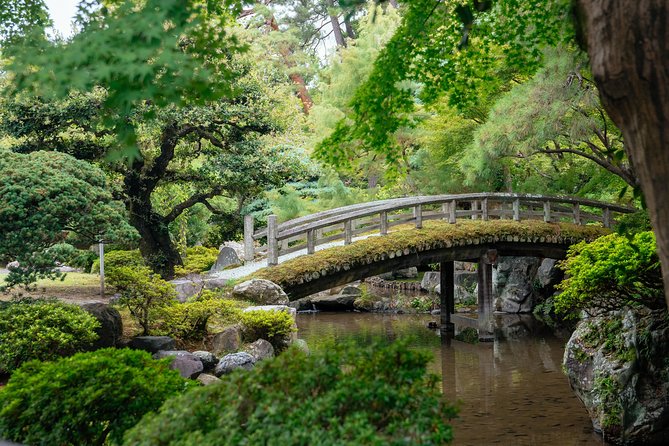
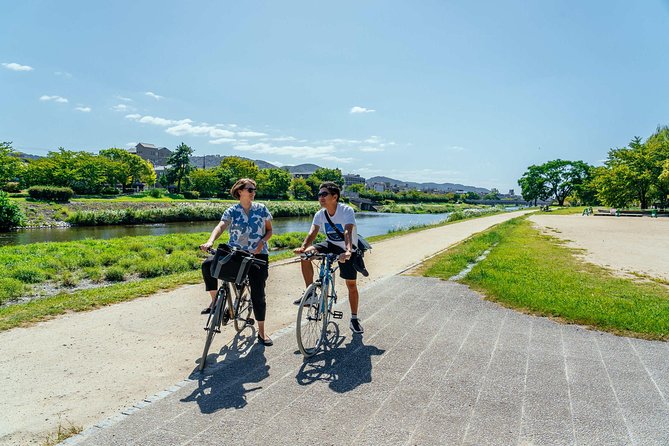
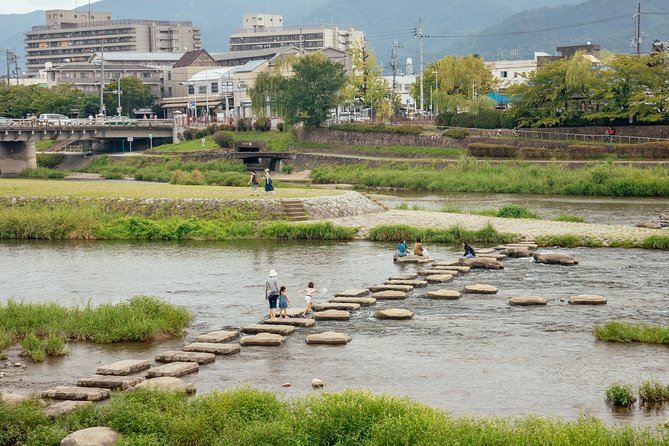
The Kamogawa River runs through Kyoto Prefecture, and the route includes about 20 minutes by the river. This is one of the strongest parts of the experience because it changes the rhythm of the tour.
After city streets and historic districts, the river offers open space and a chance to ride at an easier pace. Your guide may explain how the river relates to Kyoto’s neighborhoods, bridges, and daily life. The name Kamogawa literally means duck river, a small detail that adds character to the stop.
Several people enjoyed the riverside portions, and one guide bought mochi for the riders to eat beside the river. That snack is not something you should assume will happen on every departure, but a local drink or snack is included in the experience.
I like this stop because it gives you more than another famous building. You see how Kyoto residents use public space, and you get a break from the concentrated sightseeing zones. The river also makes a pleasant place for photographs, although the exact view and stopping point depend on the route your host chooses.
Imperial Palace areas and flexible stops
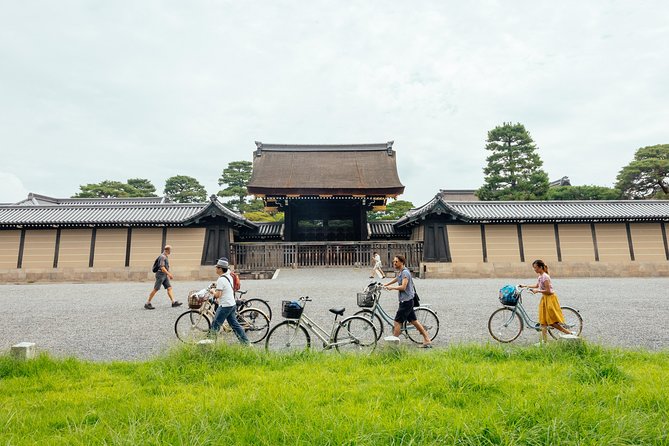
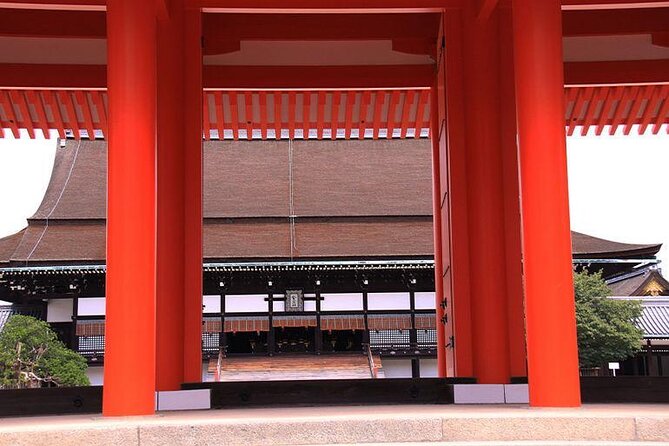
The Kyoto Imperial Palace is named among the possible sights, and several rides included the park near the palace. Other stops may also be added depending on the host. This is important: the tour has a clear set of featured districts, but it is not a rigid promise that every departure will visit every named place.
That flexibility can work in your favor. Sebastian has been praised for taking riders through historic areas, wealthy residential streets, and ordinary day-to-day neighborhoods. That mix gives you a better sense of Kyoto than a checklist of major monuments.
The Imperial Palace area also helps show the scale of the city. The broad grounds and surrounding streets feel different from Gion’s tight lanes or the Philosopher’s Path. You can ask your guide to spend more time here if public spaces and Kyoto’s political past interest you.
Still, do not book this tour expecting entry into every landmark. The supplied details describe cycling and brief stops, not interior visits or admission to palace buildings. The included sightseeing is primarily outdoors, and admission tickets are free because the stops do not require paid entry.
Guides, language, and the value of private attention
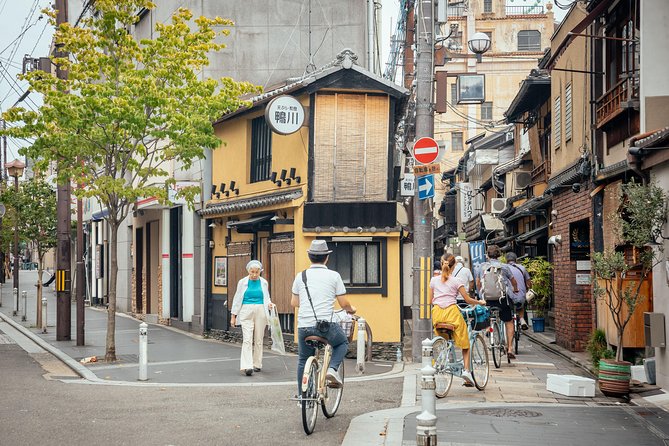
The strongest part of this experience is the guide. Eiji is praised for humor, quick bike setup, local stories, and a warm approach with families. Sebastian is noted for clear English, historical and cultural insight, and finding quieter streets. Naoki is praised for excellent English, route knowledge, and adapting the ride to requests.
Guides can change, so you may not receive one of these particular hosts. Still, the pattern is useful: this tour depends heavily on the person leading it. A good host does more than point toward a temple. The host explains why a bridge matters, identifies changes between districts, and helps you ride safely through streets that may feel unfamiliar.
Private attention also means conversation. You can ask about what to eat, which neighborhoods to revisit, how to spend the rest of your Kyoto stay, or what to skip if your schedule is tight. Tailored recommendations are one of the stated benefits, and they are often more useful than a long list of standard attractions.
The English ability described for the named guides is a major benefit for international visitors. The information is not limited to memorized facts. The best moments seem to come from the back-and-forth: you ask a question, your guide follows it, and the ride becomes more personal.
Cycling comfort, traffic, and family suitability
The ride is described as easy by some participants, and e-bikes have been arranged when requested. Another person found an electric bike especially helpful in warm weather. You should ask about an e-bike before the tour rather than waiting until the morning of departure.
At the same time, do not confuse an easy route with a traffic-free route. One family completed the ride successfully, but the rider felt the tour might suit adults best because of road safety. That is sensible advice. You need to pay attention around cars, pedestrians, crossings, and narrow streets.
Most people can participate, according to the activity information, but the tour still requires enough balance, awareness, and comfort on a bicycle. If someone in your group is uncertain about cycling in city traffic, discuss that before booking.
The private format helps here. Your guide can slow down, take breaks, and adapt the pace more easily than a large group leader can. It does not remove traffic, but it can make the experience less stressful for riders with different speeds.
What the $162.05 price means
At $162.05 per person, this is not Kyoto’s cheapest way to see the city. The price includes a private guide, bicycle rental, and a local drink or snack. It also covers a carbon-neutral tour, which may matter if you want to limit the environmental cost of sightseeing.
The value depends on your group size and priorities. For one or two people, the cost buys personal attention and a route that can respond to your interests. For a larger private group, group discounts may improve the price per person.
I would compare it with the cost of renting bicycles alone, then add the time you would spend planning a safe and efficient route. You are paying not only for wheels, but for navigation, local context, language help, and recommendations for the rest of your stay.
It is especially good value as a first Kyoto activity. The ride can show you where Gion, the river, northern Higashiyama, and central public spaces sit in relation to one another. You can then return to the areas that caught your attention.
It is less compelling if you want long temple visits, a formal historical lecture, or a low-cost self-guided ride. The tour provides an overview and local guidance, not a full-day cultural program.
Timing, cancellation, and small practical details
The experience is booked, on average, 56 days ahead, so popular dates may need planning. Confirmation is provided at booking, and free cancellation is available until 24 hours before the start time.
If you cancel less than 24 hours before the local start time, you do not receive a refund. Changes inside that same 24-hour window are not accepted, so check your Kyoto schedule carefully before the deadline.
Wear clothes that let you pedal comfortably and bring what you need for the weather. The tour includes a drink or snack, but no hotel pickup or drop-off. Since the ride ends where it starts, you can plan your next activity from the same central area.
The published rating is 4.8 from 47 reviews, with 96 percent recommending the experience. Those numbers fit the main strengths: friendly guides, strong English, flexible routing, easy cycling for many riders, and the chance to see Kyoto away from the most obvious roads.
Should you book this Kyoto bike tour?
Book it if you want a personal introduction to Kyoto, enjoy casual cycling, and value a local host more than a long list of paid admissions. It is a particularly good choice early in your visit, when you want to get your bearings and collect ideas for later sightseeing.
Ask for an e-bike if warm weather or hills concern you, and tell the guide before the ride if the Philosopher’s Path, the Imperial Palace area, Gion, or riverside cycling is your priority. If you are riding with children or anyone uneasy in traffic, be honest about ability and keep safety first.
Skip it if you dislike city cycling or want to spend most of your time inside temples. For everyone else, this is a lively, practical way to see Kyoto as a connected city rather than a set of isolated attractions.
FAQ
How long does the private Kyoto bike tour last?
The tour lasts approximately 2 hours and 30 minutes.
What places can the tour visit?
Featured areas include the Philosopher’s Path, Gion, the Kamogawa River, the Kyoto Imperial Palace area, and Pontocho District. Additional stops may depend on the host.
Where does the tour start?
You meet your local host outside J-Cycle Biking Rental at 192 Nakanonochō, Shimogyo Ward, Kyoto, 600-8435, Japan.
Where does the tour end?
The activity ends back at the starting meeting point.
Is bicycle rental included?
Yes. Bike rental is included in the private tour price.
Is food or a drink included?
Yes. A local drink or snack is included.
Is hotel pickup included?
No. Hotel pickup and drop-off are not included.
Is this a group tour?
No. This is a private activity, and only your group participates.
Can I cancel for a full refund?
Yes. You can cancel for a full refund at least 24 hours before the experience start time. Cancellations or changes made less than 24 hours before the start time are not accepted for a refund.
Just added around Kyoto
- Kyoto: Zen Meditation at a Private Temple with a Monk★ 5.0 · 25 reviews
- Kyoto: Gion Geisha District & Sake-in-Hand Walking Tour★ 5.0 · 37 reviews
- Private Pewter Sake Cup Experience with a Kyoto Artisan★ 5.0 · 31 reviews
- Your Private Vacation Photography Session In Kyoto★ 5.0 · 110 reviews
- Private Guided Traditional Buddhist Cooking in Japan★ 5.0 · 16 reviews
- Kyoto Wagashi(Japanese sweets) Cooking Class near Fushimiinari★ 5.0 · 60 reviews
- Traditional Japanese Music show & Experience Tour in Kyoto★ 5.0 · 57 reviews
- Kyoto:Family-Friendly Kimono & Yukata Experience at WARGO★ 5.0 · 147 reviews
Kyoto Tours, compared.


Fushimi Inari, Kinkakuji, Bamboo Grove 1 Day Bus Tour
Read our review →
Tea Ceremony in a Traditional Tea House in Kiyomizu
Read our review →
Kyoto Geisha Walking Tour: Gion District & Hidden Gems
Read our review →

Gion Magical Night Walking Tour with Geisha Trivia
Read our review →

Gion Geisha District Walking Tour – Stories of Geisha
Read our review →Browse the lists this tour appears in