
Reviewed · KYOTO TOURS
Sekka Cotton Furoshiki Class
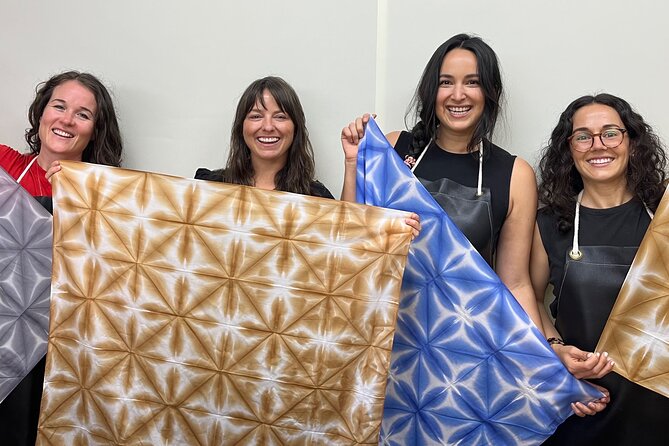
The best part of this Kyoto class is that you do not simply buy a craft souvenir. You make one. Under an instructor’s direction, you fold a cotton cloth, clamp it between boards, and dye it in the sekka shibori style. When you open it, the pattern is yours, even if the method is carefully standardized.
I like two things here: the private format, which keeps the lesson personal, and the built-in museum visit, which gives the short craft session more substance. You also leave with a useful 86-by-89-centimeter furoshiki rather than a trinket destined for a drawer. The main consideration is that the hands-on work is quite simple, so experienced crafters may want more freedom to design their own pattern.
Key points to know before booking
- Your party has the lesson to itself: This is a private activity, so the pace and questions stay with your group.
- The project is a cotton furoshiki: You create an 86-by-89-centimeter Japanese wrapping cloth to take home.
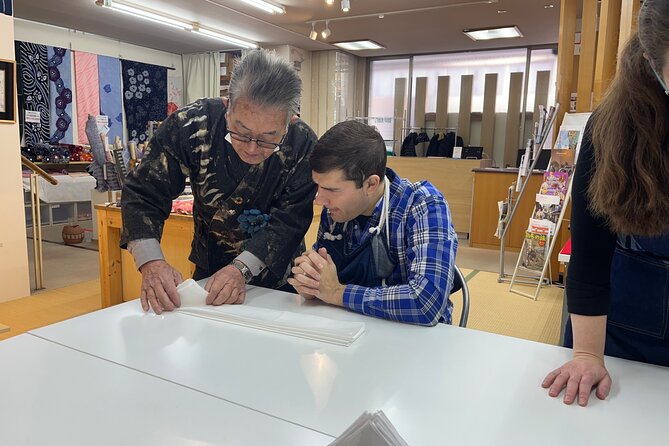
- Sekka shibori uses folding and board dyeing: Your instructor shows you how to fold the fabric before placing it between two boards.
- Drying time becomes museum time: While the cloth dries for about 30 minutes, you can see textile art, tools, and samples.
- The full visit takes about 30 to 60 minutes: The actual folding and dyeing is brief, with the museum visit filling out the experience.
- The shop is part of the temptation: It carries shibori textiles, fabrics, souvenirs, and other handmade goods, so bring some spending money if you like Japanese craft.
Making a Kyoto souvenir with your own hands
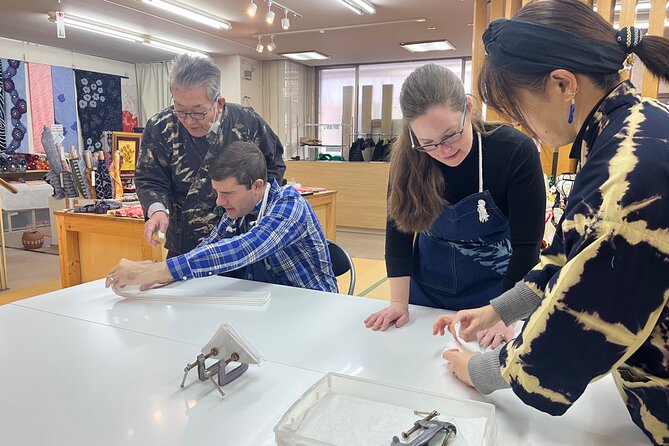
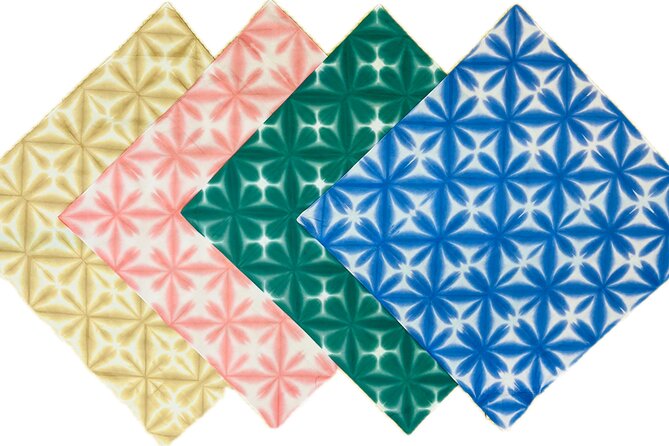
At Kyoto Shibori Museum, the activity begins with a practical choice: pick your favorite color. Then your instructor explains the folding pattern used for sekka shibori.
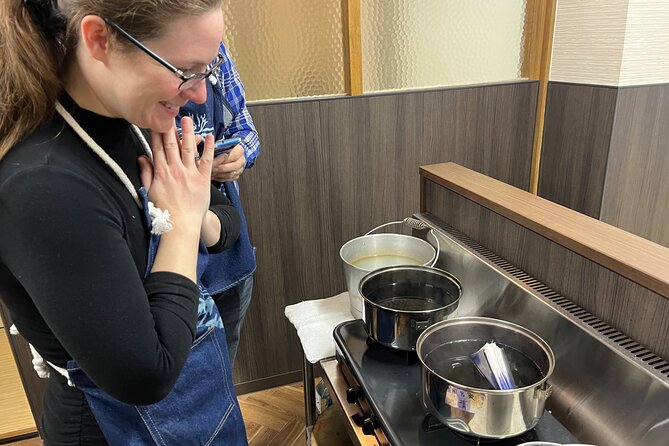
You fold the cloth in a particular way and place it between two boards. The boards control which parts of the fabric receive dye. That simple setup creates the repeating, geometric effect associated with this method.
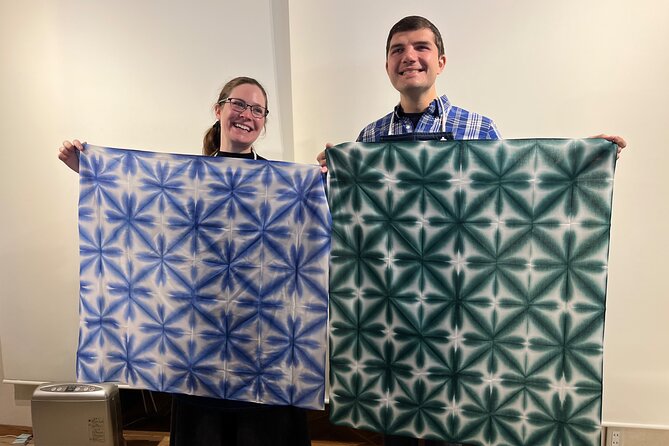
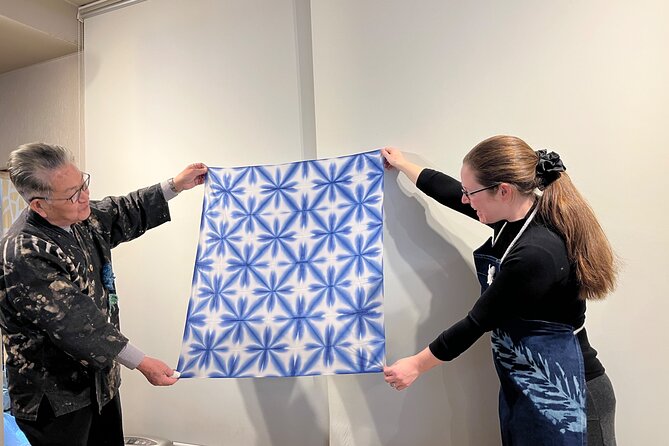
The cloth measures about 86 by 89 centimeters, large enough to use as a wrapping cloth rather than merely display. A furoshiki can wrap gifts, lunches, clothing, or other objects, so your finished piece has a life beyond the classroom.
The craft itself is approachable. You do not need prior sewing or dyeing experience, and the instructions are detailed enough for a first attempt. The work is also suitable for families, including older children and teenagers who can follow folding directions.
I would set your expectations correctly. This is not a long studio workshop where you develop an elaborate personal design. The folding and dyeing portion is fairly quick and follows a set process. That makes it easy to complete within a sightseeing day, but it also limits experimentation.
For many people, that trade-off works well. You get the satisfaction of making something yourself without committing half a day to a difficult craft. If you are an experienced textile artist, though, you may find the project a little too prescribed.
More hands-on workshops in Kyoto:
- Kyoto: 45-Minute Tea Ceremony Lesson Experience
★ 4.3 · 2,378 reviews - Ramen Cooking Class at Ramen Factory in Kyoto
★ 5.0 · 1,937 reviews - Kyoto : Chopsticks Making Workshop in Gion with Engraving Option
★ 5.0 · 958 reviews
Why the private format matters
The class is reserved for your own party. That is useful in a small craft setting because you can ask questions without waiting behind a larger group, and the instructor can explain each step at a comfortable pace.
The lesson is usually individual, with classes lasting from 30 to 60 minutes. Your exact timing may depend on how quickly you fold the fabric and how much time you spend looking around the museum.
The private setup also suits families and mixed-age groups. One person may want to ask about the dyeing process while another focuses on getting the folds right. You are not trying to keep up with a room full of strangers.
The instruction is hands-on, but you complete the folding and dyeing yourself. The teacher gives detailed directions rather than taking over the project. That distinction matters if you want a genuine handmade reminder of Kyoto.
The staff are described as friendly and helpful, with English-speaking people available in the setting. The information provided does not identify individual instructors by name, so you should not expect to book a particular teacher.
From wet cloth to museum visit
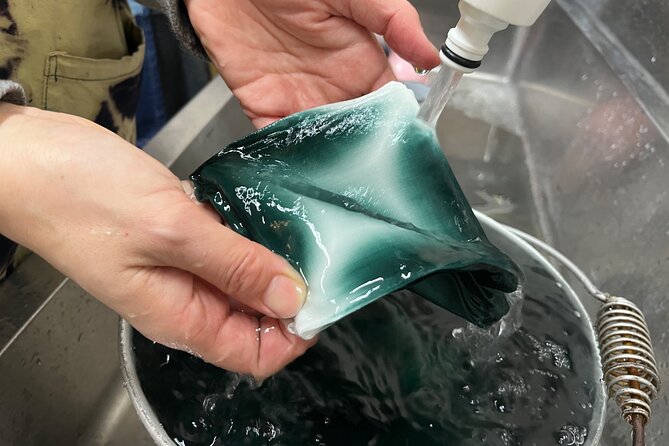
Once the folded fabric has been dyed, it needs about 30 minutes to dry. Rather than waiting in a plain room, you use that time to see more of the Kyoto Shibori Museum.
The museum displays shibori art, tools, and sample fabrics. You can see how the small steps you just followed connect to a larger Japanese textile tradition. The timing works well: first you make a simple piece, then you look at more complex work with a better sense of what you are seeing.
The museum displays include remarkable textile art made by many artisans over a long period. One especially memorable exhibition was created by 50 artisans over 50 years. That kind of work helps put your modest furoshiki in perspective. Your cloth will not be a museum masterpiece, but you will understand more about the patience and control behind fine shibori.
An educational video is also part of the museum experience. You may find this especially useful if you know little about shibori before arriving. The class gives you a physical introduction, and the museum adds the cultural and technical context.
The upstairs exhibition is a pleasant surprise for anyone expecting only a quick craft class. I would allow enough time to look carefully instead of treating it as a hallway between the workshop and the exit.
What makes sekka shibori interesting
Shibori is a Japanese resist-dyeing craft. Fabric is folded, bound, stitched, compressed, or otherwise protected before dye is applied. The covered sections remain lighter while the exposed sections take on color.
In this class, boards replace a more complicated setup. You fold the fabric, press it between two boards, and dye it. The pressure and folds help create the final pattern.
Sekka shibori has a crisp, repeatable character. The design comes from preparation rather than from painting directly onto the cloth. That is part of the appeal. You make decisions at the folding stage, then let the dye reveal the result.
There is a small moment of suspense when the fabric is unfolded. Until then, you cannot see the complete pattern. The method is controlled, but the final appearance still feels personal because you handled the cloth yourself.
You also get a useful lesson in how Japanese textile crafts can turn a functional object into an artistic one. A furoshiki is made for wrapping and carrying, yet its pattern can make it suitable for display too.
A few more Kyoto half-days to weigh up
- PERFECT KYOTO 1-Day Bus Tour
★ 5.0 · 13,518 reviews - Kyoto: Fushimi Inari, Kinkakuji, Bamboo Grove 1 Day Bus Tour
★ 4.8 · 4,316 reviews - Kyoto: Tea Ceremony in a Traditional Tea House in Kiyomizu
★ 4.9 · 3,519 reviews - Kyoto Geisha Walking Tour: Gion District & Hidden Gems
★ 4.7 · 3,273 reviews
The museum shop and the temptation to spend
The shop sells shibori items, souvenirs, fabrics, and other craft goods. This is not just a practical place to pick up a postcard. It gives you a chance to compare your own finished cloth with professionally made textiles.
I would bring extra money if Japanese fabric work interests you. The class price does not include shop purchases, and the range of goods can make it easy to find something appealing after you have learned how the process works.
The shop can also help you choose a more polished gift if your handmade furoshiki is headed home with you rather than to another person. You will have a better eye for the work after seeing the museum displays.
Still, you do not need to buy anything extra to get value from the visit. The class includes the fabric you dye, and the exhibition provides the main cultural addition. Think of the shop as an optional extension, not a required part of the experience.
Is $43.35 a fair price?
At $43.35 per person, this sits above the cost of a casual souvenir but below many longer guided activities in Kyoto. The value depends on what you want from the hour.
If you only want a finished cloth, buying one may be cheaper and faster. The price here pays for the private instruction, the materials, the dyeing process, and access to the museum displays while your cloth dries.
I consider that a reasonable package for someone who values making rather than merely buying. You receive a useful textile, a lesson in a traditional craft, and a short museum visit. The private format adds value for a couple, family, or small group that wants focused attention.
The calculation is less favorable if you want an advanced workshop. The craft portion is simple, and the entire class may take only 30 minutes before you move through the displays. The experience is best understood as a compact cultural activity, not an intensive course in textile design.
The price also works better when you place it inside a Kyoto sightseeing day. You do not need to reserve a full morning or afternoon. A one-hour appointment can fit between visits to other central Kyoto sights, provided you allow enough time to reach the museum.
Location, timing, and practical planning
The meeting point is Kyoto Shibori Museum at 135-5 Shikiamicho, Nakagyo Ward, Kyoto, 604-8261, Japan. The location is near public transportation, which makes it a practical stop during a day in central Kyoto.
The activity begins and ends at the museum. There is no separate transfer, hotel pickup, or sightseeing route attached to the booking.
Confirmation is provided at booking, and the ticket is mobile, so you can keep the booking on your phone. I would still check the address and appointment time before setting out, especially if you are moving between several Kyoto neighborhoods.
The class is usually individual and lasts about 30 to 60 minutes. The cloth itself needs around 30 minutes to dry, and that is when the museum visit fits in. Plan around an hour rather than assuming the hands-on portion alone represents the full stop.
Most people can participate. The supplied details do not give specific information about wheelchair access, exact age limits, or facilities for particular needs, so contact the provider if those points matter to you.
Free cancellation is available if you cancel at least 24 hours before the local start time. Changes or cancellations made less than 24 hours before the experience are not accepted for a refund.
Who will enjoy this class most?
I would choose this for families looking for a quiet, creative activity in Kyoto. The project is straightforward enough for children who can follow folding instructions, while the museum gives adults something more substantial to see.
It also suits couples and small groups who want a souvenir with a personal story. A shop-bought textile may be more polished, but your own cloth carries the memory of choosing the color and opening the folded fabric.
The class is a good fit if you have already seen several temples and need a change of pace. You trade a little sightseeing time for a close look at Japanese craft, with something useful to take away.
It may be less satisfying for someone seeking a long, open-ended workshop. The method is taught in a clear, standardized way, and you do not appear to choose every design element yourself.
It is also not the best pick if your main goal is a large museum collection requiring hours of exploration. The museum visit is an important part of the experience, but the activity remains compact.
How this compares with ordinary souvenir shopping
Kyoto has no shortage of attractive fabrics and traditional goods. The difference here is the connection between object and process.
You will understand why the pattern looks the way it does because you folded and dyed the cloth. You can point to the color choice and the shape created by your own hands. That makes the furoshiki more than a purchase.
The museum also prevents the activity from feeling like a stand-alone craft table. You see tools and examples that show where this small exercise fits within Japanese textile work.
At the same time, the class does not turn you into a shibori artisan in one hour. You learn one method at an introductory level. Its value is in the clear first step, not in mastery.
That honesty is useful when deciding. Book it for a pleasant, personal introduction and a handmade souvenir. Skip it if you want a demanding technical course or a long guided museum tour.
Should you book the Sekka Cotton Furoshiki Class?
I would book this experience if you want a short, personal Kyoto activity that combines making, learning, and shopping without taking over your day. The private lesson, friendly instruction, museum displays, and finished furoshiki form a strong package for the price.
Go in expecting a simple process, not an advanced craft course. Choose your color, follow the folding directions, enjoy the moment when the pattern appears, and use the drying time to see the museum properly.
The best candidates are families, couples, craft lovers, and anyone who prefers a useful souvenir to a mass-produced keepsake. With a 4.9 rating from 19 reviews and a 100 percent recommendation rate, it has a strong record, but the most important question is whether a short, structured activity matches your travel style.
If it does, this is an easy Kyoto booking to justify. You leave with a cloth, a better understanding of shibori, and a small story that a store-bought souvenir cannot provide.
FAQ
Where does the Sekka Cotton Furoshiki Class take place?
The class takes place at Kyoto Shibori Museum, 135-5 Shikiamicho, Nakagyo Ward, Kyoto, 604-8261, Japan.
How long does the activity last?
Classes usually take about 30 to 60 minutes. The dyed fabric needs approximately 30 minutes to dry, during which you can view the museum.
What will I make?
You will dye an 86-by-89-centimeter cotton furoshiki, a Japanese wrapping cloth, using the sekka shibori method.
Is the class private?
Yes. This is a private activity, and only your party participates.
What happens during the craft lesson?
You choose a color, fold the fabric in a particular way, place it between two boards, and dye it.
Can I visit the museum during the activity?
Yes. While your furoshiki dries, you can view shibori art, tools, samples, and other displays at the museum.
Is the activity near public transportation?
Yes. The Kyoto Shibori Museum is near public transportation.
Can I cancel for a full refund?
Yes, if you cancel at least 24 hours before the experience start time. Cancellations or changes made less than 24 hours before the local start time are not accepted for a refund.
Just added around Kyoto
- Kyoto: Zen Meditation at a Private Temple with a Monk★ 5.0 · 25 reviews
- Kyoto: Gion Geisha District & Sake-in-Hand Walking Tour★ 5.0 · 37 reviews
- Private Pewter Sake Cup Experience with a Kyoto Artisan★ 5.0 · 31 reviews
- Your Private Vacation Photography Session In Kyoto★ 5.0 · 110 reviews
- Private Guided Traditional Buddhist Cooking in Japan★ 5.0 · 16 reviews
- Kyoto Wagashi(Japanese sweets) Cooking Class near Fushimiinari★ 5.0 · 60 reviews
- Traditional Japanese Music show & Experience Tour in Kyoto★ 5.0 · 57 reviews
- Kyoto:Family-Friendly Kimono & Yukata Experience at WARGO★ 5.0 · 147 reviews
Kyoto Tours, compared.


Fushimi Inari, Kinkakuji, Bamboo Grove 1 Day Bus Tour
Read our review →
Tea Ceremony in a Traditional Tea House in Kiyomizu
Read our review →
Kyoto Geisha Walking Tour: Gion District & Hidden Gems
Read our review →

Gion Magical Night Walking Tour with Geisha Trivia
Read our review →

Gion Geisha District Walking Tour – Stories of Geisha
Read our review →Browse the lists this tour appears in