
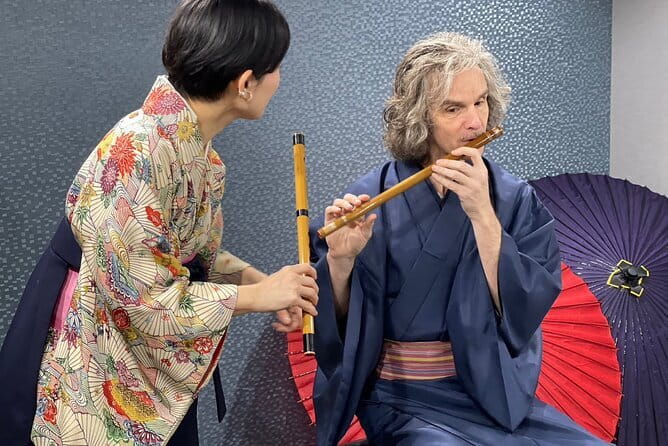
Reviewed · KYOTO TOURS
Traditional Japanese Music show & Experience Tour in Kyoto
Kyoto has plenty of cultural shows where you sit quietly and watch. This one asks you to pick up the instruments yourself. In one hour, you see a traditional Japanese concert, try instruments including shamisen, koto, and wadaiko, and finish with time for photos.
I like the useful balance: the 25-minute performance gives you a proper introduction before the hands-on session, and the small group, capped at 12 people, allows more direct help. I also like that no musical background is expected. The main consideration is the short format. You get a lively taste of Japanese music, not a full concert or a detailed music lesson.
Key Points
- Watch before you play: The 25-minute concert lets you hear the instruments in a real performance first.
- Try several traditional instruments: Depending on the session, you may handle shamisen, koto, wadaiko, and other Japanese instruments.
- Small-group instruction: The group limit is 12, which makes it easier to receive personal guidance.
- A compact Kyoto activity: The full experience lasts about 60 minutes, making it easy to fit into a busy sightseeing day.
- A friendly, hands-on finish: The final 10 minutes are set aside for photos with the instruments and performers.
- Good value for curious visitors: At $46.24 per person, you receive a concert and an instrument experience rather than just a seat in an audience.
A Kyoto Music Experience That Gets You Playing
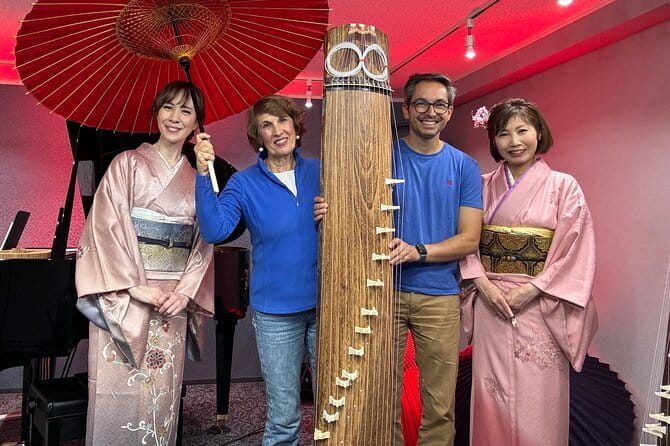
The best feature here is the change from audience member to performer. For the first part, you sit back and hear Japanese traditional music played properly. Then the instruments are placed within reach, and you try to make your own sound.
That second part matters. Seeing a koto or shamisen onstage can be fascinating, but handling one shows you how much control and practice the music requires. Even a simple attempt gives you a better sense of the instrument’s shape, strings, tone, and technique.
The experience is held at 5F, 306 Higashidaimonjichō, in Nakagyo Ward. It begins at 11:00 in the morning on Monday, Tuesday, Thursday, and Friday. The activity returns to the same meeting point, so you do not need to arrange a separate end location.
The timing is handy if you want to spend the afternoon exploring Kyoto. You could pair the morning session with lunch and more sightseeing nearby, though the supplied information does not specify a walking route or nearby attraction. Plan your local transportation around the meeting address and allow enough time to find the building.
More shows in Kyoto:
- Kyoto Gion Cultural Walk & Geisha Show with Dining Options
★ 5.0 · 518 reviews - Kyoto Gion Cultural Walk & Geisha Show with Dining Options
★ 5.0 · 483 reviews - 1 Hour Geisha Show in Kyoto
★ 5.0 · 452 reviews
The 25-Minute Concert: Hear the Instruments in Context
The show begins with about 25 minutes of authentic Japanese music. This is more than a short demonstration before the real activity. It gives you a chance to hear how the instruments sound when played by experienced performers.
The expected instruments include the shamisen, a three-stringed Japanese lute; the koto, a long zither often described in simple terms as a Japanese harp; and wadaiko, the powerful Japanese drum. Other instruments may also appear, and the concert content changes by day.
That changing program is a useful detail. If you attend more than once, you may not hear precisely the same selection each time. One session may place more attention on strings, another on percussion, and another on a different part of Japan’s musical tradition. The schedule does not promise a fixed set list, so you should treat the program as a sample rather than a guaranteed recital.
The sound itself may surprise you. The koto can produce delicate, ringing tones, while the wadaiko brings a much heavier physical presence. The shamisen has a distinct, pointed sound that can feel far removed from Western string instruments. Hearing these instruments side by side makes the program more useful than seeing each one in isolation.
Some musical traditions are easy to admire without understanding. Here, the concert prepares you for the practical part. After hearing how the performers shape rhythm and tone, you will have a better idea of what you are attempting when your turn comes.
The 25-Minute Hands-On Session
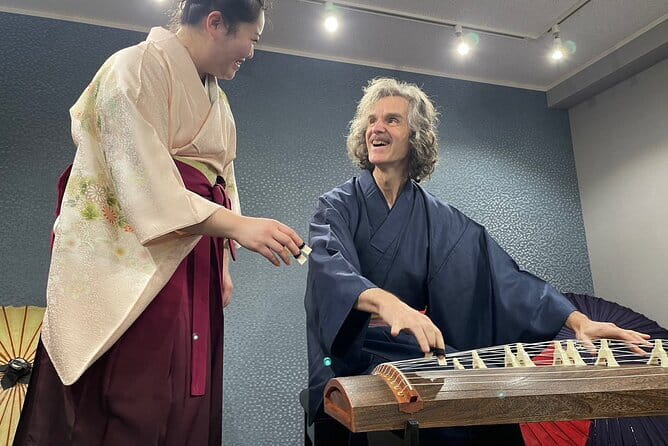
After the concert, you spend about 25 minutes trying traditional Japanese instruments. You can choose the instruments that interest you most, and the experience includes the instrument used for your session.
You do not need prior experience. The organizers guide you through the basic process, and the small group helps keep the activity personal. With a maximum of 12 people, this is not a huge class where you wait in the back for a quick turn.
The exact order of the instrument practice is not specified, so you should expect the session to adapt to the day’s setup and group. You might spend time with the shamisen, koto, wadaiko, or another instrument available during that performance. If one instrument matters especially to you, the provider invites questions and special requests.
The most useful attitude is to approach this as a cultural experience, not a test of musical ability. Your first attempt may sound uneven. That is part of the fun, and the activity is designed for beginners. A personal account of the session describes two organizers patiently helping participants whose playing was not exactly polished. You can expect encouragement rather than pressure to perform perfectly.
The hands-on portion also gives you a practical reason to pay attention during the concert. Notice how the performers hold their hands, strike or pluck the instrument, and keep rhythm. Even if you cannot copy their technique, you will recognize that these are not simple props. Their control is a major part of what makes the performance impressive.
Shamisen, Koto, and Wadaiko: What You May Try
The three named instruments offer very different experiences.
The shamisen is a Japanese lute with three strings. It is held and played differently from a standard guitar, and its sound has a firm, bright quality. Trying it gives you a quick lesson in how a small number of strings can produce a strong musical voice.
The koto is a long stringed instrument played horizontally. Its shape is striking, and the experience lets you move from simply looking at it to learning how it responds to your touch. If you enjoy quieter, more delicate sounds, this may be the instrument you most want to try.
The wadaiko is a traditional Japanese drum. It offers the most immediate physical experience, since rhythm comes from controlled strikes and body movement. It may appeal to children and adults who prefer a clear beat to the more delicate work of string instruments.
The program also includes and more, so the three examples are not necessarily the complete selection. The safest plan is to arrive curious rather than fixed on one exact instrument. Content changes depending on the day, and the staff can address questions or special requests.
A few more Kyoto half-days to weigh up
- PERFECT KYOTO 1-Day Bus Tour
★ 5.0 · 13,518 reviews - Kyoto: Fushimi Inari, Kinkakuji, Bamboo Grove 1 Day Bus Tour
★ 4.8 · 4,316 reviews - Kyoto: Tea Ceremony in a Traditional Tea House in Kiyomizu
★ 4.9 · 3,519 reviews - Kyoto Geisha Walking Tour: Gion District & Hidden Gems
★ 4.7 · 3,273 reviews
The Final 10 Minutes: Photos and a Last Look
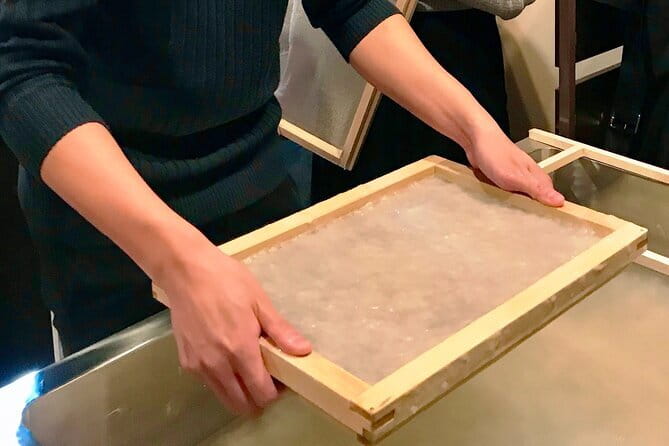
The final 10 minutes are reserved for photographs with the instruments and performers. This is a small but worthwhile part of the experience, especially if you are looking for a tangible memory of your time with Japanese music.
The photo period also gives you a chance to see the instruments at close range after trying them. Take a moment to notice their construction and size. A photograph of you holding a shamisen or standing beside a wadaiko says more about the activity than a standard concert snapshot.
Because this portion lasts only 10 minutes, keep your expectations sensible. It is not a separate photo session with unlimited time. If you want particular group pictures, use the hands-on portion well and be ready when the photo period begins.
Why the Small Group Size Matters
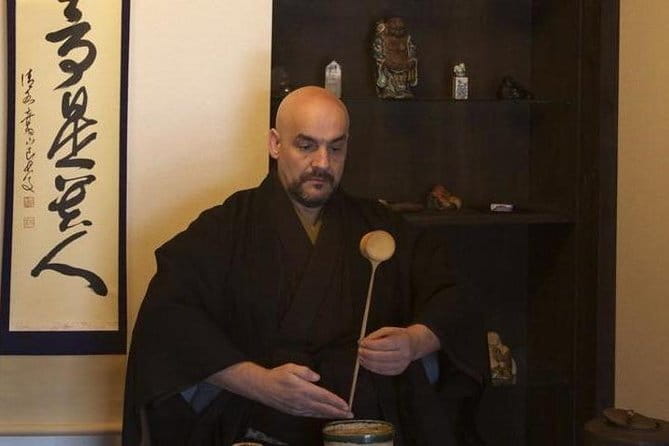
The activity has a maximum of 12 participants, and a minimum of two is required for it to go ahead. That size is well suited to an instrument demonstration, where everyone needs a reasonable chance to see, listen, and try.
A small group also makes it easier to ask basic questions. You can clarify how to hold an instrument, ask about its role, or request advice on the instrument that interests you most. The supplied details do not name the organizers, but the activity is run by two organizers who provide hands-on guidance.
There is one practical uncertainty: because a minimum of two participants is required, the session can be canceled if that number is not reached. If that happens, you are offered another date or experience, or a full refund. It is a standard condition, but it is worth knowing before you build a tightly timed day around this one-hour appointment.
The 12-person maximum also means the session is small, but not private. If you want a one-on-one lesson, this is not presented as one. You are joining a shared cultural experience with personal help available within the group.
Is $46.24 a Fair Price?
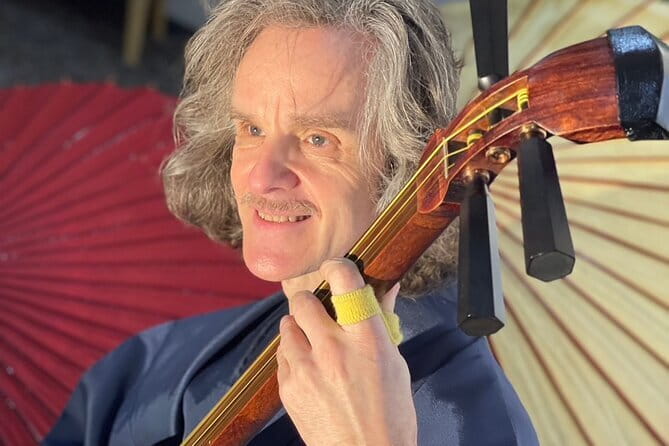
At $46.24 per person, the price covers a 25-minute concert, a 25-minute attempt at traditional instruments, and 10 minutes for photos. The instrument for the experience is included, while private transportation is not.
I consider that reasonable value if you want participation rather than passive entertainment. A short concert alone might feel expensive for some people, especially if you already plan to attend a longer music performance elsewhere. The added instrument session is what gives this activity its value.
The format also saves time. You do not need to commit half a day to a formal class, and the one-hour schedule leaves room for temples, markets, museums, or a meal afterward. For a first introduction to Japanese music, that compact format may be more useful than a long performance with no explanation or participation.
The price is less compelling if you are seeking advanced musical instruction. The available information promises expert advice and beginner guidance, but not a technical course, printed lesson materials, or extended practice time. Think of the activity as a cultural introduction with a chance to play, not as a path toward mastering the shamisen or koto.
Who Will Enjoy This Most
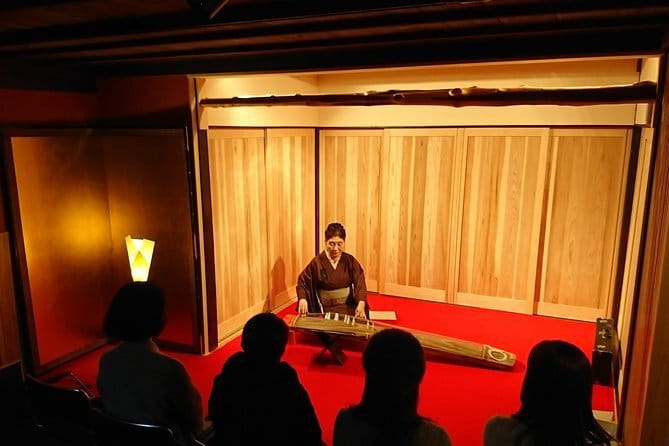
I would recommend this experience to you if you want a cultural activity that asks you to participate. It works especially well for first-time visitors who want more than another photo in front of a famous Kyoto sight.
Families may appreciate the clear structure and the opportunity to make music. Children and adults can choose instruments that suit their interests, although the information does not specify a minimum age. Since service animals are allowed and most people can participate, the activity is broadly accessible, but you should contact the provider with any specific mobility or participation question.
It also suits anyone who feels uncertain about traditional music. You do not need to know the names of Japanese instruments before arriving. The concert gives you the basic context, and the guided practice turns unfamiliar objects into something more approachable.
Music lovers may enjoy the contrast between polished performance and beginner experimentation. You will hear what the instruments can do, then discover how difficult it is to create even a small part of that sound yourself.
I would think twice if you want a long, formal concert, a private lesson, or a highly detailed academic discussion of Japanese music. The hour passes quickly, and the program changes by day. Its strength is direct contact and variety, not depth in one instrument.
Practical Details for Your Kyoto Day
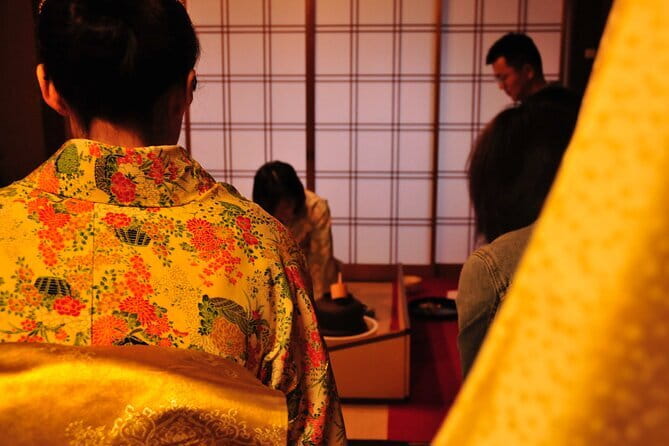
The meeting point is 5F, 306 Higashidaimonjichō, Nakagyo Ward, Kyoto, postal code 604-8043. The start time is 11:00, and the experience operates on Monday, Tuesday, Thursday, and Friday. There is no Wednesday, Saturday, or Sunday time listed, so check your date carefully before booking.
A mobile ticket is provided, and confirmation arrives at booking. The activity is near public transportation, but private transportation is not included. Since the experience ends back at the meeting point, you can plan your next stop from the same general area.
The total time is approximately one hour:
- 25 minutes of traditional Japanese music
- 25 minutes trying the instruments
- 10 minutes for photos with the performers and instruments
Free cancellation is available if you cancel at least 24 hours before the local start time. Cancellations or changes inside that 24-hour window are not refunded or accepted. That cutoff matters if your Kyoto plans are still shifting.
The activity currently has a 5 out of 5 rating from 57 ratings, with 100 percent recommending it. The strongest praise centers on the combination of performance and participation, the useful information, and the patience shown during the playing session. That matches the design of the activity: you are not simply watching someone else do all the work.
Should You Book the Traditional Japanese Music Experience?
Book it if you want a short, friendly, hands-on introduction to Japanese music in Kyoto. The price is fair for the combination of live performance, instrument practice, and photos, and the 12-person limit should make the guidance more useful than a large cultural show.
Skip it if your priority is a full-length concert, private tuition, or a guaranteed fixed program. The content changes by day, and the activity is deliberately brief.
For most visitors, I would place this early in a Kyoto stay. The concert gives you a first sound of instruments you may encounter elsewhere, and the hands-on section helps you notice their technique afterward. You leave with a better sense of what you heard, plus the memory of making a little music yourself, even if your rhythm is not ready for the stage.
FAQ
How long does the traditional Japanese music experience last?
The experience lasts approximately 60 minutes. It includes a 25-minute concert, 25 minutes of playing traditional instruments, and 10 minutes for photos.
What instruments can I try?
The named instruments include shamisen, koto, and wadaiko. Other instruments may also be available, and the selection can vary depending on the day.
Do I need musical experience?
No. Prior experience is not required, and expert guidance is provided during the hands-on portion.
When and where does the activity start?
It starts at 11:00 am on Monday, Tuesday, Thursday, or Friday. The meeting point is 5F, 306 Higashidaimonjichō, Nakagyo Ward, Kyoto, 604-8043, Japan.
What is included in the price?
A Japanese musical instrument for the experience is included. Private transportation is not included.
Can I cancel for a refund?
Yes. You can receive a full refund if you cancel at least 24 hours before the local start time. Cancellations or changes made less than 24 hours before the start are not accepted or refunded.
Just added around Kyoto
- Kyoto: Zen Meditation at a Private Temple with a Monk★ 5.0 · 25 reviews
- Kyoto: Gion Geisha District & Sake-in-Hand Walking Tour★ 5.0 · 37 reviews
- Private Pewter Sake Cup Experience with a Kyoto Artisan★ 5.0 · 31 reviews
- Your Private Vacation Photography Session In Kyoto★ 5.0 · 110 reviews
- Private Guided Traditional Buddhist Cooking in Japan★ 5.0 · 16 reviews
- Kyoto Wagashi(Japanese sweets) Cooking Class near Fushimiinari★ 5.0 · 60 reviews
- Kyoto:Family-Friendly Kimono & Yukata Experience at WARGO★ 5.0 · 147 reviews
- Private Cooking Class Udon in Kyoto Japan★ 5.0 · 23 reviews
Kyoto Tours, compared.


Fushimi Inari, Kinkakuji, Bamboo Grove 1 Day Bus Tour
Read our review →
Tea Ceremony in a Traditional Tea House in Kiyomizu
Read our review →
Kyoto Geisha Walking Tour: Gion District & Hidden Gems
Read our review →

Gion Magical Night Walking Tour with Geisha Trivia
Read our review →
