
Reviewed · KYOTO TOURS
Kyoto: Beginner Knife Sharpening & Handle Fitting Workshop
Japanese knife craft becomes much more useful when you get to practice it yourself. At Japanese knife shop HIRAI, you learn to sharpen a blade on a whetstone, fit a wooden handle, and leave with a knife you helped finish. The workshop also explains the story of Japanese knives, giving the practical work some welcome context.
I like the small group size, limited to three people, because a beginner can get close instruction instead of waving a blade around in a crowded class. I also like the value: the $161 price includes a knife, magnolia handle, uniform, apron, instruction, and engraving, so you are paying for both a useful lesson and a lasting Kyoto souvenir.
The main consideration is the hands-on nature of the class. You need to concentrate while sharpening, and the handle-fitting stage uses fire, which can leave a smoky smell on your clothes. The shop is in the Nishiki Market area, so finding its white storefront curtain may take a little patience.
Key details before you book
- Sharpen one of three Japanese knife styles: Choose a Santoku, Deba, or Yanagi knife for your workshop.
- Fit a magnolia wood handle: The standard handle is included, with other handle types available for an extra fee.
- Learn a skill you can use at home: Instruction covers basic whetstone sharpening and knife care.
- Work with an English speaking instructor: Guides include English and Japanese speakers, with Julio and Tatsu praised for patient instruction.
- Take home the finished knife: Your knife is packaged at the end, ready to carry home.
- Plan for smoke and concentration: Fire is used during handle fitting, and children under 15 cannot participate.
Why this Kyoto workshop is more than a knife purchase
Kyoto gives you plenty of chances to buy fine crafts, but buying something off a shelf is a different experience from helping make it usable. This workshop lets you select a blade, sharpen it, choose a handle, and take the finished piece home. That gives the knife a personal connection to your time in Japan.
The practical side is the strongest reason to book. Many people have tried sharpening at home after watching videos, only to end up unsure about the angle, pressure, or motion. Here, the instructor can watch your hands, correct you, and let you feel the right technique on the stone.
The workshop also makes a good introduction to Japanese kitchen knives without demanding previous experience. You do not need to arrive as a chef or craftsperson. The lesson is built for beginners, and the instruction is broken into demonstrations and practice.
At the same time, this is not a passive demonstration. You will handle a sharp blade and work with tools under supervision. If you want an easy sightseeing stop where you simply watch a maker work, this is not that kind of activity.
More hands-on workshops in Kyoto:
- Kyoto: 45-Minute Tea Ceremony Lesson Experience
★ 4.3 · 2,378 reviews - Ramen Cooking Class at Ramen Factory in Kyoto
★ 5.0 · 1,937 reviews - Kyoto : Chopsticks Making Workshop in Gion with Engraving Option
★ 5.0 · 958 reviews
Finding Japanese knife shop HIRAI near Nishiki Market
You go directly to the shop rather than meeting a guide at a station or hotel. Look for the white storefront curtain at the building. The shop is in the busy Nishiki Market area, an attractive but crowded part of central Kyoto where signs and foot traffic can make a small storefront easy to miss.
Arrive at least five minutes early. That small margin matters because the session lasts only two hours, and the opening explanation sets up everything that follows. You do not want to spend the first part of your appointment trying to locate the entrance.
The activity takes place indoors, but the information provided does not give a full address or transport directions. Check the precise meeting-point details when booking and allow extra time around Nishiki Market. This is one of the few practical weak spots in an otherwise tightly organized experience.
The group is limited to three participants. That number gives the instructor room to see how each person is holding the knife and stone. It also means the tone should be quieter and more focused than a large cooking class.
Choosing between Santoku, Deba, and Yanagi knives
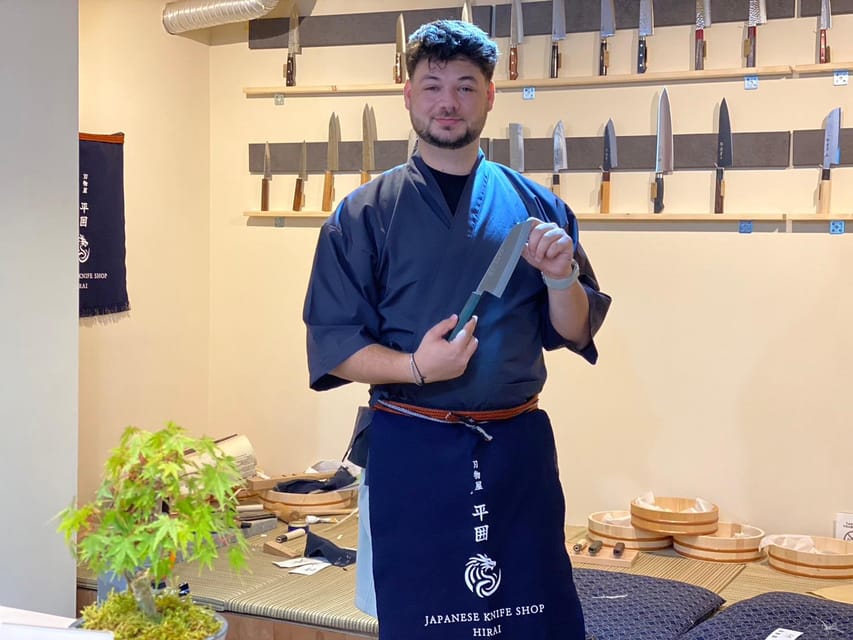
You choose one knife for the workshop from three Japanese styles:
- Santoku: A general kitchen knife suited to everyday cooking.
- Deba: A heavier style associated with fish preparation.
- Yanagi: A long, narrow knife traditionally used for slicing fish.
The best choice depends on how you cook, not just on which blade looks most impressive. If you want one knife for regular home meals, Santoku is the natural starting point. Deba and Yanagi are more specialized, so they make sense if you already have a strong interest in Japanese food preparation or want a distinctive craft piece.
The class gives you time to handle your chosen blade before taking it home. That is useful because a knife can look beautiful in a shop yet feel different once you grip it. The handle fitting lets you shape the final ownership experience around the knife rather than simply accepting a finished product.
You can also buy additional knives at the shop, but extra purchases are not part of the $161 price. Several people choose to upgrade the blade or handle, though there is no need to do so for the class to work well. The standard choices are described as good-quality knives, and the included option keeps the total cost easier to control.
The opening lesson: Japanese knife history and purpose
The class begins with an explanation of Japanese knives and their history. This is not just decoration before the real activity. It helps you understand why different blade shapes exist and what each one is meant to do.
The early talk also gives you a chance to compare your three knife options before committing to the practical work. Staff explain how knives have been used in Japan, then move into the sharpening process. Several participants specifically valued this short history section because it made the knife feel connected to Japanese craft rather than just another kitchen purchase.
The English support is important here. The instructors work in English and Japanese, and the class has included an English translator or English speaking guide. Julio is singled out for clear, patient teaching, while Tatsu and other shop staff have helped participants through sharpening and handle selection.
Exact staffing can vary by date, so do not assume a particular guide will be present. The useful point is that English instruction is available, and the class is designed to be understandable even if you know little about Japanese knives.
A few more Kyoto half-days to weigh up
- PERFECT KYOTO 1-Day Bus Tour
★ 5.0 · 13,518 reviews - Kyoto: Fushimi Inari, Kinkakuji, Bamboo Grove 1 Day Bus Tour
★ 4.8 · 4,316 reviews - Kyoto: Tea Ceremony in a Traditional Tea House in Kiyomizu
★ 4.9 · 3,519 reviews - Kyoto Geisha Walking Tour: Gion District & Hidden Gems
★ 4.7 · 3,273 reviews
Learning the whetstone technique step by step
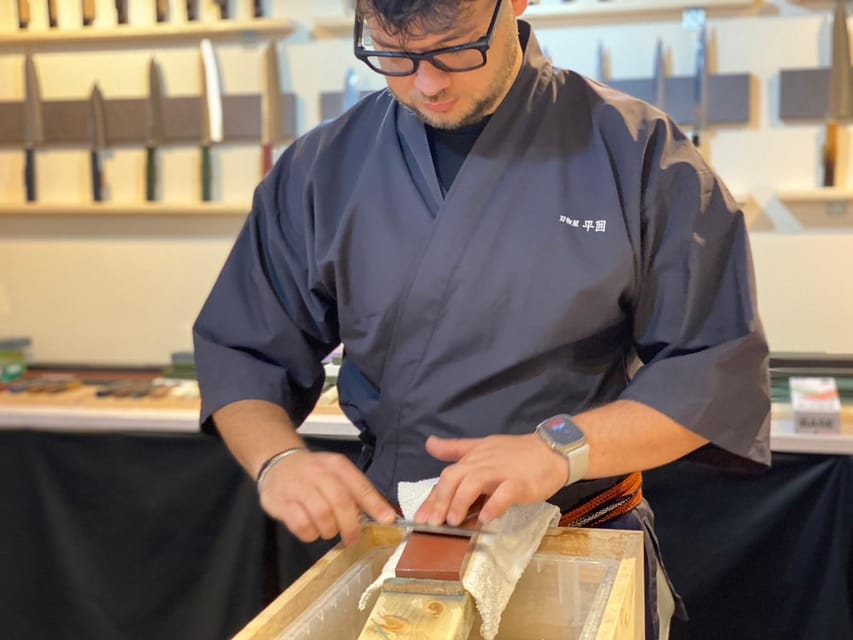
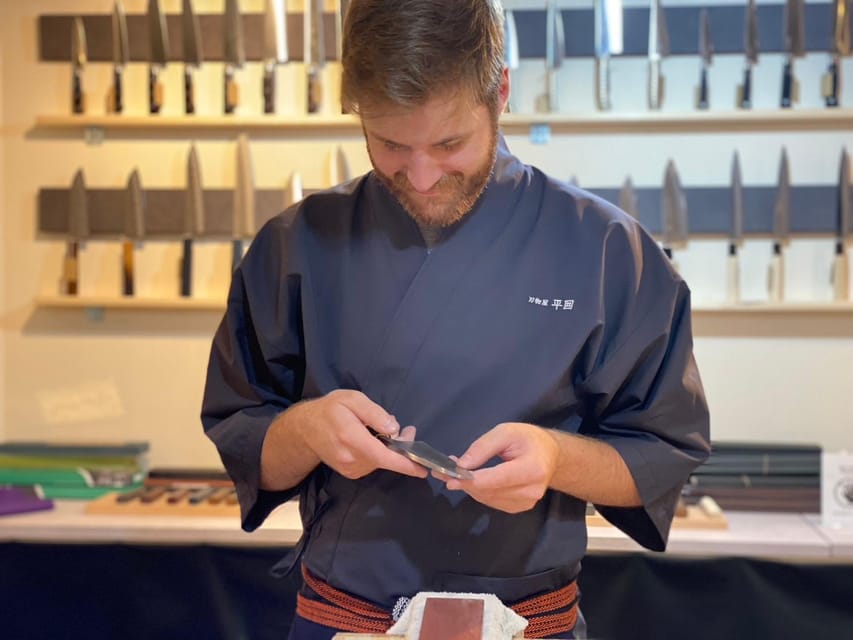
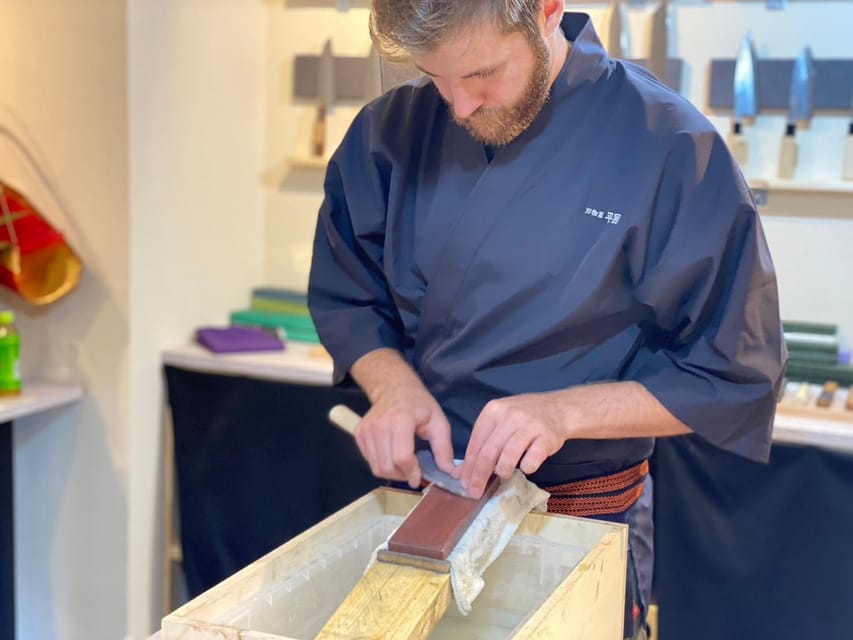
The sharpening section begins with a demonstration, often using practice knives before you work on your own blade. This is a smart approach for beginners. You can watch the hand position and motion first, then try the technique without the pressure of immediately ruining your new knife.
The shop supplies the whetstones, so you do not need to buy one to take part. You learn the basic method, then sharpen the knife selected for your workshop. The instructor checks your progress and gives corrections as you work.
This is where the small group makes a real difference. You can ask about pressure, angle, and the feel of the blade, then get an answer while the problem is still in your hands. Several participants found that the direct correction gave them confidence to repeat the method at home.
Do not expect to become a professional sharpener in two hours. The class gives you a solid beginner foundation, not years of craft training. You will need practice later, and one useful improvement would be a printed reminder of the technique. One participant specifically wished for written sharpening notes to take home.
Still, the lesson solves the hardest beginner problem: knowing whether you are doing it correctly. A video can show a movement, but it cannot tell you that your pressure is too heavy or your angle has slipped. Here, the instructor can.
Fitting the magnolia handle with care
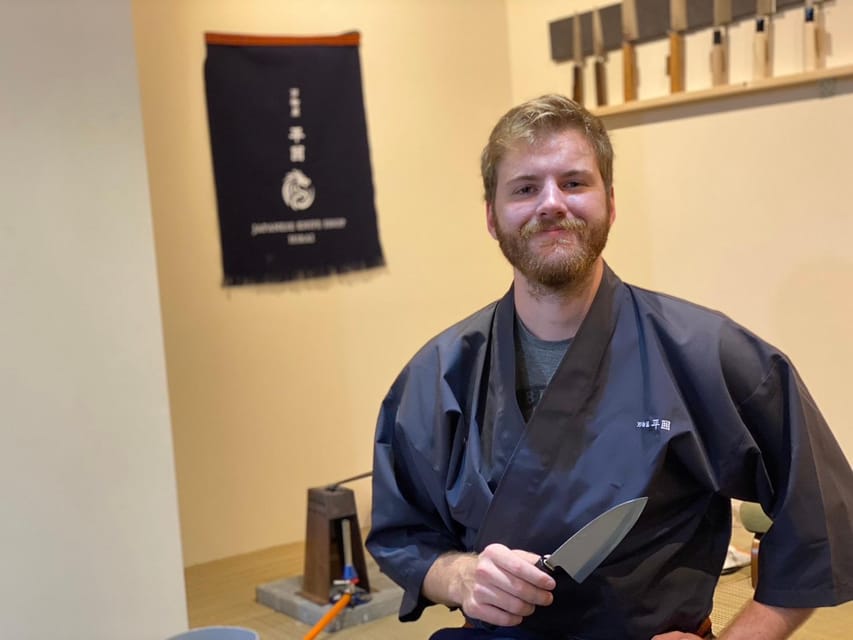
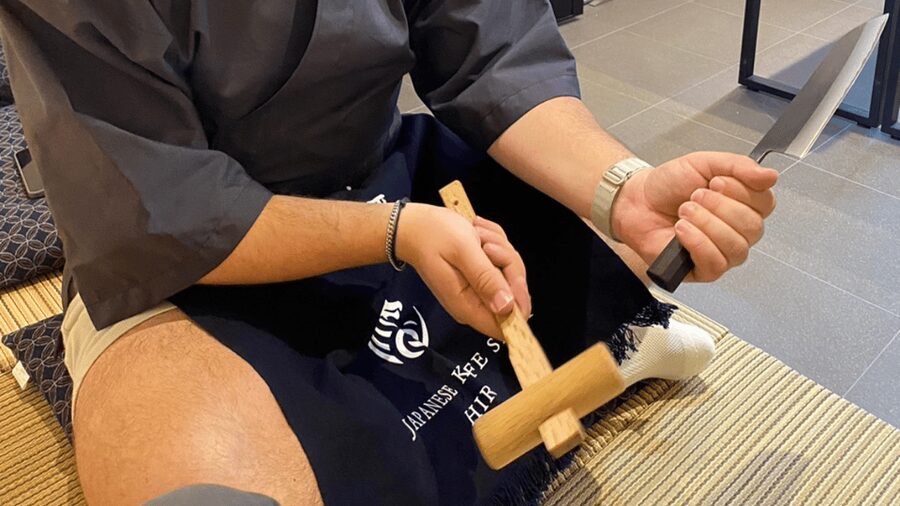
After sharpening, you move to the handle-fitting section. The included handle is made from magnolia wood, a traditional-looking choice that gives the knife a simple, natural finish.
You choose the handle and fit it with help from the instructor. The work involves fire, and smoke may come out during the process. Wear clothes you do not mind smelling smoky afterward. This is not a reason to skip the class, but it is worth knowing before you arrive in your best dinner outfit.
The handle stage adds a satisfying sense of completion. You are not only sharpening a knife that someone else finished. You are helping assemble the working tool, with guidance from people who handle these blades every day.
Other handle types are available for an extra charge. The added cost depends on the handle you select, so ask before agreeing to an upgrade. The standard magnolia handle is included and keeps the advertised price intact.
If you want engraving, contact the shop in advance and provide up to four characters. The engraving fee is included in the activity price, but the request needs advance notice. Short initials, a name, or a meaningful four-character inscription could make the knife feel more personal, though the available details do not specify which writing systems or fonts the shop offers.
Packaging your finished knife for the journey home
At the end, the shop packages your knife so you can take it home. That is a practical benefit, especially if you are still moving around Japan or flying internationally.
You should still check your airline and customs rules before carrying a knife home. The workshop information confirms that the knife is packaged, but it does not give country-specific transport advice. Keep it packed and follow the rules for checked baggage rather than carrying it loosely.
The finished knife also makes a useful souvenir because it carries more than a shop receipt. You remember the blade you selected, the hours spent learning to sharpen it, and the handle you helped fit. Participants repeatedly valued that personal connection, especially compared with simply buying a knife without instruction.
The knife is not a museum object. It is intended for use. Once home, you can apply the sharpening method to maintain it, though you should continue to use care with any sharp blade and follow the shop’s guidance.
Is $161 a fair price?
At $161 per person, this is not a cheap two-hour activity. You are paying more than you would for a basic sightseeing stop or a short craft demonstration.
The value improves when you count what is included: one knife, the magnolia handle, the sharpening lesson, handle fitting, a uniform and apron, the workshop fee, and engraving. The knife alone accounts for a meaningful part of the cost, and you also receive instruction in a skill that can serve you for years.
Several participants felt the total was only modestly higher than buying a knife without instruction. That is the right comparison. If you already plan to purchase a Japanese knife, this workshop can make more sense than a standard retail visit because you receive personal instruction and a finished knife.
The calculation changes if you do not cook, do not want to maintain knives, or are unlikely to use a whetstone again. In that case, the activity becomes an expensive souvenir purchase. You may still value the craft experience, but the practical return is smaller.
Upgrades can raise the final price. Additional knives and non-magnolia handles are not included, so decide your budget before entering the shop. The lack of sales pressure is helpful, but you should still ask clearly about any added cost.
Who will enjoy this experience most?
I would recommend the workshop to home cooks, food lovers, craft fans, and anyone who wants a Kyoto souvenir with a job to do. It also suits couples, friends, or parents with teenagers aged 15 and older, provided everyone is comfortable with careful, hands-on work.
It is especially good for someone who has always been intimidated by wet stones. The class takes the mystery out of the process and lets you practice under supervision. You may not leave ready to sharpen every blade in the house, but you should understand the basic motion and feel more willing to continue.
It is less suitable for young children, wheelchair users, and people over 80, as stated in the activity information. Pets, baby strollers, smoking, alcohol, drugs, and loud behavior are not allowed.
The workshop also rewards people who enjoy a slower activity. For two hours, you are concentrating on metal, stone, wood, heat, and hand movement. That can feel calm and absorbing, but it will not suit someone seeking a fast, high-energy Kyoto attraction.
Useful planning advice for the day
Wear practical clothes. The handle-fitting section uses fire and can produce smoke, so choose clothing you do not mind smelling smoky.
Arrive five minutes early and use the white curtain as your visual clue. Since the shop is around Nishiki Market, allow time to get through the area and locate the storefront.
Tell the shop ahead of time if you want engraving. Give them up to four letters or characters, and confirm the exact format before the workshop begins.
Choose your knife before the class if possible. Santoku is the most broadly useful option, while Deba and Yanagi are better suited to people drawn to their specialized forms.
Finally, leave room in your luggage for the finished knife, even though it will be packaged. If you are flying, check the rules for transporting knives before your workshop date.
Should you book the HIRAI knife workshop?
Book it if you want a useful souvenir, enjoy learning by doing, and have at least some interest in cooking or Japanese craft. The combination of sharpening, handle fitting, English instruction, and a knife to take home gives the two hours real substance.
I especially like it for first-time whetstone users. Patient instructors such as Julio have helped beginners correct their technique, and the three-person limit gives the lesson a personal feel. The history talk, choice of knife, and magnolia handle add meaning without taking over the practical work.
Skip it if you want a purely visual activity, dislike smoke, or have no interest in using a knife after your trip. Also watch the budget if you are tempted by upgrades.
For the right person, $161 is a fair price for a Kyoto experience that continues in your own kitchen. You leave with a blade, a new maintenance skill, and a souvenir tied to your own hands rather than simply purchased on the way to the next sight.
FAQ
Where does the knife sharpening workshop take place?
Go directly to Japanese knife shop HIRAI in Kyoto. The shop has a white storefront curtain at the building. It is located in the Nishiki Market area.
How long does the workshop last?
The workshop lasts two hours. Starting times depend on availability.
Which knives can I choose?
You can choose one knife from three options: Santoku, Deba, or Yanagi.
Is an English guide available?
Yes. Instruction is available in English and Japanese, and the workshop has English speaking guides.
What is included in the price?
The $161 price includes the knife you sharpen, the magnolia wood handle you fit, a Japanese working uniform and apron, the experience fee, and the engraving fee.
Can I engrave the knife?
Yes. Tell the shop in advance if you want engraving and provide up to four letters or characters.
Can I choose a different handle?
Yes, but handles other than the included magnolia type cost extra. The added fee depends on the handle selected.
Can I cancel the booking?
You can cancel up to 24 hours in advance for a full refund. A reserve now and pay later option is also available.
Just added around Kyoto
- Kyoto: Zen Meditation at a Private Temple with a Monk★ 5.0 · 25 reviews
- Kyoto: Gion Geisha District & Sake-in-Hand Walking Tour★ 5.0 · 37 reviews
- Private Pewter Sake Cup Experience with a Kyoto Artisan★ 5.0 · 31 reviews
- Your Private Vacation Photography Session In Kyoto★ 5.0 · 110 reviews
- Private Guided Traditional Buddhist Cooking in Japan★ 5.0 · 16 reviews
- Kyoto Wagashi(Japanese sweets) Cooking Class near Fushimiinari★ 5.0 · 60 reviews
- Traditional Japanese Music show & Experience Tour in Kyoto★ 5.0 · 57 reviews
- Kyoto:Family-Friendly Kimono & Yukata Experience at WARGO★ 5.0 · 147 reviews
Kyoto Tours, compared.


Fushimi Inari, Kinkakuji, Bamboo Grove 1 Day Bus Tour
Read our review →
Tea Ceremony in a Traditional Tea House in Kiyomizu
Read our review →
Kyoto Geisha Walking Tour: Gion District & Hidden Gems
Read our review →

Gion Magical Night Walking Tour with Geisha Trivia
Read our review →

Gion Geisha District Walking Tour – Stories of Geisha
Read our review →Browse the lists this tour appears in