
Reviewed · KYOTO TOURS
Kyoto: Full Day Bike Tour
Kyoto is sprawling, but a bicycle makes its famous temples feel connected. This full-day ride takes you from Toji and Nishi Honganji to the Golden Pavilion, Imperial Palace, Gion, and Fushimi Inari, while slipping through shopping arcades, river paths, and quiet neighborhood lanes in between.
I like the small groups of no more than nine and the mix of headline sights with places you might miss on your own. I also like that lunch, a helmet, bike rental, and Golden Pavilion admission are included. The catch is simple: this is a long, active day, with roughly 18 miles of cycling reported by one participant, plus plenty of walking and temple visits.
Key points
- Seven and a half hours on two wheels: This is a full Kyoto day, not a gentle one-hour spin.
- A smart mix of famous and local: See Kinkaku-ji and Fushimi Inari, then ride through Gion lanes and lesser-known neighborhoods.
- English-speaking guides with local experience: Jay, Juan, Karl, and Shawn are among the guides named by participants.
- Comfortable Giant and Trek bikes: Standard bikes work well on Kyoto’s generally flat routes, and e-bikes are available on request.
- Lunch and Golden Pavilion entry included: You avoid paying the Kinkaku-ji admission separately, and the meal gives the day a useful pause.
- A practical choice for active first-time visitors: You cover a lot of ground quickly, but you need to be comfortable cycling for hours.
Why a bicycle works so well in Kyoto
Kyoto’s major sights are spread across the city. Public transportation gets you close, but changing trains or buses can eat up time, and the ride between one temple and the next often reveals very little. On a bicycle, you move through the in-between parts of the city, which are often just as interesting as the formal sights.
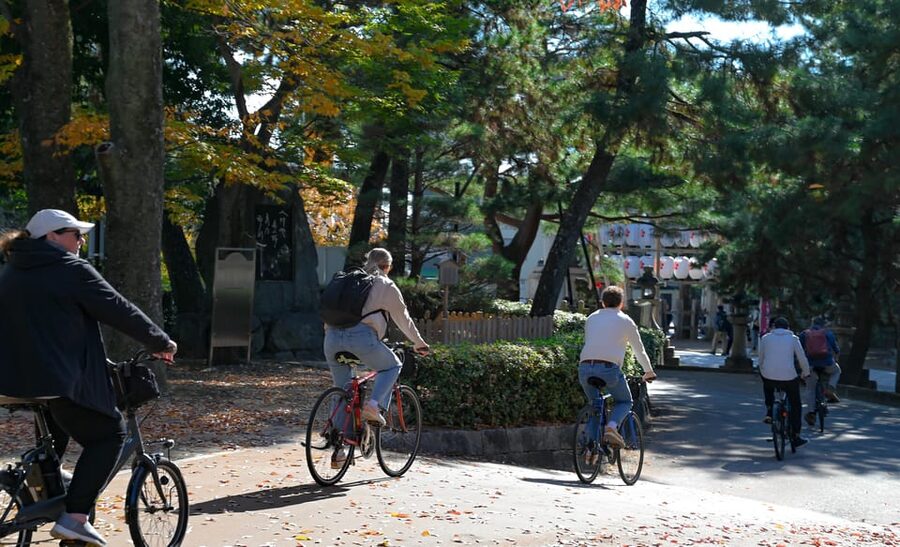
This route uses local roads, back streets, shopping streets, and the Kamo River. That gives you a useful sense of Kyoto as a lived-in city rather than a string of isolated tourist stops. You may pass ordinary homes, small shrines, neighborhood businesses, and quiet lanes before arriving at a major temple.
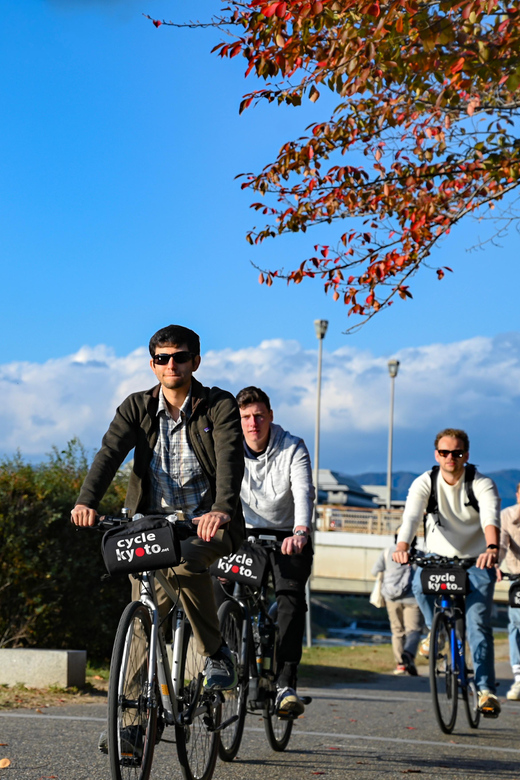
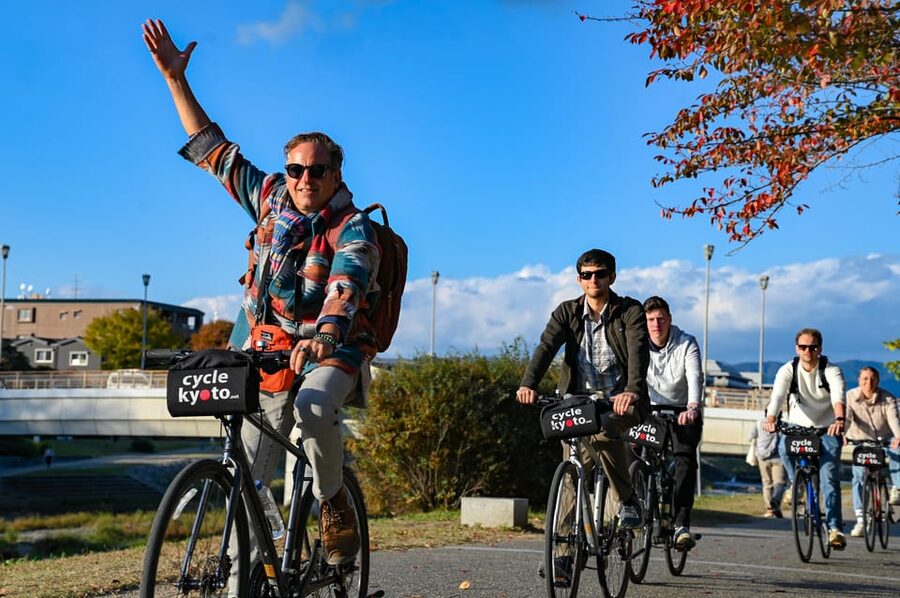
The tour starts at Cycle Kyoto at 9:30 AM sharp. Arrive 15 minutes early for fitting and the safety briefing. The group is capped at nine people, which matters in Kyoto’s narrow streets. A small group is easier to keep together and gives you a better chance to ask your guide questions without holding up a large crowd.
The bikes are well-maintained cross bikes from Giant and Trek. Kyoto is mostly flat along this route, so a standard bike should suit many riders. If you are uneasy about cycling for a full day, request an e-bike before booking or as early as possible. You still need to be comfortable riding a bicycle, and this tour is not for anyone who cannot ride.
More bike days around Kyoto:
- Hidden Kyoto E-Biking tour
★ 5.0 · 1,843 reviews - Bike Tour Exploring North Kyoto plus Lunch
★ 5.0 · 1,087 reviews - Arashiyama Bamboo Forest & Hidden Gems Bike Tour (Early Bird)
★ 5.0 · 613 reviews
Toji and Nishi Honganji set the tone
After the safety briefing, Toji is the first proper stop. It is described as Kyoto’s oldest temple, giving the day an early dose of serious religious and architectural history. The visit lasts about 30 minutes, enough to look around without using up your best energy at the first stop.
From Toji, it is about a 10-minute ride to Nishi Honganji. The temple visit here lasts around 50 minutes, so your guide has time to explain what you are seeing instead of rushing you through a gate, a hall, and back to the bikes.
This early section also helps you settle into the riding rhythm. You learn how the group moves through the city, where to stop, and how much time to allow when switching between cycling and walking. If you have not ridden in Kyoto before, pay attention to the guide’s road instructions. The routes are generally described as safe and low traffic, but you are still riding in a city.
Sanjo Arcade and Shinsen-en add variety
The ride continues north through the Sanjo Shopping arcade. This is a welcome change from temple grounds. You see a more everyday side of Kyoto, with covered shopping streets and local businesses rather than formal gardens and sacred buildings.
A short stop at Shinsen-en gardens follows. The gardens are picturesque and offer a quieter pause before the larger shrine and temple visits ahead. It is a small stop, but it helps prevent the day from becoming a nonstop parade of major attractions.
This is one of the tour’s better design choices. Kyoto can become a blur of wooden gates, incense, gravel, and camera stops. Mixing in a shopping arcade and a compact garden keeps the day varied and helps you notice how the old city functions between its monuments.
Kitano Tenmangu gives you time to look around
Kitano Tenmangu Shrine receives about an hour, including a guided visit. That gives you room to walk the grounds rather than simply park, take a photo, and leave.
Your guide can add context to the shrine’s role and details that are easy to miss when you are moving alone. The route also gives you a break from the bike saddle. That balance matters because the tour is long, and several of the best stops require walking.
A festival or special event may occasionally appear along the route, depending on the day. One participant happened to visit a festival and a little-visited temple during the ride. That is not guaranteed, but it shows the benefit of having a guide who can respond to what is happening in the city rather than following a rigid path with no room for local discoveries.
A few more Kyoto half-days to weigh up
- 5 Top Highlights of Kyoto Full Day Bike Tour (E-bike option)
★ 5.0 · 511 reviews - Full Day Biking Tour Exploring the Best of Kyoto
★ 5.0 · 498 reviews - Full Day Guided Tour to Kyoto and Nara from Osaka by Van
★ 5.0 · 420 reviews - Nara Park, Osaka & Kobe from Kyoto Full Day tour
★ 5.0 · 207 reviews
Kinkaku-ji is the big visual stop
The Golden Pavilion, or Kinkaku-ji, is the most instantly recognizable sight on the route. Admission is included, and you spend about an hour at the temple, with roughly 25 minutes specifically noted for exploring the pavilion area.
The gold-covered building reflected in the pond is one of Kyoto’s classic views. It is also one of the city’s busiest attractions, so set your expectations correctly. This is a major sight with a fixed walking route, not a quiet temple visit. Your guide helps put the pavilion in context, but you will still share the grounds with many other people.
Including the admission is useful. You do not need to queue at the ticket counter or think about the extra cost once you arrive. After the stop, the group rides east toward lunch and the Imperial Palace.
Lunch is a real part of the value
The traditional Japanese lunch lasts about an hour, and the restaurant can vary with availability. That flexibility means you should not book this expecting one fixed signature dish or a particular dining room.
The meal is still an important part of the day. You need a proper break after the morning’s riding and temple visits, and the guide can take you somewhere you might not locate on your own. Dishes described by participants included ramen with a duck broth, along with other traditional Japanese food. One guide also took the group to good food spots and ice cream during the day.
Lunch is included in the $116 price, which improves the overall value. In Kyoto, a full-day guided experience with bike rental, helmet, a meal, and Kinkaku-ji entry can be easier to budget than paying separately for each part. The price is not bargain-basement, but the day includes a lot of moving parts and personal guidance.
The Imperial Palace offers a slower hour
After lunch, the route reaches Kyoto Imperial Palace. The visit lasts about an hour, giving you time to walk through the grounds and take in the scale of the former imperial center.
The palace area is a useful contrast to the compact shrine and temple stops. You have more open space, longer sight lines, and a chance to stretch your legs after lunch. It also breaks up the day before the route returns toward the river and southern Kyoto.
By this stage, you will have covered a large part of the city. That is the main advantage of the tour, but also its main demand. You are not lingering for hours at any one site. The day favors breadth and connection over a slow, solitary visit.
The Kamo River and Gion bring you into Kyoto’s daily life
The Kamo River section includes about 40 minutes for a photo stop and a ride south. The river is one of Kyoto’s best orientation points. It gives you a clear sense of direction and a calmer riding stretch after the city streets.
From there, the group enters the backstreets of Gion. The district is famous for geisha culture, but it is more rewarding when you look beyond the search for a dramatic sight. The lanes, traditional buildings, small entrances, and careful details are part of the experience.
Your guide leads a one-hour visit through Gion, adding useful cultural context and pointing out things you could easily pass without noticing. A geisha sighting is possible, but it should not be treated as a promised feature. Keep your camera respectful and follow local etiquette.
This part of the tour was especially well received because it combines a famous district with a quieter way of seeing it. You are not simply dropped at a busy entrance and told to wander. You arrive by bike, move through the surrounding streets, and hear explanations along the way.
Tofukuji and Fushimi Inari finish the ride strongly
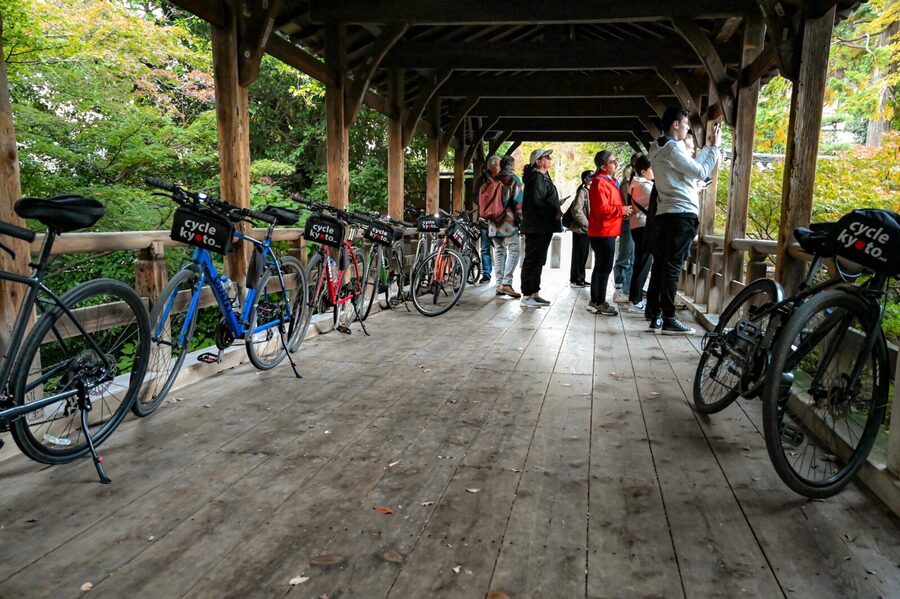
The final leg heads south to Tofukuji Temple. The stop is listed as about 30 minutes and works mainly as a photo pause. It gives you another look at Kyoto’s temple architecture without adding a long, tiring visit late in the day.
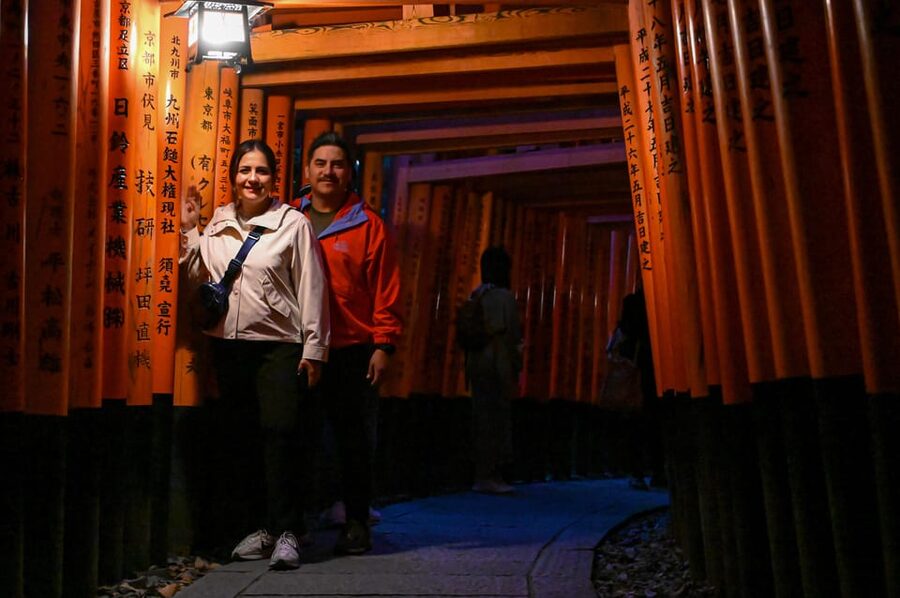
Then comes Fushimi Inari Taisha, with its famous rows of vermilion torii gates. The guided visit at the Senbontorii section lasts about an hour. This is a fitting final major sight because the gates create a very different visual experience from the Golden Pavilion and the Imperial Palace.
Be aware that Fushimi Inari is not just a quick photo stop. Even a limited visit involves walking, and the day has already included several temple grounds. You will likely appreciate the dramatic gates, but you may also feel the distance in your legs by this point.
After Fushimi Inari, you cycle back to Cycle Kyoto. The full duration is 450 minutes, or about seven and a half hours. Plan your evening lightly. This is not the kind of activity to pair with a demanding night reservation immediately afterward.
What the guides add to the day
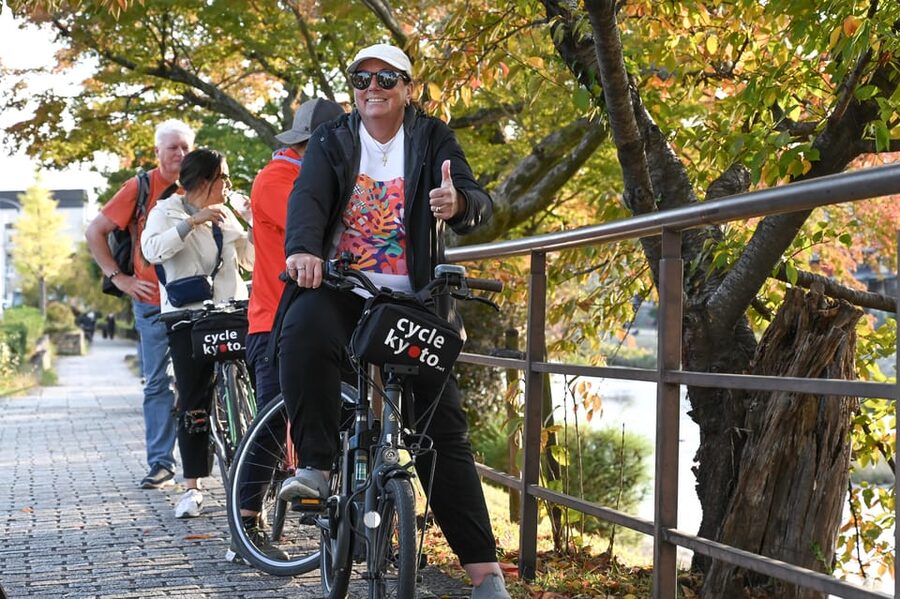
The guides speak English and have lived in Japan for a considerable time. That background matters most during the transitions, when a bicycle tour can otherwise become little more than a moving checklist.
Guides named in the feedback include Shawn, Jay, Juan, and Karl. Jay is described as funny and enthusiastic, while Juan is noted for patience and helpful suggestions for other Kyoto visits. Karl is associated with an enjoyable lunch stop and clear explanations. Shawn led a route through small alleys and temple areas with plenty of historical detail.
Guide quality can vary from person to person, but the format gives each guide room to shape the day. You may hear anecdotes, learn about local customs, or get suggestions for places to visit after the tour. The strongest praise centers on the guides’ enthusiasm, clear English, and ability to make the history interesting without turning every stop into a lecture.
Is $116 a fair price?
At $116 per person, this is a mid-priced full-day activity. The useful question is not simply how much the bike costs. Ask what you would spend and organize yourself to visit Toji, Nishi Honganji, Kitano Tenmangu, Kinkaku-ji, the Imperial Palace, Gion, Tofukuji, and Fushimi Inari in one day.
The fee covers the bike, helmet, Golden Pavilion admission, and traditional Japanese lunch. You also get route planning, an English-speaking guide, and a small group. Those inclusions make the price reasonable for a first full day in Kyoto, especially if you value seeing many districts without working out every connection yourself.
You can save money by using buses and trains, but you will spend more time navigating and may miss the local streets between the attractions. You also give up the guide’s running commentary and the ease of having the route organized.
Who should book this ride?
I would recommend it most to active first-time visitors with limited time in Kyoto. It is also a good fit for couples, friends, and families with children aged 12 or older who already feel comfortable on bikes.
You should be ready for a long day. One participant estimated a little over 18 miles of cycling, and that figure gives you a useful idea of the effort involved. The city is relatively flat, but cycling, walking, standing, and sightseeing add up.
Wear comfortable clothing and shoes. Bring water, sunscreen, a hat, and a camera. Storage on the bikes is limited, so keep personal belongings small. Larger luggage can be left in the secure shop space.
The tour does not run in every type of weather. In heavy rain, it is canceled and refunds are provided. Dress for the forecast, but understand that suitable clothing does not turn a stormy day into a cycling day. High heels and smoking are not allowed, and the activity is not suitable for pregnant women or people who cannot ride a bike.
You can cancel up to 24 hours ahead for a full refund, and the reserve-now, pay-later option gives you some planning flexibility.
Should you book the Kyoto full-day bike tour?
Book it if you want maximum sightseeing with a local route between the famous places. The combination of Kinkaku-ji, Fushimi Inari, Gion, the Imperial Palace, major temples, and neighborhood lanes is hard to match in one organized day.
Skip it if you want slow temple visits, dislike cycling in cities, or prefer to set your own pace. The day is long and the schedule is full, even though the riding itself is generally manageable on a standard bike.
For the right person, this is an efficient and enjoyable introduction to Kyoto. Request an e-bike if you have doubts about the distance, arrive early for fitting, and leave your evening free. You will see a lot, learn plenty, and get a better feel for the city than you would by moving only between train stations and major gates.
FAQ
How long does the Kyoto full-day bike tour last?
The tour lasts 450 minutes, or about seven and a half hours. It begins at 9:30 AM and returns to Cycle Kyoto after the Fushimi Inari visit.
Where does the tour start and finish?
The tour starts and finishes at Cycle Kyoto. You should arrive 15 minutes before the 9:30 AM start.
What sights are included?
The route includes Toji, Nishi Honganji Temple, Sanjo Shopping arcade, Shinsen-en gardens, Kitano Tenmangu Shrine, Kinkaku-ji, Kyoto Imperial Palace, the Kamo River, Gion, Tofukuji Temple, and Fushimi Inari Taisha Shrine.
Is the Golden Pavilion entrance fee included?
Yes. Admission to Kinkaku-ji, also called the Golden Pavilion, is included in the price.
Is lunch included?
Yes. A traditional Japanese lunch is included. The restaurant may change based on availability.
Are e-bikes available?
Yes. E-bikes are available upon request. The regular bikes are well-maintained cross bikes made by Giant and Trek.
How large is the group?
The tour is limited to nine participants, making it a small-group activity.
What language does the guide speak?
The live guide speaks English. The guides have lived in Japan for a considerable amount of time.
Can I cancel the tour?
Yes. You can cancel up to 24 hours in advance for a full refund. In heavy rain, the operator cancels the tour and provides refunds.
Just added around Kyoto
- Kyoto: Zen Meditation at a Private Temple with a Monk★ 5.0 · 25 reviews
- Kyoto: Gion Geisha District & Sake-in-Hand Walking Tour★ 5.0 · 37 reviews
- Private Pewter Sake Cup Experience with a Kyoto Artisan★ 5.0 · 31 reviews
- Your Private Vacation Photography Session In Kyoto★ 5.0 · 110 reviews
- Private Guided Traditional Buddhist Cooking in Japan★ 5.0 · 16 reviews
- Kyoto Wagashi(Japanese sweets) Cooking Class near Fushimiinari★ 5.0 · 60 reviews
- Traditional Japanese Music show & Experience Tour in Kyoto★ 5.0 · 57 reviews
- Kyoto:Family-Friendly Kimono & Yukata Experience at WARGO★ 5.0 · 147 reviews
Kyoto Tours, compared.


Fushimi Inari, Kinkakuji, Bamboo Grove 1 Day Bus Tour
Read our review →
Tea Ceremony in a Traditional Tea House in Kiyomizu
Read our review →
Kyoto Geisha Walking Tour: Gion District & Hidden Gems
Read our review →

Gion Magical Night Walking Tour with Geisha Trivia
Read our review →

Gion Geisha District Walking Tour – Stories of Geisha
Read our review →Browse the lists this tour appears in