
Reviewed · KYOTO TOURS
Kyoto: Kintsugi Jewelry Workshop with Natural Stones
Broken pottery becomes wearable art in this calm Kyoto workshop. You choose shards from Japanese ceramics, add natural stones or pearls, and use synthetic lacquer with gold powder to create jewelry that celebrates repair rather than hiding damage. I like the hands-on design time and the chance to work with pottery from places such as Arita, Karatsu, Oribe, Kyoto, Shigaraki, and Hagi.
I also like the setting. The atelier is a 100-year-old Kyoto townhouse a short walk from Fushimi Inari Taisha, so this makes a thoughtful break from temple crowds. The main consideration is access: the house is traditional, there is no parking, and the workshop is not suitable for wheelchair users.
Key points to know before you book
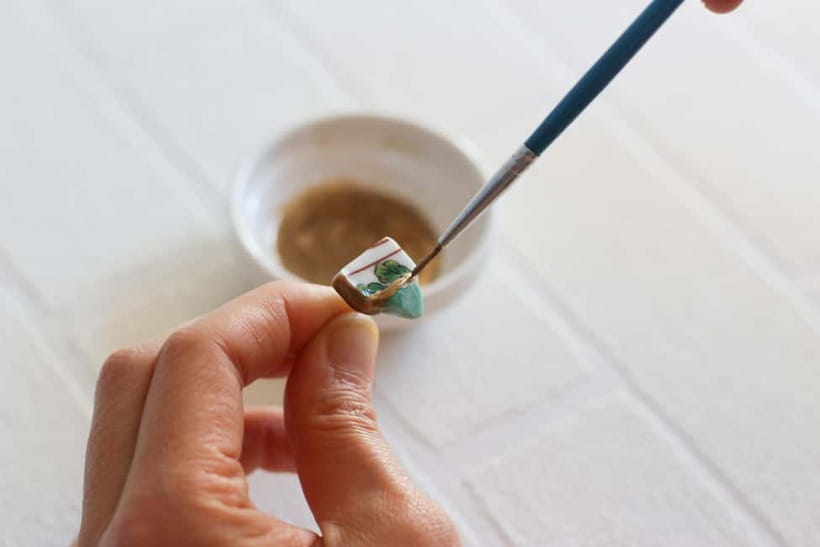
- Make two personal jewelry pieces: Choose from earrings, rings, necklaces, brooches, tie pins, cufflinks, and other accessory styles.
- Work with Japanese pottery shards: Select fragments from several famous ceramic traditions, then pair them with colorful stones, shells, or pearls.
- Learn the meaning of kintsugi: The class connects the craft with repair, reuse, and the Japanese idea of wabi-sabi.
- Meet artisan Natsuka: Instruction is available in English and Japanese, with patient, step-by-step help.
- Enjoy a small class: The group is limited to 10 people, giving you room to ask for design and technique advice.
- Walk from Fushimi Inari: The atelier is about three minutes from the shrine, five minutes from Inari Station or Ryukoku Daimae-Fukakusa Station.
Turning cracked ceramics into Kyoto jewelry
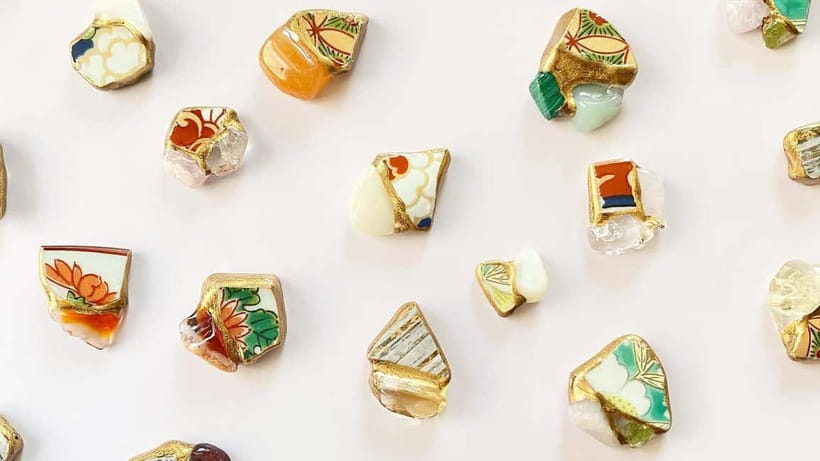
Kintsugi is usually associated with repairing broken pottery using lacquer and powdered gold. Here, the same visual idea is adapted for jewelry. Instead of restoring a bowl or plate, you use small ceramic fragments to make an accessory that shows its joins as part of the design.
That shift makes the workshop easy to enjoy even if you have no art training. You are not expected to reproduce a fixed pattern. You choose the materials, decide how they should sit together, and then follow the instructor’s guidance as the piece takes shape.
The materials give you plenty of room to create something personal. You can work with pottery from Arita, Karatsu, Oribe, Kyoto, Shigaraki, or Hagi. You may also select stained glass, natural stones, shells, and pearls. Each material changes the feel of the finished item. A patterned ceramic shard may give you a clear link to Japan, while a bright stone or pearl can make the result feel more like everyday jewelry.
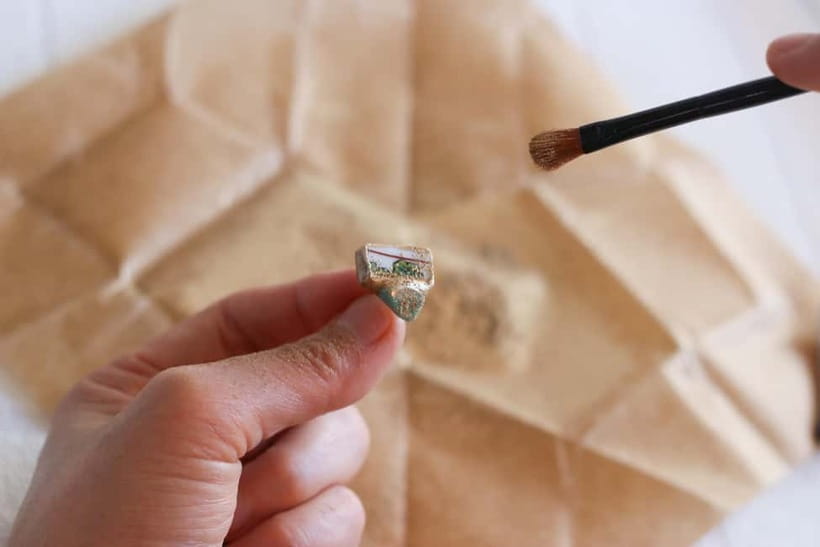
The gold powder is important to the look. It highlights the joins and gives the finished piece the familiar kintsugi effect. The workshop uses synthetic lacquer rather than traditional urushi lacquer, specifically to reduce the risk of allergic reactions. That makes the class more approachable, though anyone with material sensitivities should still check the details before booking.
More hands-on workshops in Kyoto:
- Kyoto: 45-Minute Tea Ceremony Lesson Experience
★ 4.3 · 2,378 reviews - Ramen Cooking Class at Ramen Factory in Kyoto
★ 5.0 · 1,937 reviews - Kyoto : Chopsticks Making Workshop in Gion with Engraving Option
★ 5.0 · 958 reviews
A gentle 150-minute creative session
The full workshop lasts 150 minutes, which is long enough to make careful choices without turning the activity into a rushed souvenir stop. You begin by learning what kintsugi is and why repaired objects can be valued for their marks and history.
The instructor then explains the materials and the basic process. You will see how pottery fragments, stones, and other small elements can work together as jewelry. The guidance is practical, with each step shown before you try it.
The design stage is one of the best parts. You can compare different ceramic colors and shapes, test combinations, and decide which accessory suits your idea. If you are making earrings, you may want matching fragments. If you choose a brooch or necklace, an irregular shard can become the main visual feature.
Several people have found the process slow and calming, and that is a fair way to think about the session. It is not a fast demonstration where you watch an artisan do all the work. You spend real time making choices and applying the technique yourself. If you like craft activities that let you work at your own pace, the 150-minute format is a strong point.
The workshop is set up for two jewelry pieces. That gives you a useful chance to try more than one design, or to make a matching pair and a separate keepsake. Your finished jewelry can be taken home the same day.
Choosing from Japanese pottery and natural stones
The selection of fragments is a major part of the experience. You are not simply decorating a generic blank item. You are working with pieces of pottery connected to different Japanese ceramic traditions.
Arita is known for its porcelain tradition, while Karatsu, Oribe, Shigaraki, and Hagi each have their own visual character. Kyoto pottery offers another local connection, especially fitting for a workshop held in the city. You do not need to be a ceramics expert to appreciate the differences. Look for colors, glaze patterns, textures, and edges that appeal to you.
The fragments may be small, so your design depends on careful arrangement. That is part of the fun, but it also means the final result will not look like mass-produced jewelry. Two people can use similar materials and still leave with very different pieces.
Natural stones, shells, and pearls add color and softness beside the harder ceramic. Stained glass offers another option if you want a brighter or more modern appearance. The workshop’s appeal comes from this mixture of old and new: historic Japanese pottery becomes part of an accessory that you design for yourself.
I would take your time before settling on a piece. Hold several possible combinations together and consider the size of the accessory you want. A bold shard may work well as a brooch, while a smaller fragment may be better suited to earrings or a ring.
Meeting Natsuka in a traditional Kyoto townhouse
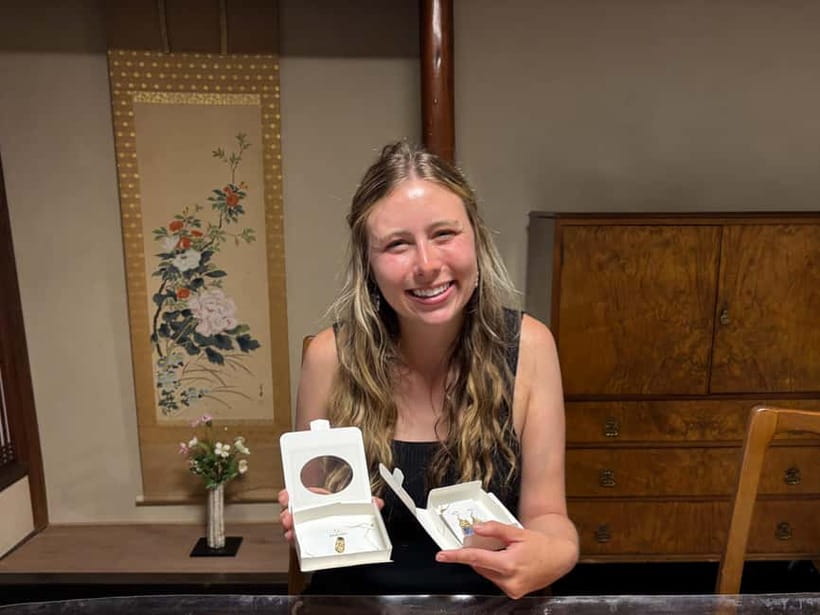
The workshop takes place at Kintsugi Jewelry engrace, in a one-story Kyoto house that is about 100 years old. A white engawa curtain hangs at the entrance, helping you identify the atelier.
The setting gives the activity a sense of place without requiring a long trip outside central Kyoto. Fushimi Inari Taisha is only about three minutes away, so you can combine the workshop with a shrine visit. I would plan the timing carefully, since Fushimi Inari can be crowded and the shrine grounds are larger than the famous torii path alone suggests.
Natsuka leads the workshop in English and Japanese. The instruction is built around clear demonstrations and patient help. That matters here because the craft involves small pieces and fine movements. You will want an instructor who can explain not only what to do, but also how to adjust your design when a fragment does not sit exactly as expected.
The small-group limit is 10 participants. This is not a private lesson, but it is small enough for the instructor to check on each person. The available feedback also points to a warm, unhurried teaching style, with extra time sometimes given when a group needs it. Do not treat that as a guaranteed extension of every session, but it suggests the class is not run with a hard, hurried rhythm.
Refreshments have also been provided during some sessions. They are a pleasant touch, though the main reason to book is the making itself rather than food or sightseeing.
A few more Kyoto half-days to weigh up
- PERFECT KYOTO 1-Day Bus Tour
★ 5.0 · 13,518 reviews - Kyoto: Fushimi Inari, Kinkakuji, Bamboo Grove 1 Day Bus Tour
★ 4.8 · 4,316 reviews - Kyoto: Tea Ceremony in a Traditional Tea House in Kiyomizu
★ 4.9 · 3,519 reviews - Kyoto Geisha Walking Tour: Gion District & Hidden Gems
★ 4.7 · 3,273 reviews
Why the kintsugi story matters
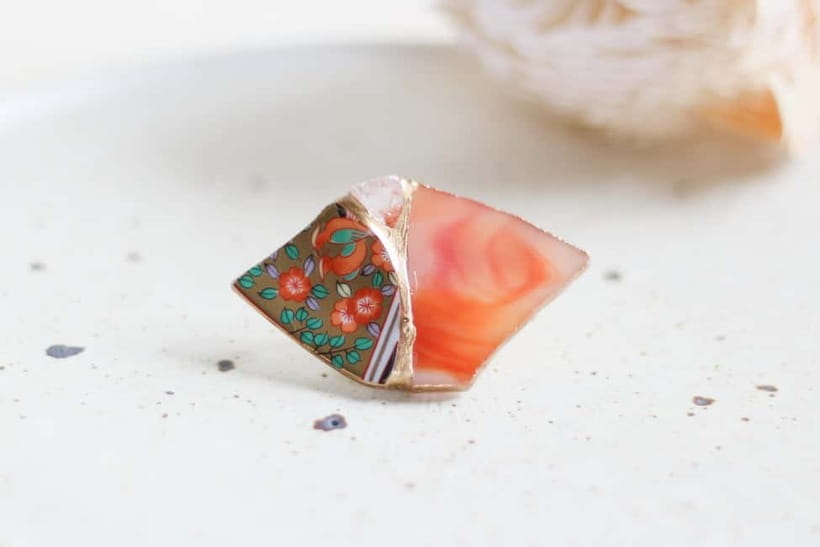
The workshop gives you more than a decorative technique. It introduces a Japanese way of looking at broken objects. Kintsugi makes the repair visible, using gold rather than trying to disguise the crack.
The related idea of wabi-sabi is often explained through an appreciation of imperfection, age, and change. In this setting, you see that idea in a direct and manageable form. A broken pottery fragment is not treated as waste. Its marks and irregular shape become part of the design.
That message also gives the activity an environmental angle. The jewelry uses upcycled pottery rather than asking you to buy another ordinary trinket. You still receive a souvenir, but it carries your own choices and the story of a material being given a second life.
I would not book this class expecting a full course in Japanese ceramics or a formal study of Buddhist aesthetics. The cultural explanation is part of the workshop, but the focus stays on making jewelry. For most people, that balance is right. You get enough context to understand why the method matters, then spend most of your time working with your hands.
The value of $106
At $106 per person, this is not the cheapest craft activity in Kyoto. The value depends on what you want from a souvenir and how much you enjoy guided creative time.
The fee includes the 150-minute kintsugi jewelry workshop, synthetic lacquer, gold powder, pottery shards, stones, shells, pearls, and instructor assistance. You also take home your finished pieces the same day. Since the session is designed around two jewelry items, the price works better if you compare it with the cost of a small craft class plus two personal souvenirs, rather than with the price of a simple purchased accessory.
The cultural setting adds value too. You are making the jewelry in a traditional Kyoto townhouse close to one of the city’s best-known shrines. The experience gives you a quiet indoor activity, a local craft connection, and a keepsake that cannot be duplicated exactly.
Still, this is not the right choice if you want a large finished object, a formal museum lecture, or a bargain activity. The jewelry is handmade and likely small. Much of what you are paying for is the teaching, material choice, atmosphere, and time to create something yourself.
It is especially useful on a rainy day, during a hot part of the afternoon, or when you need a slower activity between major Kyoto sights. The workshop can also add variety to an itinerary filled with temples and shrines.
Who will enjoy this workshop most
I would recommend it to adults, couples, families with older children, and anyone who likes making things rather than simply collecting photographs. One family completed the activity with an eight-year-old child, so younger participants can take part with close adult support.
The class is a good fit for people who enjoy design but do not consider themselves artistic. The instructor demonstrates the process, and the range of materials lets you work toward a simple or more unusual look.
It also suits anyone searching for a meaningful Kyoto souvenir. A mass-produced charm may remind you of your trip, but a piece you assemble from a Japanese pottery shard will carry a stronger personal connection.
You should think twice if you dislike detailed handwork or prefer a tightly scheduled sightseeing activity. The process requires patience. You may spend a surprising amount of time deciding between two small pieces of pottery, and that is part of the point.
The traditional house also brings practical limits. There is no parking, and the lane in front of the atelier is too narrow for vehicles. The meeting point is about a five-minute walk from either Keihan Ryukoku Daimae-Fukakusa Station or JR Inari Station. The site is not suitable for wheelchair users.
Finding the atelier near Fushimi Inari
The easiest approach is by train. From JR Inari Station, or from Keihan Ryukoku Daimae-Fukakusa Station, allow about five minutes on foot. Follow the supplied photo map carefully and look for the traditional one-story house with the white entrance curtain.
Do not plan to drive directly to the door. There is no parking at the atelier, and the narrow alley is not suitable for vehicles. If you are visiting Fushimi Inari first, leave enough time to walk from the shrine area and locate the house without rushing.
This location works well as part of a half-day plan. You can visit the shrine, attend the workshop, and then continue around southern Kyoto. Just remember that the workshop has a set starting time, while Fushimi Inari invites you to wander. Put the class first in your schedule if you have a booking, then explore the shrine afterward.
Free cancellation is available up to 24 hours before the activity for a full refund, and you can reserve now and pay later. Those terms are useful if your Kyoto schedule is still shifting, but you should still confirm the available start time before finalizing your day.
Should you book the kintsugi jewelry workshop?
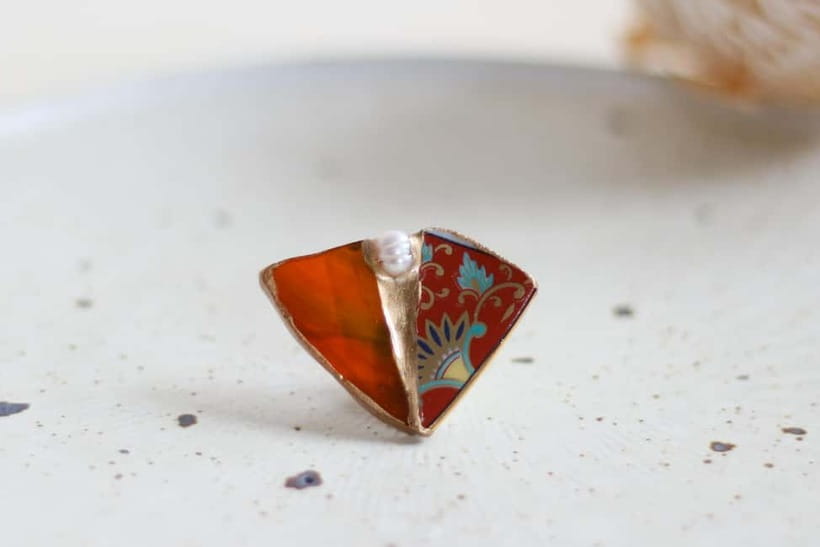
Book this experience if you want a quiet, hands-on Kyoto memory and like the idea of turning broken pottery into something useful. The strongest reasons are the thoughtful material selection, the patient step-by-step instruction from Natsuka, the intimate townhouse setting, and the chance to take home two handmade pieces.
I would be cautious only if mobility access is important, if you want a traditional lacquer restoration course, or if $106 feels high for small jewelry. For everyone else, the price is reasonable for 150 minutes of instruction, materials, cultural background, and two personal souvenirs.
Schedule it near Fushimi Inari, allow time to find the entrance, and arrive ready to make design choices slowly. The best result will not come from trying to make a perfect piece. It will come from letting the pottery’s cracks, colors, and uneven edges guide you.
FAQ
How long does the kintsugi jewelry workshop last?
The workshop lasts 150 minutes.
How much does the activity cost?
The listed price is $106 per person.
How many jewelry pieces can I make?
The workshop is set up for you to make two jewelry pieces.
What types of jewelry can I choose?
Options include earrings, rings, necklaces, brooches, tie pins, cufflinks, and other accessory styles.
What materials are provided?
Materials include synthetic lacquer, gold powder, Japanese pottery shards, natural stones, stained glass, shells, and pearls.
Is the workshop taught in English?
Yes. Instruction is available in English and Japanese.
Where is the atelier located?
The atelier is about a five-minute walk from Keihan Ryukoku Daimae-Fukakusa Station or JR Inari Station, and about three minutes from Fushimi Inari Taisha.
Is the workshop wheelchair accessible?
No. The activity is not suitable for wheelchair users.
Just added around Kyoto
- Kyoto: Zen Meditation at a Private Temple with a Monk★ 5.0 · 25 reviews
- Kyoto: Gion Geisha District & Sake-in-Hand Walking Tour★ 5.0 · 37 reviews
- Private Pewter Sake Cup Experience with a Kyoto Artisan★ 5.0 · 31 reviews
- Your Private Vacation Photography Session In Kyoto★ 5.0 · 110 reviews
- Private Guided Traditional Buddhist Cooking in Japan★ 5.0 · 16 reviews
- Kyoto Wagashi(Japanese sweets) Cooking Class near Fushimiinari★ 5.0 · 60 reviews
- Traditional Japanese Music show & Experience Tour in Kyoto★ 5.0 · 57 reviews
- Kyoto:Family-Friendly Kimono & Yukata Experience at WARGO★ 5.0 · 147 reviews
Kyoto Tours, compared.


Fushimi Inari, Kinkakuji, Bamboo Grove 1 Day Bus Tour
Read our review →
Tea Ceremony in a Traditional Tea House in Kiyomizu
Read our review →
Kyoto Geisha Walking Tour: Gion District & Hidden Gems
Read our review →

Gion Magical Night Walking Tour with Geisha Trivia
Read our review →

Gion Geisha District Walking Tour – Stories of Geisha
Read our review →Browse the lists this tour appears in