
Reviewed · KYOTO TOURS
Kyoto Michelin Ramen Workshop or Painting Ramen Essentials
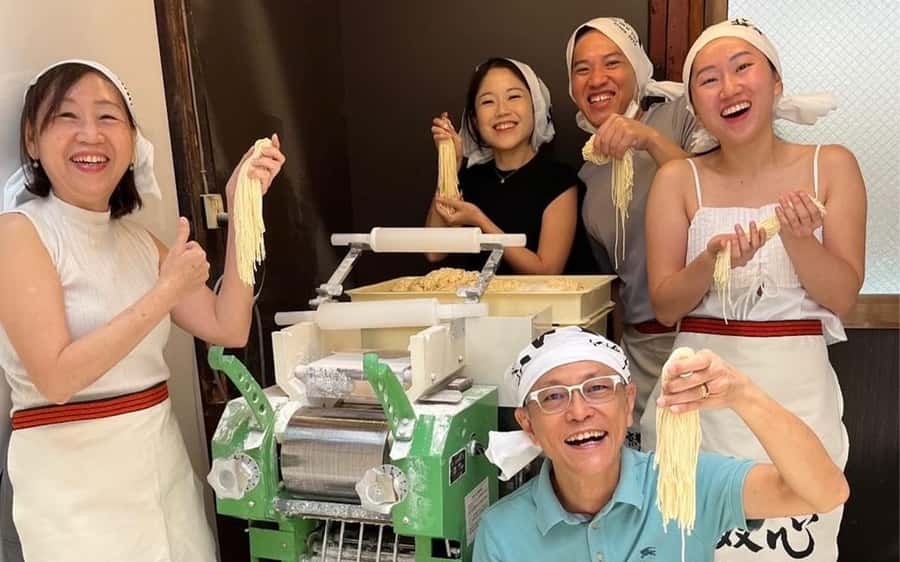
Musoshin’s Kyoto ramen workshop puts you behind the counter, where you mix ingredients, work dough through a noodle machine, and learn why fresh noodles rest overnight before they reach your bowl. The class is tied to Musoshin Ramen, whose Toronto branch has received Michelin recognition, and the ramen served afterward uses the same house methods.
I like the hands-on noodle making and the chance to eat the finished restaurant meal afterward, even though the noodles you make need to rest overnight. I also like the bowl and spoon painting, especially for families who want a creative break from temples and train rides.
The main drawback is space. The workshop room is small, and a full group can feel tight, particularly if you are working alongside children. Ask about the exact option and meeting point when booking, since the setup and included items can vary.
Key points at a glance
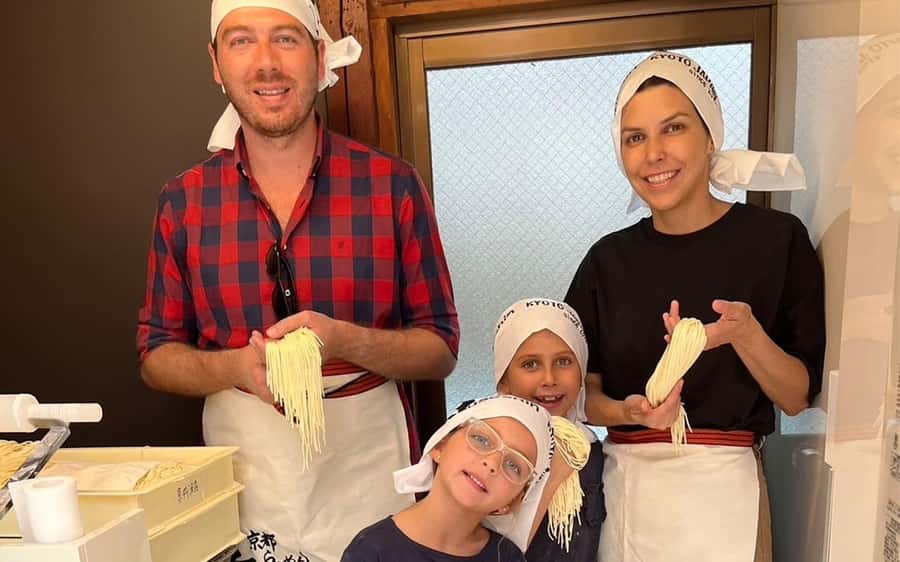
- Fresh noodles from start to finish: Mix the dough and take part in several stages of rolling and shaping with the noodle machine.
- Michelin-connected ramen: Musoshin’s Toronto branch has been nominated for Michelin recognition for three consecutive years, and the Kyoto recipe is the same.
- Painting adds a second activity: Depending on your booking, you can decorate a ramen bowl or spoon, with a custom bowl fired in a kiln at no extra charge.
- A proper meal follows: You receive ramen and a drink at the Musoshin restaurant after the workshop.
- Good for children: The class is designed for families, with simple, physical tasks that keep younger participants involved.
- Dietary choices are possible: Vegetarian and vegan ramen are available, and one family had special gluten-free noodles and soup prepared for a child.
Why this Kyoto class is different from a ramen lunch
Kyoto has no shortage of ramen shops, but eating a bowl and understanding how it is made are two different experiences. At Musoshin, you get both. The workshop shows you the labor behind the noodles, then sends you to the restaurant for a bowl made with the shop’s own ingredients.
Musoshin began in Kyoto in 2022 and now has six restaurants in Kyoto and Toronto. The company says it makes its ingredients in-house, including the noodles, soup, ramen soy sauce, and roast pork. Its noodles are made each morning, then rested overnight for use the following day. The soup cooks for 12 hours.
That detail matters. Ramen is often served as a quick, casual meal, but the broth and noodles depend on preparation done long before you sit down. The workshop gives you a useful look at that process without turning the class into a lecture.
The Toronto connection is part of the appeal, but it should be understood correctly. The experience is not a Michelin-starred cooking school. Musoshin’s Toronto location has been nominated for Michelin recognition for three consecutive years, and the workshop serves the same recipe used by the group. You are paying for a practical food experience linked to a serious ramen business, not a formal culinary qualification.
More hands-on workshops in Kyoto:
- Kyoto: 45-Minute Tea Ceremony Lesson Experience
★ 4.3 · 2,378 reviews - Ramen Cooking Class at Ramen Factory in Kyoto
★ 5.0 · 1,937 reviews - Kyoto : Chopsticks Making Workshop in Gion with Engraving Option
★ 5.0 · 958 reviews
Mixing flour and working the noodle dough
The main class takes about an hour for noodle making, with the format depending on the option you choose. You are given the basic ramen recipe and take part in the process rather than simply watching an instructor prepare everything.
The work includes mixing ingredients, handling the dough, and rolling it through several stages. The noodle machine is a favorite part for children because it turns a quiet cooking lesson into something physical and easy to understand. You can see how a lump of dough becomes a long sheet and then noodles.
Guides give instructions in English or Japanese. Names reported for different sessions include Shin, Koki, Makoto, Momo, Shima, Patti, Yaya, and Rose. The exact instructor is not guaranteed, but the teaching style is consistent in the feedback: patient, friendly, willing to answer questions, and ready to help when a child needs assistance.
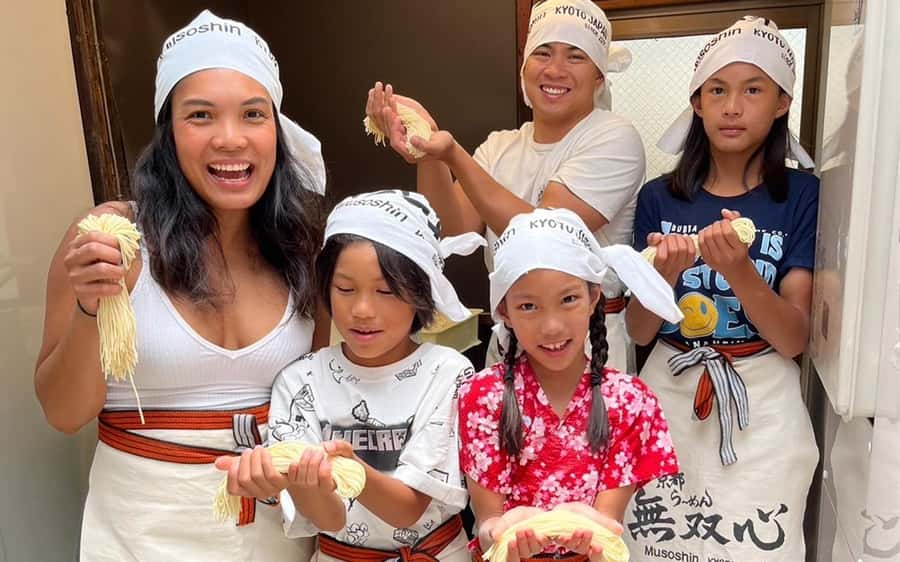
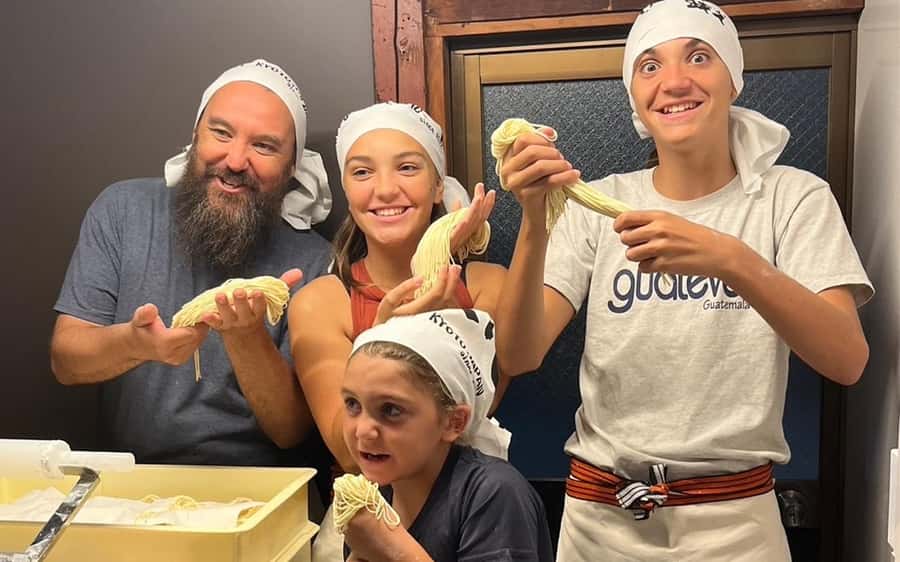
You should expect an active class, not a demonstration where you stand back with a camera. Aprons and Musoshin bandanas are part of the workshop setup, and photographs are taken during the process. At the end, the guide can take a picture of you with your finished work.
There is one important point to understand before you arrive. The noodles you make are not generally the noodles you eat immediately. They need to rest overnight, which explains why the meal afterward is prepared by the restaurant. That may sound disappointing if you expect to eat your own batch, but it is also a useful lesson in how the shop gets the right texture.
Painting a ramen bowl or spoon
The painting option gives the workshop a calmer, more artistic half. You may decorate a ramen bowl or spoon, depending on the package you book. This works particularly well for families because younger children can take part even if the dough work becomes difficult.
A custom-designed bowl can be fired in a kiln for free and collected the next day. That next-day pickup is a real logistical point, so plan it around your Kyoto schedule. If you are leaving the city immediately after the workshop, the bowl may not be practical unless you have a way to arrange collection.
One useful painting tip comes from the class itself: pale pink paint needs to be applied thickly if you want the color to show clearly after firing. The painting is not just a quick souvenir exercise. It gives you time to slow down, and several families enjoyed the contrast between decorating a piece and working with dough.
The bowl option is best for someone staying in Kyoto another night. The spoon option may be easier if you want a smaller keepsake, though the exact included item depends on your reservation. A Musoshin ramen spoon, bowl, and apron can also be available as options rather than standard inclusions, so check the package carefully before paying.
Eating at Musoshin after the class
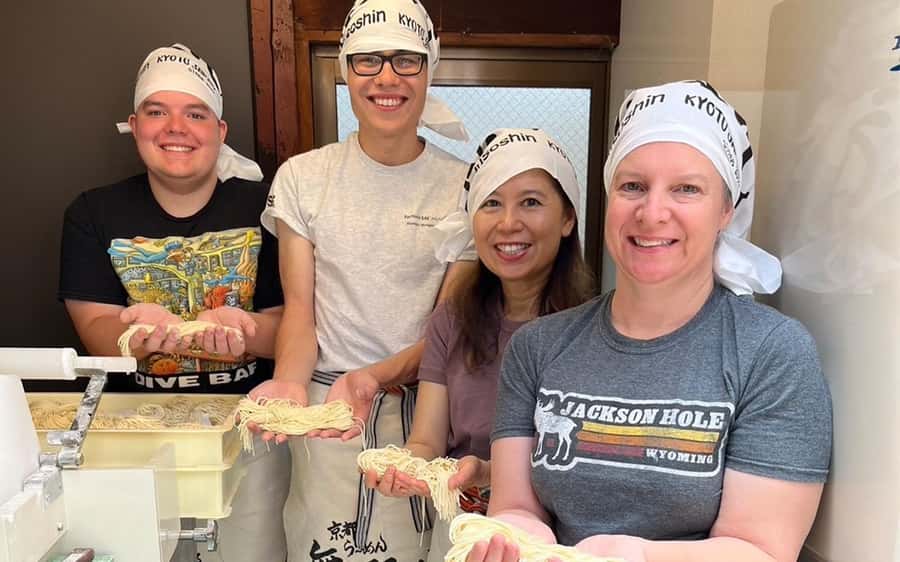
The meal is where the workshop earns much of its value. After handling flour and learning about broth, you walk to the Musoshin restaurant, where your ramen and a drink are included.
The food is repeatedly described as the strongest part of the experience, with several people calling it the best ramen they ate in Japan. That is a bold claim, especially in a country full of excellent noodle shops, but it makes sense that the meal feels better after you have seen the work behind it.
You can arrange the ramen yourself at the table, which adds a personal touch to the bowl. The meal can include the shop’s black ramen and its specialty ramen, with vegetarian and vegan choices available. Fried chicken and Musoshin merchandise are additional possibilities mentioned during the experience, but they should not be treated as part of the standard price.
A drink at the Musoshin restaurant is included. Dinner after the class also removes the need to find another restaurant for one meal, a small but useful benefit in a packed Kyoto schedule. You finish with food rather than carrying a painted object and a recipe away from the class.
A few more Kyoto half-days to weigh up
- PERFECT KYOTO 1-Day Bus Tour
★ 5.0 · 13,518 reviews - Kyoto: Fushimi Inari, Kinkakuji, Bamboo Grove 1 Day Bus Tour
★ 4.8 · 4,316 reviews - Kyoto: Tea Ceremony in a Traditional Tea House in Kiyomizu
★ 4.9 · 3,519 reviews - Kyoto Geisha Walking Tour: Gion District & Hidden Gems
★ 4.7 · 3,273 reviews
How family-friendly is the workshop?
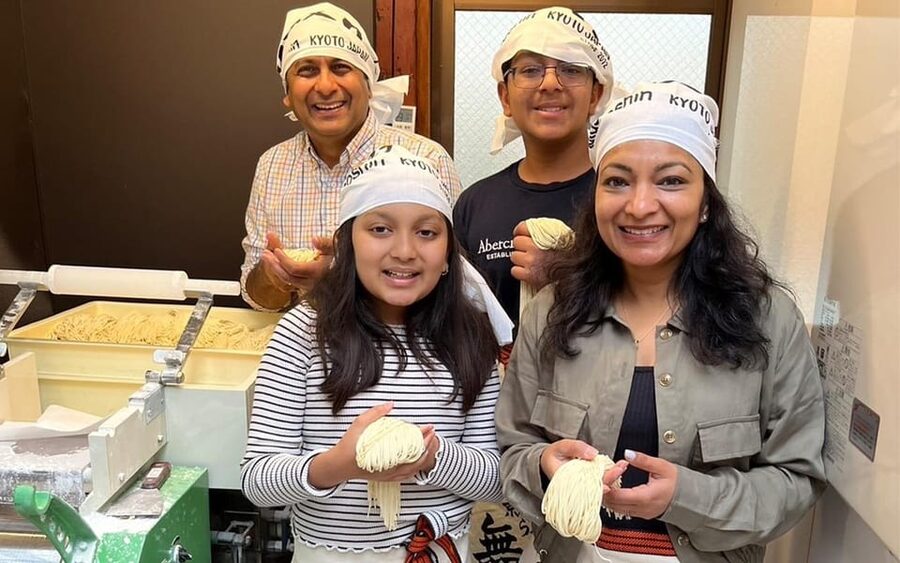
This is one of the better food activities for a family with mixed ages. A four-year-old joined one session, while children around nine and eleven also took part. The noodle machine gives kids a clear job, and painting provides another task if they prefer something quieter.
The instructors make a point of including everyone. Children can use their hands, help with the dough, and watch the transformation from ingredients to noodles. Parents and teenagers can take the process more seriously, asking about the recipe, broth, or shop’s preparation methods.
The class is not completely carefree for adults. The room is small, and one family of six found the addition of another pair made the space feel cramped. If your group is large, keep that in mind. A close working area can be part of the charm, but it may be less comfortable for anyone who needs room to move.
I would choose this for families who want a shared activity rather than another sightseeing stop. It also suits couples and friends, particularly if you enjoy cooking, food photography, or trying a local dish in a more personal way.
Vegetarian, vegan, and gluten-free considerations
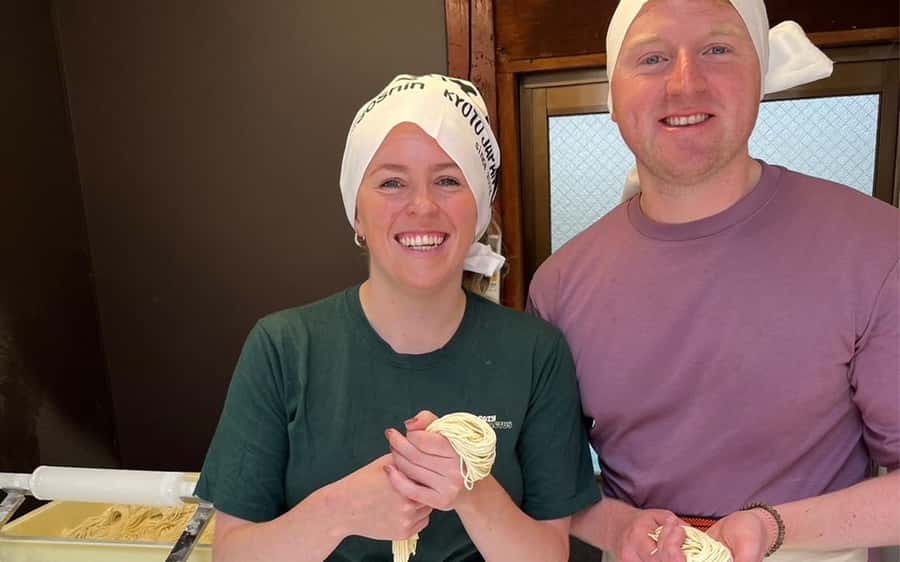
Vegetarian and vegan ramen options are available. You should state your needs clearly when reserving and again at the workshop, since the standard recipe may include ingredients that do not fit your diet.
One child with celiac disease was given special gluten-free noodles and a separate gluten-free soup. That is encouraging, but it does not mean every dietary request is automatically covered. Gluten-free ingredients had to be obtained specially in that case, so contact Musoshin before booking if cross-contamination or strict dietary control is important.
The class includes food preparation, but the information does not promise that every stage can be altered for every allergy. Ask what can be arranged rather than assuming. Vegetarian and vegan diners have a clear option, while complex allergies need advance discussion.
What the $54 price includes
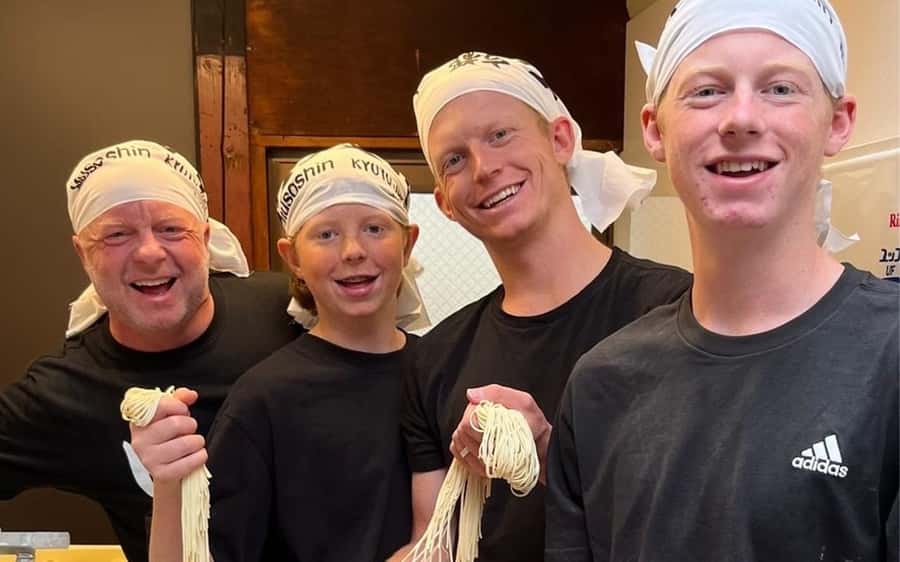
At $54 per person, this is more than the cost of a normal ramen lunch. It also gives you a workshop, instruction, a Musoshin bandana, a restaurant ramen meal, and a drink. Depending on the option, you may also receive or create a spoon, bowl, or apron.
The value is strongest if you want a full activity lasting roughly an hour or more, rather than simply a meal. You are paying for the teaching time, ingredients, use of the noodle equipment, creative work, and the restaurant visit. The included dinner makes the price easier to justify.
The value is weaker if you only want to taste ramen or if you are short on time. Kyoto has many ramen shops where you can eat for far less, and the workshop requires you to fit a class and meal into your day. The bowl pickup option also works best if you stay overnight.
Reserve and pay later is available, and cancellation up to 24 hours before the activity brings a full refund. The meeting point may vary by booking option, so do not rely on a location copied from someone else’s reservation.
What to bring and how to plan your time
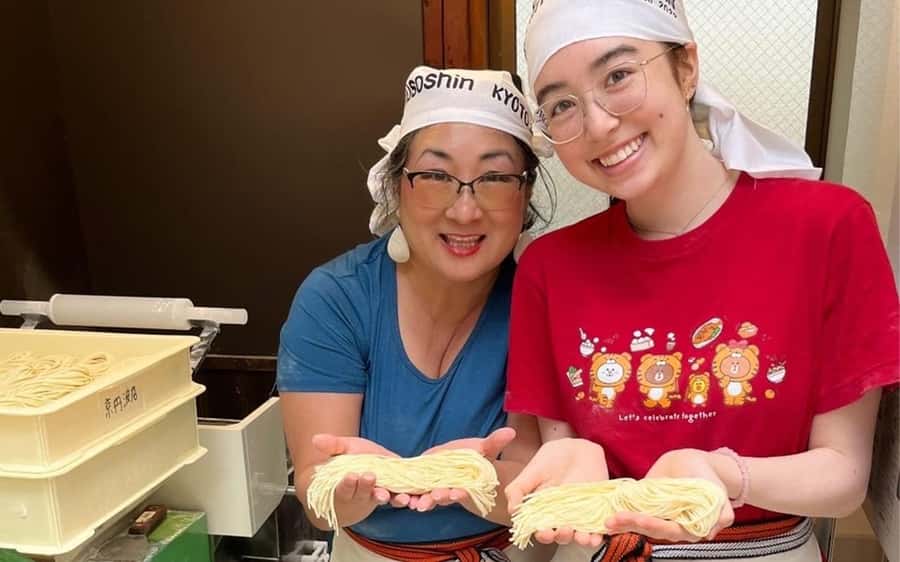
Wear clothes you can work in. An apron is part of the workshop, but flour, dough, paint, and close work around equipment are still easier when you are not dressed for a formal dinner.
Allow enough time for both the class and the restaurant meal. The noodle-making portion is described as about an hour, while some sessions also spend roughly an hour painting and another half hour preparing ramen. The exact balance depends on whether you choose a bowl, spoon, or noodle-focused option.
If you want your bowl fired and returned, plan to be in Kyoto the next day. If you do not have that extra time, choose the option that gives you a more portable item or skip the pottery add-on.
The activity is offered in English and Japanese. English-speaking guides such as Shin, Patti, Yaya, and Rose have led sessions, while other classes have included Koki, Makoto, Momo, and Shima. You should still check the language shown for your chosen time.
The small room is the one real drawback
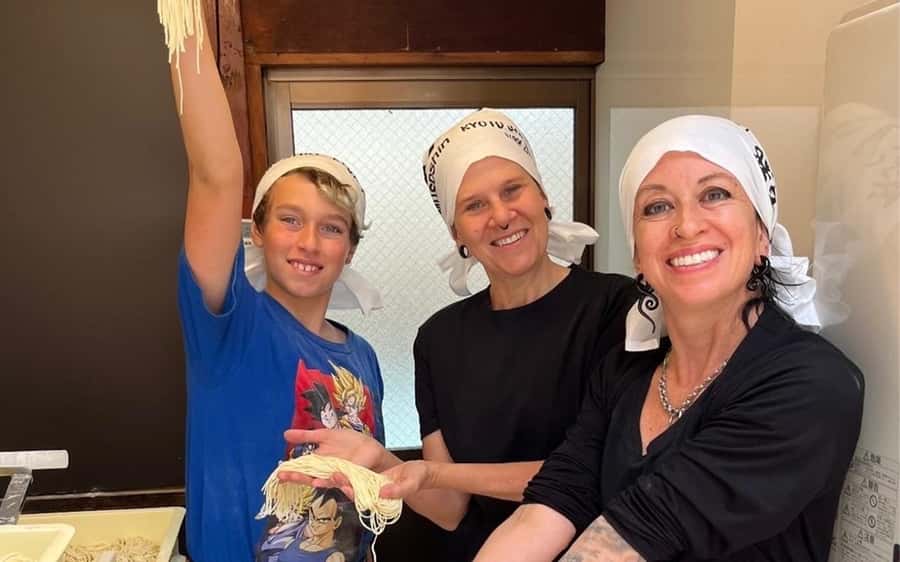
The workshop space is carefully kept but small. That helps the class feel personal, yet it can become crowded when a larger group is combined with another booking.
This matters most if you are traveling with four or more people, or if your children need plenty of room to move. The noodle machine and work surfaces are shared parts of the activity, so expect a compact setup rather than a spacious cooking studio.
The size does not appear to limit the teaching. Instructors move around to help, take photos, and explain each stage. Still, comfort depends partly on the group size on your date, something the booking page may not make clear.
Who should book this ramen experience?
Book it if you want to understand how ramen is made, enjoy hands-on food activities, or need a family-friendly break from temples and museums. It is especially good for children who like machines, dough, painting, and eating what they helped prepare.
It also suits couples and friends. The activity gives you a shared project, plenty of chances for photos, and a restaurant meal without sending you off to organize dinner afterward.
Think twice if you want a quiet, spacious class, a formal chef-led lesson, or the chance to eat the exact noodles you made. The dough rests overnight, the room is compact, and the teaching is aimed at fun and participation rather than professional technique.
Should you book Musoshin’s Kyoto workshop?
I would book this for a family, a food-loving couple, or anyone who wants a Kyoto activity with a clear local connection. The combination of noodle making, painting, restaurant ramen, and a drink gives you more than a standard meal, while the friendly guides keep the hour approachable.
Check the option details before reserving. Confirm the meeting point, what bowl or spoon items are included, the language, dietary arrangements, and whether you can collect a fired bowl the next day. If those details fit your schedule, $54 is a fair price for a hands-on class followed by a serious bowl of Musoshin ramen.
FAQ
Where does the ramen workshop take place?
The experience takes place in Kyoto on Honshu, Japan, and is run by Musoshin Ramen. The exact meeting point may vary according to the option booked.
How much does the workshop cost?
The listed price is $54 per person.
How long does the noodle-making class last?
The noodle-making portion is described as about one hour. Options that include painting may add more time, and some sessions have included about 30 minutes of ramen preparation afterward.
Can I eat the noodles I make?
The noodles you make need to rest overnight, so the ramen meal afterward is prepared by the Musoshin restaurant.
Is a meal included?
Yes. A portion of ramen and a drink at the Musoshin Ramen restaurant are included.
Are vegetarian and vegan ramen available?
Yes. Vegetarian and vegan ramen options are available.
Can the workshop accommodate gluten-free diners?
Special gluten-free noodles and soup were prepared for one child with celiac disease. Contact Musoshin in advance for your own dietary needs.
Can I paint a ramen bowl?
Yes, some booking options include painting a custom ramen bowl. Musoshin can fire the designed bowl in a kiln for free, and it can be collected the next day.
Are a ramen spoon and apron included?
A Musoshin bandana is included. The ramen spoon, ramen bowl, and apron are listed as optional items, so check the inclusions for your chosen package.
Is the activity offered in English?
Yes. The workshop is available in English and Japanese.
What is the cancellation policy?
You can cancel up to 24 hours in advance for a full refund. Reserve and pay later is also available.
Just added around Kyoto
- Kyoto: Zen Meditation at a Private Temple with a Monk★ 5.0 · 25 reviews
- Your Private Vacation Photography Session In Kyoto★ 5.0 · 110 reviews
- Kyoto: Gion Geisha District & Sake-in-Hand Walking Tour★ 5.0 · 37 reviews
- Private Pewter Sake Cup Experience with a Kyoto Artisan★ 5.0 · 31 reviews
- Private Guided Traditional Buddhist Cooking in Japan★ 5.0 · 16 reviews
- Kyoto Wagashi(Japanese sweets) Cooking Class near Fushimiinari★ 5.0 · 60 reviews
- Traditional Japanese Music show & Experience Tour in Kyoto★ 5.0 · 57 reviews
- Kyoto:Family-Friendly Kimono & Yukata Experience at WARGO★ 5.0 · 147 reviews
Kyoto Tours, compared.


Fushimi Inari, Kinkakuji, Bamboo Grove 1 Day Bus Tour
Read our review →
Tea Ceremony in a Traditional Tea House in Kiyomizu
Read our review →
Kyoto Geisha Walking Tour: Gion District & Hidden Gems
Read our review →

Gion Magical Night Walking Tour with Geisha Trivia
Read our review →

Gion Geisha District Walking Tour – Stories of Geisha
Read our review →Browse the lists this tour appears in