
Reviewed · KYOTO TOURS
Kyoto Night All-Inclusive Eats and Streets, Gion and Beyond
Kyoto’s best evening may be the one that takes you from a lantern-lit shrine to a tiny restaurant you would never find on your own. This three-hour walk links Yasaka Shrine, Gion, and Ponto-cho with a spread of Japanese dishes served at two local eateries. I like the small groups, capped at six, and the way the food comes in many small plates rather than one fixed main course. I also like the guides’ mix of local customs, geisha-district history, and practical food advice.
The main consideration is that this is a walking and eating evening, not a formal restaurant crawl with guaranteed luxury dining. Some dishes may be unfamiliar, portions can feel more like tapas than a giant dinner, and smoking has been reported at one of the small bars. If you avoid smoke, have serious mobility limits, or want a quiet fine-dining meal, this may not be your best fit.
What makes this Kyoto night different
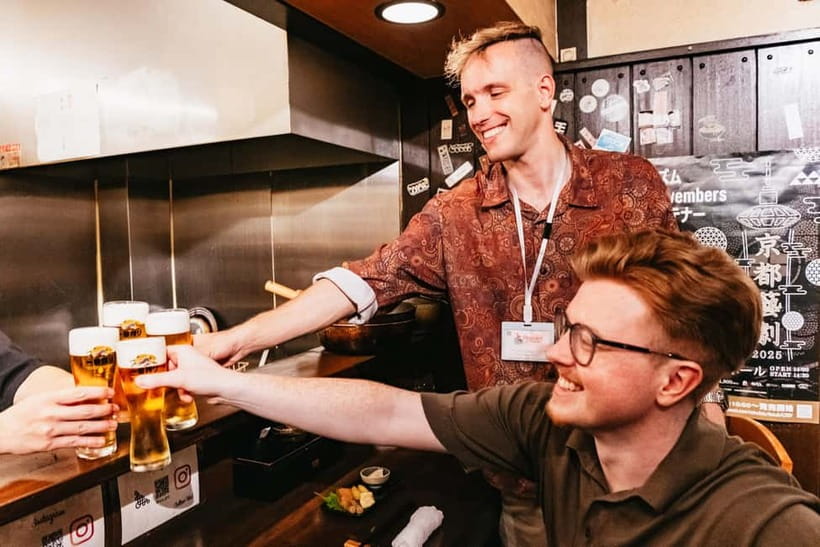
- Two restaurant stops: Your dinner is spread across two local restaurants, with several shared dishes and two drinks included.
- Yasaka Shrine after dark: You see one of Gion’s major religious sites in its evening setting, with time for your guide to explain its customs and place in Kyoto.
- Gion beyond the postcard view: The walk covers geisha-district traditions as well as the modern entertainment streets that operate beside them.
- Ponto-cho and the Kamo River: You get a look at two of Kyoto’s most atmospheric nightlife areas rather than staying on one sightseeing street.
- A genuinely small group: Six people or fewer makes it easier to ask questions, share food, and keep the evening conversational.
- Optional Kobe beef: You can request Kobe or nearby-sourced beef if you book at least 10 hours ahead, though it costs extra.
Starting at Minamiza Theatre in Gion
The meeting point is in front of Minamiza Theatre, directly at street level by exit 6 of Gion Shijo Station. That is a useful location because you do not need to hunt through a large station or find a restaurant hidden down an alley.
Minamiza is an old and important kabuki theater, so the starting point already places you in the cultural heart of eastern Kyoto. Your guide gathers the group here before setting off on foot. Guides may be English, French, or Spanish speakers, and named guides who have led this experience include Ferdinand, Jamie, Lito, Maya, Laura, Hugo, Bryan, Andres, and Damien.
The exact guide matters less than the group size and language match, but the guide’s personality shapes the evening. The strongest experiences described by the available feedback came from guides who kept the pace relaxed, answered questions, and helped strangers talk to one another. This is not a headset-and-follow-the-flag tour. It is closer to walking around with a local friend who has already chosen the evening’s stops.
Wear comfortable shoes. The route includes several walking stretches, and the pavement and narrow streets of the entertainment districts are not ideal for anyone who struggles with mobility.
More geisha-district evenings:
- Kyoto Geisha Walking Tour: Gion District & Hidden Gems
★ 4.7 · 3,273 reviews - Kyoto: Gion Magical Night Walking Tour with Geisha Trivia
★ 4.9 · 2,393 reviews - Kyoto: Gion Geisha District Walking Tour – Stories of Geisha
★ 4.7 · 2,187 reviews
Yasaka Shrine after sunset
The first major stop is Yasaka Shrine, with about 15 minutes for guided sightseeing. The shrine is especially well suited to an evening visit. Rather than seeing it only as a daytime sightseeing box to tick, you experience its gates, grounds, and religious atmosphere as the surrounding district shifts toward dinner and nightlife.
Your guide explains the Shinto setting and the traditions connected with the site. Several guides have been praised for explaining the difference between Shinto and Buddhist customs, as well as the beliefs behind the buildings and rituals. That context is useful because Kyoto can otherwise feel like a string of beautiful places without a clear sense of how they fit into Japanese life.
Do not expect a long temple lecture here. The stop is brief, and the evening has a lot of ground to cover. Its value is the setting and the orientation: you begin with the old religious side of Kyoto before moving into Gion’s entertainment district.
Gion’s geisha traditions and modern nightlife
From Yasaka Shrine, you walk through Gion for roughly 15 minutes of guided sightseeing. Gion is often reduced to photographs of wooden facades and the hope of spotting a geisha. The better approach is to understand the district as a working place with strict customs, private venues, restaurants, tea houses, and modern nightlife.
Your guide explains the traditions of geisha and the social rules that shape the area. This can help you look past the surface. You learn why certain streets feel formal and quiet, while others lead toward bars, restaurants, and late-night entertainment.
The tour does not promise a geisha sighting, and it should not be booked for that reason. Its strength is the explanation of the district itself. Guides such as Laura and Ferdinand have been singled out for giving clear background on geisha culture, while Jamie, Andres, Hugo, and Maya were praised for making the history easy to follow without turning the walk into a dry lesson.
This is also where the tour offers a useful correction to the usual Kyoto day trip. Gion is not only an old neighborhood preserved for photographs. It is a living entertainment quarter, and the tour gives you both sides.
The Kamo River and Kiyamachi streets
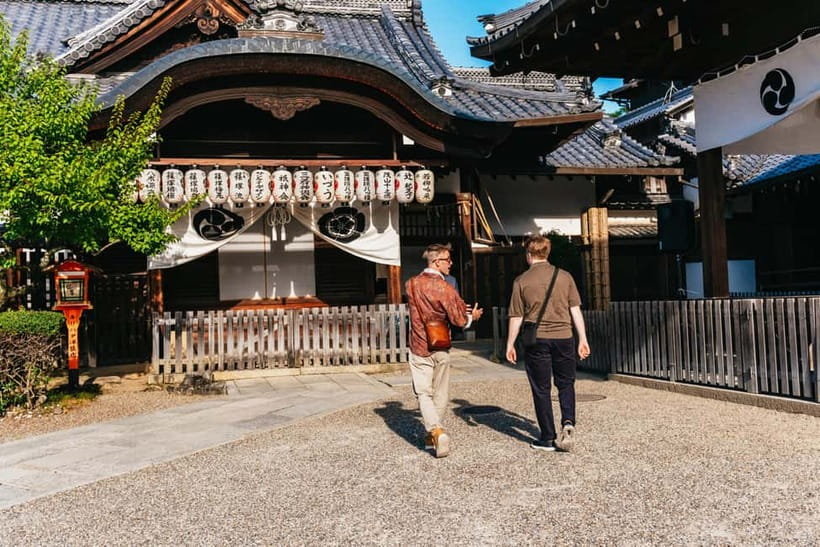
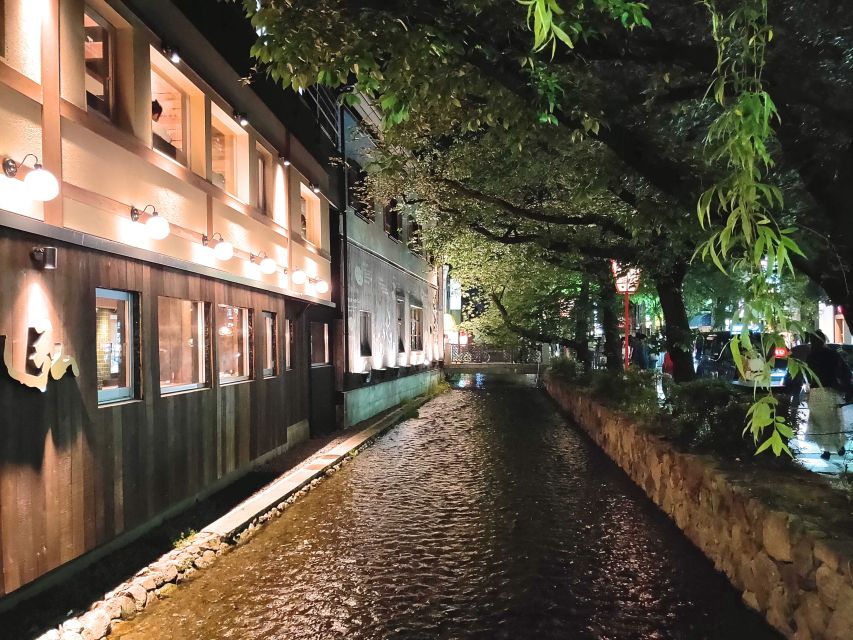
The route continues toward the Kamo River and the Kiyamachi area. The river is one of Kyoto’s great reference points, and seeing it in the evening gives you a change of pace between the shrine, the older lanes, and the restaurants.
Kiyamachi brings a more commercial and nightlife-focused side of the city. You may pass restaurants, bars, and narrow streets where the atmosphere changes from traditional architecture to contemporary evening life. The guide’s role here is not simply to lead you from one food stop to the next. It is to show how old Kyoto and present-day Kyoto occupy the same small area.
This part of the walk is also valuable for your own later exploring. After the tour, you will know where Gion ends, how the Kamo River relates to the surrounding streets, and where Ponto-cho begins. The route gives you a practical mental map instead of leaving you with isolated attractions.
More evenings out in Kyoto:
- Night Walk in Gion: Kyoto’s Geisha District
★ 4.5 · 2,003 reviews - Kyoto Night Foodie Tour in Gion (9+ dishes + 6 Sake tastings)
★ 5.0 · 1,762 reviews - Kyoto Gion Night Walk & Geisha District Guided Tour
★ 5.0 · 786 reviews - Kyoto Ghost Tour: Dark Tales, Urban Legends, Bamboo Forest Night
★ 5.0 · 625 reviews
First restaurant: small plates and a drink
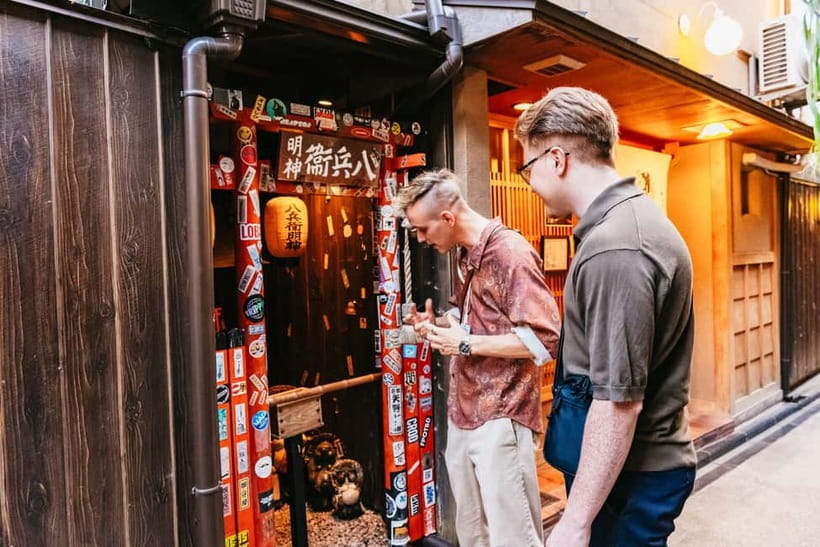
The first restaurant stop lasts about 45 minutes and includes dinner plus one drink. The drink may be beer, a cocktail, spirits, or a non-alcoholic choice. The food is served as a series of small plates, similar in spirit to Japanese tapas.
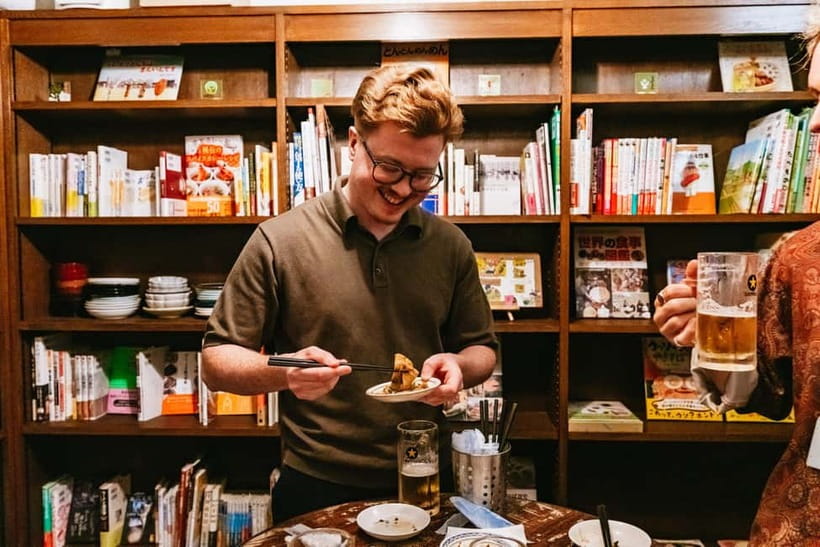
That format works well for a first night in Kyoto. You can try several regional dishes without committing to a single large meal, and your guide can explain what is on the table. The food may include items you would not confidently order alone, especially if you are unfamiliar with Japanese menus.
Several people found the food varied, local, and delicious. Others found the portions modest, so I would set your expectations correctly: this is a progressive dinner built around shared samples, not necessarily two full restaurant meals. One guide specifically advised the group not to eat too much at the first stop because more food follows.
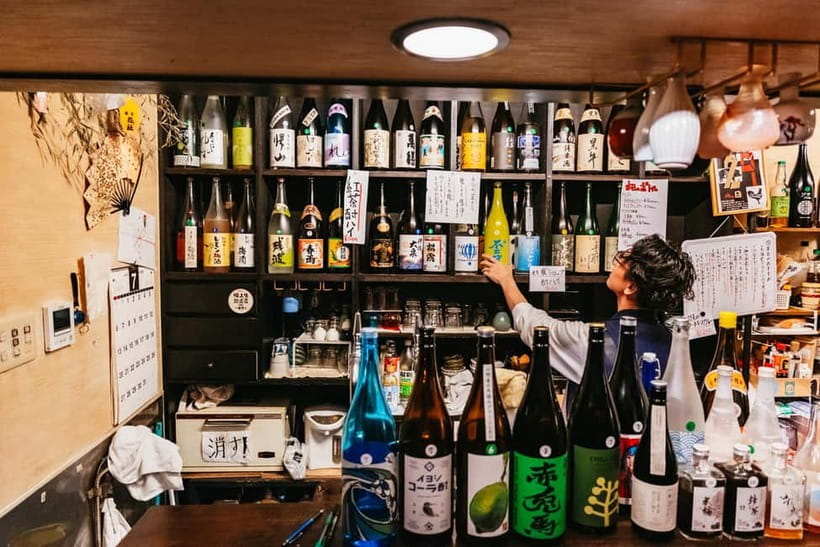
The first venue may be a small bar or izakaya-style restaurant. That is part of the appeal. These are the sorts of places many first-time visitors skip because of language barriers, unfamiliar ordering customs, or uncertainty about whether tourists are welcome. With the guide handling the ordering and explanations, you can focus on tasting and talking.
There is one practical warning. Indoor smoking has been reported at one of the restaurant or bar stops. The exact venue can change with availability, but if smoke is a health concern, tell the provider before booking and ask what arrangements are possible. The experience includes two drinks, not unlimited alcohol, and extra drinks are not included.
Ponto-cho for a close look at Kyoto’s evening side
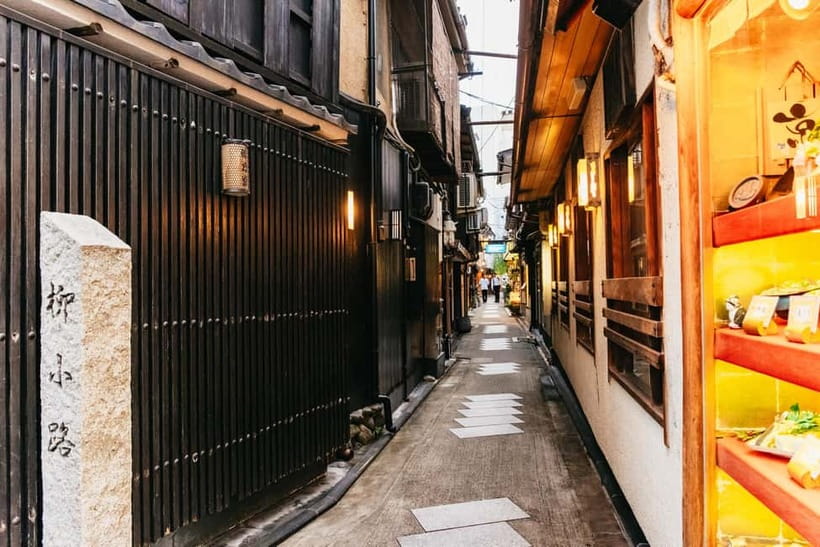
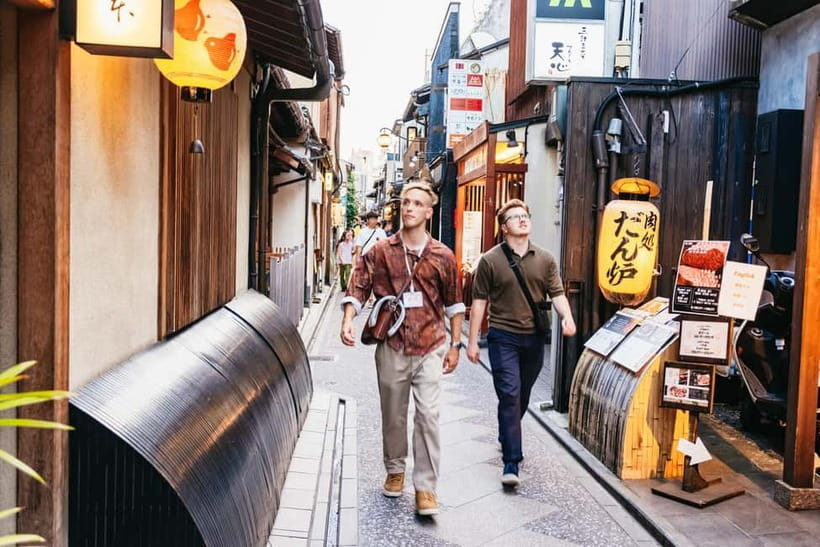
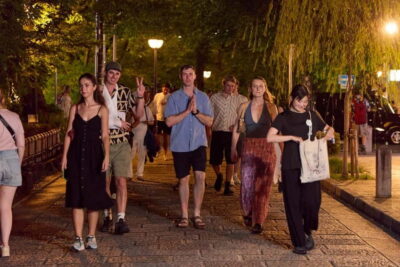
After the first meal, you continue on foot to Ponto-cho for about 30 minutes of guided sightseeing. This is one of the most atmospheric parts of the route, with a narrow lane packed with restaurants and evening venues near the Kamo River.
Ponto-cho is a good contrast to Gion. Gion gives you the geisha-district traditions and historic streets, while Ponto-cho shows another concentrated pocket of Kyoto nightlife. Your guide points out the differences and helps explain what you are seeing rather than leaving you to wander past closed doors and unfamiliar signs.
The walk also gives the group time to digest, chat, and compare the first dishes. Small groups matter here. With only six people or fewer, the guide can answer individual questions about food, customs, and neighborhood etiquette without losing half the group.
The route returns to the Minamiza Theatre after the second restaurant. The supplied timing suggests about 30 minutes at the final food stop, so the whole evening has a clear rhythm: shrine, neighborhood history, first meal, river and nightlife streets, second meal, then back to the starting area.
Second restaurant: more tasting, less ceremony
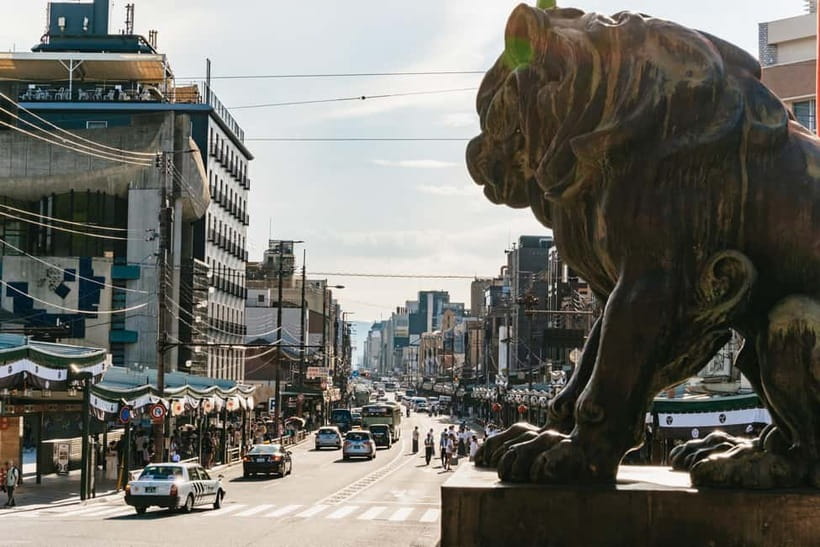
The final restaurant stop lasts around 30 minutes and includes another round of food and a second drink. The two venues are intended to differ, giving you a broader look at Kyoto dining than a single restaurant could provide.
Some descriptions point to a small bar followed by a more traditional eatery. You may try a range of local dishes and Japanese drinks, with the guide helping the group share plates and understand what is being served. The exact dishes can change with the season and restaurant availability, so treat any sample menu as a guide, not a promise.
This flexibility is normal for a food walk, but it matters if you have a very specific menu in mind. The value comes from variety and access rather than a fixed tasting menu. The experience also seems to handle vegetarian needs when told in advance, and food restrictions have been accommodated, but you should provide those details before the evening begins.
The final stop is not intended to be a long, formal dinner. You are there for another set of tastes, a drink, and the chance to finish the night in a local setting. If you eat lightly during the afternoon, the two stops should feel like a complete evening. If you arrive hungry and expect large portions, you may find the small-plate approach a little lean.
Is $92 a fair price?
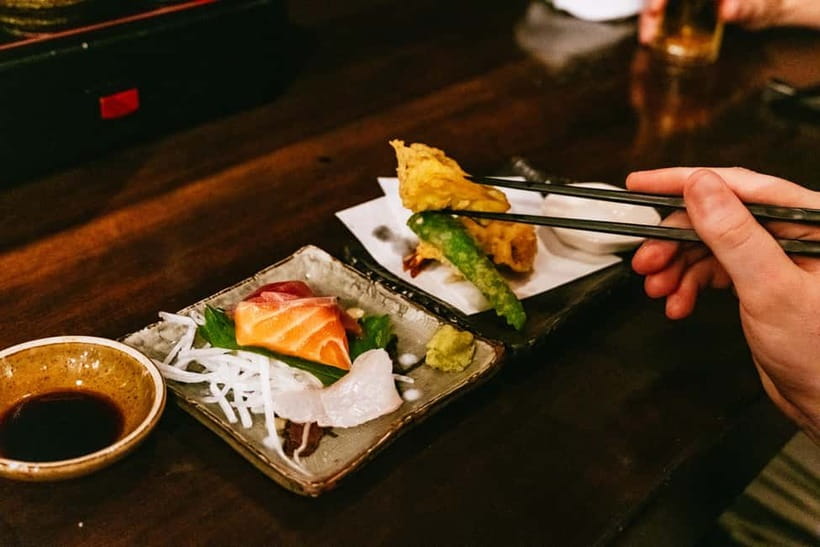
At $92 per person, this is not the cheapest way to eat in Kyoto. You can buy individual meals for less, and independent diners who are comfortable ordering in Japanese can explore on their own.
The price becomes easier to justify when you count what is included: a three-hour guided walk, dinner across two restaurants, two drinks, local cultural context, and a group of no more than six. You are also paying for access to places you might hesitate to enter without help. Gratuities are included, and tipping is not customary in Japan, so there is no need to budget extra for the guide.
I see the strongest value for a first or second night in Kyoto. You get your bearings in Gion and Ponto-cho, learn how the districts connect, and collect ideas for restaurants and streets to revisit. It is less compelling for someone who already knows Kyoto’s nightlife or wants a large, elaborate dinner.
The optional Kobe beef add-on may appeal to meat lovers, but it must be arranged at least 10 hours ahead and costs extra. The standard experience already includes a range of dishes, so I would choose the add-on only if Kobe beef is a priority rather than assuming it is necessary.
Who will enjoy this evening most?
I would recommend this experience to first-time Kyoto visitors who want food and place together. It suits solo visitors, couples, and small groups who like meeting other people over shared dishes.
It is also a good match if you feel unsure about izakayas, Japanese drinks, geisha-district etiquette, or ordering food from a menu you cannot read. The guide removes much of that friction while keeping the evening social.
You should think twice if you want a predictable menu, a smoke-free guarantee, or a long uninterrupted dinner. The tour also is not suitable for children under 18, and it is not suitable for people with mobility impairments.
Book early if you need a particular language, have food restrictions, or want the Kobe beef option. The available languages are English, French, and Spanish. Private arrangements and small-group options are available, but the standard format already keeps the group very small.
You can cancel up to 24 hours in advance for a full refund, and the reserve-now, pay-later option helps if your Kyoto schedule is still shifting. Starting times vary, so check availability for the date you want.
Final call: book it for the neighborhood access
I would book this tour if you want an easy, social introduction to Kyoto after dark, especially at the start of your stay. The best parts are the combination of Yasaka Shrine and Gion’s cultural background with two small restaurants in the Ponto-cho and Kiyamachi orbit.
The guides are central to the experience. Names such as Maya, Ferdinand, Jamie, Laura, Lito, Hugo, Bryan, Andres, and Damien appear repeatedly in the strongest accounts, with praise for humor, clear explanations, good pacing, and care at the restaurants. That human element is what turns a simple food outing into a useful introduction to Kyoto.
I would not book it solely for a large dinner. Think of the food as a generous tasting evening, with the possibility that portions feel small to a big eater. I would also ask about smoking before booking if that could spoil your night.
For most first-time visitors who value local context, shared food, and a manageable group, $92 is a reasonable price for three busy but well-planned hours in Kyoto’s most famous evening districts.
FAQ
Where does the Kyoto night food tour begin?
It begins in front of Minamiza Theatre, at street level by exit 6 of Gion Shijo Station.
How long does the experience last?
The tour lasts three hours.
How many people are in the group?
The group has no more than six participants. Private and small-group options are also available.
Which languages are offered?
Live guiding is available in English, French, and Spanish.
What places are included in the walking route?
The route includes Yasaka Shrine, Gion, the Kamo River, Kiyamachi, and Ponto-cho, with the tour returning to Minamiza Theatre.
How many restaurants does the tour visit?
The experience includes food at two local restaurants.
What is included with the food?
A full dinner is served across the two restaurants, along with two alcoholic or non-alcoholic drinks.
Are extra drinks included?
No. Extra drinks are not included in the price.
Can I request Kobe beef?
Yes. A Kobe beef or nearby-sourced beef option is available for an additional cost if you book it at least 10 hours in advance.
Is the tour suitable for children or people with mobility impairments?
No. It is not suitable for children under 18 or people with mobility impairments. Comfortable shoes are recommended.
Just added around Kyoto
- Kyoto: Zen Meditation at a Private Temple with a Monk★ 5.0 · 25 reviews
- Kyoto: Gion Geisha District & Sake-in-Hand Walking Tour★ 5.0 · 37 reviews
- Private Pewter Sake Cup Experience with a Kyoto Artisan★ 5.0 · 31 reviews
- Your Private Vacation Photography Session In Kyoto★ 5.0 · 110 reviews
- Private Guided Traditional Buddhist Cooking in Japan★ 5.0 · 16 reviews
- Kyoto Wagashi(Japanese sweets) Cooking Class near Fushimiinari★ 5.0 · 60 reviews
- Traditional Japanese Music show & Experience Tour in Kyoto★ 5.0 · 57 reviews
- Kyoto:Family-Friendly Kimono & Yukata Experience at WARGO★ 5.0 · 147 reviews
Kyoto Tours, compared.
Fushimi Inari, Kinkakuji, Bamboo Grove 1 Day Bus Tour
Read our review →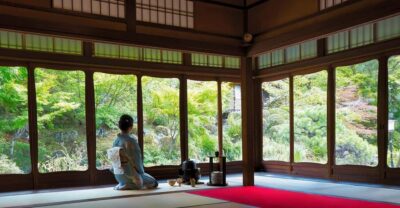
Tea Ceremony in a Traditional Tea House in Kiyomizu
Read our review →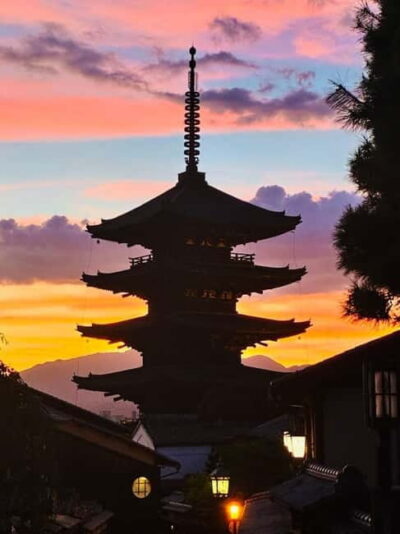
Kyoto Geisha Walking Tour: Gion District & Hidden Gems
Read our review →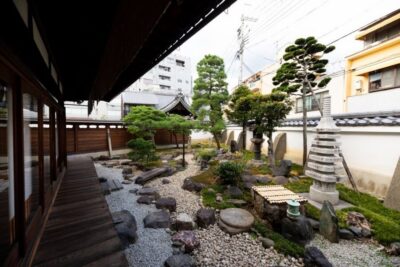
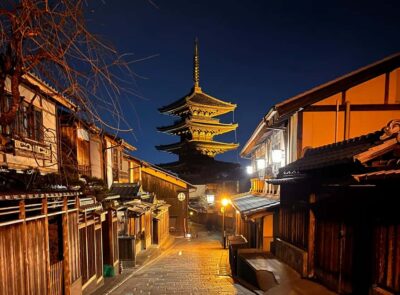
Gion Magical Night Walking Tour with Geisha Trivia
Read our review →
Gion Geisha District Walking Tour – Stories of Geisha
Read our review →Browse the lists this tour appears in