
Reviewed · KYOTO TOURS
Kyoto Ninenzaka : Japanese Calligraphy Class in Townhouse
The best part of this Kyoto activity is its setting. You step away from busy Ninenzaka and practice shodō, Japanese calligraphy, inside a townhouse near Kiyomizu Temple. The lesson covers more than copying characters. You learn why the tools matter, how brush pressure changes a stroke, and how the quiet preparation becomes part of the art.
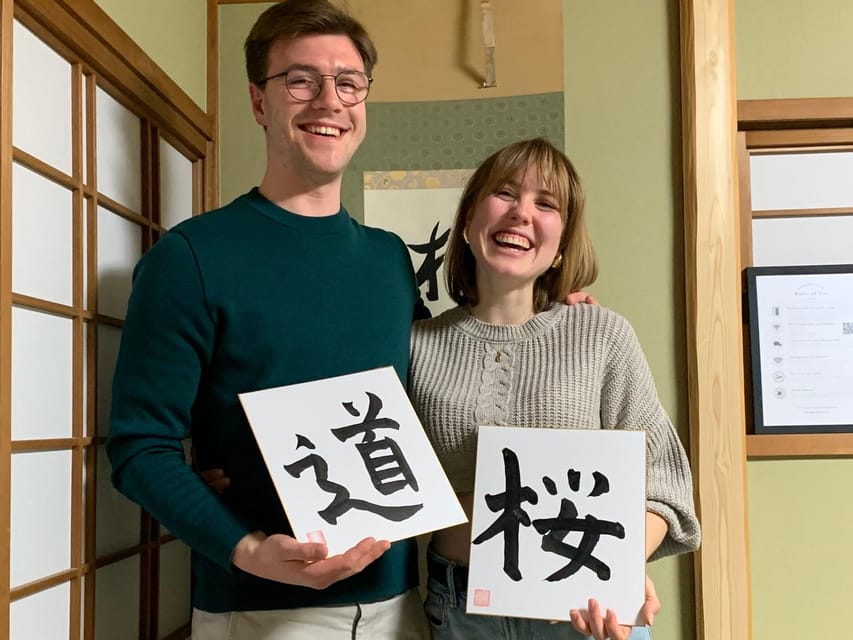
I like the small-class feel, which gives you time to ask questions and receive careful guidance. I also like the useful souvenir: your own handmade kanji on paper, along with an original booklet about calligraphy. The main drawback is the short 50-minute length. It is enough for a rewarding introduction, but not enough to master many characters or work at a slow artistic pace.
Key points
- A calm townhouse near Ninenzaka: Find the class at the end of the alley beside the Starbucks on Ninenzaka, close to Kiyomizu Temple.
- A real introduction to shodō: Learn about calligraphy’s traditions, tools, brush control, and basic kanji rather than simply making a decorative mark.
- Patient instruction for beginners: No Japanese or art background is needed, and the English-speaking host or greeter helps you follow along.
- A hands-on 50-minute lesson: You prepare the paper, practice lines and dots, then write simple kanji with attention to balance.
- A personal souvenir: Keep your finished calligraphy and the supplied booklet as a reminder of your time in Kyoto.
- Simple but important preparation: Wear socks and clothes that can get dirty. Kimono rental is available for an additional fee.
A quiet art lesson beside Kyoto’s busiest old streets
The location gives this experience much of its appeal. Ninenzaka is one of Kyoto’s most popular walking areas, with sloping lanes, traditional-looking buildings, shops, and a direct route toward Kiyomizu Temple. The class takes place near the end of the alley next to the Starbucks on Ninenzaka, so you can combine it with sightseeing before or after.
That contrast matters. Outside, you may be moving through one of Kyoto’s busiest historic areas. Inside, the pace changes. Calligraphy asks you to sit still, prepare your tools, and pay attention to one stroke at a time. Even in a short class, that change of rhythm can make the activity feel more connected to Japanese culture than a quick souvenir stop.
You should allow time to find the entrance. The meeting instructions point you to the alley beside the Starbucks, near Kiyomizu Temple. Since Ninenzaka is a pedestrian area with sloping streets, comfortable shoes will help, although shoes are not the focus of the class. You will need socks, and the venue can provide them for a fee if you arrive without any.
More hands-on workshops in Kyoto:
- Kyoto: 45-Minute Tea Ceremony Lesson Experience
★ 4.3 · 2,378 reviews - Ramen Cooking Class at Ramen Factory in Kyoto
★ 5.0 · 1,937 reviews - Kyoto : Chopsticks Making Workshop in Gion with Engraving Option
★ 5.0 · 958 reviews
What happens during the 50-minute class
The lesson begins with an introduction to Japanese calligraphy and its place in Japanese traditions. This gives you a useful frame before you pick up a brush. You learn that calligraphy is not just a way to write kanji neatly. The form of each stroke, the spacing on the page, and the movement of the brush all matter.
The instructor then introduces the main tools: brushes, ink sticks, inkstones, paper, and a paperweight. For a first-time student, this is one of the most useful sections. Many visitors recognize the brush and ink but do not know how the other pieces fit together. Learning how to prepare and care for them makes the finished work feel more meaningful.
You also learn how to hold the brush. This sounds basic, but it is central to the class. The instructor explains how to adjust pressure and how that pressure affects the width and character of a line. You are not expected to arrive with a painter’s hand. The point is to notice how a small change in grip or force changes the result.
Next comes the paper preparation. You use a paperweight and set up the writing surface before beginning. This quiet preparation is treated as part of the practice, not as annoying housekeeping. It gives you a moment to slow down and focus before making your first mark.
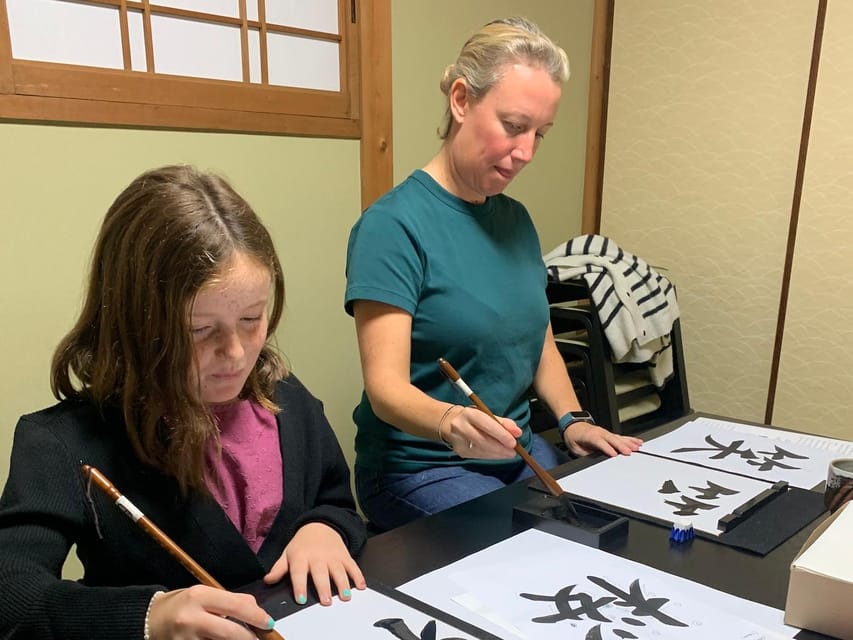
The class then moves into basic brush techniques. You practice lines, strokes, dots, and sweeps. These exercises may look simple, but they teach the control needed for kanji. You begin to see that a character is made from separate movements, each with its own start, direction, pressure, and finish.
The final stage is writing basic kanji characters. You work on vertical and horizontal balance, letter placement, and the amount of space each character needs. Your finished piece becomes a personal record of the lesson. It may not be perfect, and that is part of the charm. You can see the decisions you made with the brush rather than receiving a mass-produced keepsake.
Why the tools make the lesson more meaningful
A short cultural activity can easily become a photo opportunity with little substance. This class avoids that by giving attention to the equipment. The brush, ink, inkstone, paper, and paperweight each have a role, and understanding that role helps you approach the activity with more care.
The ink stick and inkstone are especially important to the traditional feel of the lesson. The preparation process creates a pause before writing. You are not rushing straight from a sightseeing street to a finished character. You first prepare the materials, settle your hands, and get used to the brush.
That process also helps explain why calligraphy can be meditative without turning the class into a vague wellness activity. You have specific things to watch: line thickness, pressure, balance, and placement. Your attention stays on the page.
The original booklet adds practical value. It gives you something connected to the lesson rather than only the finished sheet. If you want to continue practicing later, the booklet may help you remember the basic ideas introduced during the class.
Beginner instruction that does not assume Japanese ability
You do not need to read Japanese or have drawing experience. The lesson is designed around basic brush handling and simple kanji, so the instructor can show you what to do before you try it yourself.
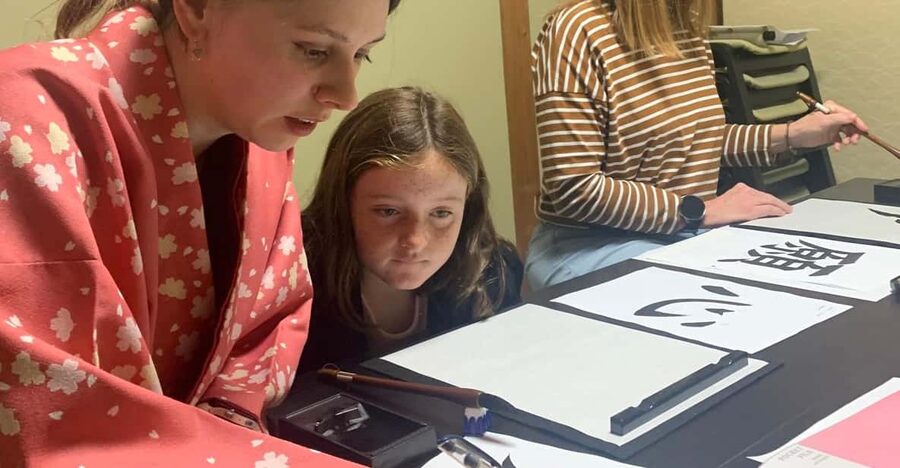
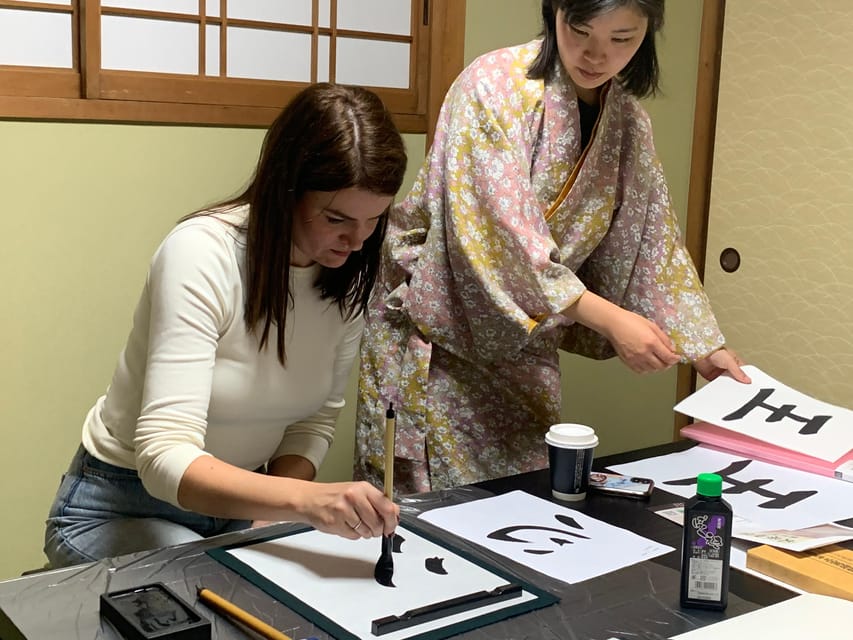
The English-speaking host or greeter supports the class, and the guidance is intended to be careful and direct. One recent class included a master and an assistant who demonstrated several techniques and helped students through the process. That arrangement can be useful because you can watch a demonstration, begin your own work, and ask for help without losing the entire lesson.
The feedback from the class experience points to patient teaching as a major strength. The instructors are described as kind and attentive, while still giving the session enough structure to remain useful. That balance suits beginners. You want correction when your brush angle is wrong, but you also want enough freedom to create something of your own.
The class is not suitable for children under 10. Older children may enjoy it if they can sit quietly, follow instructions, and accept that the first few marks may look uneven. The activity also bans noise, so it is better for people who are comfortable with a calm, focused setting.
A few more Kyoto half-days to weigh up
- PERFECT KYOTO 1-Day Bus Tour
★ 5.0 · 13,518 reviews - Kyoto: Fushimi Inari, Kinkakuji, Bamboo Grove 1 Day Bus Tour
★ 4.8 · 4,316 reviews - Kyoto: Tea Ceremony in a Traditional Tea House in Kiyomizu
★ 4.9 · 3,519 reviews - Kyoto Geisha Walking Tour: Gion District & Hidden Gems
★ 4.7 · 3,273 reviews
The kanji souvenir and what you take home
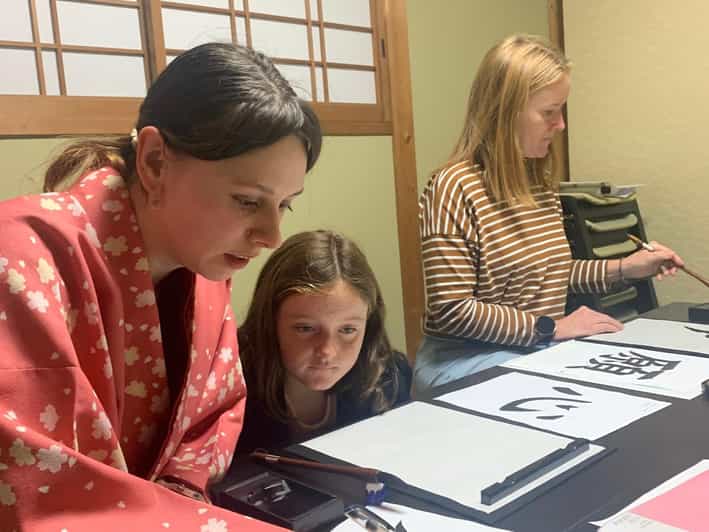
The finished calligraphy is the clearest practical benefit. You write your own basic kanji rather than receiving a character chosen by someone else. That makes the souvenir more personal, even if your brushwork is still at beginner level.
The focus is not only on copying a shape. You learn about vertical and horizontal balance and where to place the character on the paper. Those details make a difference. A kanji character can look awkward if it is crowded, tilted, or pushed too far to one side. The class gives you a basic sense of why spacing matters.
Seasonal themes and expressions also connect the activity to Japanese culture. The exact character or expression may vary, but the idea is to link the writing to the season and to Japanese ways of expressing beauty, feeling, or good wishes. This gives the finished sheet more context than a random decorative symbol.
You should treat the final piece as a handmade memory, not a professional artwork. The class lasts less than an hour, and the goal is a first experience. That is still valuable. After a day of temples and shops, you will have something made by your own hand rather than another item purchased from a store.
Is $49 a fair price for 50 minutes?
At $49 per person, this is not the cheapest short activity in Kyoto. You are paying for an instructor, guided practice, the calligraphy materials, the townhouse setting, and the chance to take home your work. The value depends on how much you want a structured cultural activity rather than a quick demonstration.
I think the price makes the most sense if you are already planning to visit Kiyomizu Temple and Ninenzaka. There is no transportation included, but the central location means you do not need to travel across the city for the class. Add it to a sightseeing route and the time becomes easier to justify.
The 50-minute duration is both a benefit and a limitation. It fits neatly into a busy Kyoto day. You can attend without giving up half a day of temple visits or shopping. On the other hand, the lesson moves quickly. You will learn the basics and produce a souvenir, but you will not receive a long course in Japanese calligraphy.
The strongest value is for someone who wants a genuine first contact with shodō. If you are already an experienced calligrapher, you may find the class too introductory. If you are curious but have no idea where to begin, the clear sequence of tools, preparation, brushwork, and kanji gives you a sensible starting point.
What to wear and what to leave behind
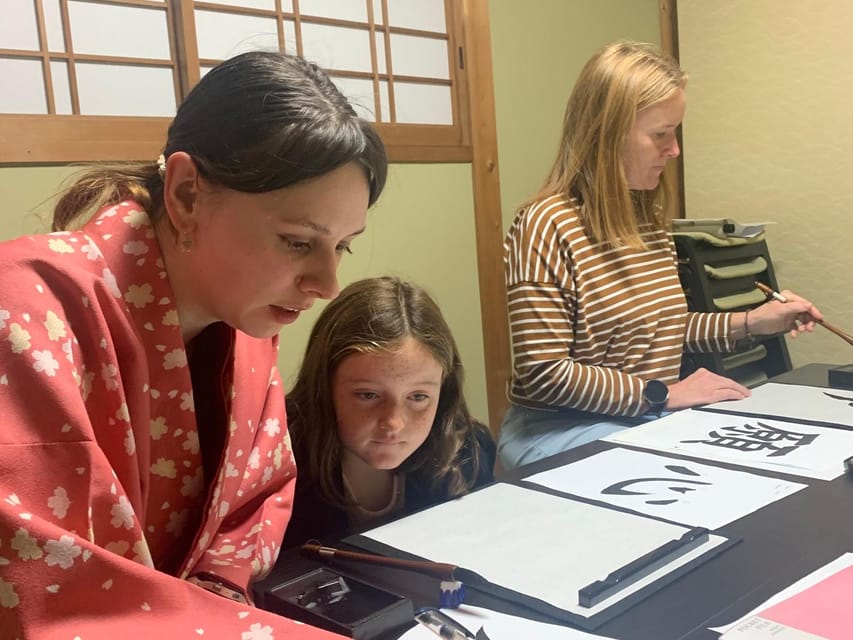
Bring socks. This is the most important practical instruction. If you forget them, socks can be provided for an extra fee, but bringing your own is simpler.
Wear clothes that can get dirty. Ink is part of the activity, and beginners cannot always predict where a brush will place a dot or sweep. You do not need special art clothing, but avoid wearing something precious or difficult to clean.
Leave large bags and luggage elsewhere. Baby strollers, non-folding wheelchairs, non-folding strollers, electric wheelchairs, selfie sticks, pets, alcohol, and drugs are not allowed. Smoking is prohibited indoors, and the class is not a place for loud conversation or disruptive behavior.
Kimono is not included. A two-piece kimono can be rented for an additional fee if you want a more traditional look for the activity. Consider the extra cost carefully. The calligraphy lesson itself does not require it, and you should still prioritize comfortable clothing that can handle ink.
Who will enjoy this Kyoto activity most
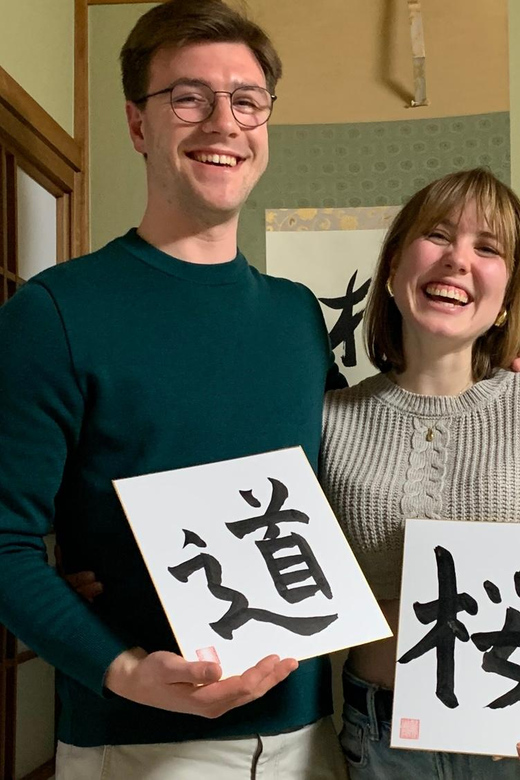
This class suits adults, couples, friends, and families with children age 10 or older who want a quiet cultural activity near Kiyomizu Temple. It is especially useful if you prefer doing something with your hands instead of only looking at buildings and taking photographs.
It also works well for a first visit to Japan. You do not need to know the language, recognize kanji, or understand calligraphy before arriving. The instructor takes you through the process in order, which removes much of the uncertainty.
I would recommend it for anyone who wants a compact activity between sightseeing stops. The class is short enough to fit into a Kyoto itinerary, and the nearby location makes it easy to pair with Ninenzaka and Kiyomizu Temple.
I would be more cautious if you want an extended art workshop. Fifty minutes gives you an introduction, not a detailed course. You may also want to skip it if you dislike sitting quietly, following a set lesson, or wearing clothes that might become stained.
Booking flexibility and timing
You can cancel up to 24 hours in advance for a full refund, which gives you some protection when building a Kyoto schedule. You can also reserve now and pay later, useful if your plans are still changing.
Starting times vary, so check availability before making the rest of your day’s plan. Same-day and day-before reservations may not always be accommodated. If the class cannot be arranged as expected, it will be conducted in English for those last-minute bookings.
The meeting point is near Kiyomizu Temple, at the end of the alley beside the Starbucks on Ninenzaka. Transportation is not included, so plan your own route to this area and arrive with enough time to find the townhouse.
Should you book the calligraphy class?
Book it if you want a short, hands-on Kyoto experience with a clear cultural focus and a souvenir you create yourself. The calm townhouse location, patient instruction, small-class feel, and careful explanation of tools give the 50 minutes real substance.
The price is reasonable when combined with a visit to Kiyomizu Temple and Ninenzaka, but less attractive if you expect advanced calligraphy training. Bring socks, wear clothes that can get dirty, and keep your expectations focused on a memorable first lesson rather than polished professional work.
FAQ
How long is the Japanese calligraphy class?
The class lasts 50 minutes.
Where does the activity take place?
It takes place in a townhouse near Kiyomizu Temple, at the end of the alley next to the Starbucks on Ninenzaka.
Do I need to speak Japanese or have art experience?
No. The class is beginner friendly, and no Japanese or art experience is required. English support is available.
What will I learn during the class?
You will learn about calligraphy’s history and cultural background, how to use the main tools, proper brush handling, paper preparation, basic brush techniques, and simple kanji characters.
Can I take my calligraphy home?
Yes. You can keep the calligraphy you make during the class. An original booklet about calligraphy is also included.
What should I bring?
Bring socks and clothes that can get dirty. Socks can be provided for a fee if you arrive without them. Large bags, luggage, pets, selfie sticks, and several types of wheelchairs and strollers are not allowed.
Just added around Kyoto
- Kyoto: Zen Meditation at a Private Temple with a Monk★ 5.0 · 25 reviews
- Kyoto: Gion Geisha District & Sake-in-Hand Walking Tour★ 5.0 · 37 reviews
- Private Pewter Sake Cup Experience with a Kyoto Artisan★ 5.0 · 31 reviews
- Your Private Vacation Photography Session In Kyoto★ 5.0 · 110 reviews
- Private Guided Traditional Buddhist Cooking in Japan★ 5.0 · 16 reviews
- Kyoto Wagashi(Japanese sweets) Cooking Class near Fushimiinari★ 5.0 · 60 reviews
- Traditional Japanese Music show & Experience Tour in Kyoto★ 5.0 · 57 reviews
- Kyoto:Family-Friendly Kimono & Yukata Experience at WARGO★ 5.0 · 147 reviews
Kyoto Tours, compared.


Fushimi Inari, Kinkakuji, Bamboo Grove 1 Day Bus Tour
Read our review →
Tea Ceremony in a Traditional Tea House in Kiyomizu
Read our review →
Kyoto Geisha Walking Tour: Gion District & Hidden Gems
Read our review →

Gion Magical Night Walking Tour with Geisha Trivia
Read our review →

Gion Geisha District Walking Tour – Stories of Geisha
Read our review →Browse the lists this tour appears in