

Reviewed · KYOTO TOURS
Kyoto Railway Museum Admission Ticket
Kyoto Railway Museum puts 53 real trains in front of you, not behind tiny glass cases. You can step into old carriages, study steam engines up close, spot the famous Shinkansen, and watch a working locomotive turn on the roundhouse table. It is part museum, part playground, and part mechanical lesson.
I like the hands-on approach, especially the train-driving simulators and detailed railway dioramas. I also like the steam locomotive ride, which adds sound, smoke, and motion to what could otherwise be a quiet museum visit. The main drawback is that opening hours can change, the museum closes every Wednesday, and the standard ticket is non-refundable.
Key things to know before you go

- 53 full-size trains: See Japanese railway equipment from steam locomotives through the Shinkansen era.
- A working steam locomotive: Add a short ride on a real steam train for a nostalgic change of pace.
- The roundhouse turntable: Watch historic locomotives rotate into position in one of the museum’s most memorable scenes.
- Hands-on activities: Train simulators and interactive displays make the technical side easier to understand.
- Sky Terrace views: Look out over Kyoto and watch railway activity from above.
- Family-friendly admission: Children under 3 enter free, while children aged 3 to 7 can buy a 200-yen ticket on site.
Why the 53 real trains make this museum special
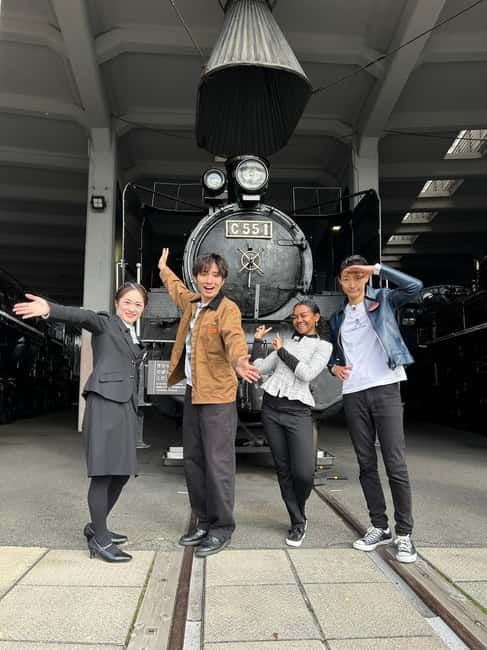
The best reason to visit is simple: the Kyoto Railway Museum gives you scale. A model train can show how a railway works, but standing beside a full-size steam locomotive tells you something different. You see the height of the wheels, the size of the machinery, and the space needed to move people and freight across Japan.
The collection covers several stages of railway development. Steam engines provide the old-fashioned drama, with their heavy metal bodies and familiar shapes. Later trains show how Japanese rail travel changed, while the Shinkansen represents the country’s modern reputation for speed and precision.
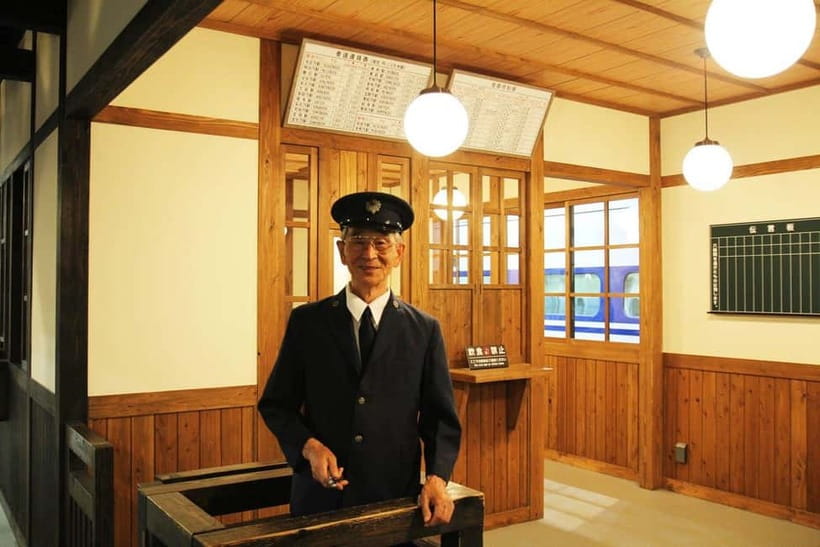
You are not limited to looking at the outside. Step inside the trains to get a feel for their interiors and understand how railway travel changed over time. That makes the visit useful for people who do not normally collect train facts. You can compare the design of older carriages with the cleaner, more streamlined style associated with Japan’s bullet trains.
The museum is also a good place to explain rail travel to children. The real trains catch their attention first, then the interactive displays give them a reason to ask how everything works. A German visitor described the museum as useful for explaining both trains and the technical systems around them. That is a fair assessment: this is not only a display of handsome machines.
More rail days around Kyoto:
- From Osaka: Sagano Train Ride and Kyoto Guided Day Tour
★ 4.3 · 180 reviews - Full Day Hiroshima and Miyajima Tour by Bullet Train from Kyoto
★ 4.5 · 120 reviews - Kyoto: Arashiyama Tour with optional Sagano Romantic Train
★ 4.7 · 18 reviews
Start with the exhibits, then let the machines explain themselves
Give yourself time to move through the main exhibits before rushing toward the biggest attractions. The displays use railway history to show how trains operate, how tracks and equipment fit together, and how rail travel developed in Japan.
The interactive sections matter because railway technology can seem dry on a printed panel. Hands-on controls and working demonstrations turn an abstract idea into something you can test. You might find yourself spending longer at a simple control display than expected, especially if you enjoy seeing cause and effect in action.
The train-driving simulators add another layer. They let you try the work of operating a train rather than simply watching someone else do it. The experience is especially useful for families, since children can take part while adults study the machinery and displays nearby.
Do not expect every activity to move at the same pace. Popular hands-on features can draw a crowd, and the museum’s appeal to children means some areas may be livelier than others. One useful advantage is that much of the museum is indoors, so it gives you a solid option on a rainy Kyoto day. A recent October visit was described as quiet and cool inside, though conditions can vary.
The roundhouse and its slow, satisfying turntable
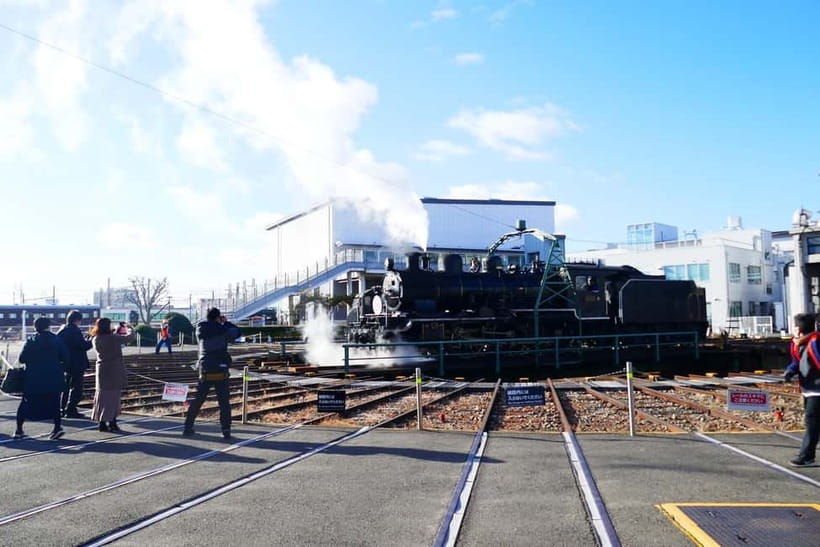
The historic roundhouse is one of the museum’s strongest visual scenes. It gathers locomotives in a circular arrangement, with the turntable at the center. When the platform rotates, a train is moved into position without needing a broad modern yard.
This is the kind of railway detail that can be easy to miss on an ordinary train journey. At the museum, you can watch the mechanism at work and understand how older railway depots handled their engines. The movement is not fast, and that is part of its charm. You see the process rather than a quick showpiece.
The roundhouse also helps place the trains in their working setting. Instead of viewing a steam locomotive as a decorative object, you can imagine it being stored, maintained, and prepared for service. If you enjoy machines, this may be the point where the museum becomes more than a collection of large vehicles.
Plan your visit around the main attractions rather than assuming you can see everything in a quick circuit. The museum is valid for one day, so you have room to pause, return to a favorite exhibit, and fit in the steam locomotive experience without treating the building like a checklist.
The steam locomotive ride adds real atmosphere
The working steam locomotive is the museum’s most nostalgic feature. A ride gives you the old railway experience in a way that a stationary engine cannot. The sound and movement make the technology easier to remember, even if you came mainly for the Shinkansen.
I like this part because it connects the museum’s history to an actual journey. You are not only reading about steam power. You are watching a working train move and feeling the difference between historic rail travel and the smooth, fast image of modern Japanese trains.
The supplied ticket information presents the steam ride as one of the main highlights, but it does not give a separate timetable or guarantee details for each day. Check the museum’s current information when planning your visit so you know how the ride fits into your day.
The ride also gives younger children a clear focus. They may not read every exhibit panel, but a real steam train in motion is hard to ignore. Adults who came for the technical displays get a pleasant break from reading and can enjoy the museum’s nostalgic side.
More museums and galleries in Kyoto:
- Kyoto: Tea Museum Tickets and Matcha Grinding Experience
★ 4.9 · 739 reviews - Skip the lines Basic Ticket at SAMURAI NINJA MUSEUM KYOTO
★ 4.5 · 632 reviews - Kyoto : Geiko Maiko Dance of Kyoto & Visits of Gion Museum
★ 4.6 · 415 reviews - Kyoto Sword Experience – includes Museum Ticket/Ninja Experience
★ 4.5 · 149 reviews
Shinkansen, simulators, and the modern face of Japanese rail
The Shinkansen is an obvious draw, and the museum gives you a chance to see this famous train at close range. Japan’s bullet trains are known around the world, but seeing one as part of a larger railway collection gives you useful context. It is not an isolated symbol of modernity. It is one stage in a long change from steam engines to high-speed rail.
You can compare the Shinkansen with earlier trains and see how priorities shifted. Steam locomotives emphasize power and mechanical labor. Modern trains emphasize speed, efficiency, and streamlined design. The museum makes that contrast visible without requiring a technical background.
The simulators fit naturally here. They let you interact with the modern railway world and give the museum a sense of play. If you are visiting with children, set aside time for them rather than treating the simulators as a quick extra. If you are visiting alone or with another adult, you may prefer to spend that time at the trains and roundhouse.
The museum’s appeal is broad because it does not assume you are already an expert. Rail fans will notice details that casual visitors miss, while first-time visitors can simply follow the development of Japanese train travel through objects they can see and touch.
Railway dioramas show the wider system
The railway dioramas are worth more than a passing glance. They reduce a large, complicated railway network to a scale you can understand. You can see how trains, stations, tracks, and surrounding activity work together rather than viewing each locomotive as a separate object.
For children, the dioramas offer a clear and engaging way to follow railway movement. For adults, they provide a useful pause between the full-size exhibits. After standing beside a locomotive, looking at a smaller working scene can help you notice the planning behind the railway system.
The dioramas also make the museum feel less like a storage hall. You are shown the wider purpose of the trains and the infrastructure around them. That is one reason the museum works for people who are interested in engineering, transport, or Japanese history, not only for dedicated train fans.
Use the Sky Terrace for a change of view
The Sky Terrace provides a break from the indoor displays and a chance to see Kyoto from above. The view is part of the experience because it places the museum in the city’s active railway setting.
After looking at trains inside, you can step outside and watch the real world beyond the exhibits. The terrace helps connect the museum’s past and present: historic locomotives are behind you, while modern rail travel continues around Kyoto.
Do not treat the terrace as the main reason to buy a ticket. It is a pleasant addition, not a full sightseeing viewpoint. Its value comes from the contrast it provides and from the chance to rest after several hours among the trains.
How much time should you allow?
The ticket is valid for one day, and I would use that flexibility. The museum has enough material for more than a quick hour, especially if you want to see the full train collection, try interactive displays, watch the turntable, and fit in the steam locomotive ride.
A useful rhythm is to begin with the large exhibits, move through the hands-on sections, then plan the roundhouse and steam train around their available times. Finish with the Sky Terrace or return to the displays you skipped earlier.
The exact time depends on your interests. A devoted rail fan could spend most of a day examining the trains and machinery. A family with young children might prefer shorter stretches indoors, followed by the ride, simulators, and outdoor views.
The museum’s one-day validity also helps if you need a flexible Kyoto schedule. You can make it a main activity rather than trying to squeeze it between several distant sights. Just check current opening hours before setting out, since they may differ from the usual schedule.
Price, children, and practical value
At about $9 per person, standard admission is modest for a full-day museum with 53 real trains, interactive exhibits, a steam locomotive experience, and the roundhouse. You do not need to be a serious rail fan to get value from the ticket, since the museum combines large objects, history, views, and activities.
The strongest value comes from time. If you only plan to look at the most famous train and leave, the ticket may feel less worthwhile. If you use the full day, explore the technical displays, take photographs, watch the turntable, and try the hands-on features, the price is easier to justify.
Infants under 3 enter free. Children aged 3 to 7 can buy tickets on site for 200 yen, so families should check the child ticket arrangement before purchasing adult admission for younger children.
The ticket is non-refundable. That makes it important to confirm your date, check the museum’s Wednesday closure, and verify current opening hours before booking. If your Kyoto plans are uncertain, this is less flexible than an activity with free cancellation.
Getting there and handling admission
There is no tour guide or group meeting point to find. Go directly to the Kyoto Railway Museum at the stated location, with coordinates 34.9870986, 135.7422732, and present your admission ticket to the staff.
Keep the ticket available if you plan to leave and return. You must show it to staff when re-entering the museum. This is useful if you need a break, but do not assume re-entry works without the ticket in hand.
If the entrance queue is long, follow the instructions for the entrance marked Early Bird Advance Ticket and wait in line as directed. The information provided does not give a guaranteed skip-the-line benefit, so plan a little patience at busy times.
The museum is wheelchair accessible. That makes the standard admission suitable for visitors who need step-free access, though the supplied information does not describe every individual exhibit or route in detail.
Who will enjoy it most?
I would recommend the Kyoto Railway Museum to anyone who enjoys trains, engineering, or Japanese transport. The collection is large enough to reward specialists, but the simulators, steam ride, and full-size trains give casual visitors plenty to do.
Families are a particularly good match. Children can move between real trains, interactive exhibits, and the steam locomotive, while adults can spend time with the technical displays and railway history. The museum also works well for a rainy day because many of its major attractions are indoors.
It may be less suitable if you want a short, quiet cultural stop with little machinery or child-focused activity. The museum is built around trains, and you need some interest in how they look, move, or work to appreciate the full visit.
Should you book the Kyoto Railway Museum?
Book it if you want a hands-on museum rather than a room of static displays. The combination of 53 real trains, the Shinkansen, a working steam locomotive, driving simulators, railway dioramas, and the rotating roundhouse turntable gives you a full and varied day for a reasonable price.
I would be especially keen to book it for a family day, a rainy-weather plan, or a visit with someone who loves Japanese railways. Check the Wednesday closure and current hours first, and remember that the admission is non-refundable. If those conditions fit your schedule, this is one of Kyoto’s more engaging indoor experiences.
FAQ
Where is the Kyoto Railway Museum?
The museum is in Kyoto on Honshu, Japan. The stated coordinates are 34.9870986, 135.7422732.
How long is the Kyoto Railway Museum ticket valid?
Standard admission is valid for one day.
How much does admission cost?
The listed price is $9 per person for standard admission. Children under 3 enter free, and children aged 3 to 7 can purchase tickets on site for 200 yen.
Is the Kyoto Railway Museum open every day?
No. The museum is closed every Wednesday. Opening hours may vary, so check the official website before visiting.
Does the ticket include access to real trains and interactive exhibits?
The standard admission allows entry to the museum, where you can see 53 real trains, interactive exhibits, train-driving simulators, railway dioramas, and the Shinkansen displays.
Is the Kyoto Railway Museum wheelchair accessible?
Yes. The activity information states that the museum is wheelchair accessible.
Can I leave and re-enter the museum?
Yes, but you must present your admission ticket to staff when you re-enter.
Just added around Kyoto
- Kyoto: Zen Meditation at a Private Temple with a Monk★ 5.0 · 25 reviews
- Kyoto: Gion Geisha District & Sake-in-Hand Walking Tour★ 5.0 · 37 reviews
- Private Pewter Sake Cup Experience with a Kyoto Artisan★ 5.0 · 31 reviews
- Your Private Vacation Photography Session In Kyoto★ 5.0 · 110 reviews
- Private Guided Traditional Buddhist Cooking in Japan★ 5.0 · 16 reviews
- Kyoto Wagashi(Japanese sweets) Cooking Class near Fushimiinari★ 5.0 · 60 reviews
- Traditional Japanese Music show & Experience Tour in Kyoto★ 5.0 · 57 reviews
- Kyoto:Family-Friendly Kimono & Yukata Experience at WARGO★ 5.0 · 147 reviews
Kyoto Tours, compared.


Fushimi Inari, Kinkakuji, Bamboo Grove 1 Day Bus Tour
Read our review →
Tea Ceremony in a Traditional Tea House in Kiyomizu
Read our review →
Kyoto Geisha Walking Tour: Gion District & Hidden Gems
Read our review →

Gion Magical Night Walking Tour with Geisha Trivia
Read our review →

Gion Geisha District Walking Tour – Stories of Geisha
Read our review →Browse the lists this tour appears in