
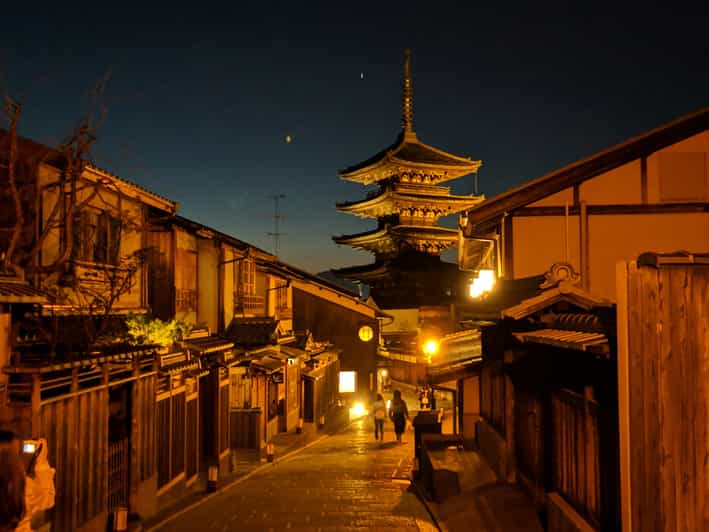
Reviewed · KYOTO TOURS
Kyoto: The Geisha Districts of Kyoto Walking Tour
Kyoto’s geisha districts make more sense when someone explains what you are seeing. This tour begins inside a traveler lounge in Miyagawacho, where you get background on geisha customs, watch an interactive slideshow, and try games linked to the profession before heading into the narrow streets.
I like the small-group format and the chance to visit four of Kyoto’s five central hanamachi districts in one outing. I also like that the tour looks beyond costume-spotting, with time devoted to tea-house customs and the history of the entertainment quarters. The main drawback is weather: two hours on foot can feel long in heavy rain, and you should note that the route is not suitable for people with mobility impairments.
Key points to know before booking

- The tour starts indoors in Miyagawacho, with a welcome drink, slideshow, and geisha-related games.
- Four of Kyoto’s five hanamachi districts are covered, giving you a wider view than a short walk through Gion alone.
- The route includes major sights, such as Kenninji Temple, Yasui Kompira-Gu Shrine, Ninenzaka, and Yasaka Shrine.
- Guides speak English or French, with guide Kevin praised for his broad explanations of Japanese culture and Ben noted for his warm manner.
- A glimpse of a geisha is possible but not guaranteed, so book this for context and atmosphere rather than a promised sighting.
- The $38 price is reasonable for a two-hour guided walk, especially if you value the indoor introduction and a private or small-group setting.
Why the lounge introduction matters
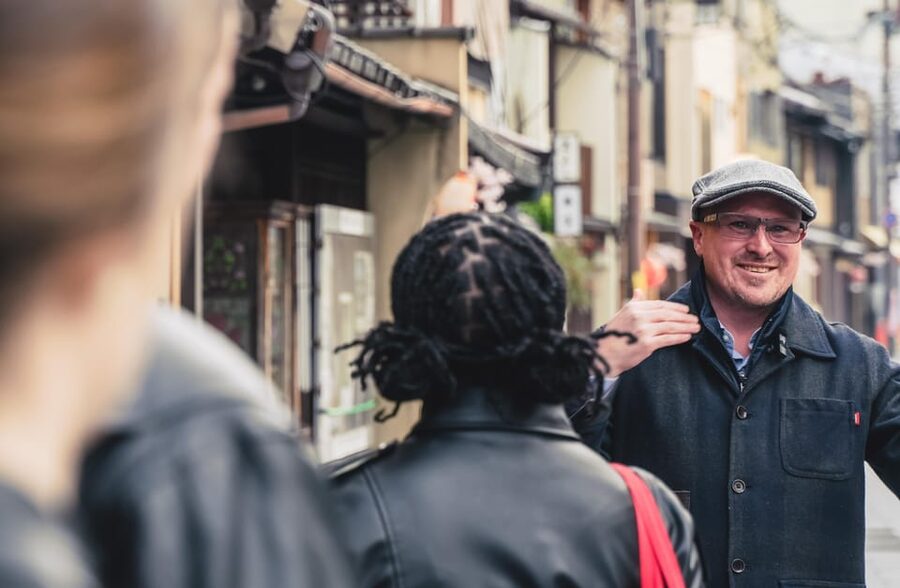
Many visitors first encounter Kyoto’s geisha districts as a stream of narrow lanes, wooden facades, and women in formal dress moving quickly between appointments. Without context, it is easy to mistake a working entertainment district for a stage set.
This tour begins at a traveler lounge in the heart of Miyagawacho. That is a smart choice. You have a chance to settle in with a welcome drink before the walk, and the guide can explain the basic customs of the geisha world in a calm setting rather than trying to speak over foot traffic.
The indoor portion includes an interactive slideshow and games associated with real geisha entertainment. Those activities give you a practical sense of how conversation, play, and performance fit into an evening at a tea house. I like this approach because it treats geisha culture as a profession with specific skills, not simply as a photo opportunity.
The welcome drink is included at the start, while additional food and drinks are not included. Keep that distinction in mind when comparing the price with longer food or evening tours.
More geisha-district evenings:
- Kyoto Geisha Walking Tour: Gion District & Hidden Gems
★ 4.7 · 3,273 reviews - Kyoto: Gion Magical Night Walking Tour with Geisha Trivia
★ 4.9 · 2,393 reviews - Kyoto: Gion Geisha District Walking Tour – Stories of Geisha
★ 4.7 · 2,187 reviews
Miyagawa-chō, the first hanamachi
Miyagawa-chō is the starting point and one of the central geisha districts on the route. The walk begins close to the lounge, so you do not lose much of your two-hour booking to transfers or a long approach from another part of Kyoto.
Your guide introduces the district as a working entertainment quarter connected with tea houses. You will see the streets where these establishments operate, along with the traditional buildings and signs that give the area its particular feel.
The appeal here is not a checklist of monuments. It is the chance to understand how an ordinary-looking lane can contain a highly structured cultural world behind its doors. Tea houses are private places, and the tour offers a way to learn about them without pretending that you can simply walk in.
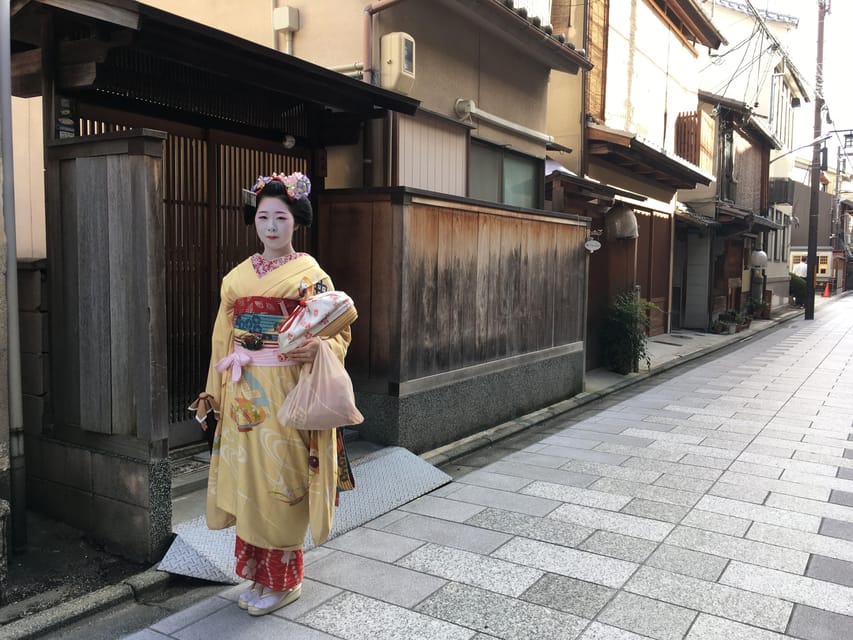
You might catch sight of a geisha or maiko in full costume during the walk, but the experience does not promise this. That is important. The strongest reason to book is the explanation of the district and its customs, with a sighting as a possible bonus.
Kenninji Temple and the shift from entertainment to religion
The route continues to Kenninji Temple, with about 15 minutes set aside for the visit. This stop adds a religious and historic layer to a tour otherwise focused on entertainment districts.
The temple helps break up the street walking and gives your guide a place to connect Kyoto’s cultural traditions. The supplied details do not specify which temple rooms or artworks are visited, so you should think of this as a guided stop within a larger route, not a full temple tour.
That distinction matters if you want extended time at religious sites. You will have enough time for an introduction and a look around, but not the sort of slow visit that would suit someone planning a detailed temple study.
Yasui Kompira-Gu Shrine and a compact cultural stop
Next comes Yasui Kompira-Gu Shrine, also listed as a 15-minute visit. Like Kenninji Temple, this is a short stop that broadens the tour beyond geisha culture.
The shrine is part of the Higashiyama area and gives the guide another setting for discussing local customs. Since the visit is brief, I would keep your expectations focused on orientation and explanation. The value comes from seeing how religious sites and entertainment districts sit close together in central Kyoto.
This mix is useful for first-time visitors. You are not spending the whole two hours following one narrow theme. Instead, the route places the hanamachi districts within the wider setting of Kyoto’s old central neighborhoods.
More walking tours in Kyoto:
- Night Walk in Gion: Kyoto’s Geisha District
★ 4.5 · 2,003 reviews - Kyoto Gion Geisha District Walking Tour – The Stories of Geisha
★ 5.0 · 1,441 reviews - Nishiki Market Brunch Walking Tour (7 Tastings + Brunch)
★ 5.0 · 1,355 reviews - Kyoto Arashiyama Walking Tour: Bamboo, Monkeys, Gardens & Secrets
★ 5.0 · 1,216 reviews
Ninenzaka, narrow lanes, and the practical side of walking
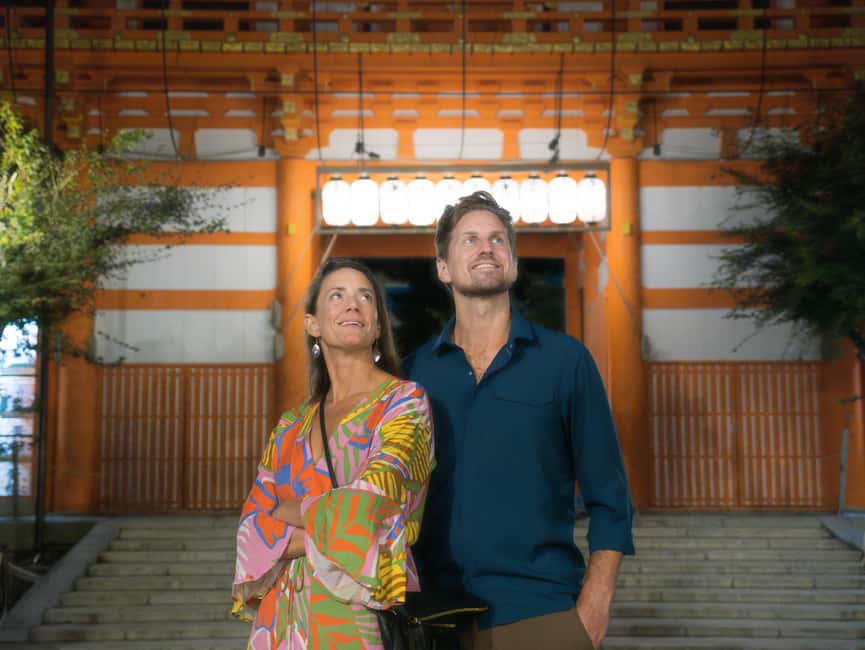
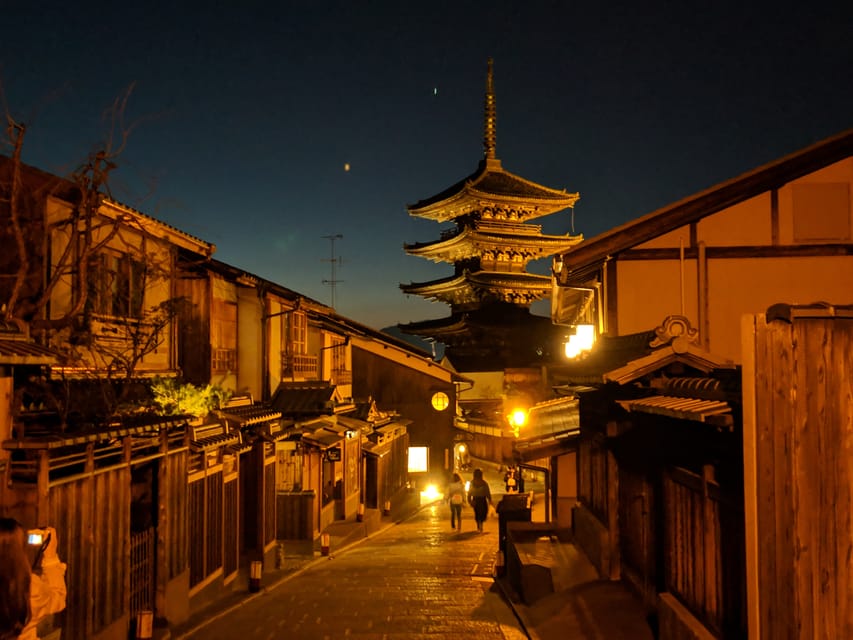
The tour then reaches Ninenzaka, where the guide leads for about 20 minutes. This is one of the route’s most atmospheric sections, with historic lanes and traditional-looking buildings that show why Higashiyama is such a popular walking area.
Ninenzaka can be crowded, especially at busy times. A guide helps you focus on the cultural details rather than simply moving with the crowd. You can also ask questions as the route unfolds, which is more useful than trying to understand the area from a map alone.
The walk is on foot, and the streets are not presented as accessible for people with mobility impairments. Wear comfortable shoes and expect uneven or crowded walking conditions. In wet weather, the route can become less pleasant. One recent booking took place in the rain, and the participant specifically found two hours of walking in those conditions uncomfortable.
That is a fair warning for Kyoto. The tour is not a bad rainy-day choice because it starts indoors, but most of the experience remains outside. Check the forecast and bring suitable rain protection.
Yasaka Shrine and the end of the route
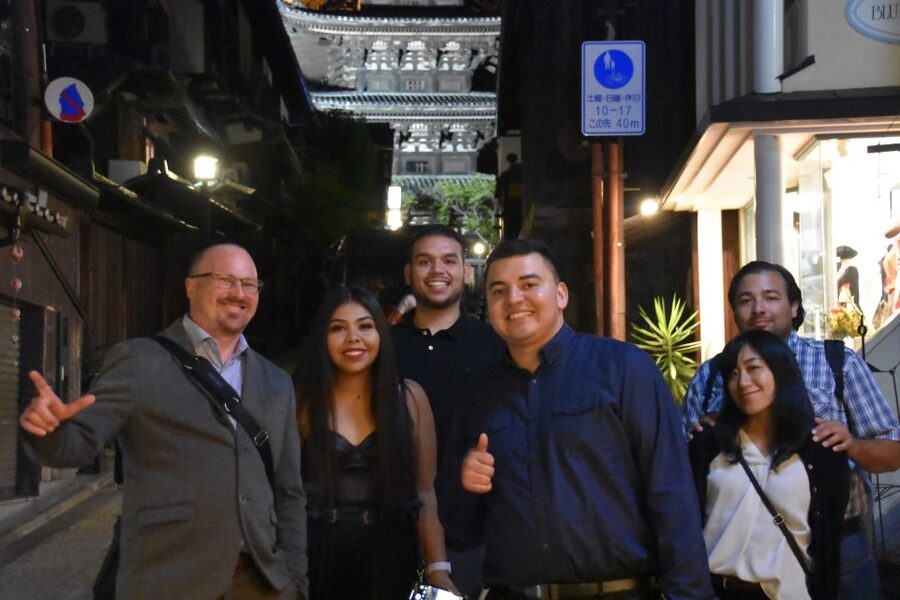
Yasaka Shrine is the final named stop, with about 20 minutes of guided time. It gives the tour a clear finish near one of Gion’s best-known cultural landmarks.
The shrine is useful as an endpoint because it brings together several themes from the walk: religion, local custom, historic streets, and the surrounding entertainment quarters. Your guide can help you make sense of how these parts of Kyoto overlap rather than treating them as isolated attractions.
The tour description also says the walking portion takes close to an hour, while the listed stops add roughly 90 minutes. The precise balance may depend on the chosen starting option, the group, and the pace on the day. The advertised total duration is two hours, so do not plan a long meal or timed attraction immediately afterward without leaving a buffer.
At the end, the guide can suggest places for dinner. That is useful because the tour finishes in an area with many dining choices, but restaurant costs are not part of the $38 booking.
Four hanamachi districts in one short walk
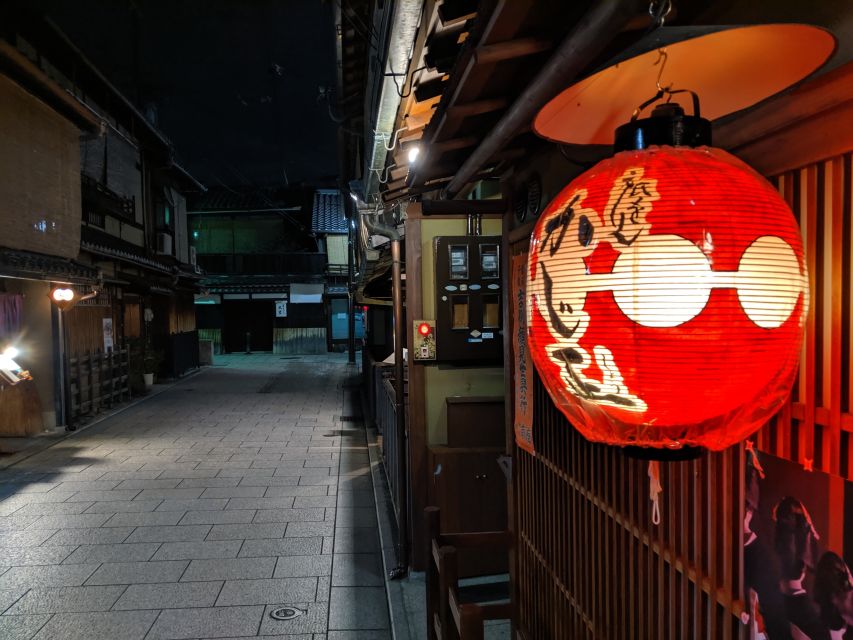
Kyoto has five central hanamachi, or geisha districts, and this tour visits four of them. That is one of its strongest features.
A short stroll through Gion may show you the best-known streets, but it can leave you with only a partial picture. Covering four districts lets you compare the atmosphere and layout of different entertainment quarters. You also see hundreds of tea houses along the wider route, though you should remember that seeing their exteriors is different from entering one.
The tour does not promise access to private tea houses. Instead, it gives you an explanation of how they function and why the streets are arranged as they are. This is a respectful way to approach a culture that is still active and private.
Please also follow the guide’s instructions about photography and personal space. A geisha or maiko may be on the way to work, not performing for the street. The information provided does not list a formal photography policy, so use ordinary courtesy and ask before taking close-up pictures.
Guides, group size, and the quality of explanation
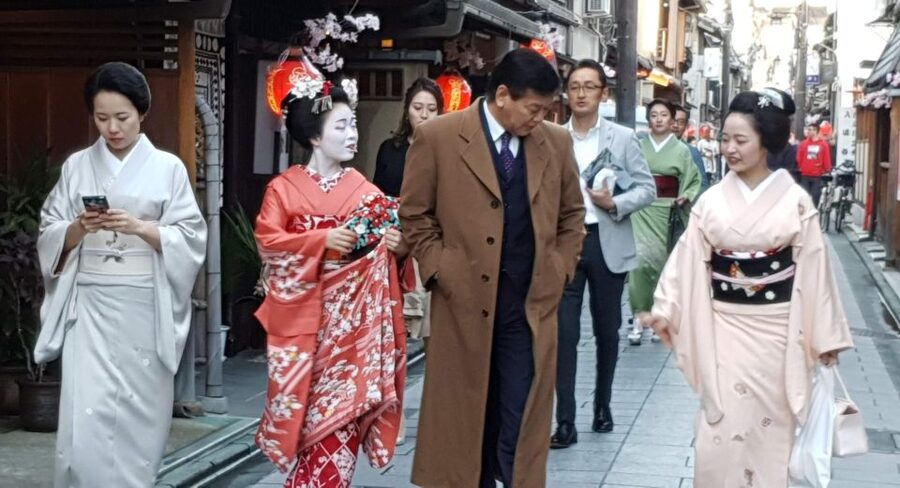
The tour is available with English- or French-speaking guides. Private and small-group options are offered, so the feel can vary depending on what you book.
Small groups are a good fit here. The lanes are narrow, and the subject involves details that are easy to miss if the guide is speaking to a large crowd. A smaller group also makes it easier to ask about customs, tea houses, and the differences between the districts.
Kevin received specific praise for explaining not only geisha culture but also Japanese history and culture more broadly. Ben was described as especially warm and pleasant. Those details suggest that guide quality is a major part of the experience, and you may want to check the guide or language option available for your date.
The guide is central to the value. Without one, you can walk through Gion and Higashiyama on your own, but you will not get the lounge presentation, games, or structured explanation of the hanamachi system.
Is $38 good value for two hours?
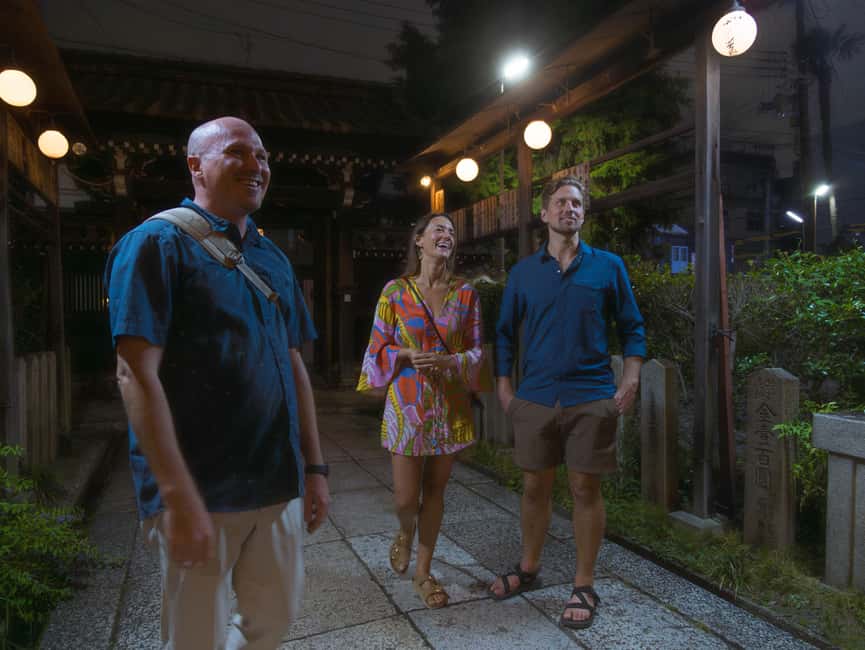
At $38 per person, this is not the cheapest way to walk through Gion. You can visit the public streets and shrines without paying an entry fee for the walk itself.
The price becomes easier to justify if you want three things: a bilingual guide, a focused introduction to geisha culture, and a route covering several districts in one sitting. The welcome drink and indoor slideshow add value, as does the chance to ask questions before going outside.
The booking also offers free cancellation up to 24 hours before the start, plus a reserve-now-and-pay-later option. Those terms help if your Kyoto schedule is still shifting, though you should confirm the exact meeting point because it can vary by booking option.
For a private group, the price may compare well with arranging a separate specialist guide. For a larger group, the value depends more heavily on how much you care about the geisha theme. If you only want to see Gion’s famous lanes, independent walking may be enough.
Who should book this Kyoto geisha tour?
I would recommend it most strongly to first-time Kyoto visitors who want an explanation of what they are seeing. It also suits anyone fascinated by geisha customs but unsure how to approach the subject respectfully.
You will get the most from it if you enjoy walking, asking questions, and looking at ordinary details such as tea-house entrances, street design, and neighborhood customs. The indoor games and slideshow make it friendlier than a tour that begins with a lecture on the pavement.
It is less suitable for visitors who need step-free access or cannot comfortably walk for two hours. It may also disappoint you if your main goal is a guaranteed geisha encounter. No tour can promise that a working geisha will appear at the exact time you pass through a district.
Families and casual sightseers may enjoy the temple, shrine, and Ninenzaka stops, but the geisha subject remains the main focus. If your interest lies only in architecture, choose a temple or Higashiyama walking tour with more time at each monument.
My booking advice
Book this tour if you want the human context behind Gion, not just its photogenic streets. The lounge session is the key difference, since it gives you a clear introduction before the walk and explains the games and customs connected with tea-house entertainment.
Choose a small group or private option if asking questions matters to you. Try to schedule it in dry weather, wear comfortable shoes, and leave some time afterward for dinner rather than treating the two-hour duration as exact to the minute.
The overall rating is 4.9 from 14 bookings, and the strongest praise centers on the guides, small groups, and informative approach. At $38, it offers fair value for a focused cultural walk. I would skip it only if you need accessible terrain, dislike walking in poor weather, or prefer to explore Kyoto’s sights without a set theme.
FAQ
How long does the Kyoto geisha districts walking tour last?
The tour lasts two hours.
How much does the tour cost?
The listed price is $38 per person.
Where does the tour begin?
There are two possible starting location options, including Kyoto Fun at Kawamatsu Mansion. The exact meeting point may vary depending on the option booked.
Which geisha districts does the tour visit?
The tour begins in Miyagawacho and visits four of Kyoto’s five central hanamachi geisha districts.
Is a welcome drink included?
Yes. The experience begins at the traveler lounge with a welcome drink. Additional food and drinks are not included.
What language is the tour offered in?
The live guide is available in English or French.
Is this a private tour?
Private and small-group options are available.
What sights are included on the walking route?
The route includes Miyagawa-chō, Kenninji Temple, Yasui Kompira-Gu Shrine, Ninenzaka, and Yasaka Shrine.
Will I definitely see a geisha?
No. The tour offers a chance to glimpse women in full costume, but a sighting is not guaranteed.
Can I cancel for a refund?
You can cancel up to 24 hours in advance for a full refund. You can also reserve now and pay later.
Just added around Kyoto
- Kyoto: Zen Meditation at a Private Temple with a Monk★ 5.0 · 25 reviews
- Kyoto: Gion Geisha District & Sake-in-Hand Walking Tour★ 5.0 · 37 reviews
- Private Pewter Sake Cup Experience with a Kyoto Artisan★ 5.0 · 31 reviews
- Your Private Vacation Photography Session In Kyoto★ 5.0 · 110 reviews
- Private Guided Traditional Buddhist Cooking in Japan★ 5.0 · 16 reviews
- Kyoto Wagashi(Japanese sweets) Cooking Class near Fushimiinari★ 5.0 · 60 reviews
- Traditional Japanese Music show & Experience Tour in Kyoto★ 5.0 · 57 reviews
- Kyoto:Family-Friendly Kimono & Yukata Experience at WARGO★ 5.0 · 147 reviews
Kyoto Tours, compared.


Fushimi Inari, Kinkakuji, Bamboo Grove 1 Day Bus Tour
Read our review →
Tea Ceremony in a Traditional Tea House in Kiyomizu
Read our review →
Kyoto Geisha Walking Tour: Gion District & Hidden Gems
Read our review →

Gion Magical Night Walking Tour with Geisha Trivia
Read our review →

Gion Geisha District Walking Tour – Stories of Geisha
Read our review →Browse the lists this tour appears in