
Reviewed · TOKYO TOURS
Asakusa: Kimono Tea Ceremony with Matcha and Sweet
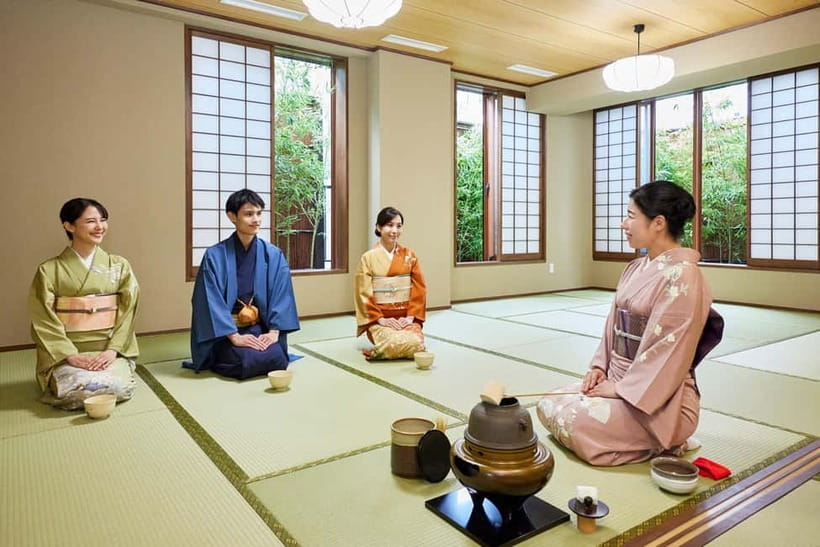
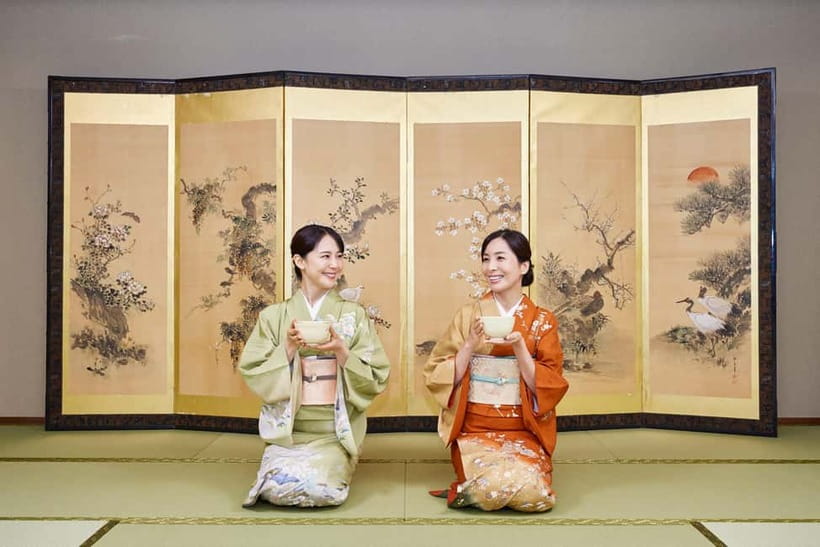
The best part of this Asakusa kimono tea ceremony is that you do not just watch a cultural demonstration. You choose an outfit, sit in a tea room, learn the meaning behind each gesture, and prepare your own matcha. I like the warm, helpful dressing staff and the chance to wear the kimono for a while afterward.
I also like the English guidance, which makes the quiet ceremony easy to follow rather than mysterious. The hosts, including Mia, Wakana, Yoko, and Kyoko, have been praised for clear explanations and a friendly manner. The main consideration is comfort: you sit on tatami mats without shoes, and the full session lasts about 90 minutes.
Key Points Before You Book
- Choose from seasonal kimono colors and patterns, then match the outfit with an obi and hair accessory.
- Women with long hair can receive a matching hairstyle, adding a polished finish to the photos.
- Learn the four tea principles, Wa, Kei, Sei, and Jaku, through a guided English explanation.
- Whisk your own bowl of matcha and enjoy it with a seasonal wagashi sweet.
- Plan for a group of roughly 12 to 14 people, though some sessions may feel smaller.
- Ask ahead for a bamboo chair if sitting on tatami mats is difficult.
Why This Asakusa Experience Feels More Personal Than a Photo Rental
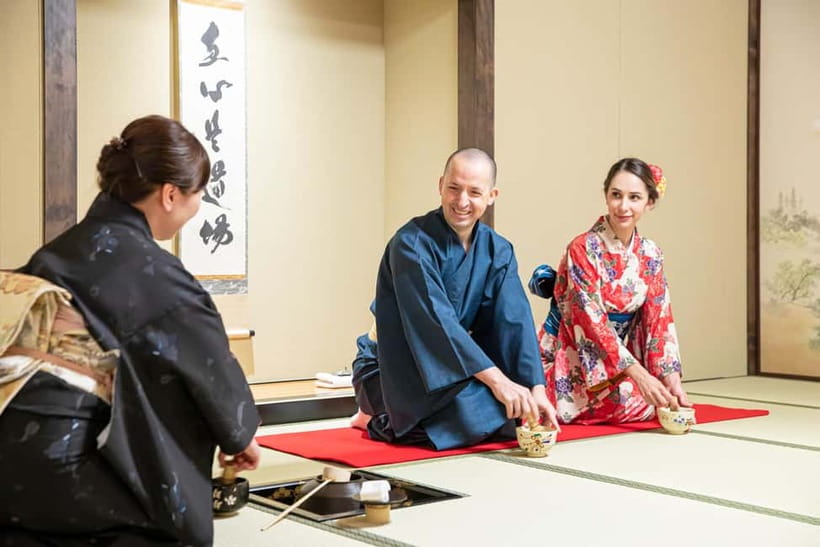
Tokyo offers many chances to rent a kimono for pictures. This experience adds a clear purpose to the outfit. You dress for a tea ceremony, learn how the ceremony works, and then take photos in your finished look.
That combination matters. A photo rental can sometimes feel like changing clothes for a few quick snapshots. Here, the kimono leads into a quiet cultural activity. You begin by selecting colors, patterns, and accessories, then enter the tea room prepared to pay attention to the details of Japanese hospitality.
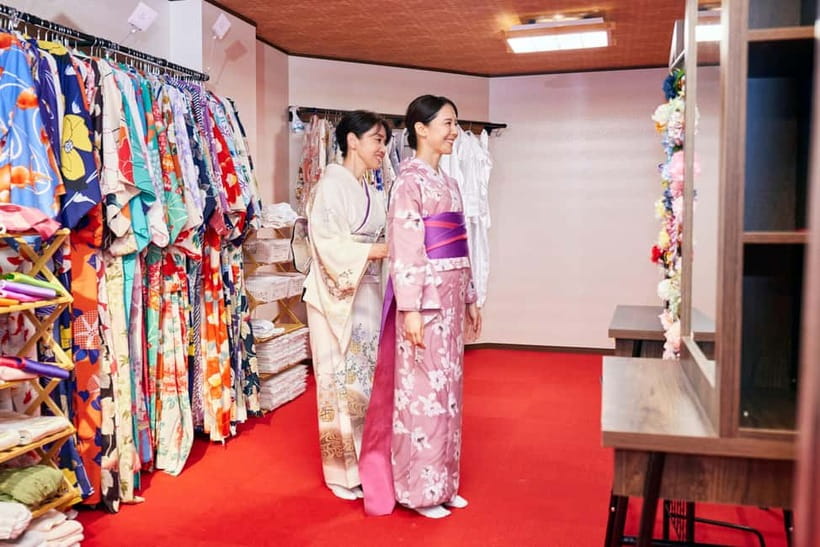
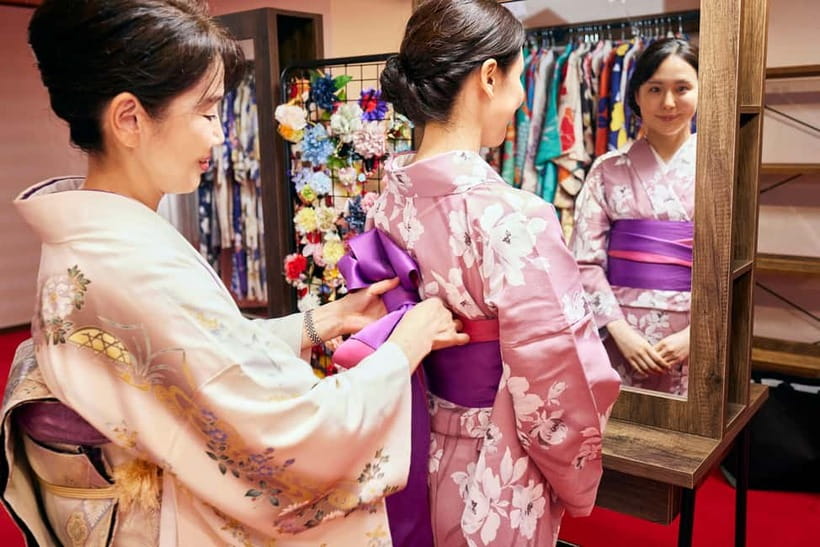
The dressing itself is part of the lesson. Staff help you choose a seasonal kimono, obi, and hairpiece. Several people have especially enjoyed the range of colors and prints, while the dressing team has earned praise for being patient and kind. You should allow yourself time to consider the color rather than grabbing the first attractive option.
The final look is carefully assembled. For women with long hair, hair styling is included. The result is more finished than a simple rental, and it gives you a stronger set of photographs to take home. If you are traveling alone, staff can also help take pictures. That is a useful touch, since solo visitors often have to rely on quick phone-camera arrangements.
More Kimono Experiences in Tokyo
- Let’s make kimono !(Kimono is a gift for you
★ 5.0 · 252 reviews - Tokyo: Matcha and Kimono Experience
★ 4.7 · 219 reviews - Tokyo: Asakusa Kimono Dressing and Matcha Experience
★ 4.9 · 173 reviews
Selecting a Kimono and Getting Ready
You will first choose your kimono with help from the staff. The available selection includes seasonal designs, different colors, and a range of prints. You then coordinate the obi and hair accessory with the outfit.
The dressing takes longer than putting on ordinary clothes, and that is part of the fun. A kimono has several layers and requires careful arrangement. Staff handle the process while you watch how the pieces come together. It is a good moment to ask questions and enjoy the transformation instead of treating it as a rushed prelude.
Women with long hair can have their hair styled to match the kimono. The service is included, but the description specifies long hair, so do not assume that every hairstyle or hair length is covered. Men and women can take part in the kimono portion, while the included hair styling is specifically for women with long hair.
Shoes are not allowed during the experience. Wear something easy to remove, and expect to spend time indoors in socks or stockinged feet. The no-shoes rule fits the tea room setting, but it is worth knowing before you arrive.
Entering the Tea Room and Learning the Four Principles
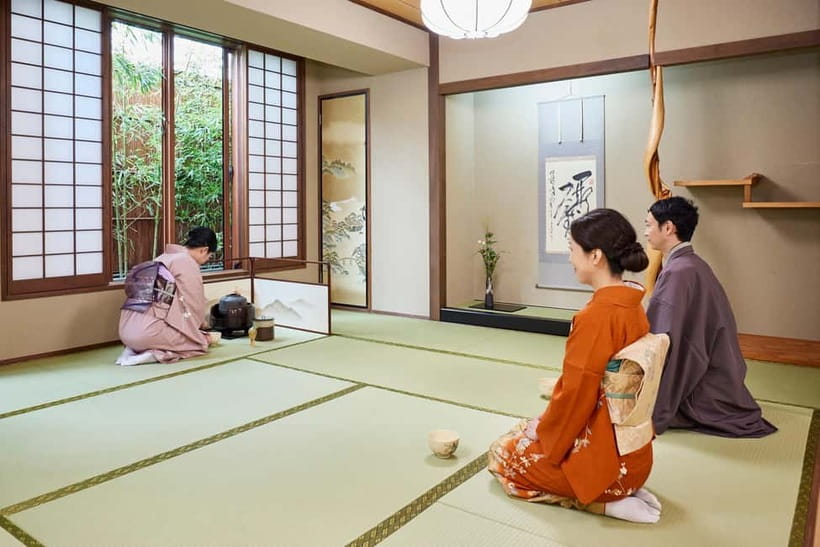
Once dressed, you move into a calm tea room. The ceremony is deliberately quiet, so this is not a loud, comic performance or a rapid-fire sightseeing stop. You are expected to slow down and observe.
The host explains four ideas that shape the ceremony:
- Wa means harmony, the sense that host, guest, setting, and season belong together.
- Kei means respect, shown through attention to the host, utensils, tea, and other people in the room.
- Sei means purity, reflected in the care given to the space and the tools.
- Jaku means tranquility, the calm that develops when the ceremony is carried out with care.
These ideas give you a useful way to understand what you are seeing. Without an explanation, the careful movements can seem like a series of rules. With context, the bowing, cleaning, serving, and handling of utensils become part of a larger practice centered on care and attention.
English is used throughout, and the hosts explain both the etiquette and the meaning behind the ceremony. Some hosts have also adapted their explanations for people who speak Japanese, with English added where needed. That flexibility can make the session feel more natural for bilingual participants.
Watching the Matcha Preparation
The tea master demonstrates how to prepare matcha using traditional tools and utensils. The handling is precise, and some of the objects are cherished artifacts. You will see that the ceremony is not simply about mixing powdered tea with hot water. The order of movements, the way tools are treated, and the presentation of the bowl all matter.
The demonstration gives you time to watch before you try it yourself. Pay attention to the rhythm of the whisk and the way the host positions each item. You do not need previous knowledge of tea ceremony etiquette. The English guidance is designed to lead you through the process.
Then you prepare your own bowl of matcha. This hands-on part is one of the strongest reasons to choose this activity over a demonstration alone. You get to take part in a practice that has been passed down for centuries, while the host remains available to guide you.
Matcha has a distinct flavor that can be bitter and grassy. The seasonal wagashi served with it provides a sweet counterpoint. The wagashi is not just a snack on the side. Its colors and flavors reflect the current season, so it adds another small lesson in Japanese food culture.
One important limit: the included food is the Japanese sweet only. This is not a meal, so plan lunch or dinner separately.
More Tea Ceremonies in Tokyo
- Tokyo: Traditional Tea Ceremony with a Tea Master
★ 5.0 · 528 reviews - Tea Ceremony Workshop in Tokyo by the Experienced Instrucor
★ 5.0 · 189 reviews - Tea Ceremony Experience in a Private Tea Room in Shibuya
★ 4.9 · 125 reviews - Tokyo: Practicing Zen with a Japanese Tea Ceremony
★ 4.7 · 105 reviews
The Quiet Pace Is Part of the Point
The tea ceremony works best if you accept its slow pace. You will not be moving from one sight to another, and there is no long list of activities packed into the 90 minutes. The calm atmosphere is the activity.
That can be a strength after a busy day in Tokyo. It gives you a break from crowds, traffic, and constant sightseeing. The quiet also helps you notice details that are easy to miss in a faster cultural demonstration.
It may not suit you if you want a lively, highly social class. The room is calm and respectful, and the tea ceremony requires attention. Children under seven are not permitted, which also helps preserve the setting.
The usual group size is about 12 to 14 participants because people booked through different sites may share the same session. That sounds fairly large for a tea room, but the actual mood can vary. Some sessions may feel more intimate, with only a few couples present. You should not book expecting a private ceremony unless that is specifically confirmed.
Photos, Gardens, and Time in the Kimono
After the tea ceremony, you have time for photographs. The venue has a small garden and indoor photo areas set up for kimono portraits. Staff can help position you and take pictures, which is particularly helpful if you are traveling solo or want a picture of you and your companion together.
The photo time is not an afterthought. It gives you a chance to enjoy the finished outfit without rushing. Several people have appreciated the staff’s help with photographs, and one solo participant received enough assistance to leave with a useful set of memories rather than just a few awkward phone shots.
You may also be able to go out afterward in the kimono and walk around nearby for a while. The practical value is considerable: you get more than a short indoor costume session. Still, ask the staff about the exact return arrangements before leaving, since a kimono is a rental and the time allowed afterward should be clear.
Weather matters. Walking outside in a kimono can be enjoyable in mild conditions, but winter cold can make it less appealing. One participant chose to stay indoors because the weather was very cold. If you hope to explore Asakusa afterward, check the forecast and allow enough time before your next fixed booking.
What the $66 Price Includes
At $66 per person, this is not the cheapest way to put on a kimono in Tokyo. The value depends on how many parts you would otherwise book separately.
The price includes the kimono rental, professional dressing, hair styling for women with long hair, the tea ceremony, English instruction, matcha preparation, and seasonal wagashi. You also get time for photographs, and the kimono may be available for nearby sightseeing afterward.
That is a strong package for someone who wants both cultural instruction and photos. You are not paying only for a costume. You are paying for staff time, dressing assistance, a guided ceremony, ingredients, and access to the setting.
The value is weaker if you only want to wear a kimono for a quick picture. In that case, a simple rental may meet your needs for less money. This activity earns its price through the tea lesson and the guided participation.
The English instruction also matters. A tea ceremony can be difficult to appreciate if you do not understand why the host moves slowly or handles each object with care. Here, the explanation is built into the experience rather than left for you to figure out later.
Who Will Enjoy It Most
I would choose this for a first visit to Japan if you want a clear introduction to one part of Japanese culture. You do not need to know tea ceremony etiquette, speak Japanese, or have experience wearing a kimono.
It suits couples, families with older children, solo visitors, and anyone who enjoys taking photos. Couples get a memorable dressed-up activity, while solo visitors benefit from staff help with pictures. Children must be at least seven years old.
It is also a good choice for people who prefer a structured cultural activity. The staff guide you from clothing selection to tea preparation, so you do not need to plan the details yourself.
You may want to skip it if you dislike sitting on the floor, cannot comfortably remove your shoes, or prefer a fast-moving tour. Tatami seating is standard, but bamboo chairs are available if requested in advance. Do not wait until arrival to ask for one.
Practical Tips for a Smooth Visit
Wear clothing that makes changing easy. You will be dressed in several kimono layers, so simple clothing underneath is more practical than a complicated outfit.
Arrive ready to spend time choosing your colors. If you already know which shades suit you, the selection may go faster, but staff can help you coordinate the obi and accessories.
Keep your schedule open after the ceremony if you want more photos or a short walk in the kimono. The activity itself takes about 90 minutes, and rushing straight to a train or restaurant could cut into the best part of the experience.
Ask ahead for a bamboo chair if tatami seating is a concern. Shoes are not permitted, and the ceremony is quiet, so prepare for an indoor setting rather than an ordinary sightseeing tour.
Cancellation is flexible: you can cancel up to 24 hours before the experience for a full refund. You can also reserve now and pay later, which helps if your Tokyo plans are still shifting.
Should You Book This Kimono Tea Ceremony?
I would book it if you want more than a costume photograph. The strongest parts are the careful kimono dressing, the English explanation of Wa, Kei, Sei, and Jaku, and the chance to whisk your own matcha rather than simply watch someone else do it.
The activity also offers unusually good photo support, with indoor setups, a small garden, and staff willing to help solo visitors and couples. The option to wear the kimono nearby afterward adds value, though you should confirm the return timing.
Think twice if you need a private session, a full meal, or a high-energy activity. The group can reach about 12 to 14 people, the setting is quiet, and the food is limited to wagashi. For most visitors seeking a respectful, approachable introduction to tea ceremony and kimono culture, the $66 price is fair for the amount included.
FAQ
How long does the kimono tea ceremony last?
The full experience lasts approximately 90 minutes, including kimono dressing, hair styling where included, the tea ceremony, matcha preparation, sweets, and time for photographs.
Is the activity conducted in English?
Yes. Full English guidance is provided throughout the experience, and the instructor language is English.
What does the $66 price include?
The price includes the traditional tea ceremony, kimono rental and professional dressing, hair styling for women with long hair, matcha preparation, seasonal wagashi, and English guidance.
Can I sit on a chair instead of the tatami floor?
The standard seating is on tatami mats. Bamboo chairs are available upon advance request, so ask for one before your session.
Are children allowed to join?
Children under seven years old are not permitted to take part.
Can I wear the kimono outside after the ceremony?
You can go out afterward in the kimono for nearby sightseeing if the arrangement allows it. Confirm the permitted time and return details with the staff before leaving the venue.
Just added around Tokyo
- Private Arrival Transfer : Narita International Airport to Central Tokyo City★ 4.5 · 12 reviews
- Narita Airport(NRT): Private Transfer to Tokyo/Yokohama 1-9pax★ 5.0 · 47 reviews
- Private Transfer from Narita Airport to Yokohama Port and City★ 4.5 · 17 reviews
- [Narita Airport Terminals 1, 2] 40-60km Sawara Itako Historic Bike Tour★ 5.0 · 13 reviews
- 3 Day Japan Highlights Tour: Tokyo, Mt.Fuji, Nara, Kyoto, Osaka★ 5.0 · 22 reviews
- Small Town in the Big City: Tasting Tokyo’s Kichijoji★ 5.0 · 195 reviews
- Small Town in the Big City: Tasting Tokyo’s Kichijoji★ 5.0 · 16 reviews
- The 10 Tastings of Tokyo With Locals: Private Street Food Tour★ 5.0 · 48 reviews
Tokyo Tours, compared.

Mt Fuji and Hakone 1-Day Bus Tour Return by Bullet Train
Read our review →
teamLab Planets TOKYO Digital Art Museum Entry Ticket
Read our review →
Mt Fuji & Hakone Cruise, Drum Show Bullet Train 1 Day from Tokyo
Read our review →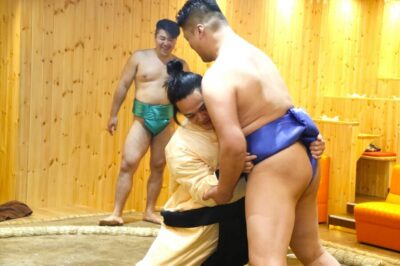
Sumo Show Experience with Chicken Hot Pot and a Photo
Read our review →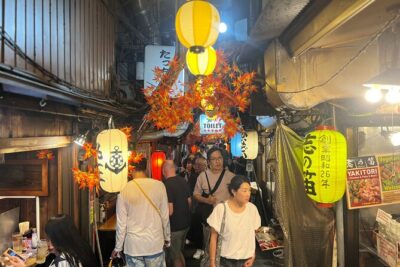
Shinjuku Food Tour (13 Dishes at 4 Local Eateries)
Read our review →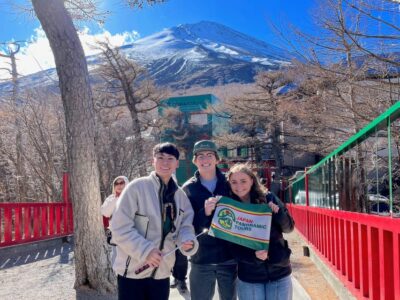
Tokyo Mt Fuji 5th St & Hakone Cruise Bus Tour w/Bullet Train
Read our review →
Flagship 2-Hours Official Street Go-Kart Tour – Tokyo Bay Shop
Read our review →Browse the lists this tour appears in