
Reviewed · KYOTO TOURS
Calligraphy & Digital Art Workshop in Kyoto
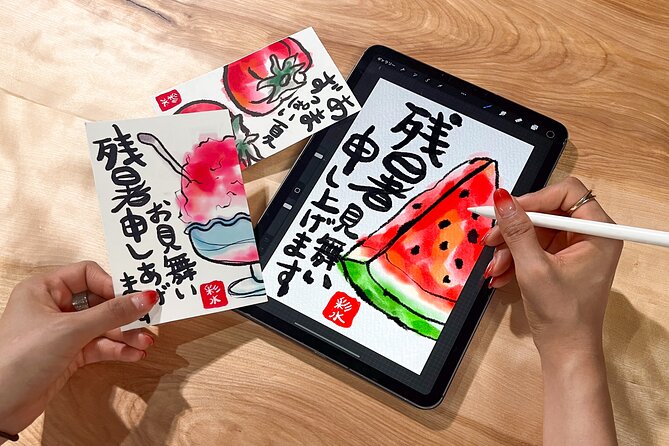
Japanese brushwork takes a modern turn at Studio Aya, where you learn traditional calligraphy or ink painting before recreating the idea on an iPad. That contrast is the heart of the class: first, you work with ink, paper, and brush control, then you use a digital tool to make a Japanese picture letter called etegami.
I like the private format, since only your group takes part, and I like the gentle pace, with a tea-and-snack break built into the 90 minutes. Ami, the studio’s founder, brings both traditional art and digital creativity to the lesson. The main consideration is time: this is a short introduction, not a full art course, and the 3 p.m. start may require planning around your Kyoto sightseeing.
Key points to know before booking
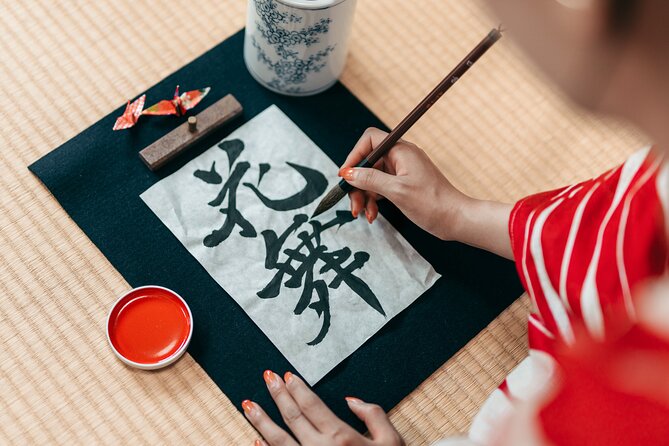
- Traditional and digital in one class: Begin with brushwork and ink, then make calligraphy or ink art on an iPad.
- Ami’s creative studio: The workshop is led by Ami and her team of professional artists and creators.
- Etegami is the special project: You learn Japanese picture letters that can become a personal digital postcard.
- Tea and snacks are included: The 15-minute break gives the class a relaxed rhythm.
- A private activity: Only your own group participates, making it suitable for families, couples, or solo visitors.
- Budget about 90 minutes: The class starts at 3 p.m. and finishes back at the studio.
Why this Kyoto workshop is different
Many Kyoto art activities ask you to copy a traditional form. This one asks you to move between two tools and two ways of thinking. You start with the physical feel of a brush, where pressure, speed, and ink matter. Then you shift to an iPad, where the same artistic ideas can be edited and developed digitally.
That change makes the class useful even if you are not confident with drawing. You are not simply watching someone demonstrate calligraphy. You are given a chance to try the strokes, understand the basic approach, and make something of your own.
The class also introduces etegami, a Japanese art form built around picture letters. The idea combines writing and simple imagery, so your finished work can feel more like a small illustrated message than a formal piece of calligraphy. For a visitor, that gives the activity a clear result to take away, even though the work is created digitally during the second half.
I especially like the balance between cultural context and hands-on practice. The traditional section connects the class to Japanese brush art, while the iPad section gives it a current, practical edge. You do not need to choose between old and new Kyoto here.
More hands-on workshops in Kyoto:
- Kyoto: 45-Minute Tea Ceremony Lesson Experience
★ 4.3 · 2,378 reviews - Ramen Cooking Class at Ramen Factory in Kyoto
★ 5.0 · 1,937 reviews - Kyoto : Chopsticks Making Workshop in Gion with Engraving Option
★ 5.0 · 958 reviews
Arriving at Studio Aya in Kamigyō Ward
The meeting point is iPadmate kids47, Daikokuyachō, in Kyoto’s Kamigyō Ward. You should allow enough time to reach the address for the 3 p.m. start, since private art workshops usually work best when everyone can begin together.
The activity ends at the same meeting point. There is no private transportation included, so you are responsible for getting to and from the studio. The location is near public transportation, which helps if you are fitting the class into a day of sightseeing.
The setting matters. This is not a large attraction with crowds moving through in groups. It is a studio environment connected to creative education, with a focus on learning. The quiet indoor setting should appeal to you if you want a break from temples, shopping streets, and busy train stations.
The workshop is also a good choice on a rainy Kyoto afternoon. You will spend the full class indoors, and the tea break gives you a chance to slow down rather than rush from one sight to the next.
The first 30 minutes: brush, ink, and Japanese calligraphy
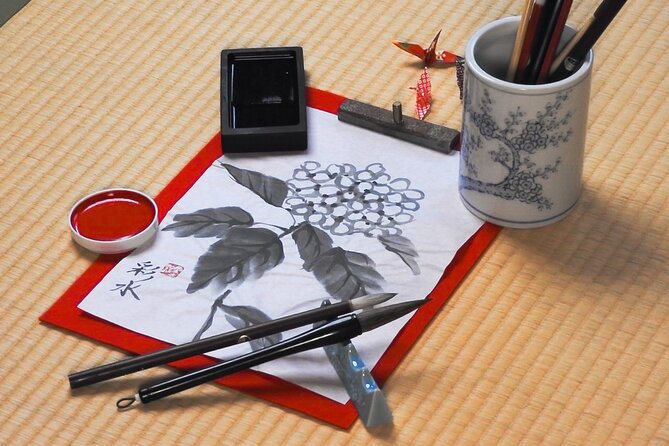
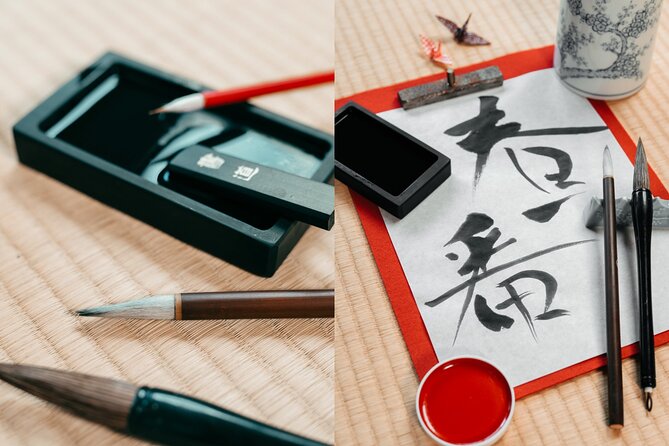
The opening section lasts about 30 minutes. The class introduces traditional Japanese calligraphy or suibokuga, Japanese ink painting. The exact balance may depend on the session and your group, but the goal is to help you understand the tools and the basic character of the art.
Calligraphy is not just about writing a correct character. Your brush stroke carries the movement of your hand. Pressure changes the line, and the amount of ink affects the result. That is why this first section has value even for beginners: it gives you a direct feel for the physical side of Japanese art.
You may spend time working on individual characters and basic strokes. One family described learning about kanji and practicing characters on paper before moving to the iPad. That progression makes sense. You first see how the mark behaves in the traditional medium, then consider how to recreate or adapt it digitally.
The class also introduces the Zen approach connected with calligraphy. You should not expect a long lecture on philosophy during a 90-minute activity. Instead, the point is likely to help you focus on the act of making the stroke, rather than worrying about producing a perfect final image.
That is useful advice for you as a beginner. Brushwork can feel intimidating when you are trying to get every line right. The workshop gives you permission to treat the process as practice. You may find that the most satisfying part is watching a simple stroke change as you alter the pressure or speed.
If you choose ink painting rather than calligraphy, the same ideas apply. Ink painting depends on controlled marks and the relationship between dark ink and open paper. It can be a calmer option if you prefer images to written characters.
The 15-minute tea break
After the traditional section, the class pauses for about 15 minutes. Japanese tea and snacks are included, so you do not need to arrange your own refreshment.
This break is short but well placed. Brushwork takes concentration, and a pause gives you time to look at what you have made before switching to digital work. It also helps families and mixed-age groups keep the activity comfortable.
The tea is not presented as a separate ceremony, and you should not book this expecting a formal tea lesson. Think of it as a simple hospitality break within the workshop. You can ask questions, reset your hands, and prepare for the second half.
For couples or friends, this is also an easy point to compare what you have learned. The class has a social side, but it does not depend on constant conversation. Solo participants can take part without feeling out of place because the work itself gives you something to focus on.
A few more Kyoto half-days to weigh up
- PERFECT KYOTO 1-Day Bus Tour
★ 5.0 · 13,518 reviews - Kyoto: Fushimi Inari, Kinkakuji, Bamboo Grove 1 Day Bus Tour
★ 4.8 · 4,316 reviews - Kyoto: Tea Ceremony in a Traditional Tea House in Kiyomizu
★ 4.9 · 3,519 reviews - Kyoto Geisha Walking Tour: Gion District & Hidden Gems
★ 4.7 · 3,273 reviews
The next 30 minutes: making digital art on an iPad
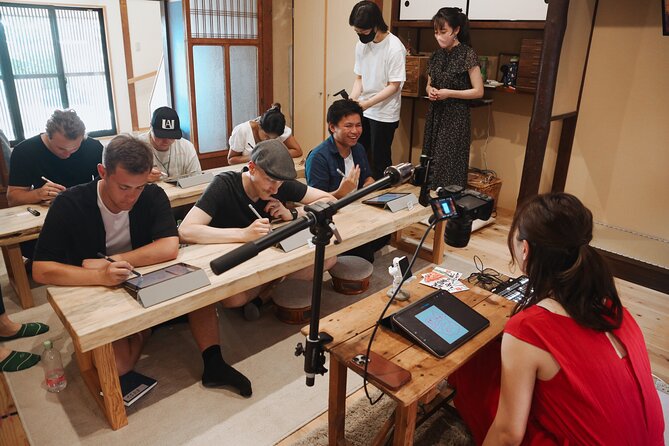
The digital art section lasts about 30 minutes. An iPad is provided, so you do not need to bring your own device. The instructors show you how to make calligraphy or suibokuga digitally, using the brushwork ideas from the first half.
This is where Studio Aya’s identity becomes clear. Ami studied digital art in the United Kingdom and runs the YouTube channel amity_sensei, which focuses on creative uses of the iPad. Her work also includes iPadmate kids, a creative school founded in 2020 for children.
That background gives the digital portion a clear purpose. You are not simply handed a tablet as a novelty. The class connects digital tools to traditional Japanese marks, showing you how a brush-inspired effect can be made on screen.
The digital format can be more forgiving than paper. You might be able to adjust a mark or try a different arrangement without wasting materials. At the same time, it is not exactly the same as holding a brush. If the physical feel of ink is what attracts you most, the first half may be your favorite.
I like having both formats in one session because the comparison teaches you something. Traditional paper shows you the character of the stroke. The iPad lets you experiment with composition and presentation. You can see how an old artistic idea changes when it moves into a modern creative tool.
Families may find this part especially engaging. Children who are less interested in a traditional brush lesson may become more involved when the iPad appears. One family used the class to learn about kanji, practice on paper and an iPad, and finish with a postcard project. That sequence gives younger participants several ways to stay involved.
Creating an etegami picture letter
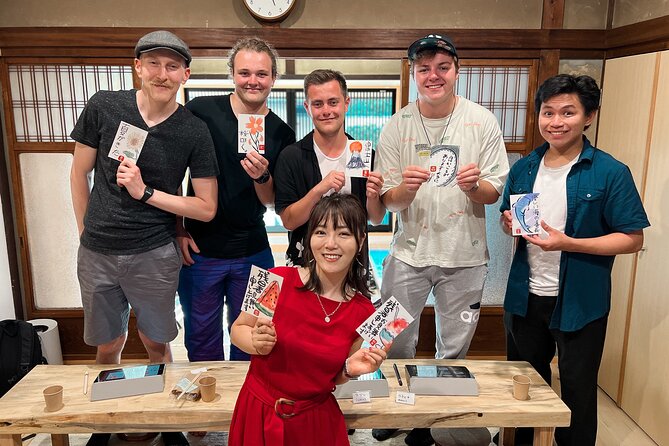
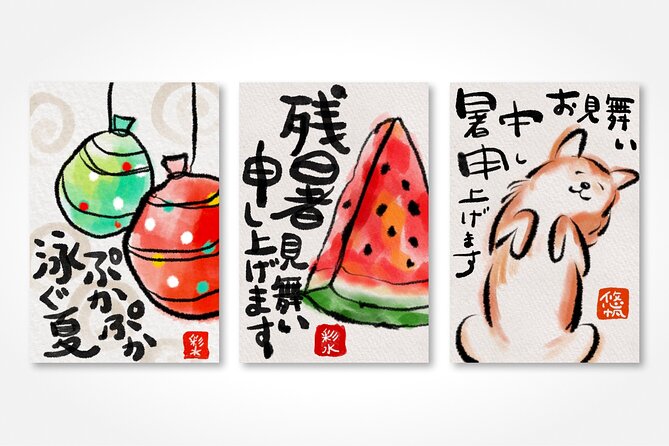
The workshop’s most distinctive project is the digital etegami. The word refers to Japanese picture letters, combining a written message or character with a simple image.
This is a useful choice for a short class because it gives you a clear creative target. You are not expected to master every part of Japanese calligraphy in 90 minutes. Instead, you learn a few ideas and use them to create a small, personal piece.
A digital postcard also makes the activity feel connected to travel. You can think about the character, image, or message you want to create, then shape it with guidance from the instructors. The finished work may be more meaningful than a standard souvenir because you made it during your time in Kyoto.
The exact design will depend on your own skill and the instruction given to your group. You should not expect a professional illustration or a finished artwork ready for a gallery. The value is in the process: learning how Japanese writing and images can work together, then trying that combination yourself.
If you are looking for a hands-on cultural activity, this project gives you more to do than watch a demonstration. If you mainly want to collect beautiful photographs, this may not be the right choice. The workshop asks for active participation, and your result will reflect your own practice.
The final 15 minutes: questions and a chance to review your work
The last 15 minutes are reserved for questions and answers. This gives you time to ask about the brush techniques, the digital process, Japanese characters, or the idea behind etegami.
A question period is helpful in a small private class because the instructors can respond to your group’s interests. You might want to know why a stroke looks different on paper and on an iPad, or how a particular character should be handled. You can also use this time to clarify anything that felt difficult during the exercises.
The schedule is a rough guide, so the rhythm may shift slightly. A group that needs more help with brushwork could spend longer there, while another group might ask more questions about digital art. The important point is that the workshop includes a planned pause and discussion rather than packing every minute with instruction.
What the $72 price gives you
At $72, this is not a cheap drop-in craft activity. Still, the price includes about 90 minutes of instruction, an iPad, Japanese tea, and snacks. You are also paying for a private session, with only your group participating.
That package can be good value if you want direct guidance rather than a self-led activity. You do not need to buy equipment or arrange materials, and the class covers two different forms of art. The private format may be especially worthwhile for a family or small group that prefers a personal pace.
The value is less clear if you only want a brief introduction to calligraphy and have no interest in digital art. In that case, half of the workshop may not match your priorities. Before booking, decide if the traditional and modern combination is what attracts you.
I would also compare the cost with what you want from your Kyoto schedule. A standard sightseeing stop can be shorter and less expensive, but it will not give you the same chance to practice. This workshop earns its price through participation, instruction, and the unusual switch from brush to screen.
Who will enjoy this most
This activity is a strong match for you if you like making things while you travel. It works well for solo visitors, couples, friends, and families, and most participants can take part.
Families should note that the class has several stages, which helps hold attention. Children can learn about kanji, try brushwork, use an iPad, and create a picture letter. The studio’s connection to children’s creative education also fits that audience.
Couples may appreciate the shared project. You can learn the same basic techniques, then create different digital postcards. The tea break gives the class a relaxed pause without turning the activity into a formal cultural performance.
Solo visitors can also book with confidence. Since the activity is private to your group, you will not be placed into a large class of strangers. The quiet format lets you concentrate on your own work.
You may want to skip it if you dislike structured instruction, cannot spare 90 minutes, or want a long traditional calligraphy lesson. The class offers an introduction to several ideas rather than advanced training in one discipline.
Practical details for planning your afternoon
The workshop starts at 3 p.m. Plan your day so you can reach Daikokuyachō without cutting it close. The class ends at the same studio, making it easy to continue with dinner or another evening plan.
Bring your booking confirmation on your phone, since the activity uses a mobile ticket. An iPad is supplied, along with tea and snacks, so you do not need to carry art equipment.
Service animals are allowed, and the location is near public transportation. The activity is private to your group, and most people can participate. The provided information does not describe specific accessibility features, so contact Studio Aya before booking if you need detailed assistance.
Free cancellation is available when you cancel at least 24 hours before the local start time. Cancellations or changes made within 24 hours are not accepted for a refund.
Should you book Studio Aya?
I would book this workshop if you want a small, hands-on Kyoto activity that links Japanese tradition with current technology. The strongest reason to choose it is the two-part format: you feel the brush and ink first, then carry those ideas into digital art and an etegami postcard.
The class is also a good pick for families, thanks to its mix of kanji, paper practice, iPad work, tea, and a final creative project. Couples and solo visitors will find the private setting comfortable too.
I would think twice if your main goal is advanced calligraphy or a formal tea ceremony. This is a compact introduction, with about 30 minutes for traditional work and another 30 minutes for digital art.
For $72, the experience makes sense when you value personal instruction, included supplies, and a creative souvenir more than a quick sightseeing stop. If that sounds like your kind of afternoon in Kyoto, Studio Aya offers a thoughtful way to spend it.
FAQ
Where does the calligraphy and digital art workshop take place?
The workshop takes place at iPadmate kids47, Daikokuyachō, Kamigyō Ward, Kyoto, Japan.
What time does the workshop start?
The scheduled start time is 3 p.m.
How long does the activity last?
The workshop lasts approximately 1 hour and 30 minutes, including a break.
What will I learn during the workshop?
You will be introduced to traditional Japanese calligraphy or suibokuga, digital calligraphy or ink painting on an iPad, and Japanese picture letters called etegami.
Is an iPad provided?
Yes. An iPad is included for the digital art portion of the workshop.
Are tea and snacks included?
Yes. Japanese tea and snacks are provided during the approximately 15-minute break.
Is this a private activity?
Yes. Only your own group participates in the activity.
Does the workshop include transportation?
No. Private transportation is not included. The meeting point is near public transportation.
Can children participate?
Most participants can take part, and the activity is designed for people traveling alone, with friends, or with family. The information also describes children learning kanji, brushwork, and digital art during the workshop.
What is the cancellation policy?
You can cancel for a full refund if you cancel at least 24 hours before the experience start time. Cancellations or changes made less than 24 hours before the start time are not accepted for a refund.
Just added around Kyoto
- Kyoto: Zen Meditation at a Private Temple with a Monk★ 5.0 · 25 reviews
- Kyoto: Gion Geisha District & Sake-in-Hand Walking Tour★ 5.0 · 37 reviews
- Private Pewter Sake Cup Experience with a Kyoto Artisan★ 5.0 · 31 reviews
- Your Private Vacation Photography Session In Kyoto★ 5.0 · 110 reviews
- Private Guided Traditional Buddhist Cooking in Japan★ 5.0 · 16 reviews
- Kyoto Wagashi(Japanese sweets) Cooking Class near Fushimiinari★ 5.0 · 60 reviews
- Traditional Japanese Music show & Experience Tour in Kyoto★ 5.0 · 57 reviews
- Kyoto:Family-Friendly Kimono & Yukata Experience at WARGO★ 5.0 · 147 reviews
Kyoto Tours, compared.


Fushimi Inari, Kinkakuji, Bamboo Grove 1 Day Bus Tour
Read our review →
Tea Ceremony in a Traditional Tea House in Kiyomizu
Read our review →
Kyoto Geisha Walking Tour: Gion District & Hidden Gems
Read our review →

Gion Magical Night Walking Tour with Geisha Trivia
Read our review →

Gion Geisha District Walking Tour – Stories of Geisha
Read our review →Browse the lists this tour appears in