
Reviewed · KYOTO TOURS
Discover Kyoto by Bike Full Day Tour
Kyoto reveals itself best at street level, and this 32-kilometer e-bike ride gets you into places a tour bus cannot. You pedal beside the Kamo River, slip through old geisha-district lanes, pause at mossy temples, and move between major sights without spending the day underground or in traffic.
I like the way the route balances famous places, especially Ginkakuji and Nanzen-ji, with quieter stops such as Honen-in and Miyagawacho. I also like that Jaime leads a private tour, so your group can receive direct explanations and keep a more relaxed rhythm. The main drawback is simple: seven to eight hours and 32 kilometers demand solid fitness, even with an e-bike.
Key points to know before you book
- A full Kyoto day on two wheels: You cover about 32 kilometers, with riding, sightseeing, and photo stops spread across seven to eight hours.
- Jaime leads a private experience: Only your group participates, which makes questions and pacing easier than on a large shared outing.
- Major temples meet quiet lanes: The route includes Toji, Nishi Honganji, Nanzen-ji, Ginkakuji, Heian Shrine, Gion, and lesser-known corners.
- The e-bike helps, but it does not remove the effort: You still need to steer safely on narrow paths and be fit enough for a long day in the saddle.
- Lunch is not included: Plan on buying lunch during the day, although one review specifically found the lunch choice enjoyable.
- Weather matters: Poor weather can lead to a new date or a full refund, and cancellation is free up to 24 hours before departure.
What this Kyoto bike tour really gives you
The strength of this experience is not simply the number of temples. Kyoto has plenty of temples, and you can reach many of them by train or taxi. The real advantage here is the connection between them.
You ride from one district to another through ordinary city streets, riverside paths, university grounds, historic neighborhoods, and narrow lanes. That gives you a better sense of how Kyoto fits together. Instead of treating each shrine as an isolated stop, you see the city between the postcard views.
The route begins at 9:00 am at the 7-Eleven at 44-1 Higashikujō Kamitonodachō in Minami Ward. It ends back at that same meeting point. The tour includes use of an e-bike, and the activity is private, meaning only your group takes part.
The price is $128.48 per person. That is not a bargain basement sightseeing ride, but the value is reasonable if you want a full day with a guide, an e-bike, a carefully linked route, and private attention. You are paying for more than bicycle rental. You are also paying to avoid working out the route between distant sights and to gain context as you go.
More bike days around Kyoto:
- Hidden Kyoto E-Biking tour
★ 5.0 · 1,843 reviews - Bike Tour Exploring North Kyoto plus Lunch
★ 5.0 · 1,087 reviews - Arashiyama Bamboo Forest & Hidden Gems Bike Tour (Early Bird)
★ 5.0 · 613 reviews
Toji begins the day with Kyoto’s tallest wooden tower
Toji is a strong opening stop. Its five-story pagoda is the tallest wooden tower in Japan, and the temple is a UNESCO World Heritage Site. You get about 15 minutes to walk through the grounds and hear how Toji fits into Kyoto’s Buddhist story.
This is a short visit, so do not expect a long temple tour or time to inspect every corner. Its purpose is to set the tone: old Kyoto is not confined to a single preserved district. It appears beside roads, rail lines, parks, and working neighborhoods.
Starting here also puts you near the southern part of the city before the route works north and east. That geographic flow makes sense by bicycle, though the day will still involve plenty of riding.
Umekoji Park and Ryukoku University show everyday Kyoto
The route then moves through Umekoji Park, where the hard edges of the city give way to open lawns, trees, seasonal flowers, and a pond. It is a useful change of pace after the temple grounds and early city streets.
You may appreciate this stop less for a single famous sight than for the glimpse of local leisure. Kyoto is not only shrines and wooden houses. Parks like this show where people go to slow down, meet friends, and get outside.
The ride continues through the Omiya Campus of Ryukoku University, one of Kyoto’s old private universities. The campus was founded by the Nishi Hongwanji sect of Buddhism. You get about 10 minutes here, enough to notice the mix of traditional religious roots and modern city life.
This part of the route is a reminder that Kyoto remains a living city. The historic sights are important, but they share the streets with students, commuters, shops, and neighborhoods.
Nishi Honganji brings grand architecture into view
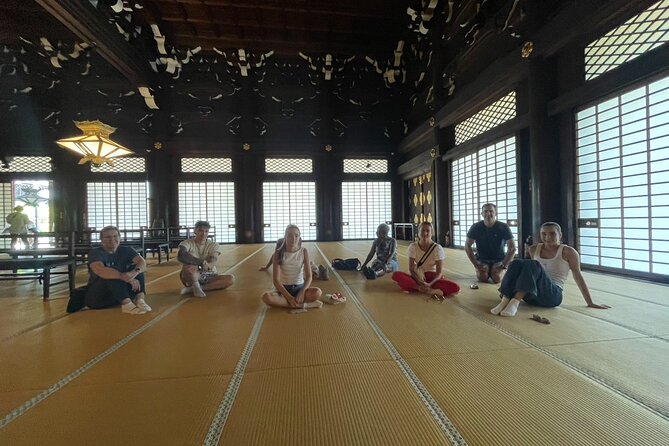
Nishi Honganji is one of the larger and more important Jodo Shinshu Buddhist temples in Kyoto. It is also a UNESCO World Heritage Site, with broad courtyards and carefully maintained wooden buildings.
The stop lasts about 30 minutes, giving you more time than at Toji. Jaime can explain the temple’s influence and help you read details that might otherwise blur into a general impression of old wood and tiled roofs.
I find stops like this especially useful on a bike tour because the movement between sites keeps the day from feeling like a string of formal temple visits. You have a major monument, then a ride through the city, then another major monument. That variety keeps the pace lively.
A few more Kyoto half-days to weigh up
- 5 Top Highlights of Kyoto Full Day Bike Tour (E-bike option)
★ 5.0 · 511 reviews - Full Day Biking Tour Exploring the Best of Kyoto
★ 5.0 · 498 reviews - Full Day Guided Tour to Kyoto and Nara from Osaka by Van
★ 5.0 · 420 reviews - Nara Park, Osaka & Kobe from Kyoto Full Day tour
★ 5.0 · 207 reviews
The Kamo River and Miyagawacho change the mood
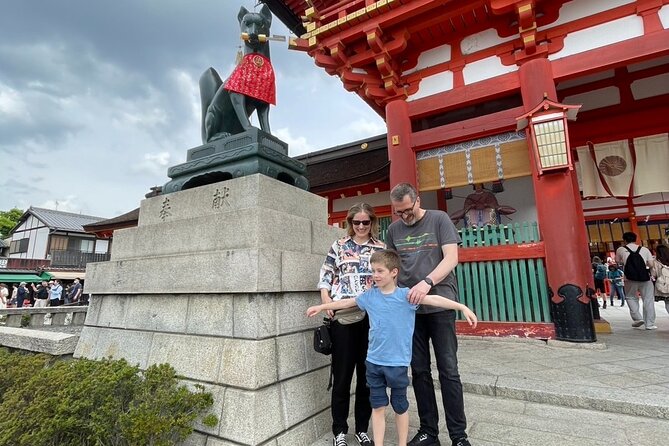
Cycling along the Kamo River is one of the day’s most appealing transitions. The river is a favorite place for walking, jogging, and taking a break, and the route lets you see Kyoto’s urban life from a calmer angle.
Riverside riding can also be one of the more pleasant parts of a long cycling day. You get a visual break from buildings and intersections, though you still need to handle the bike carefully around other people and on narrow paths.
Near Gion, the tour visits Miyagawacho, a less familiar geisha district with old lanes and traditional buildings. This is the sort of neighborhood where a guide adds real value. You are not just looking at pretty wooden facades. You are getting context for the geiko and maiko traditions and for the way historic entertainment districts developed.
The quiet ride through Miyagawacho is a good counterpoint to Gion later in the day. It feels more low-key and intimate, while Gion is Kyoto’s best-known geisha district and usually draws more attention.
Heian Shrine provides a bold burst of color
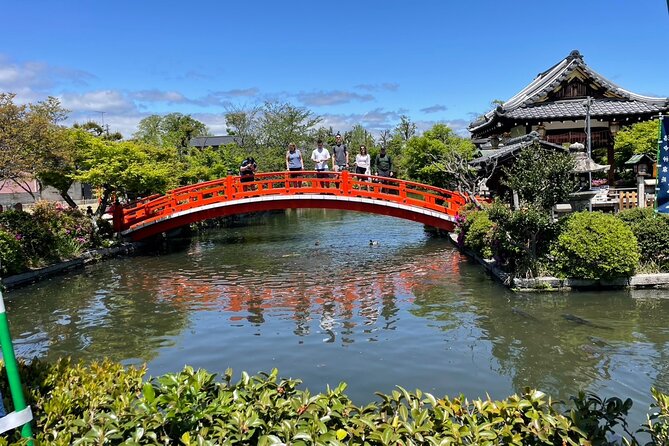
Heian Shrine was built in 1895 to mark Kyoto’s 1,100th anniversary. Its vermilion gate and buildings copy the style of the ancient Imperial Palace, creating a dramatic contrast with the darker wood and moss found at several other stops.
You spend about 10 minutes here, and the stop includes a look at one of Japan’s largest torii gates nearby. That short visit is enough for photographs and a quick explanation, but not enough for a full exploration of the shrine grounds.
This is a good example of why you should view the tour as a broad city ride rather than a series of deep temple visits. You see many places, but the time at each one varies. If Heian Shrine is a personal priority, you may want to return independently for a longer look.
The Lake Biwa Canal explains Kyoto’s modern recovery
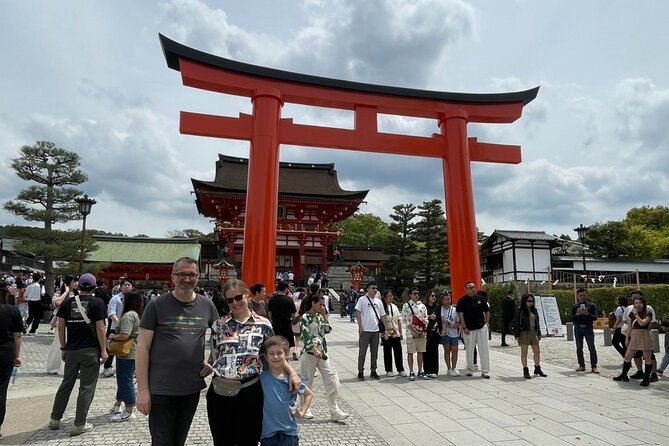
At the Biwa Aqueduct Museum, you learn about the Lake Biwa Canal, an engineering project from the 1890s. The canal brought water and electricity to Kyoto and helped give the city new energy after the capital moved to Tokyo.
The museum stop lasts about 10 minutes. It is small, so do not expect a major museum visit. Its value is the explanation of how Kyoto adapted to a changing Japan. After so much ancient architecture, this piece of infrastructure shows a city trying to modernize without losing its identity.
The canal itself also adds another pleasant riding section. Water, brick, and old engineering make a welcome break from temple courtyards.
Nanzen-ji mixes Zen calm with industrial history
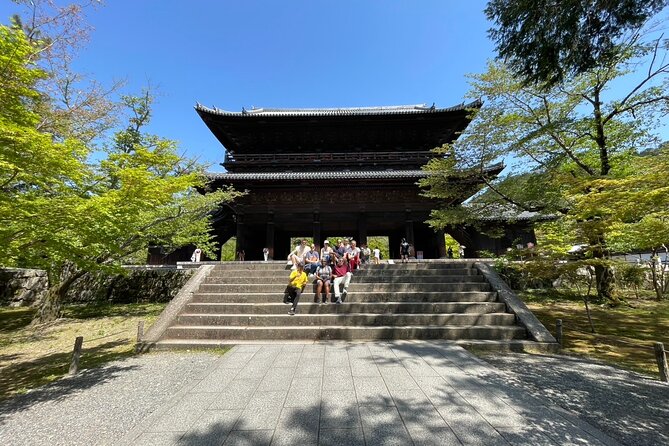
Nanzen-ji is one of Kyoto’s most important Zen temples, founded in the 13th century. The massive Sanmon gate gives the stop weight, while the temple’s Zen gardens offer a quieter visual mood.
The red brick aqueduct running through the temple grounds is the surprise. It belongs to the Lake Biwa Canal system and creates an unusual meeting of Zen architecture and Meiji-era engineering. This is one of the route’s best examples of Kyoto’s many time periods occupying the same frame.
You get about 25 minutes here. That is enough for the main impression and an explanation from Jaime, but again, not enough to explore every garden or building at leisure. The temple can become crowded, so your guide’s route and timing matter.
The Philosopher’s Path slows the ride
The Philosopher’s Path follows a canal beneath trees and is especially famous for spring cherry blossoms. Its name comes from Nishida Kitaro, a Kyoto University professor who walked here while thinking through his ideas.
The path is not a place for speed. It is a scenic section where you may ride slowly, stop for photographs, and take in the canal-side setting. Narrow paths are part of the appeal, but they are also why the tour requires careful maneuvering and moderate fitness.
During busy periods, you may need to share the route with pedestrians. This is one reason the e-bike should not be treated as a fast transport machine. It helps with distance, but you still need patience and control.
Honen-in offers the day’s quietest temple stop
Honen-in is tucked into the hills and feels more subdued than the major temple complexes. Its mossy entrance and white sand patterns give it a restrained, almost hushed character.
The visit lasts about 20 minutes. That is enough time to appreciate the gate, grounds, and setting without turning the day into a long indoor temple inspection.
I like this stop because it gives the itinerary room to breathe. After the stronger colors of Heian Shrine and the scale of Nanzen-ji, Honen-in feels small and personal. It is also the sort of place that is easy to miss if you are following only the city’s most famous sights.
Ginkakuji is the headline temple stop
Ginkakuji, the Silver Pavilion, is likely the day’s biggest temple draw. Shogun Ashikaga Yoshimasa built it in the late 1400s, and its name creates a common misunderstanding: the pavilion was never covered in silver.
You spend about 25 minutes walking around the grounds, with admission included. The garden setting matters as much as the pavilion itself, and the visit gives you a chance to connect the building with the refined artistic culture associated with Kyoto.
Ginkakuji is also one of the places most likely to feel crowded. The tour’s bicycle approach helps you reach it without arranging separate transport, but it cannot remove the crowds once you arrive. Keep your expectations realistic: this is a focused visit, not an afternoon spent wandering every path.
Gion finishes with Kyoto’s best-known old lanes
The final major stop is Gion, where traditional wooden machiya houses, lantern-lit lanes, and geiko and maiko culture define the streetscape. You spend about 15 minutes riding through the district and learning how to understand what you are seeing.
Gion is famous for good reason, but it is also the point where the tour may feel most crowded and less relaxed. Ride respectfully, keep your voice down, and remember that these lanes are part of a real neighborhood, not a stage set.
Ending in Gion gives the day a clear finish. You have seen quiet districts and river paths, grand Buddhist temples and modern canal works, then arrive at the Kyoto image many people picture first. Afterward, you cycle back to the original meeting point.
The physical demands are real, even with an e-bike
The important practical fact is the distance: about 32 kilometers. The e-bike reduces the strain of the route, but it does not turn the activity into a short sightseeing stroll.
You need to be fit enough to ride for most of a day and to maneuver safely on narrow paths. The tour is best for someone who already feels comfortable on a bicycle. If you rarely cycle, the distance, stops, city streets, and shared paths may feel tiring.
Wear comfortable clothing and plan for changing weather, though the supplied details do not specify equipment beyond the bicycle. Bring enough water for the day and remember that lunch is not included. One review noted that lunch was great, but you should still budget separately and ask Jaime about the day’s lunch plan.
The route includes admission to Ginkakuji. The other listed stops have no admission charge, which keeps extra sightseeing costs fairly limited.
Is $128.48 fair value for a full day?
At $128.48 per person, this tour makes the most sense if you value structure and local guidance. You could rent a bicycle for less, but then you would need to plan a route linking southern Kyoto, the Kamo River, eastern temples, Gion, and the northern Higashiyama area.
The private format adds value for couples, families, or friends who want to ask questions without competing with a large group. Jaime can also keep the ride at a practical pace for your group, within the demands of the route.
The price is less attractive if you want to linger for hours inside each temple, avoid physical exertion, or see only the headline sights. Public transport and walking may suit you better in that case.
The tour has a 5 out of 5 rating from 24 reviews, with 100 percent recommending it. One detailed comment praised the mix of busy and quiet areas, Jaime’s friendly manner, and the enjoyable lunch. That fits the design of the day: the strongest appeal is seeing many sides of Kyoto rather than checking off one monument at a time.
Who should book this experience?
Book it if you want to understand Kyoto’s layout, enjoy active sightseeing, and prefer quiet backstreets to a bus window. It suits a reasonably fit visitor who wants famous temples but also wants the spaces between them explained.
It is especially useful early in a Kyoto stay because you cover several districts in one day and gain a sense of where the river, temples, old entertainment quarters, and southern landmarks sit in relation to one another.
Think twice if you have limited cycling experience, dislike narrow paths, need long visits at major temples, or want a slow day with little exertion. A full day in the saddle is the central feature, not a minor detail.
Free cancellation is available up to 24 hours before the 9:00 am start. Changes or cancellations inside that window are not refunded, and poor weather can lead to a different date or a full refund. The tour also requires a minimum number of participants, although the booking is private for your group once it runs.
FAQ
Where does the Kyoto bike tour begin?
It begins at the 7-Eleven at 44-1 Higashikujō Kamitonodachō, Minami Ward, Kyoto, 601-8002, Japan.
What time does the tour start?
The tour starts at 9:00 am.
Where does the tour end?
The activity ends back at the original meeting point.
How long does the tour last?
The tour lasts approximately seven to eight hours.
How far do you ride?
You need to be fit enough to ride about 32 kilometers and maneuver safely on narrow paths.
Is the bicycle included?
Yes. Use of an e-bike is included in the tour.
Is lunch included in the price?
No. Lunch is not included.
Is this a shared group tour?
No. This is a private activity, so only your group participates.
What happens if the weather is poor?
If poor weather causes the tour to be canceled, you will be offered a different date or a full refund. Free cancellation is also available if you cancel at least 24 hours before the start time.
Should you book the Discover Kyoto by Bike Full Day Tour?
You should book this tour if you want a broad, active look at Kyoto and can comfortably handle 32 kilometers. The mix is unusually good: Toji and Nishi Honganji in the south, the Kamo River and old geisha districts in the center, then Heian Shrine, Nanzen-ji, Honen-in, Ginkakuji, and Gion.
Jaime’s private guiding, the e-bike, and the route through quieter streets make the $128.48 price easier to justify. Just treat the day as a serious cycling outing with temple visits, not as a gentle ride between a few quick photo stops. If that sounds like your kind of Kyoto day, this is a strong way to see the city from the ground up.
Just added around Kyoto
- Kyoto: Zen Meditation at a Private Temple with a Monk★ 5.0 · 25 reviews
- Kyoto: Gion Geisha District & Sake-in-Hand Walking Tour★ 5.0 · 37 reviews
- Private Pewter Sake Cup Experience with a Kyoto Artisan★ 5.0 · 31 reviews
- Your Private Vacation Photography Session In Kyoto★ 5.0 · 110 reviews
- Private Guided Traditional Buddhist Cooking in Japan★ 5.0 · 16 reviews
- Kyoto Wagashi(Japanese sweets) Cooking Class near Fushimiinari★ 5.0 · 60 reviews
- Traditional Japanese Music show & Experience Tour in Kyoto★ 5.0 · 57 reviews
- Kyoto:Family-Friendly Kimono & Yukata Experience at WARGO★ 5.0 · 147 reviews
Kyoto Tours, compared.


Fushimi Inari, Kinkakuji, Bamboo Grove 1 Day Bus Tour
Read our review →
Tea Ceremony in a Traditional Tea House in Kiyomizu
Read our review →
Kyoto Geisha Walking Tour: Gion District & Hidden Gems
Read our review →

Gion Magical Night Walking Tour with Geisha Trivia
Read our review →

Gion Geisha District Walking Tour – Stories of Geisha
Read our review →Browse the lists this tour appears in