
Reviewed · KYOTO TOURS
Early Bird E-biking through East Kyoto
Kyoto is easiest to understand when you can cover ground between its famous temples and quieter lanes. This early start takes you from Fushimi Inari and Tofuku-ji to the Philosopher’s Path, Nanzen-ji, Gion, and Higashi Hongan-ji without spending the day waiting for buses.
I like the small cap of eight people, which keeps the ride personal, and I like that lunch and a café stop are built in rather than left for you to solve mid-tour. The e-bike also makes a long day possible, though you still need to ride confidently around busy streets, uneven paths, and a few uphill stretches.
Key points to know before booking
- Start early at 8 a.m.: You reach Fushimi Inari before the worst crowds and have more time for the long route.
- Nine very different Kyoto stops: Expect shrines, Zen temples, riverside cycling, gardens, old neighborhoods, and Gion backstreets.
- Small groups capped at eight: Guides can adjust the pace and answer questions more easily than on a large coach outing.
- Lunch and coffee are included: The exact restaurant can depend on crowd levels, so do not expect a fixed fine-dining experience.
- You need real cycling ability: The electric motor helps, but it does not remove traffic, hills, or the need to stay alert.
- Check the bike size at the start: The minimum age is 13, the minimum height is 145 centimeters, and proper fit matters on a six-to-seven-hour ride.
Why an e-bike works so well in Kyoto
Kyoto’s top sights spread across the southern and eastern parts of the city. Walking between them takes time, while buses can be slow and crowded, especially around major temples. A bicycle gives you a better sense of the city between the postcard stops.
The electric assist matters because this is not a short sightseeing spin. You ride along the Kamogawa River, move between Fushimi Inari and Tofuku-ji, continue north toward Ginkaku-ji, then cross through the Philosopher’s Path, Nanzen-ji, Heian Shrine, Gion, and Higashi Hongan-ji.
You still pedal, steer, brake, and watch the road. The e-bike simply takes some strain out of the distance and hills. I would not book this as a passive sightseeing day. You are on the bike for much of the experience, with walking breaks at the temples and meal stops along the way.
The group size is one of the tour’s best practical features. With no more than eight people, the guide can keep an eye on the group and make modest adjustments for pace or interests. Guides named in the feedback include Juan, Jay, Indra, Mayco, Paul, Carl, Jaime, Shaune, Julian, and Sean. The quality of a day like this depends partly on the person leading it, but the strongest reports describe guides who mix local stories, humor, safety advice, and food suggestions.
More bike days around Kyoto:
- Hidden Kyoto E-Biking tour
★ 5.0 · 1,843 reviews - Bike Tour Exploring North Kyoto plus Lunch
★ 5.0 · 1,087 reviews - Arashiyama Bamboo Forest & Hidden Gems Bike Tour (Early Bird)
★ 5.0 · 613 reviews
Fushimi Inari before the crowds
The tour begins at Cycle Kyoto near Kyoto Station in Higashikujo Nishisannocho. From there, you ride for about 25 minutes along the river to Fushimi Inari-taisha Shrine.
Fushimi Inari is famous for its thousands of orange torii gates climbing into the wooded hills. You do not spend the entire day hiking the mountain. The scheduled visit gives you about 30 minutes on foot, enough to see the shrine grounds and walk beneath a portion of the gates.
The early departure is important here. Fushimi Inari is one of Kyoto’s busiest sights, and arriving at 8 a.m. gives you a better chance of seeing the lower shrine area before it becomes packed. Thirty-five minutes total is not enough for a full climb, so set your expectations correctly. This is an introduction, not a mountain trek.
Tofuku-ji and the first temple pause
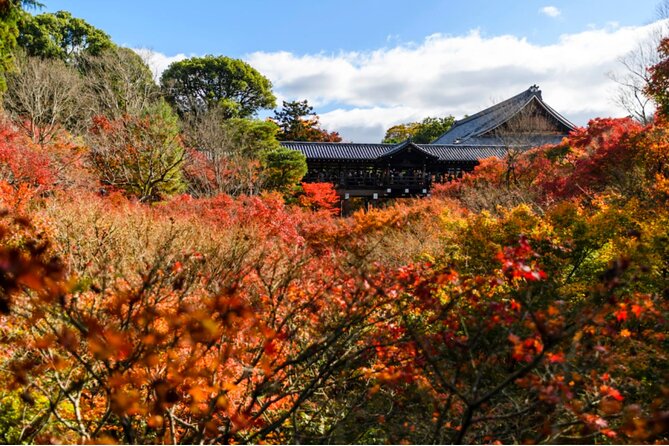
A 15-minute ride brings you to Tofuku-ji Temple, one of Kyoto’s major Zen temples. The stop lasts about 30 minutes and includes a brief pause on a picturesque bridge.
Tofuku-ji is known for its temple buildings, gardens, and seasonal color. The bridge gives you a particularly pleasing view, though the appeal changes with the season. You are not given a long, quiet garden visit here, but the stop breaks up the morning ride and adds a different style of temple from Fushimi Inari’s shrine grounds.
Admission is listed as free for this stop. As with the rest of the day, listen closely to the guide’s timing. A group cycling tour has to keep moving, and lingering too long at one early stop can cut into the northern part of the route.
Along the Kamogawa River
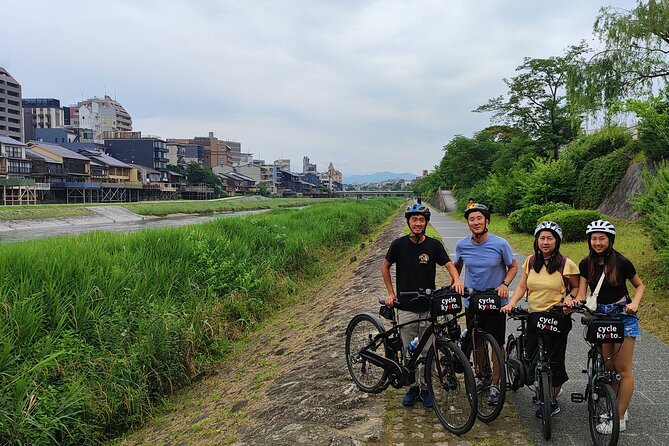
The next section is an extended 30-minute ride beside the Kamogawa River. This is one of the parts I would value most if you want to see Kyoto as a lived-in city rather than a string of famous entrances.
The riverside route gives your legs a steady stretch of riding and offers a calmer change from city streets. You see the river corridors that help shape Kyoto’s daily rhythm, then continue toward Ginkaku-ji.
The route is not entirely carefree. Some riding takes place near busy roads and crowded areas, so you need to stay aware of traffic, pedestrians, and the group ahead. A guide helps with navigation, but you remain responsible for safe riding.
More e-bike rides in Kyoto:
- 5 Top Highlights of Kyoto Full Day Bike Tour (E-bike option)
★ 5.0 · 511 reviews - E-Bike Tours of the highlights of Kyoto!!!
★ 5.0 · 291 reviews - Kyoto: City Secrets eBike Tour
★ 4.9 · 196 reviews - Pedal Adventure Kyoto’s iconic landmarks on an e-bike tour
★ 5.0 · 189 reviews
Ginkaku-ji and lunch near the Silver Pavilion
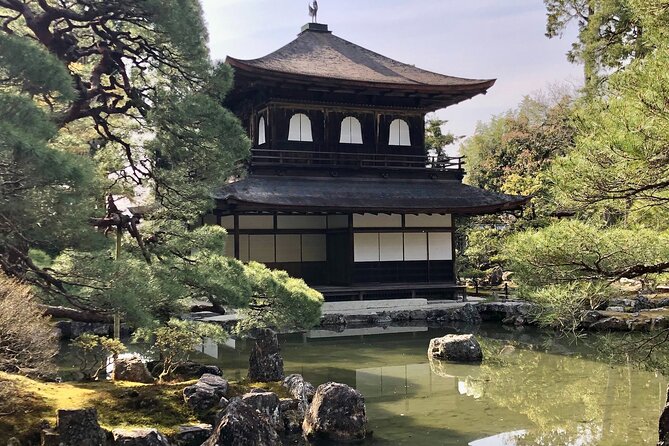
Ginkaku-ji, the Silver Pavilion, is one of Kyoto’s most elegant temple visits. Despite its name, the pavilion is not covered in silver. The grounds are the main attraction, with carefully arranged paths, moss, trees, and garden views.
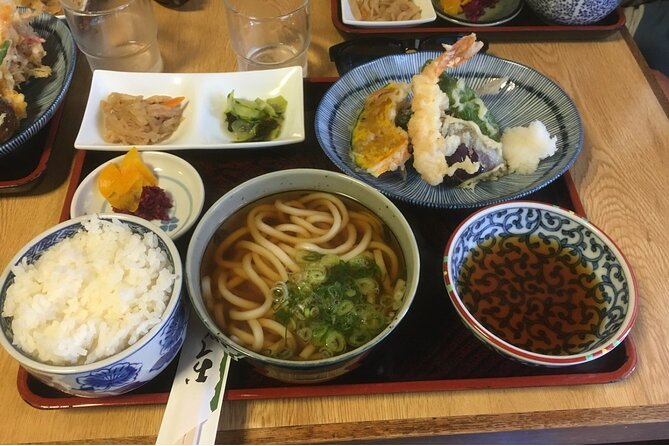
The stop lasts about 45 minutes, including lunch at a nearby restaurant. Lunch is a real benefit on a day this long. You do not have to leave the route to find food, and a guide can help the group get seated and keep the schedule moving.
The meal is not presented as a luxury dining experience. During busy seasons, the restaurant choice may be shaped by long lines and limited seating. One account described lunch on the busiest street near the Silver Pavilion as ordinary, while other outings included a well-liked ramen restaurant or a local place the guide favored. I would treat lunch as useful and convenient, with the exact setting and menu subject to the day.
Tell the operator about dietary needs ahead of time. That request is specifically noted, and it is much easier to plan before the morning begins.
The Philosopher’s Path by bicycle
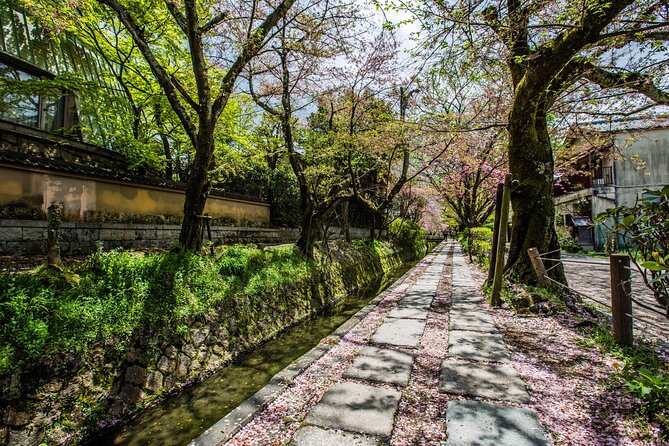
From Ginkaku-ji, you cycle along the Philosopher’s Path for about 45 minutes. This tree-lined canal path is one of Kyoto’s most pleasant places to ride, especially when seasonal blossoms are out.
The path is narrow in places and can become crowded. You may need to slow down, stop, or walk the bike around pedestrians. That is part of the trade-off: the route is scenic, but it is not a private cycleway.
If blossoms are a priority for you, make your wishes clear to the guide. One group had to ask for extra time to stop for photographs during peak bloom. The schedule is full, so the guide may need to balance photo stops against the remaining temples and the return ride.
Nanzen-ji and Heian Shrine
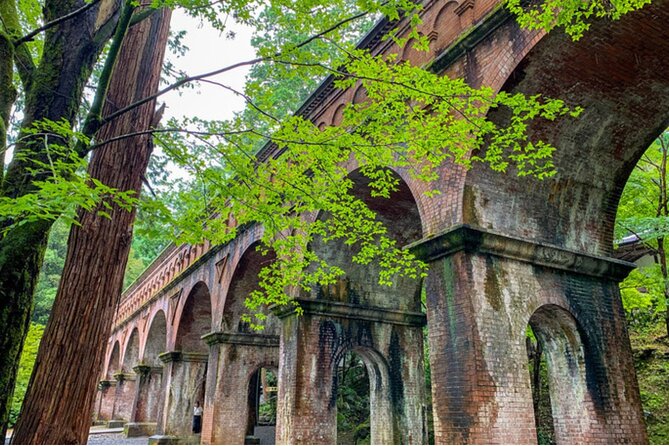
Nanzen-ji follows the Philosopher’s Path, with about 45 minutes to walk around the temple grounds. This is a spacious and impressive temple complex, with broad gates, traditional buildings, and the distinctive brick aqueduct nearby.
The stop gives you more room to walk than the shorter temple pauses earlier in the morning. It is also a good point to ask the guide how Zen temples differ from Shinto shrines. You will have seen both traditions by this stage, and the contrast becomes easier to follow when someone explains what you are looking at.
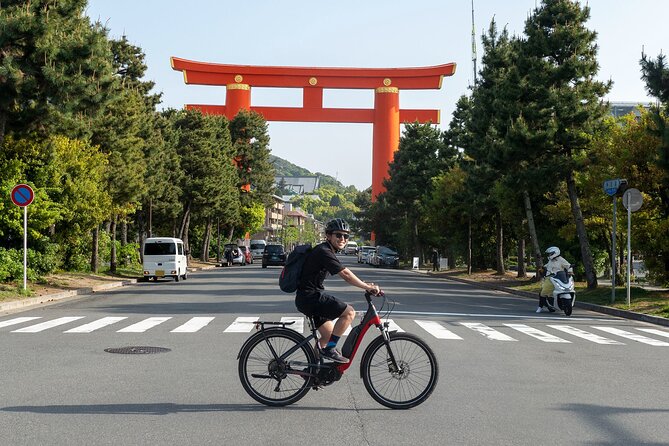
Heian Shrine comes next, with about 35 minutes in its large courtyard. The shrine’s scale and bold vermilion details make it feel quite different from Nanzen-ji’s quieter temple grounds. The route gives you a useful range of Kyoto architecture in one day, from intimate lanes to grand ceremonial spaces.
Admissions are listed as free for most stops. Ginkaku-ji is the exception shown in the schedule, with admission included.
Gion from the backstreets
The ride through Gion lasts about 45 minutes. Rather than treating the district as one big photo stop, the route takes you through its backstreets and traditional entertainment-quarter scenery.
You might catch a glimpse of a Maiko or Geiko, but this is not guaranteed. The best approach is to be respectful and avoid treating people in traditional dress as photo props. Gion is also an active neighborhood, not simply an open-air museum.
This section is especially useful because a bicycle lets you cover side streets that you would be unlikely to reach on a standard walking route. At the same time, Gion can be crowded, and cycling there requires patience. Stay close to the group and follow the guide’s instructions about where to ride and when to dismount.
Higashi Hongan-ji and the café stop
The final scheduled sight is Higashi Hongan-ji Temple, where you spend about 15 minutes walking through its large wooden prayer halls. The scale of the buildings gives the day a strong finish, even though the stop itself is brief.
A café stop is included in this part of the route. Several outings made a point of visiting a favorite local café, which adds a small personal touch to a day otherwise built around major sights. It also gives you a chance to rest before returning to the starting point.
The short timing means you should not expect a long architectural study. Think of Higashi Hongan-ji as a final introduction, followed by coffee and the ride back to Cycle Kyoto.
What the $138.74 price really buys
At $138.74 per person, this is not the cheapest way to see Kyoto. The value comes from combining transport, equipment, guiding, temple stops, lunch, and route planning in one long outing.
You receive an e-bike and helmet, so you do not need to arrange rental equipment. The guide handles navigation across a broad section of the city, which is useful when you want to connect sights that are awkward to combine by public transport.
The small group also matters. A private tour would cost more, while a large group would likely feel less flexible. For a first full day in Kyoto, the tour can help you get your bearings quickly and show you areas you might otherwise divide across several days.
The price is harder to justify if you mainly want independent cycling. You could ride between some of these places yourself, and the itinerary does not promise an in-depth lecture at every temple. One poor experience involved a guide who relied too much on phone research and offered little explanation. That appears to be an exception among the supplied feedback, but it points to a fair question: you are paying for the guide as much as for the bicycle.
Fitness, bike fit, and busy streets
The operator asks for moderate physical fitness. That description is worth taking seriously. The e-bike reduces effort, but you still spend six to seven hours mounting, riding, braking, walking, and getting back on the bike.
Expect some uphill riding, uneven sections, busy streets, and crowded paths. You need to feel comfortable riding in an urban setting and keeping track of a group. The motor will not solve balance or traffic awareness.
Bike size deserves attention. The minimum height is 145 centimeters, and smaller bikes are available, but one group arrived to find two bikes that were too small for taller teenagers. Check the fit before setting off. Your feet should reach the pedals comfortably, your position should feel stable, and the handlebars should not force you into an awkward posture.
The minimum age is 13. The tour ends back at the starting point, and the mobile ticket makes access simple once you have reached Cycle Kyoto.
Who will enjoy this Kyoto day most
I would recommend this for a first visit when you want a broad look at Kyoto without planning several separate routes. It suits couples, families with older teenagers, and small groups who are comfortable spending most of a day outdoors.
It is also a good match for people who enjoy local context. Guides such as Juan and Indra were praised for linking temples with food, customs, and city life. A good guide can explain what makes a shrine different from a temple, point out less obvious details, and suggest places to eat after the tour.
I would hesitate if you dislike cycling near traffic, need a slow pace, or want long stretches of quiet temple contemplation. The schedule is ambitious. You see a lot, but each sight receives a set amount of time.
The tour requires good weather. If poor weather cancels the outing, you are offered another date or a full refund. You can cancel for a full refund up to 24 hours before the local start time. Last-minute changes are not accepted, and the experience can also be canceled if the minimum group size is not reached.
My call: book it for range, not for a lazy ride
I would book Early Bird E-biking through East Kyoto if I wanted to see many of Kyoto’s essential eastern and southern sights in one day, especially on my first morning in the city. The early start, small group, included equipment, lunch, and riverside riding make the price reasonable for someone who values structure and local guidance.
Go in expecting a full day with real cycling, not a gentle ride between temple gates. Ask about bike size before leaving, tell the operator about dietary needs, and make clear which sights or photo moments matter most to you.
Skip it if you prefer complete independence or want detailed teaching at every stop. For the right rider, though, this is an efficient and enjoyable way to connect Fushimi Inari, Ginkaku-ji, the Philosopher’s Path, Nanzen-ji, Gion, and several parts of Kyoto that are easy to miss from a bus window.
FAQ
Where does the Kyoto e-bike tour begin?
The tour begins at Cycle Kyoto, Higashikujō Nishisannōchō, Minami Ward, Kyoto, 601-8003, Japan.
What time does the tour start?
The tour starts at 8:00 a.m.
How long does the experience last?
The outing lasts approximately six to seven hours and ends back at the starting point.
What is included with the bicycle rental?
An e-bike and helmet are provided.
Is lunch included?
Yes. Lunch at a nearby restaurant is included during the Ginkaku-ji portion of the tour. Dietary requirements should be provided ahead of time.
How many people can join the tour?
The group has a maximum of eight participants.
What are the age and height requirements?
The minimum age is 13 years old, and the minimum height is 145 centimeters.
Can I cancel for a refund?
You can cancel at least 24 hours before the start time for a full refund. Cancellations or changes made less than 24 hours before the start time are not refunded or accepted. If poor weather or insufficient numbers cancel the experience, you are offered another date or a full refund.
Just added around Kyoto
- Kyoto: Zen Meditation at a Private Temple with a Monk★ 5.0 · 25 reviews
- Kyoto: Gion Geisha District & Sake-in-Hand Walking Tour★ 5.0 · 37 reviews
- Private Pewter Sake Cup Experience with a Kyoto Artisan★ 5.0 · 31 reviews
- Your Private Vacation Photography Session In Kyoto★ 5.0 · 110 reviews
- Private Guided Traditional Buddhist Cooking in Japan★ 5.0 · 16 reviews
- Kyoto Wagashi(Japanese sweets) Cooking Class near Fushimiinari★ 5.0 · 60 reviews
- Traditional Japanese Music show & Experience Tour in Kyoto★ 5.0 · 57 reviews
- Kyoto:Family-Friendly Kimono & Yukata Experience at WARGO★ 5.0 · 147 reviews
Kyoto Tours, compared.


Fushimi Inari, Kinkakuji, Bamboo Grove 1 Day Bus Tour
Read our review →
Tea Ceremony in a Traditional Tea House in Kiyomizu
Read our review →
Kyoto Geisha Walking Tour: Gion District & Hidden Gems
Read our review →

Gion Magical Night Walking Tour with Geisha Trivia
Read our review →

Gion Geisha District Walking Tour – Stories of Geisha
Read our review →Browse the lists this tour appears in